3812 Results for "

derived

" in MedChemExpress (MCE) Product Catalog:
Products (3812)

3812 Results for "derived" in MCE Product Catalog:

Cat. No.: HY-L238
2,383 compounds

Mongolian medicine refers to drugs used for disease prevention and treatment under the guidance of Mongolian medical theory. Originating from the vast grasslands and desert regions of northern China, Mongolian medicine developed under specific natural conditions and a nomadic lifestyle, forming a unique theoretical system and treatment methods. It emphasizes the balance between the human body and the natural environment and has demonstrated distinct efficacy in treating digestive system diseases, rheumatism, skin diseases, and various chronic conditions. For example, Mongolian medicine often uses Chinese red date for palpitations and angina pectoris, sea buckthorn to relieve coughs, reduce phlegm, promote blood circulation, and remove blood stasis, and scabious to clear lung heat and treat liver heat diseases. The application of these characteristic Mongolian medicines embodies the profound wisdom of Mongolian medical practice.

With the advancement of modern technology, research on Mongolian medicine continues to deepen. Systematic studies on the chemical composition and pharmacological effects of Mongolian medicines can provide new ideas and methods for modern drug development.

MCE has collected 2,383 characteristic natural products derived from Mongolian medicines, with 400+ plant sources of Mongolian medicine.

Cat. No.: HY-148775
Purity:  ≥95.0%
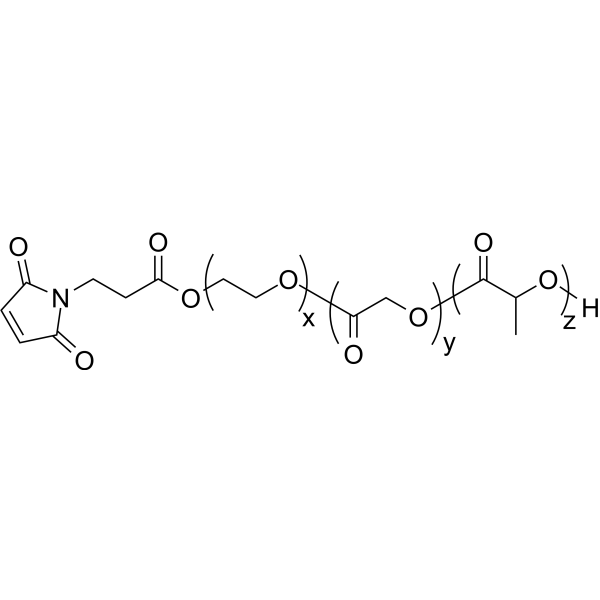
PLGA-PEG-MAL (60kDa-3.4kDa, LA:GA ratio 75:25) is a biodegradable amphipathic polymeric nanocarrier of poly (lactic-co-glycolic acid)-block-poly (ethylene glycol) (PLGA-PEG-Mal) that allows covalent modification of functional molecules. PLGA-PEG-MAL (60kDa-3.4kDa, LA:GA ratio 75:25) modified with Angiopep-2 can cross the blood-brain barrier and exhibits targeting selectivity for glioblastoma cells. PLGA-PEG-MAL (60kDa-3.4kDa, LA:GA ratio 75:25) can capture tumor-derived protein antigens, and exerts immunomodulatory effects when conjugated with anti-OX40 antibody; when used in combination with A2-CL/Dbait nanoparticles and radiotherapy, it prolongs survival time and reduces tumor volume in glioblastoma mouse models. PLGA-PEG-MAL (60kDa-3.4kDa, LA:GA ratio 75:25) can be used for studies related to bacterial wound infections and glioblastoma .
loading...
    loading...
Cat. No.: HY-189364
CAS No.: 88262-44-6
Synonyms: SMC247-9
Research Areas:  

Cancer

(DL)-3,5-Dimethyltyrosine (SMC247-9) is a selective APOBEC3B inhibitor optimized from SMC247, with an IC50 of 50 pM. (DL)-3,5-Dimethyltyrosine binds to the APOBEC3B protein, reduces intracellular APOBEC3B protein abundance partially through a lysosome-dependent pathway, enhances IL-15 expression in tumor cells, and relieves the suppression of CD8 + T cells by tumor cells in an IL-15-dependent manner. (DL)-3,5-Dimethyltyrosine attenuates tumor- and macrophage-derived chemokine-mediated macrophage chemotaxis and inhibits pathological myeloid inflammatory signaling. (DL)-3,5-Dimethyltyrosine inhibits tumor growth in the immune checkpoint blockade-responsive MC38 syngeneic mouse model and produces synergistic effects with anti-PD-L1 in the immune checkpoint blockade-resistant TC-1 tumor model; it also ameliorates anti-PD-1-exacerbated DSS-induced colitis-like intestinal inflammatory injury. (DL)-3,5-Dimethyltyrosine can be used in research related to tumor immunotherapy .
loading...
    loading...
Cat. No.: HY-P5415
CAS No.: 127134-13-8
Target:  

HIV

Research Areas:  

Others

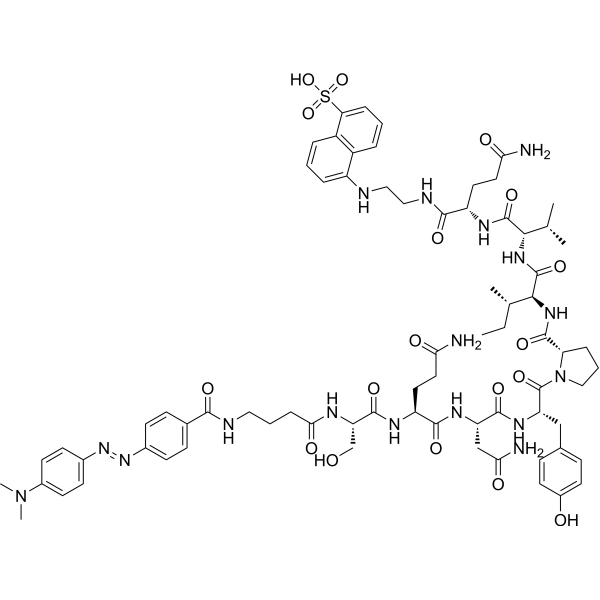
DABCYL-GABA-Ser-Gln-Asn-Tyr-Pro-Ile-Val-Gln-EDANS is a biological active peptide. (DABCYL-GABA-Ser-Gln-Asn-Tyr-Pro-Ile-Val-Gln-EDANS is also called HIV protease substrate I in some literature. It is widely used for the continuous assay for HIV protease activity. The 11-Kd protease (PR) encoded by the human immunodeficiency virus 1 (HIV-1) is essential for the correct processing of viral polyproteins and the maturation of infectious virus, and is therefore a target for the design of selective acquired immunodeficiency syndrome (AIDS) therapeutics. The FRET-based fluorogenic substrate is derived from a natural processing site for HIV-1 PR. Incubation of recombinant HIV-1 PR with the fluorogenic substrate resulted in specific cleavage at the Tyr-Pro bond and a time-dependent increase in fluorescence intensity that is linearly related to the extent of substrate hydrolysis. The fluorescence quantum yields of the HIV-1 PR substrate in the FRET assay increased by 40.0- and 34.4-fold, respectively, per mole of substrate cleaved. Because of its simplicity and precision in the determination of reaction rates required for kinetic analysis, this substrate offers many advantages over the commonly used HPLC or electrophoresis-based assays for peptide substrate hydrolysis by retroviral PRs. Abs/Em = 340nm/490nm.)
loading...
    loading...
Cat. No.: HY-P990186

Target:  

MHC

Research Areas:  

Others

Anti-Mouse MHC Class II (I-Ak, I-Ar, I-Af, I-As,I-Ag7) Antibody (10-3.6.2) is a mouse-derived IgG2c κ type antibody inhibitor, targeting to mouse MHC Class II. Anti-Mouse MHC Class II (I-Ak, I-Ar, I-Af, I-As,I-Ag7) Antibody (10-3.6.2) reacts with mouse MHC Class II haplotypes I-Ak, I-Ar, I-Af, I-As, and I-Ag7. Anti-Mouse MHC Class II (I-Ak, I-Ar, I-Af, I-As,I-Ag7) Antibody (10-3.6.2) does not react with I-Ab, I-Ad, I-Ap, or I-Aq haplotypes. Anti-Mouse MHC Class II (I-Ak, I-Ar, I-Af, I-As,I-Ag7) Antibody (10-3.6.2) blocks MHC Class II and inhibits antigen proliferation responses. Anti-Mouse MHC Class II (I-Ak, I-Ar, I-Af, I-As,I-Ag7) Antibody (10-3.6.2) can be used for the research of immunology .
loading...
    loading...
Cat. No.: HY-P990269

Target:  

TNF Receptor

Research Areas:  

Inflammation/Immunology Cancer

Anti-Mouse CD40L/CD154 (LALA-PG) Antibody (MR-1) is a mouse-derived IgG2a κ type antibody inhibitor, targeting to mouse CD40L/CD154. Anti-Mouse CD40L/CD154 (LALA-PG) Antibody (MR-1) is a chimeric version of the original MR-1 antibody (HY-P990134). The variable domain sequences are identical to the original MR-1 but the constant region sequences have been switched from Armenian hamster IgG to mouse IgG2a. Anti-Mouse CD40L/CD154 (LALA-PG) Antibody (MR-1) contains a LALA-PG mutation in the Fc fragment rendering it unable to bind to endogenous Fcγ receptors. Anti-Mouse CD40L/CD154 (LALA-PG) Antibody (MR-1) blocks CD40/CD40L signaling. Anti-Mouse CD40L/CD154 (LALA-PG) Antibody (MR-1) can be used for researches of cancer, inflammation and immunology.
loading...
    loading...
Cat. No.: HY-P990270

Target:  

TNF Receptor

Research Areas:  

Inflammation/Immunology Cancer

Anti-Mouse CD40L/CD154 (D265A) Antibody (MR-1) is a mouse-derived IgG1 κ type antibody inhibitor, targeting to mouse CD40L/CD154. Anti-Mouse CD40L/CD154 (D265A) Antibody (MR-1) is a chimeric version of the original MR-1 antibody (HY-P990134). The variable domain sequences are identical to the original MR-1 but the constant region sequences have been switched from Armenian hamster IgG to mouse IgG1. Anti-Mouse CD40L/CD154 (D265A) Antibody (MR-1) contains a D265A mutation in the Fc fragment rendering it unable to bind to endogenous Fcγ receptors. Anti-Mouse CD40L/CD154 (D265A) Antibody (MR-1) blocks CD40/CD40L signaling. Anti-Mouse CD40L/CD154 (D265A) Antibody (MR-1) can be used for researches of cancer, inflammation and immunology.
loading...
    loading...
Cat. No.: HY-P990304B

Target:  

TNF Receptor

Anti-Mouse 4-1BBL/CD137L (D265A) Antibody (TKS-1) is a mouse-derived IgG1 κ antibody inhibitor that targets mouse 4-1BBL/CD137L. Anti-Mouse 4-1BBL/CD137L (D265A) Antibody (TKS-1) is a chimeric version of the original TKS-1 antibody (HY-P990304). The variable domain sequences are identical to the original TKS-1 but the constant region sequences have been switched from rat IgG2a to mouse IgG1. Anti-Mouse 4-1BBL/CD137L (D265A) Antibody (TKS-1) contains a D265A mutation in the Fc fragment rendering it unable to bind to endogenous Fcγ receptors. Anti-Mouse 4-1BBL/CD137L (D265A) Antibody (TKS-1) reacts with mouse 4-1BB ligand (4-1BBL). Anti-Mouse 4-1BBL/CD137L (D265A) Antibody (TKS-1) can be used for the researches of cancer, infection, inflammation and immunology.
loading...
    loading...
Cat. No.: HY-P990304C

Target:  

TNF Receptor

Anti-Mouse 4-1BBL/CD137L (LALA-PG) Antibody (TKS-1) is a mouse-derived IgG2a κ antibody inhibitor that targets mouse 4-1BBL/CD137L.Anti-Mouse 4-1BBL/CD137L (LALA-PG) Antibody (TKS-1) is a chimeric version of the original TKS-1 antibody (HY-P990304). The variable domain sequences are identical to the original TKS-1 but the constant region sequences have been switched from rat IgG2a to mouse IgG2a. Anti-Mouse 4-1BBL/CD137L (LALA-PG) Antibody (TKS-1) contains a LALA-PG mutation in the Fc fragment rendering it unable to bind to endogenous Fcγ receptors. Anti-Mouse 4-1BBL/CD137L (LALA-PG) Antibody (TKS-1) reacts with mouse 4-1BB ligand (4-1BBL). Anti-Mouse 4-1BBL/CD137L (LALA-PG) Antibody (TKS-1) can be used for the researches of cancer, infection, inflammation and immunology.
loading...
    loading...
Cat. No.: HY-W015777R
CAS No.: 105-13-5
Synonyms: P-Methoxy-benzyl alcoho (Standard); (4-Methoxyphenyl)methanol (Standard)
4-Methoxybenzyl alcohol (Standard) (P-Methoxy-benzyl alcoho (Standard); (4-Methoxyphenyl)methanol (Standard)) is the analytical standard of 4-Methoxybenzyl alcohol (HY-W015777). This product is intended for research and analytical applications. 4-Methoxybenzyl alcohol (P-Methoxy-benzyl alcoho; (4-Methoxyphenyl) methanol) is a naturally derived volatile aromatic compound. 4-Methoxybenzyl alcohol upregulates the phosphorylation level of PI3K/Akt pathway proteins, downregulates the expression of pro-inflammatory factors, increases the content of tight junction proteins occludin and claudin-5, and alleviates structural damage to the blood-brain barrier. 4-Methoxybenzyl alcohol improves the decrease in viability and NO level of cerebral microvascular endothelial cells induced by oxygen-glucose deprivation/reperfusion, and reduces the release of lactate dehydrogenase. 4-Methoxybenzyl alcohol serves as a substrate in the two-phase persulfate-mediated electro-oxidation system, where it is directionally oxidized to p-anisaldehyde. 4-Methoxybenzyl alcohol acts as a substrate for wild-type fungal aryl alcohol oxidase. 4-Methoxybenzyl alcohol can be used in studies related to ischemic stroke, as well as in research across various fields such as chemical synthesis, including the synthesis of fragrances and flavorings .
loading...
    loading...
Cat. No.: HY-W020780
CAS No.: 724722-89-8
Synonyms: mPEG5000-Maleimide
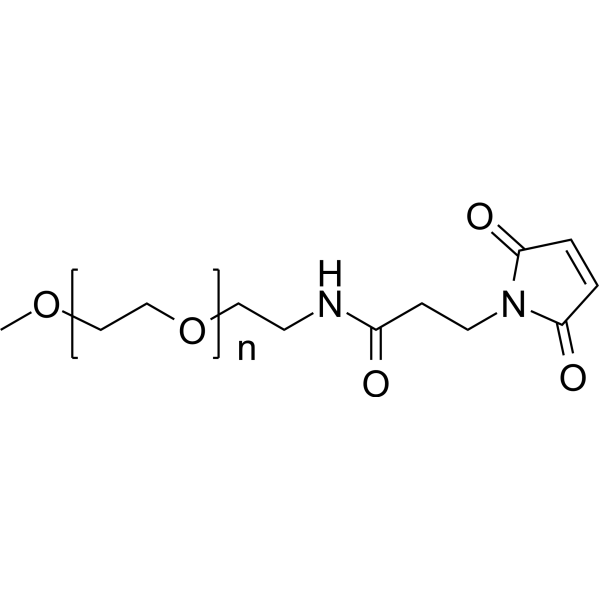
mPEG5000-Mal (mPEG5000-Maleimide) is a PEG-derived selective covalent binding agent for sulfhydryl groups (RSGs), which can form irreversible thioether bonds with sulfhydryl groups under near-neutral conditions via the maleimide group. The mechanism of action of mPEG5000-Mal can be divided into two categories: firstly, as an enzyme modifier, it binds to target proteins through hydrophobic interactions, hydrogen bonds, and van der Waals forces, altering the protein's secondary structure; secondly, as a nanoparticle surface modifier, it covalently binds to sulfhydryl groups on the surface of red blood cells, changing the surface properties and morphology of the red blood cells, leading to their phagocytosis by macrophages of the reticuloendothelial system. mPEG5000-Mal can react with free cysteine in proteins, increasing the apparent molecular weight of the modified protein by 10-15 kDa for detection purposes. mPEG5000-Mal can enhance the thermal stability and catalytic activity of enzymes, and improve the macrophage targeting of nanoparticles, enabling targeted drug delivery. mPEG5000-Mal can be applied in enzyme engineering research in the food industry and in oncology, assisting radiotherapy by inhibiting tumor-associated macrophage infiltration and enhancing anti-tumor immune responses .
loading...
    loading...
Cat. No.: HY-P70384
Purity:  ≥ 95%, as determined by reducing SDS-PAGE.
Synonyms: GFRA1; GDNFR-Alpha-1; Prev. GDNFRA; Glial Cell Line-derived Neurotrophic Factor Receptor Alpha; RETL1; PI-Linked Cell-Surface Accessory Protein; TRNR1; GPI-Linked Anchor Protein; GDNF Family Receptor Alpha-1; Alternative Protein GFRA1; GFR-ALPHA-1; GDNF Receptor Alpha 1d; GDNFR; GDNF Receptor Alpha 1e; RET1L; GFR-Alpha-1; TGF-Beta-Related Neurotrophic Factor Receptor 1; GFRalpha-1; GDNF Receptor Alpha-1; RHDA4; GDNF Family Receptor Alpha 1; RET Ligand 1
Species:  
Human
Source:  
HEK293
loading...
    loading...
Cat. No.: HY-D1056A3
Synonyms: LPS, from Escherichia coli (O26:B6)
Lipopolysaccharides, from E. coli (Escherichia coli) O26:B6 are lipopolysaccharide endotoxins and TLR-4 activators derived from E. coli, classified as S-type LPS, which can activate pathogen-associated molecular patterns (PAMP) of the immune system and induce cellular secretion of migrasomes. Lipopolysaccharides, from E. coli O26:B6 exhibit a typical three-part structure: O-antigen, core oligosaccharide, and lipid A, and can be recognized by the core-specific monoclonal antibody MAb J8-4C10. Lipopolysaccharides, from E. coli O26:B6 can promote an increase in pro-inflammatory cytokines in plasma, thereby triggering hypothalamic-pituitary-adrenal (HPA) activation and leading to adrenal oxidative damage. The pathogenic effects of Lipopolysaccharides, from E. coli O26:B6 can be used to construct various models, such as cellular inflammation models, sepsis, acute lung injury models, adrenal dysfunction models, and bladder infection models, etc .
It is recommended to prepare a solution with concentration ≥2 mg/mL. Vortex thoroughly for more than 10 minutes. Due to the adsorption characteristics of LPS, silanized container or low adsorption centrifuge tubes should be used for aliquoting and storage, and mix thoroughly before use.
loading...
    loading...
Cat. No.: HY-P991744

Target:  

CXCR

Research Areas:  

Cancer

Anti-Mouse CXCR4 Antibody is a monoclonal antibody that specifically recognizes murine CXCR4 (C-X-C chemokine receptor 4), also known as fusin or CD184. CXCR4 is a seven-transmembrane G protein–coupled receptor whose principal endogenous ligand is CXCL12 (stromal cell–derived factor-1α, SDF-1α) and is widely expressed in hematopoietic cells, endothelial cells, neurons, as well as embryonic and adult stem cells. The CXCR4–CXCL12 signaling axis activates multiple downstream pathways, including ERK1/2, Ras, p38 MAPK, PLC/MAPK, and SAPK/JNK, thereby regulating cell survival, proliferation, migration, and stemness maintenance. Aberrant overexpression of CXCR4 is closely associated with poor prognosis and metastasis in various cancers, with CXCR4-positive tumor cells preferentially home to CXCL12-rich tissues such as the liver, bone marrow, lung, and lymph nodes. Accordingly, CXCR4 and its CXCL12-related antagonists emerge as attractive targets for experimental anticancer therapy. Anti-Mouse CXCR4 Antibody is generated using a cell-based immunization and screening strategy and exhibits high affinity for both endogenous and exogenous murine CXCR4. Anti-Mouse CXCR4 Antibody can be used for thestudy of chronic lymphocytic leukemia and multiple myeloma .
loading...
    loading...
Cat. No.: HY-L939
10855 compounds

The rising prevalence of multidrug-resistant and extensively drug-resistant bacteria, combined with emerging resistance mechanisms and the limitations of existing antibacterial drugs, creates an urgent need for novel antibacterial agents. Antibacterial compound libraries serve as key tools to support antibacterial drug screening and development.

This library features structurally diverse compounds, including small-molecule scaffolds and natural product derivatives, and exhibits diverse antibacterial mechanisms of action. For example, these compounds exert antibacterial effects by disrupting bacterial cell structures, interfering with bacterial metabolic processes, and inhibiting nucleic acid synthesis. The derivation of scaffold structures enhances their activity against drug-resistant bacteria and their selectivity against different types of bacteria. This library can be used for the high-throughput screening of novel antibacterial drug candidates and the identification of potent compounds against drug-resistant and multidrug-resistant bacteria. Additionally, it provides a reference for compound structural modification, enabling further in-depth research on the structure-activity relationships(SARs) of antibacterial drugs. It can also be applied to the exploration of bacterial resistance mechanisms and reversal strategies, as well as the discovery of antibacterial molecules that inhibit efflux pumps and restore drug susceptibility.

The library contains 10855 structurally diverse drug-like compounds. Its core compound sources include analogs of known antifungal active moleculeswith a similarity score of ≥ 0.6. MCE has collected more than 1900 antibacterial molecules. All screened compounds conform to lead-like physicochemical properties, providing valuable support for the research and development of novel antibacterial drugs.

Cat. No.: HY-P704907
Purity:  ≥ 90%, as determined by reducing SDS-PAGE.
Synonyms: MAPT; Tau-derived Paired Helical Filament Hexapeptide; Prev. MAPTL; Microtubule-Associated Protein Tau; Prev. DDPAC; Neurofibrillary Tangle Protein; MTBT1; Paired Helical Filament-Tau; PPP1R103; MGC138549; Tau-PHF6; FLJ31424; FTDP-17; PHF-Tau; Tau-40; Microtubule-Associated Protein Tau, Isoform 4; MTBT2; Mutant Microtubule-Associated Protein Tau; PPND; Microtubule-Associated Protein; MSTD; FTD1; Tau; TAU; G Protein Beta1/Gamma2 Subunit-Interacting Factor 1; Microtubule Associated Protein Tau; Protein Phosphatase 1, Regulatory Subunit 103
Species:  
Human
Source:  
E. coli
loading...
    loading...
Cat. No.: HY-P704910
Purity:  ≥ 90%, as determined by reducing SDS-PAGE.
Synonyms: MAPT; Tau-derived Paired Helical Filament Hexapeptide; Prev. MAPTL; Microtubule-Associated Protein Tau; Prev. DDPAC; Neurofibrillary Tangle Protein; MTBT1; Paired Helical Filament-Tau; PPP1R103; MGC138549; Tau-PHF6; FLJ31424; FTDP-17; PHF-Tau; Tau-40; Microtubule-Associated Protein Tau, Isoform 4; MTBT2; Mutant Microtubule-Associated Protein Tau; PPND; Microtubule-Associated Protein; MSTD; FTD1; Tau; TAU; G Protein Beta1/Gamma2 Subunit-Interacting Factor 1; Microtubule Associated Protein Tau; Protein Phosphatase 1, Regulatory Subunit 103
Species:  
Human
Source:  
E. coli
loading...
    loading...
Cat. No.: HY-P706282
Purity:  ≥ 95%, as determined by HPLC.
Synonyms: ¹⁵N-Insulin-like growth factor 2; ¹⁵N-IGF-II; ¹⁵N-Somatomedin-A; ¹⁵N-Skeletal Growth Factor; ¹⁵N-SGF; IGF2; Insulin-Like Growth Factor 2 (Somatomedin A); Prev. C11orf43; Insulin-Like Growth Factor Type 2; Insulin-Like Growth Factor 2; Somatomedin A; IGF-II; Somatomedin-A; Insulin-Like Growth Factor II; PP9974; T3M-11-derived Growth Factor; IGF-2; FLJ44734; GRDF; Preptin; SRS3; Insulin Like Growth Factor 2; Chromosome 11 Open Reading Frame 43
Species:  
Human
Source:  
E. coli
loading...
    loading...
Cat. No.: HY-P73064
Purity:  ≥ 95%, as determined by reducing SDS-PAGE.
Synonyms: FLT1; Tyrosine-Protein Kinase FRT; Prev. FLT; FLT-1; Vascular Endothelial Growth Factor Receptor 1; Vascular Endothelial Growth Factor Receptor 1 Variant; VEGFR1; Platelet-derived Growth Factor Receptor-Like Protein; Vascular Permeability Factor Receptor; Fms-Related Tyrosine Kinase 1; Tyrosine-Protein Kinase Receptor FLT; Soluble FLT1 Variant E15a; Fms-Like Tyrosine Kinase 1; P19FLT1; Fms-Related Tyrosine Kinase 1 (Vascular Endothelial Growth Factor/Vascular Permeability Factor Receptor); P28FLT1; Fms Related Tyrosine Kinase 1; FRT; Fms Related Receptor Tyrosine Kinase 1; VEGFR-1
Species:  
Human
Source:  
HEK293
loading...
    loading...
Cat. No.: HY-P702691
Purity:  ≥ 80%, as determined by reducing SDS-PAGE.
Synonyms: KIT; C-Kit Protooncogene; Prev. PBT; Platelet-derived Growth Factor Receptor-Like Protein; Mast/Stem Cell Growth Factor Receptor Kit; Mast/Stem Cell Growth Factor Receptor Variant; SCFR; Proto-Oncogene Tyrosine-Protein Kinase Kit; V-Kit Hardy-Zuckerman 4 Feline Sarcoma Viral Oncogene Homolog; Mast/Stem Cell Growth Factor Receptor; Tyrosine-Protein Kinase Kit; Receptor Protein-Tyrosine Kinase; Proto-Oncogene C-Kit; Alternative Protein KIT; C-Kit; Piebald Trait; CD117; CD117 Antigen; V-Kit Hardy-Zuckerman 4 Feline Sarcoma Viral Oncogene-Like Protein; KIT Protein; Piebald Trait Protein; MASTC; KIT Proto-Oncogene, Receptor Tyrosine Kinase; P145 C-Kit
Species:  
Human
Source:  
Sf9 insect cells
loading...
    loading...

