
55 Results for "

DISC

" in MedChemExpress (MCE) Product Catalog:
Products (55)

55 Results for "DISC" in MCE Product Catalog:

Cat. No.: HY-P10447
CAS No.: 103651-09-8
Synonyms: Fengycin IX; SNA-60-367-3
Target:  

Phospholipase Fungal

Research Areas:  

Infection

Plipastatin A1 (Fengycin IX; SNA-60-367-3) is a lipopeptide with phospholipase A2 inhibitory activity. Plipastatin A1 inhibits conidial germination of Botrytis cinerea in vitro and reduces the incidence of gray mold on tomato leaves. Plipastatin A1 is applicable to research related to gray mold [1][2].
loading...
    loading...
Cat. No.: HY-108909
CAS No.: 9001-09-6
Chymopapain is a non-specific proteo-glycanase derived from the papaya plant. Chymopapain has neurotoxicity when injected into nerve bundles. Chymopapain directly into the intervertebral disc caused disc narrowing due to dissolution of the extruded material. Chymopapain has the potential for the research of herniated lumbar discs .
loading...
    loading...
Cat. No.: HY-P990446
Synonyms: DISC0280

Target:  

Interleukin Related

Research Areas:  

Inflammation/Immunology

The Anti-IL-15 Antibody (DISC0280) is a CHO-expressed human antibody that targets IL-15. The Anti-IL-15 Antibody (DISC0280) has a huIgG1 heavy chain and a huλ light chain, with a predicted molecular weight (MW) of 145 kDa. The isotype control for Anti-IL-15 Antibody (DISC0280) can be referenced as Human IgG1 kappa, Isotype Control (HY-P99001).
loading...
    loading...
Cat. No.: HY-110067
CAS No.: 675848-25-6
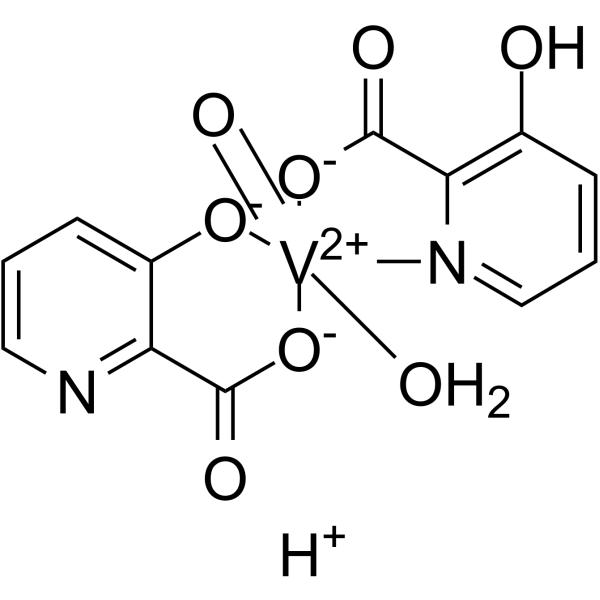
VO-OHPic is a reversible, noncompetitive PTEN inhibitor with an human IC50 value of 46 nM. VO-OHPic inhibits PTEN signaling, activates Akt-GSK3β and Nrf-2/HO-1 pathways, induces apoptosis resistance and elevates IL-10 levels. VO-OHPic inhibits autophagy, ferroptosis and oxidative stress. VO-OHPic can be used for the research of acute myocardial infarction, intervertebral disc degeneration, cardiomyopathy and cancer .
loading...
    loading...
Cat. No.: HY-N6812
CAS No.: 39089-30-0
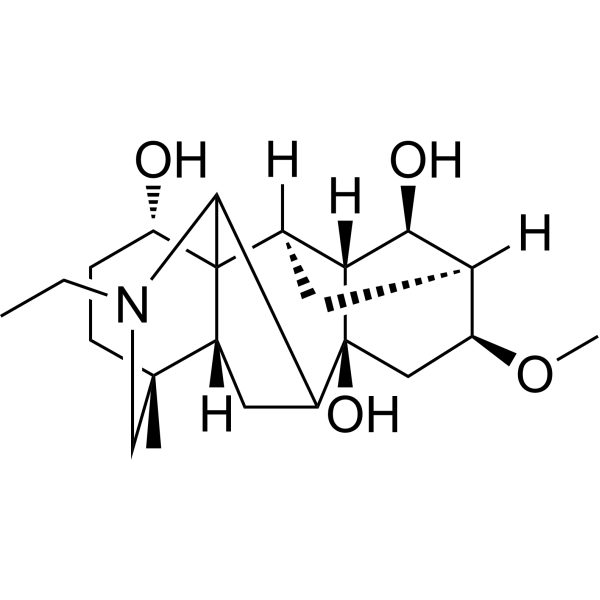
Karacoline is an orally active PPARγ activator and ERK/JNK MAPK inhibitor. Karacoline restricts ROS production, maintains mitochondrial membrane potential, and inhibits pulmonary cell apoptosis. Karacoline inhibits NF-κB pathway activation, reduces acetylation levels of p65 and the expression of MMP14 and MMP9, enhances the expression of type II collagen (collagen II) and aggrecan (aggrecan), and suppresses extracellular matrix degradation. In a mouse model of sepsis-induced acute lung injury, Karacoline alleviates lung injury, inhibits the release of IL-1β, IL-6 and TNF-α, increases the Bcl-2/BAX ratio, and reduces caspase 3 expression. Karacoline can be used in research related to acute lung injury and intervertebral disc degeneration .
loading...
    loading...
Cat. No.: HY-P990498
CAS No.: 3038196-66-3
Synonyms: Anti-RGMC/HFE2 Antibody (DISC-0974); DISC-0974

Target:  

Inhibitory Antibodies

Research Areas:  

Inflammation/Immunology

Selcodebart (Anti-RGMC/HFE2 Antibody (DISC-0974)) is a CHO-expressed human antibody that targets RGMC/HFE2. Selcodebart features a huIgG1 heavy chain and a huκ light chain, with a predicted molecular weight (MW) of 145.66 kDa. For the isotype control of Selcodebart, please refer to Human IgG1 kappa, Isotype Control (HY-P99001).
loading...
    loading...
Cat. No.: HY-19872
CAS No.: 942436-93-3
Target:  

GABA Receptor

Research Areas:  

Neurological Disease

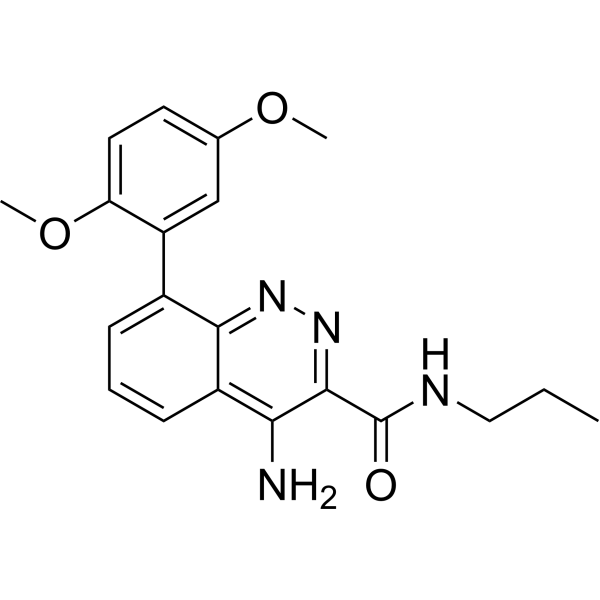
AZD6280 is an orally active, blood-brain barrier-permeable GABAA receptor modulator, with Ki values of 21 nM, 31 nM and 1680 nM against human receptors containing α2, α3 and α5 subtypes, respectively, and subtype-specific Ki values of < 30 nM for α2 and α3 subtypes. AZD6280 selectively potentiates GABAA receptors containing α2/α3 subtypes with higher potency than α1/α5 subtypes, exerts no modulatory effect on receptors containing α1 subtypes, and regulates the tuberoinfundibular dopaminergic pathway. AZD6280 decreases peak saccadic velocity, increases serum and plasma prolactin levels, rescues dendritic abnormalities of cortical neurons induced by DISC1 knockdown. AZD6280 can be used in studies related to anxiety disorders .
loading...
    loading...
Cat. No.: HY-W008003
CAS No.: 615-16-7
Research Areas:  

Infection

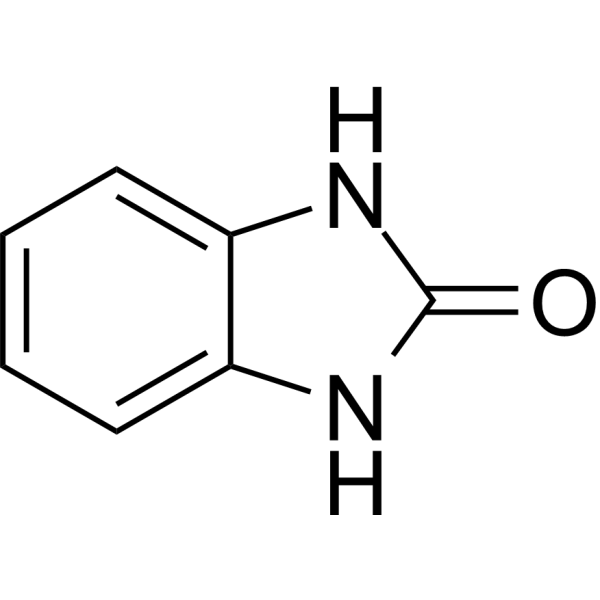
2-Hydroxybenzimidazole is a metabolite of Carbendazim (HY-13582). 2-Hydroxybenzimidazole is produced by the degradation of Carbendazim (HY-13582) by mycobacteria. 2-Hydroxybenzimidazole does not induce CYP1A1 protein expression and does not significantly reduce mortality in mice after influenza virus challenge following intranasal administration. 2-Hydroxybenzimidazole can be used in research on tobacco mosaic virus infection and influenza .
loading...
    loading...
Cat. No.: HY-N16552
CAS No.: 52589-13-6
Embinin is a natural product that can be isolated from Petals of Iris germanica Linnaeous. Embinin can enhance lumbar disc neovascularization and induces apoptosis of nucleus pulposus cells in lumbar disc herniation rats .
loading...
    loading...
Cat. No.: HY-129316
CAS No.: 143209-04-5
Synonyms: CGP 52547
Research Areas:  

Infection

(S)-Dihydroaeruginoic acid is an antibiotic originally isolated from P. fluorescens. It has antimicrobial activity in a disc assay against R. solani, P. ultimum, B. cinera, S. rolfsii, C. gloeosporioide, F. oxysporum, and S. tritici fungi as well as B. subtilis, E. herbicola, and S. albus bacteria when used at a concentration of 200 μg/disc.
loading...
    loading...
Cat. No.: HY-W001084R
CAS No.: 14199-15-6
Methyl 4-hydroxyphenylacetate (Standard) is the analytical standard of Methyl 4-hydroxyphenylacetate (HY-W001084). This product is intended for research and analytical applications. Methyl 4-hydroxyphenylacetate is a compound found in the marine fungus Penicillium oxalicum 0312F1. Methyl 4-hydroxyphenylacetate can be Methyl 4-hydroxyphenylacetate inhibits replication of tobacco mosaic virus (TMV) in Nicotiana tabacum leaf discs. Methyl 4-hydroxyphenylacetate shows inhibitory activity against proliferation of cancer cells. Methyl 4-hydroxyphenylacetate can be used for the researches of TMV infection and cancer .
loading...
    loading...
Cat. No.: HY-D2994
CAS No.: 2434651-49-5
Synonyms: SNAP-MaP555
Target:  

Fluorescent Dye

Research Areas:  

Others

SPY555-BG (SNAP-MaP555) is a cell-permeable fluorescent dye for SNAP-tag labeling of HIV-1 Gag, which enables visualization of HIV-1 intercellular transmission via SNAPf. SPY555-BG relies on irreversible covalent binding to the active-site cysteine of the SNAPf tag fused to HIV-1 Gag .
loading...
    loading...
Cat. No.: HY-129529
CAS No.: 54300-65-1
Purity:  99.25%
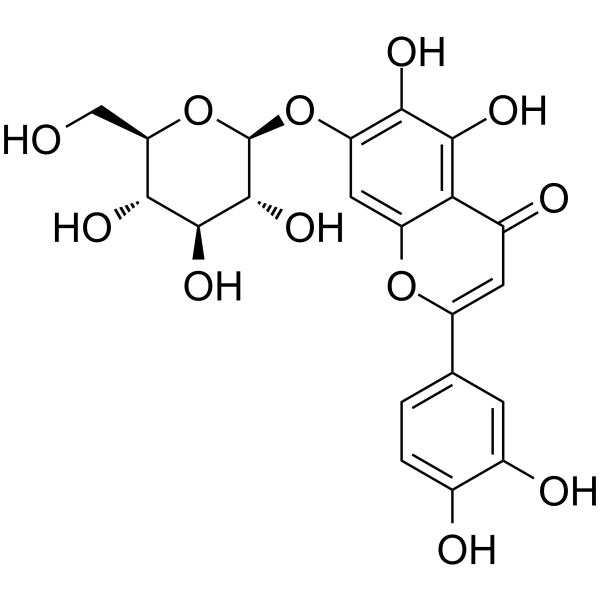
6-Hydroxyluteolin 7-glucoside is a flavone glycoside that can be found in the disc flowers of Tanacetum vulgare .
loading...
    loading...
Cat. No.: HY-P10326
CAS No.: 1416658-51-9
Target:  

Caspase Apoptosis

Research Areas:  

Cancer

Z-ATAD-FMK is an inhibitor of caspase-12. Z-ATAD-FMK is an inhibitor of caspase-12. Z-ATAD-FMK prevents endoplasmic reticulum stress-mediated apoptosis by inhibiting the activity of caspase-12 and reducing the activity of caspase-9 .
loading...
    loading...
Cat. No.: HY-D1626
CAS No.: 53533-50-9
Synonyms: 3,3'-Dioctadecylthiacarbocyanine perchlorate
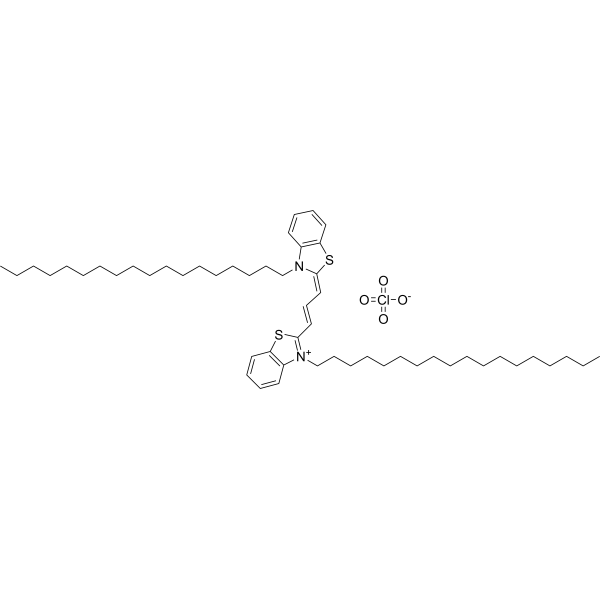
DiSC18(3) is a lipophilic carbocyanine dye for membrane labelling .
loading...
    loading...
Cat. No.: HY-RS03781
Research Areas:  

Others

DISC1 Human Pre-designed siRNA Set A contains three designed siRNAs for DISC1 gene (Human), as well as a negative control, a positive control, and a FAM-labeled negative control.

loading...
    loading...
Cat. No.: HY-RS21555
Research Areas:  

Others

Disc1 Mouse Pre-designed siRNA Set A contains three designed siRNAs for Disc1 gene (Mouse), as well as a negative control, a positive control, and a FAM-labeled negative control.

loading...
    loading...
Cat. No.: HY-RS28073
Research Areas:  

Others

Disc1 Rat Pre-designed siRNA Set A contains three designed siRNAs for Disc1 gene (Rat), as well as a negative control, a positive control, and a FAM-labeled negative control.
loading...
    loading...
Cat. No.: HY-N2259R
CAS No.: 19431-84-6
Synonyms: (+)-Curcumenol (Standard)
Curcumenol (Standard) ((+)-Curcumenol (Standard)) is the analytical standard of Curcumenol (HY-N2259). This product is intended for research and analytical applications. Curcumenol ((+)-Curcumenol) is a natural compound with oral efficacy, exhibiting an IC50 of 12.6 μM and a Ki of 10.8 μM against human CYP3A4. Curcumenol inhibits TNFα-induced phosphorylation/degradation of IκBα, phosphorylation/nuclear translocation of NF-κB p65, as well as the upregulation of MMP3, MMP9, MMP13, TRAF3, IL1RL1, TNFα and IL-1β. Curcumenol suppresses LPS-induced phosphorylation of Akt and p38 MAPK, as well as the production of pro-inflammatory mediators/proteins, and downregulates the SLC7A11/NF-κB/TGF-β pathway. Curcumenol binds to and inhibits the activation of Fyn and Lyn, blocks the function of downstream FcεRI signaling components, and reduces the release of allergic mediators/cytokines. Curcumenol upregulates the expression of KDM6B, and promotes chondrocyte proliferation and cartilage repair. Curcumenol induces ferroptosis and apoptosis, regulates the EMT process, and inhibits tumor growth and metastasis of triple-negative breast cancer. Curcumenol possesses anti-inflammatory, neuroprotective, antioxidant, antitumor, antiviral and hepatoprotective activities. Curcumenol can be used in research related to intervertebral disc degeneration, cancer, inflammation, central nervous system neurodegenerative diseases, allergic reactions and knee osteoarthritis .
loading...
    loading...
Cat. No.: HY-N11756
CAS No.: 163596-98-3
Linearmycin A is a polyene antibiotic that has been found in Streptomyces. It is active against the bacteria S. aureus and E. coli (MICs=3.1 and 1.6 μg/disc, respectively), the fungi S. cerevisiae and C. albicans (MICs=0.1 and 1.6 μg/disc, respectively), and the plant pathogenic fungus A. niger in disc assays (MIC=0.2 μg/disc). Linearmycin A induces lysis and degradation of B. subtilis as a component of Streptomyces Mg1 extract.
loading...
    loading...

