58 Results for "

LO2

" in MedChemExpress (MCE) Product Catalog:
Products (58)

58 Results for "LO2" in MCE Product Catalog:

  • Targets Recommended:
Cat. No.: HY-146114
CAS No.: 2820146-10-7
Research Areas:  

Cancer

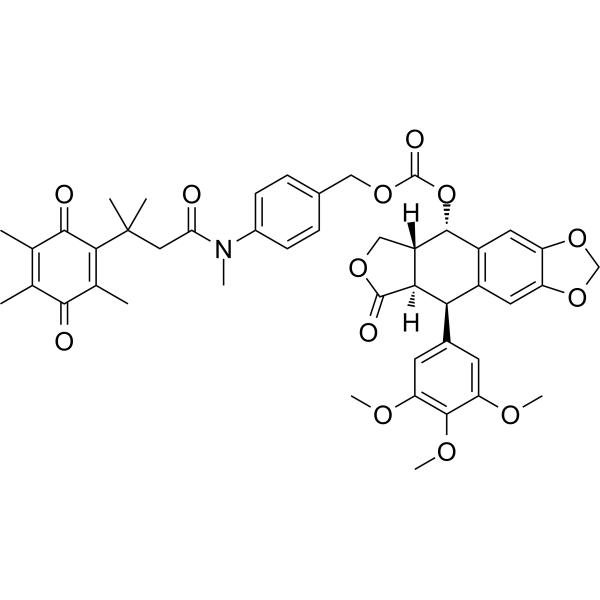
Antitumor agent-67 (compound 3) is a potent antitumor agent. Antitumor agent-67 has highly selective toxicity to cancer cells and lower damage to normal cells. Antitumor agent-67 can be activated by NQO1 and effectively liberate podophyllotoxin and kill tumor cells. Antitumor agent-67 significantly suppresses cancer growth in HepG2 xenograft models without obvious toxicity .
loading...
    loading...
Cat. No.: HY-147698
CAS No.: 2851977-85-8
Research Areas:  

Cancer

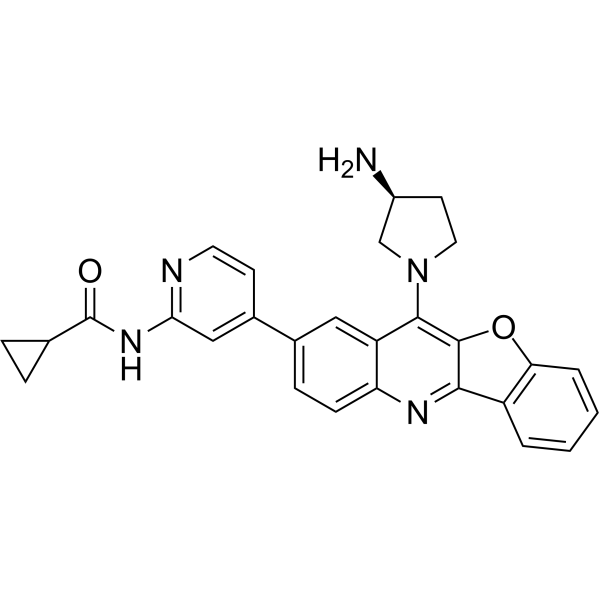
ZLHQ-5f is a dual CDK2 and Topo I inhibitor with an IC50 of 0.145 μM against CDK2/CycA2. ZLHQ-5f arrests the cell cycle in S-phase, triggers apoptosis in HCT116 cells, and has a good safety profile .
loading...
    loading...
Cat. No.: HY-162429
Target:  

Bacterial

Research Areas:  

Infection

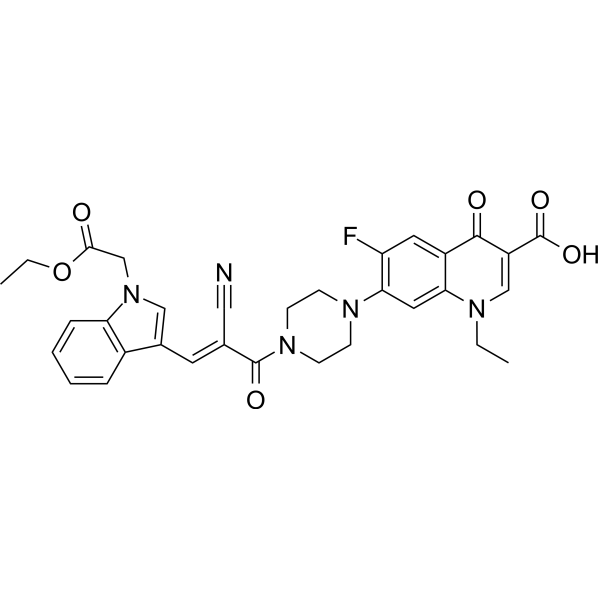
Antibacterial agent 205 (Compound 10d) is a indolylacryloyl-derived oxacins, which exhibits broad antibacterial spectrum with MIC of 0.25-0.5 μg/mL. Antibacterial agent 205 reduces the exopolysaccharide, eliminates the biofilm, and thus attenuates the drug resistance. Antibacterial agent 205 exhibits antibacterial activity through destory of membrane integrity, accumulation of reactive oxygen species ROS, and inhibition of DNA replication .
loading...
    loading...
Cat. No.: HY-162430
Target:  

Bacterial

Research Areas:  

Infection

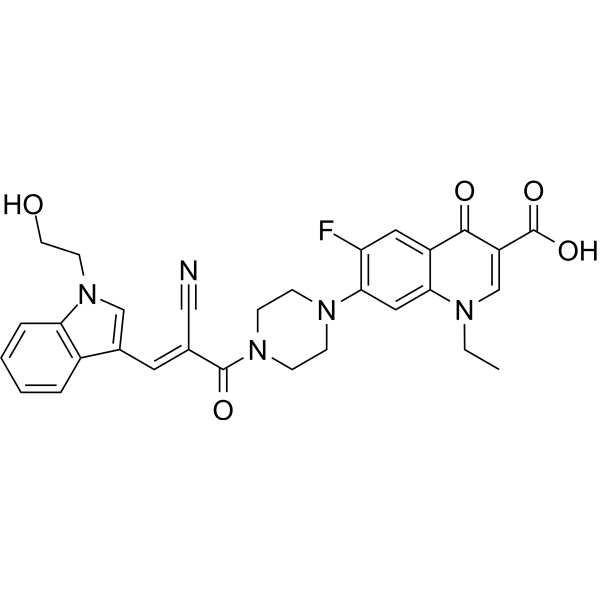
Antibacterial agent 206 (Compound 10e) is a indolylacryloyl-derived oxacins, which exhibits broad antibacterial spectrum with MIC of 0.25-1 μg/mL. Antibacterial agent 206 reduces the exopolysaccharide, eliminates the biofilm, and thus attenuates the drug resistance. Antibacterial agent 206 exhibits antibacterial activity through destory of membrane integrity, accumulation of reactive oxygen species ROS, and inhibition of DNA replication .
loading...
    loading...
Cat. No.: HY-175047
CAS No.: 2848714-91-8
Research Areas:  

Cancer

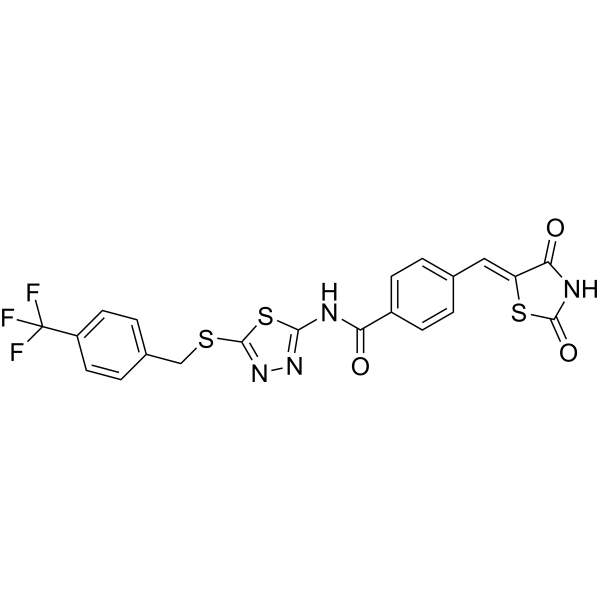
Enpp-1-IN-26 (Compound 4e) is an ENPP1 inhibitor with an IC50 of 0.188 μM. Enpp-1-IN-26 enhances IFN-β expression in vivo by preventing ENPP1 from hydrolyzing cGAMP. Enpp-1-IN-26 can be used in the research of metastatic breast cancer .
loading...
    loading...
Cat. No.: HY-172225
Research Areas:  

Cancer

[Ru(phen)2(HMPIP)](PF6)2 (Compound 6A) is an anti-tumor agent. [Ru(phen)2(HMPIP)](PF6)2 can inhibit the proliferation and migration of HepG2 liver cancer cells, and induce apoptosis, autophagy, cell cycle arrest and ferroptosis of HepG2 liver cancer cells. [Ru(phen)2(HMPIP)](PF6)2 exerts its anti-tumor activity by stimulating immune response to increase CD8+ T cells .
loading...
    loading...
Cat. No.: HY-161281
Target:  

Glycosidase

Research Areas:  

Metabolic Disease

α-Glucosidase-IN-49 (compound C23) is a potent inhibitor of α-Glucosidase, with IC50 of 0.52 μM. α-Glucosidase-IN-49 has oral bioactivity that can reduce blood glucose and improve glucose tolerance in mice .
loading...
    loading...
Cat. No.: HY-161283
CAS No.: 2996864-57-2
Target:  

MAP3K

Research Areas:  

Others

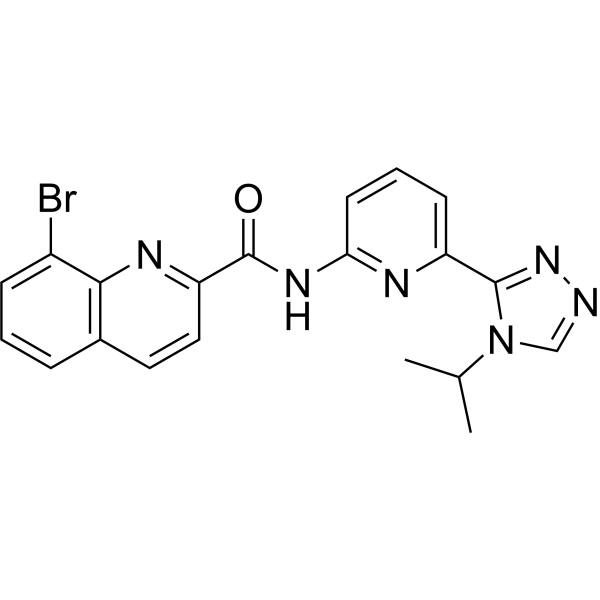
JT21-25 (compound 9h) is a potent and selective inhibitor of apoptosis signal-regulating kinase 1 (ASK1), with IC50 of 5.1 nM .
loading...
    loading...
Cat. No.: HY-176149
Research Areas:  

Cancer

Fluoxetine-Conjugated Platinum(IV) prodrug-1 (Compound 8) is an eEF2K inhibitor. Fluoxetine-Conjugated Platinum(IV) prodrug-1 inhibits cancer cell proliferation, induces DNA damage, cell cycle arrest at S phase and apoptosis. Fluoxetine-Conjugated Platinum(IV) prodrug-1 induces ROS accumulation and mitochondrial dysfunction. Fluoxetine-Conjugated Platinum(IV) prodrug-1 inhibits TNBC cell migration and invasion by inhibiting MMP-2 activity. Fluoxetine-Conjugated Platinum(IV) prodrug-1 induces autophagy in TNBC cells by activating AMPK. Fluoxetine-Conjugated Platinum(IV) prodrug-1 has antitumor activity and activates immunosuppression in the 4T1-Luc mouse model. Fluoxetine-Conjugated Platinum(IV) prodrug-1 can be used in triple-negative breast cancer (TNBC) research .
loading...
    loading...
Cat. No.: HY-149844
CAS No.: 2946669-78-7
Target:  

Fungal

Research Areas:  

Infection

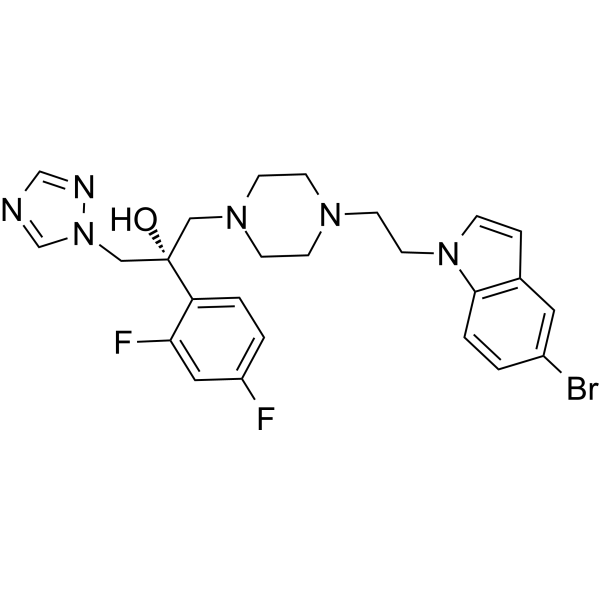
S-F24 is an antifungal agent with excellent broad-spectrum. S-F24 inhibits CYP3A4 with an IC50 value of 0.4 μM. S-F24 displays a good safety profile with high selectivity, low hemolytic effects, and low tendency to induce resistance. S-F24 can be used for research on fungal infections .
loading...
    loading...
Cat. No.: HY-146347
CAS No.: 2376710-36-8
Research Areas:  

Neurological Disease

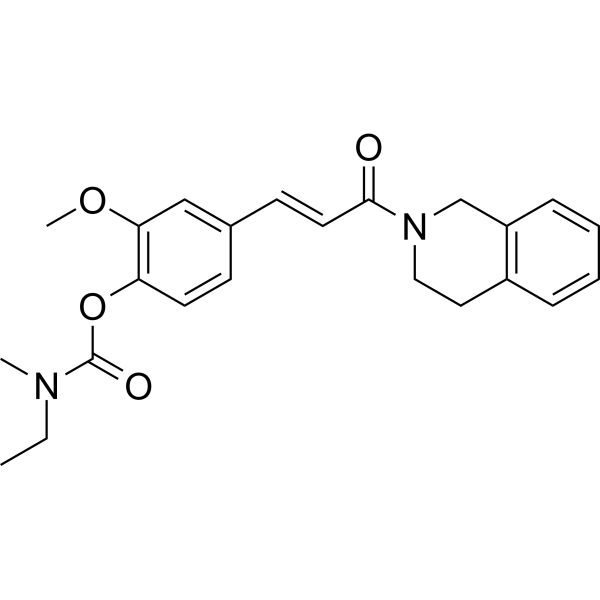
MAO-B-IN-10 (compound 4f) is a potent, selective, BBB-penetrated MAO-B (monoamine oxidase-B) inhibitor, with IC50 of 5.3 μM. MAO-B-IN-10 can inhibit (58.2%) and disaggregate (43.3%) self-mediated Aβ (amyloid β) aggregation. MAO-B-IN-10 can be use for Alzheimer’s disease research .
loading...
    loading...
Cat. No.: HY-173130
Target:  

Glycosidase

α-Glucosidase-IN-86 (Compound A4) is an orally active α-glucosidase inhibitor with an IC50 of 2.72 μM. α-Glucosidase-IN-86 has high safety in mice. α-Glucosidase-IN-86 can reduce fasting blood glucose levels, improve glucose tolerance, regulate blood lipids, and has antioxidant effects in diabetic mice. α-Glucosidase-IN-86 can be used for the research of diabetes .
loading...
    loading...
Cat. No.: HY-179613
CAS No.: 2749600-16-4
D-Leucine amide-CDDO-Me-HMP is a prodrug composed of CDDO-Me (HY-13324) and ligustrazine (HY-N0264). D-Leucine amide-CDDO-Me-HMP can protect against CCl4-induced liver injury. D-Leucine amide-CDDO-Me-HMP can inhibit ROS production, alleviates mitochondrial damage and inhibits cell apoptosis. D-Leucine amide-CDDO-Me-HMP can be used for the research of liver injury .
loading...
    loading...
Cat. No.: HY-P811237
Synonyms: Polyunsaturated fatty acid lipoxygenase ALOX15B, 15-lipoxygenase 2, Arachidonate 15-lipoxygenase B, Arachidonate 15-lipoxygenase type II, Linoleate 13-lipoxygenase 15-LOb, 15-LOX-2, 15-LOX-B, ALOX15B

Host:  

Rabbit

Application:  

WB, ICC/IF

Reactivity:  

Human, Mouse, Rat

loading...
    loading...
Cat. No.: HY-P89640
Synonyms: Polyunsaturated fatty acid lipoxygenase ALOX15B, 15-lipoxygenase 2, Arachidonate 15-lipoxygenase B, Arachidonate 15-lipoxygenase type II, Linoleate 13-lipoxygenase 15-LOb, 15-LOX-2, 15-LOX-B, ALOX15B

Host:  

Mouse

Application:  

WB, ICC/IF, IF-Tissue, IP, ELISA

Reactivity:  

human

loading...
    loading...
Cat. No.: HY-179517
Target:  

ASK1 JNK p38 MAPK

ASK1-IN-12 is an ASK1 inhibitor with an IC50 of 6.3 nM. ASK1-IN-12 inhibits TNF-α-induced activation of the ASK1-p38/JNK pathway. ASK1-IN-12 can reduce free fatty acid-induced cholesterol increase, lipid droplet accumulation and improves hepatocellular steatosis. ASK1-IN-12 can be used for the research of non-alcoholic steatohepatitis (NASH) .
loading...
    loading...
Cat. No.: HY-P11592
Target:  

Bacterial

Research Areas:  

Infection

KIKIKPWWWPKIKIK-NH2 is a β-turn antimicrobial peptide. KIKIKPWWWPKIKIK-NH2 can inhibit bacterial biofilm formation and bind to lipopolysaccharid. KIKIKPWWWPKIKIK-NH2 shows wound-healing ability in mice bacteria-infected full-thickness wound models. KIKIKPWWWPKIKIK-NH2 can be used for the research of bacterial infection .
loading...
    loading...
Cat. No.: HY-184716
NF-κB-IN-21 is a NF-κB signaling pathway inhibitor. NF-κB-IN-21 reduces the phosphorylation levels of IκBα and p65, and inhibits the nuclear translocation of p65. NF-κB-IN-21 downregulates the expression of iNOS, inhibits nitric oxide production, and decreases the levels of pro-inflammatory cytokines TNF-α and IL-6. NF-κB-IN-21 is used in the research of inflammatory diseases .
loading...
    loading...
Cat. No.: HY-107632R
CAS No.: 106740-09-4
GYY4137 (Standard) is the analytical standard of GYY4137 (HY-107632). This product is intended for research and analytical applications. GY4137 is a sustained-release H2S donor possessing vasodilatory, antihypertensive, and anti-inflammatory activities. GY4137 can inhibit cell growth, induce apoptosis, and cause cell cycle arrest by blocKing the STAT3 pathway, demonstrating potent anticancer activity [2] .
loading...
    loading...