51 Results for "

Mevalonate

" in MedChemExpress (MCE) Product Catalog:
Products (51)

51 Results for "Mevalonate" in MCE Product Catalog:

Cat. No.: HY-164091A
Target:  

Endogenous Metabolite

Research Areas:  

Metabolic Disease

Mevalonate 5-phosphate trilithium is a substrate of phosphomevalonate kinase and mevalonate-5-phosphate decarboxylase .
loading...
    loading...
Cat. No.: HY-113037CS
Synonyms: Farnesyl diphosphate-d2 triammonium
Farnesyl pyrophosphate-d2 (Farnesyl diphosphate-d2) triammonium is a deuterium labeled Farnesyl pyrophosphate triammonium (HY-113037C). Farnesyl pyrophosphate ammonium is a metabolic intermediate in the mevalonate (MVA) pathway. It is a TRP channel (TRPM2) agonist that triggers Ca2+ influx and cell death. Farnesyl pyrophosphate ammonium is a key branch substrate for cholesterol synthesis, ubiquinone synthesis, protein farnesylation, and geranylgeranyl pyrophosphate (GGPP) synthesis. Farnesyl pyrophosphate ammonium is used in research on cerebral ischemia, neurodegenerative diseases, pancreatic cancer, inflammation, and autoimmune diseases.
loading...
    loading...
Cat. No.: HY-N12281
CAS No.: 517-43-1
Sennoside is an orally active apoptosis inducer and stimulant laxative, found in Senna (Cassia angustifolia). Sennoside induces overexpression of wild-type p53 and p21/WAF as part of pathways mediating colonic epithelial cell apoptosis. Sennoside stimulates colonic peristalsis, reverses net water, sodium, chloride absorption to secretion and enhances potassium and calcium secretion. Sennoside increases paracellular permeability to small molecules, accelerates colon transit and softens fecal pellets. Sennoside can be used for the research of constipation, melanosis coli, and colorectal cancer .
loading...
    loading...
Cat. No.: HY-107855S
CAS No.: 347840-19-1
Purity:  99.27%
Synonyms: (±)-Mevalonolactone-d7; Mevalolactone-d7
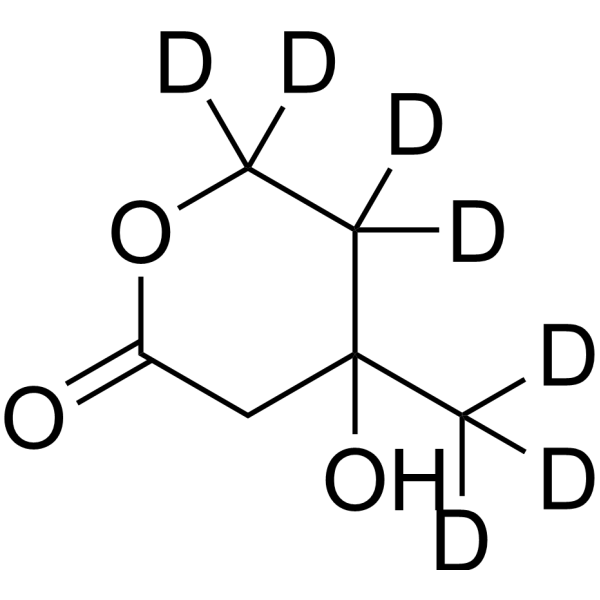
DL-Mevalonolactone-d7 is the deuterium labeled DL-Mevalonolactone. DL-Mevalonolactone ((±)-Mevalonolactone) is the δ-lactone form of mevalonic acid, a precursor in the mevalonate pathway. DL-Mevalonolactone (Mevalonolactone) decreases mitochondrial membrane potential (?Ψm), NAD(P)H content and the capacity to retain Ca2+ in the brain, besides inducing mitochondrial swelling .
loading...
    loading...
Cat. No.: HY-113037B
CAS No.: 372-97-4
Synonyms: Farnesyl diphosphate
Farnesyl pyrophosphate is a metabolic intermediate in the mevalonate (MVA) pathway. It is a TRP channel (TRPM2) agonist that triggers Ca2+ influx and cell death. Farnesyl pyrophosphate is a key branch substrate for cholesterol synthesis, ubiquinone synthesis, protein farnesylation, and geranylgeranyl pyrophosphate (GGPP) synthesis. Farnesyl pyrophosphate is used in research on cerebral ischemia, neurodegenerative diseases, pancreatic cancer, inflammation, and autoimmune diseases.
loading...
    loading...
Cat. No.: HY-19671
CAS No.: 126411-13-0
Synonyms: SR-45023A; SR 9223i; SK&F-99085
Research Areas:  

Cancer

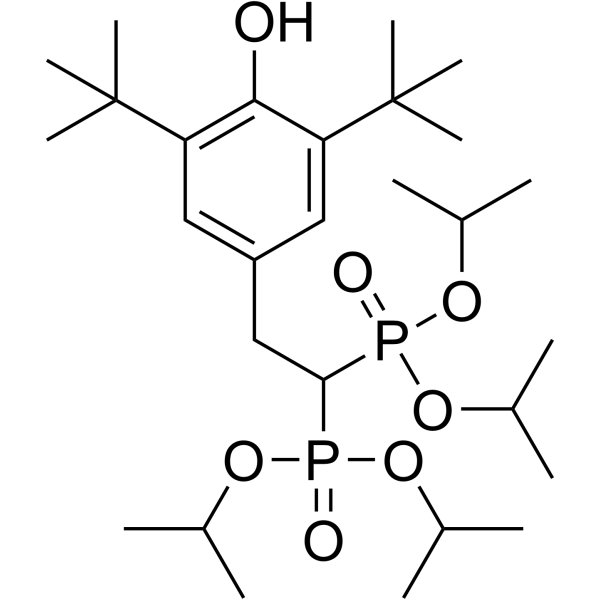
Apomine (SR-45023A) is an orally active antineoplastic agent that inhibits the mevalonate/isoprenoid pathway in cholesterol synthesis. Apomine can accelerate the degradation of 3-hydroxy-3-methylglutaryl-CoA reductase (HMGR). Apomine can also inhibit the growth of various types of cancer cells, including lung cancer, colon cancer, breast cancer, and skin cancer. Apomine is able to induce apoptosis in tumor cell lines derived from leukemia, colon cancer, liver cancer, ovarian cancer, and breast cancer .
loading...
    loading...
Cat. No.: HY-164091
CAS No.: 73566-35-5
Target:  

Endogenous Metabolite

Research Areas:  

Metabolic Disease

Mevalonate 5-phosphate is a substrate of phosphomevalonate kinase and mevalonate-5-phosphate decarboxylase .
loading...
    loading...
Cat. No.: HY-N16439
CAS No.: 128-68-7
Synonyms: Phoenicine
Phenicin (Phoenicine), a microbial metabolite, is an irreversible HMG-CoA reductase (HMGCR) inhibitor. Phenicin can be isolated from cultures of Penicillium phoeniceum and Penicillium rubrum. Phenicin specifically inhibits the conversion of HMG-CoA to mevalonate catalyzed by HMGCR, effectively inhibiting cholesterol synthesis .
loading...
    loading...
Cat. No.: HY-113071C
CAS No.: 32451-23-3
Synonyms: (S)-MVA
(S)-Mevalonic acid is the isomer of Mevalonic acid (HY-113071). Mevalonic acid ((S)-DCIT) is a precursor substance of the mevalonate pathway, which is essential for cell growth and proliferation. Mevalonic acid is effective in inhibiting Simvastatin (HY-17502)-induced decrease in C2C12 cell viability in vitro. Mevalonic acid can be used in studies of myopathy and heart failure .
loading...
    loading...
Cat. No.: HY-W011209R
CAS No.: 7724-76-7
Synonyms: Riboprine (Standard)
N6-Isopentenyladenosine (Riboprine), an RNA modification found in cytokinins, which regulate plant growth/differentiation, and a subset of tRNAs, where it improves the efficiency and accuracy of translation. N6-Isopentenyladenosine, an end product of the mevalonate pathway, is an autophagy inhibitor with an interesting anti-melanoma activity .
loading...
    loading...
Cat. No.: HY-18714
CAS No.: 329059-55-4
Target:  

Others

Research Areas:  

Cancer

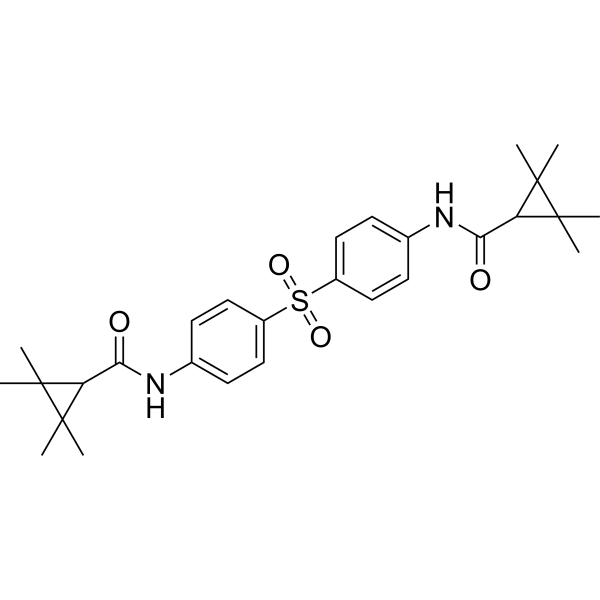
BRD7116 is a cell-non-autonomous inhibitor of leukemic stem cells (LSCs). BRD7116, without directly contacting LSCs, can inhibit LSCs merely by altering the microenvironment. BRD7116 also has any cell-autonomous effects on LSCs and induces transcriptional changes consistent with myeloid differentiation. BRD7116 can be used for the study of leukemia .
loading...
    loading...
Cat. No.: HY-113071AR
CAS No.: 2618458-93-6
Synonyms: MVA lithium salt (Standard)
Mevalonic acid lithium salt (Standard) is the analytical standard of Mevalonic acid lithium salt. This product is intended for research and analytical applications. Mevalonic acid (MVA) lithium salt is a precursor substance of the mevalonate pathway, which is essential for cell growth and proliferation. Mevalonic acid lithium salt is effective in inhibiting Simvastatin (HY-17502)-induced decrease in C2C12 cell viability in vitro. Mevalonic acid lithium salt can be used in studies of myopathy and heart failure .
loading...
    loading...
Cat. No.: HY-N9923
CAS No.: 206440-72-4
2-C-Methyl-D-erythritol 4-phosphate is a metabolite intermediate exclusive to the non-mevalonate MEP pathway, predominantly found in prokaryotes, serving as a precursor for the synthesis of isoprenoids and non-isoprenoids, including vitamins; its absence in humans makes it a promising target for the development of bacterium-specific drugs aimed at treating infectious diseases.
loading...
    loading...
Cat. No.: HY-W011474S
CAS No.: 174873-05-3
Geranylgeraniol-d5 is the deuterium labeled Geranylgeraniol (HY-W011474). Geranylgeraniol is an orally acitve vitamin K2 sub-type, an intermediate of the mevalonate pathway. Geranylgeraniol targets NF-kB signaling pathway and could alleviate LPS-induced microglial inflammation in animal model .
loading...
    loading...
Cat. No.: HY-W415921
CAS No.: 60299-43-6
1-Deoxy-D-threo-pentulose is a derivative of D-xylulose, which has application activity in the study of mevalonate pathway. 1-Deoxy-D-threo-pentulose is widely used to explore the mechanism of cell metabolism. 1-Deoxy-D-threo-pentulose has important experimental value in biochemical research.
loading...
    loading...
Cat. No.: HY-107855S1
CAS No.: 61219-76-9
Synonyms: (±)-Mevalonolactone-d3; Mevalolactone-d3
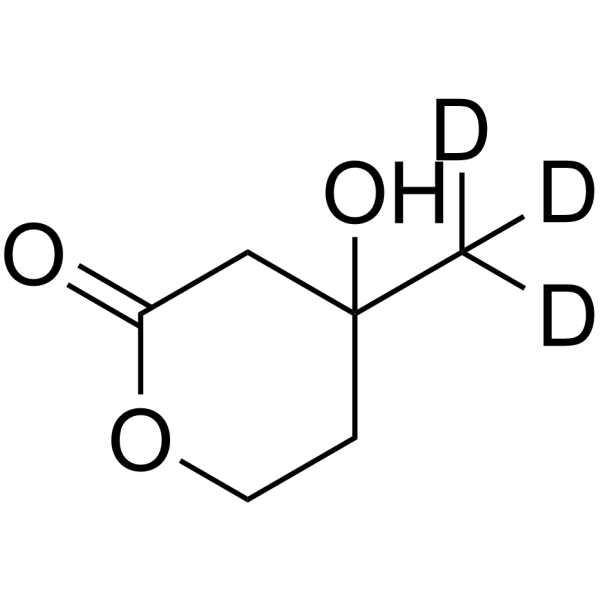
DL-Mevalonolactone-d3 is the deuterium labeled DL-Mevalonolactone . DL-Mevalonolactone ((±)-Mevalonolactone;Mevalolactone) is the δ-lactone form of mevalonic acid, a precursor in the mevalonate pathway. DL-Mevalonolactone (Mevalonolactone) decreases mitochondrial membrane potential ( Ψm), NAD(P)H content and the capacity to retain Ca2+ in the brain, besides inducing mitochondrial swelling .
loading...
    loading...
Cat. No.: HY-151965
CAS No.: 3037689-82-7
Target:  

Parasite

Research Areas:  

Infection

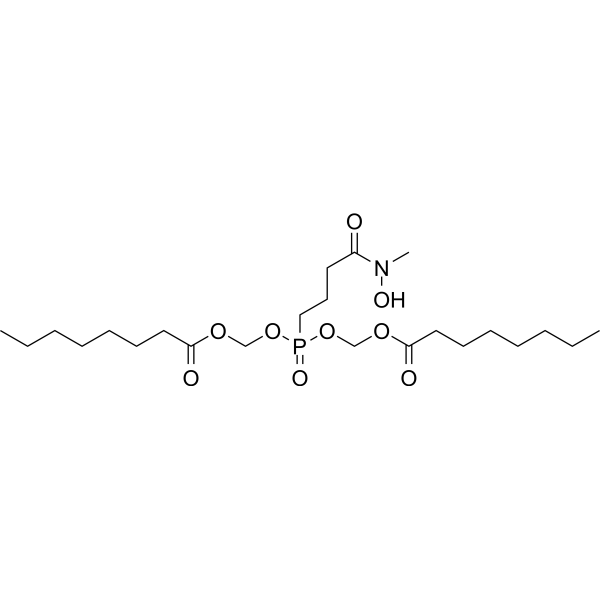
Antimalarial agent 18 is an potent antimalarial agent, based on electronic, highly lipophilic and siderophoric properties. Antimalarial agent 18 belongs to acyloxymethyl series, as a fosmidomycin surrogate, which is potent IspC inhibitor against the non-mevalonate isoprenoid biosynthesis pathway. Antimalarial agent 18 inhibits P. falciparum (IC50=50 nM) and A. baumanii (IC50=390 nM) .
loading...
    loading...
Cat. No.: HY-107855R
CAS No.: 674-26-0
Synonyms: (±)-Mevalonolactone (Standard); Mevalolactone (Standard)
DL-Mevalonolactone (Standard) is the analytical standard of DL-Mevalonolactone. This product is intended for research and analytical applications. DL-Mevalonolactone ((±)-Mevalonolactone;Mevalolactone) is the δ-lactone form of mevalonic acid, a precursor in the mevalonate pathway. DL-Mevalonolactone is orally active against HMGCR mutation and statin caused myopathy . DL-Mevalonolactone induces inflammation and oxidative stress response with decreased mitochondrial membrane potential (MMP) and induces mitochondrial swelling .
loading...
    loading...
Cat. No.: HY-B0515R
CAS No.: 138926-19-9
Synonyms: BM-210955 (Standard); RPR-102289A (Standard)
Research Areas:  

Cancer

Ibandronate Sodium Monohydrate (BM-210955; RPR-102289A) (Standard) is the analytical standard of Ibandronate Sodium Monohydrate (HY-B0515). This product is intended for research and analytical applications. Ibandronate Sodium Monohydrate (BM-210955; RPR-102289A) is an orally active, selective inhibitor of farnesyl pyrophosphate synthase (FPP synthase). Ibandronate Sodium Monohydrate can block the mevalonate pathway to inhibit the isoprenylation modification of small GTPases (such as RAS, RHO family proteins), induce tumor cell apoptosis and inhibit bone resorption. Ibandronate Sodium Monohydrate inhibits tumor cell proliferation (such as ER + breast cancer cells), promotes the expression of the pro-apoptotic gene FAS, and can produce synergistic anti-tumor effects with anti-estrogen compounds. Ibandronate Sodium Monohydrate is used in the study of osteoporosis and bone metastatic tumors (such as breast cancer bone metastasis) .
loading...
    loading...
Cat. No.: HY-N19716
CAS No.: 34427-31-1
Austamide is an indole alkaloid found in cultures of Aspergillus ustus. Austamide undergoes biosynthesis via the classical mevalonate pathway with nonface-selective reverse prenylation of its indole ring .
loading...
    loading...

