96 Results for "

PD-L1 expression

" in MedChemExpress (MCE) Product Catalog:
Products (96)

96 Results for "PD-L1 expression" in MCE Product Catalog:

Cat. No.: HY-P99914
CAS No.: 2559704-23-1
Synonyms: GNC-038
Emfizatamab (GNC-038) is a monoclonal antibody against CD19/CD3E/TNFRSF9/PD-L1. Emfizatamab exhibits antitumor activity, being capable of activating CD3 and 4-1BB signals on T cells, as well as targeting the high expression of CD19 or PD-L1 on tumor cells. Emfizatamab functions as a CD19-specific T cell engager by mediating direct antitumor activity. Emfizatamab can also overcome the inhibition of T cells by PD-L1. Emfizatamab can be used in the research of tumors such as R/R non-Hodgkin lymphoma or acute lymphoblastic leukemia .
loading...
    loading...
Cat. No.: HY-N14001
CAS No.: 2227550-73-2
Naamidine J is an imidazole-type alkaloids discovered in a sponge. Naamidine J inhibits inflammation by binding to the protein CSE1L (KD = 5.41 μM). Namidine J significantly inhibits the expression of pro-inflammatory factors such as TNF-α, IL-1β, and IL-6, and upregulates anti-inflammatory factors such as CD206 and Arg-1. Namidine J inhibits PD-L1 and shows antitumor activity. Namidine J significantly reduces pulmonary tissue edema, inflammatory cell infiltration and cytokine storm in mice. Namidine J can be used for the research on the immune microenvironment of acute lung injury and tumors .
loading...
    loading...
Cat. No.: HY-148511
CAS No.: 147063-80-7
Synonyms: CMP-001
Vidutolimod (CMP-001) is a virus-like particle containing a TLR9 activator . Vidutolimod induces human peripheral blood mononuclear cells to secrete IFNα, and upregulates the gene expression of CXCL10, PDL1, IDO and CD80. Vidutolimod activates TLR9, which in turn triggers plasmacytoid dendritic cell activation, production of IFNγ and TNFα, induction of CXCL10, and recruitment of antitumor T cells. Vidutolimod causes influenza-like symptoms, hypotension and tumor regression, and its activity depends on the presence of anti- antibodies. Vidutolimod modulates monocyte function, promotes CD4 T cell proliferation, and activates multiple immune cell types in an environment with anti-Qβ antibodies. Vidutolimod prolongs the survival of tumor-bearing mice. Vidutolimod is used in research related to advanced melanoma, head and neck squamous cell carcinoma, and advanced non-small cell lung cancer .
loading...
    loading...
Cat. No.: HY-156850
CAS No.: 2247608-27-9
Purity:  98.55%
Target:  

HDAC NF-κB

Research Areas:  

Cancer

ITF 3756 is a selective, orally active HDAC6 inhibitor. ITF 3756 antagonizes TNF-α-induced activation of the NF-κB pathway. ITF 3756 reduces PD-L1 expression on human monocytes and CD8 + T cells, and exhibits antitumor activity. ITF 3756 can be used in colon cancer-related research .
loading...
    loading...
Cat. No.: HY-144501
CAS No.: 2230218-36-5
Purity:  98.14%
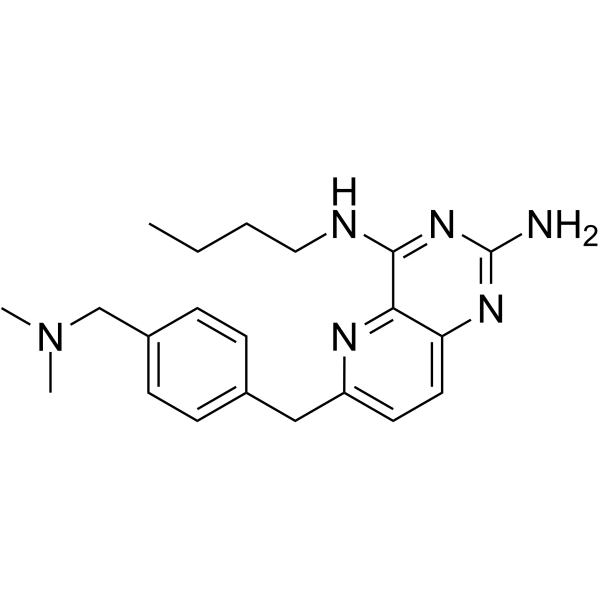
D18 is an immune modulator. D18 acts as a TLR7/8 dual agonist (EC50 = 24 nM for hTLR7 and 10 nM for hTLR8, respectively). D18 increases PD-L1 expression through epigenetic regulation, thus sensitizing tumors to PD-1/PD-L1 blockade. D18 is a ADC cytotoxin uesd for the systhesis of ADC HE-S2 (HY-144497). D18 has strong immune activation and anti-tumor activity. D18 commonly used in cancer research, such as colon cancer .
loading...
    loading...
Cat. No.: HY-N8389
CAS No.: 489-41-8
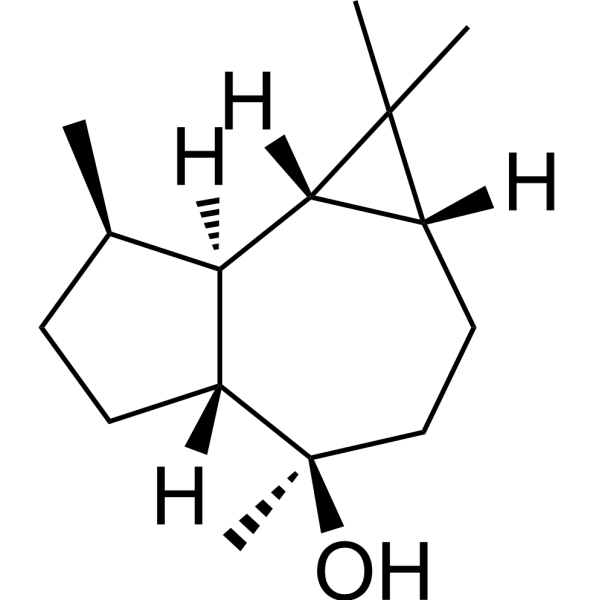
Globulol is a terpenoid metabolite and Antimicrobial agent. Globulol can be isolated from Alpinia oxyphylla Miq. Globulol binds to PAK4, reduces the expression level of PAK4 in cancer cells, decreases the phosphorylation of AKT, and downregulates the expressions of STAT3, phosphorylated STAT3, and PD-L1. Globulol promotes the secretion of CCL4 by cancer cells. Globulol reduces the viability and proliferation ability of cancer cells, induces G0/G1 cell cycle arrest and Apoptosis in cancer cells, and inhibits cancer cell migration and the integrity of 3D tumor spheres. Globulol enhances the relevant effects of anti-PD-1 agents in the cancer cell microenvironment. Globulol exhibits anticancer activity against liver cancer. Globulol inhibits the mycelial growth of phytopathogenic fungi and the growth of phytopathogenic bacteria. Globulol can be used in studies related to hepatocellular carcinoma .
loading...
    loading...
Cat. No.: HY-P3342
CAS No.: 289056-32-2
Target:  

PD-1/PD-L1 Apoptosis

Research Areas:  

Inflammation/Immunology

[D-Leu-4]-OB3 inhibits expressions of pro-inflammatory, proliferative and metastatic genes and PD-L1 expression. [D-Leu-4]-OB3 stimulates expression of pro-apoptotic genes .
loading...
    loading...
Cat. No.: HY-P991193

Target:  

TNF Receptor

Research Areas:  

Cancer

NGM-438 is a humanized monoclonal antibody antagonist of LAIR1, with a Ka of 0.26 nM for human LAIR1 and 4.28 nM for cynomolgus monkey LAIR1. NGM-438 blocks the binding of LAIR1 to its Collagen ligand and antagonizes the Collagen-induced LAIR1 signaling pathway. NGM-438 reverses FcγR signaling inhibition in myeloid cells, induces dendritic cells to secrete TNFα, promotes T cell proliferation, and triggers myeloid inflammation and allogeneic T cell responses. NGM-438 sensitizes refractory mouse lung cancer to PD-1 blockade, increases the content of intratumoral CD8 + T cells and the expression of inflammatory genes. NGM-438 is applicable to research related to solid tumors, refractory solid tumors and non-small cell lung cancer .
loading...
    loading...
Cat. No.: HY-155847
CAS No.: 3052262-64-0
Purity:  99.80%
Target:  

Phosphatase PD-1/PD-L1

Research Areas:  

Inflammation/Immunology Cancer

LYP-IN-3 is a selective, orally active and reversible lymphoid-tyrosine phosphatase (LYP) inhibitor (IC50 = 2.55 μM, Ki = 0.93 μM). D34 exhibits high selectivity of PTP1B, PTPN12, PTPN5 and SSH2. LYP-IN-3 regulates the T-cell receptor (TCR) signaling by specifically inhibiting LYP. LYP-IN-3 does not significantly inhibit MC38 cell viability; its anti-tumor effect stems from immune regulation. LYP-IN-3 can significantly upregulate PD-L1 or PD-1 expression in different immune cells. LYP-IN-3 facilitates T-cell infiltration and enhances T-cell functions. LYP-IN-3 synergizes with PD-L1 blockade can significantly improve colorectal tumor regression. LYP-IN-3 can be used for the study of colorectal cancer .
loading...
    loading...
Cat. No.: HY-155848
Purity:  98.09%
Target:  

Phosphatase

Research Areas:  

Cancer

LYP-IN-4 (compound D14) is a reversible and selective inhibitor of lymphotyrosine phosphatase (LYP) (Ki=1.34 μM, IC50=3.52μM). LYP-IN-4 inhibits LYP to regulate TCR signaling, up-regulates PD-1/PD-L1 expression, and enhance anti-tumor immunity. LYP-IN-4 activates T cells and inhibits M2 macrophage polarization, inhibits tumor growth in MC38 isogenic mouse models.
loading...
    loading...
Cat. No.: HY-172200
CAS No.: 2834094-36-7
Target:  

PD-1/PD-L1 HDAC

Research Areas:  

Inflammation/Immunology Cancer

PD-L1/HDAC6-IN-1 is an orally active dual inhibitor of PD-L1 and HDAC6, with IC50 values of 26.8 nM and 78 nM, respectively. PD-L1/HDAC6-IN-1 binds to human and murine PD-L1 proteins with high affinity, while it reduces STAT3 phosphorylation and downregulates PD-L1 expression by inhibiting HDAC6, thus blocking the PD-1/PD-L1 interaction. PD-L1/HDAC6-IN-1 exhibits potent anti-tumor activity in a mouse melanoma model. PD-L1/HDAC6-IN-1 is suitable for research on tumor immune regulation related to melanoma .
loading...
    loading...
Cat. No.: HY-P99844
CAS No.: 2307144-64-3
Synonyms: ALPN-202; CD80 vIgD-Fc

Target:  

CTLA-4

Research Areas:  

Cancer

Davoceticept (ALPN-202; CD80 vIgD-Fc) is a variant CD80 vIgD-Fc fusion protein targeting CTLA-4 and PD-L1. Davoceticept consists of the (1-107) fragment of CD80 linked to IGHG1 Fc via a peptidyl linker. The expression system of Davoceticept is usually CHO (Chinese Hamster Ovary) cells .
loading...
    loading...
Cat. No.: HY-174811
Research Areas:  

Cancer

PROTAC BRD4 Degrader-33 is a BRD4 PROTAC degrader that recruits CRBN. PROTAC BRD4 Degrader-33 downregulates PD-L1 expression, inhibits tumor cell proliferation and tumor growth in mice by inducing ubiquitination and proteasomal degradation of BRD4. PROTAC BRD4 Degrader-33 can be used in the research of breast cancer .
loading...
    loading...
Cat. No.: HY-173070
CAS No.: 2275612-76-3
TLR7 agonist 29 (Compound 1) is the agonist for TLR7 with an EC50 of 5.2 nM for human TLR7 (EC50 for mouse TLR7 is 48.2 nM). TLR7 agonist 29 activates bone marrow-derived macrophages (BMDMs), stimulates myeloid cells in the tumor microenvironment, promotes the expression of PD-L1, CD86 and IFN-α. TLR7 agonist 29 can be used as payload for synthesis of ADC .
loading...
    loading...
Cat. No.: HY-178193A
CAS No.: 122981-77-5
Research Areas:  

Cancer

(Rac)-Chem-0199 is the racemic mixture of Chem-0199 (HY-178193). Chem-0199 is an Adipocyte Enhancer-Binding Protein 1 (AEBP1) inhibitor. Chem-0199 can disrupt the interaction between AEBP1 and CKAP4, thereby enhances antitumor immunity. Chem-0199 can inhibit Akt phosphorylation (p-Akt) and downregulates PD-L1 expression. Chem-0199 can be used for the research of cancer, such as colon cancer .
loading...
    loading...
Cat. No.: HY-179557
CAS No.: 2463893-46-9
iMQT_020 is a selective allosteric SLC1A5_var inhibitor. iMQT_020 disrupts the trimeric assembly of SLC1A5_var, causing metabolic crisis in cancer cells and selectively suppressing their growth. iMQT_020 reduces glutamine anaplerosis and oxidative phosphorylation, resulting in a broad disruption of cancer metabolism. iMQT_020 reduces GSH levels and increases cellular ROS and mitochondrial ROS. iMQT_020 induces apoptosis and ferroptosis. iMQT_020 can epigenetically upregulate PD-L1 expression. iMQT_020 can be used for the study of pancreatic cancer, lung cancer, and colon cancer .
loading...
    loading...
Cat. No.: HY-145769
CAS No.: 2547100-02-5
Target:  

PD-1/PD-L1

Research Areas:  

Cancer

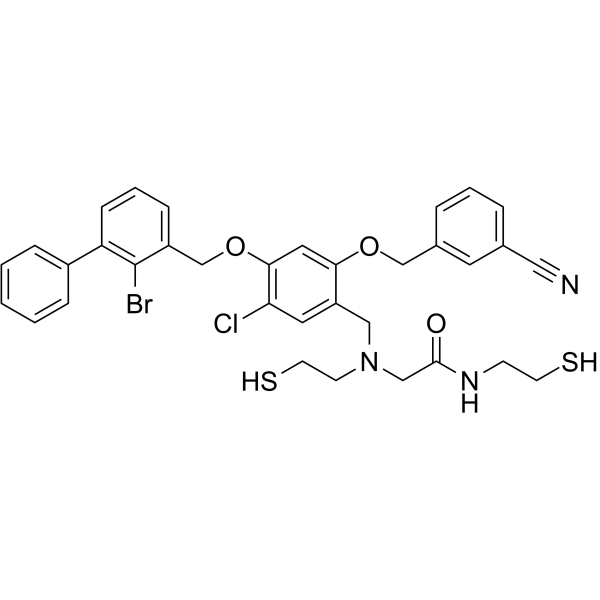
N2S2-CBMBC, an N2S2 bromo-benzyl ether derivative, acts as a ligand and use 99mTc-labelled complexes 99mTc-N2S2-CBMBC can be used as an imaging agent to be applied to the aspect of detecting PD-L1 expression, realize the real-time, comprehensive and convenient detection of the PD-L1 level of tumors, and overcome the defects of an immunohistochemical method .
loading...
    loading...
Cat. No.: HY-175604
CAS No.: 1061105-16-5
Target:  

PD-1/PD-L1

Research Areas:  

Cancer

SCL-1 is an orally active anti-PD-1/PD-L1 inhibitor. SCL-1 can inhibit PD-1/PD-L1 binding. SCL-1 increases T cells, B cells and natural killer cells. SCL-1 exerts strong tumor growth inhibitory effects that were mediated by effector T-cell induction inside tumors and the up-regulated expression of long non-coding RNAs as neoantigens leading to cytotoxic T lymphocyte activation. SCL-1 can be used for the research of cancer, such as triple-negative breast cancer .
loading...
    loading...
Cat. No.: HY-169363
Research Areas:  

Cancer

PD-L1 degrader-2 (Compound B3) is an orally active AUTAC degrader, that degrades PD-L1 through autophagy-lysosome pathway with a DC50 of 0.5 μM. PD-L1 degrader-2 exhibits inhibitory activity against PD-1/PD-L1 interaction with an IC50 of 22.8 nM. PD-L1 degrader-2 upregulates the expressions of Atg9b, Lamp1 and Mitf, and activates the autophagy lysosome system. PD-L1 degrader- exhibits antitumor efficacy in CT26 mouse model . (Pink: autophagy-lysosome activator (HY-159894); Black: linker (HY-W015088); Blue: PD-L1 ligand (HY-169365))
loading...
    loading...
Cat. No.: HY-175014
Research Areas:  

Cancer

LGT-1 is a PD-L1 ligand. LGT-1 labeled with 18F has an excellent specific uptake in B16-F10 tumor cells, and shows a high tumor uptake but a low liver uptake with good stability in B16-F10 tumor-bearing mice model. LGT-1 can be used as a radiotracer for PET imaging of PD-L1 expression in tumors .
loading...
    loading...