10039 Results for "

Selectivity

" in MedChemExpress (MCE) Product Catalog:
Products (10039)

10039 Results for "Selectivity" in MCE Product Catalog:

202
202 Cited Publications
Cat. No.: HY-50846
CAS No.: 942183-80-4
Target:  

ERK

Research Areas:  

Neurological Disease Cancer

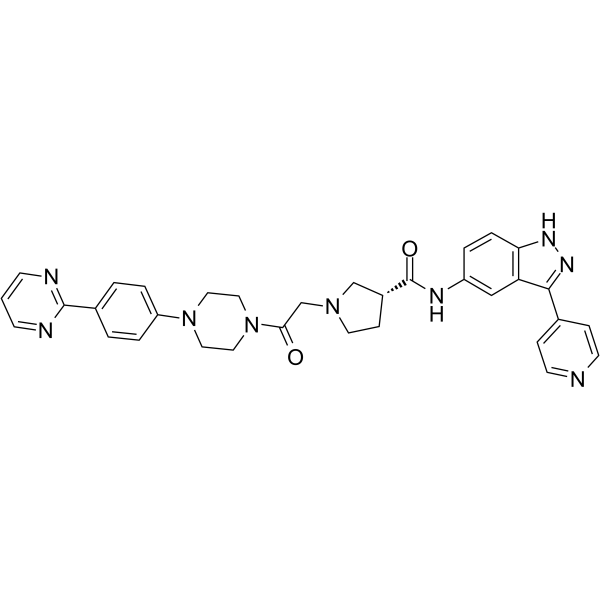
SCH772984 is a highly selective and ATP-competitive ERK inhibitor, with IC50s of 4 and 1 nM for ERK1 and ERK2, respectively. SCH772984 has antitumor activity in MAPK inhibitor-naive and MAPK inhibitor-resistant cells containing BRAF or RAS mutations .
loading...
    loading...
200
200 Cited Publications
Cat. No.: HY-15979A
CAS No.: 130964-39-5
Target:  

PKA Autophagy

Research Areas:  

Others

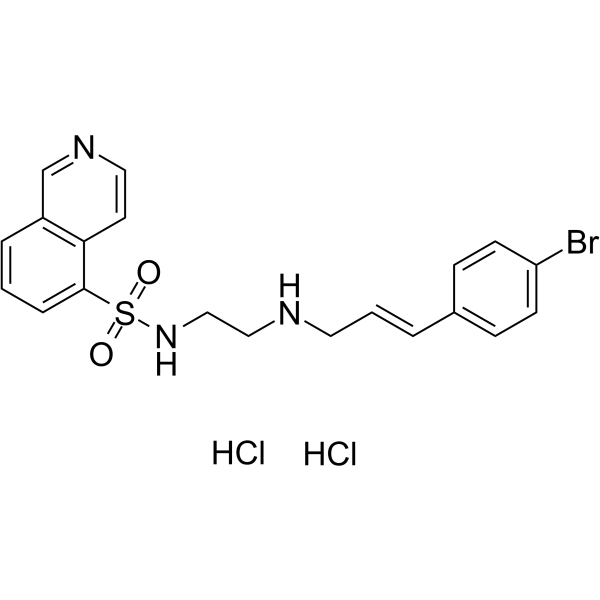
H-89 dihydrochloride is a potent and selective inhibitor of protein kinase A (PKA) with an IC50 of 48 nM and has weak inhibition on PKG, PKC, Casein Kinase.
loading...
    loading...
200
200 Cited Publications
Cat. No.: HY-15979
CAS No.: 127243-85-0
Target:  

PKA Autophagy

Research Areas:  

Neurological Disease

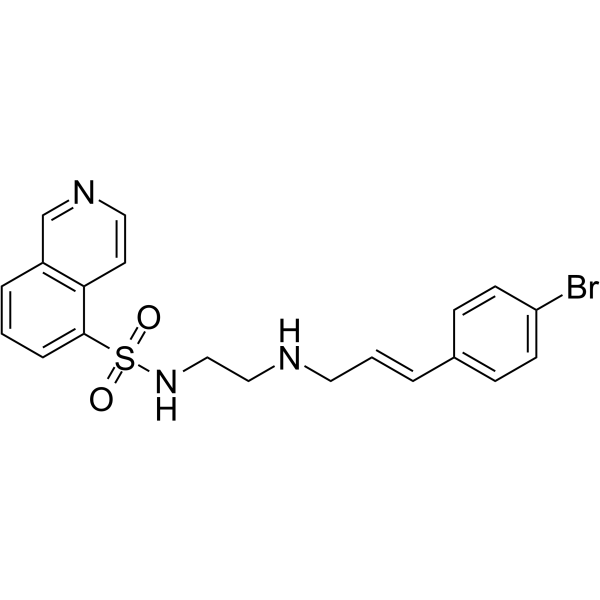
H-89 is a potent and selective inhibitor of cyclic AMP-dependent protein kinase (protein kinase A) with IC50 of 48 nM and has weak inhibition on PKG, PKC, Casein Kinase, and others kinases.
loading...
    loading...
197
197 Cited Publications
Cat. No.: HY-17386A
CAS No.: 302543-62-0
Synonyms: BRL 49653 hydrochloride
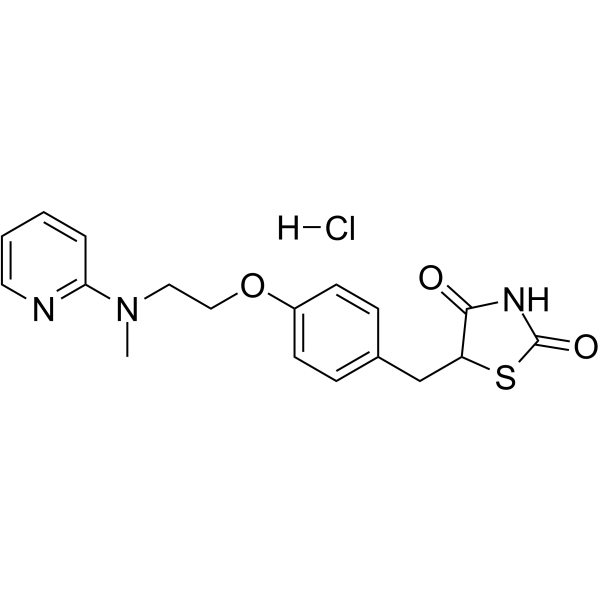
Rosiglitazone (BRL 49653) hydrochloride is an orally active selective PPARγ agonist (EC50: 60 nM, Kd: 40 nM). Rosiglitazone hydrochloride is a TRPC5 activator (EC50: 30 μM) and TRPM3 inhibitor. Rosiglitazone hydrochloride can be used in the research of obesity and diabetes, senescence, ovarian cancer .
loading...
    loading...
194
194 Cited Publications
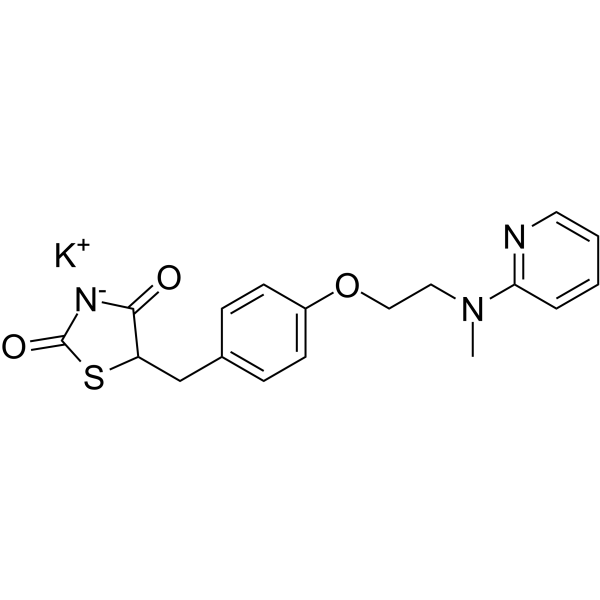
Cat. No.: HY-17386B
CAS No.: 316371-84-3
Synonyms: BRL 49653 potassium
Rosiglitazone (BRL 49653) potassium is an orally active selective PPARγ agonist (EC50: 60 nM, Kd: 40 nM). Rosiglitazone potassium is a TRPC5 activator (EC50: 30 μM) and TRPM3 inhibitor. Rosiglitazone potassium can be used in the research of obesity and diabetes, senescence, ovarian cancer .
loading...
    loading...
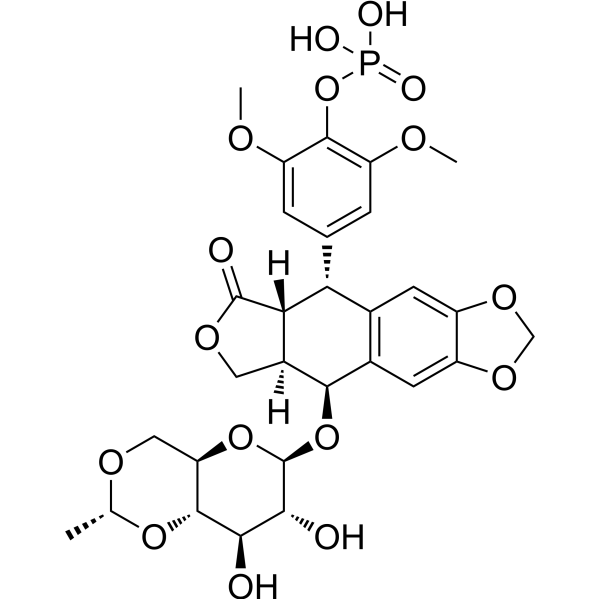
191
191 Cited Publications
Cat. No.: HY-13630
CAS No.: 117091-64-2
Purity:  99.28%
Synonyms: BMY-40481
Etoposide phosphate (BMY-40481) is a potent anti-cancer chemotherapy agent and a selective topoisomerase II inhibitor to prevent re-ligation of DNA strands. Etoposide phosphate is the phosphate ester proagent of etoposide and is considered as active equivalent to Etoposide. Etoposide phosphate induces cell cycle arrest, apoptosis, and autophagy.
loading...
    loading...
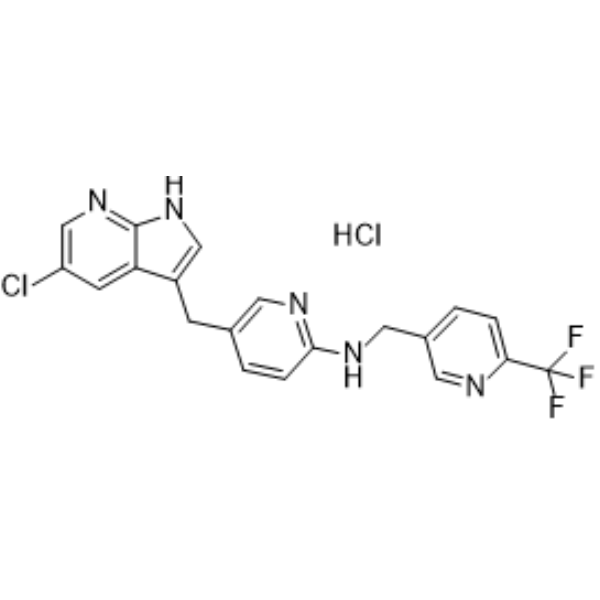
171
171 Cited Publications
Cat. No.: HY-16749A
CAS No.: 2040295-03-0
Synonyms: PLX-3397 hydrochloride
Target:  

c-Fms c-Kit Apoptosis

Research Areas:  

Cancer

Pexidartinib hydrochloride (PLX-3397 hydrochloride) is a potent, orally active, selective, and ATP-competitive colony stimulating factor 1 receptor (CSF1R or M-CSFR) and c-Kit inhibitor, with IC50s of 20 and 10 nM, respectively. Pexidartinib hydrochloride exhibits 10- to 100-fold selectivity for c-Kit and CSF1R over other related kinases. Pexidartinib hydrochloride induces cell apoptosis and has anti-cancer activity .
loading...
    loading...
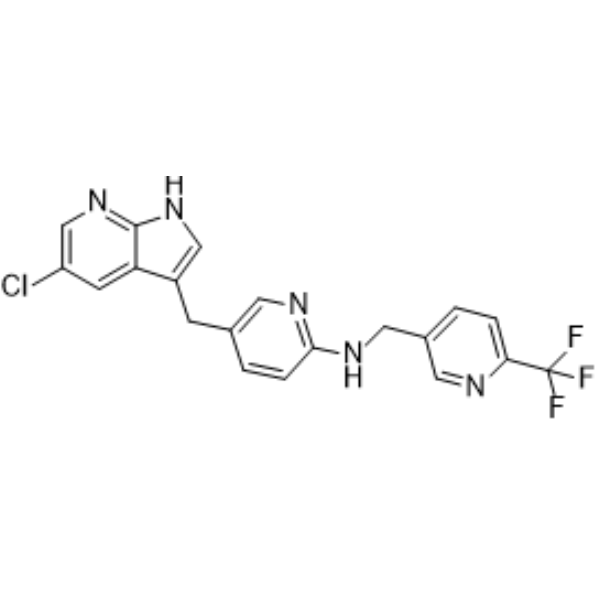
171
171 Cited Publications
Cat. No.: HY-16749
CAS No.: 1029044-16-3
Synonyms: PLX-3397
Target:  

c-Fms c-Kit Apoptosis

Research Areas:  

Cancer

Pexidartinib (PLX-3397) is a potent, orally active, selective, and ATP-competitive colony stimulating factor 1 receptor (CSF1R or M-CSFR) and c-Kit inhibitor, with IC50s of 20 and 10 nM, respectively. Pexidartinib (PLX-3397) exhibits 10- to 100-fold selectivity for c-Kit and CSF1R over other related kinases. Pexidartinib (PLX-3397) induces cell apoptosis and has anti-tumor activity. Pexidartinib has limited permeability to the blood-brain barrier, primarily through ABCB1 .
loading...
    loading...
168
168 Cited Publications
Cat. No.: HY-112693
CAS No.: 941987-60-6
Purity:  99.78%
Target:  

STING

Research Areas:  

Inflammation/Immunology

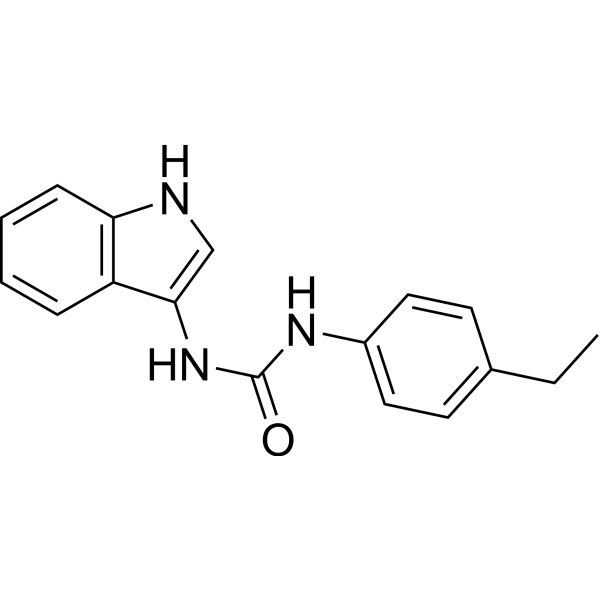
H-151 is a potent, selective and covalent antagonist of STING that has noteworthy inhibitory activity both in cells and in vivo. H-151 reduces TBK1 phosphorylation and suppresses STING palmitoylation. H-151 can be used for the research of autoinflammatory disease .
loading...
    loading...
159
159 Cited Publications
Cat. No.: HY-18738
CAS No.: 5108-96-3
Synonyms: Ammonium pyrrolidinedithiocarbamate; PDTC ammonium; APDC
Target:  

NF-κB

Research Areas:  

Inflammation/Immunology Cancer

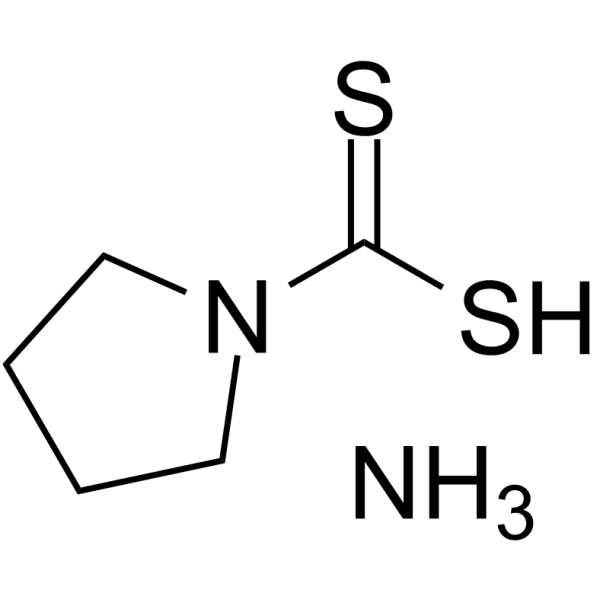
Pyrrolidinedithiocarbamate ammonium (Ammonium pyrrolidinedithiocarbamate) is a selective and blood-brain barrier (BBB) permeable NF-κB inhibitor.
loading...
    loading...
139
139 Cited Publications
Cat. No.: HY-10997
CAS No.: 936563-96-1
Purity:  99.97%
Synonyms: PCI-32765
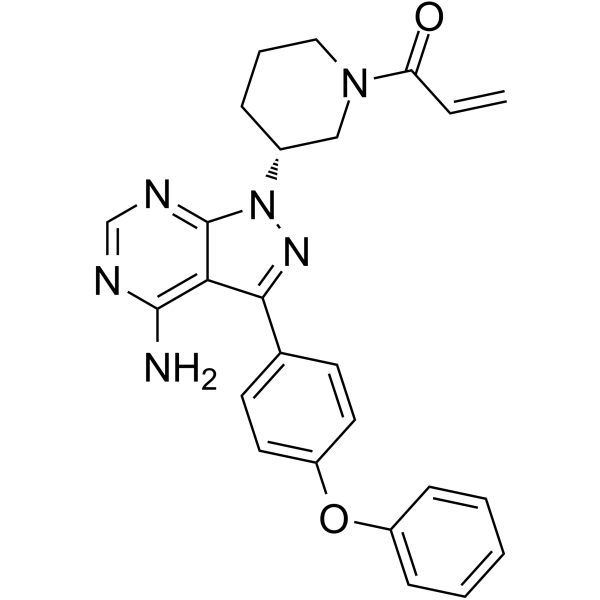
Ibrutinib (PCI-32765) is a selective, irreversible Btk inhibitor with an IC50 of 0.5 nM .
loading...
    loading...
138
138 Cited Publications
Cat. No.: HY-13434
CAS No.: 56092-81-0
Purity:  99.27%
Synonyms: SQ23377
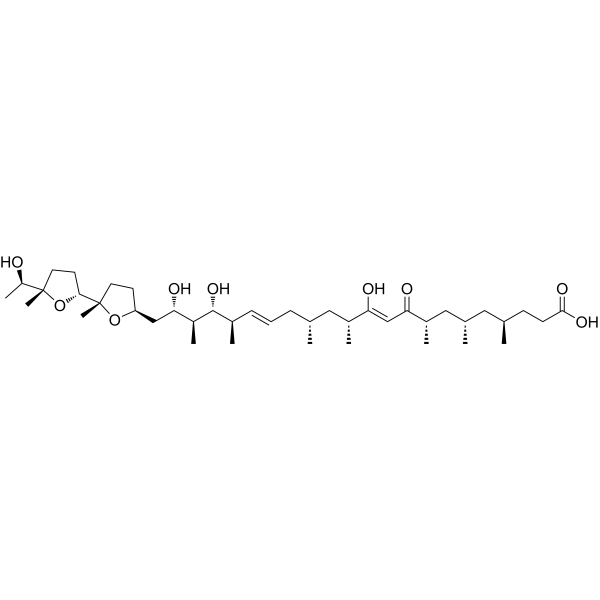
Ionomycin (SQ23377) is a potent, selective calcium ionophore and an antibiotic produced by Streptomyces conglobatus. Ionomycin (SQ23377) is highly specific for divalent cations (Ca>Mg>Sr=Ba). Ionomycin (SQ23377) promotes apoptosis. Ionomycin also induces the activation of protein kinase C (PKC) .
loading...
    loading...
135
135 Cited Publications
Cat. No.: HY-P1410
CAS No.: 1209500-46-8
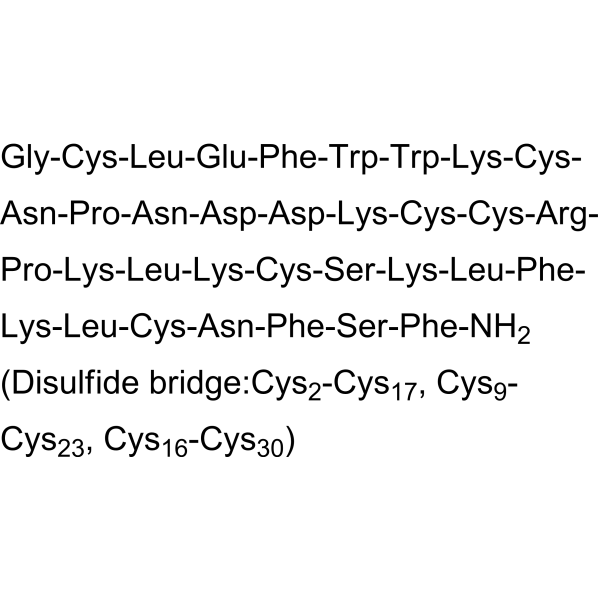
GsMTx4 is a spider venom peptide that selectively inhibits cationic-permeable mechanosensitive channels (MSCs) belonging to the Piezo and TRP channel families. GsMTx4 also blocks cation-selective stretch-activated channels (SACs) , attenuates lysophosphatidylcholine (LPC)-induced astrocyte toxicity and microglial reactivity. GsMTx4 is an important pharmacological tool for identifying the role of these excitatory MSCs in normal physiology and pathology .
loading...
    loading...
135
135 Cited Publications
Cat. No.: HY-P1410A
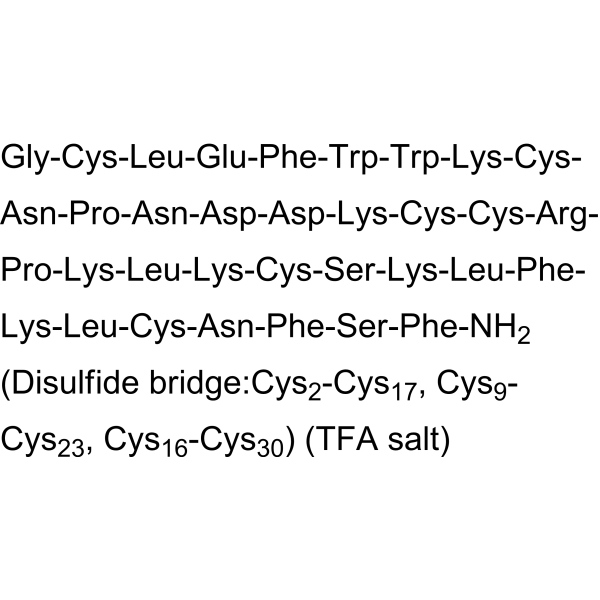
GsMTx4 TFA is a spider venom peptide that selectively inhibits cationic-permeable mechanosensitive channels (MSCs) belonging to the Piezo and TRP channel families. GsMTx4 TFA also blocks cation-selective stretch-activated channels (SACs) , attenuates lysophosphatidylcholine (LPC)-induced astrocyte toxicity and microglial reactivity. GsMTx4 TFA is an important pharmacological tool for identifying the role of these excitatory MSCs in normal physiology and pathology .
loading...
    loading...
128
128 Cited Publications
Cat. No.: HY-16297A
CAS No.: 1231929-97-7
Synonyms: LY2835219
Target:  

CDK

Research Areas:  

Neurological Disease Cancer

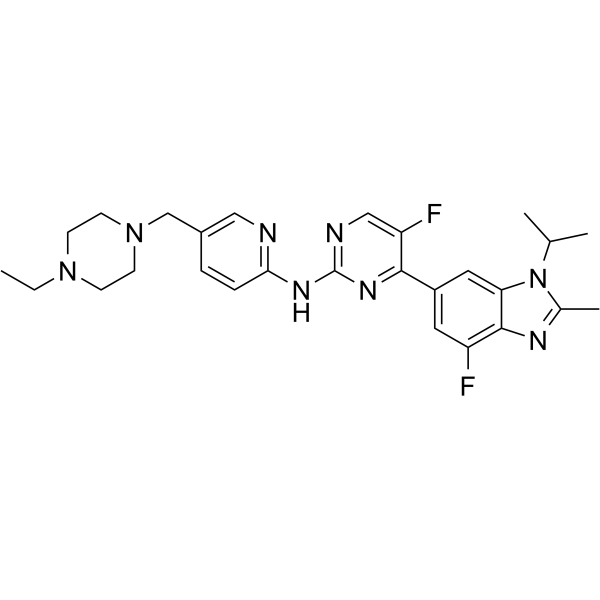
Abemaciclib (LY2835219) is a selective and BBB-permeable CDK4/6 inhibitor with IC50 values of 2 nM and 10 nM for CDK4 and CDK6, respectively.
loading...
    loading...
128
128 Cited Publications
Cat. No.: HY-16297
CAS No.: 1231930-82-7
Synonyms: LY2835219 methanesulfonate
Target:  

CDK

Research Areas:  

Cancer

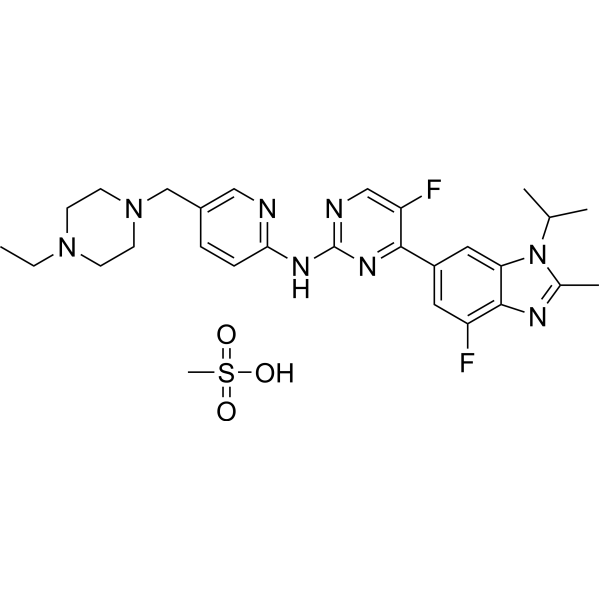
Abemaciclib methanesulfonate (LY2835219 methanesulfonate) is a selective and BBB-permeable CDK4/6 inhibitor with IC50s of 2 nM and 10 nM for CDK4 and CDK6, respectively .
loading...
    loading...
127
127 Cited Publications
Cat. No.: HY-112906
CAS No.: 314054-00-7
Purity:  99.45%
Target:  

STING

Research Areas:  

Inflammation/Immunology

C-176 is a selective and blood-brain barrier permeable STING inhibitor. C-176 covalently targets transmembrane cysteine residue 91 and thereby blocking activation-induced palmitoylation of STING .
loading...
    loading...
116
116 Cited Publications
Cat. No.: HY-134836
CAS No.: 2499663-01-1
Purity:  99.86%
Target:  

Apoptosis METTL3

Research Areas:  

Cancer

STM2457 is a first-in-class, highly potent, selective and orally active METTL3 inhibitor with an IC50 of 16.9 nM. STM2457 can be used for the research of acute myeloid leukaemia (AML) .
loading...
    loading...
115
115 Cited Publications
Cat. No.: HY-12248
CAS No.: 1439399-58-2
Purity:  99.82%
Synonyms: CB-839
Target:  

Glutaminase Autophagy

Research Areas:  

Cancer

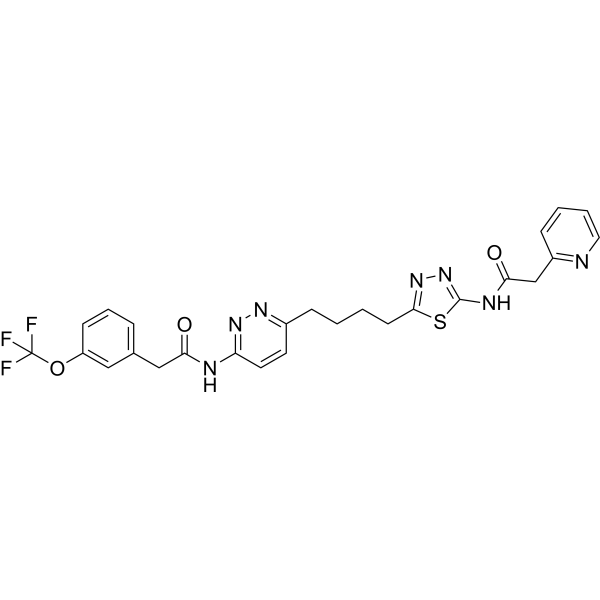
Telaglenastat (CB-839) is a first-in-class, selective, reversible and orally active glutaminase 1 (GLS1) inhibitor. Telaglenastat selectively inhibits GLS1 splice variants KGA (kidney-type glutaminase) and GAC (glutaminase C) compared to GLS2. The IC50s are 23 nM and 28 nM for endogenous glutaminase in mouse kidney and brain, respectively. Telaglenastat inuduces autophagy and has antitumor activity .
loading...
    loading...
115
115 Cited Publications
Cat. No.: HY-12248A
CAS No.: 1874231-60-3
Synonyms: CB-839 hydrochloride
Target:  

Glutaminase Autophagy

Research Areas:  

Cancer

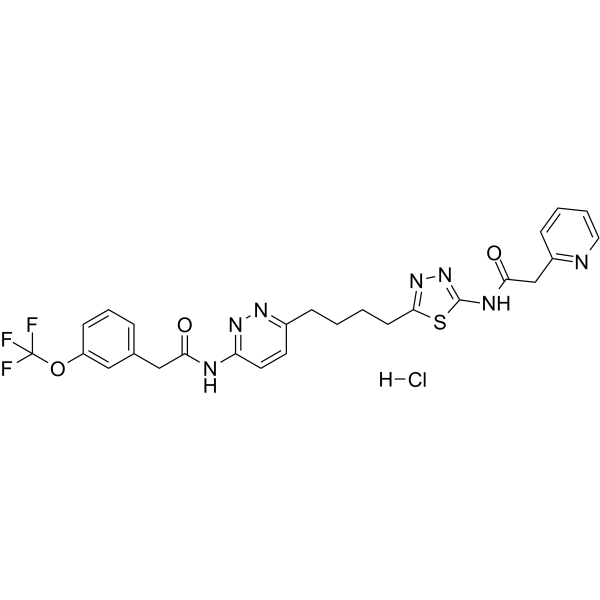
Telaglenastat (CB-839) hydrochloride is a first-in-class, selective, reversible and orally active glutaminase 1 (GLS1) inhibitor. Telaglenastat hydrochloride selectively inhibits GLS1 splice variants KGA (kidney-type glutaminase) and GAC (glutaminase C) compared to GLS2. The IC50s are 23 nM and 28 nM for endogenous glutaminase in mouse kidney and brain, respectively. Telaglenastat hydrochloride inudces autophagy and has antitumor activity .
loading...
    loading...

