50 Results for "

cleaved-PARP

" in MedChemExpress (MCE) Product Catalog:
Products (50)

50 Results for "cleaved-PARP" in MCE Product Catalog:

Cat. No.: HY-N17665
CAS No.: 205114-65-4
Cimicifugic acid A is a cytotoxic caffeic acid derivative that can be isolated from the rhizomes of Cimicifuga heracleifolia. Cimicifugic acid A shows cytotoxic activity against cancer cells, and increases expression of cleaved PARP, thereby exhibiting pro-apoptotic activity. Cimicifugic acid A can be used for colon cancer research .
loading...
    loading...
Cat. No.: HY-122423
CAS No.: 83409-32-9
Synonyms: N-Desethylamiodarone; LB 33020
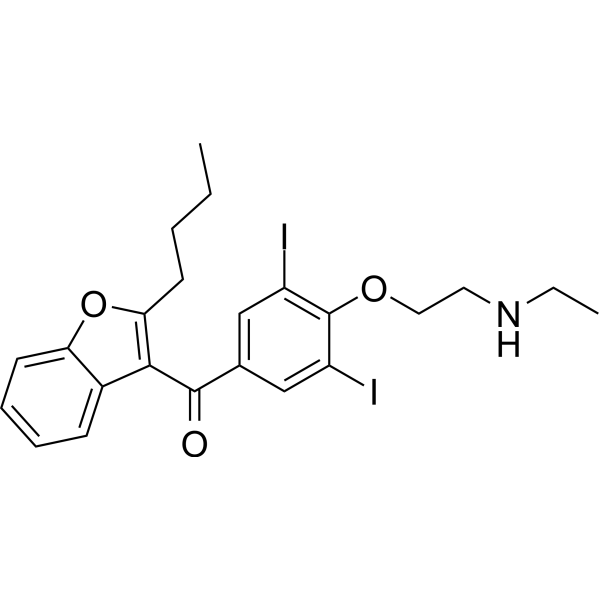
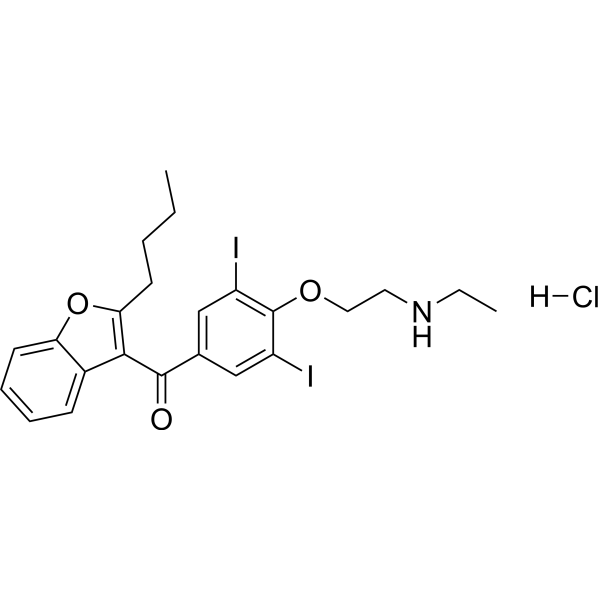
Desethylamiodarone (N-Desethylamiodarone; LB 33020) is the major active metabolite of Amiodarone (HY-14187) generated via CYP3A4 metabolism. Desethylamiodarone downregulates p‑Akt, p‑Bad and Bcl‑2, upregulates Bax, promotes mitochondrial release of cytochrome c, activates caspase‑3 and cleaves PARP‑1, thereby inducing cell cycle arrest and apoptosis. Desethylamiodarone can be used in cervical cancer-related research .
loading...
    loading...
Cat. No.: HY-130353S
CAS No.: 1189960-80-2
Synonyms: N-Desethylamiodarone-d4 hydrochloride; LB 33020-d4 hydrochloride
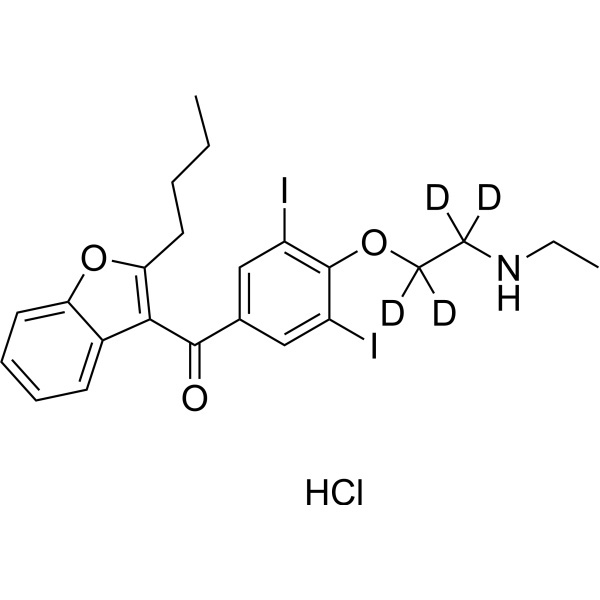
Desethylamiodarone-d4 hydrochloride (N-Desethylamiodarone-d4 hydrochloride; LB 33020-d4 hydrochloride) is the deuterated-labeled Desethylamiodarone hydrochloride (HY-130353). Desethylamiodarone hydrochloride (N-Desethylamiodarone hydrochloride; LB 33020 hydrochloride) is the major active metabolite of Amiodarone (HY-14187) generated via CYP3A4 metabolism. Desethylamiodarone hydrochloride downregulates p‑Akt, p‑Bad and Bcl‑2, upregulates Bax, promotes mitochondrial release of cytochrome c, activates caspase‑3 and cleaves PARP‑1, thereby inducing cell cycle arrest and apoptosis. Desethylamiodarone hydrochloride can be used in cervical cancer-related research .
loading...
    loading...
Cat. No.: HY-N1970R
CAS No.: 31721-94-5
5,7-Dihydroxychromone (Standard) is the analytical standard of 5,7-Dihydroxychromone (HY-N1970). This product is intended for research and analytical applications. 5,7-Dihydroxychromone is a flavonoid compound with antioxidant properties. 5,7-Dihydroxychromone induces Nrf2 nuclear translocation, increases Nrf2/ARE binding activity, and up-regulates Nrf2-dependent antioxidant genes HO-1, NQO1, GCLc. 5,7-Dihydroxychromone attenuates excessive ROS generation, inhibits activated caspase-3, caspase-9, cleaved PARP expression, and prevents neuronal apoptosis and cell death. 5,7-Dihydroxychromone increases LXRα and PPARγ mRNA expression, induces preadipocyte differentiation, and regulates blood glucose levels. 5,7-Dihydroxychromone inhibits radial growth of soil pathogenic fungi, radicle elongation of select seedlings, and transiently inhibits Bradyrhizobium sp. growth in high mannitol medium. 5,7-Dihydroxychromone can be used for the research of Parkinson’s disease, type 2 diabetes mellitus and pathogenic fungal infection .
loading...
    loading...
Cat. No.: HY-N14161
CAS No.: 87614-40-2
Diazaquinomycin A (DAQA), a diaza-anthracene antibiotic, is a thymidylate synthase inhibitor. Diazaquinomycin A (DAQA) induces DNA damage, cell cycle arrest, and apoptosis through cleaved-PARP .
loading...
    loading...
Cat. No.: HY-168877
FMP is a Platinum(IV) complexe. FMP significantly upregulates the expression of γ-H2AX and p53. FMP increases the production of ROS. FMP markedly upregulates the expressions of Apoptosis-related proteins (DR5, Fas, caspase-8, Cyt-c, caspase-3, cleaved-PARP1, Bax). FMP shows antiproliferative activity against breast cancer .
loading...
    loading...
Cat. No.: HY-161874
Research Areas:  

Cancer

RPS6-IN-1 (Compound 22o) inhibits cell metastasis, induces cell apoptosis (increases the expression of Bax, p53, cleaved-caspase 3, and cleaved-PARP). RPS6-IN-1 decreases mitochondrial membrane potential. RPS6-IN-1 activates autophagy through the PI3K-Akt-mTOR signaling pathway, damages intracellular mitochondria and lysosomes, and cause ER stress. RPS6-IN-1 inhibits RPS6 phosphorylation. RPS6-IN-1 is an anticancer agent with low systemic toxicity .
loading...
    loading...
Cat. No.: HY-147906
CAS No.: 2453228-45-8
Target:  

Apoptosis PARP

Research Areas:  

Cancer

Anticancer agent 71 (Compound 4b) is a potent anticancer agent and induces apoptosis. Anticancer agent 71 arrests cell cycle at G2/M phase and induces apoptosis through upregulating Bax, Ikb-α and cleaved PARP and downregulating Bcl-2 expression levels. Anticancer agent 71 shows antiproliferative activity .
loading...
    loading...
Cat. No.: HY-155570
Target:  

PI3K Apoptosis Caspase PARP

Research Areas:  

Cancer

Anticancer agent 137 (8q) is a potent PI3k inhibitor. Anticancer agent 137 has broad-spectrum anticancer activity. Anticancer agent 137 induces G2/M cell cycle arrest and apoptosis. Anticancer agent 137 increases cleaved PARP, caspase 3, and 7. Anticancer agent 137 can be used in research of cancer .
loading...
    loading...
Cat. No.: HY-118129
CAS No.: 55511-14-3
Synonyms: Ganwuweizic acid
Target:  

PARP Apoptosis

Research Areas:  

Cancer

Schisandronic acid is a triterpenoid antioxidant and anticancer agent extracted from Schisandra chinensis, which has potent cytotoxicity against human breast cancer cells, especially MCF-7. Schisandronic acid induces apoptosis and reduces cell viability in a time-dependent manner (MCF-7, IC50=8.06 μM). Schisandronic acid can upregulate active caspase-3 expression and cleave PARP, reduce the generation of reactive oxygen species and exhibit antioxidant effects .
loading...
    loading...
Cat. No.: HY-130353R
CAS No.: 96027-74-6
Synonyms: N-Desethylamiodarone hydrochloride (Standard); LB 33020 hydrochloride (Standard)
Desethylamiodarone hydrochloride (Standard) (N-Desethylamiodarone hydrochloride (Standard); LB 33020 hydrochloride (Standard)) is the analytical standard of Desethylamiodarone hydrochloride (HY-130353). This product is intended for research and analytical applications. Desethylamiodarone hydrochloride (N-Desethylamiodarone hydrochloride; LB 33020 hydrochloride) is the major active metabolite of Amiodarone (HY-14187) generated via CYP3A4 metabolism. Desethylamiodarone hydrochloride downregulates p‑Akt, p‑Bad and Bcl‑2, upregulates Bax, promotes mitochondrial release of cytochrome c, activates caspase‑3 and cleaves PARP‑1, thereby inducing cell cycle arrest and apoptosis. Desethylamiodarone hydrochloride can be used in cervical cancer-related research .
loading...
    loading...
Cat. No.: HY-169412
CAS No.: 2848599-79-9
MAPK-IN-3 (Compound 4a) is an anti-proliferative agent that shows particularly strong inhibitory effects on KYSE 30, HCT 116, and HGC 27, with IC50 values of 0.57 μM, 3.27 μM, and 2.28 μM, respectively. MAPK-IN-3 blocks the cell cycle via a p53-dependent mechanism and induces cell apoptosis through a p53-independent mechanism. MAPK-IN-3 downregulates the expression of cell cycle-related proteins like Cyclin D1 and cyclin B1, upregulates pro-apoptotic proteins such as cleaved PARP, cleaved caspase-7, and cleaved caspase-9, and reduces the expression of anti-apoptotic proteins like Bcl-2. Additionally, MAPK-IN-3 increases the intracellular level of ROS in KYSE 30 cells and upregulates the expression of members of the MAPK signaling pathway associated with ROS, such as p-ERK, p-p38 and p-JNK .
loading...
    loading...
Cat. No.: HY-B0366AR
CAS No.: 969-33-5
Synonyms: Cyproheptadine HCl (Standard)
Cyproheptadine hydrochloride (Standard) (Cyproheptadine HCl (Standard)) is the analytical standard of Cyproheptadine hydrochloride (HY-B0366A). This product is intended for research and analytical applications. Cyproheptadine hydrochloride (Cyproheptadine HCl) acts as a p38 MAP kinase activator, CHK2 activator, histamine H1 receptor inhibitor and serotonin receptor inhibitor. Cyproheptadine hydrochloride mediates cell cycle arrest via G1 phase arrest, G1/S transition arrest, G0/G1 phase arrest, reduced expression of cyclins D1/D2/D3, upregulated expression of HBP1, p16, p21, p27, and decreased phosphorylation of retinoblastoma protein. Cyproheptadine hydrochloride induces Apoptosis by increasing PARP and cleaved PARP, as well as activating the mitochondrial caspase pathway. Cyproheptadine hydrochloride inhibits tumor growth with extremely low toxicity to normal cells. Cyproheptadine hydrochloride can be used in research related to hepatocellular carcinoma, multiple myeloma and acute myeloid leukemia .
loading...
    loading...
Cat. No.: HY-B1622R
CAS No.: 129-03-3
Cyproheptadine (Standard) is the analytical standard of Cyproheptadine (HY-B1622). This product is intended for research and analytical applications. Cyproheptadine acts as a p38 MAP kinase activator, CHK2 activator, histamine H1 receptor inhibitor and serotonin receptor inhibitor. Cyproheptadine mediates cell cycle arrest via G1 phase arrest, G1/S transition arrest, G0/G1 phase arrest, reduced expression of cyclins D1/D2/D3, upregulated expression of HBP1, p16, p21, p27, and decreased phosphorylation of retinoblastoma protein. Cyproheptadine induces Apoptosis by increasing PARP and cleaved PARP, as well as activating the mitochondrial caspase pathway. Cyproheptadine inhibits tumor growth with extremely low toxicity to normal cells. Cyproheptadine can be used in research related to hepatocellular carcinoma, multiple myeloma and acute myeloid leukemia .
loading...
    loading...
Cat. No.: HY-B1622S
CAS No.: 2712455-05-3
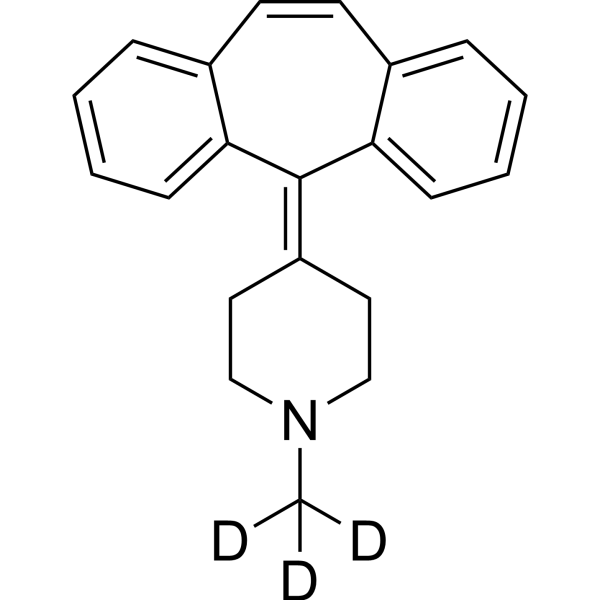
Cyproheptadine-d3 is the d3-labeled Cyproheptadine (HY-B1622). Cyproheptadine acts as a p38 MAP kinase activator, CHK2 activator, histamine H1 receptor inhibitor and serotonin receptor inhibitor. Cyproheptadine mediates cell cycle arrest via G1 phase arrest, G1/S transition arrest, G0/G1 phase arrest, reduced expression of cyclins D1/D2/D3, upregulated expression of HBP1, p16, p21, p27, and decreased phosphorylation of retinoblastoma protein. Cyproheptadine induces Apoptosis by increasing PARP and cleaved PARP, as well as activating the mitochondrial caspase pathway. Cyproheptadine inhibits tumor growth with extremely low toxicity to normal cells. Cyproheptadine can be used in research related to hepatocellular carcinoma, multiple myeloma and acute myeloid leukemia .
loading...
    loading...
Cat. No.: HY-N0805R
CAS No.: 26575-95-1
Synonyms: 23-Acetylalismol B (Standard); 23-O-Acetylalisol B (Standard); Alisol B monoacetate (Standard)
Alisol B 23-acetate (Standard) is the analytical standard of Alisol B 23-acetate (HY-N0805). This product is intended for research and analytical applications. Alisol B 23-acetate is an orally active prototerpane-type triterpenoid. Alisol B 23-acetate can be isolated from Alisma orientalis. Alisol B 23-acetate induces Apoptosis, promotes ROS generation, downregulates CDK4/6, MMP-2/9, upregulates cleaved PARP, activates FXR and inhibits Syk. Alisol B 23-acetate has anti-inflammatory and hepatoprotective activities. Alisol B 23-acetate protects the kidney from ischemia-reperfusion injury. Alisol B 23-acetate has anticancer activity against ovarian cancer, colon cancer, lung cancer, and gastric cancer. Alisol B 23-acetate can be used in the study of atherosclerosis and allergic asthma .
loading...
    loading...
Cat. No.: HY-W745430
Synonyms: Cyproheptadine HCl-d3
Cyproheptadine hydrochloride-d3 (Cyproheptadine HCl-d3) is the d3-labeled Cyproheptadine (hydrochloride) (HY-B0366A). Cyproheptadine hydrochloride (Cyproheptadine HCl) acts as a p38 MAP kinase activator, CHK2 activator, histamine H1 receptor inhibitor and serotonin receptor inhibitor. Cyproheptadine hydrochloride mediates cell cycle arrest via G1 phase arrest, G1/S transition arrest, G0/G1 phase arrest, reduced expression of cyclins D1/D2/D3, upregulated expression of HBP1, p16, p21, p27, and decreased phosphorylation of retinoblastoma protein. Cyproheptadine hydrochloride induces Apoptosis by increasing PARP and cleaved PARP, as well as activating the mitochondrial caspase pathway. Cyproheptadine hydrochloride inhibits tumor growth with extremely low toxicity to normal cells. Cyproheptadine hydrochloride can be used in research related to hepatocellular carcinoma, multiple myeloma and acute myeloid leukemia .
loading...
    loading...
Cat. No.: HY-184294
CAS No.: 3037598-39-0
Research Areas:  

Cancer

ZH25 is an ATR kinase inhibitor with antiproliferative activity against ATM-deficient cancer cells. ZH25 induces DNA damage, reduces G2/M phase cell proportion, upregulates γH2AX, Cleaved-Caspase3, and Cleaved-PARP. ZH25 functions as an ATR kinase binding ligand for ATR-PROTAC degrader design. ZH25 can be used for the research of atm-deficient cancer .
loading...
    loading...
Cat. No.: HY-183069
Research Areas:  

Cancer

FKL-137 is a GLUT1 and PI3K/AKT signaling pathway inhibitor. FKL-137 binds to GLUT1, reduces glucose uptake and lactate secretion, downregulates glucose metabolism-related proteins, and inhibits erythroleukemia cell proliferation. FKL-137 downregulates PI3K, p-PI3K, AKT, p-AKT levels, disrupts the PI3K/AKT-GLUT1 positive feedback loop, and suppresses erythroleukemia cell proliferation. FKL-137 induces apoptosis via upregulated Bax, Cleaved-PARP and downregulated Bcl-2, PARP. FKL-137 can be used for the research of erythroleukemia .
loading...
    loading...
Cat. No.: HY-P11935
CAS No.: 2410535-57-6
RR-171 is an amino acid polypeptide and an inhibitor of the Wnt signaling pathway. RR-171 reduces the expression levels of Wnt-1, GSK3β and β-catenin. RR-171 induces apoptosis (Apoptosis) in pancreatic cancer cells, which is characterized by an increased Bax/Bcl-2 ratio, activation of Caspase-3/7/9, and increased Cleaved-PARP; this pro-apoptotic effect can be partially reversed by Z-VAD-FMK (HY-16658B). RR-171 also induces pyroptosis (Pyroptosis) in pancreatic cancer cells, which is manifested by activation of the NLRP-3 inflammasome, activation of Caspase-1, cleavage of GSDMD, upregulation of IL-1β and IL-18, and increased LDH release; this pro-pyroptotic effect can be partially reversed by VX-765 (HY-13205). RR-171 inhibits the viability, proliferation and colony formation of pancreatic cancer cells, with low cytotoxicity against normal cells. RR-171 downregulates the expression of Ki-67 and PCNA in tumor tissues in vivo, with favorable biosafety. RR-171 can be used in studies related to pancreatic cancer .
loading...
    loading...

