65 Results for "

fed

" in MedChemExpress (MCE) Product Catalog:
Products (65)

65 Results for "fed" in MCE Product Catalog:

Cat. No.: HY-117912
CAS No.: 1431553-15-9
Target:  

Endogenous Metabolite

Research Areas:  

Cardiovascular Disease

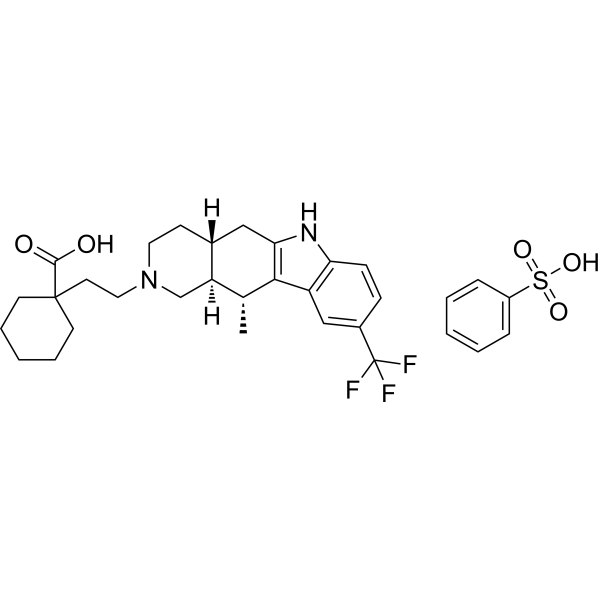
TRC210258 is a TGR5 agonist with activity to improve diabetes-associated hyperglycemia and dyslipidemia. TRC210258 promotes energy expenditure by enhancing the release of glucagon-like peptide-1. TRC210258 is able to improve glucose metabolic control in high-fat diet-induced obese mice. TRC210258 also showed improvement in lipid parameters in high-fat-fed hamsters, including reductions in plasma triglyceride and low-density lipoprotein cholesterol levels. TRC210258 improved emerging lipid-related cardiovascular risk parameters including remnant cholesterol and triglyceride clearance .
loading...
    loading...
Cat. No.: HY-15830
CAS No.: 29261-12-9
Purity:  95.47%
Synonyms: 25,26-Dihydroxycholecalciferol
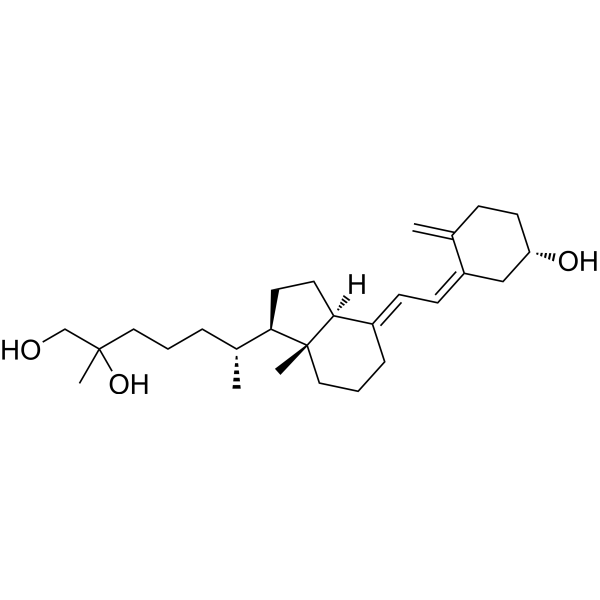
25,26-Dihydroxyvitamin D3 (25,26-Dihydroxycholecalciferol) is a dihydroxylated derivative and metabolite of Vitamin D3 (HY-15398). 25,26-Dihydroxyvitamin D3 moderately increases serum calcium levels when the initial serum calcium level is low. 25,26-Dihydroxyvitamin D3 promotes intestinal calcium absorption in vitamin D-deficient rats fed a low-calcium diet. 25,26-Dihydroxyvitamin D3 is applicable to research related to osteomalacia .
loading...
    loading...
Cat. No.: HY-B1268R
CAS No.: 577-11-7
Synonyms: Dioctyl sulfosuccinate sodium salt (Standard)
Target:  

Reference Standards HSV

Research Areas:  

Others

Docusate (Sodium) (Standard) is the analytical standard of Docusate (Sodium). This product is intended for research and analytical applications. Docusate Sodium (Dioctyl sulfosuccinate sodium salt) is one of the main components in stool softeners. Docusate Sodium is a sulfated surfactant and may inactivate viral pathogens by disrupting viral envelopes and/or denaturing/disassociating proteins. Docusate Sodium is effective in vitro against wild type and drug-resistant strains of HSV type 1 and 2. Docusate Sodium is an obesogen. Docusate Sodium with developmental exposure leads to increased adult adiposity, inflammation, metabolic disorder and dyslipidemia in offspring fed a standard diet in mice .
loading...
    loading...
Cat. No.: HY-N0573R
CAS No.: 93-35-6
Synonyms: 7-Hydroxycoumarin (Standard); Hydrangin (Standard); NSC 19790 (Standard)
Umbelliferone (Standard) (7-Hydroxycoumarin (Standard)) is the analytical standard of Umbelliferone (HY-N0573). This product is intended for research and analytical applications. Umbelliferone (7-Hydroxycoumarin), a natural orally active product of the coumarin family, is a fluorescing compound which can be used as a sunscreen agent. Umbelliferone induces cell cycle arrest, apoptosis and DNA fragmentation in HepG2 cells. Umbelliferone exhibits significant anticancer effects. Umbelliferone attenuates the alteration characteristics of allergic airway inflammation. Umbelliferone displays the neuroprotective effects and cross the blood-brain barrier. Umbelliferone exhibits anti-inflammatory and antioxidant effects in chronic alcohol-fed rats.
loading...
    loading...
Cat. No.: HY-N0573S
CAS No.: 1215373-23-1
Synonyms: 7-Hydroxycoumarin-d5; Hydrangin-d5; NSC 19790-d5
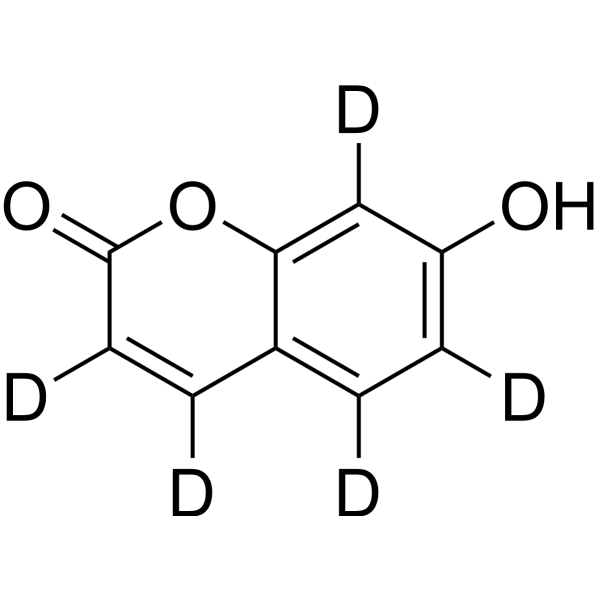
Umbelliferone-d5 (7-Hydroxycoumarin-d5) is the deuterium labeled Umbelliferone (HY-N0573 ). Umbelliferone (7-Hydroxycoumarin), a natural orally active product of the coumarin family, is a fluorescing compound which can be used as a sunscreen agent. Umbelliferone induces cell cycle arrest, apoptosis and DNA fragmentation in HepG2 cells. Umbelliferone exhibits significant anticancer effects. Umbelliferone attenuates the alteration characteristics of allergic airway inflammation. Umbelliferone displays the neuroprotective effects and cross the blood-brain barrier. Umbelliferone exhibits anti-inflammatory and antioxidant effects in chronic alcohol-fed rats .
loading...
    loading...
Cat. No.: HY-113448
CAS No.: 7274-08-0
Purity:  99.82%
Synonyms: 20:3 (8Z,11Z,14Z) CE; 20:3 n-6 CE; 20:3 (8Z,11Z,14Z) Cholesterol Ester
Target:  

Endogenous Metabolite

Research Areas:  

Cardiovascular Disease

Cholesteryl homo-γ-linolenate is a cholesterol ester. It accumulates in the adrenal gland of rabbits fed a diet high in linolenic acid.1 Levels of cholesteryl homo-γ-linolenate are decreased and positively correlate with cognitive decline in HIV-infected humans.
loading...
    loading...
Cat. No.: HY-158812
CAS No.: 2133456-02-5
Target:  

Drug Derivative

Research Areas:  

Metabolic Disease

Eicosapentaenoyl-L-carnitine chloride is a long-chain acylcarnitine composed of Eicosapentaenoic Acid (HY-B0660) and L-Carnitine (HY-B0399). The levels of Eicosapentaenoyl-L-carnitine chloride are increased in the eyes of mice fed a diet high in n-3/n-6 polyunsaturated fatty acids (PUFAs) in a mouse model of myopia induced by out-of-focus lenses .
loading...
    loading...
Cat. No.: HY-130437
CAS No.: 389850-21-9
Purity:  ≥97.0%
Research Areas:  

Infection Metabolic Disease

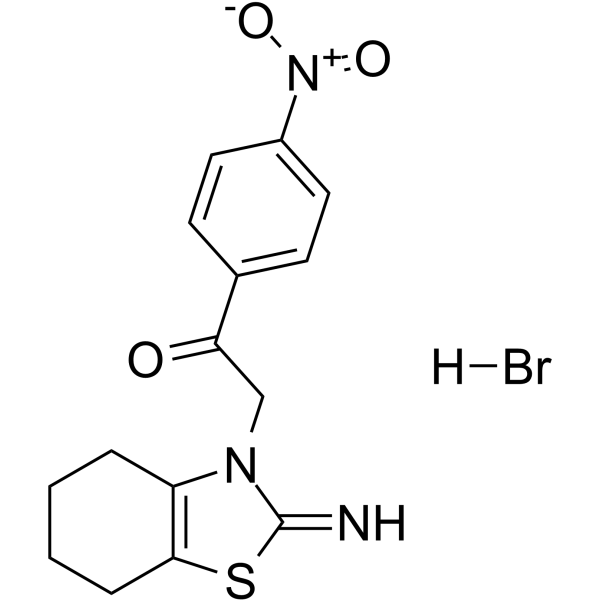
p-nitro-Pifithrin-α, a cell-permeable analog of pifithrin-α, is a potent p53 inhibitor. p-nitro-Pifithrin-α suppresses p53-mediated TGF-β1 expression in HK-2 cells. p-nitro-Pifithrin-α inhibits the activation of caspase-3 by Zika virus (ZIKV) strains. p-nitro-Pifithrin-α attenuates steatosis and liver injury in mice fed a high-fat diet [4]. non-alcoholic fatty liver disease .
loading...
    loading...
Cat. No.: HY-W013214
CAS No.: 1808-26-0
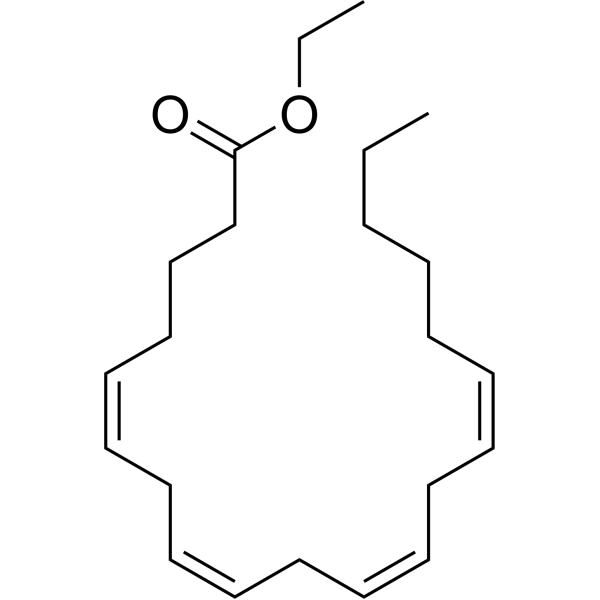
Ethyl arachidonate is a lipophilic esterified form of arachidonic acid (AA) and can be added into dietary regimens or fed to cultured cells as a source of exogenous arachidonate. Ethyl arachidonate is the main species of fatty acid ethyl esters (FAEE) in brain of alcohol-intoxicated subjects .
loading...
    loading...
Cat. No.: HY-W201317
CAS No.: 1060968-92-4
Target:  

PPAR

Research Areas:  

Metabolic Disease

E17241 is an inducer of the expression of ABCA1 that increases the protein levels of ABCA1 in RAW 264.7 macrophages. E17241 is also an agonist of peroxisome proliferator-activated receptors (PPARs ). E17241 decreases plasma glucose levels and body weight in KKAy diabetic mice fed a high-fat and high-glucose (HFHG) diet .
loading...
    loading...
Cat. No.: HY-B0399A
CAS No.: 406-76-8
Synonyms: DL-Carnitine; DL-Levocarnitine
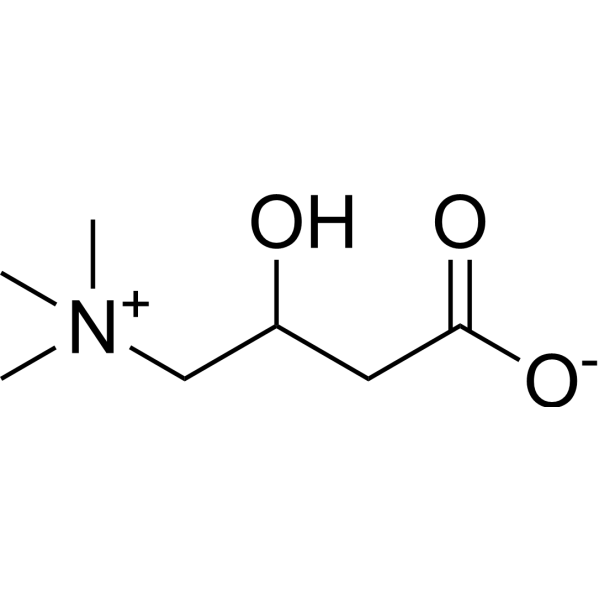
(±)-Carnitine (DL-Carnitine) is an orally effective racemic mixture of L-Carnitine (HY-B0399) and D-Carnitine. (±)-Carnitine elevates the mitochondrial NAD +/NADH ratio in the presence of 1,3-butanediol (HY-77490A). (±)-Carnitine does not increase glucose and urea production from L-glutamine, but stimulates propionate gluconeogenesis in rat renal cortical slices, and significantly reduces hepatic ketone body levels in rats fed a diet containing 30% high fat plus 20% 1,3-butanediol .
loading...
    loading...
Cat. No.: HY-159595
CAS No.: 1233353-86-0
Target:  

LDLR PCSK9

PCSK9-IN-29 is a lipid-lowering agent. PCSK9-IN-29 can increase low-density lipoprotein receptor (LDLR) protein expression and decrease PCSK9 protein expression in hepG2 cells. PCSK9-IN-29 can reduce the levels of serum LDL-C, TC, and liver enzyme ALT in crab eating macaques fed a high-fat diet, lower body weight and fat, and increase bone mineral content. PCSK9-IN-29 can be used for research on non-alcoholic fatty liver disease and obesity .
loading...
    loading...
Cat. No.: HY-178015
CAS No.: 3051970-23-8
THR-β agonist 11 is an orally active and selective thyroid hormone receptor (THR-β) agonist. THR-β agonist 11 shows potent cholesterol-lowering activity in cholesterol-fed rats. THR-β agonist 11 significantly reduces serum total TG, LDL-cholesterol, liver total TC and TG levels, and alleviates hepatic steatosis, inflammation and fibrosis in HFD-CCl4-induced Metabolic dysfunction-associated steatohepatitis (MASH) model mice. THR-β agonist 11 can be used for the study of metabolic dysfunction-associated steatohepatitis (MASH) and other fibrotic diseases .
loading...
    loading...
Cat. No.: HY-W749927
CAS No.: 1981-50-6
Synonyms: C17:1(9Z); Margaroleic acid
Target:  

Endogenous Metabolite

Research Areas:  

Metabolic Disease

cis-9-Heptadecenoic acid is a monounsaturated fatty acid that is a major constituent of ruminant fat and milk. The levels of cis-9-heptadecenoic acid in milk are negatively correlated with methane production in cows fed a high-lipid diet.
loading...
    loading...
Cat. No.: HY-101699A
CAS No.: 1001438-96-5
Target:  

MCHR1 (GPR24)

Research Areas:  

Metabolic Disease

AMG-076 is an orally bioavailable and selective MCHR1 antagonist. AMG-076 results in significant reduction in body weight gain in nonobese mice fed a high-fat diet and in high-fat diet-induced obese (DIO) mice .
loading...
    loading...
Cat. No.: HY-N15285
CAS No.: 7361-59-3
Protocatechuic acid 4-glucoside is a glycosylated phenolic acid. Protocatechuic acid 4-glucoside exhibits antioxidant activity and can alleviate atherosclerotic lesions in rats fed a high-fat diet. Protocatechuic acid 4-glucoside can be used for the study of metabolism-related diseases .
loading...
    loading...
Cat. No.: HY-101699
CAS No.: 693823-79-9
Target:  

MCHR1 (GPR24)

Research Areas:  

Metabolic Disease

AMG-076 free base is an orally bioavailable and selective MCHR1 antagonist. AMG-076 free base results in significant reduction in body weight gain in nonobese mice fed a high-fat diet and in high-fat diet-induced obese (DIO) mice .
loading...
    loading...
Cat. No.: HY-117075
CAS No.: 421592-30-5
Target:  

SGLT

Research Areas:  

Metabolic Disease

BI-44847 is a selective and orally active SGLT2 inhibitor. BI-44847 can increase UGE and decrease HbA1c levels. BI-44847 shows improvement in fasting and fed glucose levels. BI-44847 can be studied in research on type 2 diabetes mellitus (T2DM) .
loading...
    loading...
Cat. No.: HY-131675
CAS No.: 51346-20-4
Target:  

TNF Receptor

Research Areas:  

Inflammation/Immunology

CH-100 is an immunomodulatory agent targeting T-cell activation and inflammatory mediator production. CH-100 demonstrates anti-inflammatory and hepatoprotective effects by reducing TNF-α secretion, suppressing CD4+ T-cell proliferation, and lowering endotoxin levels in alcohol-fed rats. CH-100 is promising for research of alcoholic liver disease and T-cell-mediated hepatitis .
loading...
    loading...
Cat. No.: HY-176817
CAS No.: 944559-31-3
Target:  

GPR109A

GPR109 receptor agonist-3 is an orally active GPR109 receptor agonist, with an IC50 of 310 nM. GPR109 receptor agonist-3 retains the antioxidation and cytoprotection of Lipoic acid (HY-18733). GPR109 receptor agonist-3 reduces total cholesterol (TC), triglyceride (TG), low-density lipoprotein cholesterol (LDL-C) and increases high-density lipoprotein cholesterol (HDL-C) in high-fat diet-fed rats. GPR109 receptor agonist-3 can be used for the study of atherosclerosis .
loading...
    loading...

