

263 Results for "

glutamic

" in MedChemExpress (MCE) Product Catalog:
Products (263)

263 Results for "glutamic" in MCE Product Catalog:

1
1 Cited Publications
Cat. No.: HY-W019870
CAS No.: 77182-82-2
Research Areas:  

Neurological Disease

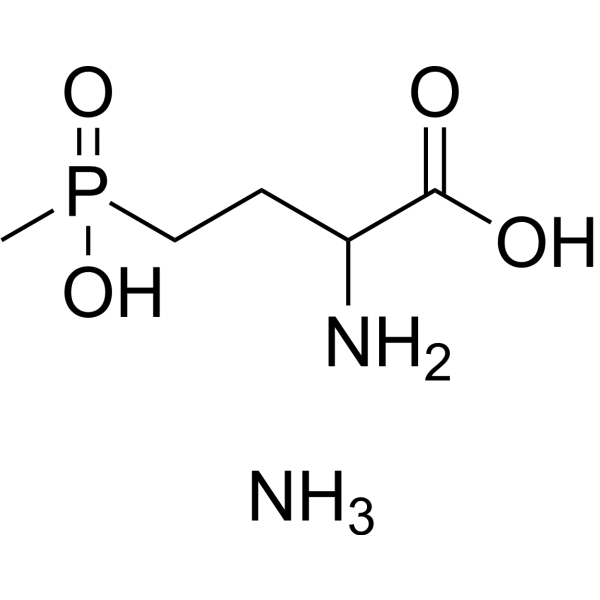
Glufosinate ammonium, a phosphinic acid analogue of glutamic acid, is an herbicide which is converted by plant cells into PT (L-phosphinothricin). Glufosinate ammonium exerts neurotoxic activity .
loading...
    loading...
1
1 Cited Publications
Cat. No.: HY-N0390S5
CAS No.: 159663-16-8
Synonyms: L-glutamic acid 5-amide-1-13C
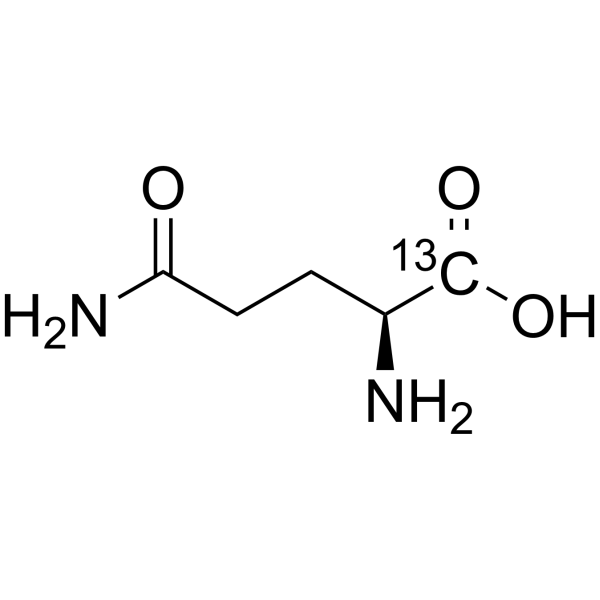
L-Glutamine-1- 13C is the 13C-labeled L-Glutamine (HY-N0390). L-Glutamine is an orally active nutritional agent and cellular metabolism regulator. L-Glutamine is taken up in a Na +-dependent manner and targets multiple key molecules including glutaminase, mTORC1, NF-κB, STAT-3 and HIF-1α. L-Glutamine enhances glutaminolytic catabolism, drives the conversion of glutamate to α-ketoglutarate, thereby regulating gene expression, integrating metabolic signals, mediating glutamine flux and maintaining redox homeostasis. L-Glutamine also promotes cell proliferation, osteogenic differentiation and fracture healing, exerts neuroprotective and cardioprotective effects, and inhibits osteoarthritis. L-Glutamine can be applied to research related to osteoporosis, osteoarthritis, ischemic stroke and acute cantharidin-induced cardiotoxicity .
loading...
    loading...
1
1 Cited Publications
Cat. No.: HY-N0390S8
CAS No.: 204451-48-9
Synonyms: L-glutamic acid 5-amide-15N2
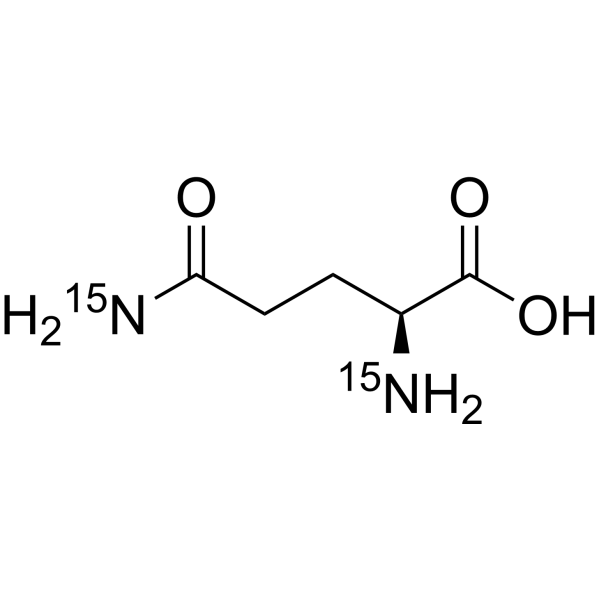
L-Glutamine- 15N2 is the 15N-labeled L-Glutamine (HY-N0390). L-Glutamine is an orally active nutritional agent and cellular metabolism regulator. L-Glutamine is taken up in a Na +-dependent manner and targets multiple key molecules including glutaminase, mTORC1, NF-κB, STAT-3 and HIF-1α. L-Glutamine enhances glutaminolytic catabolism, drives the conversion of glutamate to α-ketoglutarate, thereby regulating gene expression, integrating metabolic signals, mediating glutamine flux and maintaining redox homeostasis. L-Glutamine also promotes cell proliferation, osteogenic differentiation and fracture healing, exerts neuroprotective and cardioprotective effects, and inhibits osteoarthritis. L-Glutamine can be applied to research related to osteoporosis, osteoarthritis, ischemic stroke and acute cantharidin-induced cardiotoxicity .
loading...
    loading...
1
1 Cited Publications
Cat. No.: HY-P7611
Purity:  ≥ 95%, as determined by reducing SDS-PAGE.
Synonyms: GOT1; Aspartate Transaminase 1; glutamic-Oxaloacetic Transaminase 1; Transaminase A; Glutamate Oxaloacetate Transaminase 1; CAspAT; AST1; CCAT; SGOT; glutamic-Oxaloacetic Transaminase 1, Soluble (Aspartate Aminotransferase 1); AST; Testis Secretory Sperm-
Species:  
Human
Source:  
E. coli
loading...
    loading...
1
1 Cited Publications
Cat. No.: HY-P0133B
Synonyms: Nona-L-arginine acetate; Peptide R9 acetate
Target:  

Ser/Thr Protease

Research Areas:  

Neurological Disease

(Arg)9 (Nona-L-arginine) acetate is a cell-penetrating peptide (CPP) made up of 9 arginine residues. (Arg)9 acetate has neuroprotective property, exhibits neuroprotective activity with an IC50 of 0.78 μM in the glutamic acid model .
loading...
    loading...
1
1 Cited Publications
Cat. No.: HY-P0133A
CAS No.: 2283335-13-5
Synonyms: Nona-L-arginine TFA; Peptide R9 TFA
Target:  

Ser/Thr Protease

Research Areas:  

Neurological Disease

(Arg)9 (Nona-L-arginine) TFA is a cell-penetrating peptide (CPP) made up of 9 arginine residues. (Arg)9 TFA has neuroprotective property, exhibits neuroprotective activity with an IC50 of 0.78 μM in the glutamic acid model .
loading...
    loading...
1
1 Cited Publications
Cat. No.: HY-B2228
CAS No.: 9001-92-7
Proteinase, Aspergillus oryzae is a serine protease that hydrolyzes peptide bonds in protein substrates, preferring alkaline conditions (optimal pH 10.5). It efficiently degrades casein, poly-L-glutamic acid, and poly-L-lysine, with activity irreversibly inhibited by diisopropylfluorophosphate (DFP) and potato inhibitor. This enzyme catalyzes proteolysis via serine residues in its active site, finding applications in food processing (e.g., soy sauce fermentation), detergents, and leather industries due to its high yield in solid-state fermentation and cost-effective production.
loading...
    loading...
1
1 Cited Publications
Cat. No.: HY-P75178
Purity:  ≥ 90%, as determined by reducing SDS-PAGE.
Synonyms: GAD2; Glutamate Decarboxylase 65 KDa Isoform; Glutamate Decarboxylase 2; GAD-65; GAD65; Glutamate Decarboxylase 2 (Pancreatic Islets And Brain, 65kD); 65 KDa glutamic Acid Decarboxylase; Glutamate Decarboxylase-2 (Pancreas); Glutamate Decarboxylase 2 (Pan
Species:  
Mouse
Source:  
Sf9 insect cells
loading...
    loading...
Cat. No.: HY-W015240
CAS No.: 1188-37-0
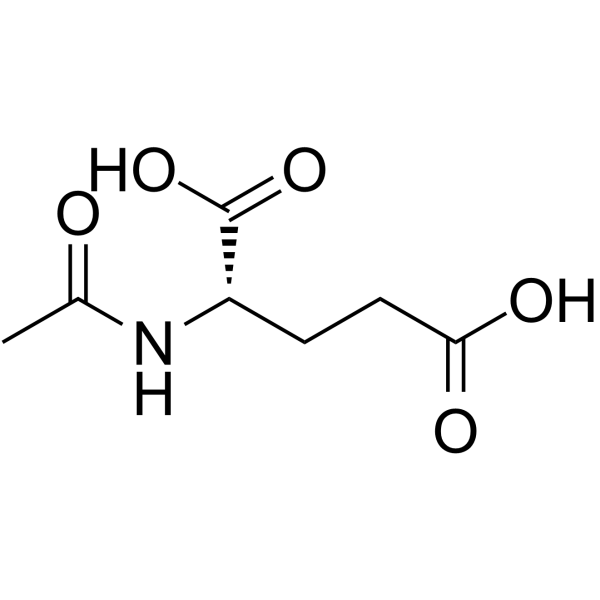
N-Acetyl-L-glutamic acid is a type of glutamic acid that can serve as a component of cell culture media. When combined with media containing inorganic salts, carbohydrates, vitamins, and amino acids, N-Acetyl-L-glutamic acid plays roles in promoting cell growth, enhancing antibody production, etc. N-Acetyl-L-glutamic acid is also an endogenous metabolite that can be found in the brain. Additionally, as an IgE blocker, N-Acetyl-L-glutamic acid can be used in the research of allergic diseases .
loading...
    loading...
Cat. No.: HY-Y1166
CAS No.: 84793-07-7
Research Areas:  

Others

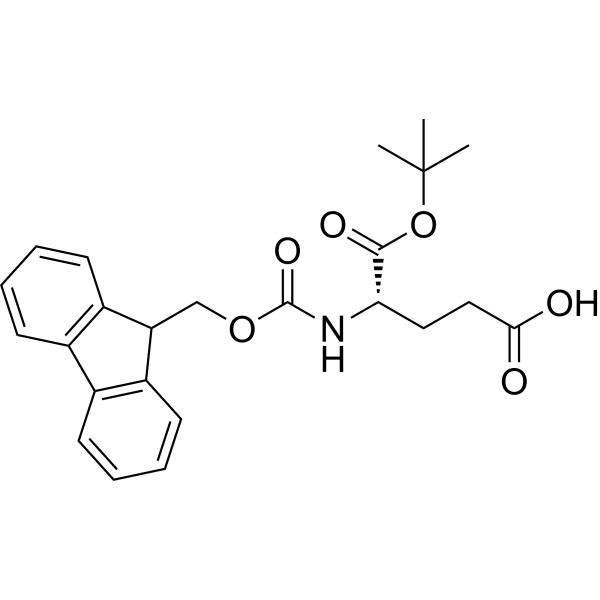
N-(9-Fluorenylmethoxycarbonyl)glutamic acid α-tert-butyl ester is a glutamic acid derivative .
loading...
    loading...
Cat. No.: HY-14608S7
CAS No.: 2784-50-1
Purity:  99.8%
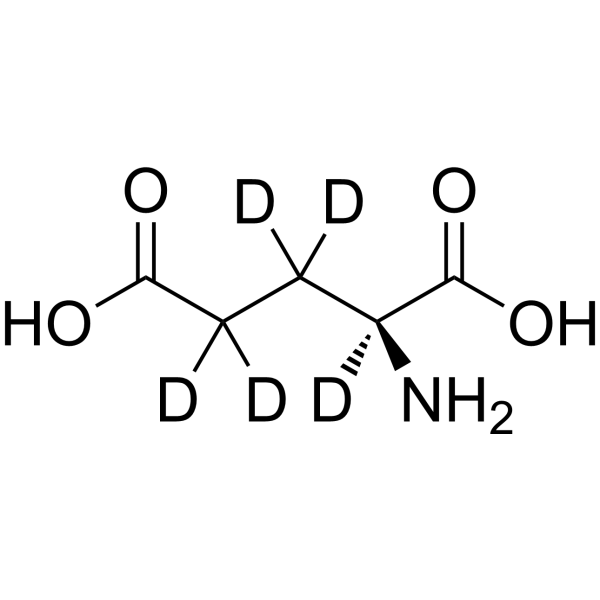
L-Glutamic acid-d5 is the deuterium labeled L-Glutamic acid. L-Glutamic acid acts as an excitatory transmitter and an agonist at all subtypes of glutamate receptors (metabotropic, kainate, NMDA, and AMPA). L-Glutamic acid shows a direct activating effect on the release of DA from dopaminergic terminals.
loading...
    loading...
Cat. No.: HY-14608S8
CAS No.: 203805-84-9
Purity:  98.00%
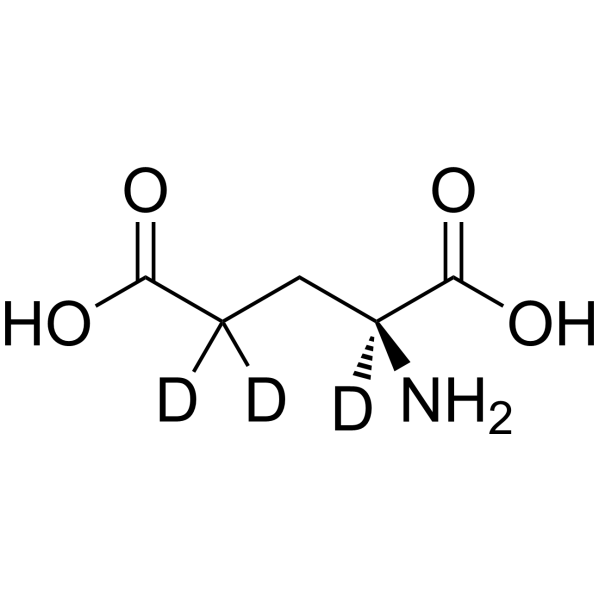
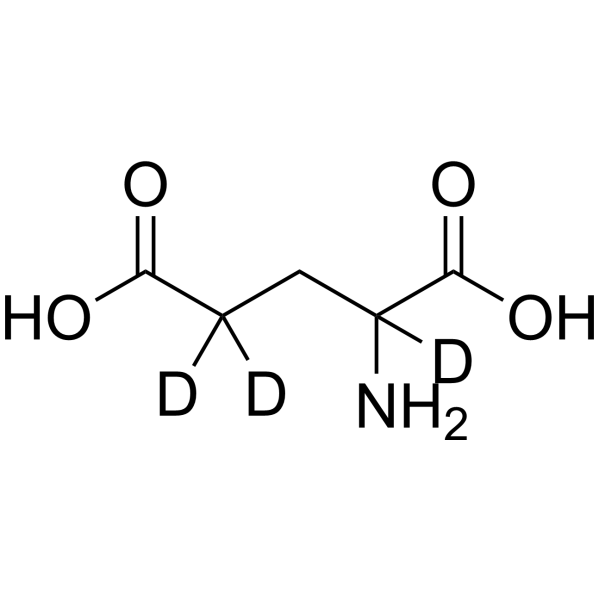
L-Glutamic acid-d3 is the deuterium labeled L-Glutamic acid. L-Glutamic acid acts as an excitatory transmitter and an agonist at all subtypes of glutamate receptors (metabotropic, kainate, NMDA, and AMPA). L-Glutamic acid shows a direct activating effect on the release of DA from dopaminergic terminals.
loading...
    loading...
Cat. No.: HY-14608S3
CAS No.: 202468-31-3
Purity:  99.9%
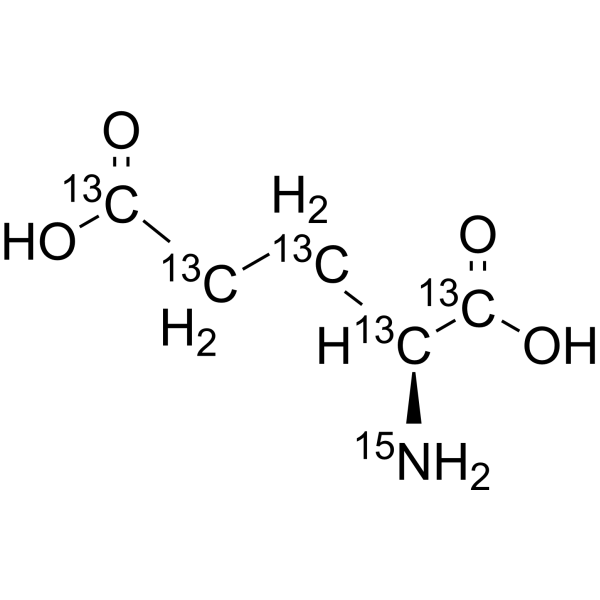
L-Glutamic acid- 13C5, 15N is the 13C- and 15N-labeled L-Glutamic acid. L-Glutamic acid acts as an excitatory transmitter and an agonist at all subtypes of glutamate receptors (metabotropic, kainate, NMDA, and AMPA). L-Glutamic acid shows a direct activating effect on the release of DA from dopaminergic terminals.
loading...
    loading...
Cat. No.: HY-149449
CAS No.: 208106-41-6
Poly-L-γ-glutamic acid sodium is a macromolecular polymer formed by the linkage of glutamic acid residues via peptide bonds between γ-amino and carboxyl groups. Poly-L-γ-glutamic acid sodium plays an important role as a carrier material in compound delivery systems. Poly-L-γ-glutamic acid sodium can deliver Paclitaxel (HY-B0015) to colon cancer cells, reduce cell viability and inhibit the growth of colon cancer spheroids. Poly-L-γ-glutamic acid sodium can be used as a carrier material and in studies related to colon cancer in mice .
loading...
    loading...
Cat. No.: HY-W011713
CAS No.: 4271-30-1
Research Areas:  

Others

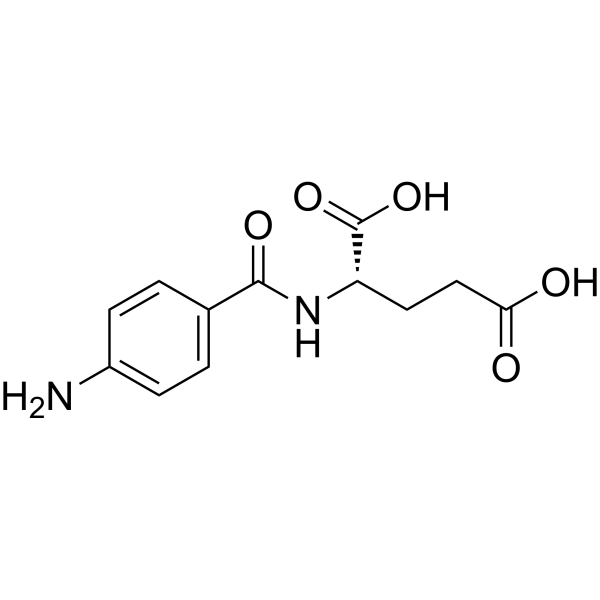
(4-Aminobenzoyl)-L-glutamic acid is a glutamic acid derivative .
loading...
    loading...
Cat. No.: HY-W041895S1
CAS No.: 96927-56-9
DL-Glutamic acid-d3 is the d3-labeled DL-Glutamic acid (HY-W041895). DL-Glutamic acid is a racemic amino acid mixture and an antibacterial agent. DL-Glutamic acid reduces RNA and DNA levels, with a more significant effect on RNA. DL-Glutamic acid inhibits cell division of Rhodospirillum rubrum .
loading...
    loading...
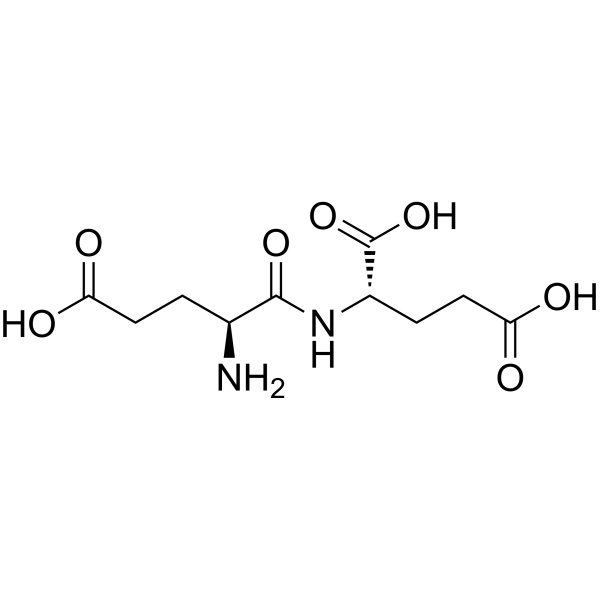
Cat. No.: HY-W016012
CAS No.: 3929-61-1
Synonyms: H-Glu-Glu-OH; Glutamyl-glutamic acid
Research Areas:  

Others

Glu-Glu is a glutamic acid derivative containing amino and carboxyl groups. Glu-Glu is an analogs of acidic tripeptide and can contribute to calcium absorption .
loading...
    loading...
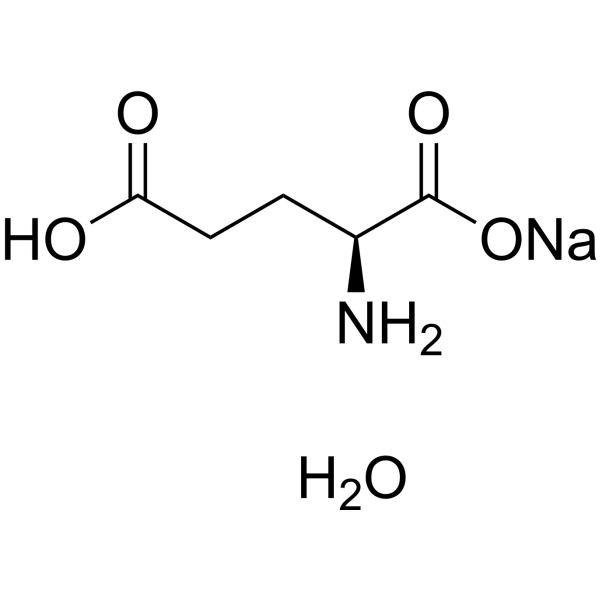
Cat. No.: HY-W016145
CAS No.: 6106-04-3
L-Glutamic acid monosodium hydrate is an excitatory amino acid neurotransmitter that acts as an agonist for all subtypes of glutamate receptors (metabolic rhodophylline, NMDA, and AMPA). L-Glutamic acid monosodium hydrate has an agonist effect on the release of DA from dopaminergic nerve endings. L-Glutamic acid monosodium hydrate can be used in the study of neurological diseases. L-Glutamic acid monosodium hydrate acts at ionotropic and?metabotropic glutamate receptors .
loading...
    loading...
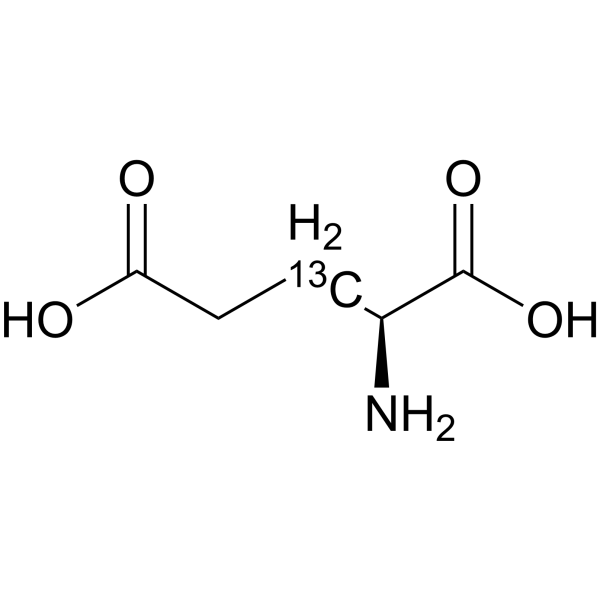
Cat. No.: HY-14608S
CAS No.: 115473-51-3
L-Glutamic acid- 13C is the 13C-labeled L-Glutamic acid. L-Glutamic acid acts as an excitatory transmitter and an agonist at all subtypes of glutamate receptors (metabotropic, kainate, NMDA, and AMPA). L-Glutamic acid shows a direct activating effect on the release of DA from dopaminergic terminals.
loading...
    loading...
Cat. No.: HY-112111
CAS No.: 25513-46-6
Purity:  ≥95.0%
Research Areas:  

Cancer

Poly-L-Glutamic acid (MW 700000) is a synthetic polypeptide with biocompatibility, biodegradability and non-immunogenicity. Poly-L-Glutamic acid is an ideal tumor-targeting polymer carrier. Poly-L-Glutamic acid can be hydrolyzed by cathepsin B during metabolic decomposition .
loading...
    loading...

