

131 Results for "

hyperlipidemia

" in MedChemExpress (MCE) Product Catalog:
Products (131)

131 Results for "hyperlipidemia" in MCE Product Catalog:

Cat. No.: HY-164740
CAS No.: 2379776-40-4
Synonyms: ARO-APOC3
Target:  

Apolipoprotein

Research Areas:  

Metabolic Disease

Plozasiran is an siRNA targeting APOC3 for the study of mixed hyperlipidemia.
loading...
    loading...
Cat. No.: HY-P1123
CAS No.: 87272-20-6
MEDICA16 is an orally active acetyl-CoA carboxylase and ATP-citrate lyase inhibitor. MEDICA16 limits the acetyl-CoA supply for acetyl-CoA carboxylase, inhibits acetyl-CoA carboxylase activity, exerts citrate-competitive inhibitory effects on ATP-citrate lyase, and reduces hepatic AMPK activity. MEDICA16 can be used in research related to insulin resistance, hyperlipidemia, and obesity .
loading...
    loading...
Cat. No.: HY-156371
CAS No.: 2569296-51-9
Purity:  99.61%
Target:  

PI3K

MIPS-21335 is a PI3KC2α inhibitor with an IC50 of 7 nM. MIPS-21335 also inhibits PI3KC2β, p110α, p110β and p110δ, with IC50 values of 43, 140, 386 and 742 nM, respectively. MIPS-21335 has antithrombotic effect. MIPS-21335 can be used for the researches of cardiovascular disease and metabolic disease, such as thrombosis and hyperlipidemia .
loading...
    loading...
Cat. No.: HY-152221
CAS No.: 368434-98-4
Purity:  98.95%
Target:  

PCSK9

PCSK9-IN-10 is a potent and orally active PCSK9 inhibitor with an IC50 value of 6.4 µM. PCSK9-IN-10 increases the expression of LDLR protein and decreases the expression of PCSK9. PCSK9-IN-10 reduces atherosclerosis progression. PCSK9-IN-10 has the potential for the research of hyperlipidemia .
loading...
    loading...
Cat. No.: HY-162562
CAS No.: 930017-01-9
Target:  

PCSK9

E28362 is an orally active lipid-lowering agent and a selective PCSK9 antagonist. E28362 blocks the interaction between PCSK9 and LDLR, and induces PCSK9 degradation via the ubiquitin-proteasome pathway. E28362 significantly increases the levels of cell surface and total LDLR proteins, enhances low-density lipoprotein uptake, thereby effectively reducing plasma lipids, hepatic cholesterol and triglyceride levels. E28362 shows no obvious cytotoxicity at high concentrations, and significantly attenuates atherosclerotic lesions in animal models. E28362 is an important molecule in research of hyperlipidemia and atherosclerosis .
loading...
    loading...
Cat. No.: HY-156041
CAS No.: 97281-40-8
Purity:  ≥99.0%
Synonyms: Lyso-PE (egg); LPE (egg); L-α-lysophosphatidylethanolamine
Lysophosphatidylethanolamines, egg (Lyso-PE (egg); LPE (egg); L-α-lysophosphatidylethanolamine) is a naturally occurring lysophospholipid isolated from purified egg phosphatidylcholine. Lysophosphatidylethanolamines, egg acts as a hepatic lipid biomarker in oleic acid-induced hepatocytes. The level of Lysophosphatidylethanolamines, egg decreases in mice fed a high-fat diet. Lysophosphatidylethanolamines, egg can be used in studies related to non-alcoholic fatty liver disease and hyperlipidemia .
loading...
    loading...
Cat. No.: HY-P99822
CAS No.: 2361290-85-7
Synonyms: SHR-1209

Target:  

PCSK9

Research Areas:  

Metabolic Disease

Recaticimab (SHR-1209) is a humanized IgG1 mAb that selectively targets PCSK9. Recaticimab reduces low-density lipoprotein cholesterol (LDL-C), non-high-density lipoprotein cholesterol (non-HDL-C), apolipoprotein B (ApoB), triglyceride (TG), and lipoprotein(a) levels. Recaticimab can be used for hyperlipidemia research .
loading...
    loading...
Cat. No.: HY-163794
CAS No.: 2135765-21-6
Target:  

ANGPTL PCSK9

Research Areas:  

Metabolic Disease

DC371739 is a potent and orally activity PCSK9 inhibitor. DC371739 decreases the mRNA expression of PCSK9 and ANGPTL3. DC371739 decreases the protein expression of PCSK9 and increases the protein expression of LDLR. DC371739 has the potential for the research of hyperlipidemia .
loading...
    loading...
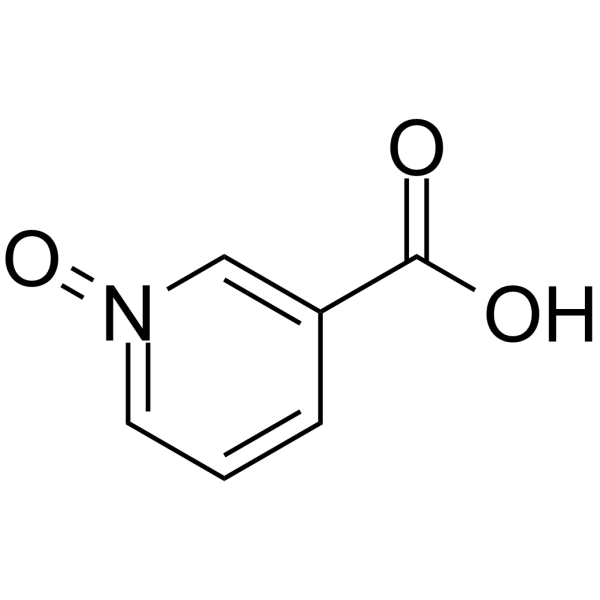
Cat. No.: HY-B1061
CAS No.: 2398-81-4
Target:  

Drug Derivative

Research Areas:  

Cardiovascular Disease

Nicotinic acid N-oxide can be used for research on hyperlipidemia.
loading...
    loading...
Cat. No.: HY-164740A
CAS No.: 2379776-41-5
Synonyms: ARO-APOC3 sodium
Target:  

Apolipoprotein

Research Areas:  

Metabolic Disease

Plozasiran sodium is an siRNA targeting APOC3 for the study of mixed hyperlipidemia.
loading...
    loading...
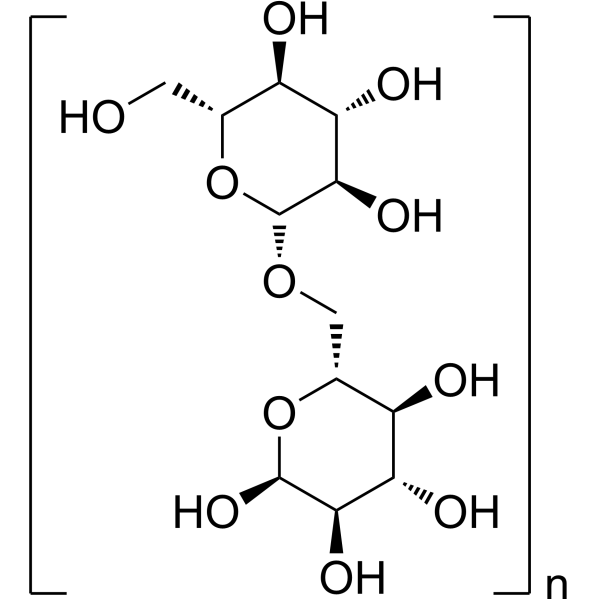
Cat. No.: HY-W134326
CAS No.: 68424-04-4
Polydextrose is an orally active prebiotic. Polydextrose promotes the growth of Pediococcus pentosaceus ATCC 43200. Polydextrose reduces cholesterol and synergistically lowers blood sugar with Sitagliptin (HY-13749). Currently, it is mainly used in the research of diseases such as hyperlipidemia, type 2 diabetes, and postoperative iron deficiency anemia .
loading...
    loading...
Cat. No.: HY-W923642
CAS No.: 474923-21-2
Sphingomyelin (d18:1/12:0) is a metabolomic biomarker. Sphingomyelin (d18:1/12:0) exhibits favorable diagnostic properties and may facilitate the early detection and targeted prevention of dyslipidemia-related adverse cardiovascular events .
loading...
    loading...
Cat. No.: HY-103479
CAS No.: 1452473-54-9
Purity:  99.38%
GOAT-IN-1 is an inhibitor of ghrelin O-acyltransferase (GOAT), which could be useful for the prophylaxis or treatment of obesity, diabetes, hyperlipidemia, metabolic, non-alcoholic fatty liver, steatohepatitis, sarcopenia, appetite control, alcohol/narcotic dependence, Alzheimer’s disease, Parkinson’s disease, cerebrovascular dementia, cerebral apoplexy, cerebral infarction, cardic disease, some kind of tumors.
loading...
    loading...
Cat. No.: HY-W004580
CAS No.: 1802-30-8
Target:  

MOFs

Research Areas:  

Cardiovascular Disease

5,5'-Dicarboxy-2,2'-bipyridine is a niacin derivative, which is promising for research of hypercholesterolemia, hyperlipidemia, and cardiovascular disease .
loading...
    loading...
Cat. No.: HY-164853
CAS No.: 2228847-12-7
Kanglexin is an orally active and novel anthraquinone compound. Kanglexin inhibits NLRP3 inflammatory body activation and cell pyroptosis, and has a cardioprotective effect. Kanglexin promotes angiogenesis through FGFR1/ERK signaling pathway and accelerates diabetic wound healing. In addition, Kanglexin has the effect of lipid-lowering and inhibiting the dedifferentiation of vascular smooth muscle cells, and can be used in the study of hyperlipidemia, fatty liver and atherosclerosis .
loading...
    loading...
Cat. No.: HY-W414588
CAS No.: 50673-97-7
Research Areas:  

Metabolic Disease

Colestolone is a 15-ketosterol compound and an orally active inhibitor of HMG-CoA reductase. Colestolone can inhibit the activity of cholesteryl ester transfer protein (CETP) in vitro (IC50 = 660 μM). Colestolone is a cholesterol-lowering agent, and can be used in the research of endocrine and metabolic diseases such as hyperlipidemia .
loading...
    loading...
Cat. No.: HY-I0400R
CAS No.: 131-48-6
Synonyms: NANA (Standard); Lactaminic acid (Standard)
N-Acetylneuraminic acid (Standard) is the analytical standard of N-Acetylneuraminic acid. This product is intended for research and analytical applications. N-Acetylneuraminic acid (NANA; Lactaminic acid), a nonphenolic structure, is the predominant form of sialic from Collocalia esculenta. N-Acetylneuraminic acid plays a biological role in myocardial injury, melanoma and viral or bacterial infection. N-Acetylneuraminic acid inhibits melanogenesis by reducing tyrosinase activity and triggers myocardial injury in vitro and in vivo by activation of the Rho/Rho-associated signaling pathway through binding to RhoA and Cdc42. N-Acetylneuraminic acid may prevent high fat diet (HFD)-induced inflammation and oxidative stress, thereby prevents hyperlipidemia-associated inflammation and oxidative stress. N-Acetylneuraminic acid is promising for research in the field of melanoma, coronary artery, obesity-related diseases and hyperlipidemia .
loading...
    loading...
Cat. No.: HY-W016389
CAS No.: 2443-58-5
Synonyms: 2-OHFLU
Target:  

Endogenous Metabolite

Research Areas:  

Metabolic Disease

2-Hydroxyfluorene (2-OHFLU) is a polycyclic aromatic hydrocarbon metabolite. 2-Hydroxyfluorene is positively associated with cardiovascular disease (CVD) and hyperlipidemia.
loading...
    loading...
Cat. No.: HY-W423578
CAS No.: 6656-19-5
Target:  

LDLR

Research Areas:  

Cardiovascular Disease

LDLR regulator-1 (Compound 7b) is a regulator of the low-density lipoprotein receptor (LDLR), capable of increasing the mRNA expression of LDLR .
loading...
    loading...
Cat. No.: HY-148874A
Purity:  99.96%
Target:  

FXR

Research Areas:  

Metabolic Disease

FXR antagonist 2 (compound A-26) hydrochloride is a diarylamide derivative, as well as a moderate FXR antagonist. FXR antagonist 2 hydrochloride can be used in the study of hyperlipidemia and type 2 diabetes .
loading...
    loading...

