
84 Results for "

nociception

" in MedChemExpress (MCE) Product Catalog:
Products (84)

84 Results for "nociception" in MCE Product Catalog:

Cat. No.: HY-112692
CAS No.: 2099681-31-7
Purity:  ≥96.0%
Target:  

Opioid Receptor

Research Areas:  

Neurological Disease

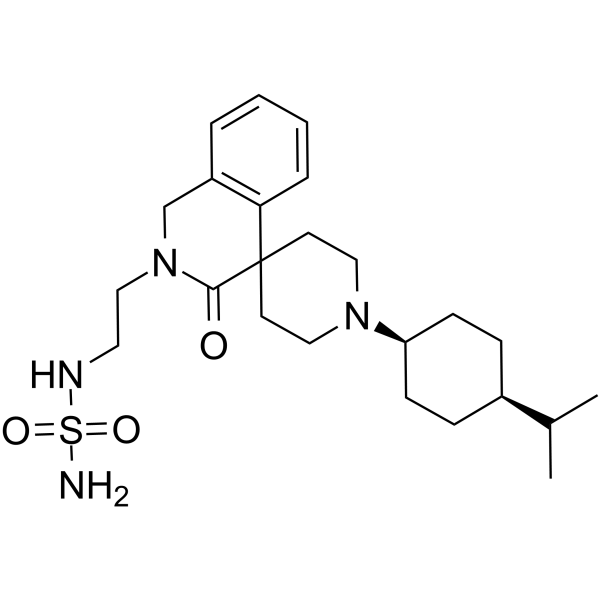
AT-121 is a bifunctional nociception and mu opioid receptor agonist, with Kis of 3.67 and 16.49 nM, respectively. AT-121 is a safe, non-addictive analgesic, and shows antinociceptive and antiallodynic effects .
loading...
    loading...
Cat. No.: HY-B1319
CAS No.: 637-58-1
Synonyms: Pramoxine hydrochloride
Target:  

Sodium Channel

Research Areas:  

Neurological Disease

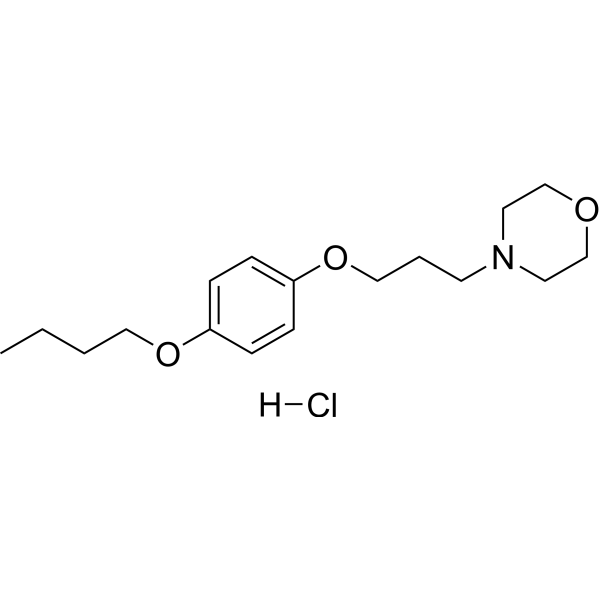
Pramocaine (Pramoxine) hydrochloride is a topical surface anesthetic and antipruritic agent. Pramocaine hydrochloride reversibly inhibits voltage-gated sodium channel, reduces transmembrane permeability of sodium ions, stabilizes cell membranes, prevents depolarization, blocks action potential conduction, and inhibits peripheral slow C-fiber pathways associated with pain, pruritus and thermoception. Pramocaine hydrochloride can be used in research related to chronic pruritus, renal pruritus, atopic dermatitis, xerotic pruritus, uremic pruritus, and cutaneous hyperalgesia/pain .
loading...
    loading...
Cat. No.: HY-W097625
CAS No.: 26964-24-9
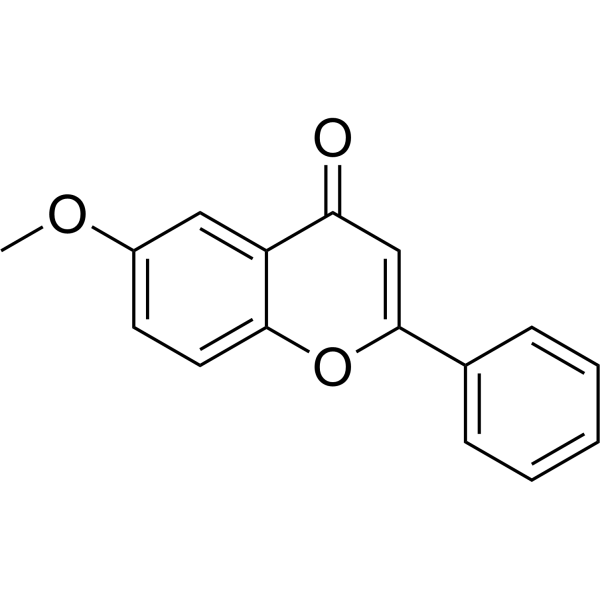
6-Methoxyflavone is an orally active methoxyflavone. 6-Methoxyflavone suppresses neuroinflammation in microglia through the inhibition of TLR4/MyD88/p38 MAPK/NF-κB dependent pathways and the activation of HO-1/NQO-1 signaling. 6-Methoxyflavone induces S-phase arrest through the CCNA2/CDK2/p21CIP1 signaling pathway in HeLa cells. 6-Methoxyflavone inhibits NFAT Translocation into the nucleus and suppresses T cell activation. 6-Methoxyflavone partially restores chronic ethanol-induced behavioral deficits in mice. 6-Methoxyflavone antagonizes chronic constriction injury and diabetes associated neuropathic nociception expression. 6-Methoxyflavone can be used for the study of cancer, inflammation and neurological diseases .
loading...
    loading...
Cat. No.: HY-121235
CAS No.: 17737-65-4
Purity:  ≥98.0%
Synonyms: SCH-10304
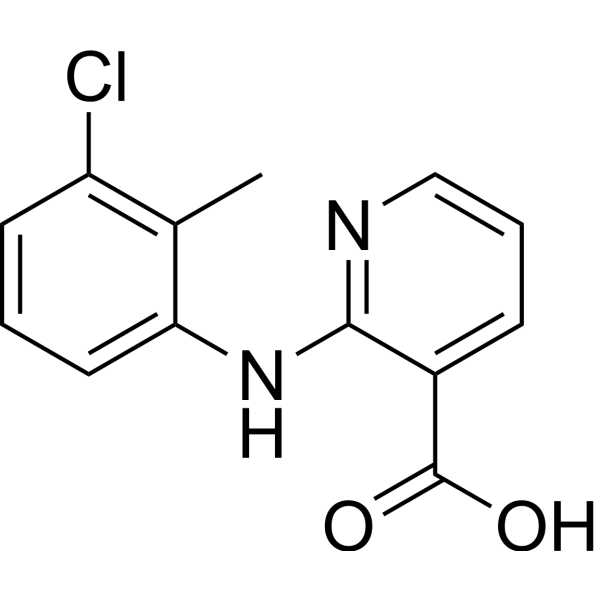
Clonixin (SCH-10304) is an orally active non-steroidal anti-inflammatory agent (NSAID) that inhibits COX synthesis. Clonixin acts as a voltage-gated L-type calcium channel blocker, exerts vasodilatory effects by antagonizing Ca 2+ in vascular smooth muscle. Clonixin inhibits TGF-β, reduces lung coefficient, immune cell infiltration level, oxidative stress response, airway resistance, hydroxyproline content and collagen deposition. Clonixin can be used in research related to inflammation such as idiopathic pulmonary fibrosis and moderate to severe pain .
loading...
    loading...
Cat. No.: HY-P1238A
Synonyms: Neuromedin U (rat) TFA; Rat neuromedin U-23 TFA
Research Areas:  

Neurological Disease

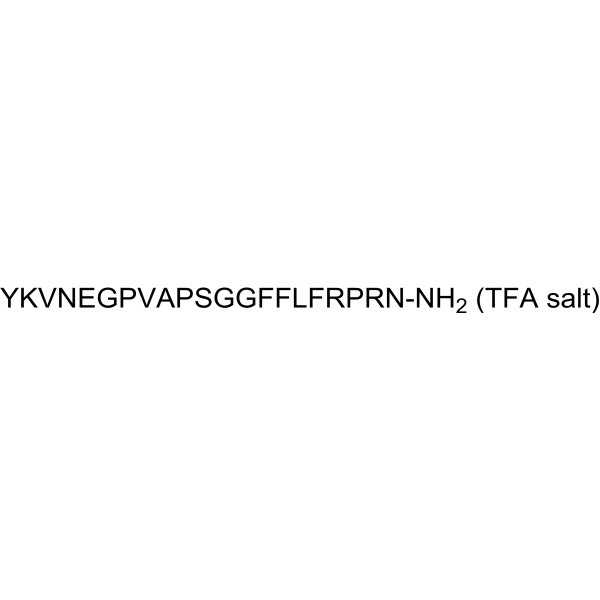
Neuromedin U, rat TFA is a 23-amino acid brain-gut peptide. Neuromedin U (NMU), through its cognate receptor NMUR2 in the central nervous system, regulates several important physiological functions, including energy balance, stress response, and nociception.
loading...
    loading...
Cat. No.: HY-P1302
CAS No.: 178249-41-7
Target:  

Opioid Receptor

Research Areas:  

Neurological Disease

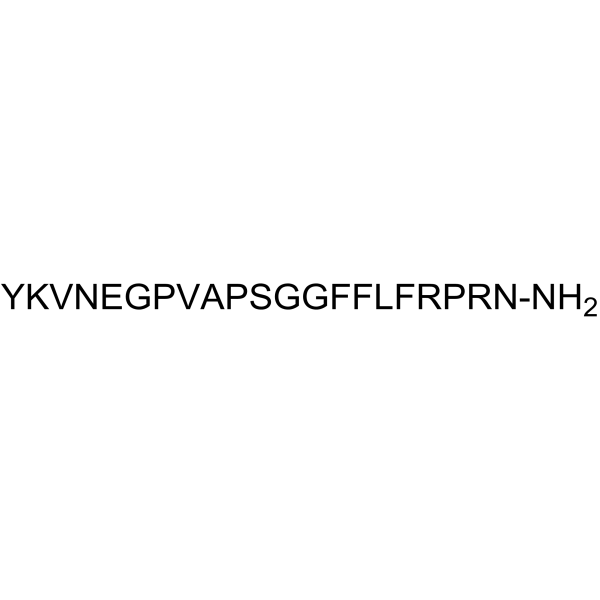
Orphanin FQ(1-11), a orphanin FQ or nociceptin (OFQ/N) fragment, is a potent NOP receptor (ORL-1; OP4) agonist, with a Ki of 55 nM. Orphanin FQ(1-11) has no affinity for μ, δ, κ1 and κ3 receptors (Ki>1000 nM). Orphanin FQ(1-11) is analgesic in CD-1 mice .
loading...
    loading...
Cat. No.: HY-B0219R
CAS No.: 315-30-0
Allopurinol (Standard) is the analytical standard of Allopurinol. This product is intended for research and analytical applications. Allopurinol is a potent and orally active xanthine oxidase inhibitor with an IC50 value of 0.2-50 μM. Allopurinol can be used in the research of hyperuricemia and gout. Allopurinol decreases the expression of HIF-1α and HIF-2α protein. Allopurinol shows anti-depressant and anti-nociception activity. Anti-leishmanial effect .
loading...
    loading...
Cat. No.: HY-135809
CAS No.: 861038-72-4
Purity:  99.05%
Target:  

Potassium Channel

Research Areas:  

Neurological Disease

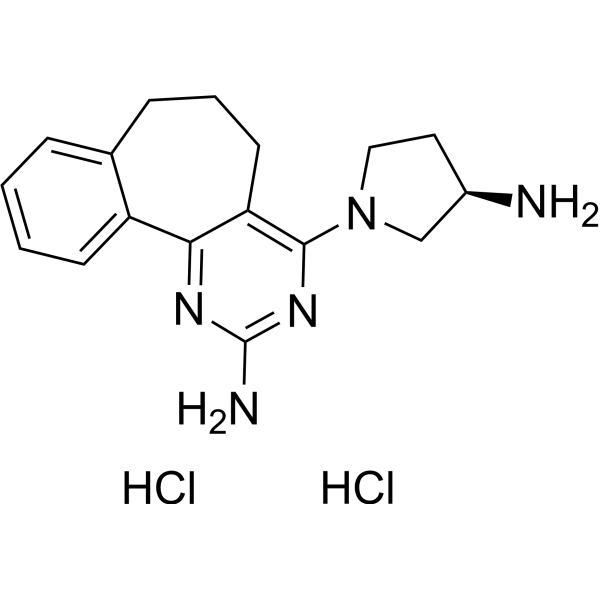
A2764 dihydrochloride is a highly selective inhibitor of TRESK (TWIK-related spinal cord K + channel, K2P18.1), which has moderate inhibitory effects on TREK-1 and TALK-1. A2764 dihydrochloride is more sensitive to the activated mTRESK channels (IC50=6.8 μM) than the basal current. A2764 dihydrochloride can lead to cell depolarization and increased excitability in native cells, it has the potential for probing the role of TRESK channel in migraine and nociception .
loading...
    loading...
Cat. No.: HY-116005
CAS No.: 483341-15-7
A-286501 is an orally active and potent carbocyclic nucleoside adenosine kinase inhibitor with an IC50 value of 0.47 nM, which shows analgesic and anti-inflammatory effects. A-286501 reduces nociception in animal models of acute (thermal), inflammatory (formalin and carrageenan) and neuropathic (L5/L6 nerve ligation and streptozotocin-induced diabetic) pain. A-286501 also reduces Carrageenan (HY-125474)-induced paw edema and myeloperoxidase activity in the injured paw. A-286501 is promising for research of analgesic and anti-inflammatory agents .
loading...
    loading...
Cat. No.: HY-P1345
CAS No.: 869988-94-3
Target:  

Complement System

Research Areas:  

Neurological Disease Endocrinology

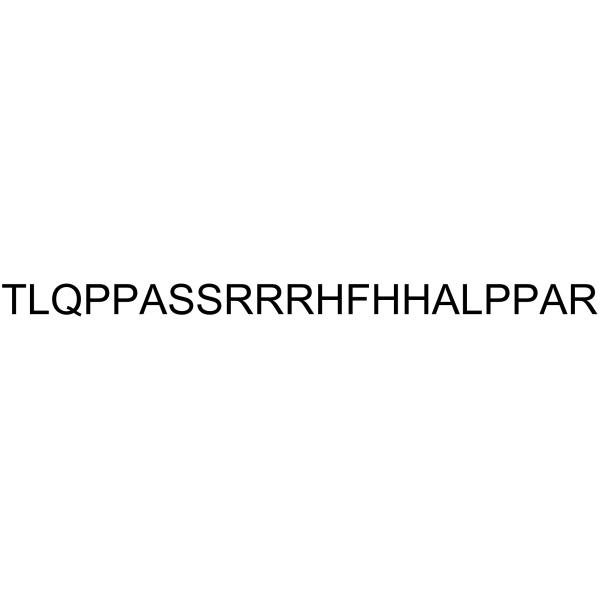
TLQP-21, a VGF-derived peptide endowed of endocrine and extraendocrine properties, is a potent G-protein-coupled receptor complement-3a receptor 1 (C3aR1) agonist (EC50: mouse TLQP-21=10.3 μM; human TLQP-21=68.8 μM). TLQP-21 activates C3aR1 to induce an increase of intracellular Ca 2+. TLQP-21 is used for the research in regulation of nociception and other relevant physiologic functions .
loading...
    loading...
Cat. No.: HY-P5152
Target:  

Sodium Channel

Research Areas:  

Neurological Disease

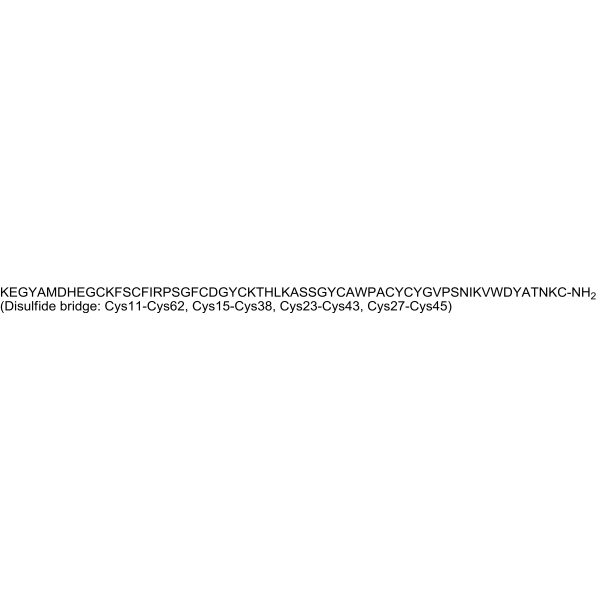
Scorpion toxin Tf2 is a selective human voltage-gated sodium channel Nav1.3 (hNav1.3) activator. Scorpion toxin Tf2 selectively shifts the channel's activation voltage to more negative values, enabling channel opening at resting membrane potentials. Scorpion toxin Tf2 can be used for the research of epilepsy, nociception (after spinal cord injury) .
loading...
    loading...
Cat. No.: HY-14407
CAS No.: 172673-20-0
Synonyms: L-758298
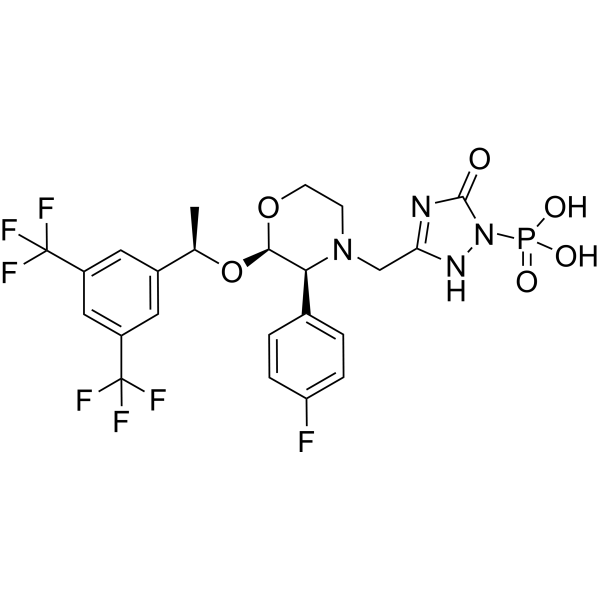
Fosaprepitant (L-785298) is a proagent of Aprepitant (HY-10052). Fosaprepitant is a neurokinin-1 receptor antagonist, which is development for the prevention of chemotherapy-induced nausea and vomiting (CINV) .
loading...
    loading...
Cat. No.: HY-147306
CAS No.: 1446971-41-0
Target:  

NO Synthase

Research Areas:  

Neurological Disease

ZLc-002 is a selective inhibitor of nNOS-Capon coupling. ZLc-002 suppresses inflammatory nociception and chemotherapy-induced neuropathic pain. ZLc-002 can be used for the research of anxiety disorder and inflammation .
loading...
    loading...
Cat. No.: HY-B0352B
CAS No.: 61364-37-2
Synonyms: (R)-Org3770; (R)-6-Azamianserin
Target:  

5-HT Receptor

Research Areas:  

Neurological Disease

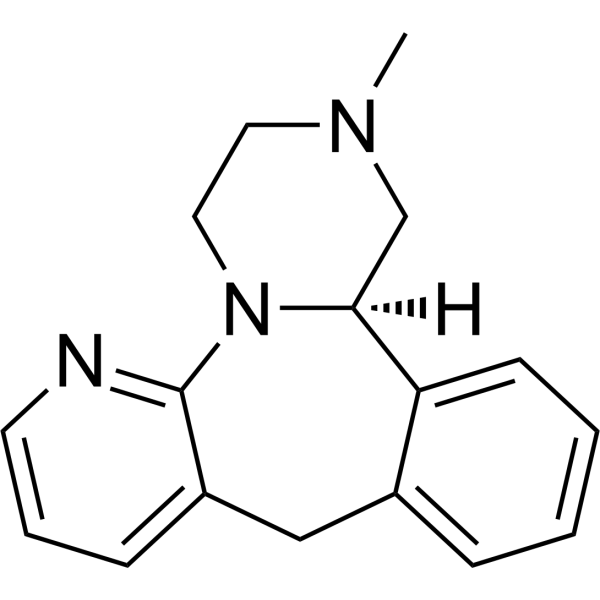
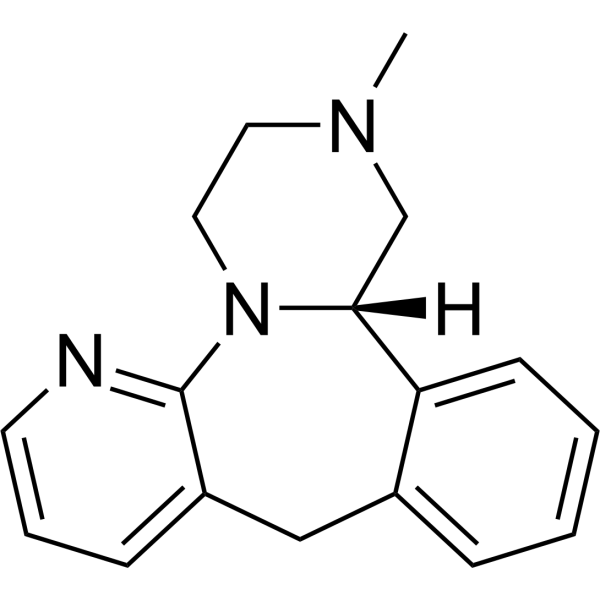
(R)-Mirtazapine ((R)-Org3770) is a R( )-enantiomer of Mirtazapine with antinociceptive properties in an animal model of acute thermal nociception. (R)-Mirtazapine is a 5-HT3 receptor antagonist. (R)-Mirtazapine is mainly metabolized by CYP3A4 .
loading...
    loading...
Cat. No.: HY-P1238
CAS No.: 117505-80-3
Synonyms: Neuromedin U (rat); Rat neuromedin U-23
Research Areas:  

Neurological Disease

Neuromedin U, rat is a 23-amino acid brain-gut peptide. Neuromedin U (NMU), through its cognate receptor NMUR2 in the central nervous system, regulates several important physiological functions, including energy balance, stress response, and nociception.
loading...
    loading...
Cat. No.: HY-107561
CAS No.: 1227675-50-4
Target:  

Histamine Receptor

Research Areas:  

Inflammation/Immunology

A-943931 (Compound 10) is a histamine H4 receptor antagonists. A-943931 has improved pharmacotropic and in vivo efficacy in models of pain and inflammation. A-943931 can be used in vivo anti-inflammatory and anti-nociception research .
loading...
    loading...
Cat. No.: HY-B0352A
CAS No.: 61337-87-9
Synonyms: (S)-Org3770; (S)-6-Azamianserin
Target:  

5-HT Receptor

Research Areas:  

Neurological Disease

(S)-Mirtazapine ((S)-Org3770) is a S(+)-enantiomer of Mirtazapine with pronociceptive properties in an animal model of acute thermal nociception. (S)-Mirtazapine is a stereoselective 5-HT2 receptor antagonist. (S)-Mirtazapine is metabolized by CYP2D6 and CYP1A2 .
loading...
    loading...
Cat. No.: HY-N2433
CAS No.: 122413-01-8
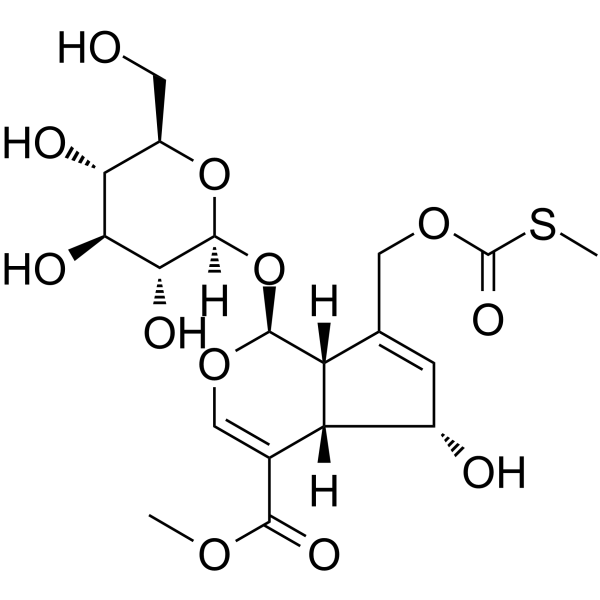
Paederosidic acid methyl ester is a ATP‐sensitive K + channel activator, isolated from P. scandens. Paederosidic acid methyl ester exhibits significant central analgesic activity, and enhances the threshold of pain by activating ATP‐sensitive K + channel in the brain and spinal cord level .
loading...
    loading...
Cat. No.: HY-B0219S1
Allopurinol- 13C, 15N2 is the 13C- and 15N-labeled labeled Allopurinol (HY-B0219). Allopurinol is a potent and orally active xanthine oxidase inhibitor with an IC50 value of 0.2-50 μM. Allopurinol can be used in the research of hyperuricemia and gout. Allopurinol decreases the expression of HIF-1α and HIF-2α protein. Allopurinol shows anti-depressant and anti-nociception activity. Anti-leishmanial effect .
loading...
    loading...
Cat. No.: HY-113273
CAS No.: 41708-91-2
Synonyms: Ap5A; P1,P5-Di(adenosine-5'-)pentaphosphate
Diadenosine pentaphosphate (Ap5A; P1,P5-Di(adenosine-5'-)pentaphosphate) is an endogenous generated diadenosine polyphosphate, possessing the dual identities of intracellular alarm signal and extracellular signaling molecule. Diadenosine pentaphosphate regulates calcium signaling in the nervous, cardiac and peripheral sensory systems by activating P2X1/P2X3/P2Y receptor and RyR2 channels (EC50 = 140 μM). Diadenosine pentaphosphate can be used in studies related to intracellular calcium release channels, cardiovascular diseases and nociception (pain) .
loading...
    loading...

