


305 Results for "

Intake

" in MedChemExpress (MCE) Product Catalog:
Products (305)

305 Results for "Intake" in MCE Product Catalog:

2
2 Cited Publications
Cat. No.: HY-101365A
CAS No.: 187397-18-8
Purity:  99.33%
Target:  

5-HT Receptor

Research Areas:  

Neurological Disease

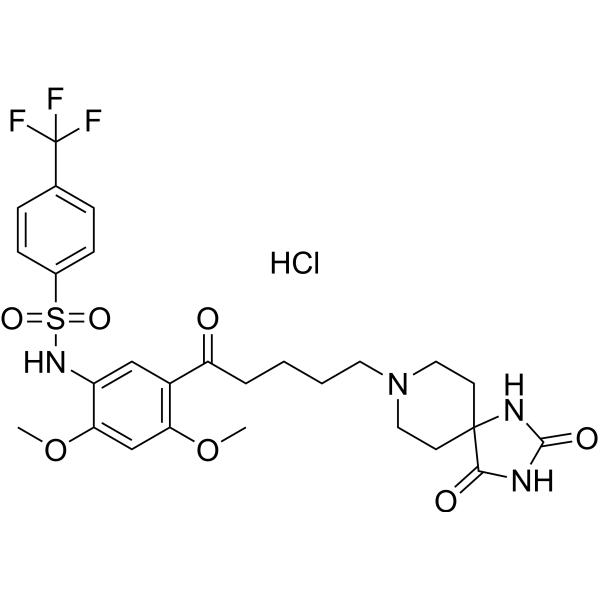
RS-102221 hydrochloride is a selective 5-HT2C receptor antagonist (Ki=10 nM). RS-102221 hydrochloride shows nearly 100-fold selectivity for the 5-HT2C receptor as compared to the 5-HT2A and 5-HT2B receptors. RS-102221 hydrochloride can promote the differentiation of new nerve cells. RS-102221 hydrochloride increases food-intake and weight-gain in rats .
loading...
    loading...
2
2 Cited Publications
Cat. No.: HY-N0113
CAS No.: 539-15-1
Synonyms: Ordenina; Peyocactine
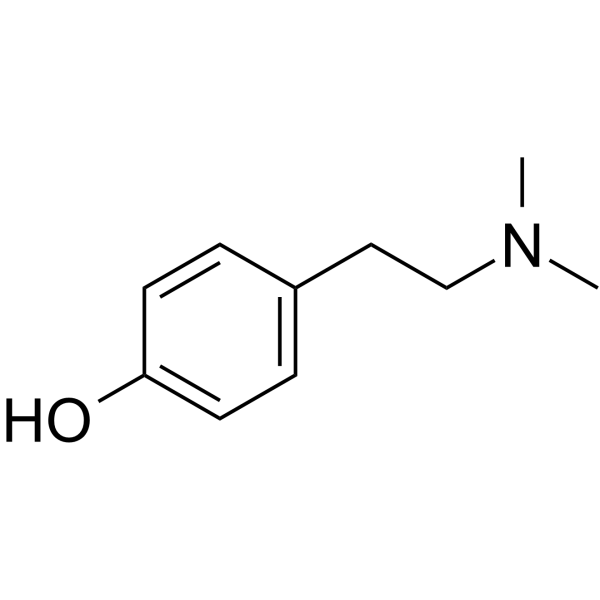
Hordenine (Ordenina; Peyocactine) is a multifunctional alkaloid with oral activity and blood-brain barrier penetration. Hordenine inhibits LPS-induced phosphorylation of p38, JNK, ERK1/2, p65, IκB, and AKT, prevents p65 nuclear translocation, and suppresses inflammatory cytokines and mediators. Hordenine promotes M2 macrophage polarization, restores blood-milk barrier integrity, alleviates oxidative stress by reducing ROS and MDA, and attenuates LPS-induced lung injury and pulmonary edema. Hordenine inhibits cAMP production, CREB phosphorylation, and MITF expression, thereby suppressing melanin synthesis in melanocytes and reconstructed epidermis. Hordenine activates the Wnt/β-catenin signaling pathway, promotes dermal papilla cell proliferation and hair shaft elongation, and accelerates hair regeneration. Hordenine activates DRD2, acts as a D3R partial agonist, α2A-AR full agonist, and 5-HT2A-R antagonist, and inhibits SERT and DAT. Hordenine inhibits α-synuclein accumulation and ameliorates motor deficits in Parkinson's disease models. Hordenine limits alcohol intake, reduces relapse drinking behavior, and modulates alcohol-induced conditioned place preference. Hordenine can be used for research on mastitis, skin pigmentation, acute lung injury, foodborne diseases, hair loss, Parkinson's disease, bacterial infections, and alcohol use disorder .
loading...
    loading...
2
2 Cited Publications
Cat. No.: HY-N0113B
CAS No.: 6027-23-2
Synonyms: Ordenina hydrochloride; Peyocactine hydrochloride
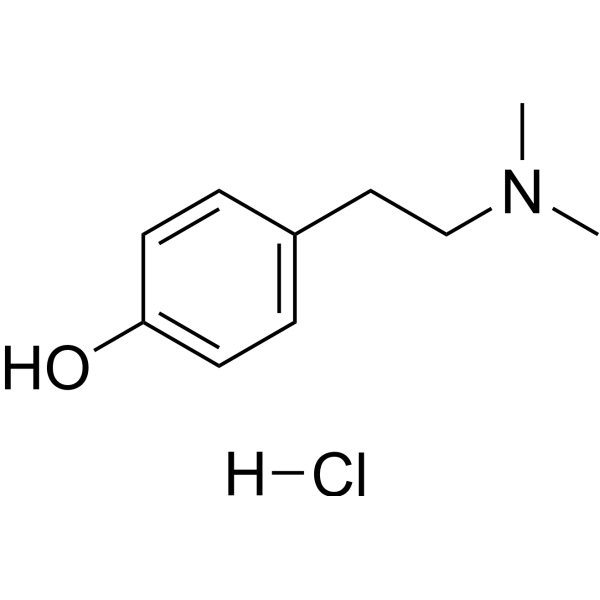
Hordenine hydrochloride (Ordenina hydrochloride; Peyocactine hydrochloride) is a multifunctional alkaloid with oral activity and blood-brain barrier penetration. Hordenine hydrochloride inhibits LPS-induced phosphorylation of p38, JNK, ERK1/2, p65, IκB, and AKT, prevents p65 nuclear translocation, and suppresses inflammatory cytokines and mediators. Hordenine hydrochloride promotes M2 macrophage polarization, restores blood-milk barrier integrity, alleviates oxidative stress by reducing ROS and MDA, and attenuates LPS-induced lung injury and pulmonary edema. Hordenine hydrochloride inhibits cAMP production, CREB phosphorylation, and MITF expression, thereby suppressing melanin synthesis in melanocytes and reconstructed epidermis. Hordenine hydrochloride activates the Wnt/β-catenin signaling pathway, promotes dermal papilla cell proliferation and hair shaft elongation, and accelerates hair regeneration. Hordenine hydrochloride activates DRD2, acts as a D3R partial agonist, α2A-AR full agonist, and 5-HT2A-R antagonist, and inhibits SERT and DAT. Hordenine hydrochloride inhibits α-synuclein accumulation and ameliorates motor deficits in Parkinson's disease models. Hordenine hydrochloride limits alcohol intake, reduces relapse drinking behavior, and modulates alcohol-induced conditioned place preference. Hordenine hydrochloride can be used for research on mastitis, skin pigmentation, acute lung injury, foodborne diseases, hair loss, Parkinson's disease, bacterial infections, and alcohol use disorder .
loading...
    loading...
1
1 Cited Publications
Cat. No.: HY-P3463
CAS No.: 123475-27-4
Synonyms: GLP-1 (human)
Target:  

GCGR

Beinaglutide is a human GLP-1 polypeptide that shares almost 100% homology with human GLP-1 (7–36). Beinaglutide displays does-dependent effects in glycemic control, inhibiting food intake and gastric empty and promoting weight loss. Beinaglutide has the potential for the research of overweight/obesity and nonalcoholic steatohepatitis (NASH) .
loading...
    loading...
1
1 Cited Publications
Cat. No.: HY-W010042
CAS No.: 921-60-8
Synonyms: L-(-)-Glucose
Target:  

Fluorescent Dye

Research Areas:  

Metabolic Disease Cancer

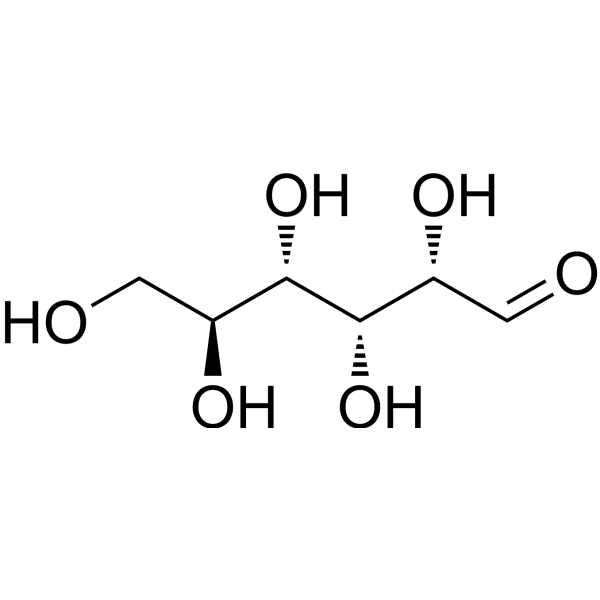
L-Glucose (L-(-)-Glucose) is a stereoisomer of D-Glucose (HY-B0389), which does not readily enter the brain. L-Glucose can promote food intake. L-glucose is combined with a fluorescence detector to produce a fluorescent probe that can be used to visualize and characterize cancer cells. L-Glucose also can be used in the research to enhance memory in mice .
loading...
    loading...
1
1 Cited Publications
Cat. No.: HY-W041019
CAS No.: 154-02-9
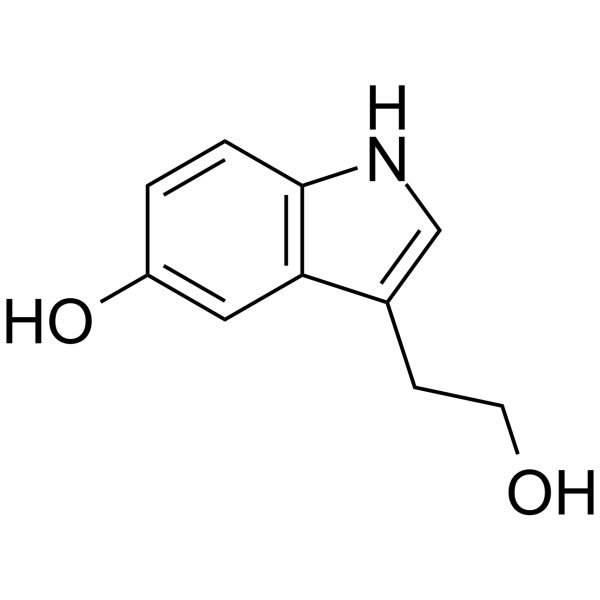
5-Hydroxytryptophol is a mammalian serotonin metabolite that can be used as a sensitive biomarker for recent alcohol intake. 5-Hydroxytryptophol is formed by alcohol-induced changes in the serotonin metabolic pathway and is excreted in the urine as a glucuronic acid conjugate. 5-Hydroxytryptophol is elevated in urine excretion and can be used clinically to monitor alcohol intake in scenarios such as alcohol relapse .
loading...
    loading...
1
1 Cited Publications
Cat. No.: HY-P1215A
Target:  

Melanocortin Receptor

Research Areas:  

Metabolic Disease

HS024 is a selective MC4 receptor antagonist, with Kis of 0.29, 3.29, 5.45, 18.6 nM for MC4, MC5, MC3, and MC1, respectively. HS024 increase food intake .
loading...
    loading...
1
1 Cited Publications
Cat. No.: HY-W010042S
CAS No.: 478519-02-7
Synonyms: L-(-)-Glucose-13C
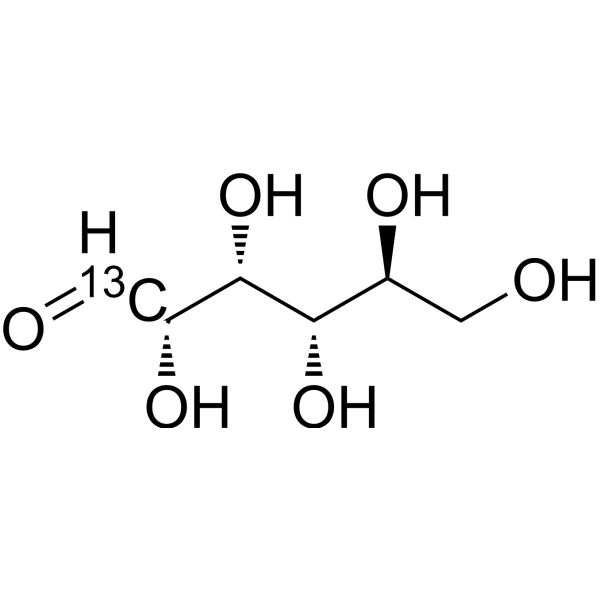
L-Glucose- 13C is the 13C labeled L-Glucose. L-Glucose (L-(-)-Glucose) is an enantiomer of D-glucose. L-Glucose can promote food intake .
loading...
    loading...
1
1 Cited Publications
Cat. No.: HY-121827
CAS No.: 611207-11-5
Purity:  99.83%
Target:  

Cannabinoid Receptor

Research Areas:  

Metabolic Disease

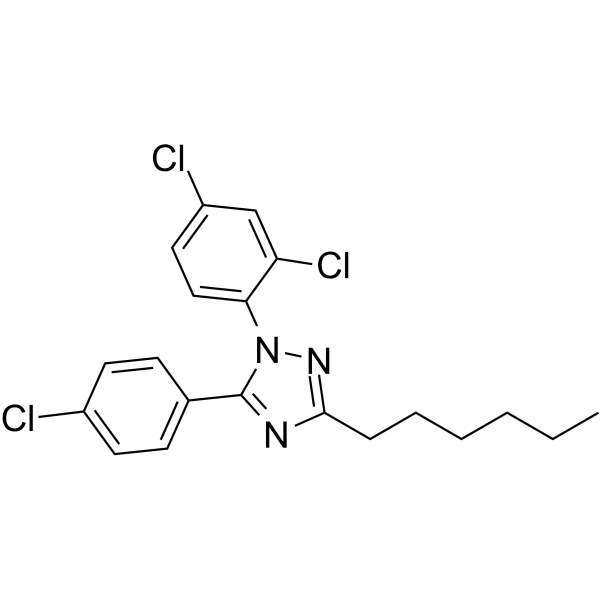
LH-21 is a potent in vivo neutral cannabinoid CB1 receptor antagonist. LH-21 reduces food intake and body weight gain in obese Zucker rats. , and displays efficacy as a feeding inhibitor .
loading...
    loading...
1
1 Cited Publications
Cat. No.: HY-P1216A
Target:  

Melanocortin Receptor

Research Areas:  

Neurological Disease

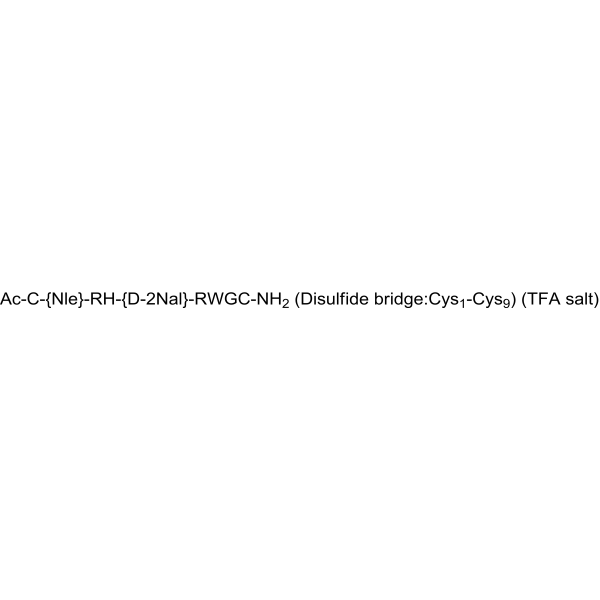
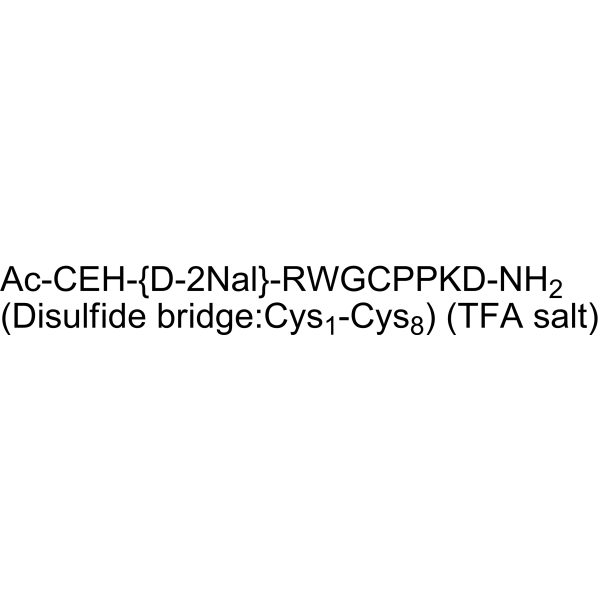
HS014 TFA is a potent and selective melanocortin-4 (MC4) receptor antagonist, with Kis of 3.16, 108, 54.4 and 694 nM for human MC4, MC1, MC3 and MC5 receptors respectively. HS014 TFA increases food intake in free-feeding rats .
loading...
    loading...
1
1 Cited Publications
Cat. No.: HY-W017006S
CAS No.: 91037-48-8
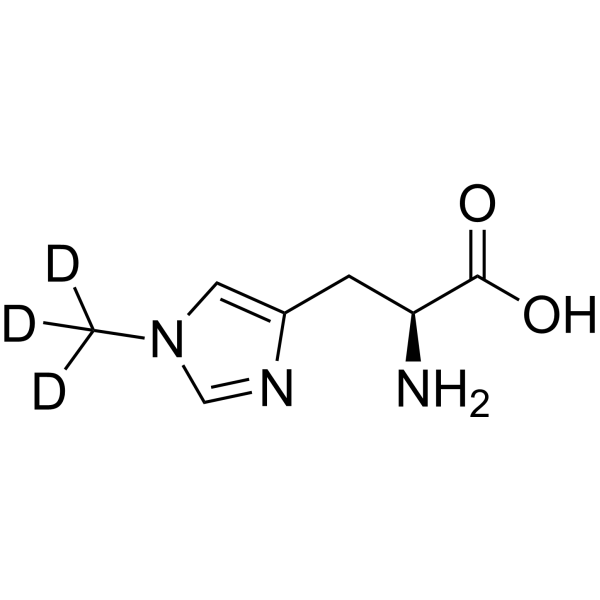
1-Methyl-L-histidine-d3 is the deuterium labeled 1-Methyl-L-histidine. 1-Methyl-L-histidine is an objective indicator of meat ingestion and exogenous 3-methylhistidine (3MH) intake.
loading...
    loading...
1
1 Cited Publications
Cat. No.: HY-P99388
CAS No.: 1429201-24-0
Synonyms: REGN-1033; SAR391786

Target:  

TGF-beta/Smad

Research Areas:  

Inflammation/Immunology

Trevogrumab (REGN-1033) is a monoclonal antibody targeting GDF8 (growth differentiation factor 8, also known as myostatin). Trevogrumab is used in research on muscle wasting conditions, including disuse atrophy, chronic diseases, and changes in food and nutrient intake .
loading...
    loading...
1
1 Cited Publications
Cat. No.: HY-103416
CAS No.: 145307-34-2
Purity:  ≥98.0%
Target:  

Dopamine Receptor

Research Areas:  

Neurological Disease

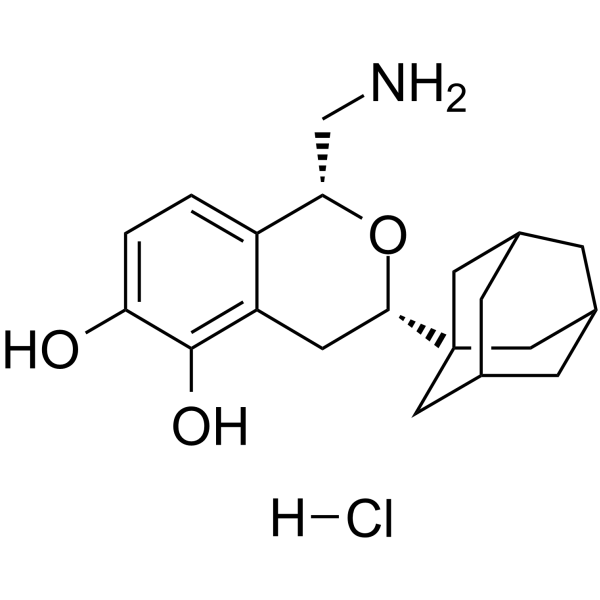
A-77636 hydrochloride is a potent, orally active, selective and long acting dopamine D1 receptor agonist (pKi=7.40; Ki=39.8 nM) with antiparkinsonian activity. A-77636 hydrochloride is functionally inactive at dopamine D2 receptor .
loading...
    loading...
1
1 Cited Publications
Cat. No.: HY-W011220
CAS No.: 74772-77-3
Synonyms: ADD-3878; U-63287
Target:  

PPAR

Research Areas:  

Cardiovascular Disease Cancer

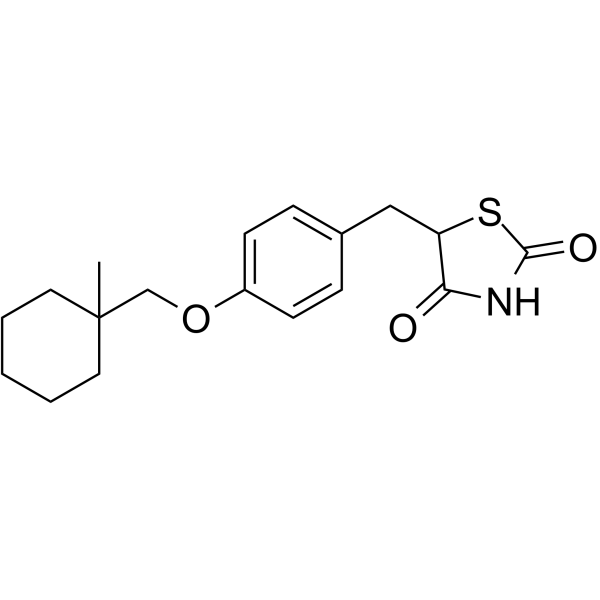
Ciglitazone is a potent and selective PPARγ agonist (EC50=3 μM). Ciglitazone inhibits proliferation and differentiation of th17 cells. Ciglitazone is a hypoglycemic agent orally active in the obese-hyperglycemic animal models. Ciglitazone induces apoptosis accompanied by activation of p38 MAPK and nuclear translocation of apoptosis inducing factor (AIF) in opossum kidney (OK) renal epithelial cells .
loading...
    loading...
1
1 Cited Publications
Cat. No.: HY-120619
CAS No.: 186185-03-5
Purity:  99.08%
BMS-193885 is a selective neuropeptide Y1 receptor antagonist (Ki=3.3 nM) that competitively blocks the receptor to inhibit NPY-mediated appetite regulation signaling pathways, reduce food intake and inhibit weight gain. BMS-193885 has good blood-brain barrier penetration and is mainly used in the study of obesity and related metabolic diseases .
loading...
    loading...
1
1 Cited Publications
Cat. No.: HY-P5645
CAS No.: 1683582-94-6
Synonyms: Human liver expressed antimicrobial peptide-2
LEAP-2 (Human liver expressed antimicrobial peptide-2) is a GHS-R1a antagonist, with an IC50 of 6.0 nM. LEAP-2 suppresses the orexigenic effect of ghrelin. LEAP-2 attenuates ghrelin-induced growth hormone (GH) release and reduces basal food intake. LEAP-2 exhibits antimicrobial activity against microbial model organisms. LEAP-2 can be used for the study of obesity and infection .
loading...
    loading...
1
1 Cited Publications
Cat. No.: HY-18775
CAS No.: 110505-75-4
Synonyms: Para-topolin riboside
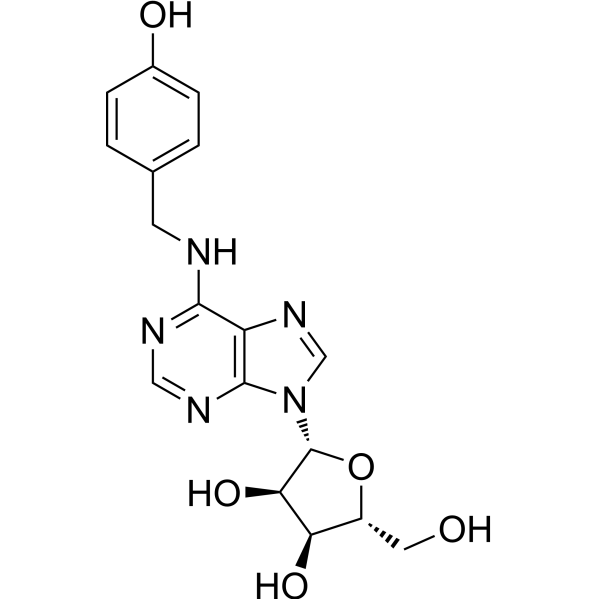
N6-(4-Hydroxybenzyl) adenosine (Para-topolin riboside) is an equilibrative nucleoside transporter 1 (ENT1) inhibitor and a selective agonist of adenosine A2a receptor (A2aR), and also exhibits activity against P2Y12 receptor. N6-(4-Hydroxybenzyl) adenosine reduces ethanol intake and preference, attenuates operant conditioning-induced ethanol place preference, decreases the value of ethanol-related rewards, and inhibits collagen-induced platelet aggregation. N6-(4-Hydroxybenzyl) adenosine can be used in studies related to alcohol use disorder .
loading...
    loading...
1
1 Cited Publications
Cat. No.: HY-123789
CAS No.: 956507-49-6
Purity:  98.1%
Research Areas:  

Inflammation/Immunology

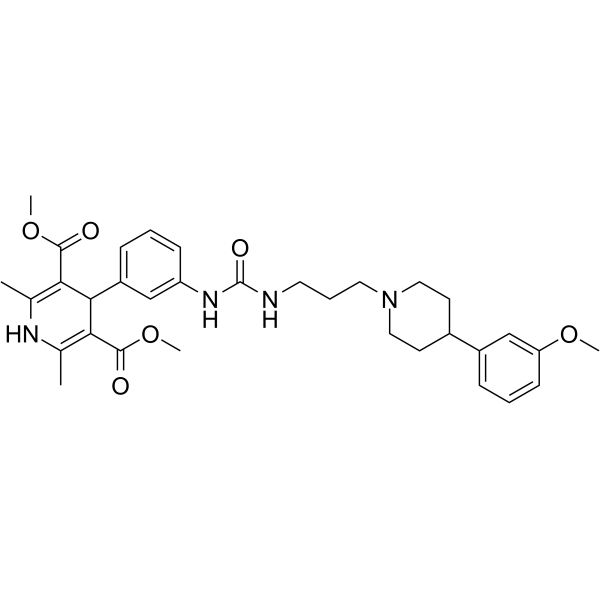
T-5342126 is a toll-like receptor 4 (TLR4) antagonist. It reduces LPS-induced production of nitric oxide (NO) in RAW 264.7 cells (IC50=27.8 μM), as well as decreases LPS-induced IL-8, TNF-α, and IL-6 production in isolated human whole blood (IC50s=110.5, 315.6, and 318.4 μM, respectively). T-5342126 (82 mg/kg) reduces ethanol intake and the abundance of ionized calcium-binding adapter molecule 1 (Iba1), a marker of microglial activation, in the central nucleus of the amygdala in ethanol-dependent mice.
loading...
    loading...
1
1 Cited Publications
Cat. No.: HY-N2466
CAS No.: 75921-69-6
Synonyms: MT-I; [Nle4,D-Phe7]-α-MSH
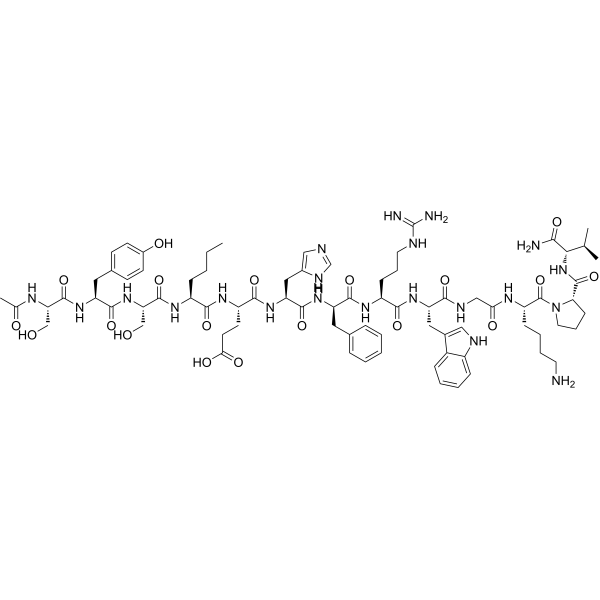
Melanotan I (MT-I; [Nle4,D-Phe7]-α-MSH) is an α-MSH (HY-P0252) analog, synthetic melanotropic peptide, and melanocortin receptor (MCR) agonist. Melanotan I induces skin tanning by mimicking the action of α-MSH on the melanocortin 1 receptor (MC1R) in melanocytes. As an appetite suppressant, Melanotan I impairs the ability of insulin to inhibit endogenous glucose production, suppresses leptin secretion from adipose tissue, and thereby reduces voluntary feed intake in ewes. Melanotan I can be used in research related to UV-induced skin damage, polymorphic light eruption, ruminant feeding, and sexual dysfunction .
loading...
    loading...
1
1 Cited Publications
Cat. No.: HY-N2466A
CAS No.: 1566590-77-9
Synonyms: MT-I acetate; [Nle4,D-Phe7]-α-MSH acetate
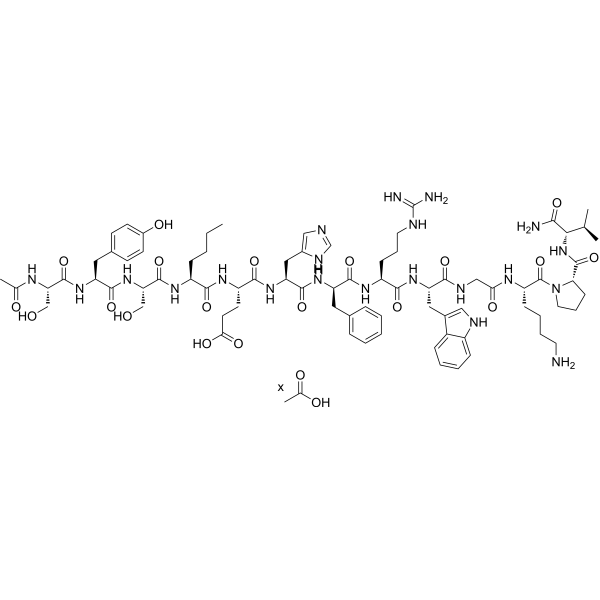
Melanotan I (MT-I; [Nle4,D-Phe7]-α-MSH) acetate is an α-MSH (HY-P0252) analog, synthetic melanotropic peptide, and melanocortin receptor (MCR) agonist. Melanotan I acetate induces skin tanning by mimicking the action of α-MSH on the melanocortin 1 receptor (MC1R) in melanocytes. As an appetite suppressant, Melanotan I acetate impairs the ability of insulin to inhibit endogenous glucose production, suppresses leptin secretion from adipose tissue, and thereby reduces voluntary feed intake in ewes. Melanotan I acetate can be used in research related to UV-induced skin damage, polymorphic light eruption, ruminant feeding, and sexual dysfunction .
loading...
    loading...

