



145307-34-2
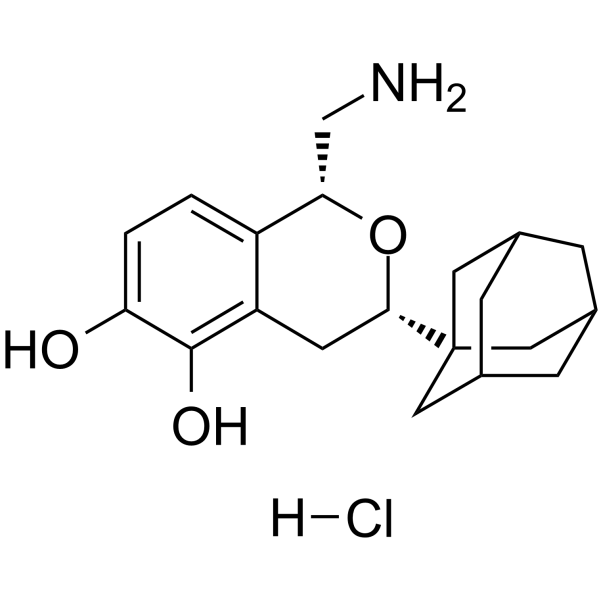
145307-34-2
Chemical Structure
A-77636 hydrochloride
- CAS No.: 145307-34-2
- Formula:C20H28ClNO3
- Molecular Weight:365.89
IUPAC Name: (1R,3S)-3-((3S,5S,7S)-adamantan-1-yl)-1-(aminomethyl)isochromane-5,6-diol hydrochloride
InChIKey: BWHPNJVKFAPVOG-WUAVIEMVSA-N
SMILES: [H]Cl.NC[C@@H]1O[C@@H](CC2=C(O)C(O)=CC=C12)C34C[C@H](C5)C[C@H](C[C@H]5C4)C3
Biological Activity: A-77636 hydrochloride is a potent, orally active, selective and long acting dopamine D1 receptor agonist (pKi=7.40; Ki=39.8 nM) with antiparkinsonian activity. A-77636 hydrochloride is functionally inactive at dopamine D2 receptor[1][2].
| Cat. No. | Product Name | Purity | Description | Pricing | |||||||||||||||||||
|---|---|---|---|---|---|---|---|---|---|---|---|---|---|---|---|---|---|---|---|---|---|---|---|
|
|
A-77636 hydrochloride | 98.03% | A-77636 hydrochloride is a potent, orally active, selective and long acting dopamine D1 receptor agonist (pKi=7.40; Ki=39.8 nM) with antiparkinsonian activity. A-77636 hydrochloride is functionally inactive at dopamine D2 receptor. | ||||||||||||||||||||
|
loading...
/
|
|||||||||||||||||||||||
Structural Analogs
-
Similarity Score 0.98
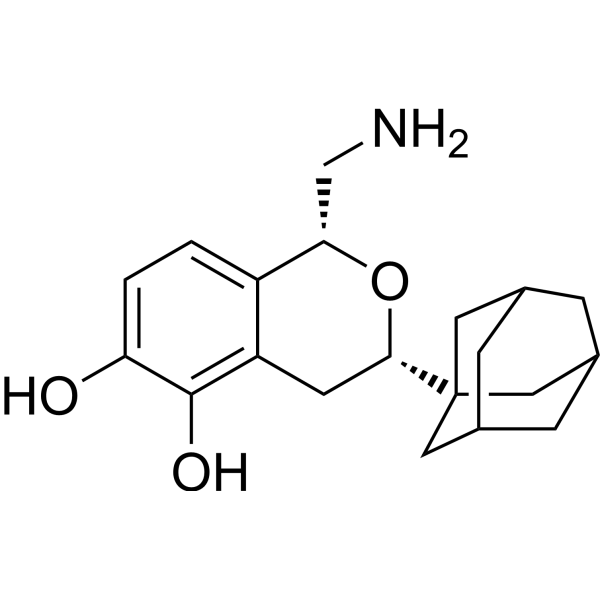 HY-141496A-77636
-
Similarity Score 0.53
 HY-103431RA68930 hydrochloride (Standard)
-
Similarity Score 0.52
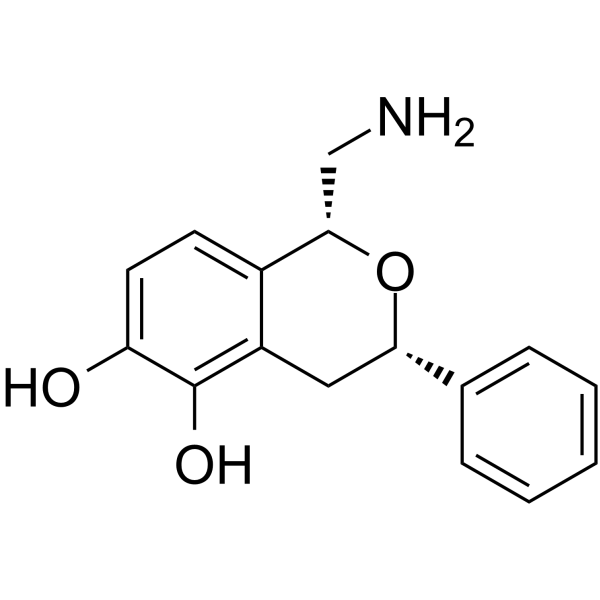 HY-120687A68930
-
Similarity Score 0.46
 HY-N10403R4-Hydroxyestradiol (Standard)
-
Similarity Score 0.46
 HY-Z7812RAdapalene impurity 1 (Standard)
-
Similarity Score 0.45
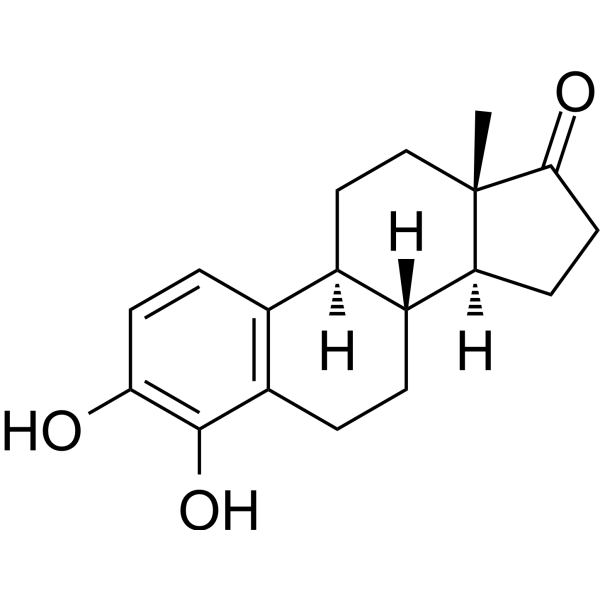 HY-W0093004-Hydroxyestrone
-
Similarity Score 0.44
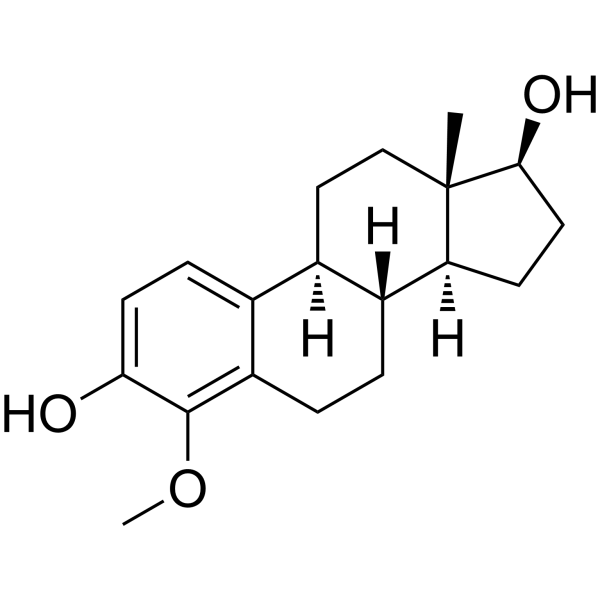 HY-1482964-Methoxyestradiol
-
Similarity Score 0.43
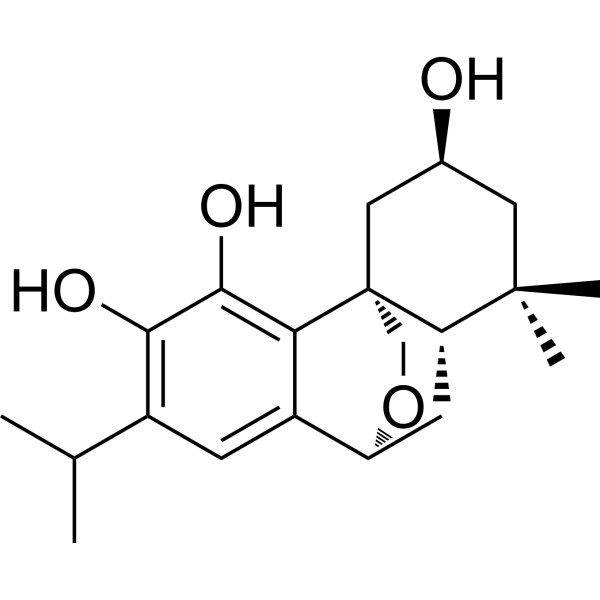 HY-N109272,11,12-Trihydroxy-7,20-epoxy-8,11,13-abietatriene
-
Similarity Score 0.43
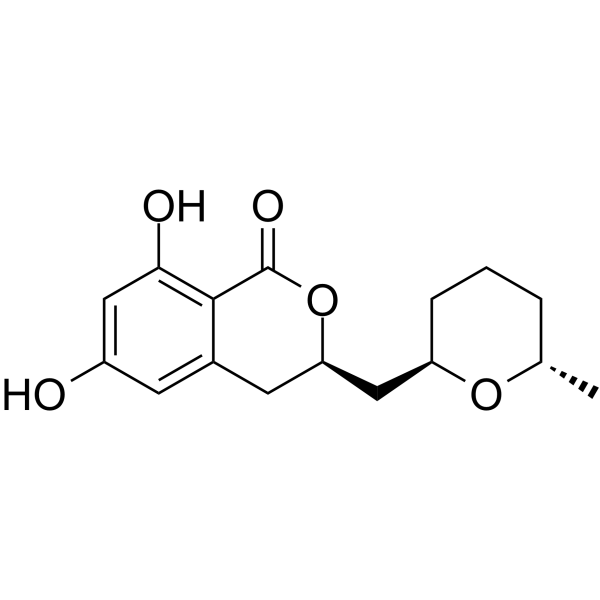 HY-136767Cladosporin
-

Explore the MedChemAI to find more analogs


References
- [1]. Kebabian JW, et al. A-77636: a potent and selective dopamine D1 receptor agonist with antiparkinsonian activity in marmosets. Eur J Pharmacol. 1992;229(2-3):203-209. [Content Brief]
- [2]. Smith LA, et al. The actions of a D-1 agonist in MPTP treated primates show dependence on both D-1 and D-2 receptor function and tolerance on repeated administration. J Neural Transm (Vienna). 2002;109(2):123-140. [Content Brief]



