


296 Results for "

Intake

" in MedChemExpress (MCE) Product Catalog:
Products (296)

296 Results for "Intake" in MCE Product Catalog:

72
72 Publications Verification
Cat. No.: HY-13443
CAS No.: 141758-74-9
Purity:  99.95%
Synonyms: Exenatide
Exendin‑4 (Exenatide) is an orally active, blood-brain barrier-permeable glucagon-like peptide-1 receptor (GLP‑1 receptor) agonist that resists degradation mediated by dipeptidyl peptidase IV. Exendin‑4 mediates multiple glucose-regulating effects, including stimulation of glucose-dependent insulin secretion, inhibition of glucagon production, increase in β-cell mass, delay of gastric emptying, reduction of food intake, improvement of peripheral insulin sensitivity, and restoration of normal islet structure. Exendin‑4 inhibits oxidative stress, alleviates inflammatory responses, and reduces neuronal apoptosis. Exendin‑4 reduces the aggregation level of mutant huntingtin, improves motor function, prolongs survival time, and regulates the expression levels of leptin and ghrelin. Exendin‑4 can be used in research related to type 2 diabetes, acute ischemic stroke, and Huntington's disease .
loading...
    loading...
72
72 Publications Verification
Cat. No.: HY-13443A
CAS No.: 914454-01-6
Purity:  99.91%
Synonyms: Exenatide acetate
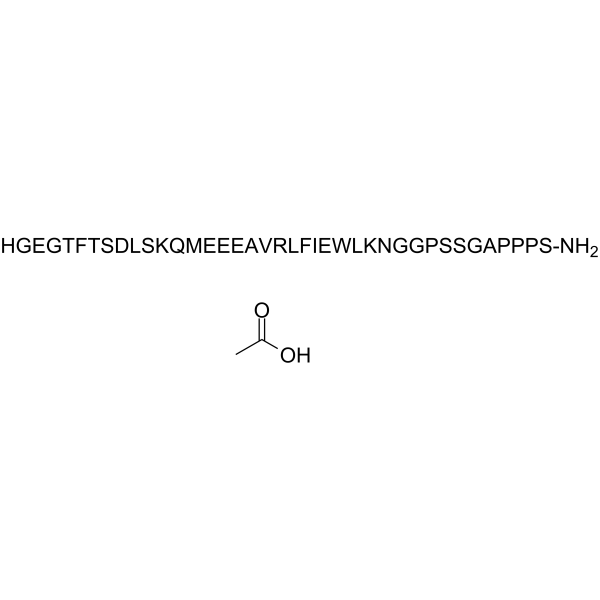
Exendin-4 acetate (Exenatide acetate) is an orally active, blood-brain barrier-permeable glucagon-like peptide-1 receptor (GLP‑1 receptor) agonist that resists degradation mediated by dipeptidyl peptidase IV. Exendin-4 acetate mediates multiple glucose-regulating effects, including stimulation of glucose-dependent insulin secretion, inhibition of glucagon production, increase in β-cell mass, delay of gastric emptying, reduction of food intake, improvement of peripheral insulin sensitivity, and restoration of normal islet structure. Exendin-4 acetate inhibits oxidative stress, alleviates inflammatory responses, and reduces neuronal apoptosis. Exendin-4 acetate reduces the aggregation level of mutant huntingtin, improves motor function, prolongs survival time, and regulates the expression levels of leptin and ghrelin. Exendin-4 acetate can be used in research related to type 2 diabetes, acute ischemic stroke, and Huntington's disease .
loading...
    loading...
71
71 Cited Publications
Cat. No.: HY-B1618
CAS No.: 50-22-6
Synonyms: 17-Deoxycortisol; 11β,21-Dihydroxyprogesterone; Kendall's compound B
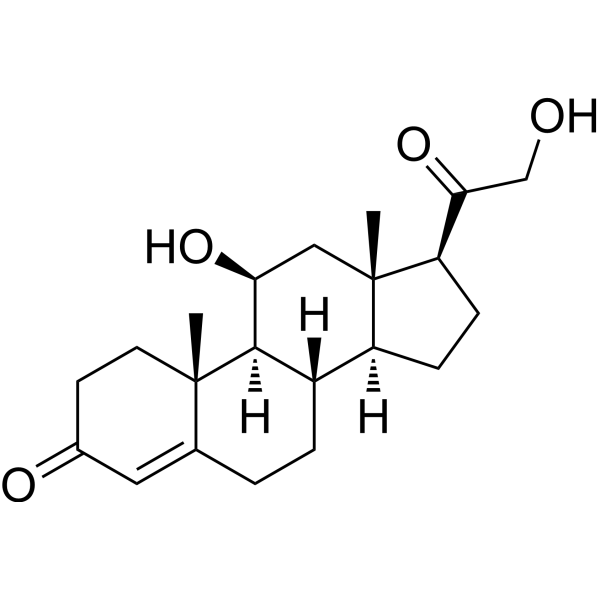
Corticosterone (17-Deoxycortisol) is an orally active and adrenal cortex-produced glucocorticoid, which plays an important role in regulating neuronal functions of the limbic system (including hippocampus, prefrontal cortex, and amygdala). Corticosterone increases the Rab-mediated AMPAR membrane traffic via SGK-induced phosphorylation of GDI. Corticosterone also interferes with the maturation of dendritic cells and shows a good immunosuppressive effect .
loading...
    loading...
14
14 Cited Publications
Cat. No.: HY-10895
CAS No.: 249889-64-3
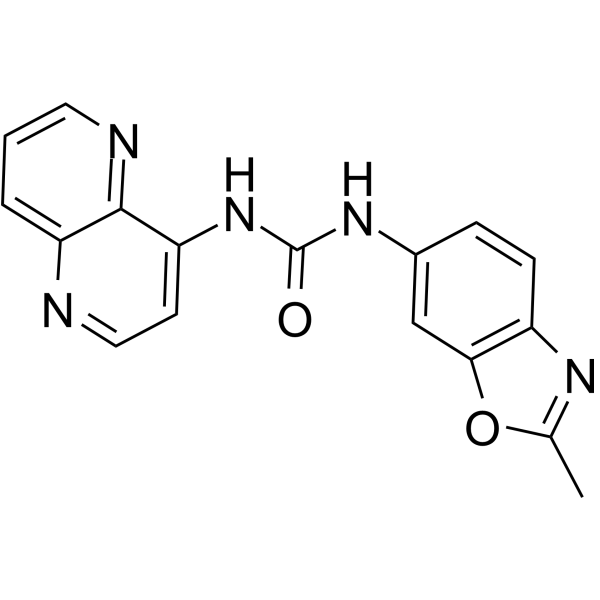
Synonyms: SB 334867A
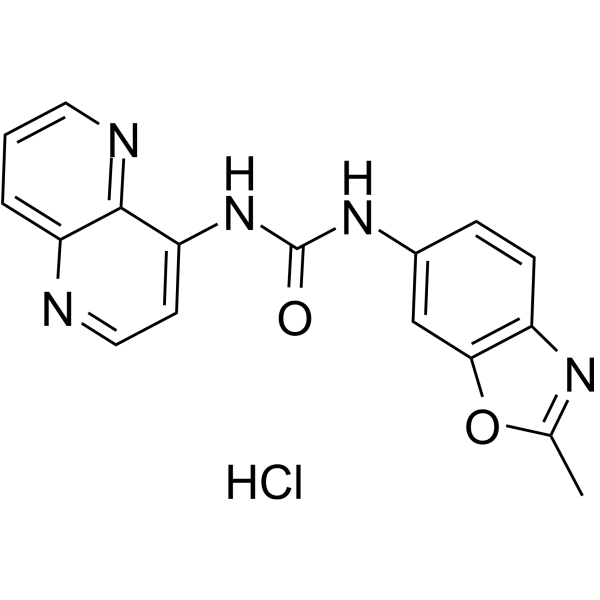
SB-334867 (SB 334867A) is an excellent,selective and blood-brain barrier permeable orexin-1 (OX1) receptor antagonist, shows selectivity over OX2 (pKb=7.4), 100-fold over 5-HT2B, 5-HT2C with pKi values of 5.4 and 5.3, respectively . SB-334867 reduces ethanol consumption and inhibits the acquisition of morphine-induced sensitization to locomotor activity in vivo .
loading...
    loading...
14
14 Cited Publications
Cat. No.: HY-10895A
CAS No.: 792173-99-0
Purity:  99.88%
Synonyms: SB334867A free base
SB-334867 free base (SB334867A free base) is an excellent, selective and blood–brain barrier permeable orexin-1 (OX1) receptor antagonist, shows selectivity over OX2 (pKb=7.4), 100-fold over 5-HT2B, 5-HT2C with pKi values of 5.4 and 5.3, respectively . SB-334867 reduces ethanol consumption and inhibits the acquisition of morphine-induced sensitization to locomotor activity in vivo .
loading...
    loading...
8
8 Cited Publications
Cat. No.: HY-19870
CAS No.: 920014-72-8
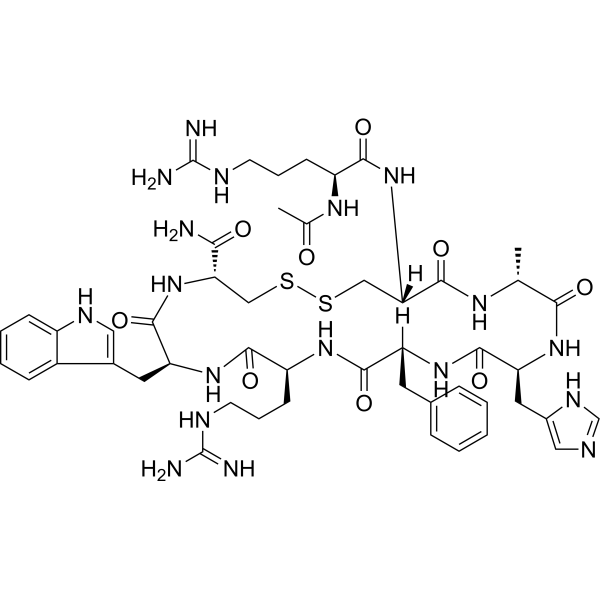
Synonyms: RM-493; BIM-22493; IRC-022493
Setmelanotide (RM-493) is a blood-brain barrier-permeable, selective MC4R agonist with a Ki value of 2.1 nM for hMC4R. Setmelanotide activates the CaMKK2/AMPK signaling pathway. Setmelanotide mediates body weight homeostasis, feeding regulation and energy expenditure modulation; it reduces food intake, induces weight loss, decreases obesity severity, increases daytime activity and energy expenditure, lowers levels of leptin, triglycerides, fasting insulin and diastolic blood pressure, improves insulin sensitivity, glucose tolerance and fatty liver condition, and reverses respiratory depression. Setmelanotide is applicable to research related to obesity, hyperinsulinemia, fatty liver and respiratory depression .
loading...
    loading...
8
8 Cited Publications
Cat. No.: HY-19870C
CAS No.: 2759937-80-7
Synonyms: RM-493 monoacetate; BIM-22493 monoacetate; IRC-022493 monoacetate
Setmelanotide monoacetate (RM-493 monoacetate) is a blood-brain barrier-permeable, selective MC4R agonist with a Ki value of 2.1 nM for hMC4R. Setmelanotide monoacetate activates the CaMKK2/AMPK signaling pathway. Setmelanotide monoacetate mediates body weight homeostasis, feeding regulation and energy expenditure modulation; it reduces food intake, induces weight loss, decreases obesity severity, increases daytime activity and energy expenditure, lowers levels of leptin, triglycerides, fasting insulin and diastolic blood pressure, improves insulin sensitivity, glucose tolerance and fatty liver condition, and reverses respiratory depression. Setmelanotide monoacetate is applicable to research related to obesity, hyperinsulinemia, fatty liver and respiratory depression .
loading...
    loading...
4
4 Cited Publications
Cat. No.: HY-P1107
CAS No.: 220673-95-0
Synonyms: aSvg-30
Target:  

CRFR

Research Areas:  

Neurological Disease

Antisauvagine-30 (aSvg-30) is a selective peptide antagonist of the CRF2 receptor, with an IC50 of 1.1 nM for mouse CRF2. Antisauvagine-30 modulates cAMP signaling, gastric emptying, food intake, fear conditioning, anxiety-like behavior, stress responses, corticosterone levels, c-Fos expression, and CRF expression. Antisauvagine-30 is used in studies of anxiety-related disorders .
loading...
    loading...
4
4 Cited Publications
Cat. No.: HY-P1107A
Synonyms: aSvg-30 TFA
Target:  

CRFR

Research Areas:  

Neurological Disease

Antisauvagine-30 TFA (aSvg-30 TFA) is a selective peptide antagonist of the CRF2 receptor, with an IC50 of 1.1 nM for mouse CRF2. Antisauvagine-30 TFA modulates cAMP signaling, gastric emptying, food intake, fear conditioning, anxiety-like behavior, stress responses, corticosterone levels, c-Fos expression, and CRF expression. Antisauvagine-30 TFA is used in studies of anxiety-related disorders .
loading...
    loading...
3
3 Cited Publications
Cat. No.: HY-P3462
CAS No.: 1415456-99-3
Target:  

CGRP Receptor

Research Areas:  

Metabolic Disease

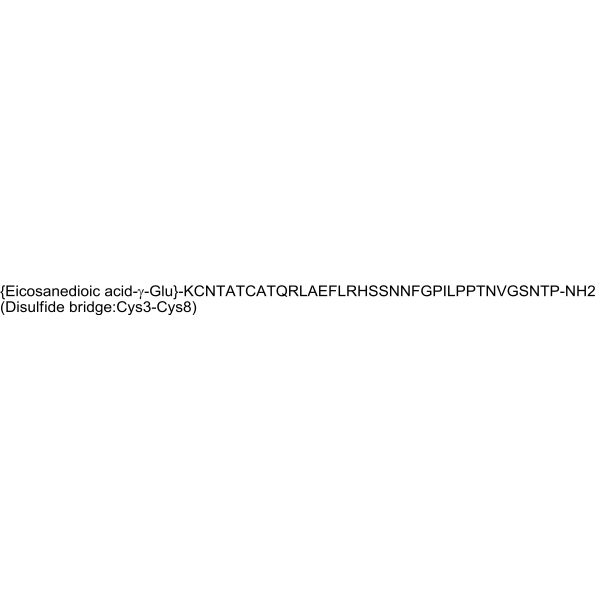
Cagrilintide is an investigational novel long-acting acylated amylin analogue, acts as nonselective amylin receptors (AMYR) and calcitonin G protein-coupled receptor (CTR) agonist. Cagrilintide induces significant weight loss and reduces food intake. Cagrilintide has the potential for the research of obesity .
loading...
    loading...
3
3 Cited Publications
Cat. No.: HY-P3462A
Target:  

CGRP Receptor

Research Areas:  

Metabolic Disease

Cagrilintide acetate is a non-selective AMYR/CTR agonist and long-acting acylated amylase analogue. Cagrilintide acetate causes a reduction in food intake and significant weight loss in a dose-dependent manner. Cagrilintide acetate can be used in obesity studies .
loading...
    loading...
3
3 Cited Publications
Cat. No.: HY-101302
CAS No.: 122517-78-6
Purity:  99.65%
Research Areas:  

Inflammation/Immunology

Naltriben mesylate is a potent δ2-opioid receptor antagonist and a TRPM7 activator. Naltriben mesylate shows Ki values of 0.013 nM, 19 nM and 152 nM for δ, μ and κ receptors, respectively. Naltriben mesylate enhances glioblastoma cell migration and invasion. Naltriben mesylate can be used in research into neurological diseases and cancer .
loading...
    loading...
3
3 Cited Publications
Cat. No.: HY-14229
CAS No.: 1197300-24-5
Purity:  99.71%
Synonyms: CCDC
TGR5 Receptor Agonist (CCDC), a potent Takeda G protein-coupled receptor 5 (TGR5; GPCR19) agonist, shows improved potency in the U2-OS cells and melanophore cells with pEC50s of 6.8 and 7.5, respectively. TGR5 Receptor Agonist can induce peripheral and central hypersensitivity to bladder distension in mice, and increase intracellular Ca 2+ concentration. TGR5 Receptor Agonist can also reduces food intake and improves insulin responsiveness, in diet-induced obese mice. TGR5 Receptor Agonist can be used to research diabetes, bladder hypersensitivity and anti-obesity .
loading...
    loading...
2
loading...
    loading...
2
2 Cited Publications
Cat. No.: HY-14342
CAS No.: 1022152-70-0
Purity:  99.75%
Target:  

Bombesin Receptor

Research Areas:  

Metabolic Disease

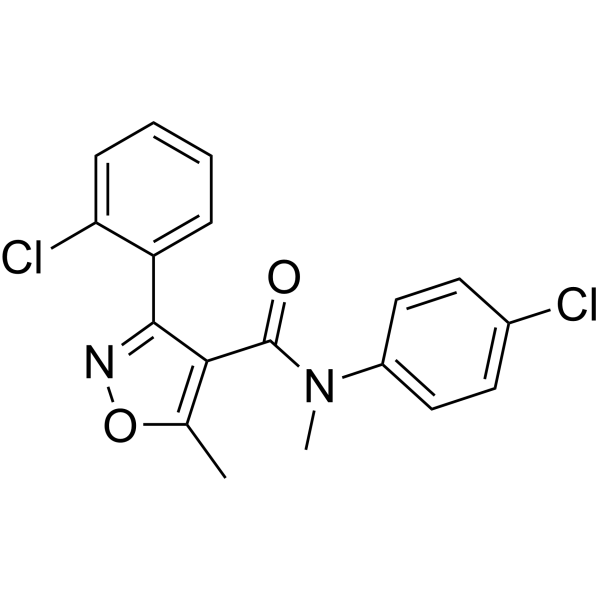
MK-5046 is a potent, selective and orally active Bombesin receptor subtype-3 (BRS-3) allosteric agonist with an IC50 and an EC50 value of 27 and 25 nM for hBRS-3, respectively. MK-5046 inhibits food intake and reduces body weight of diet-induced obese (DIO) mouse models. MK-5046 can be used for the research of obesity .
loading...
    loading...
2
2 Cited Publications
Cat. No.: HY-P2932
CAS No.: 9011-97-6
Synonyms: Cholecystokinin-33(human); CCK-33(human)
Research Areas:  

Metabolic Disease

Cholecystokinin is a peptide hormone. Cholecystokinin, as a hunger suppressant, inhibits food intake and stimulates the digestion of fat and protein. Cholecystokinin can be used for the research of gastrointestinal system .
loading...
    loading...
2
2 Cited Publications
Cat. No.: HY-P1349A
Synonyms: Rat orexin B TFA; Orexin B (mouse) TFA
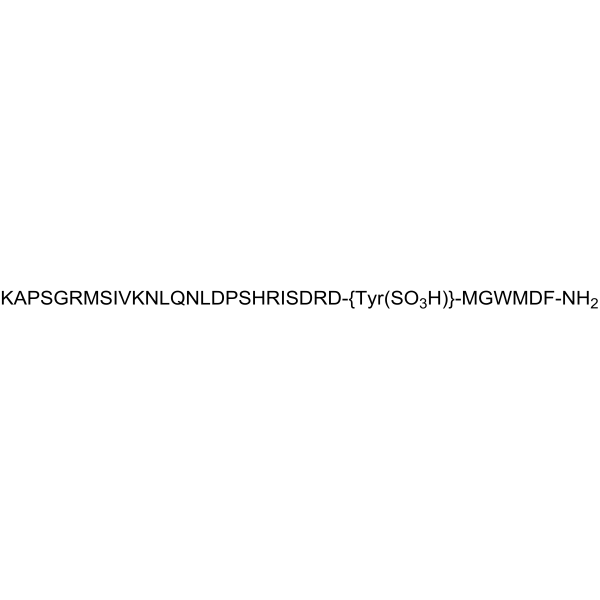
Orexin B, rat, mouse (Rat orexin B) TFA is an endogenous orexin receptor agonist. Orexin B, rat, mouse TFA binds and activates two closely related orphan G protein-coupled receptors OX1-R and OX2-R. Orexin B, rat, mouse TFA stimulates food intake and energy expenditure and plays a significant role in sleep-wakefulness regulation .
loading...
    loading...
2
2 Cited Publications
Cat. No.: HY-P1323A
[Leu31,Pro34]-Neuropeptide Y(human,rat) TFA is a specific neuropeptide Y Y1 receptor agonist. [Leu31,Pro34]-Neuropeptide Y(human,rat) TFA slao activates Y4, Y5. [Leu31,Pro34]-Neuropeptide Y(human,rat) TFA can increase blood pressure in anesthetized rats and increases food intake .
loading...
    loading...
2
2 Cited Publications
Cat. No.: HY-112612A
Purity:  98.06%
Target:  

GPR88

Research Areas:  

Neurological Disease

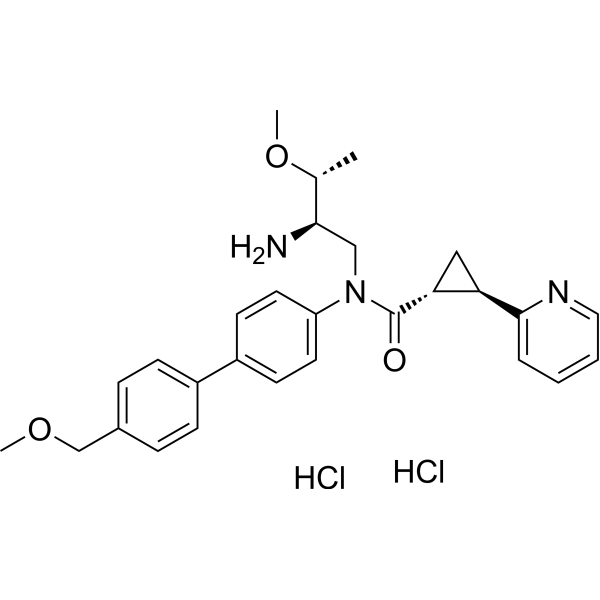
RTI-13951-33 hydrochloride is a potent, selective, and brain-penetrant GPR88 agonist, with an EC50 of 25 nM in GPR88 cAMP functional assay. RTI-13951-33 hydrochloride reduces alcohol reinforcement and intake behaviors in rats .
loading...
    loading...
2
2 Cited Publications
Cat. No.: HY-P1349
CAS No.: 202801-92-1
Synonyms: Rat orexin B; Orexin B (mouse)
Orexin B, rat, mouse (Rat orexin B) is an endogenous agonist at Orexin receptor with Kis of 420 and 36 nM for OX1 and OX2, respectively.
loading...
    loading...