305 Results for "

Intake

" in MedChemExpress (MCE) Product Catalog:
Products (305)

305 Results for "Intake" in MCE Product Catalog:

Cat. No.: HY-P11881
IUB288 is a stable and long-acting glucagon-modified peptide, as well as a highly selective Glucagon Receptor agonist. IUB288 stimulates the production of cAMP, increases the expression levels of FGF21 in plasma and liver, regulates bile acid metabolism, and inhibits the expression of hepatic HMGCR. IUB288 improves hypercholesterolemia, enhances insulin sensitivity, increases core body temperature, boosts energy expenditure, suppresses food intake, and can also induce hyperglycemia and glucose intolerance. IUB288 is applicable to the research of diet-induced obesity, type 2 diabetes, and obesity-related glucose intolerance .
loading...
    loading...
Cat. No.: HY-P5519
CAS No.: 77568-41-3
Target:  

Inhibitory Antibodies

Research Areas:  

Others

[Thr28, Nle31]-Cholecystokinin (25-33) is a biological active peptide. (Cholecystokinin (CCK) acts both as a hormone and a neurotransmitter and is found in the GI system and the central nervous system. It is a satiety peptide that inhibits food intake.This Cholecystokinin (CCK) analog retains all the bioactivities of CCK8, but was found to be remarkably more stable in acidic media and unaffected by air oxidation due to Met replacements (Thr 28 and Nle31 were substituted for Methionine). The predominant conformation contains a gamma-turn centered on Thr4, separated by Gly5 from a helical segment that comprises the C-terminal residues.)
loading...
    loading...
Cat. No.: HY-W746625
CAS No.: 31930-67-3
Synonyms: all-cis-4,7,10,13,16-DPA methyl ester
all-cis-4,7,10,13,16-Docosapentaenoic acid methyl ester (all-cis-4,7,10,13,16-DPA methyl ester) is the methyl ester derivative of all-cis-4,7,10,13,16-Docosapentaenoic acid, that can be used as a nutritional supplement to increase all-cis-4,7,10,13,16-Docosapentaenoic acid intake. all-cis-4,7,10,13,16-Docosapentaenoic acid is a long-chain polyunsaturated fatty acid, that plays a role in cardiovascular health, neuroprotection, and inflammation regulation .
loading...
    loading...
Cat. No.: HY-107928A
CAS No.: 9004-66-4
Iron-Dextran is an injectable complex of iron and dextran, a complex carbohydrate. It is often used to improve iron deficiency anemia, a condition characterized by low levels of iron in the blood due to insufficient dietary intake or malabsorption. Iron-glucan works by providing a source of supplemental iron that the body can use to produce hemoglobin, the protein responsible for carrying oxygen in the blood. However, caution should be exercised when taking iron dextran because it may cause hypersensitivity reactions, including anaphylaxis, and may also increase the risk of infection or other adverse reactions. Therefore, it should only be administered under the supervision of a qualified healthcare provider in a clinical setting.
loading...
    loading...
Cat. No.: HY-12191
CAS No.: 392338-13-5
Target:  

Histamine Receptor

Research Areas:  

Metabolic Disease

A-331440 is a potent and selective histamine H3 receptor antagonist that regulates neurotransmitter release by inhibiting presynaptic H3 receptors. In preclinical studies involving mice on a high-fat diet, A-331440 demonstrated dose-dependent effects on weight reduction and fat loss. At 5 mg/kg, it effectively decreased body weight comparable to dexfenfluramine, while at 15 mg/kg, it significantly reduced body fat and improved insulin tolerance, similar to mice on a low-fat diet. These findings suggest that A-331440 holds promise as an antiobesity agent by modulating histaminergic pathways involved in food intake and metabolic regulation .
loading...
    loading...
Cat. No.: HY-150700
CAS No.: 2784577-71-3
Purity:  99.79%
Target:  

ERK

Research Areas:  

Metabolic Disease

RLX-33 is a potent, selective and blood-brain barrier (BBB) penetrant relaxin family peptide 3 (RXFP3) antagonist, also blocks relaxin-3-induced ERK1/2 phosphorylation, with IC50 values of 2.36 μM for RXFP3, 7.82 and 13.86 μM for ERK1 and ERK2 phosphorylation, respectively. RLX-33 can block the stimulation of food intake induced by the RXFP3-selective agonist R3/I5 in rats. RLX-33 can be used for the research of metabolic syndrome .
loading...
    loading...
Cat. No.: HY-178780
CAS No.: 2137977-29-6
Synonyms: MKP10241
Target:  

GPR119

Deziglipel (MKP10241) is an orally active GPR119 agonist (human EC50: 3.7 nM; IC50 > 7.2 μM). Deziglipel activates GPR119 to increase cAMP levels, promotes active GLP-1 release, reduces blood glucose and HbA1c, decreases body weight and feed intake, and resolves MASH via altered lipid, cytokine, and liver enzyme levels. Deziglipel shows low hERG channel inhibition, minimal CYP450 inhibition, no PXR activation, and no significant transporter inhibition. Deziglipel can be used for the research of type 2 diabetes mellitus, obesity, MASH/MASLD, and metabolic disorders .
loading...
    loading...
Cat. No.: HY-180465
CAS No.: 616201-56-0
Target:  

5-HT Receptor

Research Areas:  

Metabolic Disease

5-HT2C agonist-12 (example.2) is a selective and orally active 5-HT2C receptor agonist. 5-HT2C agonist-12 can inhibit the accumulation of IP3 with an IC50 of 4.5 nM. 5-HT2C agonist-12 can induce a feeling of fullness, shorten the time of eating, and reduce calorie intake. 5-HT2C agonist-12 can be used for the research of obesity .
loading...
    loading...
Cat. No.: HY-181960
CAS No.: 914302-78-6
Target:  

Histamine Receptor

Research Areas:  

Neurological Disease

BP1.3656B is a selective, orally active, blood-brain barrier-permeable histamine H3 receptor (histamine H3 receptor) inverse agonist/antagonist, with a KB value of 0.08 nM for antagonizing agonist-induced activity and an IC50 value of 0.38 nM for directly inhibiting the basal activity of the receptor. BP1.3656B reduces alcohol consumption, alcohol-seeking behavior, alcohol self-administration, motivation to drink, alcohol relapse, alcohol-induced hyperlocomotion, and binge alcohol intake. BP1.3656B is applicable for the research of alcohol use disorder .
loading...
    loading...
Cat. No.: HY-186096
Research Areas:  

Metabolic Disease

LP-856866 is an orally active ACSL5 inhibitor, with IC50 values of 8 nM and 4 nM against mouse and human ACSL5, respectively, and IC50 values of 6 nM and 17 nM against mouse and human ACSL1, respectively. LP-856866 induces delayed gastric emptying, promotes GLP-1 release, reduces food intake, decreases body weight and body fat mass, preserves lean body mass, improves glucose homeostasis, enhances insulin sensitivity, reduces hepatic lipid accumulation, and lowers serum triglyceride and total cholesterol levels. LP-856866 is applicable to research on diet-induced obesity .
loading...
    loading...
Cat. No.: HY-W587486R
CAS No.: 19213-70-8
N-Acetyltaurine (Standard) is the analytical standard of N-Acetyltaurine (HY-W587486). This product is intended for research and analytical applications. N‑acetyltaurine is an orally active endogenous sulfonate that is synthesized from taurine and acetate in the renal cortex. N‑acetyltaurine supports bacterial growth as a sole fixed nitrogen or carbon source. N‑acetyltaurine buffers acetyl moieties of mitochondrial acetyl‑CoA in skeletal muscle. N‑acetyltaurine reduces food intake and body weight in obese and lean wild‑type mice in a GFRAL‑dependent manner. N‑acetyltaurine can be used for the research of diet‑induced obesity, hyperacetatemia and diabetes .
loading...
    loading...
Cat. No.: HY-101365AR
CAS No.: 187397-18-8
Research Areas:  

Neurological Disease

RS-102221 (hydrochloride) (Standard) is the analytical standard of RS-102221 (hydrochloride). This product is intended for research and analytical applications. RS-102221 hydrochloride is a selective 5-HT2C receptor antagonist (Ki=10 nM). RS-102221 hydrochloride shows nearly 100-fold selectivity for the 5-HT2C receptor as compared to the 5-HT2A and 5-HT2B receptors. RS-102221 hydrochloride can promote the differentiation of new nerve cells. RS-102221 hydrochloride increases food-intake and weight-gain in rats .
loading...
    loading...
Cat. No.: HY-182300
CAS No.: 171092-64-1
Research Areas:  

Metabolic Disease

FE 999011 is an orally active dipeptidyl peptidase IV (DPP-IV) inhibitor with IC50 values of 7 nM and 3 nM against human and rat sources, respectively. FE 999011 acts as a glucose tolerance-improving agent and a GLP-1 receptor activator, which reduces blood glucose fluctuation, promotes GLP-1 release and decreases the insulin-glucose ratio. FE 999011 regulates lipid metabolism, delays the onset of diabetes, stabilizes food and water intake, reduces hypertriglyceridemia, prevents the elevation of free fatty acids, and delays the progression of impaired glucose tolerance to disease. FE 999011 can be used in relevant studies of type 2 diabetes .
loading...
    loading...
Cat. No.: HY-N0046
CAS No.: 88105-29-7
Synonyms: Notoginseng triterpenes; Ginsenoside Mb
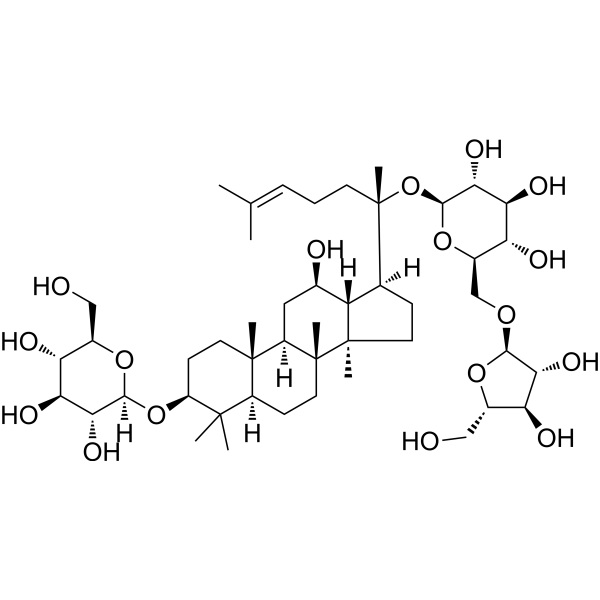
Notoginsenoside Fe (Notoginseng triterpenes; Ginsenoside Mb) is a saponin with anti-obesity and anti-neuroblastoma activities. Notoginsenoside Fe can be isolated from leaves of Panax notoginseng. Notoginsenoside Fe specifically activates paraventricular nucleus neurons in the hypothalamus, effectively reducing body weight, improving fasting blood glucose and protecting liver function by decreasing food intake, increasing resting metabolic rate and enhancing energy expenditure. Notoginsenoside Fe also inhibits the c-Src signaling pathway, blocks the proliferation and viability of human neuroblastoma cells, while improving mitochondrial dysfunction and alleviating apoptosis. Notoginsenoside Fe can be used in studies related to diet-induced obesity and neuroblastoma .
loading...
    loading...
Cat. No.: HY-P0216A
Target:  

Angiotensin Receptor

Research Areas:  

Cardiovascular Disease

A-779 TFA is a selective angiotensin-(1-7) (Ang-(1-7)) antagonist. A-779 TFA blocks Arachidonic acid release, bradykinin potentiation effects and hypotensive action. A-779 TFA exerts diuretic effects in non-pregnant rats, antidiuretic effects in late-pregnant rats, and also inhibits feed intake and water consumption in late-pregnant rats. A-779 TFA attenuates the regulatory effects of prostacyclin, nitric oxide and thromboxane A2 associated with angiotensin-(1-7). A-779 TFA can be used in studies related to hypertension .
loading...
    loading...
Cat. No.: HY-102086
CAS No.: 261717-23-1
Research Areas:  

Neurological Disease

MSX3 is an orally active, selective A2a adenosine receptor antagonist and a prodrug of MSX2 (HY-117184). MSX3 reduces hyperphosphorylation of Tau at specific epitopes in mice without altering total Tau levels, Tau fragments, or Tau aggregation in these animals. MSX3 enhances spatial memory. MSX3 regulates effort-related decision-making behaviors. MSX3 reverses D2 antagonist-induced suppression of lever pressing, increased Chow feed intake, reduced selection of high-barrier arms, and prolonged response latency, and also slightly attenuates effects induced by D1 antagonists. MSX3 can be used in the research of Tauopathies (Alzheimer's disease-related), depression, and Parkinsonism .
loading...
    loading...
Cat. No.: HY-14811
CAS No.: 251111-30-5
Synonyms: ZGN-440; CKD-732 free base
Target:  

MetAP NF-κB

Research Areas:  

Metabolic Disease

Beloranib (ZGN-440; CKD-732 free base) is a selective, irreversible inhibitor of methionine aminopeptidase MetAP2 that suppresses appetite and increases energy expenditure. Beloranib blocks the enzymatic cleavage of N-terminal methionine from nascent proteins by forming a covalent bond with MetAP2, thereby regulating fatty acid metabolism, adrenergic signaling, and hypothalamic NF-κB expression. Beloranib significantly reduces food intake, body weight, and fat accumulation, while improving glucose tolerance, insulin sensitivity, and lipid metabolism. Beloranib also elevates energy expenditure and fat oxidation levels, without affecting body temperature, spontaneous activity, or the inflammatory cytokine IL-1β. Beloranib can be used in research on obesity and hypothalamic obesity .
loading...
    loading...
Cat. No.: HY-182271
GPR61 Inverse agonist 3 is a selective and brain-penetrant GPR61 inverse agonist with human IC50 of 4.0 nM, mouse IC50 of 8.8 nM, human Ki of 0.34 nM, mouse Ki of 1.1 nM. GPR61 Inverse agonist 3 disrupts GPR61-Gαs protein interactions to abolish GPR61 constitutive activity. GPR61 Inverse agonist 3 moderately inhibits GABAA chloride channel and PDE3A1 with IC50 values of 4.6 and 8.9 μM. GPR61 Inverse agonist 3 shows no functional effect on food intake in adult mice co-administered with a pan-CYP inhibitor. GPR61 Inverse agonist 3 can be used for the research of cachexia/sarcopenia .
loading...
    loading...
Cat. No.: HY-19870A
Synonyms: RM-493 TFA; BIM-22493 TFA; IRC-022493 TFA
Setmelanotide TFA (RM-493 TFA) is a blood-brain barrier-permeable, selective MC4R agonist with a Ki value of 2.1 nM for hMC4R. Setmelanotide TFA activates the CaMKK2/AMPK signaling pathway. Setmelanotide TFA mediates body weight homeostasis, feeding regulation and energy expenditure modulation; it reduces food intake, induces weight loss, decreases obesity severity, increases daytime activity and energy expenditure, lowers levels of leptin, triglycerides, fasting insulin and diastolic blood pressure, improves insulin sensitivity, glucose tolerance and fatty liver condition, and reverses respiratory depression. Setmelanotide TFA is applicable to research related to obesity, hyperinsulinemia, fatty liver and respiratory depression .
loading...
    loading...
Cat. No.: HY-21200
CAS No.: 375-92-8
Synonyms: 1-Perfluoroheptanesulfonic acid; Perfluoroheptanesulphonic acid; PFHpS
Target:  

PPAR

Perfluoroheptanesulfonic acid (1-Perfluoroheptanesulfonic acid; Perfluoroheptanesulphonic acid; PFHpS) is a per- and polyfluoroalkyl substance (PFAS) that penetrates the skin and induces systemic toxicity and immunotoxicity. Perfluoroheptanesulfonic acid reduces the expression of PPARδ in liver tissue; it induces hepatocyte hypertrophy and necrosis in liver tissue and alters serum biochemical markers associated with liver injury. Perfluoroheptanesulfonic acid upregulates genes related to fatty acid metabolism, cell necrosis and inflammation, reduces the relative weights of the spleen and thymus, suppresses humoral immune responses, and alters the composition of immune cell subsets in the spleen and skin. The plasma concentration of Perfluoroheptanesulfonic acid correlates with food intake. Perfluoroheptanesulfonic acid and perfluorooctanesulfonic acid exhibit synchronous pulse events in influent samples from wastewater treatment plants. Perfluoroheptanesulfonic acid can be used in studies related to liver injury and immune system damage .
loading...
    loading...