120 Results for "

Me2

" in MedChemExpress (MCE) Product Catalog:
Products (120)

120 Results for "Me2" in MCE Product Catalog:

1
1 Cited Publications
Cat. No.: HY-P80176
Synonyms: H3K9Me3; H3 histone family Member E pseudogene; H3 histone family, MemberA; H3/A; H31_HUMAN; H3F3; H3FA; Hist1h3a; HIST1H3B; HIST1H3C; HIST1H3D; HIST1H3E; HIST1H3F; HIST1H3G; HIST1H3H; HIST1H3I; HIST1H3J; HIST3H3; histone 1, H3a; Histone cluster 1, H3a; Histone H3 3 pseudogene; Histone H3.1; Histone H3/a; Histone H3/b; Histone H3/c; Histone H3/d; Histone H3/f; Histone H3/h; Histone H3/i; Histone H3/j; Histone H3/k; HistoneH3/l; H3K9Me2; HistoneH3(triMethylK9)

Host:  

Mouse

Application:  

WB, IHC-P, ICC/IF, IF-Tissue

Reactivity:  

Human, Mouse, Rat

loading...
    loading...
Cat. No.: HY-162275
CAS No.: 861224-48-8
Research Areas:  

Cancer

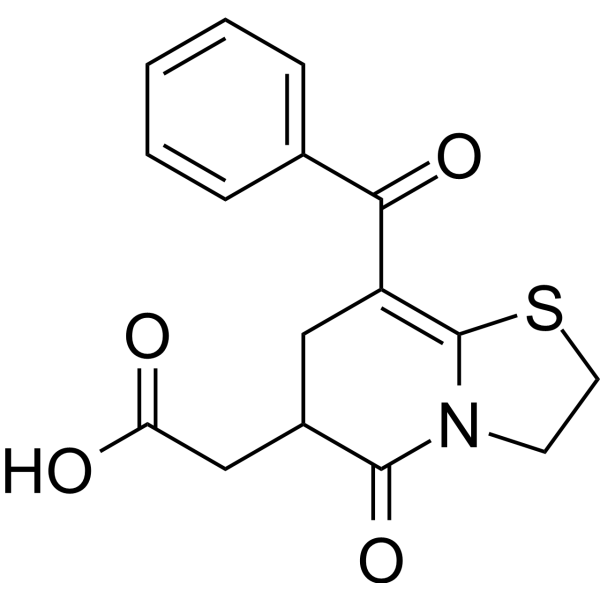
JMJD1C-IN-1 is an orally active and selective inhibitor of JMJD1C (IC50 = 0.59 μM, Kd = 1.96 μM). JMJD1C-IN-1 inhibits the binding of JMJD1C to H3K9me2 peptide substrate in the HTRF assay (IC50 = 1.47 μM). JMJD1C-IN-1 disrupts intratumoral regulatory T (Treg) cell fitness by dual mechanisms: promoting H3K9me2 accumulation to downregulate PD1 expression and reducing STAT3 demethylation to enhance STAT3 activation. JMJD1C-IN-1 demonstrates dose-dependent antitumor efficacy in multiple mouse tumor models (MCA205 fibrosarcoma, B16-F10 melanoma, LLC lung cancer, Hepa1-6 hepatocellular carcinoma, CT26 colorectal cancer). JMJD1C-IN-1 can be used for the study of tumor immunotherapy by selectively targeting intratumoral Treg cells .
loading...
    loading...
Cat. No.: HY-12033S2
CAS No.: 358731-34-7
Purity:  98.67%
Synonyms: 2-Me2-d5; NSC-659853-d5
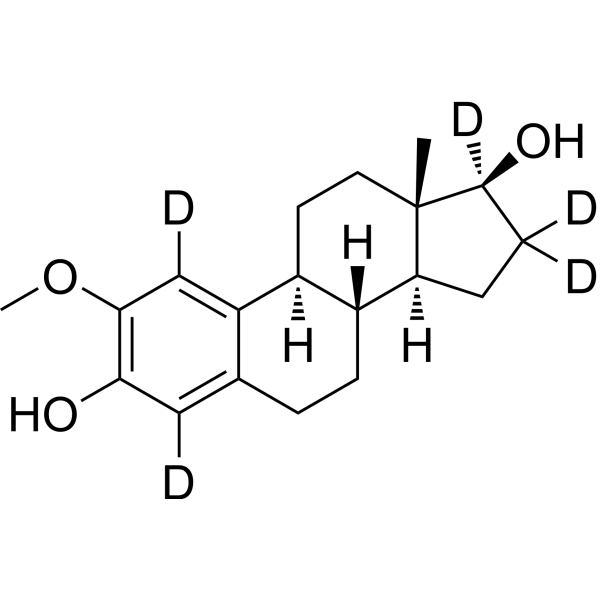
2-Methoxyestradiol-d5 is the deuterium labeled 2-Methoxyestradiol. 2-Methoxyestradiol (2-ME2), an orally active endogenous metabolite of 17β-estradiol (E2), is an apoptosis inducer and an angiogenesis inhibitor with potent antineoplastic activity. 2-Methoxyestradiol also destablize microtubules. 2-Methoxyestradio, also a potent superoxide dismutase (SOD) inhibitor and a ROS-generating agent, induces autophagy in the transformed cell line HEK293 and the cancer cell lines U87 and HeLa [2] .
loading...
    loading...
Cat. No.: HY-145103
CAS No.: 2561494-77-5
Purity:  99.15%
Research Areas:  

Cancer

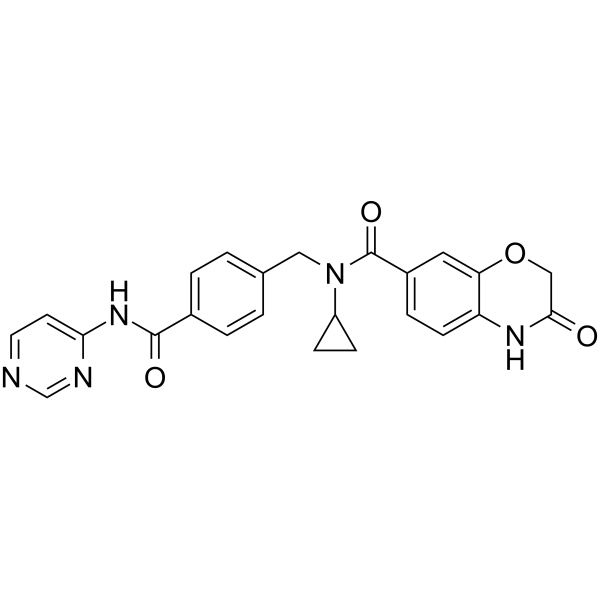
UNC6934 is a selective NSD2-PWWP1 antagonist with a Kd of 91 nM against human targets. UNC6934 binds to the canonical methyl-lysine binding pocket of NSD2-PWWP1 and directly competes with H3K36me2 for binding. UNC6934 induces the aggregation of NSD2 within the nucleolus, without altering ribosomal RNA transcription, global H3K36me2 levels or the proliferation of KMS-11 cells. UNC6934 can be used in studies related to multiple myeloma and diffuse intrinsic pontine glioma [2].
loading...
    loading...
Cat. No.: HY-13808R
CAS No.: 1320288-19-4
Research Areas:  

Cancer

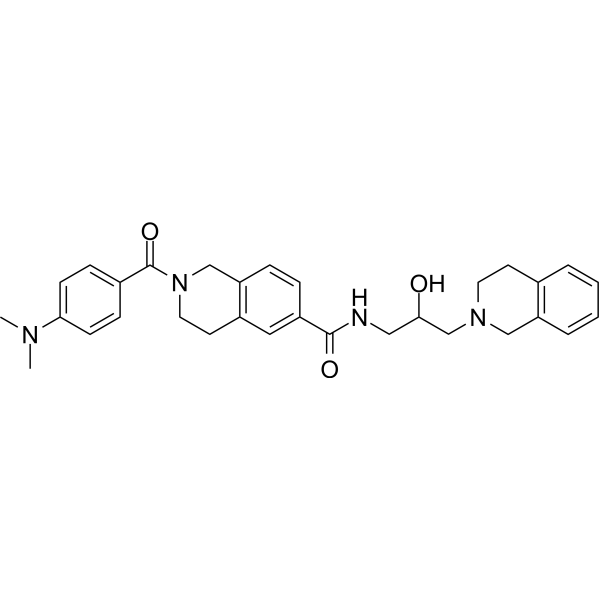
UNC 0631 (Standard) is the analytical standard of UNC 0631. This product is intended for research and analytical applications. UNC 0631 is a potent histone methyltransferase G9a inhibitor with an IC50 of 4 nM. UNC 0631 potently reduces H3K9me2 levels in MDA-MB-231 cells with an IC50 of 25 nM .
loading...
    loading...
Cat. No.: HY-157251
CAS No.: 2929304-61-8
Purity:  99.92%
Research Areas:  

Cancer

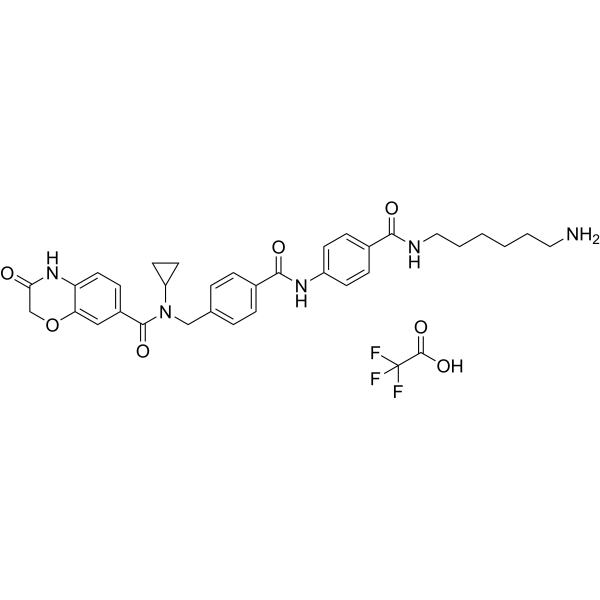
UNC8153 TFA is a potent and selective nuclear receptor-binding SET domain-containing 2 (NSD2)-targeted degrader with a Kd of 24 nM. UNC8153 TFA reduces the cellular levels of both NSD2 protein (DC50 in cell U2OS is 0.35 μM) and the H3K36me2 chromatin mark. UNC8153 TFA contains a simple warhead that confers proteasome-dependent degradation of NSD2 .
loading...
    loading...
Cat. No.: HY-162749A
Research Areas:  

Cancer

G9D-4 TFA is a G9a PROTAC degrader. G9D-4 TFA induces G9a degradation, reduces H3K9me2 levels, and prevents GLP interference via the CRBN ternary complex, proteasome and ubiquitin-like modification-dependent pathways. G9D-4 TFA exerts antiproliferative activity and induces Apoptosis in pancreatic cancer cells. G9D-4 TFA can be used for research on pancreatic cancer .
loading...
    loading...
Cat. No.: HY-168992
Research Areas:  

Neurological Disease Cancer

UNC6535 is a covalent ligand targeting the SETDB1 triple Tudor domain (3TD) with negative allosteric modulator properties, with an IC50 of 3.4 μM and a Kd of 4.2 μM. UNC6535 inhibits the methyltransferase activity of recombinant SETDB1 protein lacking the 3TD domain. UNC6535 reversibly binds to the aromatic cages of both TD2 and TD3 subdomains of SETDB1 3TD simultaneously, displacing the endogenous H3K9Me2K14Ac histone tail ligand. UNC6535 can be used in research on cancer and neurodegenerative diseases [2].
loading...
    loading...
Cat. No.: HY-161313
CAS No.: 2982792-85-6
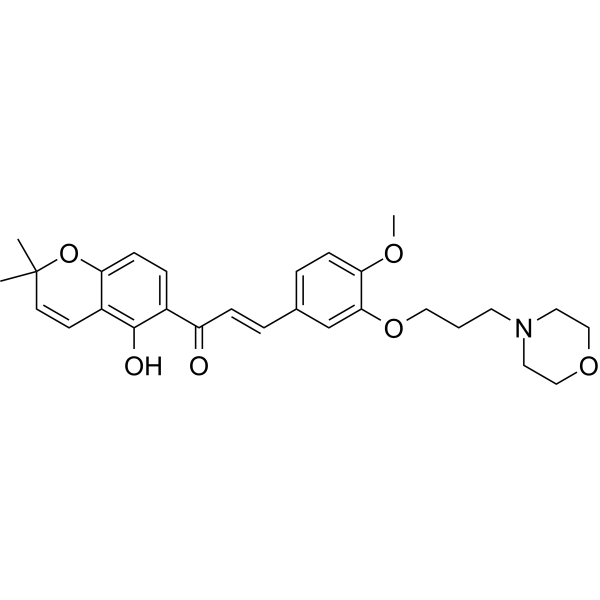
DYB-03 is an oral active HIF-1α/EZH2 inhibitor. DYB-03 inhibits migration, invasion, and angiogenesis of lung cancer cells and HUVECs in vitro and in vivo. DYB-03 induces apoptosis in 2-ME2 - and GSK126 -resistant of A549 and H460 cells .
loading...
    loading...
Cat. No.: HY-128579
CAS No.: 2243709-60-4
Purity:  99.63%
Research Areas:  

Cancer

DW14800 is a protein arginine methyltransferase 5 (PRMT5) inhibitor, with an IC50 of 17 nM. DW14800 reduces H4R3me2s levels and enhances the transcription of HNF4α, but does not alter PRMT5 expression. Anti-cancer activity .
loading...
    loading...
Cat. No.: HY-D0858S
CAS No.: 352534-94-2
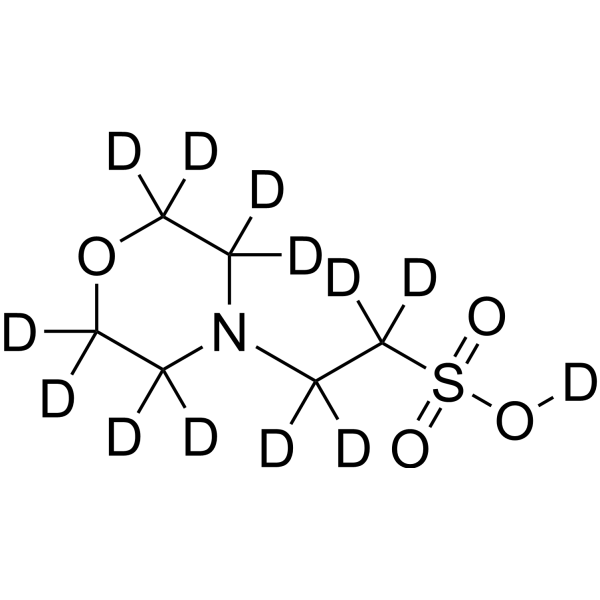
MES-d13 is the deuterium labeled MES. MES (2-Morpholinoethanesulphonic acid) is a kind of amphoteric ion buffer, the buffer capacity ranging pH 5.5-7.0. As a Good's buffer, MES is widely used in biochemistry and molecular biology experiments, such as cell culture, enzyme activity determination, electrophoresis and protein studies [2] .
loading...
    loading...
Cat. No.: HY-D0858AR
CAS No.: 145224-94-8
Synonyms: 2-Morpholinoethanesulphonic acid monohydrate (Standard)
MES (monohydrate) (Standard) is the analytical standard of MES (monohydrate). This product is intended for research and analytical applications. MES (2-Morpholinoethanesulphonic acid) is a kind of amphoteric ion buffer, the buffer capacity ranging pH 5.5-7.0. As a Good's buffer, MES is widely used in biochemistry and molecular biology experiments, such as cell culture, enzyme activity determination, electrophoresis and protein studies [2].
loading...
    loading...
Cat. No.: HY-156285
CAS No.: 3053365-82-2
Purity:  98.74%
Research Areas:  

Cancer

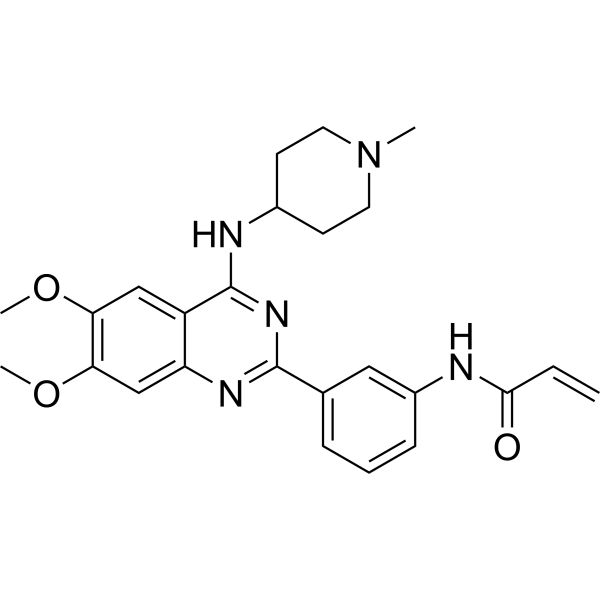
ZZM-1220 is a histone lysine methyltransferase G9a/GLP covalent inhibitor with IC50s of of 458 nM and 924 nM, respectively. ZZM-1220 inhibits H3K9me2 in cells and significantly induces apoptosis of triple-negative breast cancer (TNBC) cells and blocks the cell cycle in the G2/M phase .
loading...
    loading...
Cat. No.: HY-157251A
CAS No.: 2929304-60-7
Purity:  99.13%
Research Areas:  

Cancer

UNC8153 is a potent and selective nuclear receptor-binding SET domain-containing 2 (NSD2)-targeted degrader with a Kd of 24 nM. UNC8153 reduces the cellular levels of both NSD2 protein (DC50 in cell U2OS is 0.35 μM) and the H3K36me2 chromatin mark. UNC8153 contains a simple warhead that confers proteasome-dependent degradation of NSD2 .
loading...
    loading...
Cat. No.: HY-44062
CAS No.: 1350752-07-6
Research Areas:  

Inflammation/Immunology Cancer

G9a-IN-1 (Compound 113) is a G9a protein inhibitor. G9A/EHMT2 is a nuclear histone lysine methyltransferase that catalyzes histone H3 lysine 9 dimethylation (H3K9me2), which is a reversible modification generally associated with transcriptional gene silencing. G9a-IN-1 can be used for the research of autoimmune disorders or cancer .
loading...
    loading...
Cat. No.: HY-161759
CAS No.: 3107476-89-8
Research Areas:  

Endocrinology Cancer

MS152 is an orally active, blood-brain barrier penetrant inhibitor of EHMT2/G9a and EHMT1/GLP, with IC50s of 76 nM and 126 nM, repsectively. MS152 reduces H3K9me2 levels and reactivates maternally silenced Prader-Willi syndrome (PWS) genes. MS152 significantly improves perinatal lethality and growth retardation in mouse models, and is applicable to research related to Prader-Willi syndrome .
loading...
    loading...
Cat. No.: HY-178065
Research Areas:  

Cancer

PROTAC G9a/GLP degrader 1 is a PROTAC degrader targeting G9a/GLP histone methyltransferases, with DC50 values of 336 nM and 988 nM against G9a and GLP, respectively. PROTAC G9a/GLP degrader 1 reduces H3K9me2 levels, inhibits breast cancer cell migration, and has no effect on cell viability. PROTAC G9a/GLP degrader 1 can be used in breast cancer-related research .
loading...
    loading...
Cat. No.: HY-162749
CAS No.: 3097803-96-5
Research Areas:  

Cancer

G9D-4 is a G9a PROTAC degrader. G9D-4 induces G9a degradation, reduces H3K9me2 levels, and prevents GLP interference via the CRBN ternary complex, proteasome and ubiquitin-like modification-dependent pathways. G9D-4 exerts antiproliferative activity and induces Apoptosis in pancreatic cancer cells. G9D-4 can be used for research on pancreatic cancer .
loading...
    loading...
Cat. No.: HY-150510
CAS No.: 2866408-21-9
Research Areas:  

Neurological Disease Cancer

MS8511 is a selective G9a/GLP covalent irreversible inhibitor by targeting a cysteine residue at the substrate binding site, with IC50 values of 100 nM (G9a) and 140 nM (GLP), and Kd values of 44 nM (G9a) and 46 nM (GLP). MS8511 reduces the cellular H3K9me2 level and enhances antiproliferation activity. MS8511 can be used for the research of several types of cancers including brain, breast, ovarian, lung, bladder, melanoma, colorectal cancer, and other disease such as Alzheimer’s disease (AD), sickle cell disease, Prader−Willi syndrome (PWS) .
loading...
    loading...
Cat. No.: HY-178825
Research Areas:  

Cancer

LD-110 is a PROTAC degrader targeting LSD1 with a DC50 of 0.44-1.24 μM. LD-110 acts through the CRBN E3 ubiquitin ligase and the ubiquitin-proteasome system, leading to H3K4me2 accumulation. LD-110 induces apoptosis and inhibits the growth and survival of multiple esophageal squamous cell carcinoma (ESCC) cell lines. LD-110 inhibits tumor growth in the KYSE-150 xenograft model. LD-110 can be used in research related to esophageal squamous cell carcinoma .
loading...
    loading...

