


878 Results for "

recognition

" in MedChemExpress (MCE) Product Catalog:
Products (878)

878 Results for "recognition" in MCE Product Catalog:

1
1 Cited Publications
Cat. No.: HY-W009444
CAS No.: 1463-10-1
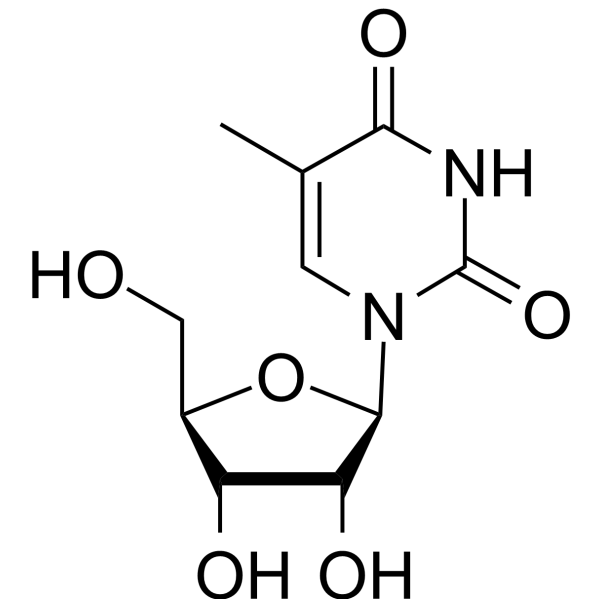
5-Methyluridine (m 5U) is an RNA modified nucleotide generated by RNA methyltransferases (such as TrmA and RumA), which mainly targets specific uracil sites in RNA molecules such as the T arm of tRNA and rRNA. 5-Methyluridine relies on enzyme recognition of RNA secondary/tertiary structures (such as the T loop of tRNA or the specific stem-loop structure of rRNA) and participates in physiological processes such as translation accuracy and ribosome function by stabilizing RNA folding or regulating base pairing .
loading...
    loading...
1
1 Cited Publications
Cat. No.: HY-N0307
CAS No.: 114902-16-8
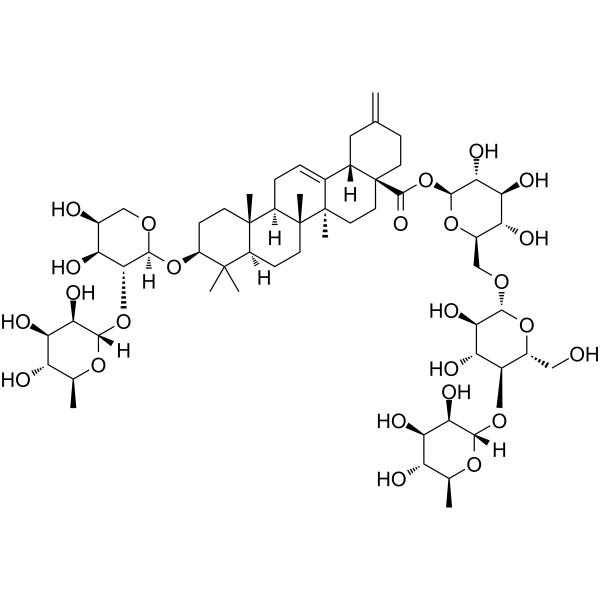
Ciwujianoside B is an orally active, blood-brain barrier penetrable radioprotective agent and memory enhancer. Ciwujianoside B reduces radiation-induced DNA damage, cell cycle arrest and apoptosis, downregulates NF-κB and the Bax/Bcl-2 ratio, and enhances the proliferative capacity of bone marrow cells. Ciwujianoside B enhances object recognition memory in normal mice and induces dendritic extension in primary cultured cortical neurons. Ciwujianoside B can be used in studies related to hematopoietic system radiation injury and memory enhancement .
loading...
    loading...
1
1 Cited Publications
Cat. No.: HY-122815
CAS No.: 20108-30-9
Synonyms: Fusicoccin A
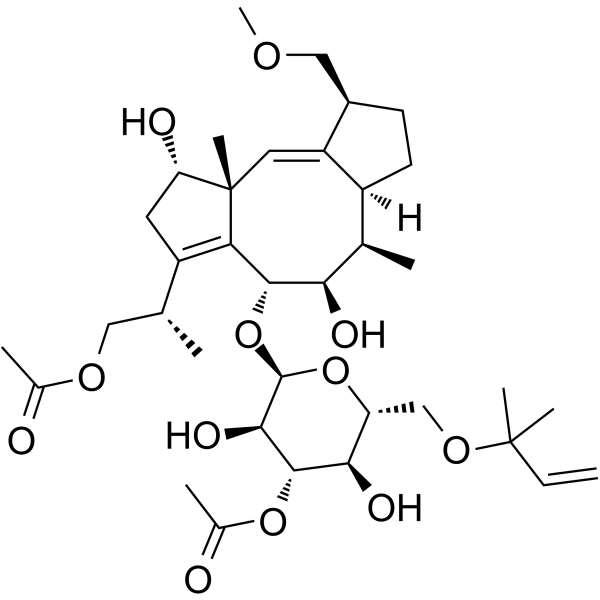
Fusicoccin (Fusicoccin A), a fungal pytotoxin, is a stabilizer of specific 14-3-3 protein-protein interactions. Fusicoccin sabilizes H +-ATPase/14-3-3 cmplex in pants, maintaining the enzyme in activated state. Fusicoccin also stabilizes 14-3-3 protein interactions with binding partners containing a C-terminal 14-3-3 recognition motif (a mode 3 motif), such as ERα, GPIbα, TASK3, CTFR, and p53. Fusicoccin induces apoptosis in cancer cells and has anticancer activity .
loading...
    loading...
1
1 Cited Publications
Cat. No.: HY-P3443
Synonyms: PNA
Peanut agglutinin (PNA) is a carbohydrate-recognition protein that binds competitively and irreversibly to cell-surface β-D-Gal (1-3)-GalNAc, and this binding can be inhibited by D-galactose and asialofetuin. Peanut agglutinin recognizes exposed glycoepitopes and reflects the glycosylation status of cells. Peanut agglutinin can label glycoconjugates at neuromuscular junctions to safely visualize synaptic structures. Peanut agglutinin can be used to synthesize dyes to distinguish between normal and tumor tissues. Peanut agglutinin provides support for research on leukemia, Burkitt's tumors, and cutaneous squamous lesions .
loading...
    loading...
1
1 Cited Publications
Cat. No.: HY-D0896
CAS No.: 82-76-8
Synonyms: ANSA; 8-Anilino-1-naphthalenesulfonic acid
ANS (8-Anilino-1-naphthalenesulfonic acid) is a competitive inhibitor targeting thyroxine binding globulin (TBG) (Ki=2.09×10 6 M -1). ANS is used in radioimmunoassay by displacing bound triiodothyronine (T3) to improve detection sensitivity. ANS can block the protein binding site of T3 and release free T3 for antibody recognition. As a fluorescent probe, ANS can specifically bind to the hydrophobic region of proteins (such as membrane proteins) and monitor the dynamics of protein conformation through changes in fluorescent signals. It is widely used in biochemical research and antibacterial material development .
loading...
    loading...
1
1 Cited Publications
Cat. No.: HY-W089845
CAS No.: 629-94-7
Heneicosane is a royal-specific pheromone of insects (such as subterranean termites) and is an identification signal for queens and kings in termites. Heneicosane mediates royal recognition and the maintenance of social division of labor by being sensed by worker ants and triggering vibrations and antennal behaviors. Heneicosane can exert anti-inflammatory, analgesic and antipyretic activities by inhibiting the release of inflammatory mediators (such as prostaglandins and cytokines). At the same time, Heneicosane can also inhibit the mycelial growth of aflatoxin-producing fungi and inhibit the production of aflatoxin. Heneicosane can be used in insect chemical ecology research to analyze the regulatory mechanism of termite social behavior, and is also a potential target for new anti-inflammatory drugs .
loading...
    loading...
1
1 Cited Publications
Cat. No.: HY-P2803A
CAS No.: 9001-45-0
Target:  

β-glucuronidase

Research Areas:  

Metabolic Disease

Beta-glucuronidase (bovine liver) is a glycoside hydrolase that hydrolyzes β-glucuronic acid and sulfate esters in urine and other biological fluids, thereby releasing β-glucuronides. Beta-glucuronidase (bovine liver) cannot effectively hydrolyze Estriol glucuronide. Beta-glucuronidase (bovine liver) can be used in studies related to systemic gangliosidosis .
loading...
    loading...
1
1 Cited Publications
Cat. No.: HY-P0267
CAS No.: 121062-08-6
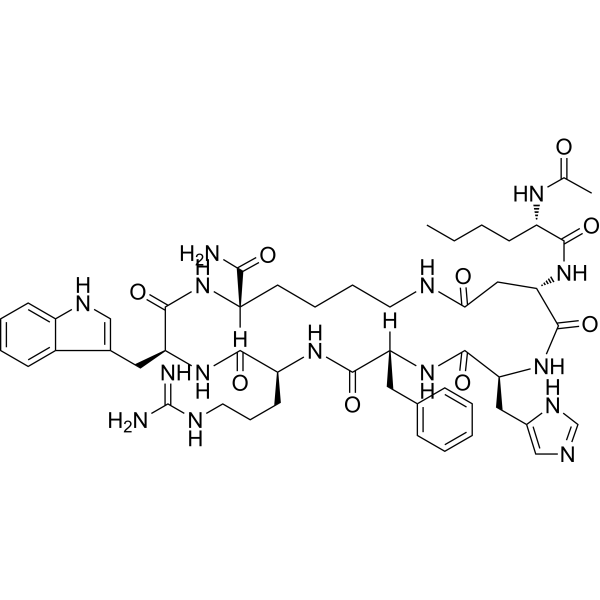
Melanotan (MT)-II is a melanocortin receptor agonist. Melanotan (MT)-II activates melanocortin receptor 3 and melanocortin receptor 4, and stimulates the release of central endogenous oxytocin. Melanotan (MT)-II reverses recognition memory impairment, increased anxiety levels and reduced exploratory tendency in zebrafish exposed to short-term high-fat diet. Melanotan (MT)-II improves impaired social behavior indicators in mouse models of autism spectrum disorder. Melanotan (MT)-II induces weight loss, reduces food intake and exerts anorectic effects. Melanotan (MT)-II increases intracavernous pressure and erectile activity in brown rats. Melanotan (MT)-II can be used in studies related to memory impairment, anxiety, reduced exploratory behavior, autism spectrum disorder, obesity and erectile dysfunction .
loading...
    loading...
1
1 Cited Publications
Cat. No.: HY-N1968
CAS No.: 60778-02-1
Synonyms: Quercetin-3-O-beta-D-glucose-7-O-beta-D-gentiobioside
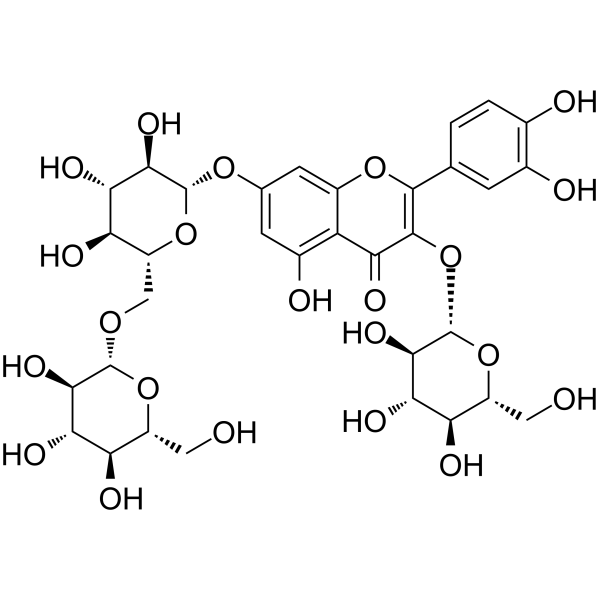
Quercetin-3-O-β-D-glucose-7-O-β-D-gentiobiosiden (Quercetin-3-O-beta-D-glucose-7-O-beta-D-gentiobioside) is a flavonoid compound. In Cylas formicarius, Quercetin-3-O-β-D-glucose-7-O-β-D-gentiobioside can bind to chemosensory proteins such as CforCSP5 (Ki: 1.429 μM) and CforOBP3 (Ki: 3.697 μM), potentially participating in the recognition process of insect host plant volatiles. Quercetin-3-O-β-D-glucose-7-O-β-D-gentiobiosiden is also an inhibitor of Sb28GST (IC50: 0.13 mM) and can be used in the research of anti-schistosome agents .
loading...
    loading...
1
1 Cited Publications
Cat. No.: HY-124344
CAS No.: 116764-15-9
Purity:  98.90%
Avenanthramide C is an orally active polyphenolic compound that penetrates the blood-brain barrier. Avenanthramide C is derived from oats. Avenanthramide C inhibits NF-κB nuclear translocation and inhibits the phosphorylation of PI3K, PLCγ1, Lyn, Syk, and Akt. Avenanthramide C inhibits the expression and activity of MMP-9 and inhibits MAPK phosphorylation. Avenanthramide C scavenges DPPH radicals, reduces intracellular ROS, and inhibits pro-inflammatory cytokine release and adhesion molecule expression. Avenanthramide C inhibits cell degranulation. Avenanthramide C attenuates active systemic anaphylaxis and inhibits passive cutaneous anaphylaxis. Avenanthramide C ameliorates PHZ-induced blood stasis. Avenanthramide C inhibits neuroinflammation, restores long-term potentiation, and improves recognition and spatial memory in Alzheimer's disease models. Avenanthramide C can be used for research on allergic inflammation, thrombosis, atherosclerosis, and Alzheimer's disease .
loading...
    loading...
Cat. No.: HY-118901
CAS No.: 315-72-0
Purity:  99.91%
Synonyms: Ensidon; G-33040
Target:  

Sigma Receptor

Research Areas:  

Neurological Disease

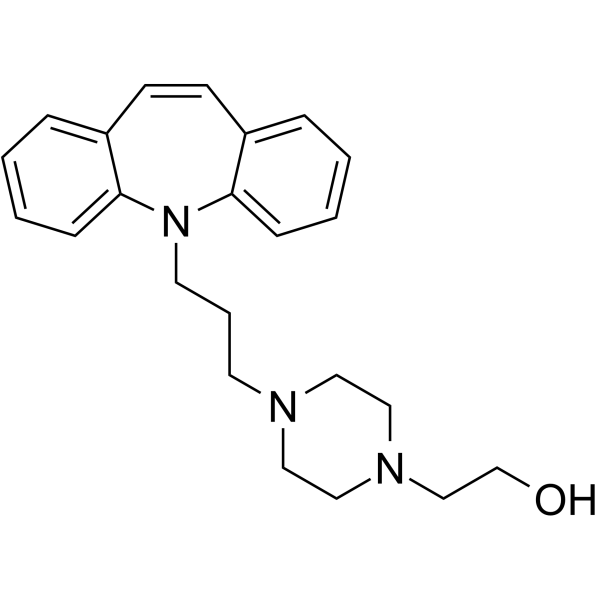
Opipramol (Ensidon) is an atypical tricyclic antidepressant (TCA). Opipramol acts primarily as a sigma (σ) receptor agonist and can potently interact with sigma recognition sites with a Ki value of 50 nM. Opipramol can be used for the research of generalized anxiety disorder (GAD) .
loading...
    loading...
Cat. No.: HY-N2427
CAS No.: 281-23-2
Adamantane is a polycyclic cage molecule with high symmetry and remarkable properties. Adamantane can be incorporated into a lipophilic part of the lipid bilayer that constitutes membranes and as an anchor in the lipid bilayer of liposomes. Adamantane can be studied in pharmacological research to improve the lipophilicity and pharmacological properties of other active products .
loading...
    loading...
Cat. No.: HY-Y0607
CAS No.: 62-23-7
4-Nitrobenzoic acid is a nitroaromatic compound that can be used in the synthesis of other active compounds. 4-Nitrobenzoic acid is also an inhibitor agent, which can be used for the recognition of the Mycobacterium tuberculosis complex and differentiation from non-tuberculous mycobacteria .
loading...
    loading...
Cat. No.: HY-P3732
CAS No.: 332179-76-7
Target:  

Integrin

Research Areas:  

Cancer

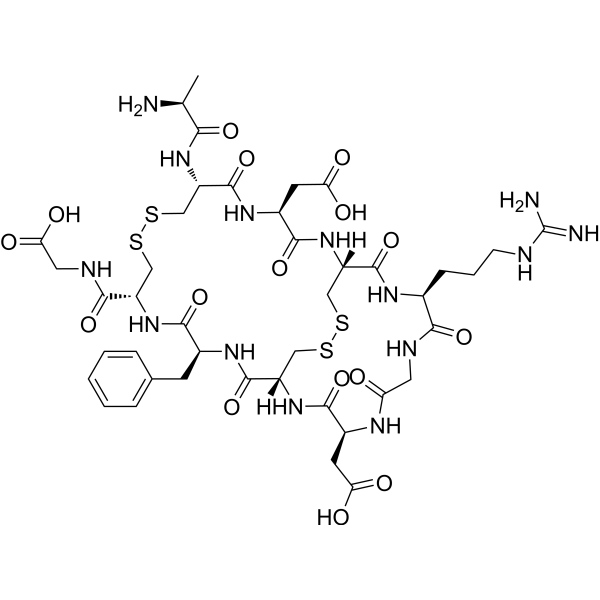
RGD-4C is a arginine-glycine-aspartic acid peptide (ACDCRGDCFC) with integrin binding activity. The Arg-Gly-Asp (RGD) sequence serves as the primary integrin recognition site in extracellular matrix proteins, and peptides containing this sequence can mimic the recognition specificity of the matrix proteins. RGD-4C is a αv-integrin ligand, can conjugate with bioactive molecule to exert antitumor effects in animal models .
loading...
    loading...
Cat. No.: HY-109968
CAS No.: 1005402-19-6
Purity:  99.38%
Synonyms: CEP-26401
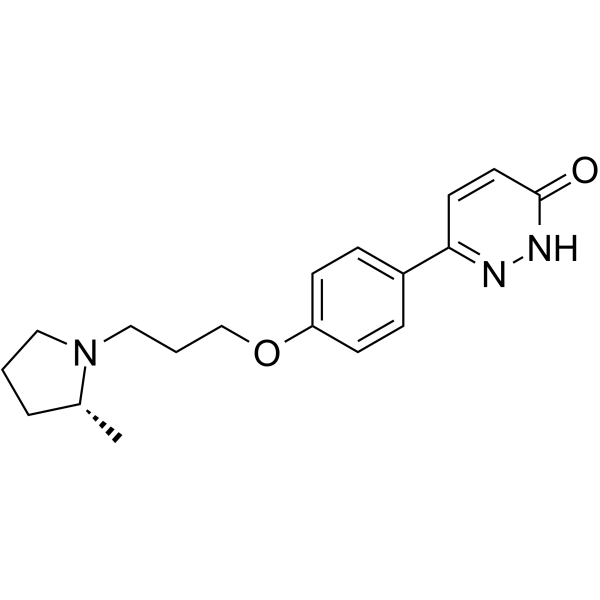
Irdabisant (CEP-26401) is a selective, orally active and blood-brain barrier (BBB) penetrant histamine H3 receptor (H3R) inverse agonist/inverse agonist with Ki values of 7.2 nM and 2.0 nM for rat H3R and human H3R, respectively. Irdabisant has relatively low inhibitory activity against hERG current with an IC50 of 13.8 μM. Irdabisant has cognition-enhancing and wake-promoting activities in the rat social recognition model. Irdabisant can be used to research schizophrenia or cognitive impairment .
loading...
    loading...
Cat. No.: HY-N10633
CAS No.: 64003-55-0
Synonyms: LS-tetrasaccharide c
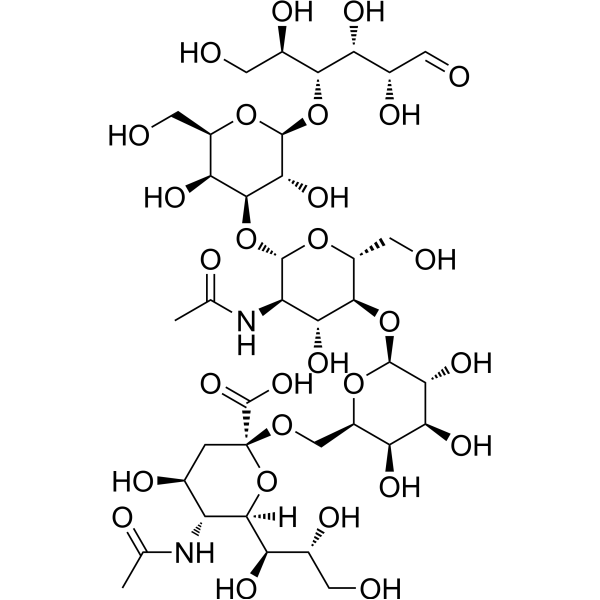
LSTc (LS-tetrasaccharide c) is a human lactooligosaccharide presents on glycoproteins and glycolipids. LSTc is also a specific human JC polyomavirus (JCV) recognition motif. LSTc has good potential for the study of progressive multifocal leukoencephalopathy (PML) .
loading...
    loading...
Cat. No.: HY-W014081
CAS No.: 1846-76-0
Synonyms: Ethyl 2-oxo-2H-chromene-3-carboxylate
Target:  

Drug Derivative

Research Areas:  

Others

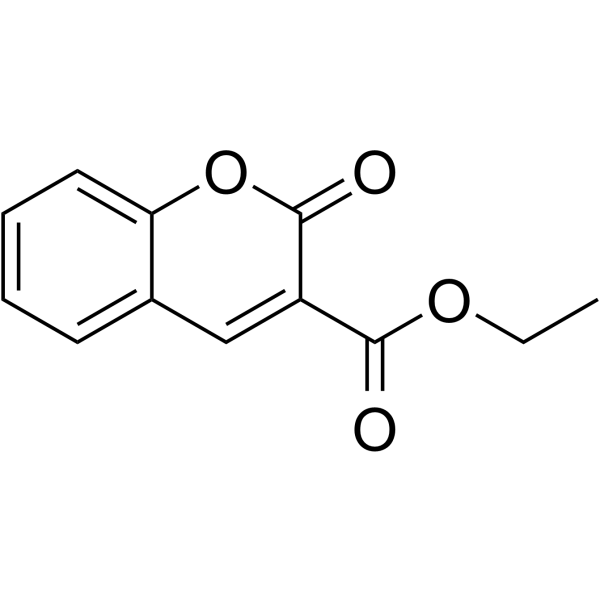
Ethyl 3-coumarincarboxylate is a coumarin derivative. Ethyl 3-coumarincarboxylate can be used as a pseudo-template to give a molecularly imprinted polymer (MIP) that has a fairly specific recognition capability for aflatoxins .
loading...
    loading...
Cat. No.: HY-160042
Research Areas:  

Cancer

AFP aptamer sodium is an aptamer that specifically targets the liver cancer biomarker alpha-fetoprotein (AFP). AFP aptamer sodium can be used as a recognition molecule for AFP, with a linear detection range of 12.5-800 ng/mL .
loading...
    loading...
Cat. No.: HY-108057A
CAS No.: 677305-02-1
Purity:  99.66%
Synonyms: RG3487 hydrochloride
Target:  

nAChR 5-HT Receptor

Research Areas:  

Neurological Disease

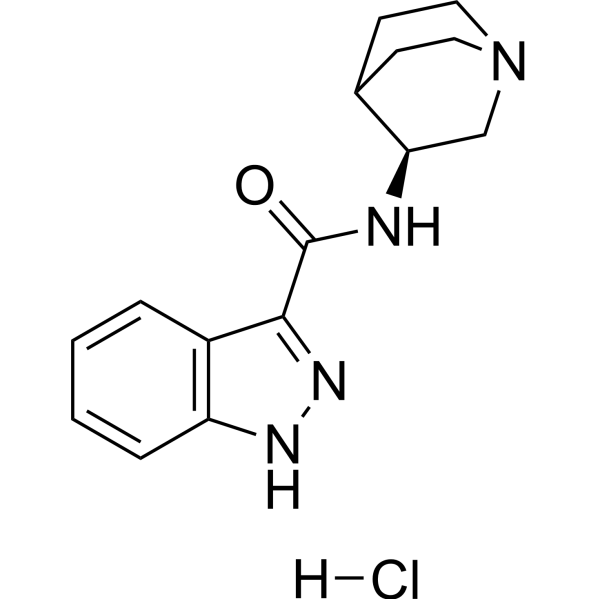
Facinicline hydrochloride (RG3487 hydrochloride) is an orally active nicotinic α7 receptor partial agonist, with a Ki of 6 nM for α7 human nAChR. Facinicline hydrochloride (RG3487 hydrochloride) improves cognition and sensorimotor gating in rodents. Facinicline hydrochloride (RG3487 hydrochloride) shows high affinity (antagonist) to 5-HT3Rs with a Ki value of 1.2 nM .
loading...
    loading...
Cat. No.: HY-158739
CAS No.: 2740257-94-5
Purity:  98.0%
Rhodamine dithenoyl hydrazide (probe 1) possesses excellent recognition and selectivity for Fe 3+ ion. Rhodamine dithenoyl hydrazide exhibits Excitation/Emission maxima of 543/550-700 nm, respectively .
loading...
    loading...

