



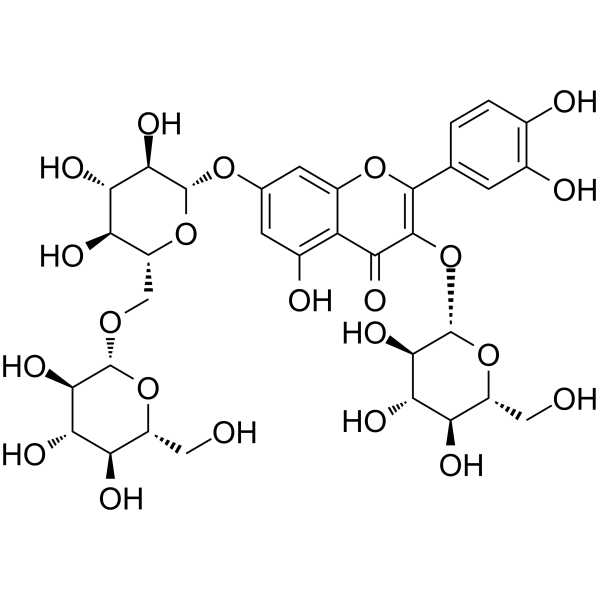
Quercetin-3-O-β-D-glucose-7-O-β-D-gentiobiosiden
Based on 1 publication(s) in Google Scholar
Quercetin-3-O-β-D-glucose-7-O-β-D-gentiobiosiden (Quercetin-3-O-beta-D-glucose-7-O-beta-D-gentiobioside) is a flavonoid compound. In Cylas formicarius, Quercetin-3-O-β-D-glucose-7-O-β-D-gentiobioside can bind to chemosensory proteins such as CforCSP5 (Ki: 1.429 μM) and CforOBP3 (Ki: 3.697 μM), potentially participating in the recognition process of insect host plant volatiles. Quercetin-3-O-β-D-glucose-7-O-β-D-gentiobiosiden is also an inhibitor of Sb28GST (IC50: 0.13 mM) and can be used in the research of anti-schistosome agents.
For research use only. We do not sell to patients.
- Purity : 99.27%
- CAS No.: 60778-02-1
- Formula: C33H40O22
- Molecular Weight:788.66
-
Storage:
-20°C, sealed storage, away from moisture and light
* In solvent : -80°C, 6 months; -20°C, 1 month (sealed storage, away from moisture and light)

To place orders, for customer services and technical support, please contact: MedChemExpress USA
Tel: 609-228-6898 E-mail: [email protected] [email protected]


-
 Biological Activity
-
Chemical Information
-
Solvent & Solubility
- Protocols
- Purity & Documentation
- References
-
 Help & FAQs


-
HY-N0020
EchinacosideWnt/β-catenin Signaling Inhibitor -
HY-N2153
Apigenin-7-O-(2G-rhamnosyl)gentiobiosideFlavone Glycosides -
HY-147295
OdetiglucanImmunostimulant -
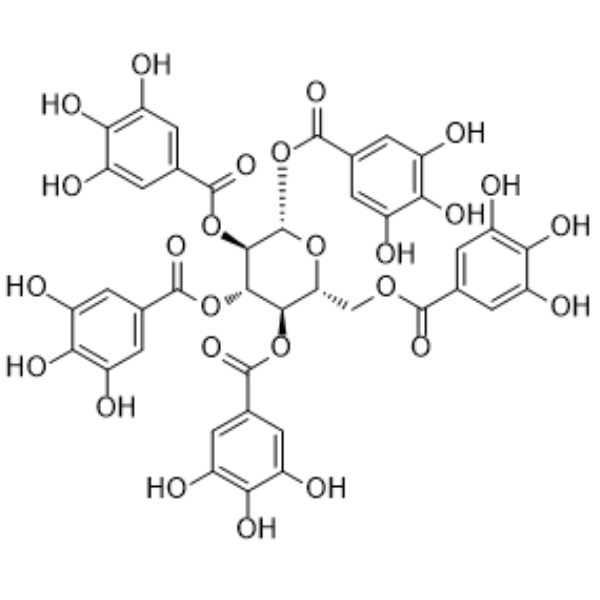
HY-N0527
PentagalloylglucoseAntioxidant -
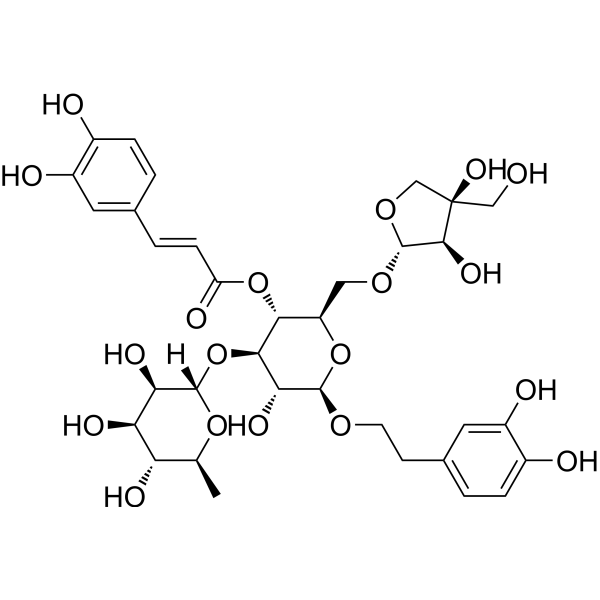
HY-N0029
Forsythoside BTNF Inhibitor -
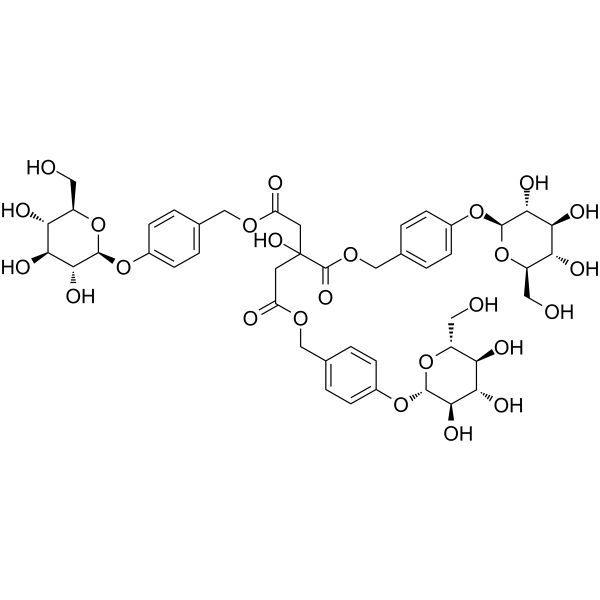
HY-N2031
ParishinSir2/Uth1/TOR Modulator -
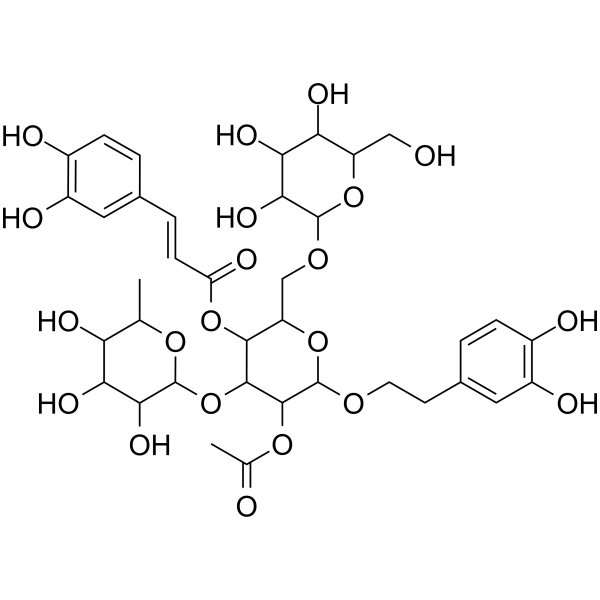
HY-N2155
Tubuloside AHepatoprotective Agent -
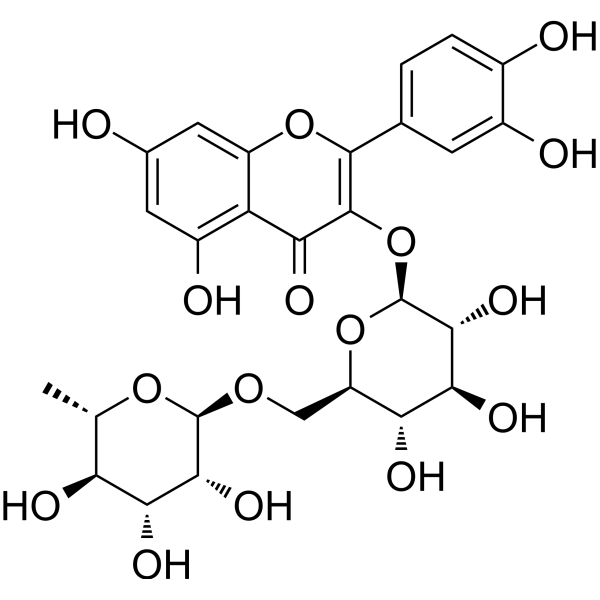
HY-N0148
RutinCBR1 Inhibitor -
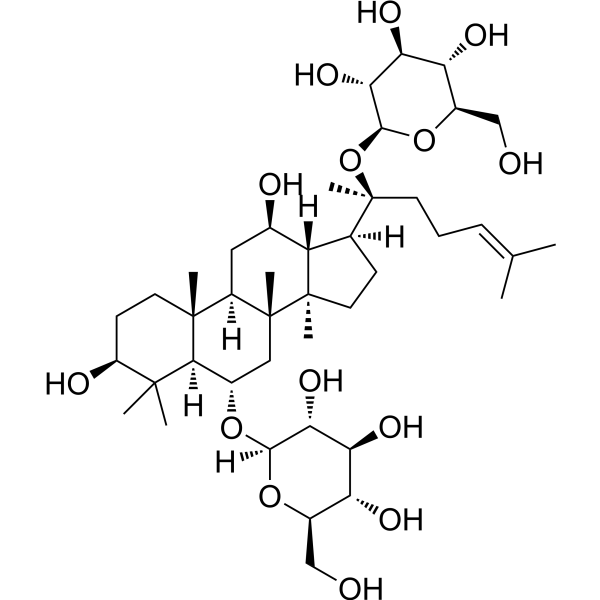
HY-N0045
Ginsenoside Rg1Apoptosis Inducer -
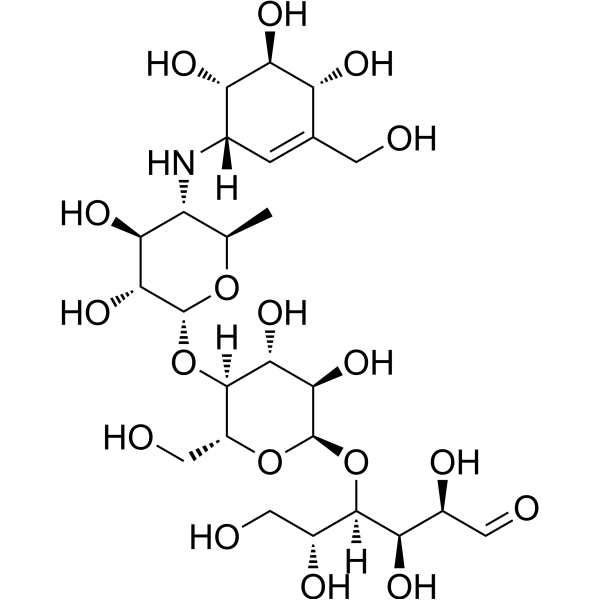
HY-B0089
AcarboseAlpha-Glucosidase Inhibitor -
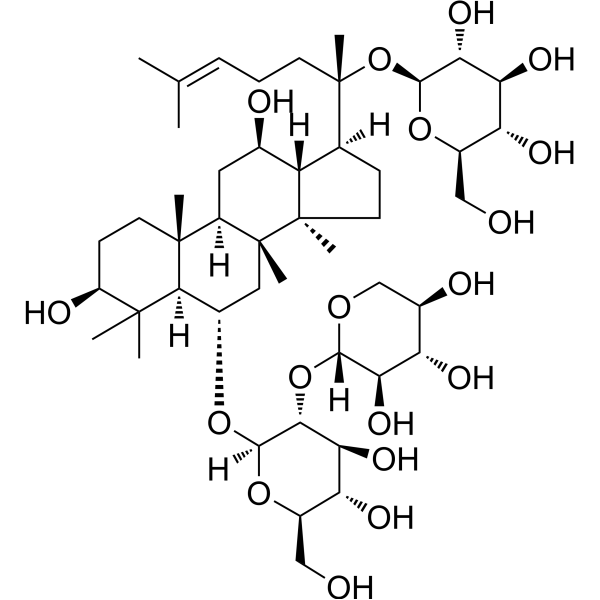
HY-N0615
Notoginsenoside R1Apoptosis Inhibitor -
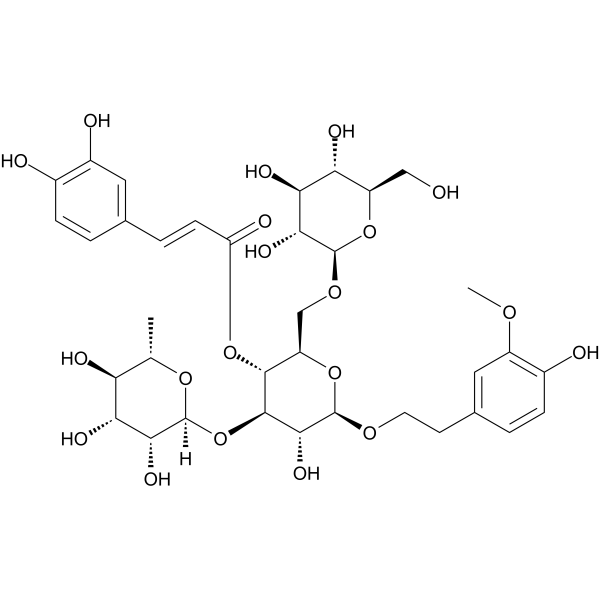
HY-N0023
Cistanoside ANO Synthase Inhibitor
Publications Citing Use of MedChemExpress (MCE) Quercetin-3-O-β-D-glucose-7-O-β-D-gentiobiosiden
MoreAll Parasite Isoforms
More

Biological Activity
Description
In Vitro
Quercetin-3-O-β-D-glucose-7-O-β-D-gentiobiosiden is a potential inhibitor of Enterococcus faecium nicotinate nucleotide adenylyltransferase (EfNNAT), which can bind to EfNNAT through hydrogen bonds and water bridges[3].
MedChemExpress (MCE) has not independently confirmed the accuracy of these methods. They are for reference only. Further protocols information, click here.


Chemical Information
-
CAS No. 60778-02-1
-
Appearance Solid
-
Molecular Weight 788.66
-
Formula C33H40O22
-
Color White to yellow
-
SMILES
O=C1C(O[C@@H]([C@@H]([C@@H](O)[C@@H]2O)O)O[C@@H]2CO)=C(C3=CC(O)=C(O)C=C3)OC4=CC(O[C@@H]([C@@H]([C@@H](O)[C@@H]5O)O)O[C@@H]5CO[C@@H]([C@@H]([C@@H](O)[C@@H]6O)O)O[C@@H]6CO)=CC(O)=C14
-
Synonyms
Quercetin-3-O-beta-D-glucose-7-O-beta-D-gentiobioside
-
Structure Classification
-
Initial Source
-
Shipping
Room temperature in continental US; may vary elsewhere.
-
Storage
-20°C, sealed storage, away from moisture and light
* In solvent : -80°C, 6 months; -20°C, 1 month (sealed storage, away from moisture and light)


Publications (1)
-
Journal Impact Factor
-
Most Recent


Solvent & Solubility
In Vitro:
DMSO : 100 mg/mL (126.80 mM; Need ultrasonic; Hygroscopic DMSO has a significant impact on the solubility of product, please use newly opened DMSO)
H2O : 100 mg/mL (126.80 mM; Need ultrasonic)
Please refer to the solubility information to select the appropriate solvent. Once prepared, please aliquot and store the solution to prevent product inactivation from repeated freeze-thaw cycles.
Storage method and period of stock solution: -80°C, 6 months; -20°C, 1 month (sealed storage, away from moisture and light). When stored at -80°C, please use it within 6 months. When stored at -20°C, please use it within 1 month.
* Note: If you choose water as the stock solution, please dilute it to the working solution, then filter and sterilize it with a 0.22 μm filter before use.
Please refer to the solubility information to select the appropriate solvent. Once prepared, please aliquot and store the solution to prevent product inactivation from repeated freeze-thaw cycles.
Storage method and period of stock solution: -80°C, 6 months; -20°C, 1 month (sealed storage, away from moisture and light). When stored at -80°C, please use it within 6 months. When stored at -20°C, please use it within 1 month.
* Note: If you choose water as the stock solution, please dilute it to the working solution, then filter and sterilize it with a 0.22 μm filter before use.
Concentration (start) × Volume (start) = Concentration (final) × Volume (final)
In Vivo:
Select the appropriate dissolution method based on your experimental animal and administration route.
- For the following dissolution methods, please ensure to first prepare a clear stock solution using an In Vitro approach and then sequentially add co-solvents:
- To ensure reliable experimental results, the clarified stock solution can be appropriately stored based on storage conditions. As for the working solution for In Vivo experiments, it is recommended to prepare freshly and use it on the same day.
- The percentages shown for the solvents indicate their volumetric ratio in the final prepared solution. If precipitation or phase separation occurs during preparation, heat and/or sonication can be used to aid dissolution.
Add each solvent one by one: 10% DMSO 40% PEG300 5% Tween-80 45% Saline
Solubility: ≥ 10 mg/mL (12.68 mM); Clear solution
This protocol yields a clear solution of ≥ 10 mg/mL (saturation unknown).
Taking 1 mL working solution as an example, add 100 μL DMSO stock solution (100.0 mg/mL) to 400 μL PEG300, and mix evenly; then add 50 μL Tween-80 and mix evenly; then add 450 μL Saline to adjust the volume to 1 mL.
Preparation of Saline: Dissolve 0.9 g sodium chloride in ddH₂O and dilute to 100 mL to obtain a clear Saline solution.
Add each solvent one by one: 10% DMSO 90% (20% SBE-β-CD in Saline)
Solubility: ≥ 10 mg/mL (12.68 mM); Clear solution
This protocol yields a clear solution of ≥ 10 mg/mL (saturation unknown).
Taking 1 mL working solution as an example, add 100 μL DMSO stock solution (100.0 mg/mL) to 900 μL 20% SBE-β-CD in Saline, and mix evenly.
Preparation of 20% SBE-β-CD in Saline (4°C, storage for one week): 2 g SBE-β-CD powder is dissolved in 10 mL Saline, completely dissolve until clear.
In Vivo Dissolution Calculator
Please enter the basic information of animal experiments:
-
-
-
-
Recommended: Prepare an additional quantity of animals to account for potential losses during experiments.
Working solution concentration: 0.22 mg/mL
This product has good water solubility, please refer to the measured solubility data in water/PBS/Saline for details.

Protocols
-
Cell Cytotoxicity Assay
Cytotoxicity assays are usually based on the assessment of cell membrane damage, which can also be indirectly detected by measuring cell viability. Detection methods include MTT assay, CKK-8 assay, LDH assay and ATP assay, etc.


Purity & Documentation
-
Data Sheet (282 KB)
-
SDS (396 KB)
- English - EN (396 KB)
- Français - FR (396 KB)
- Deutsch - DE (396 KB)
- Norwegian - NO (396 KB)
- Español - ES (396 KB)
- Swedish - SV (396 KB)
- Italian - IT (396 KB)
- Korean - KR (396 KB)
- Portuguese - PT (396 KB)
-
Handling Instructions (2659 KB)
References
[1]. Hua J, et al. Three chemosensory proteins from the sweet potato weevil, Cylas formicarius, are involved in the perception of host plant volatiles. Pest Manag Sci. 2021 Oct;77(10):4497-4509. [Content Brief]
[2]. Hua J, et al. Functional characteristic analysis of three odorant-binding proteins from the sweet potato weevil (Cylas formicarius) in the perception of sex pheromones and host plant volatiles. Pest Manag Sci. 2021 Jan;77(1):300-312. [Content Brief]


Complete Stock Solution Preparation Table
Please refer to the solubility information to select the appropriate solvent. Once prepared, please aliquot and store the solution to prevent product inactivation from repeated freeze-thaw cycles.
Storage method and period of stock solution: -80°C, 6 months; -20°C, 1 month (sealed storage, away from moisture and light). When stored at -80°C, please use it within 6 months. When stored at -20°C, please use it within 1 month.
| Optional Solvent | Concentration Solvent Mass | 1 mg | 5 mg | 10 mg | 25 mg |
|---|---|---|---|---|---|
| DMSO / H2O | 1 mM | 1.2680 mL | 6.3399 mL | 12.6797 mL | 31.6993 mL |
| 5 mM | 0.2536 mL | 1.2680 mL | 2.5359 mL | 6.3399 mL | |
| 10 mM | 0.1268 mL | 0.6340 mL | 1.2680 mL | 3.1699 mL | |
| 15 mM | 0.0845 mL | 0.4227 mL | 0.8453 mL | 2.1133 mL | |
| 20 mM | 0.0634 mL | 0.3170 mL | 0.6340 mL | 1.5850 mL | |
| 25 mM | 0.0507 mL | 0.2536 mL | 0.5072 mL | 1.2680 mL | |
| 30 mM | 0.0423 mL | 0.2113 mL | 0.4227 mL | 1.0566 mL | |
| 40 mM | 0.0317 mL | 0.1585 mL | 0.3170 mL | 0.7925 mL | |
| 50 mM | 0.0254 mL | 0.1268 mL | 0.2536 mL | 0.6340 mL | |
| 60 mM | 0.0211 mL | 0.1057 mL | 0.2113 mL | 0.5283 mL | |
| 80 mM | 0.0158 mL | 0.0792 mL | 0.1585 mL | 0.3962 mL | |
| 100 mM | 0.0127 mL | 0.0634 mL | 0.1268 mL | 0.3170 mL |
* Note: If you choose water as the stock solution, please dilute it to the working solution, then filter and sterilize it with a 0.22 μm filter before use.


Quercetin-3-O-β-D-glucose-7-O-β-D-gentiobiosiden Related Classifications
HY-N1968 Related Classifications
 Powered by Bioz