499 Results for "

Testes

" in MedChemExpress (MCE) Product Catalog:
Products (499)

499 Results for "Testes" in MCE Product Catalog:

Cat. No.: HY-184478
CAS No.: 3103822-75-6
Target:  

GABA Receptor

Research Areas:  

Neurological Disease

GABAA receptor modulator-14 is an orally active, blood-brain barrier permeable selective positive allosteric modulator (PAM) of extrasynaptic δ-containing GABAA receptors (α4β3δ subtype) with an EC50 of 0.8 μM. GABAA receptor modulator-14 selectively enhances tonic neuronal inhibition by potentiating GABA-evoked currents mediated by extrasynaptic δ-GABAARs, produces rapid sustained antidepressant effects, elevates slow-wave NREM sleep and shows no addiction liability in mice. GABAA receptor modulator-14 can be applied to major depressive disorder (MDD) and comorbid insomnia research .
loading...
    loading...
Cat. No.: HY-187377
Target:  

Glycosidase

α-Glucosidase-IN-121 is a yeast α-glucosidase inhibitor with an IC50 of 3.8 μM and a Ki of 12.9 μM. α-Glucosidase-IN-121 binds to the active site of the enzyme, competes with substrate binding, and forms stable interactions with Phe137, Ser308, Pro309, Arg312 and Glu350 via hydrogen bonding, π-π stacking and hydrophobic interactions. α-Glucosidase-IN-121 can be used in the research of diabetes .
loading...
    loading...
Cat. No.: HY-24366
CAS No.: 2423-66-7
Research Areas:  

Infection

Quindoxin is an antibacterial and growth promoter, commonly used in the livestock industry. Quindoxin exhibits clear dose-dependent mutagenic activity against Salmonella typhimurium TA98 and TA100 strains. Quindoxin can cause DNA damage and has potential genotoxicity and carcinogenic risks .
loading...
    loading...
Cat. No.: HY-W040279
CAS No.: 94125-34-5
Research Areas:  

Others

Prosulfuron is a fluorinated sulfonylurea herbicide with a reported acute oral LD50 of 546 mg/kg in female rats. Prosulfuron acts by inhibiting acetolactate synthase (ALS) to block the biosynthesis of branched-chain amino acids (valine, leucine and isoleucine) in plants, thereby suppressing weed growth. Prosulfuron may disrupt the soil microbial community balance in alkaline soils with minimal chemical degradation. Prosulfuron has low toxicity to humans and mammals, and can be used for the research of broadleaf weed control in maize and sweet corn .
loading...
    loading...
Cat. No.: HY-W751579
CAS No.: 234096-34-5
Target:  

Bacterial Antibiotic

Research Areas:  

Infection

Cefovecin is a third-generation cephalosporin antibiotic. Cefovecin's most notable characteristic is its extremely long-lasting effect; a single subcutaneous injection can maintain an effective therapeutic concentration in tissues for up to 14 days. Cefovecin is used in research on bacterial infections in dogs and cats .
loading...
    loading...
Cat. No.: HY-117881
CAS No.: 210236-47-8
Target:  

Opioid Receptor

Research Areas:  

Neurological Disease

CJ-15208 is a potent and selective κ-opioid receptor antagonist with significant opioid activity. CJ-15208 exhibited strong analgesic effects in the warm water tail withdrawal test in mice and was mediated through multiple opioid receptors. The stereoisomers of CJ-15208 exhibited different opioid activity characteristics, for example, one stereoisomer exhibited κ-opioid receptor antagonism, while the other exhibited δ-opioid receptor antagonism. All stereoisomers of CJ-15208 had no significant effects on respiration. The stereoisomers of CJ-15208 did not lead to the development of drug tolerance, which makes it potential in the further development of safe opioid analgesics .
loading...
    loading...
Cat. No.: HY-145858
CAS No.: 2756846-09-8
Target:  

Ferroptosis

Research Areas:  

Cancer

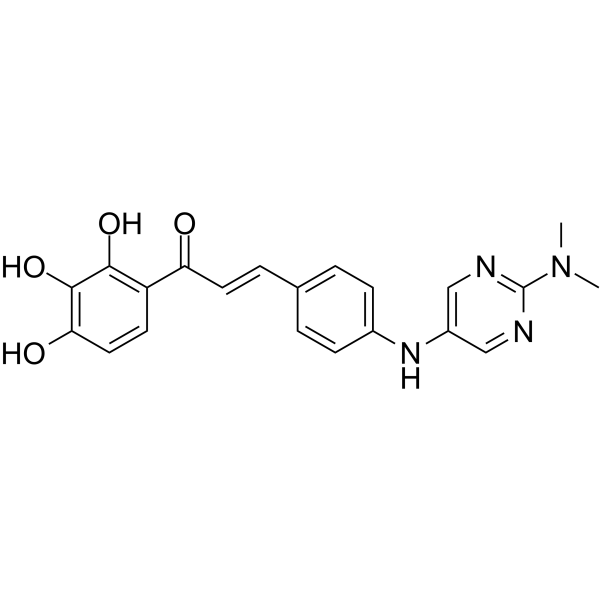
Chalcones A-N-5 is a trihydroxy chalcone derivative compound. Chalcones A-N-5 doesn’t show cytotoxicity at the concentration lower than 100 µM (with IC50 > 1 mM), but has a significant effect on promoting cell proliferation. Chalcones A-N-5 potentially promotes neuronal cell growth in the damaged brain tissue. Chalcones A-N-5 also inhibits ferroptosis induced by RSL or erastin and reduces the lipid peroxidation levels induced by Aβ1-42 protein aggregation. Chalcones A-N-5 is a promising molecular skeleton candidate for further development of lead compound for in vivo test to research AD .
loading...
    loading...
Cat. No.: HY-186062
CAS No.: 2234283-04-4
HCN-IN-1 is a TLR4 inhibitor and HCN channel modulator with activity against HCN2 and HCN4.HCN-IN-1 inhibits TLR4-mediated alkaline phosphatase (SEAP) signal activity.HCN-IN-1 reduces HCN2 current across tested voltages, shifts voltage-dependent activation to more hyperpolarized potentials, slows activation kinetics, and does not affect deactivation process.HCN-IN-1 blocks HCN4 current.HCN-IN-1 exhibits analgesic, anti-inflammatory, and anti-anginal effects.HCN-IN-1 can be used for the research of inflammatory pain, neuropathic pain, heart failure, inflammation .
loading...
    loading...
Cat. No.: HY-W013762R
CAS No.: 77-94-1
Research Areas:  

Others

Tributyl citrate (Standard) is the analytical standard of Tributyl citrate. This product is intended for research and analytical applications. Tributyl citrate is a low-toxicity and orally active citrate ester with no genotoxicity or skin sensitizing activity. Tributyl citrate also acts as a plasticizer, solvent, FDA-approved indirect food additive, and topical anesthetic, among other uses. Tributyl citrate induces a needle-prick insensitivity response that lasts for more than 2 hours, and a 5% suspension of it temporarily eliminates the corneal reflex in rabbits. Tributyl citrate causes no significant systemic toxicity in rats and cats at most tested doses, and only may cause growth retardation and gastrointestinal reactions such as diarrhea and nausea at high doses or with repeated oral administration .
loading...
    loading...
Cat. No.: HY-W540232
CAS No.: 2284-20-0
Synonyms: 4-Methylphenyl ITC
4-Methoxyphenyl isothiocyanate (4-Methylphenyl ITC) is an antioxidant, with a IC50 value of 1.25 mM for scavenging DPPH radicals. ORAC testing indicates its antioxidant capacity as 11.7 mM TE (indicating that the antioxidant efficacy of this compound is equivalent to 11.7 mmol of Trolox (HY-101445, a standard antioxidant) under the same conditions), and it extends the oxidation process by approximately 9180 seconds in the Briggs–Rauscher reaction. Additionally, 4-Methoxyphenyl isothiocyanate exhibits moderate cholinesterase inhibitory activity, with an inhibition rate of 30.4% against acetylcholinesterase (AChE) and 17.9% against butyrylcholinesterase (BChE). 4-Methoxyphenyl isothiocyanate holds potential for research in the fields of antioxidation and neurological disorders .
loading...
    loading...
Cat. No.: HY-180845
CAS No.: 2931879-67-1
TGR5 agonist 9 is a highly selective and orally active TGR5 allosteric agonist with EC₅₀ values for hTGR5 and mTGR5 of 0.48 and 0.49 μM, respectively. TGR5 agonist 9 can recruit β-arrestin 1 (EC₅₀ = 78.8 μM) and β-arrestin 2 (EC₅₀ = 12.3 μM), and has a higher efficacy in cAMP accumulation (EC₅₀ = 0.48 μM). TGR5 agonist 9 exhibits a significant hypoglycemic effect in the ICR mouse model. TGR5 agonist 9 can be used for research on diabetes .
loading...
    loading...
Cat. No.: HY-P11933
Research Areas:  

Others

FAHF is a polypeptide-based dual-signal fluorescent colorimetric probe synthesized by conjugating the 5-carboxyfluorescein (5-FAM) (HY-66022) fluorophore to the Ala-His-Phe-NH2 tripeptide backbone. FAHF achieves highly selective recognition of Cu 2+ via fluorescence quenching and colorimetric change. The FAHF-Cu 2+ complex responds to Glyphosate (HY-B0863) based on the displacement effect, resulting in fluorescence enhancement and a visually distinguishable color change. FAHF can penetrate cell membranes to enable cascade detection of copper (II) and glyphosate in living cells, and it can also be combined with smartphone RGB analysis for semi-quantitative identification .
loading...
    loading...
Cat. No.: HY-114796
CAS No.: 43230-43-9
Target:  

Lipoxygenase

Research Areas:  

Inflammation/Immunology

tHGA is a compound with anti-inflammatory activity and has the activity to inhibit soybean 15-LOX. tHGA showed significant inhibitory effects in experiments on human leukocytes, with an IC50 value of 0.42 μM, which is close to the effect of commonly used standard NDGA. tHGA concentration-dependently inhibits the synthesis of 5-LOX products, especially the cysteine leukotriene LTC(4), with an IC50 value of 1.80 μM. and showed no cytotoxicity. The anti-inflammatory effects of tHGA do not appear to be through redox or metal chelation mechanisms, as the compound was negative in these bioactivity tests. tHGA works through a dual LOX/COX inhibition mechanism and has higher selectivity for 5-LOX and COX-2, with an IC50 value of 0.40 μM .
loading...
    loading...
Cat. No.: HY-118243
CAS No.: 1089681-42-4
Target:  

Amyloid-β

Research Areas:  

Others

KMS88009 is a potent small molecule that directly interferes with the formation of amyloid-β oligomers, thereby preserving cognitive behavior when used preventively and reversing cognitive behavior decline when used therapeutically. Oral administration of KMS88009 around the onset of Alzheimer's disease symptoms significantly reduced the assembly of amyloid-β oligomers and improved cognitive behavior in the APP/PS1 double transgenic mouse model. This unique dual mode of action suggests that KMS88009 may be a powerful therapeutic candidate for the treatment of Alzheimer's disease. In an evaluation, the physicochemical properties, pharmacokinetics and toxicity of this anti-amyloidogenic small molecule KMS88009 were studied, as well as post-mortem analysis of APP/PS1 TG mice after behavioral testing.
loading...
    loading...
Cat. No.: HY-123702
CAS No.: 660817-08-3
Research Areas:  

Cancer

CAP-53194 is a selective Plk1 inhibitor with potential anticancer activity. CAP-53194 was identified by a high-throughput virtual screening approach using molecular docking, showing 100-fold selectivity for Plk1 over Plk2-4 and other cell cycle kinases. CAP-53194 is able to effectively exploit subtle differences between the binding sites of Plk1 and other Ser/Thr kinases, thereby enhancing their inhibitory effects. CAP-53194 meets the Lipinski compound analog criteria and passes other ADMET filters, indicating good compound compatibility. CAP-53194 belongs to a new class of potential Plk1 inhibitors suitable for subsequent compound development and testing .
loading...
    loading...
Cat. No.: HY-138822
CAS No.: 102783-53-9
Purity:  ≥95.0%
Synonyms: 2,3-DPG pentasodium salt
Target:  

Endogenous Metabolite

Research Areas:  

Cardiovascular Disease

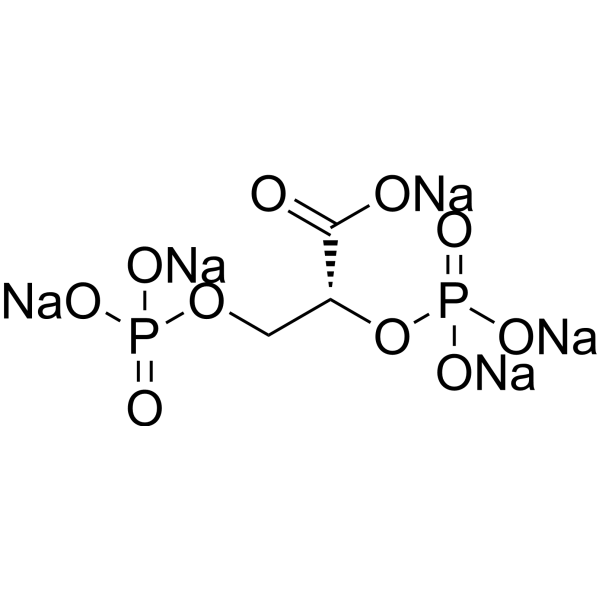
2,3-Diphospho-D-glyceric acid (2,3-DPG) pentasodium salt is a hemoglobin binder and vascular calcification inhibitor that reduces the oxygen affinity of hemoglobin. 2,3-Diphospho-D-glyceric acid pentasodium salt also specifically delays the transformation of colloidal calciprotein particles into crystalline forms, thereby effectively inhibiting vascular smooth muscle cell calcification without affecting the normal formation of osteoid nodules in osteoblast-like cells. 2,3-Diphospho-D-glyceric acid pentasodium salt shows no cytotoxicity to tested cell lines and only weakly interferes with β-hematin formation mediated by glyceryl monopalmitate. 2,3-Diphospho-D-glyceric acid pentasodium salt can be used to study the pathological mechanisms of vascular calcification and malaria-related conditions .
loading...
    loading...
Cat. No.: HY-175188
CAS No.: 2404652-82-8
Synonyms: BPN-0027490
Target:  

Myosin

Research Areas:  

Neurological Disease

MT-110 (BPN-0027490) is a non-muscle myosin NMIIB-selective inhibitor with high brain penetration and favorable safety profile. MT-110 specifically disrupts NMIIB-dependent actin dynamics in dendritic spines, while it exerts no significant adverse effects on cardiac myosin II and cardiac functions (such as cardiac output and heart rate) at tested concentrations. A single administration of MT-110 produces long-lasting (sustained for several weeks) blockade of methamphetamine motivation associated with environmental cues. MT-110 exhibits extremely high specificity, with no interference with cocaine motivation, hippocampus-dependent memory, fear memory, or locomotor and anxiety-like behaviors. MT-110 serves as a valuable tool compound for investigating the mechanisms of methamphetamine use disorder .
loading...
    loading...
Cat. No.: HY-179724A
PZ-1657 hydrochloride (Compound 57) is a potent, selective and orally active 5-HT7 receptor inverse agonist with a Ki of 5 nM. PZ-1657 hydrochloride can inhibit the constitutive cAMP production mediated by the Gs signaling pathway (EC50 = 2.93 nM). PZ-1657 hydrochloride can significantly reduce the MMP-9 activity mediated by 5-HT7 receptors in the hippocampus of mice, and the effect is comparable to that of SB-269970 (HY-15370). PZ-1657 hydrochloride can reverse the cognitive deficits observed in the rat novel object recognition test induced by Phencyclidine without affecting the animals' spontaneous activities. PZ-1657 hydrochloride can be used for the research of emotional disorders, such as depression and bipolar disorder .
loading...
    loading...
Cat. No.: HY-187090
CAS No.: 69658-91-9
Synonyms: 3-NMPY
Research Areas:  

Cancer

3-N-Nitroso-N-methylaminopyridine is a non-carcinogenic, non-mutagenic arylalkyl nitrosamine isomer that serves as a substrate for enzymatic metabolic processes. 3-N-Nitroso-N-methylaminopyridine undergoes enzymatic denitrosation, enzymatic N-oxide formation, and limited oxidative demethylation to produce trace amounts of 3-hydroxypyridine. 3-N-Nitroso-N-methylaminopyridine directly induces gene mutations in E. coli, but its mutagenic potential is eliminated by the rodent liver S-100 fraction. 3-N-Nitroso-N-methylaminopyridine shows no carcinogenicity in rats and no mutagenicity in the Ames test . 3-NMPY can be used in studies related to the metabolism and carcinogenic mechanisms of nitrosamine compounds in vitro and in vivo .
loading...
    loading...
Cat. No.: HY-19873
CAS No.: 925438-34-2
Target:  

Photosensitizer

Research Areas:  

Cancer

SL-052 is a hypocrellin-based photosensitizer that has recently shown promising results in clinical and preclinical testing for cancer photodynamic therapy (PDT). SL-052 is encapsulated in biodegradable polylactic-co-glycolic acid (PLGA) polymer nanoparticles optimized using single emulsion solvent evaporation technology. The SL-052-PLGA nanoparticles were more effective in PDT treatment of subcutaneous SCCVII squamous cell carcinoma compared to polyvinylpyrrolidone (PVP)-based and standard liposomal SL-052 formulations. A longer time interval between drug injection and tumor illumination can improve tumor cure rates, and SL-052-PLGA nanoparticles showed the best therapeutic effect among all SL-052 formulations.
loading...
    loading...

