524 Results for "

isoforms

" in MedChemExpress (MCE) Product Catalog:
Products (524)

524 Results for "isoforms" in MCE Product Catalog:

Cat. No.: HY-109056A
CAS No.: 867365-40-0
Synonyms: R-1206 sodium
Elsulfavirine sodium (R-1206) is an orally active human carbonic anhydrase (carbonic anhydrase, CA) inhibitor and an allosteric inhibitor of HIV-1 non-nucleoside reverse transcriptase (NNRT). Elsulfavirine sodium also targets and blocks the interaction between adenylosuccinate lyase (ADSL) and insulin-induced gene proteins INSIG1/2, blocks SREBP-1-mediated de novo lipid synthesis, and inhibits the proliferation of liver cancer cells. The combination of Elsulfavirine sodium and Lenvatinib (HY-10981) produces a synergistic anti-tumor effect. Elsulfavirine sodium is converted into the active metabolite VM1500A in vivo, blocks the DNA polymerase activity of reverse transcriptase, and inhibits HIV-1 replication. Elsulfavirine sodium exhibits a Ki of 1960 nM-52400 nM against human carbonic anhydrase isoforms including I, VII, VI, VA, VB, IX, XIII, XIV. Elsulfavirine sodium is used in studies related to HIV-1 infection and liver cancer .
loading...
    loading...
Cat. No.: HY-179503
PDE/TRPA1/CHIT1-IN-1 is a phosphodiesterases (PDEs), TRPA1, and hCHIT1 (KD of 37.7 μM) inhibitor. PDE/TRPA1/CHIT1-IN-1 is a broad-spectrum PDE inhibitor, potently targeting key isoforms including PDE4B, PDE7A, PDE3A, and PDE8A with IC50s of 15.54, 15.15, 8.39 and 16.46 μM. PDE/TRPA1/CHIT1-IN-1 suppresses NLRP3 inflammasome activation and inhibits NF-κB phosphorylation, downregulating the expression of pro-inflammatory genes (TNF-α and IL-6) in vivo. PDE/TRPA1/CHIT1-IN-1 can be used for chronic obstructive pulmonary disease (COPD) and related inflammatory lung disorders research .
loading...
    loading...
Cat. No.: HY-P86889
Synonyms: Adenylate cyclase stimulating G alpha protein antibody; AHO antibody; Alternative gene product encoded by XL exon antibody; C20orf45 antibody; dJ309F20.1.1 antibody; dJ806M20.3.3 antibody; Extra large alphas protein antibody; GNAS antibody; GNAS complex locus antibody; GNAS1 antibody; Adenylate cyclase stimulating G alpha protein antibody; AHO antibody; Alternative gene product encoded by XL exon antibody; C20orf45 antibody; dJ309F20.1.1 antibody; dJ806M20.3.3 antibody; Extra large alphas protein antibody; GNAS antibody; GNAS complex locus antibody; GNAS1 antibody; GPSA antibody; Gs alpha subunit antibody; GSA antibody; GSP antibody; Guanine nucleotide binding protein (G protein) alpha stimulating activity polypeptide 1 antibody; Guanine nucleotide binding protein alpha stimulating activity polypeptide 1 antibody; Guanine nucleotide binding protein G(s) subunit alpha isoforms short antibody; Guanine nucleotide binding protein G(s) subunit alpha isoforms XLas antibody; Guanine nucleotide regulatory protein antibody; MGC33735 antibody; NESP antibody; NESP55 antibody; Neuroendocrine secretory protein antibody; PHP1A antibody; PHP1B antibody; PHP1C antibody; POH antibody; Protein ALEX antibody; Protein GNAS antibody; Protein NESP55 antibody; SCG6 antibody; Secretogranin VI antibody; XLalphas antibody; XLas antibody;

Host:  

Mouse

Application:  

WB, ICC/IF, IHC-P

Reactivity:  

Human, Mouse, Rat

loading...
    loading...
Cat. No.: HY-169367
Research Areas:  

Cancer

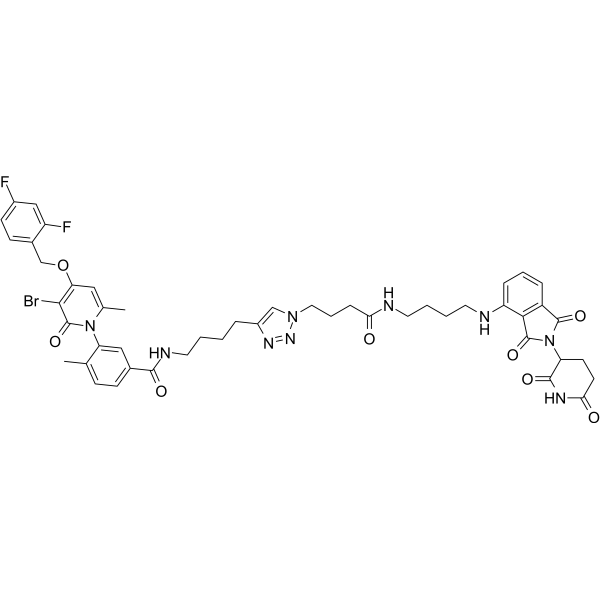
ERD-1233 is an orally active ERα PROTAC degrader with a DC50 of 0.9 nM. ERD-1233 exhibits plasma stability and microsomal stability across multiple species, and shows no significant inhibitory effect on major cytochrome P450 subtypes and hERG channels. ERD-1233 inhibits tumor growth and degrades ERα protein levels in xenograft tumor models, with favorable biosafety. ERD-1233 can be used in breast cancer-related research .
loading...
    loading...
Cat. No.: HY-182693
CAS No.: 2019223-60-8
CPL302-253 is a PI3Kδ inhibitor with an IC50 of 12.20 nM and a human Kd of 0.85 nM. CPL302-253 functionally regulates PI3Kδ activity, blocks the production of IFNγ, IL-33 and ROS in immune cells, and affects immune function. CPL302-253 blocks the progression of asthma-inducing inflammatory responses in a mouse model of asthma. CPL302-253 can be used for research related to asthma .
loading...
    loading...
Cat. No.: HY-187472
Research Areas:  

Infection

SMA-245 is an inhibitor of Filovirus glycoproteins, acting on Ebola virus (EBOV) and Marburg virus (MARV). SMA-245 blocks the endosomal membrane fusion step of filoviruses by binding to the EBOV GP1/GP2 fusion loop. SMA-245 inhibits MARV viral entry. SMA-245 can be used in research related to filovirus infections .
loading...
    loading...
Cat. No.: HY-132184
CAS No.: 87173-80-6
Purity:  ≥99.0%
Synonyms: 5,6-EET; (±)5,6-EpETrE
Research Areas:  

Endocrinology

5,6-Epoxyeicosatrienoic acid (5,6-EET; (±)5,6-EpETrE) is a fully racemic version of the enantiomeric forms biosynthesized from arachidonic acid by cytochrome P450 enzymes. In solution, 5,6-Epoxyeicosatrienoic acid degrades into 5,6-DiHET and 5,6-δ-lactone, which can be converted to 5,6-DiHET and quantified by GC-MS. In neuroendocrine cells, such as the anterior pituitary and pancreatic islets, 5,6-Epoxyeicosatrienoic acid has been implicated in the mobilization of calcium and hormone secretion. 5,6-Epoxyeicosatrienoic acid is an inhibitor of T-type voltage-gated calcium channels (Cav3) that inhibits isoforms Cav3.1, Cav3.2 (IC50=0.54 μM), and Cav3. and decreases nifedipine-resistant phenylephrine-induced vasoconstriction in isolated mouse mesenteric arteries via Cav3.2 blockade when used at a concentration of 3 μM. In addition, it is a substrate of COX-1 and COX-2.
loading...
    loading...
Cat. No.: HY-114572
CAS No.: 1635405-90-1
Target:  

c-Met/HGFR

Research Areas:  

Cancer

1D-2 is a c-Met protein kinase inhibitor, with a human-derived IC50 of 1.45 nM. 1D-2 inhibits the proliferation of cancer cells and exhibits metabolic stability in human and rat liver microsomes. 1D-2 can be used in related research on non-small cell lung cancer .
loading...
    loading...
Cat. No.: HY-109056R
CAS No.: 868046-19-9
Synonyms: R-1206 (Standard)
Elsulfavirine (Standard) is the analytical standard of Elsulfavirine (HY-109056). This product is intended for research and analytical applications. Elsulfavirine (R-1206) is an orally active human carbonic anhydrase (carbonic anhydrase, CA) inhibitor and an allosteric inhibitor of HIV-1 non-nucleoside reverse transcriptase (NNRT). Elsulfavirine also targets and blocks the interaction between adenylosuccinate lyase (ADSL) and insulin-induced gene proteins INSIG1/2, blocks SREBP-1-mediated de novo lipid synthesis, and inhibits the proliferation of liver cancer cells. The combination of Elsulfavirine and Lenvatinib (HY-10981) produces a synergistic anti-tumor effect. Elsulfavirine is converted into the active metabolite VM1500A in vivo, blocks the DNA polymerase activity of reverse transcriptase, and inhibits HIV-1 replication. Elsulfavirine exhibits a Ki of 1960 nM-52400 nM against human carbonic anhydrase isoforms including I, VII, VI, VA, VB, IX, XIII, XIV. Elsulfavirine is used in studies related to HIV-1 infection and liver cancer .
loading...
    loading...
Cat. No.: HY-112608
CAS No.: 2244992-76-3
Purity:  98.04%
Target:  

PI3K

Research Areas:  

Cancer

CHMFL-PI3KD-317 is a highly potent, selective and orally active PI3Kδ inhibitor, with an IC50 of 6 nM, and exhibits over 10-1500 fold selectivity over other class I, II and III PIKK family isoforms, such as PI3Kα (IC50, 62.6 nM), PI3Kβ (IC50, 284 nM), PI3Kγ (IC50, 202.7 nM), PIK3C2A (IC50, >10000 nM), PIK3C2B (IC50, 882.3 nM), VPS34 (IC50, 1801.7 nM), PI4KIIIA (IC50, 574.1 nM) and PI4KIIIB (IC50, 300.2 nM). CHMFL-PI3KD-317 inhibits PI3Kδ-mediated Akt T308 phosphorylation in Raji cells, with an EC50 of 4.3 nM. CHMFL-PI3KD-317 has antiproliferative effects on cancer cells .
loading...
    loading...
Cat. No.: HY-120078
CAS No.: 1845753-81-2
Target:  

Phospholipase

Research Areas:  

Cardiovascular Disease

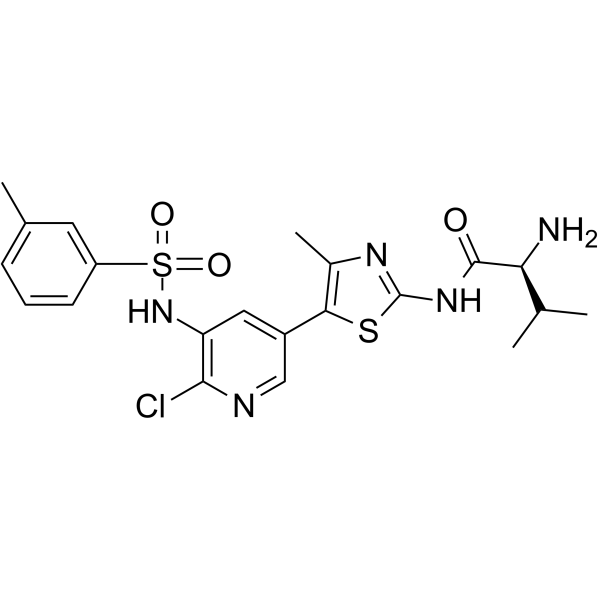
AZD2716 is an orally active secretory phospholipase A2 (sPLA2) inhibitor. AZD2716 inhibits human GIIA sPLA2 (IC50=10 nM), human GV sPLA2 (IC50=40 nM), human GX sPLA2 (IC50=400 nM), snake venom sPLA2 (IC50=2 pM), and snake (Bothrops jararacussu) Lys49-PLA2-like toxin (Kd=110 μM). AZD2716 inhibits sPLA2 isoforms IIa, V, X, snake venom sPLA2s, and snake venom Lys49-PLA2-like toxin myotoxic activity via hydrophobic channel binding. AZD2716 suppresses GIIA sPLA2 production, neutralizes snake venom-induced myotoxicity, and improves survival in envenomed mice. AZD2716 can be used for the research of coronary artery disease, atherosclerosis, and snakebite envenoming .
loading...
    loading...
Cat. No.: HY-153932
CAS No.: 2550399-06-7
Research Areas:  

Infection Cancer

NR-7h is a selective p38α/p38β MAPK PROTAC degrader with multiple activities including anti-leishmanial, anti-malarial, and anti-Mayaro virus properties. NR-7h induces specific degradation of p38α/p38β isoforms and p38-MAPK via the ubiquitin-proteasome system. NR-7h reduces the load of Leishmania donovani, modulates the cytokine profile toward a pro-inflammatory phenotype, and enhances the oxidative burst of macrophages. NR-7h inhibits the growth of Plasmodium falciparum in human red blood cells and merozoite invasion. NR-7h reduces the replication of Mayaro virus and the expression of E1 protein in primary human dermal fibroblasts. NR-7h can be used in studies related to parasitic infections, viral infections, and breast cancer .
loading...
    loading...
Cat. No.: HY-173132
CAS No.: 3114057-78-9
Research Areas:  

Cancer

AKR1Cs-IN-1 (Compound 29) is a potent and broad-spectrum inhibitor targeting members of the Aldo-Keto Reductase 1C family (AKR1C1-1C4). By simultaneously occupying the SP2 and SP3 pockets, it effectively inhibits multiple isoforms and disrupts metabolic pathways associated with drug resistance. In enzymatic activity assays, AKR1Cs-IN-1 exhibited significant inhibitory potency, with IC50 values of 0.09, 0.28, 0.05, and 0.51 µM against AKR1C1, AKR1C2, AKR1C3, and AKR1C4, respectively. In the doxorubicin (DOX)-resistant breast cancer cell line MCF-7/ADR, AKR1Cs-IN-1 showed remarkable resensitization effects and significantly enhanced the cytotoxicity of DOX. AKR1Cs-IN-1 holds promise for research on overcoming drug resistance in breast cancer .
loading...
    loading...
Cat. No.: HY-N15451
CAS No.: 112515-42-1
Deoxytopsentin (compound 5) is a marine bisindole alkaloid and also a MRSA pyruvate kinase inhibitor. Deoxytopsentin exists in sponges. Deoxytopsentin exhibits antibacterial activity against methicillin-resistant Staphylococcus aureus strains in vitro .
loading...
    loading...
Cat. No.: HY-128633
CAS No.: 2269470-35-9
Target:  

PI3K Akt Apoptosis

Research Areas:  

Cancer

PI3K-IN-4 is a potent Pan-PI3K inhibitor. PI3K-IN-4 has high activity for three PI3K isoforms with the IC50 values of picomole. PI3K-IN-4 shows superior inhibitory activity against PI3Kα (IC50 = 0.20 nM), PI3Kβ (IC50 = 2.99 nM), PI3Kδ (IC50 = 0.48 nM) and PI3Kγ (IC50 = 0.58 nM) and has no significant activity against EGFR. PI3K-IN-4 inhibits cancer cell growth though PI3K/Akt signaling pathway, leading to the inhibition of colony formation and the induction of apoptosis. PI3K-IN-4 can be used for lung, colon and breast cancer research .
loading...
    loading...
Cat. No.: HY-130133
CAS No.: 2378831-21-9
DHW-221 is a potent orally active dual PI3K/mTOR inhibitor, exhibiting low nanomolar potency against all four Class I PI3K isoforms and mTOR (PI3Kα, IC50 = 0.50 nM; PI3Kβ, IC50 = 1.9 nM; PI3Kγ, IC50 = 1.8 nM; PI3Kδ, IC50 = 0.74 nM; mTOR, IC50 = 3.9 nM). DHW-221 exerts antitumor effects by blocking the PI3K/Akt/mTOR pathway and inducing mitochondrial apoptosis and paraptosis (via Endoplasmic Reticulum (ER) stress and MAPK signaling) and arrests cell cycle, thereby inhibiting cell migration, invasion and angiogenesis. DHW-221 inhibits tumor growth in both the A549/Taxol (HY-B0015) and the HCC827 xenograft mouse models. DHW-221 can be used for non-small cell lung cancer (NSCLC), colon and breast cancer research .
loading...
    loading...
Cat. No.: HY-171881
CAS No.: 864686-48-6
Target:  

GSK-3 DYRK

BI-5521 is an orally active GSK-3 inhibitor with an IC50 of 1.1 nM against GSK-3β. BI-5521 targets the two GSK-3 isoforms with similar potency and exhibits potent inhibitory activity against DYRK1A. By modulating GSK-3 activity, BI-5521 inhibits tumor proliferation and cancer cell growth, exerts cytotoxic effects, and reduces cancer cell viability. It shows consistent chemosensitivity across all subtypes of rhabdomyosarcoma, produces synergistic growth inhibitory effects when combined with SOS1 inhibitors, reduces oral glucose levels, regulates the myofibroblast differentiation pathway, decreases the nuclear localization of YAP/SMAD2/3, and lowers the positive rate of α-SMA in fibroblasts without affecting the apoptosis of CD4 + T cells. BI-5521 can be used in the research of non-small cell lung cancer, pleomorphic rhabdomyosarcoma, type 2 diabetes, pancreatic ductal adenocarcinoma, Alzheimer's disease, bipolar disorder, and metabolic dysfunction-associated steatotic liver disease .
loading...
    loading...
Cat. No.: HY-L083
3,806 compounds

Mutations in oncogenes and tumor suppressor genes can modify multiple signaling pathways and in turn cell metabolism, which facilitates tumorigenesis. The paramount hallmark of tumor metabolism is “aerobic glycolysis” or the Warburg effect, coined by Otto Warburg in 1926, in which cancer cells produce most of energy from glycolysis pathway regardless of whether in aerobic or anaerobic condition. Usually, cancer cells are highly glycolytic (glucose addiction) and take up more glucose than do normal cells from outside. The increased uptake of glucose is facilitated by the overexpression of several isoforms of membrane glucose transporters (GLUTs). Likewise, the metabolic pathways of glutamine, amino acid and fat metabolism are also altered. Recent trends in anti-cancer drug discovery suggests that targeting the altered metabolic pathways of cancer cells result in energy crisis inside the cancer cells and can selectively inhibit cancer cell proliferation by delaying or suppressing tumor growth.

MCE provides a unique collection of 3,806 compounds which cover various tumor metabolism-related signaling pathways. These compounds can be used for anti-cancer metabolism targets identification, validation as well anti-cancer drug discovery.

Cat. No.: HY-132399S
CAS No.: 1189980-63-9
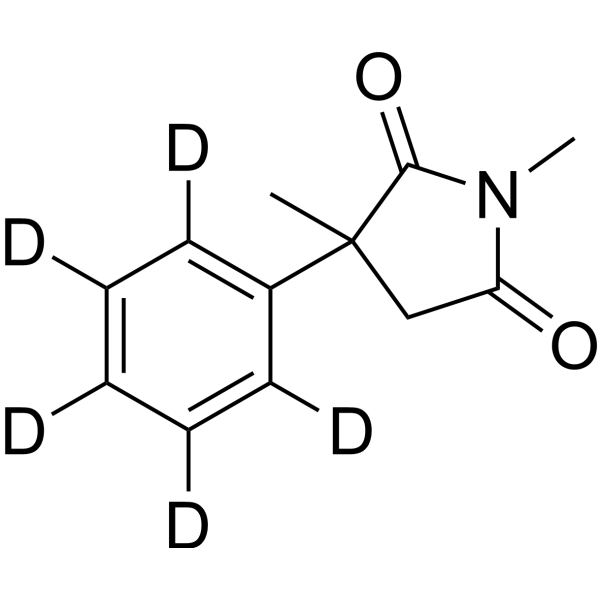
Methsuximide-d5 is the deuterated-labeled Methsuximide (HY-B1376). Methsuximide (Mesuximide) is an orally active succinimide-derived antiepileptic agent. Methsuximide interacts with cytochrome P-450, increases the level of hepatic microsomal cytochrome P-450, and inhibits or competes with the cytochrome P-450 CYP 2C9/10 subtype. Methsuximide can be used in epilepsy-related research .
loading...
    loading...
Cat. No.: HY-181266
Target:  

Parasite Aminopeptidase

Research Areas:  

Infection

Antimalarial agent 55 is an orally potent inhibitor of PfA-M1 and PfA-M17 aminopeptidases from Plasmodium falciparum, with Ki values of 27 nM and 81 nM, respectively. Antimalarial agent 55 exhibits potent nanomolar activity against homologous enzymes from Plasmodium vivax and Plasmodium berghei, with Ki values of 2 nM, 4 nM, 190 nM and 18 nM for Pv-M1, Pb-M1, Pv-M17 and Pb-M17, respectively. Antimalarial agent 55 possesses significant antiplasmodial activity, as well as cross-species inhibitory capacity and broad-spectrum activity that is unaffected by existing drug resistance mechanisms. Antimalarial agent 55 can be used in malaria research .
loading...
    loading...

