542 Results for "

ADP

" in MedChemExpress (MCE) Product Catalog:
Products (542)

542 Results for "ADP" in MCE Product Catalog:

Cat. No.: HY-B0764R
CAS No.: 16980-89-5
Synonyms: Dibutyryl cAMP sodium (Standard); DBcAMP sodium (Standard)
Bucladesine (Dibutyryl cAMP; DBcAMP) sodium (Standard) is the analytical standard of Bucladesine sodiumn (HY-B0764). This product is intended for research and analytical applications. Bucladesine is a membrane-permeable 3′, 5′-cyclic adenosine monophosphate (cAMP) analog. Bucladesine selectively activates cAMP dependent protein kinase (PKA) by increasing the intracellular level of cAMP. Bucladesine significantly attenuates MDMA-induced increases in hippocampal mitochondrial ROS formation, mitochondrial outer membrane damage, cytochrome c release, and hippocampal ADP/ATP ratio, thereby improving spatial learning and memory impairments. Bucladesine exhibit anti-nociceptive and anti-inflammation effect. Bucladesine can inhibit cancer cells proliferation, induce apoptosis. Bucladesine can be used for the researches of neurological disease, cancer, inflammation .
loading...
    loading...
Cat. No.: HY-P11467
Gy-CATH is an anionic antimicrobial peptide. Gy-CATH activates MAPK and NF-κB signaling pathways (elevated levels of phospho-ERK, -p38, -JNK, -p65, and -IκBα). Gy-CATH upregulates the expression levels of three physiological anticoagulant pathways. Gy-CATH inhibits ADP-, Collagen-, and PMA-induced platelet aggregation. Gy-CATH has no direct antimicrobial activity, but shows significant preventive abilities against mice infected with Staphylococcus aureus, Escherichia coli, and Methicillin (HY-121544)-resistant Staphylococcus aureus. Gy-CATH exhibits potent immunomodulatory activity, enhancing macrophage-and neutrophil-mediated bactericidal functions. Gy-CATH significantly reduces the extent of pulmonary fibrin deposition and prevents thrombosis in mice .
loading...
    loading...
Cat. No.: HY-P71642
Purity:  ≥ 90%, as determined by reducing SDS-PAGE.
Synonyms: ACSS2; Acetyl-Coenzyme A Synthetase 2 (ADP Forming); Prev. ACAS2; Acetyl-CoA Synthetase; AceCS; Acetate--CoA Ligase; ACS; AceCS1; Acetyl-Coenzyme A Synthetase, Cytoplasmic; CDNA FLJ53719, Highly Similar To Acetyl-Coenzyme A Synthetase, Cytoplasmic (EC6.2.
Species:  
Mouse
Source:  
E. coli
loading...
    loading...
Cat. No.: HY-123200
CAS No.: 107534-95-2
SC42619 free base is a selective platelet thrombin receptor (thrombin receptor) antagonist. SC42619 free base inhibits thrombin-induced platelet aggregation, secretion, calcium influx, and phosphatidic acid phosphorylation, as well as trypsin-induced platelet aggregation. SC42619 free base reduces the content of individual platelets. SC42619 free base inhibits prostacyclin (PGI2) synthesis in endothelial cells. SC42619 free base can be used for the research of hematological diseases .
loading...
    loading...
Cat. No.: HY-P702952
Purity:  ≥ 85%, as determined by reducing SDS-PAGE.
Synonyms: SIRT6; HSIRT6; Sirtuin 6; SIR2L6; Protein Mono-ADP-Ribosyltransferase Sirtuin-6; Sirtuin (Silent Mating Type Information Regulation 2 Homolog) 6 (S. Cerevisiae); NAD-Dependent Protein Deacetylase Sirtuin-6; Sirtuin (Silent Mating Type Information Regulati
Species:  
Human
Source:  
E. coli
loading...
    loading...
Cat. No.: HY-P703626
Purity:  ≥ 80%, as determined by reducing SDS-PAGE.
Synonyms: SIRT6; HSIRT6; Sirtuin 6; SIR2L6; Protein Mono-ADP-Ribosyltransferase Sirtuin-6; Sirtuin (Silent Mating Type Information Regulation 2 Homolog) 6 (S. Cerevisiae); NAD-Dependent Protein Deacetylase Sirtuin-6; Sirtuin (Silent Mating Type Information Regulati
Species:  
Human
Source:  
E. coli
loading...
    loading...
Cat. No.: HY-W004643
CAS No.: 13114-72-2
Synonyms: AK-II
Research Areas:  

Others

Akardite II (AK-II) is a stabilizer for nitrocellulose (NC) propellants that scavenges NOx. Akardite II is used in research related to the identification of organic compounds in gunpowder .
loading...
    loading...
Cat. No.: HY-P76525
Purity:  ≥ 95%, as determined by Bis-Tris PAGE.
Synonyms: NUDT5; Nucleoside Diphosphate-Linked Moiety X Motif 5; Nudix Hydrolase 5; HYSAH1; YSA1H; HNUDT5; Nuclear ATP-Synthesis Protein NUDIX5; Nudix Motif 5; ADP-Sugar Pyrophosphatase; NUDIX5; 8-Oxo-DGDP Phosphatase; YSAH1; Nudix (Nucleoside Diphosphate Linked Mo
Species:  
Human
Source:  
E. coli
loading...
    loading...
Cat. No.: HY-137325A
CAS No.: 301334-89-4
Target:  

Calcium Channel

Research Areas:  

Metabolic Disease

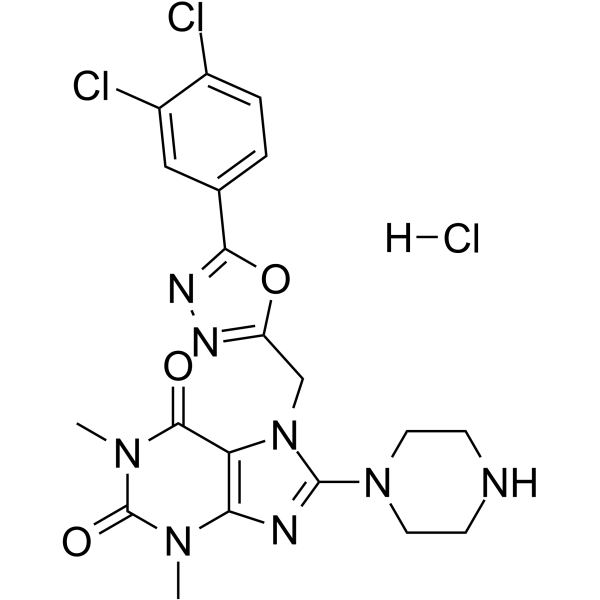
2-Chloro-ATP sodium (2-Chloro ATP) is an adenine nucleotide and an analog of ATP. It is an antagonist of the purinergic P2Y1 receptor and inhibits intracellular calcium mobilization induced by ADP (HY-W010918) in Jurkat cells expressing the human receptor (Ki=2.3 μM). 2-Chloro-ATP sodium is an agonist of the purinergic P2X receptor and induces inward currents in HEK293 cells expressing human bladder smooth muscle or rat PC12 forms of the receptor (EC50=0.5 and 2.5 μM). 2-Chloro-ATP sodium induces relaxation of precontracted guinea pig cecal strips in a concentration-dependent manner. 2-Chloro-ATP sodium has been used to study the substrate specificity of cyclic nucleotide-dependent protein kinases such as protein kinase A (PKA) and PKG.
loading...
    loading...
Cat. No.: HY-175675
CAS No.: 3104888-50-5
P2Y1 antagonist 4 is a selective P2Y1 receptor antagonist with excellent blood-brain barrier (BBB) penetration. P2Y1 antagonist 4 inhibits P2Y1 receptor-mediated cytosolic Ca 2+ increase (IC50 = 1.95 μM) and platelet aggregation (IC50 = 3.24 μM) induced by ADP in rabbit washed platelets. P2Y1 antagonist 4 significantly upregulates the level of nuclear Nrf2 protein in H2O2-treated HT22 cells. P2Y1 antagonist 4 reduces myocardial infarct size in a mouse acute myocardial infarction (MI) model. P2Y1 antagonist 4 can be used for the study of ischemic stroke and myocardial infarction .
loading...
    loading...
Cat. No.: HY-P76525Y
Purity:  ≥ 90%, as determined by Bis-Tris PAGE.
Synonyms: NUDT5; Nucleoside Diphosphate-Linked Moiety X Motif 5; Nudix Hydrolase 5; HYSAH1; YSA1H; HNUDT5; Nuclear ATP-Synthesis Protein NUDIX5; Nudix Motif 5; ADP-Sugar Pyrophosphatase; NUDIX5; 8-Oxo-DGDP Phosphatase; YSAH1; Nudix (Nucleoside Diphosphate Linked Mo
Species:  
Human
Source:  
E. coli
loading...
    loading...
Cat. No.: HY-125209A
CAS No.: 2253744-57-7
Research Areas:  

Cancer

TH5427 hydrochloride is a NUDT5 inhibitor with a human target IC50 of 29 nM, ~690-fold selectivity over MTH1 in vitro, and selective functional inhibition over other NUDIX hydrolases including NUDT9 .TH5427 hydrochloride binds to the active site of NUDT5, blocking enzymatic activity related to ADP-ribose metabolism and PAR-derived ATP synthesis .TH5427 hydrochloride blocks progestin-dependent nuclear ATP synthesis, impairs progestin-induced chromatin remodeling, inhibits histone H1 displacement, disrupts progestin-dependent gene regulation, and abrogates progestin-dependent proliferation in breast cancer cells .TH5427 hydrochloride functions as a versatile probe to study nuclear ATP dynamics and ADP-ribose-related metabolism in cells .TH5427 hydrochloride engages NUDT5 at physiological temperatures, as demonstrated by Drug Affinity Responsive Target Stability (DARTS) assay .TH5427 hydrochloride stabilizes NUDT5 against thermal denaturation in cell lysates and intact cells, as shown by cellular thermal shift assay (CETSA) .TH5427 hydrochloride functionally inhibits NUDT5 activity, leading to downstream effects on oxidative DNA damage and DNA replication in triple-negative breast cancer (TNBC) cells .TH5427 hydrochloride suppresses proliferation of TNBC cells without inducing cell death or apoptosis, slows DNA replication in TNBC cells, promotes accumulation of oxidative DNA lesions, and triggers DNA damage response in TNBC cells .TH5427 hydrochloride suppresses growth of TNBC cells in vitro, inhibits growth of TNBC xenograft tumors in nude mice in vivo, and shows greater potency against TNBC cell lines compared to ER-positive and normal-like breast cell lines .TH5427 hydrochloride can be used for the research of breast cancer and triple-negative breast cancer .
loading...
    loading...
Cat. No.: HY-N20707
CAS No.: 24312-00-3
Castalagin is an orally active natural product with multiple biological activities including antibacterial activity against bacteria and anti-leishmanial activity against Leishmania aethiopica. Castalagin exhibits inhibitory activity against PARP1 and DNA topoisomerase II, with an IC50 of 0.86 μM for bovine PARP1. Castalagin reduces poly (ADP-ribosyl) ation modification in cells. Castalagin binds to the cell envelope of Ruminococcus bromii, increases the ratio of CD8+/FOXP3+CD4+ T cells in the tumor microenvironment, and acts as a prebiotic to enhance the activity of anti-PD-1 therapy. Castalagin induces morphological changes in Leishmania aethiopica promastigotes and inhibits their proliferation. Castalagin inhibits PBP2a-mediated peptidoglycan layer stabilization, disrupts bacterial peptidoglycan assembly, and inhibits and disintegrates bacterial biofilms. Castalagin can be used in research related to diseases such as cancer, leishmaniasis, and bacterial infections .
loading...
    loading...
Cat. No.: HY-123669
CAS No.: 204204-73-9
Research Areas:  

Cardiovascular Disease

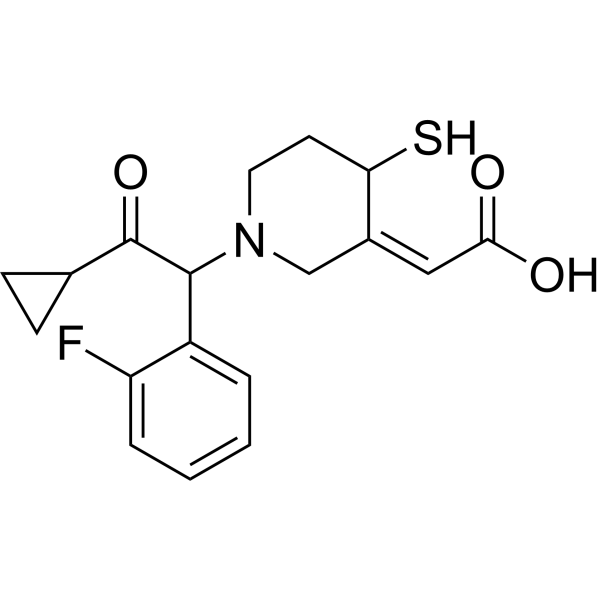
R-138727, the major active metabolite of Prasugrel (HY-15284), is a highly potent and selective irreversible antagonist of the P2Y12 receptor, with an IC50 of 2.5 μM. R-138727 covalently binds to the P2Y12 receptor on the platelet surface, blocking adenosine diphosphate-mediated platelet activation and aggregation. R-138727 can be used to study stroke, cerebral infarction and neurological deficits.
loading...
    loading...
Cat. No.: HY-188120
AZD5335 is an ADC targeting FRα, with an IC50 of 10.6 nM against human FRα. AZD5335 specifically binds to FRα, mediates internalization and trafficking to lysosomal compartments, while delivering a topoisomerase I inhibitor payload that traps TOP1-DNA cleavage complexes. AZD5335 induces DNA damage response via the ATR, ATM, Chk1 and Chk2 signaling pathways, and increases the levels of phosphorylated KAP1, phosphorylated RPA, phosphorylated γH2AX, as well as PARP cleavage. AZD5335 exhibits bystander cytotoxicity against FRα-negative cells co-cultured with FRα-expressing cells. AZD5335 induces potent and durable responses and complete regression in ovarian cancer models, including models with low FRα expression and models resistant to Elahere, with enhanced efficacy when combined with Carboplatin, Bevacizumab or poly (ADP-ribose) polymerase inhibitors. AZD5335 can be used for ovarian cancer research .
loading...
    loading...
Cat. No.: HY-P85522
Synonyms: 2810449N18Rik; AI043036; Mono ADP ribosyltransferase sirtuin 6; NAD-dependent protein deacetylase sirtuin-6; Regulatory protein SIR2 homolog 6; Regulatory protein SIR2 homolog; SIR2 like 6; SIR2 like protein 6; Sir2 related protein type 6; SIR2-like protein 6; SIR2

Host:  

Mouse

Application:  

WB, ICC/IF, IP

Reactivity:  

Human, Mouse, Rat, Monkey

loading...
    loading...
Cat. No.: HY-183765
Target:  

PARP Pyruvate Kinase

Research Areas:  

Cancer

PARP1/PKM2-IN-1 is a dual PARP1/PKM2 inhibitor, with an IC50 of 39.5 nM against PARP1, and IC50 values of 261 nM (recombinant PKM2) and 50 nM (dimeric PKM2) against PKM2. PARP1/PKM2-IN-1 reduces the dimerization of PKM2 and decreases its nuclear accumulation level. PARP1/PKM2-IN-1 also selectively downregulates PKM2 mRNA and impairs poly (ADP-ribose)-mediated nuclear retention of PKM2. PARP1/PKM2-IN-1 exhibits antiproliferative activity and inhibits the formation of 3D cancer spheroids. PARP1/PKM2-IN-1 can be used in research related to mammary adenocarcinoma, triple-negative breast cancer, BRCA1-mutant triple-negative breast cancer, and prostate adenocarcinoma .
loading...
    loading...
Cat. No.: HY-10419
CAS No.: 81443-73-4
Research Areas:  

Cardiovascular Disease

AH23848 (compound 6) is a competitive blocker of the thromboxane A2 receptor and an orally effective agent, with an IC50 value of 50 nM against human targets and a long duration of action.
loading...
    loading...
Cat. No.: HY-171722
CAS No.: 1355681-08-1
Synonyms: Asc-C9
Target:  

Insecticide PGC-1α

Research Areas:  

Infection Cancer

Ascr#10 (Asc-C9) is an orally active thermogenesis inducer and insecticide that can be obtained from Monochamus alternatus. Ascr#10 binds to the insect adipokinetic hormone (AKH) receptor (Ka=272 µM) and stimulates mitochondrial biogenesis via the PGC1α-UCP4 axis. Consequently, Ascr#10 induces UCP4-mediated uncoupled respiration, reduces the ATP/ADP ratio and accelerates lipid mobilization, thereby driving the thermogenesis process. Ascr#10 delays pupation and exerts specific chemotaxis toward dispersive fourth-stage pinewood nematode LIV larvae. Ascr#10 promotes cold acclimation of Monochamus alternatus larvae through metabolic inhibition and cryoprotectant accumulation, enhancing their survival rate under cold stress. Ascr#10 also induces browning of white adipose tissue and activates brown adipose tissue in mice, thereby helping the body resist cold and tumor growth. Ascr#10 can be widely applied to research related to pine wilt disease, lung tumors and cold stress .
loading...
    loading...

