128 Results for "

Colchicine

" in MedChemExpress (MCE) Product Catalog:
Products (128)

128 Results for "Colchicine" in MCE Product Catalog:

Cat. No.: HY-156737
Target:  

Microtubule/Tubulin

Research Areas:  

Cancer

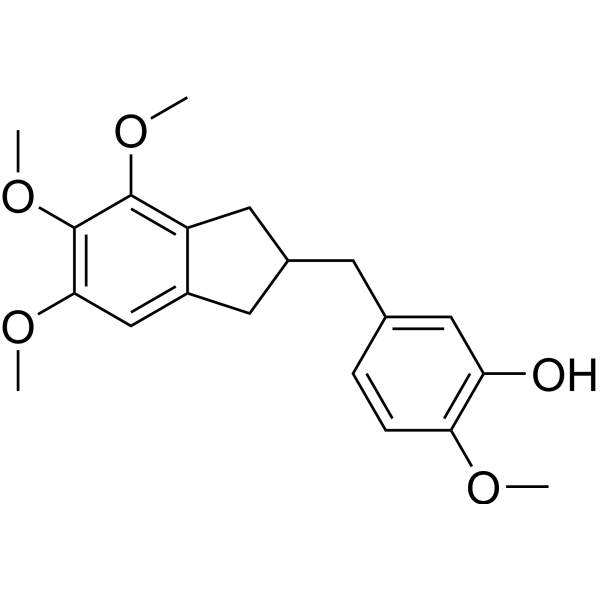
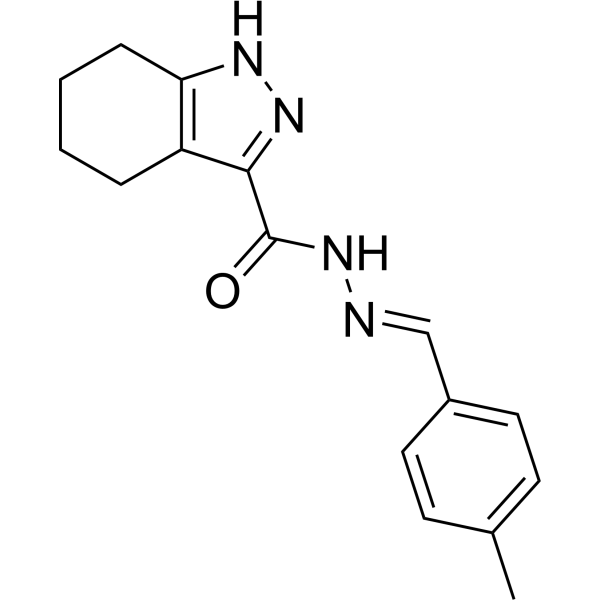
Tubulin polymerization-IN-49 (compound 12d) is a potent tubulin polymerization inhibitor. Tubulin polymerization-IN-49 bound to colchicine site on tubulin and inhibited tubulin polymerization. Tubulin polymerization-IN-49 induces cell cycle arrest at G2/M phase and apoptosis. Tubulin polymerization-IN-49 has anticancer active and prevents tumor generation, inhibits tumor proliferation and angiogenesis .
loading...
    loading...
Cat. No.: HY-16146
CAS No.: 288847-34-7
Synonyms: OXi-4503 tetrasodium
Target:  

Wnt Microtubule/Tubulin

Research Areas:  

Cancer

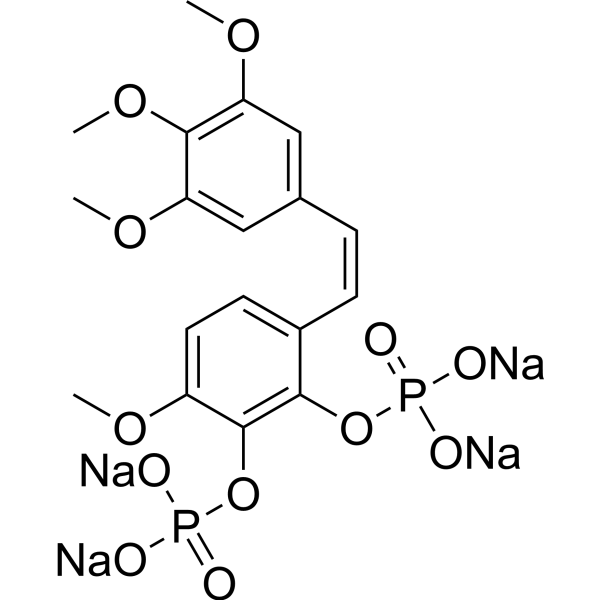
Combretastatin A-1 phosphate (OXi-4503) tetrasodium, a proagent of Combretastatin A-1, is a microtubule polymerization inhibitor that binds to the colchicine-binding site of tubulin. Combretastatin A-1 phosphate tetrasodium inhibits the Wnt/β-catenin pathway through tubulin depolymerization mediated AKT deactivation. Combretastatin A-1 phosphate tetrasodium exhibits anti-tumor and anti-vascular effects .
loading...
    loading...
Cat. No.: HY-121993R
CAS No.: 109971-63-3
Research Areas:  

Cancer

Combretastatin A-1 (Standard) is the analytical standard of Combretastatin A-1. This product is intended for research and analytical applications. Combretastatin A-1 is a microtubule polymerization inhibitor that binds to the colchicine-binding site of tubulin. Combretastatin A-1 inhibits the Wnt/β-catenin pathway through tubulin depolymerization mediated AKT deactivation. Combretastatin A-1 exhibits anti-tumor and anti-vascular effects .
loading...
    loading...
Cat. No.: HY-147947
CAS No.: 2521560-46-1
Target:  

Microtubule/Tubulin

Research Areas:  

Cancer

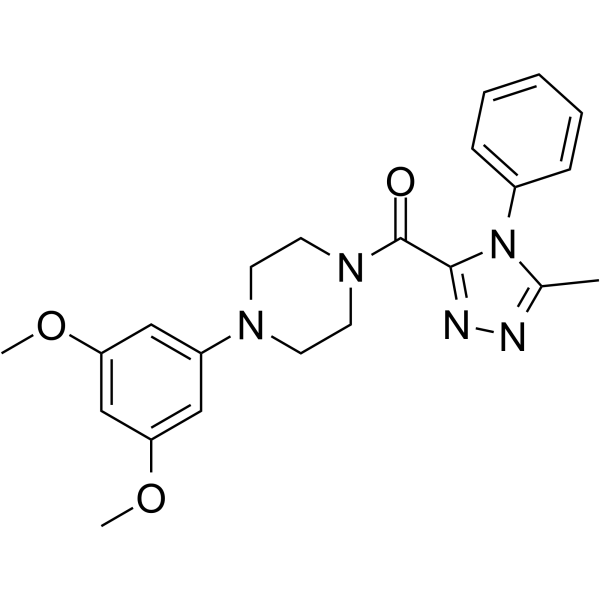
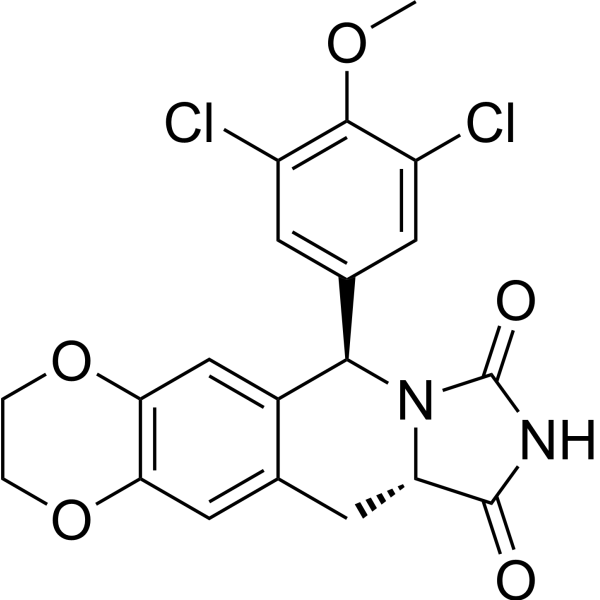
Tubulin polymerization-IN-30 (compound 6e) is a potent Tubulin polymerization inhibitor. Tubulin polymerization-IN-30 is a colchicine binding site inhibitor. Tubulin polymerization-IN-30 can disrupt intracellular microtubule organization, arrest cell cycle at the G2/M phase. Tubulin polymerization-IN-30 exhibits the high potency against the cancer cell lines including SGC-7901, A549 and HeLa, with IC50 values of 2.16, 2.21, and 0.403 μM .
loading...
    loading...
Cat. No.: HY-164510
CAS No.: 14686-61-4
Target:  

Cytochrome P450

Research Areas:  

Others

N-Formyldemecolcine is a colchicine precursor that contains the characteristic tropolone ring and pharmacophore of colchicine. N-Formyldemecolcine can be synthesized de novo by genetically engineering transgenic Nicotiana benthamiana and atypical cytochrome P450s that catalyze the production of colchicine's unique carbon scaffold .
loading...
    loading...
Cat. No.: HY-N1098R
CAS No.: 25739-41-7
Colchiceine (Standard) is the analytical standard of Colchiceine. This product is intended for research and analytical applications. Colchiceine is one of several metabolites of the anti-gout medication Colchicine (HY-16569). Colchicine is a tubulin inhibitor and a microtubule disrupting agent, and may protect rats from developing liver injury and fibrosis .
loading...
    loading...
Cat. No.: HY-182795
Research Areas:  

Metabolic Disease

Colchicine derivative-1 is a colchicine derivative. Colchicine derivative-1 exhibits cytotoxicity against various cells. Colchicine derivative-1 arrests cancer cells at the G2/M phase of the cell cycle. Colchicine derivative-1 increases the levels of MMP-2, MMP-8, MMP-9, IL-2, IL-6, IL-17A, IL-22, IL-4, and IL-5 in the blood, inhibits the gene expression of hepatic fibrinogen α, β, γ and TGF-β1, and alleviates hepatic fibrosis symptoms in mice. Colchicine derivative-1 has antifibrotic activity and can be used in studies related to hepatic fibrosis .
loading...
    loading...
Cat. No.: HY-16372
CAS No.: 227619-96-7
Synonyms: OSI-461
Research Areas:  

Cancer

CP-461 (OSI-461) is a selective apoptotic antineoplastic drug (SAAND) by engaging tubulin on colchicine site
loading...
    loading...
Cat. No.: HY-161734
Target:  

Microtubule/Tubulin

Research Areas:  

Cancer

Microtubule inhibitor 11 (compound 33) is a microtubule inhibitor with a mechanism of action similar to colchicine (HY-N0282). Microtubule inhibitor 11 can be used in cancer-related research .
loading...
    loading...
Cat. No.: HY-159155
Target:  

CDK Microtubule/Tubulin

Research Areas:  

Cancer

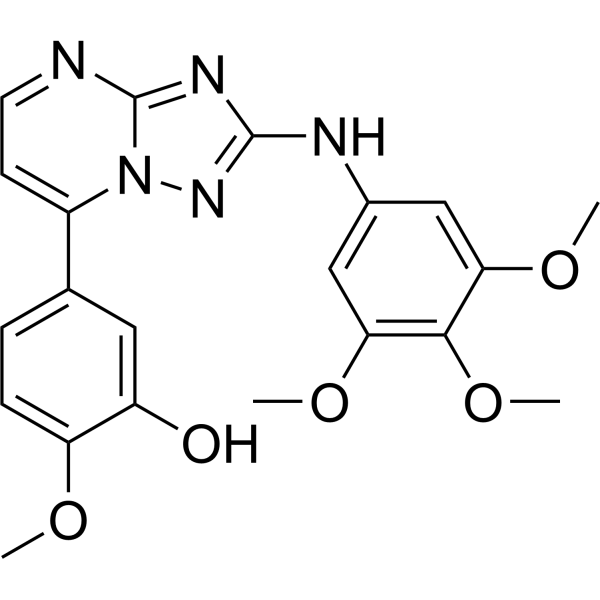
CDK2/4-IN-1 (compound B-4a) is a CDK2/4 inhibitor and a tubulin polymerization inhibitor. CDK2/4-IN-1 can be used in cancer research .
loading...
    loading...
Cat. No.: HY-151982
Target:  

Microtubule/Tubulin

Research Areas:  

Cardiovascular Disease Cancer

Tubulin polymerization-IN-39 is a tubulin polymerization inhibitor (IC50: 4.9 μM). Tubulin polymerization-IN-39 occupies the colchicine-binding site. Tubulin polymerization-IN-39 inhibits cancer cell proliferation .
loading...
    loading...
Cat. No.: HY-162594
CAS No.: 2757188-21-7
Target:  

Microtubule/Tubulin

Research Areas:  

Cancer

Antitumor agent-164 (compound 60c) is a colchicine-binding site inhibitor (CBSI) with potency against taxane-sensitive TNBC. Antitumor agent-164 is a next-generation derivative of VERU-111 .
loading...
    loading...
Cat. No.: HY-118748
CAS No.: 1477482-50-0
Purity:  ≥98.0%
Synonyms: SRF
Target:  

Microtubule/Tubulin

Research Areas:  

Cancer

Suprafenacine is a cell permeable, tubulin-destabilizing molecule which bind microtubules at the colchicine-binding site and inhibit polymerization. Suprafenacine can induce G2/M cell cycle arrest and apoptosis, and can be used for cancer research .
loading...
    loading...
Cat. No.: HY-119361
CAS No.: 674786-37-9
Synonyms: (Rac)-Deoxysappanone B 7,4' dimethyl ether
Target:  

Microtubule/Tubulin

Research Areas:  

Cancer

(Rac)-Deox B 7,4, a homoisoflavanoid compound, inhibits microtubule polymerization via binding near the colchicine site and promote reversible G2 arrest. (Rac)-Deox B 7,4 possesses nanomolar anti-leukemic activity .
loading...
    loading...
Cat. No.: HY-122185
CAS No.: 314022-97-4
Research Areas:  

Cancer

Anticancer agent 211 (AK301) can inhibit tubulin polymerization. Anticancer agent 211 can block the division of human colon cancer cells. Anticancer agent 211 can increase the sensitivity of human colon cancer cells to apoptotic ligands and promote cell apoptosis .
loading...
    loading...
Cat. No.: HY-121434
CAS No.: 3476-50-4
N-Deacetylcolchicine is a microtubule polymerization inhibitor with an IC50 of 3 μM against bovine brain microtubules. N-Deacetylcolchicine is a derivative of Colchicine (HY-16569). N-Deacetylcolchicine can activate the GTPase activity of microtubules and can be used for the research of cancer .
loading...
    loading...
Cat. No.: HY-119427
CAS No.: 1253697-49-2
Target:  

Microtubule/Tubulin

Research Areas:  

Cancer

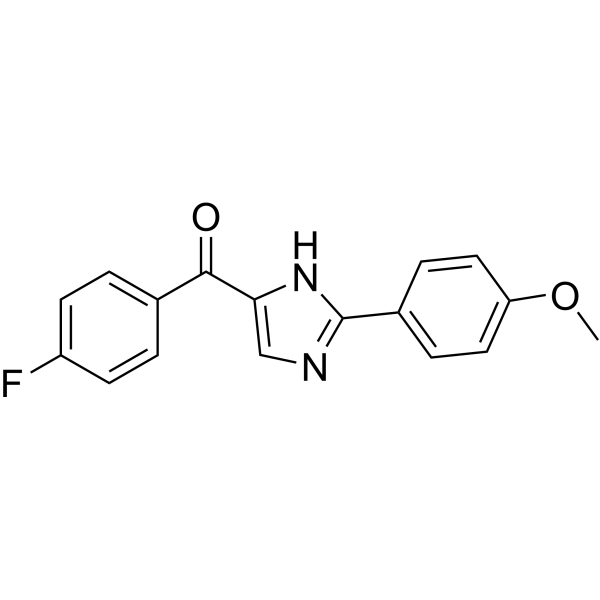
Anti-melanoma agent 3 (compound 5cb) is a 2-aryl-4-benzoyl-imidazole (ABI) derivative and an inhibitor of melanoma xenogeneic tumors. Anti-melanoma agent 3 exerts anticancer activity by interacting with the colchicine binding site to inhibit tubulin polymerization .
loading...
    loading...
Cat. No.: HY-152143
CAS No.: 2804026-81-9
Synonyms: Tubulin polymerization-IN-41
Research Areas:  

Cancer

KY216 (Tubulin polymerization-IN-41) is a potent tubulin polymerization inhibitor with the IC50 of 2.61 μM. KY216 targets the Colchicine-binding site of tubulin. KY216 can be used for the study of non-small cell lung cancer (NSCLC) and breast cancer .
loading...
    loading...
Cat. No.: HY-163356
CAS No.: 2361303-91-3
Research Areas:  

Cancer

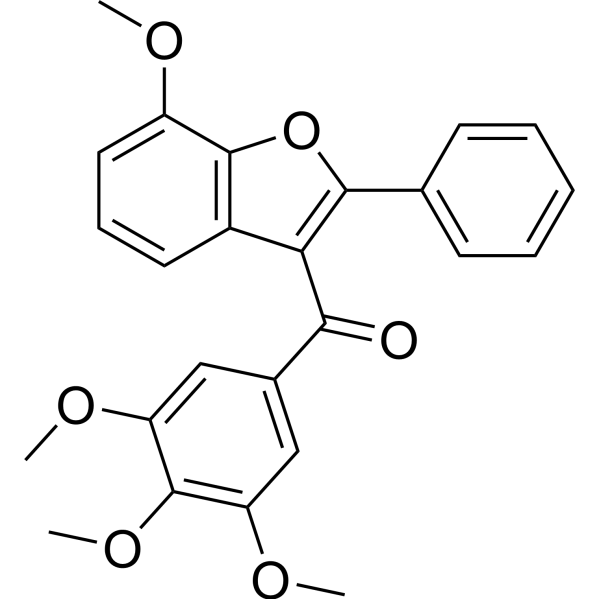
Tubulin polymerization-IN-60 (BF3) is a tubulin polymerization inhibitor with anticancer activity. Tubulin polymerization-IN-60 (BF3) belongs to the colchicine binding site inhibitors (CBSIs) and disturbs cell cycle progression leading to G2/M arrest and apoptosis .
loading...
    loading...
Cat. No.: HY-120599A
CAS No.: 2635953-17-0
Synonyms: VERU-111 hydrochloride; ABI-231 hydrochloride
Sabizabulin hydrochloride is a potent orally bioavailable microtubule inhibitor with activity that interacts with the colchicine binding site. Sabizabulin hydrochloride demonstrated significant inhibition of melanoma tumor growth with an average IC50 of 5.2 nM in melanoma and prostate cancer cell lines. Pharmacological screening of Sabizabulin hydrochloride shows it has a low risk of potential side effects .
loading...
    loading...

