57 Results for "

PPAR modulators

" in MedChemExpress (MCE) Product Catalog:
Products (57)

57 Results for "PPAR modulators" in MCE Product Catalog:

Cat. No.: HY-161926
CAS No.: 2835447-74-8
Target:  

PPAR

Research Areas:  

Metabolic Disease

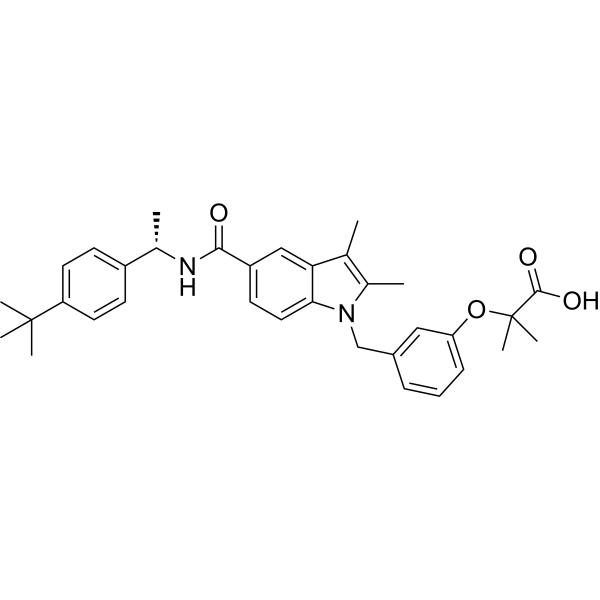
YGT-31 is a modulator for PPARγ with an IC50 of 1.72 μM, and a Ki of 0.62 μM. YGT-31 reduces blood glucose levels and improves insulin resistance in db/db mice type 2 diabetes models, through inhibition of CDK5-mediated PPARγ-Ser273 phosphorylation. YGT-31 exhibits anti-hepatic steatosis effect in mice non-alcoholic fatty liver disease (NAFLD) model .
loading...
    loading...
Cat. No.: HY-128400R
CAS No.: 959-23-9
4'-Methoxychalcone (Standard) is the analytical standard of 4'-Methoxychalcone. This product is intended for research and analytical applications. 4'-Methoxychalcone regulates adipocyte differentiation through PPARγ activation. 4'-Methoxychalcone modulates the expression and secretion of various adipokines in adipose tissue that are involved in insulin sensitivity .
loading...
    loading...
Cat. No.: HY-160159
CAS No.: 1415321-54-8
Target:  

PPAR

Research Areas:  

Metabolic Disease

Anticancer agent 183 (example 48) is a non-agonistic PPARG modulator. Anticancer agent 183 has a high affinity to PPARG (PPARγ). Anticancer agent 183 inhibits kinase-mediated phosphorylation of PPARG. Anticancer agent 183 can used for research on metabolic diseases to avoid side effects .
loading...
    loading...
Cat. No.: HY-W109107
CAS No.: 921195-93-9
GED 0507-34-Levo is an orally active PPARγ modulator. GED 0507-34-Levo downregulates the expression of TGF-β, Smad3, IL-13, and CTGF in the colon. GED 0507-34-Levo improves DSS-induced chronic colitis and fibrosis .
loading...
    loading...
Cat. No.: HY-100428R
CAS No.: 161600-01-7
Synonyms: MCC-555 (Standard); Isaglitazone (Standard)
Research Areas:  

Metabolic Disease

Netoglitazone (Standard) is the analytical standard of Netoglitazone (HY-100428). This product is intended for research and analytical applications. Netoglitazone (MCC-555) is an orally active PPARγ ligand with an EC50 of 8 μM. Netoglitazone mediates cell type-specific functional regulation, and modulates the transcriptional activity of PPARγ as a full agonist, partial agonist or antagonist. Netoglitazone induces adipogenesis, inhibits osteoblastogenesis, alters the weight of extramedullary fat depots and enhances insulin sensitivity. Netoglitazone reduces blood glucose levels. Netoglitazone can be used in research related to type 2 diabetes and non-insulin-dependent diabetes mellitus .
loading...
    loading...
Cat. No.: HY-117103A
CAS No.: 849738-78-9
Synonyms: INT131 benzenesulfonate
Target:  

PPAR

Research Areas:  

Metabolic Disease

AMG131 (INT131) (benzenesulfonate) is a potent non-thiazolidinedione (TZD) selective peroxisome proliferator-activated receptor γ modulator (SPPARM). AMG131 (benzenesulfonate) binds to PPARγ within the same binding pocket as the TZDs, but occupies a unique space in the pocket and contacts the receptor at distinct points from the TZDs. AMG131 (benzenesulfonate) is promising for research of type-2 diabetes mellitus .
loading...
    loading...
Cat. No.: HY-117459
CAS No.: 478926-45-3
Target:  

PPAR

Research Areas:  

Metabolic Disease

E-3030 free acid is a potent dual activator of peroxisome proliferator-activated receptor (PPAR) alpha and PPARgamma, exhibiting significant antidiabetic and lipid-modulating effects. E-3030 decreases blood glucose, triglyceride, non-esterified fatty acids, and insulin levels, while increasing blood adiponectin levels. E-3030 improves glucose tolerance and shows remarkable triglyceride- and non-high-density lipoprotein cholesterol-lowering effects in animal models.
loading...
    loading...
Cat. No.: HY-100348R
CAS No.: 227947-06-0
Research Areas:  

Cancer

EPI-001 (Standard) is the analytical standard of EPI-001. This product is intended for research and analytical applications. EPI-001, a selective inhibitor of Androgen Receptor (AR), targets transactivation unit 5 (Tau-5) of the AR. EPI-001 can inhibit transactivation of the AR amino-terminal domain (NTD), with an IC50 of ~6 μM. EPI-001 is also a selective modulator of PPARγ. EPI-001 is active against castration-resistant prostate cancer .
loading...
    loading...
Cat. No.: HY-116115
CAS No.: 1233715-33-7
Synonyms: 17-Oxo-DPA; 17-Oxo-7(Z),10(Z),13(Z),15(E),19(Z)-DPA
Target:  

NF-κB PPAR

Research Areas:  

Inflammation/Immunology

17-Oxo-7(Z),10(Z),13(Z),15(E),19(Z)-docosapentaenoic acid (17-Oxo-DPA; 17-Oxo-7(Z),10(Z),13(Z),15(E),19(Z)-DPA) is an electrophilic oxo-derivative (EFOX) of the docosahexaenoic acid (DHA) (HY-B2167). 17-Oxo-7(Z),10(Z),13(Z),15(E),19(Z)-docosapentaenoic acid is generated during inflammation by COX-2-catalyzed mechanism in activated macrophages. 17-Oxo-7(Z),10(Z),13(Z),15(E),19(Z)-docosapentaenoic acid acts as an agonist for PPARγ and a modulator for NF-κB signaling pathway, inhibits the production of pro-inflammatory cytokines and nitric oxide, and exhibits anti-inflammatory efficacy .
loading...
    loading...
Cat. No.: HY-W508552
CAS No.: 139256-06-7
Target:  

PPAR

Research Areas:  

Metabolic Disease

7-Hydroxy-3-(3-methoxyphenyl)-4H-chromen-4-one is a dual agonist of PPARα and PPARγ, with an EC50 of 23.10 μM for human PPARα and an EC50 of 22.29 μM for human PPARγ. 7-Hydroxy-3-(3-methoxyphenyl)-4H-chromen-4-one regulates the expression of lipid metabolism-related genes via PPARα, and modulates the expression of genes associated with glucose homeostasis and adipogenesis via PPARγ. 7-Hydroxy-3-(3-methoxyphenyl)-4H-chromen-4-one can be used in the research of type 2 diabetes and metabolic syndrome .
loading...
    loading...
Cat. No.: HY-108523R
CAS No.: 180713-37-5
Synonyms: UVI 2112 (Standard)
Research Areas:  

Metabolic Disease

LG100754 (Standard) is the analytical standard of LG100754 (HY-108523). This product is intended for research and analytical applications. LG100754 (UVI 2112) is a RXR dimers modulater. LG100754 acts as a RXR:RXR homodimer antagonist, but functions as a agonist towards RXR:PPARα and RXR:PPARγ heterodimers. LG100754 is an insulin sensitizer that functions through RXR .
loading...
    loading...
Cat. No.: HY-101292R
CAS No.: 193012-35-0
Research Areas:  

Metabolic Disease

FK614 (Standard) is the analytical standard of FK614 (HY-101292). This product is intended for research and analytical applications. FK614 is an orally active, non-thiazolidinedione (TZD) type, and selective PPARγ modulator (SPPARM). FK614 functions as a PPARγ agonist with potent anti-diabetic activity in vivo. FK614 has different effects on the activation of PPARγ at each stage of adipocyte differentiation. FK614 can be used for the research of hyperglycemia, hypertriglyceridemia, glucose intolerance and type 2 diabetes .
loading...
    loading...
Cat. No.: HY-101064R
CAS No.: 35661-60-0
Synonyms: N-FMOC-leucine (Standard); NPC 15199 (Standard); NSC 334290 (Standard)
Research Areas:  

Metabolic Disease

Fmoc-leucine (Standard) is the analytical standard of Fmoc-leucine (HY-101064). This product is intended for research and analytical applications. Fmoc-leucine is a selective PPARγ modulator. Fmoc-leucine activates PPARγ with a lower potency but a similar maximal efficacy than rosiglitazone. Fmoc-leucine improves insulin sensitivity in normal, diet-induced glucose-intolerant, and in diabetic db/db mice. Fmoc-leucine has a lower adipogenic activity .
loading...
    loading...
Cat. No.: HY-N20666
CAS No.: 120962-03-0
Canola oil is an orally effective adipogenesis inhibitor and gut microbiota modulator. Canola oil inhibits the expression of PPARγ, SREBP1, SREBP2, Insig1 and Insig2, and increases the phosphorylation level of the AMPK pathway. Canola oil inhibits adipogenesis and reshapes gut microbiota in mice to ameliorate obesity . Canola oil can be used in obesity-related research .
loading...
    loading...
Cat. No.: HY-180398
CAS No.: 95520-87-9
Target:  

PPAR PGC-1α

Research Areas:  

Metabolic Disease

PA-082 is a selective PPAR-γ modulator that functions as a partial agonist. PA-082 causes partial recruitment of SRC1, TIF2, SRC3 and full recruitment of PGC1-α to PPAR-γ ligand-binding domain. PA-082 prevents triglyceride accumulation during de novo adipogenesis and antagonizes Rosiglitazone (HY-17386)-induced lipid accumulation. PA-082 potentiates insulin-stimulated glucose uptake in adipocytes and protects against TNFα-induced insulin resistance. PA-082 can be used for the research of type 2 diabetes .
loading...
    loading...
Cat. No.: HY-10863S2
Synonyms: AEA-15NN; Arachidonoyl ethanolamide-15NN
Anandamide- 15N (AEA- 15N) is the 15N-labeled Anandamide (HY-10863). Anandamide is an endocannabinoid. Anandamide modulates both neuronal and immune functions through two protein-coupled cannabinoid receptors (CB1 and CB2). Anandamide can activate numerous other receptors like PPARS, TRPV1, and GPR18/GPR55. Anandamide also has potential anti-fungal and anti-inflammatory activities. Anandamide can be used for the research of Alzheimer’s disease (AD) and ulcerative colitis .
loading...
    loading...
Cat. No.: HY-N17617
CAS No.: 70238-51-6
S-Petasin is a phosphodiesterase (PDE) inhibitor with IC50 values of 25.5 μM and 17.5 μM for PDE3 and PDE4, respectively. S-Petasin inhibits cholesterol side-chain cleavage enzyme, 11β-hydroxylase, PPAR-γ, and iNOS induction at RNA and protein levels. S-Petasin induces apoptosis, activates caspases, cleaves PARP, modulates mitochondrial membrane permeability, and regulates BCL2/BAX, p53, Bcl-XL, MMP-2, MMP-9, p21, CDK4, and cyclin D1 expression. S-Petasin reduces inflammatory cell accumulation, cytokine and IgE levels, and enhances serum IgG2a levels. S-Petasin relaxes isolated sensitized guinea pig trachealis and exhibits gastrointestinal anti-spasmodic activity. S-Petasin reduces tonsillitis severity and asthmatic attack frequency. S-Petasin can be used for the research of prostate cancer, obesity, melanoma, allergic asthma, asthma, and peritonitis .
loading...
    loading...

