82 Results for "

cognitive dysfunction

" in MedChemExpress (MCE) Product Catalog:
Products (82)

82 Results for "cognitive dysfunction" in MCE Product Catalog:

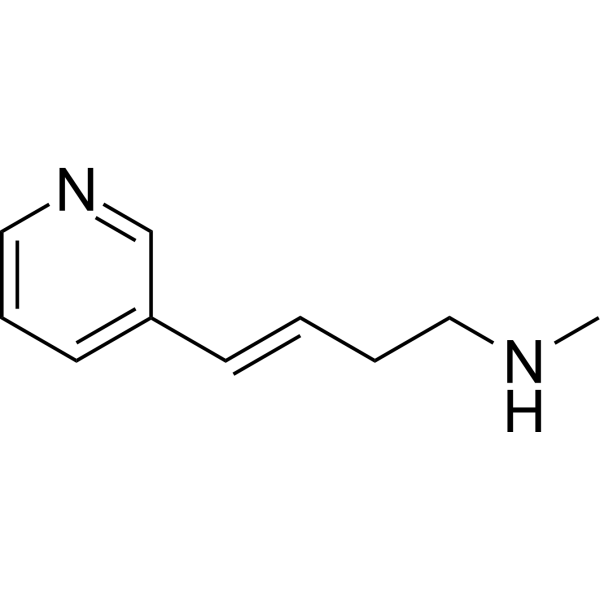
Cat. No.: HY-13225A
CAS No.: 15585-43-0
Synonyms: RJR-2403; (E)-Metanicotine
Target:  

nAChR

Research Areas:  

Neurological Disease

Rivanicline (RJR-2403) is a neuronal nicotinic receptor agonist. Rivanicline is highly selective for the rat brain cortex nAChRs (Ki = 26 nM, EC50 of 732 nM) and α4β2 subtype (Ki = 26 nM, EC50 = 16 μM). Rivanicline can significantly restore the learning impairment and cognitive dysfunction. Rivanicline can be used for the study of neurodegenerative diseases (such as schizophrenia or Alzheimer's disease) .
loading...
    loading...
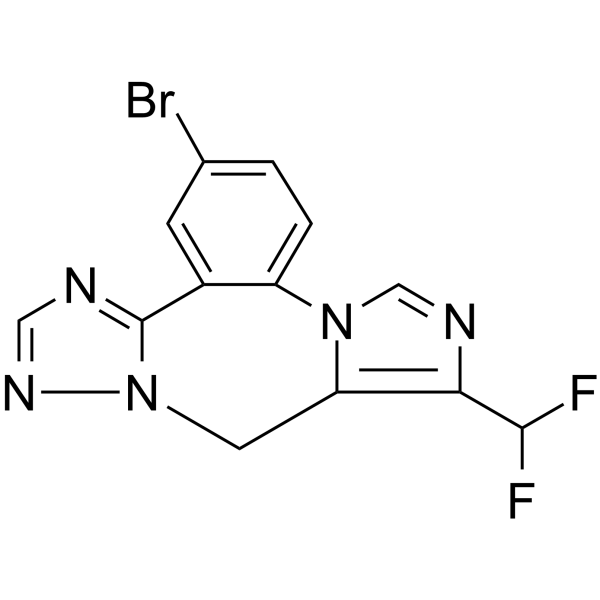
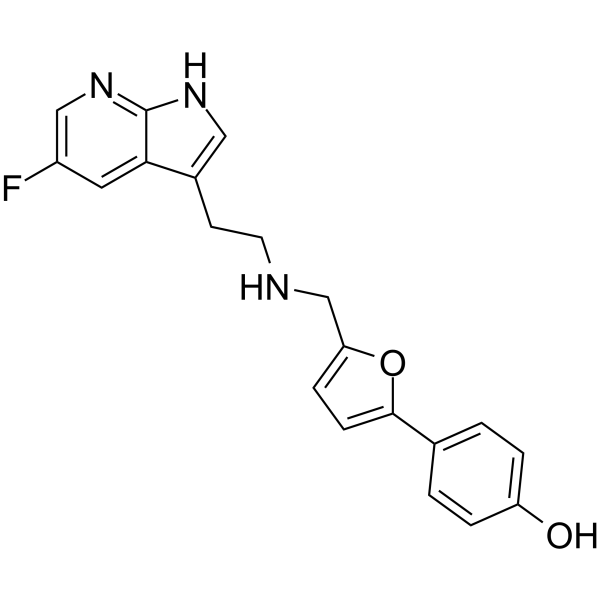
Cat. No.: HY-107489
CAS No.: 883093-10-5
Purity:  99.30%
Target:  

GABA Receptor

Research Areas:  

Neurological Disease

RO 4938581 is a potent and selective GABAA α5 inverse agonist, with a Ki of 4.6 nM for GABAA α5β3γ2a, and shows a lower affinity at α1β3γ2a, α2β3γ2a, α3β3γ2a (Ki, 174, 185, 80 nM, respectively); RO 4938581 is used in the research of cognitive dysfunction.
loading...
    loading...
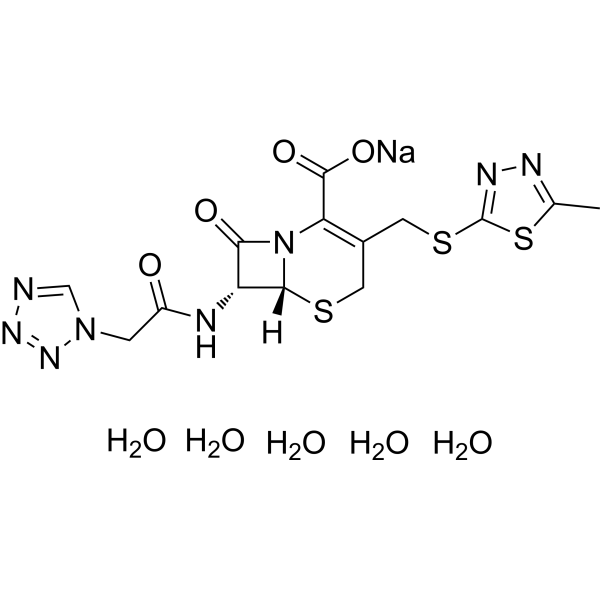
Cat. No.: HY-B0756
CAS No.: 115850-11-8
Synonyms: Cephazolin sodium pentahydrate
Cefazolin sodium pentahydrate is a first-generation cephalosporin antibiotic and can be used in varieties of bacterial infections research . Cefazolin sodium pentahydrate has anti-inflammatory effect and can attenuate post-operative cognitive dysfunction (POCD) .
loading...
    loading...
Cat. No.: HY-B0402AR
CAS No.: 665-66-7
Synonyms: 1-Adamantanamine hydrochloride (Standard); 1-Adamantylamine hydrochloride (Standard); 1-Aminoadamantane hydrochloride (Standard)
Amantadine (hydrochloride) (Standard) is the analytical standard of Amantadine (hydrochloride). This product is intended for research and analytical applications. Amantadine (1-Adamantanamine) hydrochloride is an orally avtive and potent antiviral agent with activity against influenza A viruses. Amantadine hydrochloride inhibits several ion channels such as NMDA and M2, and also inhibits Coronavirus ion channels. Amantadine hydrochloride also has anti-orthopoxvirus and anticancer activity. Amantadine hydrochloride can be used for Parkinson's disease, postoperative cognitive dysfunction (POCD) and COVID-19 research .
loading...
    loading...
Cat. No.: HY-B0402R1
CAS No.: 768-94-5
Synonyms: 1-Adamantanamine in Methanol (Standard); 1-Aminoadamantane in Methanol (Standard)
Amantadine in Methanol (Standard) is the solution of Amantadine (Standard). This product is intended for research and analytical applications. Amantadine (1-Adamantanamine) is an orally avtive and potent antiviral agent with activity against influenza A viruses. Amantadine inhibits several ion channels such as NMDA and M2, and also inhibits Coronavirus ion channels. Amantadine also has anti-orthopoxvirus and anticancer activity. Amantadine can be used for Parkinson's disease, postoperative cognitive dysfunction (POCD) and COVID-19 research [4] .
loading...
    loading...
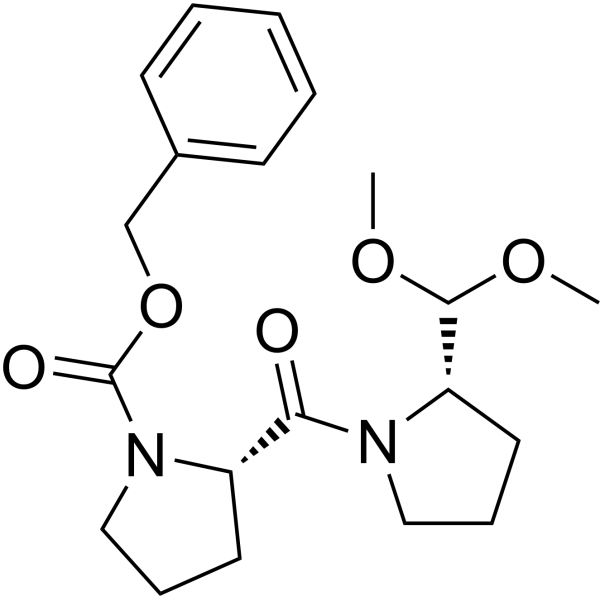
Cat. No.: HY-P4308
CAS No.: 170116-63-9
Research Areas:  

Neurological Disease

Z-Pro-Pro-aldehyde-dimethyl acetal is a potent inhibitor of prolyl endopeptidase (PREP), a cytoplasmic serine endoprotease (IC50= 12 nM). Z-Pro-Pro-aldehyde-dimethyl acetal plays an important role in cognitive dysfunction in aging and neurodegenerative diseases including Alzheimer's disease .
loading...
    loading...
Cat. No.: HY-W654098
CAS No.: 1346602-30-9
Cefazolin- 13C2, 15N (sodium) is 13C and 15N labeled Cefazolin (sodium). Cefazolin sodium is a first-generation cephalosporin antibiotic and can be used in varieties of bacterial infections research . Cefazolin sodium has anti-inflammatory effect and can attenuate post-operative cognitive dysfunction (POCD).
loading...
    loading...
Cat. No.: HY-105181
CAS No.: 142935-03-3
Target:  

nAChR

Research Areas:  

Neurological Disease

T 588 is an orally active neuroprotective agent. T 588 can increase acetylcholine release from the frontal cortex and hippocampus and meliorate cognitive dysfunction. T 588 can protect cerebellar granule cells from glutamate neurotoxicity. T 588can be used for the research of neurological disease, such as Alzheimer's disease .
loading...
    loading...
Cat. No.: HY-15981R
CAS No.: 1226781-44-7
Synonyms: MK-3102 (Standard)
Omarigliptin (Standard) is the analytical standard of Omarigliptin. This product is intended for research and analytical applications. Omarigliptin (MK-3102) is a potent, selective, orally active and cross the blood-brain barrier dipeptidyl peptidase 4 (DPP-4) inhibitor. Omarigliptin shows anti-parkinsonian activity. Omarigliptin has the neuroprotective effect to improve diabetes-associated cognitive dysfunction .
loading...
    loading...
Cat. No.: HY-168563
Research Areas:  

Neurological Disease

BuChE-IN-15 (compound D12) is a selective BuChE/FAAH dual inhibitor with and show IC50 values of 81 and 400 nM for hBuChE and hFFAH, respectively. BuChE-IN-15 possesses good BBB penetration, and shows neuroprotection.BuChE-IN-15 can be used for study of Alzheimer .
loading...
    loading...
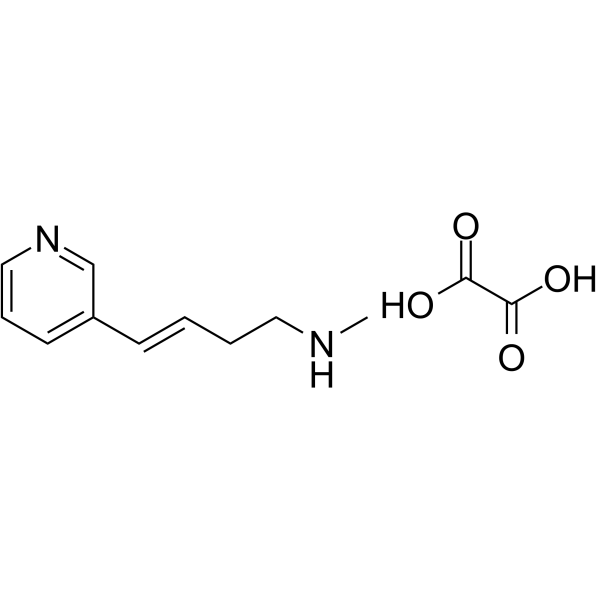
Cat. No.: HY-13225
CAS No.: 220662-95-3
Synonyms: RJR-2403 oxalate; (E)-Metanicotine oxalate
Target:  

nAChR

Research Areas:  

Neurological Disease

Rivanicline (RJR-2403) oxalate is a neuronal nicotinic receptor agonist. Rivanicline oxalate is highly selective for the rat brain cortex nAChRs (Ki = 26 nM, EC50 of 732 nM) and α4β2 subtype (Ki = 26 nM, EC50 = 16 μM). Rivanicline oxalate can significantly restore the learning impairment and cognitive dysfunction. Rivanicline oxalate can be used for the study of neurodegenerative diseases (such as schizophrenia or Alzheimer's disease) .
loading...
    loading...
Cat. No.: HY-W017540R
CAS No.: 35404-50-3
Cyclocreatine, a creatine analogue, acts as a brain-penetrant and potent bioenergetic protective agent by providing high levels of ATP. Cyclocreatine can be phosphorylated and dephosphorylated by creatine kinases. Cyclocreatine suppresses creatine metabolism ameliorating the cognitive, autistic and epileptic phenotype in a mouse model of creatine transporter defciency. Cyclocreatine protects against ischemic injury and enhances cardiac recovery during early reperfusion in dogs and rats. Cyclocreatine decreases plaque-adjacent neuronal dystrophy in TREM2-deficient mice with amyloid-β pathology. Cyclocreatine is proming for research of ischemic heart disease, cardiovascular diseases, Alzheimer’s disease and other neurodegenerative diseases associated with microglial dysfunction, prostate cancer .
loading...
    loading...
Cat. No.: HY-W062702
CAS No.: 1221973-93-8
Target:  

nAChR

Research Areas:  

Neurological Disease

BMS-933043 is a potent and selective α7 nACh receptor partial agonist. BMS-933043 attenuates the cognitive impairment in mice and can be utilized in research related to cognitive dysfunction in schizophrenia .
loading...
    loading...
Cat. No.: HY-120796
CAS No.: 1454658-89-9
Synonyms: MW01-11-108SRM hydrochloride
Target:  

p38 MAPK

Research Areas:  

Neurological Disease

MW108 (MW01-11-108SRM) hydrochloride is a selective and CNS-penetrant p38αMAPK inhibitor with a Ki of 114 nM. MW108 hydrochloride ameliorates beta-amyloid induced synaptic and cognitive dysfunction .
loading...
    loading...
Cat. No.: HY-114555
CAS No.: 1007109-16-1
Target:  

GlyT

Research Areas:  

Neurological Disease

TASP0315003 is a glycine transporter 1 (GlyT1) inhibitor. TASP0315003 potentiates NMDA receptor function by increasing synaptic glycine levels. TASP0315003 can improve cognitive dysfunction and the negative symptoms of schizophrenia without having undesirable central nervous system side effects. TASP0315003 can be used for the research of neurological disease .
loading...
    loading...
Cat. No.: HY-146077
CAS No.: 2411088-16-7
Target:  

5-HT Receptor

Research Areas:  

Neurological Disease

5-HT6/5-HT2A receptor ligand-2 (compound 42) is a brain-penetrant dual 5-HT6/5-HT2A receptor antagonist, with a Ki of 25 nM and 32 nM, respectively. 5-HT6/5-HT2A receptor ligand-2 shows pro-cognitive properties .
loading...
    loading...
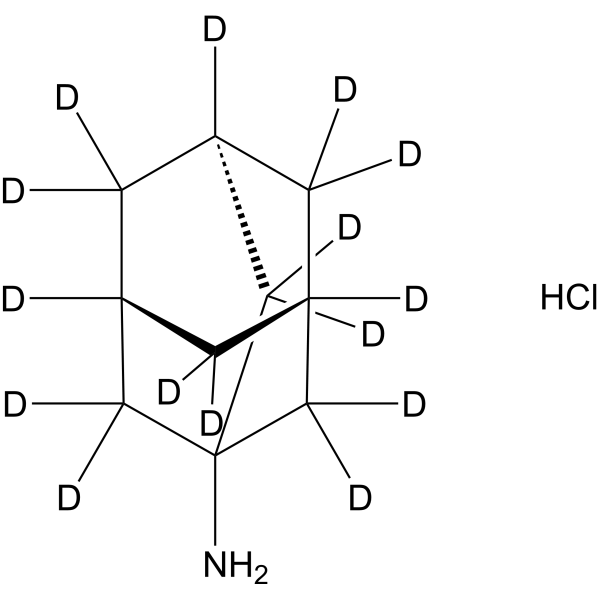
Cat. No.: HY-W653905
Synonyms: 1-Adamantanamine hydrochloride-d15
Amantadine-d15 hydrochloride is deuterated labeled Amantadine. Amantadine (1-Adamantanamine) is an orally avtive and potent antiviral agent with activity against influenza A viruses. Amantadine inhibits several ion channels such as NMDA and M2, and also inhibits Coronavirus ion channels. Amantadine also has anti-orthopoxvirus and anticancer activity. Amantadine can be used for Parkinson's disease, postoperative cognitive dysfunction (POCD) and COVID-19 research .
loading...
    loading...
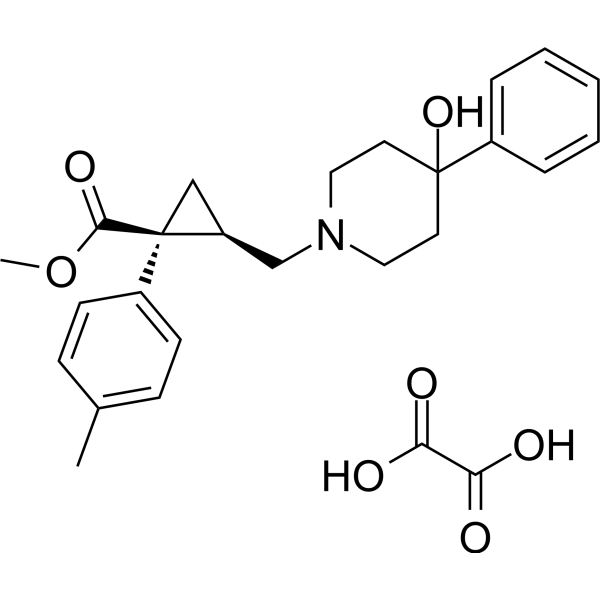
Cat. No.: HY-111081C
CAS No.: 1781628-91-8
Target:  

Sigma Receptor

Research Areas:  

Neurological Disease

(±)-PPCC oxalate is a sigma-1 agonist that mainly interacts with sigma-1 receptors with Ki of 1.5 nM. (±)-PPCC oxalate has effective anti-amnesia effects in rats with mild or severe cognitive impairment, and can improve the cognitive abilities of rats .
loading...
    loading...
Cat. No.: HY-B0402R
CAS No.: 768-94-5
Synonyms: 1-Adamantanamine (Standard); 1-Aminoadamantane (Standard)
Amantadine (Standard) is the analytical standard of Amantadine. This product is intended for research and analytical applications. Amantadine (1-Adamantanamine) is an orally avtive and potent antiviral agent with activity against influenza A viruses. Amantadine inhibits several ion channels such as NMDA and M2, and also inhibits Coronavirus ion channels. Amantadine also has anti-orthopoxvirus and anticancer activity. Amantadine can be used for Parkinson's disease, postoperative cognitive dysfunction (POCD) and COVID-19 research [4] .
loading...
    loading...
Cat. No.: HY-18060A
CAS No.: 1111941-90-2
Synonyms: TC-5619 hydrochloride
Target:  

nAChR

Research Areas:  

Neurological Disease

Bradanicline (TC-5619) tosylate is an orally active agonist of α7 nAChR with moderate blood-brain barrier penetration. Bradanicline hydrochloride exhibits high affinity and subtype selectivity for human α7 nAChR. Bradanicline hydrochloride possesses antitussive activity that depends on sustained receptor binding and activation. Bradanicline hydrochloride requires systemic administration to dose-dependently inhibit cough induced by citric acid, bradykinin and inhaled nicotine. Bradanicline hydrochloride is well tolerated in preclinical studies and is widely used in research related to chronic refractory cough .
loading...
    loading...

