165 Results for "

frequency

" in MedChemExpress (MCE) Product Catalog:
Products (165)

165 Results for "frequency" in MCE Product Catalog:

Cat. No.: HY-172419
CAS No.: 2881017-49-6
Synonyms: GM-1020
Target:  

iGluR

Research Areas:  

Neurological Disease

Blixeprodil (GM-1020) is an orally active, blood-brain barrier-penetrant NMDA receptor inhibitor with a Ki of 3.25 µM in rat cortical tissues. Blixeprodil binds to the MK-801 ion channel site and blocks NMDA receptor-mediated currents in hyperpolarized states in a voltage-dependent manner. Blixeprodil modulates the power of cortical EEG frequency bands, alters spontaneous motor activity, and induces ataxia at high doses. Blixeprodil can be used in the research of depression .
loading...
    loading...
Cat. No.: HY-106969A
CAS No.: 170142-29-7
ZD 9379 sodium is a competitive glycine/NMDA receptor antagonist, with an IC50 value of 75 nM (glutamate site). ZD 9379 sodium selectively antagonizes the glycine binding site (GlyB site) on the NMDA receptor, inhibiting the binding of glycine to the NMDA receptor and alleviating excitotoxicity. ZD 9379 sodium reduces the frequency of cortical spreading depression (SDs), alleviates energy depletion in the ischemic penumbra, and delays the expansion of infarction. ZD 9379 sodium reduces the infarct volume and improves neurological function in mouse models. ZD 9379 sodium can be used in studies of acute ischemic stroke, etc .
loading...
    loading...
Cat. No.: HY-179565
CAS No.: 2094576-12-0
Target:  

Bacterial

Research Areas:  

Infection

NM102 is an ATP competitive mutation frequency decline (Mfd) protein inhibitor (IC50 = 29 μM, Ki = 27 μM) with potent antimicrobial activity. NM102 protects against infections with antimicrobial resistant ESKAPE pathogens. NM102 exhibits activity in insects and mice. NM102 can be used for research of infections caused by Gram-negative bacteria .
loading...
    loading...
Cat. No.: HY-W010476
CAS No.: 14667-55-1
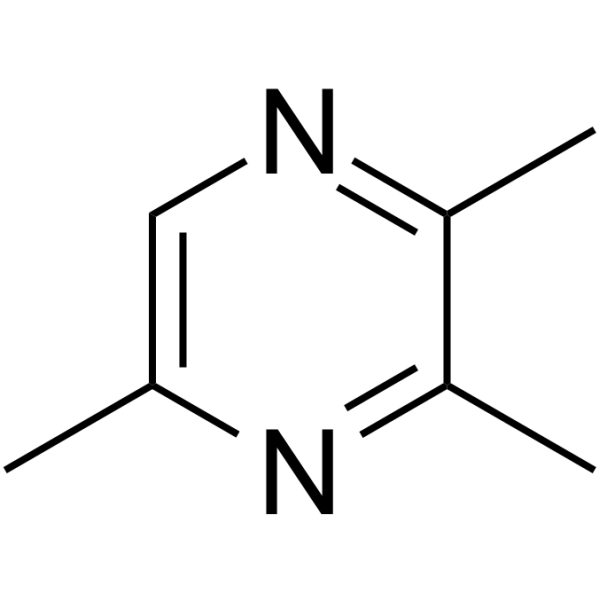
2,3,5-Trimethylpyrazine is an activator of OR5K1 with an EC50 of 65.03 μM in Hana-3A cells. 2,3,5-Trimethylpyrazine inhibits ZEN biosynthetic gene expression, disrupts cell membrane phospholipid composition, and inhibits mycelial growth. 2,3,5-Trimethylpyrazine inhibits DNA synthesis in the chorioallantoic membrane without disrupting vascular pattern formation. 2,3,5-Trimethylpyrazine inhibits ciliary beating frequency, oocyte pickup, and infundibular smooth muscle contraction in hamster oviduct explants. 2,3,5-Trimethylpyrazine is useful for research related to plant fungal infections .
loading...
    loading...
Cat. No.: HY-12596
CAS No.: 871824-55-4
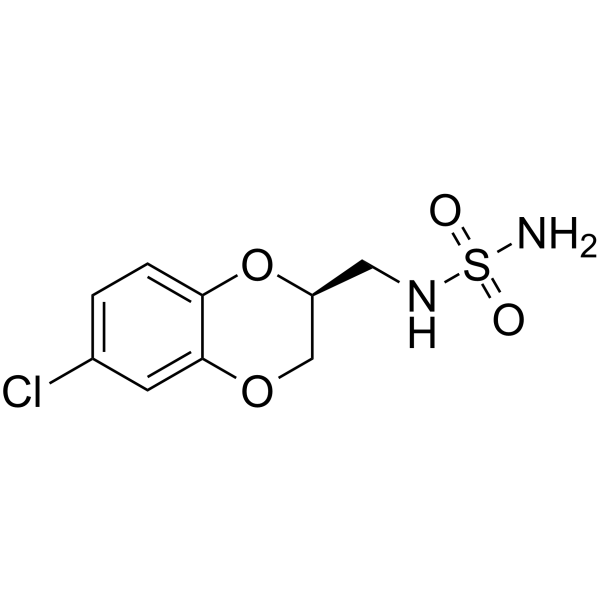
JNJ-26489112, a CNS-active agent, exhibits broad-spectrum anticonvulsant activity in rodents against audiogenic, electrically-induced, and chemically-induced seizures. JNJ-26489112 inhibits voltage-gated Na + channels and N-type Ca 2+ channels, and is effective as a K + channel opener. JNJ-26489112 has very weak inhibition of CA-II (IC50=35 μM) and CA-I (18 μM) .
loading...
    loading...
Cat. No.: HY-N15495
CAS No.: 60450-21-7
Morindine is an active ingredient that can be extracted from Morinda citrifolia L.. Morindine can stimulate an increase in heart frequency. Morindine can be used for research on cardiovascular conditions .
loading...
    loading...
Cat. No.: HY-B0709
CAS No.: 4245-41-4
Target:  

Estrogen Receptor/ERR

Research Areas:  

Endocrinology

Estradiol acetate is a novel orally active Estradiol (HY-B0141) prodrug. Estradiol acetate reduces the frequency and severity of postmenopause symptoms. Estradiol acetate can be used in the research of menopausal symptoms .
loading...
    loading...
Cat. No.: HY-B0761
CAS No.: 475468-09-8
Synonyms: (R,R)-Glycopyrronium bromide; (R,R)-Glycopyrrolate bromide
Target:  

mAChR

Research Areas:  

Neurological Disease

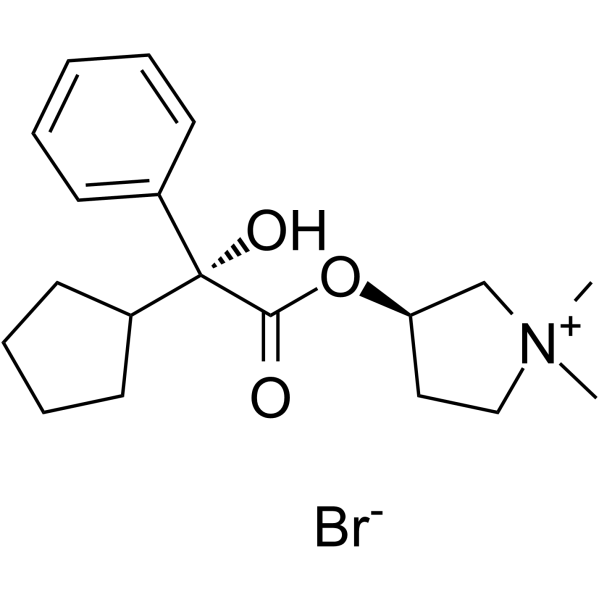
(R,R)-Glycopyrrolate ((R,R)-Glycopyrronium (bromide); (R,R)-Glycopyrrolate (bromide)) is an anticholinergic agent. (R,R)-Glycopyrrolate ((R,R)-Glycopyrronium (bromide); (R,R)-Glycopyrrolate (bromide)) has the ability to reduce the frequency of drooling in vivo with developmental disabilities .
loading...
    loading...
Cat. No.: HY-171905
CAS No.: 3069417-18-8
Target:  

Liposome

Research Areas:  

Others

N-Sterol is a sterol lipid that has been used to generate lipid nanoparticles (LNPs) for delivery of mRNA in vitro and in vivo. N-Sterol LNPs are taken up in J774A.1 macrophages in a lipid composition-dependent manner via clathrin caveolae, caveolin-mediated endocytosis, micropinocytosis, or phagocytosis at different frequencies .
loading...
    loading...
Cat. No.: HY-P1767
CAS No.: 111366-38-2
Target:  

PACAP Receptor

Research Areas:  

Cardiovascular Disease

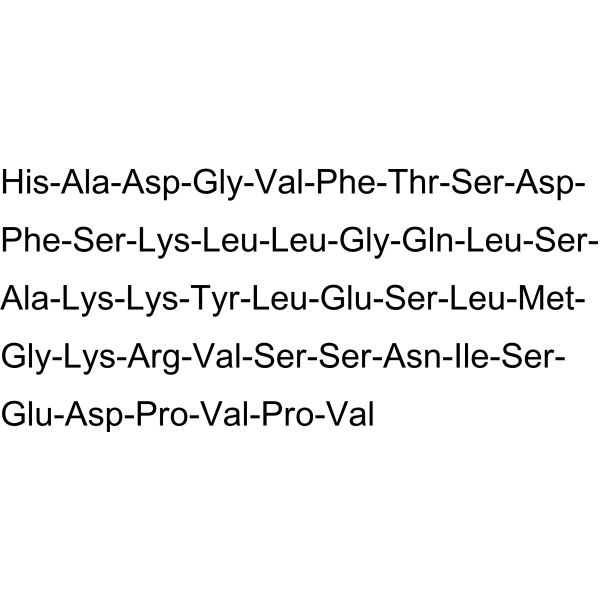
Prepro VIP (81-122), human is a prepro-vasoactive intestinal polypeptide (VIP) derived peptide, corresponding to residues 81-122. Peptide histidine valine 42 (PHV-42) has been designated to correspond exactly to Prepro VIP (81-122), which reduces both the force and frequency of spontaneous contractions of isolated rat uterus .
loading...
    loading...
Cat. No.: HY-129807
CAS No.: 115994-31-5
Target:  

5-HT Receptor

Research Areas:  

Neurological Disease

LY-228729 is a selective 5-HT1A receptor agonist. LY-228729 can reduce the rearing frequency of rats and decrease their activity in the central area in the open field test. LY-228729 can reduce the immobility time of rats and increase their swimming time in the forced swim test. LY-228729 can be used in the research of neurological diseases .
loading...
    loading...
Cat. No.: HY-171778
CAS No.: 2835455-57-5
QLS-81 is a Nav1.7 channel inhibitor (IC50: 1.5 μM). QLS-81 has significant analgesic activity and can relieve neuropathic and inflammatory pain. QLS-81 exerts frequency-dependent inhibitory effects by inhibiting the inactivated state of Nav1.7 channels. QLS-81 can be used in the study of chronic pain .
loading...
    loading...
Cat. No.: HY-120473
CAS No.: 1192348-73-4
Target:  

Adrenergic Receptor

Research Areas:  

Metabolic Disease

TAK-259 is an orally active α1D-adrenergic receptor antagonist with a Ki value of 1.1 nM for human α1D-adrenergic receptors. TAK-259 can inhibit the contraction of isolated bladder strips in rats with bladder outlet obstruction, reduce non-voiding bladder contractions, and improve urinary frequency symptoms. TAK-259 can be used in research related to overactive bladder .
loading...
    loading...
Cat. No.: HY-172264
Research Areas:  

Infection

XT17 is an anthrone compound with broad-spectrum antibacterial activity. It exerts its antibacterial effect by disrupting the cell wall and inhibiting DNA synthesis. XT17 exhibits weak hemolytic activity, low cytotoxicity against mammalian cell lines, and a low frequency of drug resistance. Meanwhile, XT17 shows in vivo efficacy in a mouse corneal infection model induced by Staphylococcus aureus or Pseudomonas aeruginosa. Further docking studies have confirmed that XT17 can form a stable complex with bacterial gyrase. XT17 can be used in the research of the anti - infection field .
loading...
    loading...
Cat. No.: HY-117734
CAS No.: 1560894-05-4
Purity:  98.13%
Target:  

iGluR

Research Areas:  

Neurological Disease

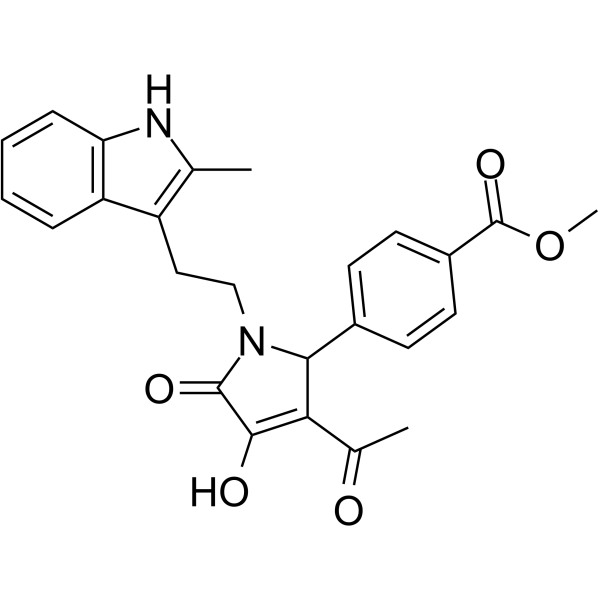
PYD-106 is a stereoselective pyrrolidinone (PYD) positive allosteric modulator for GluN2C-containing NMDA receptors. PYD-106 increases opening frequency and open time of single channel currents activated by maximally effective concentrations of agonist but only has modest effects on glutamate and glycine EC50. PYD-106 selectively enhances the responses of diheteromeric GluN1/GluN2C receptors but not triheteromeric GluN1/GluN2A/GluN2C receptors .
loading...
    loading...
Cat. No.: HY-175754
Target:  

WDR5

Research Areas:  

Cancer

C3TD078 is a WDR5 WIN site inhibitor with a Ki of 0.03  nM. C3TD078 has potent antiproliferative activity and reduces the stem-cell frequency of cancer stem cells (CSCs). C3TD078 can be used for glioblastoma (GBM) research .
loading...
    loading...
Cat. No.: HY-16489A
CAS No.: 7082-21-5
Target:  

mAChR Calcium Channel

Research Areas:  

Neurological Disease

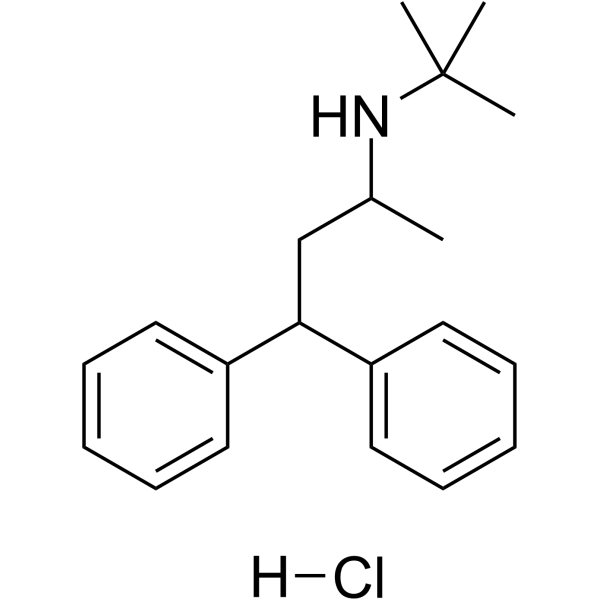
Terodiline hydrochloride is an M1-selective muscarinic receptor (mAChR) antagonist with Kbs of 15, 160, 280, and 198 nM in rabbit vas deferens (M1), atria (M2), bladder (M3) and ileal muscle (M3), respectively. Terodiline hydrochloride also is a Ca 2+ blocker. Terodiline hydrochloride acts as a treatment for urinary frequency and urge incontinence .
loading...
    loading...
Cat. No.: HY-148252
CAS No.: 1191908-24-3
Target:  

Adrenergic Receptor

Research Areas:  

Endocrinology

ADRA1D receptor antagonist 1 (free base) (compound (R)-9s) is an orally active, potent and selective human α1D-adrenoceptor (α1D-AR) antagonist (Ki=1.6 nM). ADRA1D receptor antagonist 1 (free base) dose-dependently inhibits bladder contraction with an IC30 value of 15 nM. ADRA1D receptor antagonist 1 (free base) can be used in studies of overactive bladder disorders such as urinary urgency, frequency and incontinence.
loading...
    loading...
Cat. No.: HY-Y0293R
CAS No.: 87-69-4
Synonyms: L-(+)-Tartaric acid (Standard)
L-Tartaric acid (Standard) is the analytical standard of L-Tartaric acid. This product is intended for research and analytical applications. L-tartaric acid (L-(+) -tartaric acid) is an orally active weak organic acid that can be isolated from grapes. L-Tartaric acid has vasodilatory and antihypertensive effects. L-Tartaric acid can be used as flavorings and antioxidants in a range of foods and beverages. L-Tartaric acid can be used in laser frequency doubling and optical limiting applications .
loading...
    loading...
Cat. No.: HY-D0850R
CAS No.: 6106-24-7
Synonyms: Sodium tartrate dibasic dihydrate (Standard); Sodium tartrate dihydrate (Standard)
Tartaric acid (disodium dihydrate) (Standard) is the analytical standard of Tartaric acid (disodium dihydrate). This product is intended for research and analytical applications. Tartaric acid disodium dehydrate (L-(+) -tartaric acid) is an orally active weak organic acid that can be isolated from grapes. Tartaric acid disodium dehydrate has vasodilatory and antihypertensive effects. Tartaric acid disodium dehydrate can be used as flavorings and antioxidants in a range of foods and beverages. Tartaric acid disodium dehydrate can be used in laser frequency doubling and optical limiting applications [4].
loading...
    loading...

