





171 Results for "

immune cell function

" in MedChemExpress (MCE) Product Catalog:
Products (171)

171 Results for "immune cell function" in MCE Product Catalog:

Cat. No.: HY-P10373
CAS No.: 1259928-08-9
pJAK2(1001-1013) is a cell-penetrating peptide that corresponds to the activation loop of JAK2 tyrosine kinase and functions as a SOCS1/3antagonist. pJAK2 (1001-1013) blocks SOCS1-mediated negative regulation of immune function, and enhances the biological activity of cytokines such as IFNγ and IL6. pJAK2(1001-1013) inhibits the replication of a broad range of viruses and exerts dose-dependent protective efficacy against lethal viral infections. pJAK2(1001-1013) can be used for the study of immune regulation and infection .
loading...
    loading...
Cat. No.: HY-NP0194A
C1q Protein (mouse) is a complement protein and is a recognition molecule of the classical pathway, performs a diverse range of complement and non-complement functions. C1q Protein (mouse) binds various ligands derived from self, non-self, and altered self and modulate the functions of immune
and non-immune cells. C1q Protein (mouse) can be used for the research of mutiple disease .
loading...
    loading...
Cat. No.: HY-P99152
CAS No.: 140608-64-6
Synonyms: Muromanab-CD3

Research Areas:  

Inflammation/Immunology Cancer

Muromonab (Muromonab-CD3; OKT3) is a mouse monoclonal antibody targeting the CD3 antigen. Muromonab specifically binds to the CD3 antigen on the surface of human and higher primate T cells. Muromonab blocks the function of T cell receptors to recognize foreign antigens and inhibits T cell-mediated immune responses, including cell-mediated lymphocyte lysis and T cell proliferation responses. Muromonab can be used to study acute kidney, liver, heart and combined kidney-pancreas transplant rejection, and can also be used to study graft-versus-host disease in bone marrow transplant patients .
loading...
    loading...
Cat. No.: HY-P991480
ONC-841 is a blood-brain barrier-permeable, humanized monoclonal antibody targeting SIGLEC10. As an immune checkpoint inhibitor, ONC-841 restores the functions of immune effector cells such as T cells and enhances anti-tumor immune responses by blocking inhibitory signals mediated by SIGLEC10. ONC-841 restores the phagocytic and migratory activities of microglia, and promotes the phagocytosis of Amyloid-β and Tau protein aggregates by microglia. ONC-841 is applicable to research related to solid tumors and Alzheimer's disease .
loading...
    loading...
Cat. No.: HY-P99159
CAS No.: 2128729-41-7

Target:  

Interleukin Related

Research Areas:  

Cancer

Ivuxolimab is a fully human IgG2 agonist targeting OX40 (CD134), which selectively binds to the OX40 receptor on the surface of activated CD4 + and CD8 + T cells without inducing antibody-dependent cytotoxicity. Ivuxolimab can promote T cell proliferation, survival and cytokine (such as IFN-γ, IL-2) secretion, inhibit regulatory T cell function, and enhance anti-tumor immune response. Ivuxolimab can be used in the study of melanoma, hepatocellular carcinoma, head and neck squamous cell carcinoma, etc .
loading...
    loading...
Cat. No.: HY-P990094
CAS No.: 2643974-98-3
Synonyms: CSL311

Target:  

c-Fms

Research Areas:  

Inflammation/Immunology

Trabikibart (CSL311) is a specific inhibitor targeting the βc receptor (CSF2RB) that inhibits signal transduction mediated by GM-CSF, IL-5, and IL-3. Trabikibart exhibits significant anti-inflammatory and anti-edema effects, reduces myeloid cell infiltration, and inhibits inflammatory cell survival. Trabikibart also possesses antiviral immune functions, which alleviate pulmonary inflammation, reverse airway dysfunction and fibrosis, and thereby restore impaired pulmonary function. Trabikibart can be used in research on related diseases such as acute respiratory distress syndrome, viral pneumonia, asthma, and chronic rhinosinusitis with nasal polyps .
loading...
    loading...
Cat. No.: HY-P990016
CAS No.: 2639874-57-8
Synonyms: ARGX-112; LEO-138559; LP-0145

Target:  

Interleukin Related

Research Areas:  

Inflammation/Immunology

Temtokibart (ARGX-112) is a monoclonal antibody and also an IL-22RA1 inhibitor. Temtokibart inhibits the signal transduction of IL-22, IL-20 and IL-24. Temtokibart reduces the expression levels of inflammatory proteins, chemokines, immune cell migration and markers of activated immune pathways. Temtokibart improves the expression of genes related to immunity and epidermal barrier function. Temtokibart is applicable to research on moderate-to-severe atopic dermatitis .
loading...
    loading...
Cat. No.: HY-P99015
CAS No.: 880486-59-9

Target:  

TNF Receptor

Research Areas:  

Cancer

Dacetuzumab (SGN-40) is a humanized IgG1, anti-CD40 monoclonal antibody with anti-lymphoma activity. Dacetuzumab kills tumor cells via immune effector functions (antibody-dependent cellular cytotoxicity and phagocytosis [ADCC/ADCP]). Dacetuzumab ((SGN-40) can be used for multiple myeloma research .
loading...
    loading...
Cat. No.: HY-P991278

Target:  

Interleukin Related

Research Areas:  

Inflammation/Immunology

ABM-125 is a IL-25 neutralizer and immune response modulator. ABM-125 neutralizes human and mouse IL-25 and blocks type 2 immune activation function. ABM-125 regulates virus-induced inflammatory cytokine expression and increases the expression level of antiviral interferons in rhinovirus-infected asthmatic bronchial epithelial cells. For the isotype control of ABM-125, refer to Human IgG1 kappa, Isotype Control (HY-P99001). ABM-125 is applicable to research related to virus-induced acute asthma exacerbations .
loading...
    loading...
Cat. No.: HY-153119
CAS No.: 2867519-91-1
Purity:  98.96%
Target:  

PROTACs PIKfyve

Research Areas:  

Inflammation/Immunology

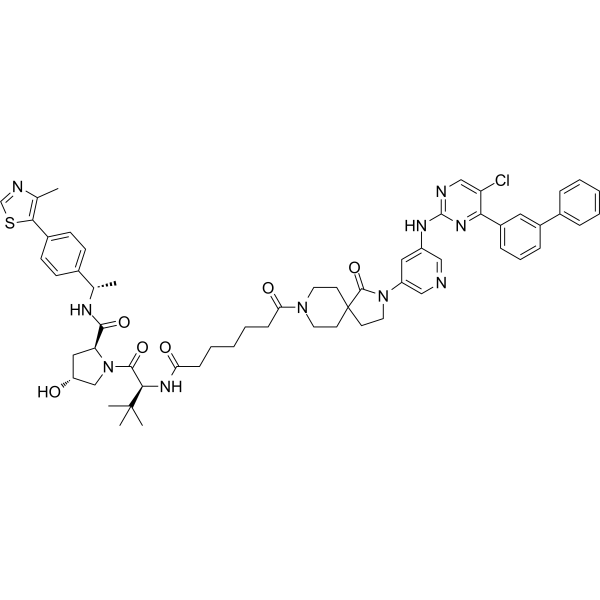
TMX-4153 is a selective PIP4K2C PROTAC degrader. TMX-4153 induces PIP4K2C degradation in MOLT4 cells (DC50 = 24 nM) and HAP1 cells (DC50 = 361 nM). TMX-4153 can be used for the study of biological functions of PIP4K2C (immune modulation)-related diseases. (Pink: BTK ligand (HY-177432), Blue: VHL Ligand (HY-112078), Black: Linker) .
loading...
    loading...
Cat. No.: HY-Y0683A
CAS No.: 8009-03-8
Petrolatum (white) is mainly composed of hydrocarbons, possesses strong water resistance and moisturizing properties, and is commonly used as a pharmaceutical excipient. Petrolatum (white) penetrates into stratum corneum cells, improves skin barrier function, repairs epidermal structure, and reduces transepidermal water loss and the risk of skin damage. Petrolatum (white) induces the expression of antimicrobial peptides, innate immune genes, filaggrin and loricrin. Petrolatum (white) is used in research on atopic dermatitis and post-operative skin infections .
loading...
    loading...
Cat. No.: HY-159114
Whole Glucan Particles is a Dectin-1a agonist. Whole Glucan Particles activates the innate immune system to improve the function of macrophages, monocytes and other immune cells .
loading...
    loading...
Cat. No.: HY-NP0194C
C1q Protein (rat) is a complement protein and is a recognition molecule of the classical pathway, performs a diverse range of complement and non-complement functions. C1q Protein (rat) binds various ligands derived from self, non-self, and altered self and modulate the functions of immune
and non-immune cells. C1q Protein (rat) can be used for the research of mutiple disease .
loading...
    loading...
Cat. No.: HY-W014375S4
Synonyms: (±)-Arginine-13C6,15N4 hydrochloride
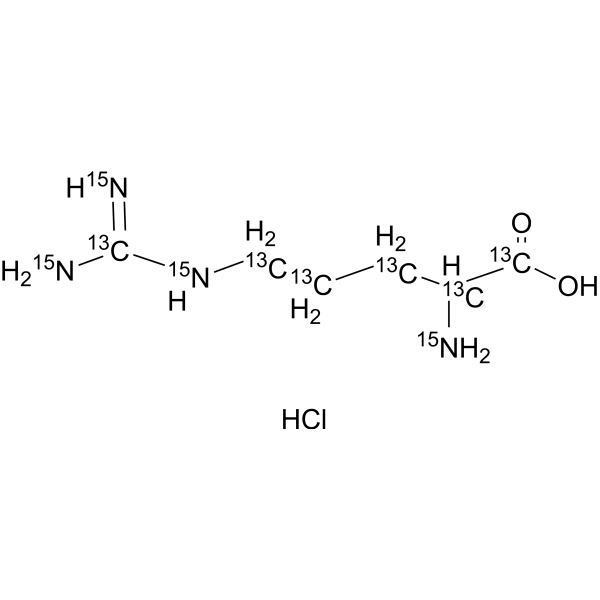
DL-Arginine- 13C6, 15N4 hydrochloride is 13C and 15N-labeled DL-Arginine hydrochloride (HY-W014375). DL-Arginine ((±)-Arginine) hydrochloride is the racemic compound of L-Arginine (HY-N0455) and D-Arginine (HY-W016781). Arginine is an essential amino acid that requires additional supplementation in traumatic or diseased conditions. Arginine is involved in T cell activation, proliferation, and differentiation, and affects the function of immune cells .
loading...
    loading...
Cat. No.: HY-133879
CAS No.: 81203-50-1
Synonyms: 1α,25-Dihydroxyvitamin D3-26,23-lactone
Target:  

Endogenous Metabolite

Research Areas:  

Others Inflammation/Immunology

Calcitriol lactone (1α,25-Dihydroxyvitamin D3-26,23-lactone) is a metabolite of vitamin D3. Calcitriol lactone is the active form of vitamin D and affects bone health, cell differentiation, immune function .
loading...
    loading...
Cat. No.: HY-P990285

Target:  

Inhibitory Antibodies

Research Areas:  

Inflammation/Immunology

Anti-Mouse CD200 Antibody (OX-90) is an anti-mouse CD200 IgG2a monoclonal antibody. Anti-Mouse CD200 Antibody (OX-90) can reduce immune cell infiltration and T cell function by blocking CD200. Anti-Mouse CD200 Antibody (OX-90) can be used for research on immunology .
loading...
    loading...
Cat. No.: HY-177058
Research Areas:  

Inflammation/Immunology

DSP30 is a phosphorothioate cpG-oligodeoxynucleotide and a TLR9 agonist. DSP30 can activate immune system cells, including B cells and dendritic cells, by inducing proliferation and cytokine production.DSP30 can enhance the immunosuppressive function of bone marrow-multipotent mesenchymal stromal cells (BM-MSC). DSP30 combined with interleukin 2 (IL2) is an effective mitotic stimulant in B-cell disorders. DSP30 can be used for the genetic characteristic research and analysis of chronic lymphocytic leukemia (CLL) .
loading...
    loading...
Cat. No.: HY-155847
CAS No.: 3052262-64-0
Purity:  99.80%
Target:  

Phosphatase PD-1/PD-L1

Research Areas:  

Inflammation/Immunology Cancer

LYP-IN-3 is a selective, orally active and reversible lymphoid-tyrosine phosphatase (LYP) inhibitor (IC50 = 2.55 μM, Ki = 0.93 μM). D34 exhibits high selectivity of PTP1B, PTPN12, PTPN5 and SSH2. LYP-IN-3 regulates the T-cell receptor (TCR) signaling by specifically inhibiting LYP. LYP-IN-3 does not significantly inhibit MC38 cell viability; its anti-tumor effect stems from immune regulation. LYP-IN-3 can significantly upregulate PD-L1 or PD-1 expression in different immune cells. LYP-IN-3 facilitates T-cell infiltration and enhances T-cell functions. LYP-IN-3 synergizes with PD-L1 blockade can significantly improve colorectal tumor regression. LYP-IN-3 can be used for the study of colorectal cancer .
loading...
    loading...
Cat. No.: HY-P99952
CAS No.: 2249927-04-4
Synonyms: SCT400
Ripertamab (SCT400) is a recombinant human-mouse chimeric anti-CD20 IgG1κ monoclonal antibody. As an immunomodulator, ripertamab reduces the levels of pathogenic autoantibodies, alleviates immune complex deposition, and blocks the antigen-presenting function of cells. Ripertamab depletes CD20-positive cells. Ripertamab can induce infusion-related reactions, pulmonary toxicity, neutropenia and thrombocytopenia. Ripertamab is applicable to research related to non-Hodgkin's lymphoma, primary membranous nephropathy and idiopathic membranous nephropathy .
loading...
    loading...
Cat. No.: HY-P991455

Target:  

TNF Receptor

Research Areas:  

Inflammation/Immunology Cancer

PTX-35 is a costimulatory agonist antibody targeting TNFRSF25 as well as an immune activator that selectively regulates activated CD8 + T cells. PTX-35 enhances the expansion, survival and effector functions of T cells, while reducing the inhibitory activity of regulatory T cells and impairing their stability. PTX-35 exhibits anti-tumor activity, effectively delaying tumor progression and prolonging survival. PTX-35 has a synergistic effect with anti-OX40 agonist antibodies. PTX-35 can be widely used in research on related diseases such as colon cancer and melanoma .
loading...
    loading...

