191 Results for "

tea

" in MedChemExpress (MCE) Product Catalog:
Products (191)

191 Results for "tea" in MCE Product Catalog:

Cat. No.: HY-D1352A
Sulfo-Cyanine7 NHS ester (TEA) is an amine-reactive succinimide ester. Sulfo-Cyanine7 NHS ester (TEA) reagent allows to prepare sulfo-Cyanine7-labeled biomolecules, such as proteins, with ease. Dye labeled molecules can be subsequently used for various research and agent design related experiments.
loading...
    loading...
Cat. No.: HY-132138A
Purity:  98.02%
Target:  

DNA/RNA Synthesis

Research Areas:  

Others

5-Propargylamino-3'-azidomethyl-dCTP (TEA) is a nucleotide molecule that can be used in DNA synthesis and DNA sequencing. For detailed information, refer to compound 17 in patent document WO2004018497A2. 5-Propargylamino-3'-azidomethyl-dCTP (TEA) is a click chemistry reagent containing an azide group, which can undergo copper-catalyzed azide-alkyne cycloaddition (CuAAc) with molecules containing alkyne groups. It can also react with molecules containing DBCO or BCN groups through strain-promoted alkyne-azide cycloaddition (SPAAC) .
loading...
    loading...
Cat. No.: HY-E70005Q
CAS No.: 9001-12-1
Research Areas:  

Others

Collagenase (Type C, filtered, animal free) is a microbial collagenolytic enzyme that can be found in Clostridium histolyticum, leeches, or Paralithodes camtschaticus (Kamchatka crab). The activity of Collagenase (Type C, filtered, animal free) is completely inhibited by tea catechins, especially (-)-epicatechin gallate (ECg) (HY-N0356) and (-)-epigallocatechin gallate (EGCg). Collagenase (Type C, filtered, animal free) is used in research related to Peyronie's disease .
loading...
    loading...
Cat. No.: HY-131603B
CAS No.: 2736455-56-2
Synonyms: 3TCTP tea
Lamivudine triphosphate (3TCTP) TEA is a phosphorylated Lamivudine (HY-B0250) (a nucleoside analogue). Lamivudine triphosphate TEA inhibits the reverse transcriptase of HIV or HBV viruses to block viral replication by chain termination. Lamivudine triphosphate TEA is also an inhibitor of the RdRp activity of the NS5B subunit of the HCV. Lamivudine triphosphate TEA can be incorporated into the nascent RNA by the SARS-CoV-2 RdRp, thus halting mutations in the nascent SARS-CoV-2 RNA .
loading...
    loading...
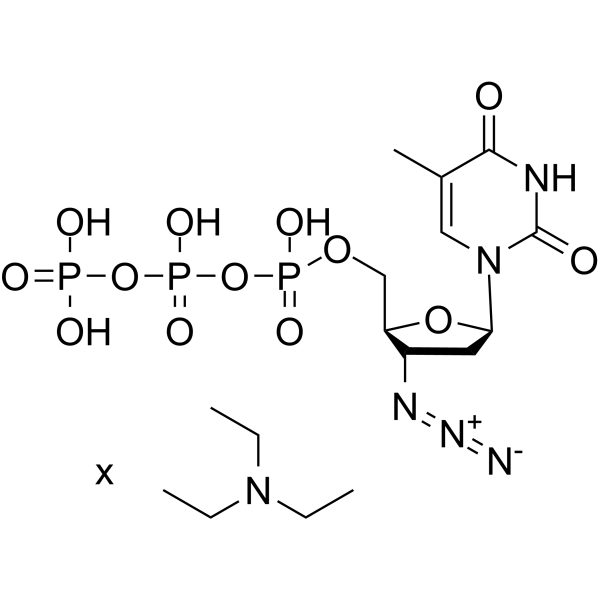
Cat. No.: HY-116364A
Synonyms: 3'-Azido-3'-deoxythymidine-5'-triphosphate tea
AZT triphosphate (3'-Azido-3'-deoxythymidine-5'-triphosphate) TEA is a active triphosphate metabolite of Zidovudine (AZT). AZT triphosphate TEA exhibits antiretroviral activity and inhibits replication of HIV. AZT triphosphate TEA also inhibits the DNA polymerase of HBV. AZT triphosphate TEA activates the mitochondria-mediated apoptosis pathway .
loading...
    loading...
Cat. No.: HY-159628A
CAS No.: 1810728-44-9
Research Areas:  

Infection

Glu-AMS TEA is a competitive inhibitor of Escherichia coli glutamyl-tRNA synthetase (GluRS), with the Ki of 2.8 nM .
loading...
    loading...
Cat. No.: HY-D1916A
ATTO 594 TEA is a highly hydrophilic fluorescent dye used to label the outermost position of the glycan moiety of glycosphingolipids to retain the biophysical and biochemical properties of native glycosphingolipids .
loading...
    loading...
Cat. No.: HY-114255
CAS No.: 261929-52-6
Synonyms: alpha-tea
Target:  

Apoptosis

Research Areas:  

Cancer

Alpha-tocopheryloxyacetic acid (alpha-TEA) is an inducer of cancer cell apoptosis pathway. Alpha-tocopheryloxyacetic acid is promising for research of solid and hematological malignancies .
loading...
    loading...
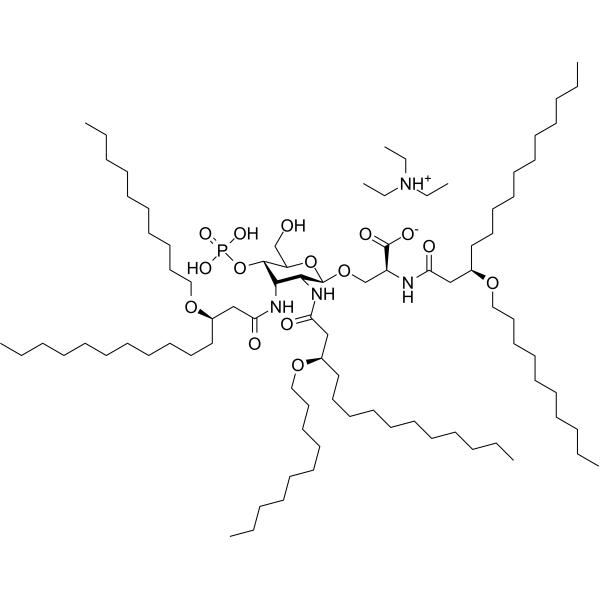
Cat. No.: HY-149650A
CAS No.: 3020639-70-4
Research Areas:  

Inflammation/Immunology

TLR4 agonist-1 (TEA) (compound 17a) is a potent agonist of Toll-like Receptor 4 (TLR4), and induces the generation of MIP-1β in RAW 264.7 and MM6 cells .
loading...
    loading...
Cat. No.: HY-RS21940
Research Areas:  

Others

Slc7a2 Mouse Pre-designed siRNA Set A contains three designed siRNAs for Slc7a2 gene (Mouse), as well as a negative control, a positive control, and a FAM-labeled negative control.

loading...
    loading...
Cat. No.: HY-125678
CAS No.: 25524-95-2
Jasmine lactone, a volatile substance produced by plants under stress, has a strong odor and is known for its unique jasmine-like floral and fruity scent which is very popular in tea, especially in oolong and black tea. The biosynthesis mechanism of Jasmine lactone in tea is regulated by various stresses, including mechanical damage and low temperature stress. Continuous mechanical damage and low temperature and mechanical damage can enhance the accumulation of Jasmine lactone in tea .
loading...
    loading...
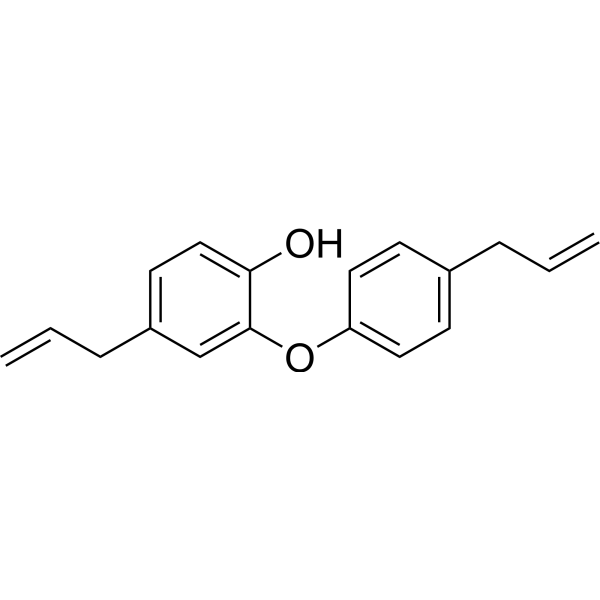
Cat. No.: HY-N2564
CAS No.: 87688-90-2
Isomagnolol is a lignan with antimicrobial activity. Isomagnolol can be isolated from the root of tea plant .
loading...
    loading...
Cat. No.: HY-N16399
Black tea extract is the extract of Black tea. Black tea extract prevents inorganic arsenic (iAs) induced ROS generation, inhibiting uncontrolled proliferation, epithelial to mesenchymal transition (EMT) and metastasis in HaCaT cells. Black tea extract has an anti-fibrotic activity. Black tea extract can be used for skin cancers research .
loading...
    loading...
Cat. No.: HY-140313A
Target:  

ADC Linkers

Research Areas:  

Cancer

Methyltetrazine-DBCO TEA is a non-cleavable ADC linker used in the synthesis of antibody-drug conjugates (ADCs). Methyltetrazine-DBCO TEA is a click chemistry reagent, it contains a DBCO group that can undergo strain-promoted alkyne-azide cycloaddition (SPAAC) with molecules containing Azide groups. Methyltetrazine-DBCO TEA also contains a Tetrazine group that can undergo an inverse electron demand Diels-Alder reaction (iEDDA) with molecules containing TCO groups .
loading...
    loading...
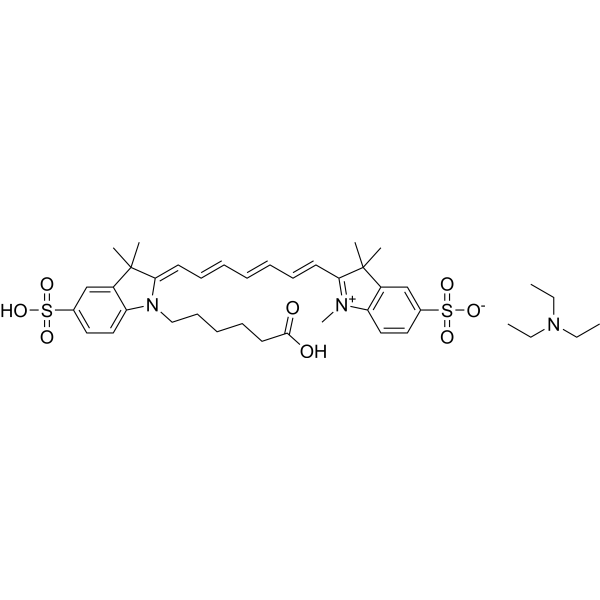
Cat. No.: HY-D1881A
Sulfo-Cy7 carboxylic acid TEA (compound 6m) is a cyanine dye .
loading...
    loading...
Cat. No.: HY-D1883A
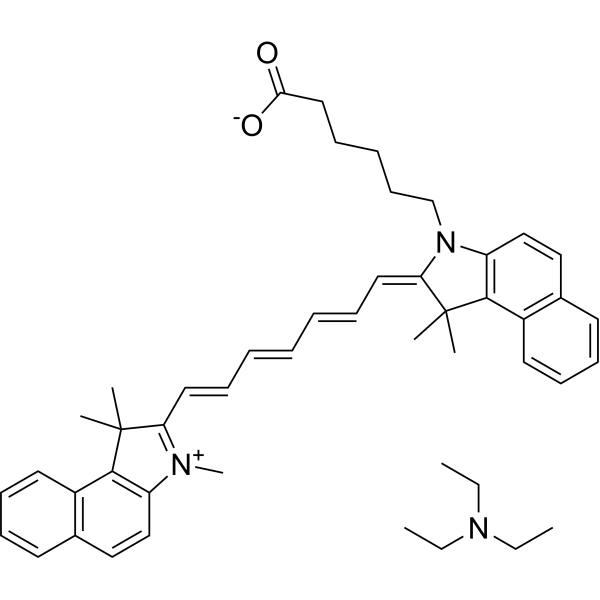
Cy7.5-COOH TEA (compound 8f), a cyanine dye, is a highly fluorescent compound (Abs/Em = 781/808 nm). Cy7.5-COOH TEA can be used as a fluorescent probe in a wide-range of applications such as DNA sequencing, flow cytometry and in vivo imaging .
loading...
    loading...
Cat. No.: HY-151701A
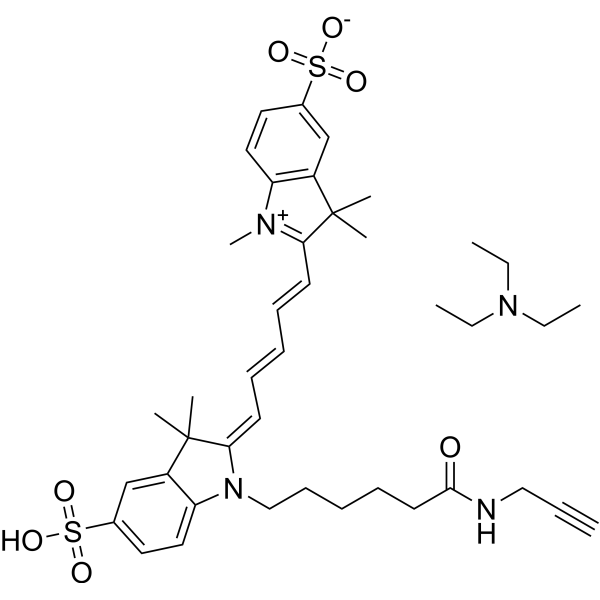
DiSulfo-Cy5 alkyne TEA is a fluorescent dye can be used as a click chemistry reagent .
loading...
    loading...
Cat. No.: HY-D1274B
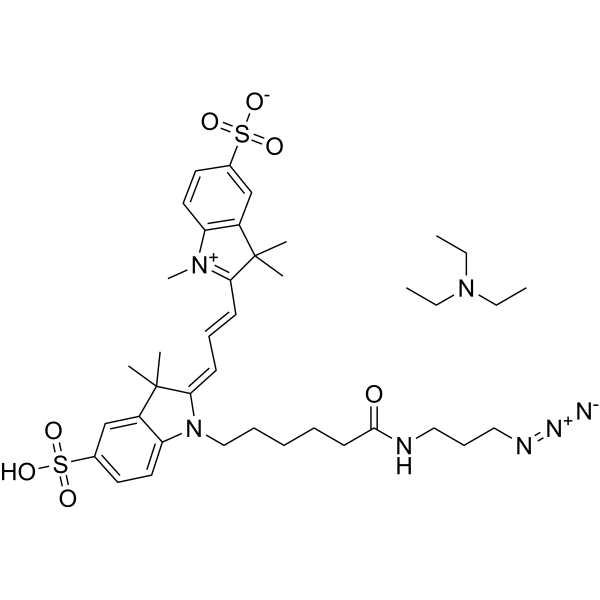
Sulfo-cyanine3 azide TEA is an azide cyanine dye and fluorescent probe (Ex/Em=548/563 nm). Sulfo-cyanine3 azide TEA can be involved in synthesis of fused tricyclic heterocycles, produces immunostimulatory agents . It contains an azide group and can undergo copper-catalyzed azide-alkyne cycloaddition (CuAAc) with molecules containing alkyne groups. It can also undergo ring strain-promoted alkyne-azide cycloaddition (SPAAC) with molecules containing DBCO or BCN groups.
loading...
    loading...
Cat. No.: HY-W123019
CAS No.: 1485489-28-8
Research Areas:  

Others

DBCO-Sulfo-Link-biotin TEA is a click chemistry intermediate containing a DBCO group, which can undergo ring strain-promoted alkyne-azide cycloaddition (SPAAC) with molecules containing an azide group.
loading...
    loading...
Cat. No.: HY-D1853A
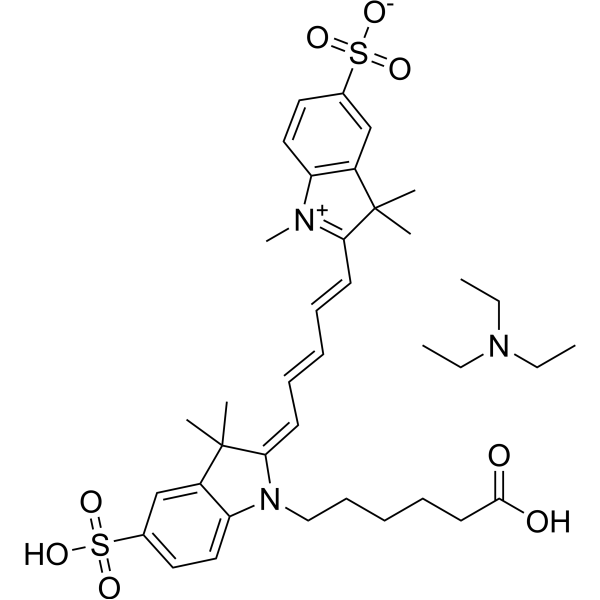
Sulfo-Cy5 carboxylic acid TEA is a Cy5 derivative that can be used for chemical synthesis. Cy5 is a red fluorescent label dye for imaging (Ex/Em=642/670 nm) .
loading...
    loading...

