697 Results for "

Matrix

" in MedChemExpress (MCE) Product Catalog:
Products (697)

697 Results for "Matrix" in MCE Product Catalog:

  • Targets Recommended:
Cat. No.: HY-P73924
Purity:  ≥ 95%, as determined by reducing SDS-PAGE.
Synonyms: Gag polyprotein; Pr55Gag; Matrix protein p17; MA; Capsid protein p24; CA; Spacer peptide 1; SP1; p2; Nucleocapsid protein p7; NC; Spacer peptide 2; SP2
Species:  
Virus
Source:  
E. coli
loading...
    loading...
Cat. No.: HY-P73925
Purity:  ≥ 90%, as determined by reducing SDS-PAGE.
Synonyms: Gag polyprotein; Pr55Gag; Matrix protein p17; MA; Capsid protein p24; CA; Spacer peptide 1; SP1; p2; Nucleocapsid protein p7; NC; Spacer peptide 2; SP2
Species:  
Virus
Source:  
E. coli
loading...
    loading...
Cat. No.: HY-P74388
Purity:  ≥ 95%, as determined by reducing SDS-PAGE.
Synonyms: BSG; Leukocyte Activation Antigen M6; Prev. OK; Hepatoma-Associated Antigen; EMMPRIN; OK Blood Group Antigen; Basigin; HAb18G; Tumor Cell-Derived Collagenase Stimulatory Factor; TCSF; Extracellular Matrix Metalloproteinase Inducer; 5F7; EMPRIN; Ok Blood G
Species:  
Human
Source:  
HEK293
loading...
    loading...
Cat. No.: HY-P76972
Purity:  ≥ 90%, as determined by reducing SDS-PAGE.
Synonyms: Gag-Pol polyprotein; Pr160Gag-Pol; Matrix protein p17; MA; Capsid protein p24; CA; Spacer peptide 1; SP1; p2; Nucleocapsid protein p7; NC; Transframe peptide; TF; gag-pol
Species:  
Virus
Source:  
E. coli
loading...
    loading...
Cat. No.: HY-P76973
Purity:  ≥ 90%, as determined by reducing SDS-PAGE.
Synonyms: Gag-Pol polyprotein; Pr160Gag-Pol; Matrix protein p17; MA; Capsid protein p24; CA; Spacer peptide 1; SP1; p2; Nucleocapsid protein p7; NC; Transframe peptide; TF; gag-pol
Species:  
Virus
Source:  
E. coli
loading...
    loading...
Cat. No.: HY-P80711
Synonyms: HSPD1; HSP60; 60 kDa heat shock protein; mitochondrial; 60 kDa chaperonin; Chaperonin 60; CPN60; Heat shock protein 60; HSP-60; Hsp60; HuCHA60; Mitochondrial Matrix protein P1; P60 lymphocyte protein

Host:  

Mouse

Application:  

WB, ICC/IF, IP

Reactivity:  

Human, Mouse, Rat

loading...
    loading...
Cat. No.: HY-P70142A
Purity:  ≥ 95%, as determined by reducing SDS-PAGE.
Synonyms: SPON2; Spondin 2, Extracellular Matrix Protein; Spondin 2; M-Spondin; DIL1; Spondin-2; Mindin; DIL-1; Differentially Expressed In Cancerous And Non-Cancerous Lung Cells 1
Species:  
Human
Source:  
HEK293
loading...
    loading...
Cat. No.: HY-P85958
Synonyms: BAF47, INI1, SNF5L1, SMARCB1, SWI/SNF-related Matrix-associated actin-dependent regulator of chromatin subfamily B member 1, BRG1-associated factor 47, Integrase interactor 1 protein, SNF5 homolog, hSNF5

Host:  

Mouse

Application:  

IHC-P, WB, ICC/IF, ELISA

Reactivity:  

Human, Mouse

loading...
    loading...
Cat. No.: HY-P86546
Synonyms: HSPD1; HSP60; 60 kDa heat shock protein; mitochondrial; 60 kDa chaperonin; Chaperonin 60; CPN60; Heat shock protein 60; HSP-60; Hsp60; HuCHA60; Mitochondrial Matrix protein P1; P60 lymphocyte protein

Host:  

Rabbit

Application:  

WB, IHC-P, ICC/IF, IP, ELISA

Reactivity:  

Human, Mouse, Rat

loading...
    loading...
Cat. No.: HY-P80602A
Synonyms: CD44; LHR; MDU2; MDU3; MIC4; CD44 antigen; CDw44; Epican; Extracellular Matrix receptor III; ECMR-III; GP90 lymphocyte homing/adhesion receptor; HUTCH-I; Heparan sulfate proteoglycan; Hermes antigen; Hyaluronate receptor; Phagocytic glycopr

Host:  

Mouse

Application:  

WB, IHC-F, IHC-P, ICC/IF, IP

Reactivity:  

Human

loading...
    loading...
Cat. No.: HY-137273
CAS No.: 74135-10-7
Purity:  ≥98.0%
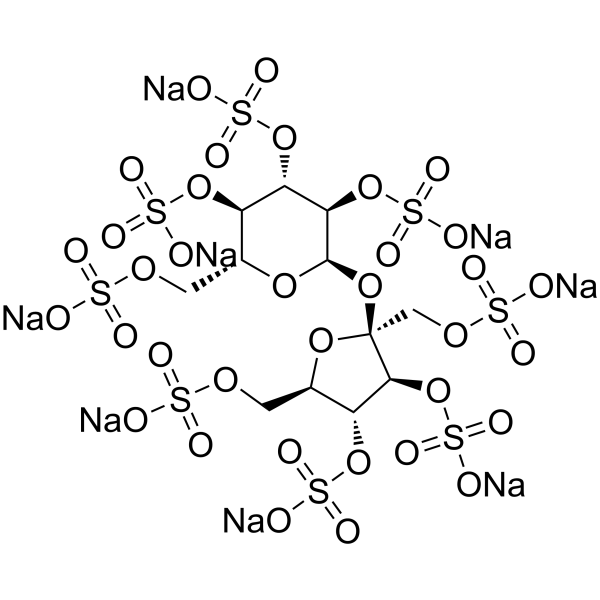
Sucrose octasulfate sodium is a wound healing promoter. Sucrose octasulfate sodium inhibits MMP, promotes angiogenesis and improves microcirculation. Sucrose octasulfate sodium causes mild skin irritation. Sucrose octasulfate sodium can be used to prepare p (MMA-co-AM)/PVA@PSO hydrogels. Sucrose octasulfate sodium is applicable to research related to diabetic wounds .
loading...
    loading...
Cat. No.: HY-137273A
CAS No.: 57680-56-5
Sucrose octasulfate is a wound healing promoter. Sucrose octasulfate inhibits MMP, promotes angiogenesis and improves microcirculation. Sucrose octasulfate causes mild skin irritation. Sucrose octasulfate can be used to prepare p (MMA-co-AM)/PVA@PSO hydrogels. Sucrose octasulfate is applicable to research related to diabetic wounds .
loading...
    loading...
Cat. No.: HY-141436
CAS No.: 73264-44-5
Purity:  ≥98.0%
Synonyms: Sucrose octasulfate potassium
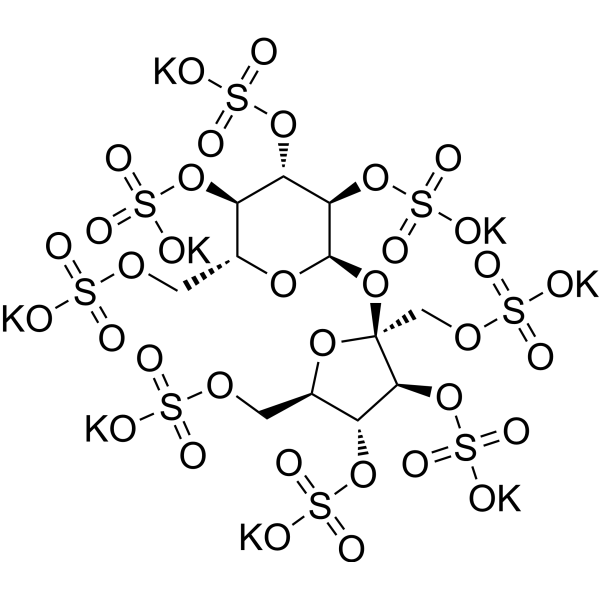
Sucrosofate potassium (Sucrose octasulfate potassium) is a wound healing promoter. Sucrosofate potassium inhibits MMP, promotes angiogenesis and improves microcirculation. Sucrosofate potassium causes mild skin irritation. Sucrosofate potassium can be used to prepare p (MMA-co-AM)/PVA@PSO hydrogels. Sucrosofate potassium is applicable to research related to diabetic wounds .
loading...
    loading...
Cat. No.: HY-141436R
CAS No.: 73264-44-5
Synonyms: Sucrose octasulfate potassium (Standard)
Sucrosofate potassium (Standard) (Sucrose octasulfate potassium) (Standard)) is the analytical standard of Sucrosofate potassium (HY-141436). This product is intended for research and analytical applications. Sucrosofate potassium (Sucrose octasulfate potassium) is a wound healing promoter. Sucrosofate potassium inhibits MMP, promotes angiogenesis and improves microcirculation. Sucrosofate potassium causes mild skin irritation. Sucrosofate potassium can be used to prepare p (MMA-co-AM)/PVA@PSO hydrogels. Sucrosofate potassium is applicable to research related to diabetic wounds .
loading...
    loading...
Cat. No.: HY-182795
Research Areas:  

Metabolic Disease

Colchicine derivative-1 is a colchicine derivative. Colchicine derivative-1 exhibits cytotoxicity against various cells. Colchicine derivative-1 arrests cancer cells at the G2/M phase of the cell cycle. Colchicine derivative-1 increases the levels of MMP-2, MMP-8, MMP-9, IL-2, IL-6, IL-17A, IL-22, IL-4, and IL-5 in the blood, inhibits the gene expression of hepatic fibrinogen α, β, γ and TGF-β1, and alleviates hepatic fibrosis symptoms in mice. Colchicine derivative-1 has antifibrotic activity and can be used in studies related to hepatic fibrosis .
loading...
    loading...
Cat. No.: HY-113621B
CAS No.: 2757574-06-2
Target:  

Fluorescent Dye MMP

Research Areas:  

Cancer

Ageladine A dihydrochloride is an inhibitor of matrix metalloproteinase (MMP) isolated from the marine sponge Agelas nakamurai, possessing anti-angiogenic activity. Ageladine A dihydrochloride not only inhibits MMP-2 but also MMP-1, MMP-8, MMP-9, MMP-12, and MMP-13, with IC50 values of 4.65 μM, 2.79 μM, 907.12 nM, 1.83 μM, 767.57 nM, and 1.09 μM, respectively. Additionally, Ageladine A dihydrochloride is a pH-sensitive membrane-permeable dye that emits fluorescence in the blue-green range upon UV excitation, featuring a maximum absorption peak at 370 nm. Furthermore, Ageladine A dihydrochloride serves as a reliable and stable fluorescent pH sensor for detecting changes in intracellular pH values .
loading...
    loading...
Cat. No.: HY-137381
CAS No.: 30275-80-0
Synonyms: N6-Benzoyl-cAMP
Target:  

PKA Potassium Channel

Research Areas:  

Metabolic Disease

6-Bnz-cAMP, a derivative of cyclic adenosine monophosphate (cAMP), is a selective PKA activator with inhibitory activity against the bTREK-1 K + channel. 6-Bnz-cAMP does not activate the Epac signaling pathway. 6-Bnz-cAMP inhibits the bTREK-1 K + channel via a voltage-independent, ATP-dependent mechanism that is independent of the PKA/Epac/calmodulin kinase/MAP kinase pathway. 6-Bnz-cAMP activates CREB phosphorylation to regulate osteoblast-specific gene expression, induces osteoblast differentiation, promotes extracellular matrix mineralization, supports osteoblast proliferation, and shows no cytotoxicity toward osteoblasts. 6-Bnz-cAMP can be used in studies related to bone tissue repair and regeneration .
loading...
    loading...
Cat. No.: HY-153149
CAS No.: 945457-84-1
Synonyms: FM101
LJ-2698 (FM101) is an orally active adenosine A3 receptor (Adenosine A3 Receptor) antagonist . LJ-2698 blocks adenosine A3 receptor-dependent pro-inflammatory JNK, ERK, and NF-κB signaling pathways. LJ-2698 prevents alveolar cavity enlargement, restores pulmonary function, and inhibits matrix metalloproteinase activity and pulmonary cell apoptosis (apoptosis) in mice . LJ-2698 induces mitochondrial dysfunction, necroptosis, and intrinsic apoptosis. LJ-2698 ameliorates renal injury in mice with diabetic nephropathy, and alleviates diet-induced hepatic inflammation and fibrosis. LJ-2698 can be used in the research of emphysema, diabetic nephropathy, and metabolic dysfunction-associated steatotic liver disease .
loading...
    loading...
Cat. No.: HY-171955
CAS No.: 315705-04-5
LXG6403 is an orally active and irreversible LOX inhibitor (IC50 = 1.3 μM). LXG6403 is ~3.5-fold more specific for LOX than LOXL2 and does not inhibit LOXL1. LXG6403 inhibits FAK signaling and induces ROS generation and DNA damage, leading to G1 arrest and apoptosis in chemoresistant triple-negative breast cancer (TNBC) cell lines. LXG6403 alters the extracellular matrix (ECM) and collagen structure, reducing collagen cross-linking and deposition, thereby increasing drug penetration and reducing tumor stiffness. LXG6403 overcomes Doxorubicin (HY-15142) resistance in chemoresistant TNBC PDX in vivo and can be used to study high-stiffness resistant tumors .
loading...
    loading...
Cat. No.: HY-180281
CAS No.: 3099026-16-8
Research Areas:  

Cancer

PLAGL2-IN-1 is a inhibitor of pleiomorphic adenoma-like protein 2 (PLAGL2) with a Kd of 2.23 µM. PLAGL2-IN-1 suppresses PLAGL2 transcriptional activity, induces G0/G1 cell cycle arrest, and apoptosis, thereby inhibiting hepatocellular carcinoma (HCC) cell proliferation. PLAGL2-IN-1 disrupts extracellular matrix organization and suppresses the PI3K-AKT pathway by reducing AKT phosphorylation. PLAGL2-IN-1 inhibits tumor growth in an HCCLM3 xenograft mouse model. PLAGL2-IN-1 can be used for the research of HCC .
loading...
    loading...

