676 Results for "

utilization

" in MedChemExpress (MCE) Product Catalog:
Products (676)

676 Results for "utilization" in MCE Product Catalog:

Cat. No.: HY-106031A
CAS No.: 866874-39-7
Research Areas:  

Cancer

F-14512 hydrochloride is an anticancer agent that utilizes the polyamine transport system (PTS) to selectively deliver polyamine-containing drugs to cancer cells. F-14512 hydrochloride enhances the affinity of polyamines for DNA, thereby inhibiting topoisomerase II and achieving selective cellular uptake. F-14512 hydrochloride exhibits significant cytotoxicity against cells with high PTS activity and induces DNA damage. F-14512 hydrochloride demonstrates potent antitumor activity in the MX1 breast tumor xenograft model. F-14512 hydrochloride could be used to study breast cancer .
loading...
    loading...
Cat. No.: HY-116604A
CAS No.: 21314-60-3
Synonyms: PD 139530 hydrochloride
Target:  

PI3K Akt

Research Areas:  

Cancer

RLX (PD 139530) hydrochloride is the hydrochloride of RLX (HY-116604). RLX is a PI3K/Akt/FoxO3a signaling inhibitor, possessing significant therapeutic potential in experimental colon cancer. RLX can effectively modulate the tumor microenvironment, enhancing the efficacy of cancer immunotherapy. RLX demonstrates the ability to improve the retention time of therapeutic agents within the tumor microenvironment by utilizing advanced nanoparticle delivery systems. RLX can be integrated with various treatment modalities, such as chemotherapy and radiotherapy, to enhance overall tumor therapy effectiveness .
loading...
    loading...
Cat. No.: HY-124456
CAS No.: 36587-59-4
Target:  

Bacterial

Research Areas:  

Infection

Unguinol is a depsidone originally isolated from A. unguis. It is an inhibitor of pyruvate phosphate dikinase (PPDK; IC50=42.3 μM). It inhibits the growth of plants utilizing C4, but not C3, carbon fixation. Unguinol also inhibits the growth of the bacteria S. aureus and V. harveyi (GI50s=8.7 and 69.5 μM, respectively) and H460, MCF-7, and SF-268 cancer cells (GI50s=28.2, 50.8, and 44.3 μM, respectively).
loading...
    loading...
Cat. No.: HY-131337
CAS No.: 2614320-29-3
Target:  

Bacterial

Research Areas:  

Infection

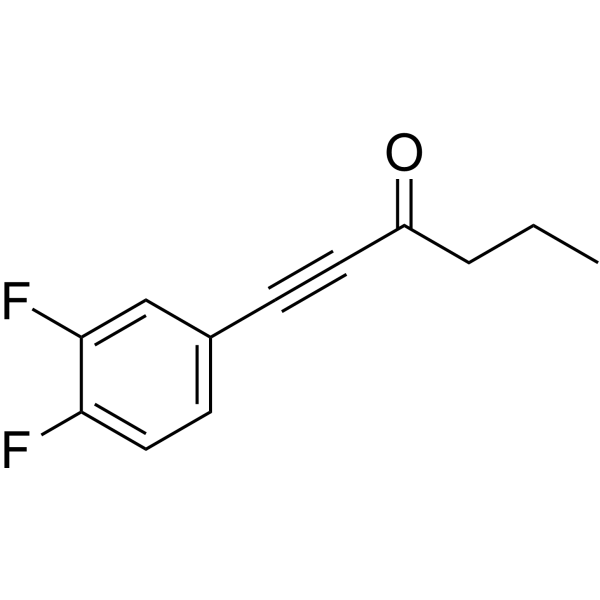
RhlR antagonist 1 is a potent RhlR antagonist with an IC50 of 26 μM. RhlR antagonist 1 displays selective RhlR antagonism over LasR and PqsR, strong inhibition of biofilm formation in static and dynamic settings, and reduces production of virulence factors such as rhamnolipid and pyocyanin in P. aeruginosa. RhlR antagonist 1 can be utilized for developing QS-modulating molecules in the control of P. aeruginosa infections . RhlR antagonist 1 is a click chemistry reagent, it contains an Alkyne group and can undergo copper-catalyzed azide-alkyne cycloaddition (CuAAc) with molecules containing Azide groups.
loading...
    loading...
Cat. No.: HY-140739A
CAS No.: 185844-12-6
Target:  

Liposome

Research Areas:  

Neurological Disease Cancer

DSPE-PEG2000-Maleimide free acid is a phospholipid-PEG conjugate. DSPE-PEG2000-Maleimide free acid utilizes the amphiphilicity of DSPE to insert into the lipid bilayer of liposomes or nanoparticles. DSPE-PEG2000-Maleimide free acid covalently couples to the sulfhydryl (-SH) of ligands (such as antibodies, peptides, or proteins) via thiol-maleimide click chemistry, giving the particles targeting capabilities. DSPE-PEG2000-Maleimide free acid can be used in the researches of breast cancer, lymphoma, and inherited retinal degeneration .
loading...
    loading...
Cat. No.: HY-161773
Research Areas:  

Cancer

HL389-NHC2-PEG3-C2NH inhibits proliferation of cancer cells MDA-MB-231 and MCF-7, with IC50 of 11.39 μM and 9.66 μM. HL389-NHC2-PEG3-C2NH can be utilized as a conjugate of an E3 ligase ligand and a linker, for the synthesis of PROTAC degrader HL435 (HY-161769) .
loading...
    loading...
Cat. No.: HY-184602
Gold nanoclusters (AuNCs) are molecular-level aggregates consisting of a core of several to dozens of gold atoms, protected by organic monomers such as thiol compounds or proteins. GSH-AuNCs utilize glutathione (a thiol-containing tripeptide) as both a reducing agent and a protecting group, reacting chemically with gold atoms to form nanoclusters, representing a transitional state between metal atoms and metal nanoparticles. Due to size effects and the emergence of quantized energy levels, GSH-AuNCs possess unique optical properties, such as tunable fluorescence emission spectra. Their fluorescence emission wavelength can be tuned with variations in particle size and composition.
loading...
    loading...
Cat. No.: HY-E70298
Synonyms: ST3GAL1
Target:  

Endogenous Metabolite

Research Areas:  

Cancer

ST3 β-Gal α-2,3-Sialyltransferase 1 (ST3GAL1) is a sialyltransferase whose overexpression in ovarian cancer cell lines enhances cell growth, migration, and invasion capabilities, as well as increases tumorigenicity and resistance to paclitaxel in vivo. ST3 β-Gal α-2,3-Sialyltransferase 1 catalyzes the transfer of sialic acid from cytidine monophosphate-sialic acid to galactose-containing substrates and can be utilized in studies of cancer progression and chemotherapy resistance .
loading...
    loading...
Cat. No.: HY-N18750
CAS No.: 89997-35-3
Category:  

Extract

Target:  

Bacterial

Celery Extract, derived from celery seeds (Apium graveolens), is a natural extract rich in bioactive compounds such as flavonoids, phenolic acids, and volatile oils. It is known for its antihypertensive, anti-inflammatory, antimicrobial, and antioxidant properties. This extract has been used in traditional medicine to manage hypertension and inflammation, and modern research supports its potential health benefits. In addition to its medicinal uses, Celery Extract is also utilized in the food industry for flavor enhancement and in cosmetics for its skin-protecting and soothing effects. While generally safe, a patch test is recommended to avoid potential allergic reactions.
loading...
    loading...
Cat. No.: HY-P5488
CAS No.: 329696-53-9
Target:  

Inhibitory Antibodies

Research Areas:  

Others

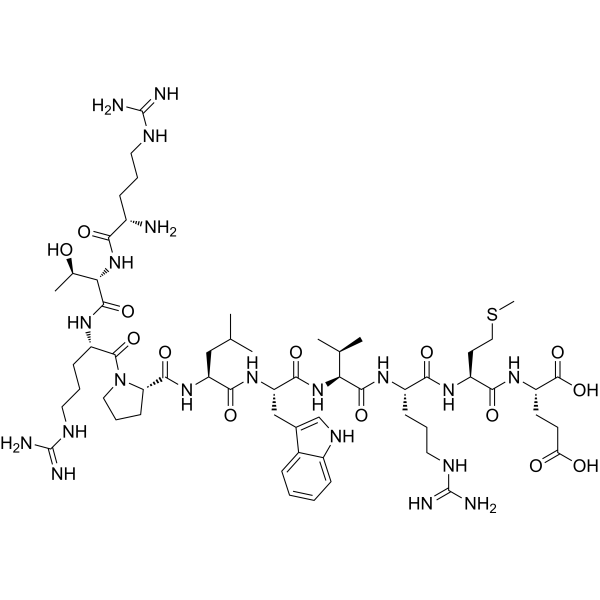
BDC2.5 Mimotope 1040-63 is a biological active peptide. (The TCR transgenic model (BDC2.5) mimitope was used in type 1 diabetes (T1D) study. T1D is an autoimmune disease in which T cells mediate damage to pancreatic islet b cells. T1D is caused by autoreactive T cell destruction of insulin-producing cells. BDC2.5 mimotope was utilized to support the study on antigen presentation of antigenic peptides to islet autoantigen-specific T cells.)
loading...
    loading...
Cat. No.: HY-P991294

Target:  

ADC Antibodies

Research Areas:  

Cancer

MGTA-117 is a humanized monoclonal antibody targeting CD117. MGTA-117 can be used for synthesis of antibody-drug conjugate (ADC), utilizing an amanitin payload. MGTA-117 has potent anti-tumor activity and increases survival in three acute myeloid leukemia (AML) xenograft hNSG mice models (Kasumi-1, AML PDX 1 and AML PDX 2). MGTA-117 enables hematopoietic stem cell transplantation (HSCT) preprocessing in AML, myelodysplasia with excess blasts (MDS-EB) and gene therapy .
loading...
    loading...
Cat. No.: HY-107497R
CAS No.: 21230-50-2
Research Areas:  

Cancer

1-Methyl-3-amino-4-cyanopyrazole (Standard) is the analytical standard of 1-Methyl-3-amino-4-cyanopyrazole (HY-107497). This product is intended for research and analytical applications. 1-Methyl-3-amino-4-cyanopyrazole (compound 3) is a molecular compound that can be used in the synthesis of adenosine A3 receptor antagonists. 1-Methyl-3-amino-4-cyanopyrazole can be utilized in cancer research .
loading...
    loading...
Cat. No.: HY-118707
CAS No.: 14486-15-8
Synonyms: Met-met-met
Research Areas:  

Infection

Trimethionine (Met-met-met) is an orally active tripeptide substrate of peptide transport systems. Trimethionine interacts with the triple-leucine-triple-threonine transport system and the oligopeptide permease (Opp) system in Escherichia coli, competing for uptake and transport processes. Trimethionine antagonizes the toxicity of threonine tripeptide and ornithine tripeptide, and competes with peptide-supported growth and amino acid source utilization processes in Escherichia coli strains. Trimethionine is taken up by Candida albicans via a carrier-mediated, energy-dependent manner, and is subsequently hydrolyzed into free methionine intracellularly. Trimethionine can be used in studies related to Candida albicans infections .
loading...
    loading...
Cat. No.: HY-159067
CAS No.: 9064-91-9
Synonyms: DEAE-dextran, MW 500000 hydrochloride, from bacterial (Leuconostoc mesenteroides); Diethylaminoethyl-dextran, MW 500000 hydrochloride
DEAE-dextran, MW 500000 hydrochloride (DEAE-dextran, MW 500000 hydrochloride, from bacterial (Leuconostoc mesenteroides)) is a high-molecular-weight positively charged polymer that significantly enhances the uptake of viral RNA by tissue culture cells. When employed in the delivery system for "tumor immunity" RNA-splenocyte transfer, DEAE-dextran can markedly extend the lifespan of tumor-bearing animals, comparable to that of actively immunized animals. Furthermore, DEAE-dextran serves as a complexing agent for nucleic acids, forming composite particles with DNA/RNA for extensive applications in gene delivery. Additionally, DEAE-dextran can be utilized as a coating for liposomes .
loading...
    loading...
Cat. No.: HY-N3686S
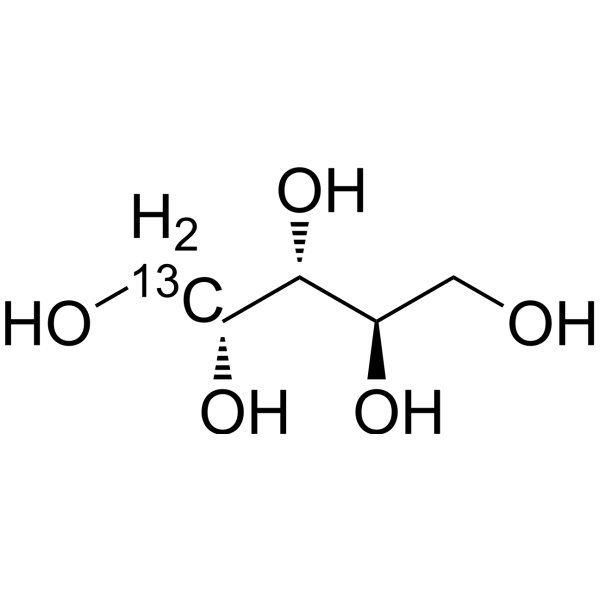
D-Arabitol- 13C is the 13C labeled D-Arabitol. D-Arabitol is an orally active D-enantiomer of arabitol. D-Arabitol modulates the composition of gut microbiota, increases short-chain fatty acids, and promotes AMPK-PGC-1α-related browning of white adipose tissue. D-Arabitol improves weight gain, fat accumulation, insulin resistance, lipid deposition and inflammatory responses. D-Arabitol serves as the sole carbon/energy source for Bacillus methanolicus MGA3, a strain that can co-utilize it with mannitol. D-Arabitol is applicable to obesity-related research.
loading...
    loading...
Cat. No.: HY-L151
544 compounds

PROTACs (Proteolysis-targeting chimeras) is a class of molecules that utilize ubiquitin-proteasome system (UPS) to ubiquitinate and degrade target proteins. The PROTACs molecule consists of two ligands joined by a linker. The one-to-one interaction between PROTACs and target proteins determines the high efficiency of PROTACs, making it a potential molecule for targeted protein degradation (TPD) therapy.

MCE supplies a unique collection of 544 PROTACs that effectively degrade target proteins with more powerful screening capability. MCE PROTAC Library is a useful tool for signal pathway research, protein degradation therapy research, drug discovery and drug repurposing, etc.

Cat. No.: HY-133830
CAS No.: 245523-67-5
Synonyms: (3β,7α,24S)-Cholest-5-ene-3,7,24-triol
Target:  

Endogenous Metabolite

Research Areas:  

Others

7α,24(S)-Dihydroxycholesterol ((3β,7α,24S)-Cholest-5-ene-3,7,24-triol) serves as a ligand for liver X receptor (LXR), binding specifically to the ligand binding domains of both LXRα and LXRβ. This compound is synthetically produced from E-α,β-enone, utilizing Arsonium ylide and J-tert-butyldimethylsilyloxy-bisnor-5-cholenaldehyde as starting materials, followed by a series of transformations to yield 7α,24(S)-dihydroxycholesterol.
loading...
    loading...
Cat. No.: HY-137390A
CAS No.: 1009811-63-5
(3S,5R)-Fluvastatin (potassium) is a synthetic hypolipidemic drug that inhibits HMG-CoA reductase activity. (3S,5R)-Fluvastatin (potassium) has similar antioxidative effects on copper ion-induced LDL oxidation compared to its 3R,5S enantiomer. (3S,5R)-Fluvastatin (potassium) and its metabolites demonstrate a potential to exhibit anti-atherosclerotic effects through their antioxidative activities. (3S,5R)-Fluvastatin (potassium) is clinically utilized as part of a racemic mixture for reducing plasma cholesterol levels.
loading...
    loading...
Cat. No.: HY-170665
Target:  

EGFR

Research Areas:  

Cancer

EGFR T790M/L858R-IN-9 (Compound 8) is an EGFR-L858R/T790M inhibitor that demonstrates potent inhibitory phosphorylation effects against the EGFR-L858R/T790M mutant kinase, with an IC50 value of 0.0064µM. EGFR T790M/L858R-IN-9 also inhibits the proliferation of non-small cell lung cancer (NSCLC) cells and can be utilized in cancer research .
loading...
    loading...
Cat. No.: HY-D3111
CAS No.: 1240465-12-6
Target:  

Fluorescent Dye

Research Areas:  

Neurological Disease

DBHA is a long-wavelength polarity-sensitive fluorescent probe based on Nile Red. Under the catalysis of Pd (OAc)2/TPPTS, DBHA site-selectively labels protein tyrosine residues via a π-allyl palladium complex intermediate. Utilizing the property that its maximum emission wavelength blue-shifts with decreasing local polarity (650 nm in aqueous solution → 584-608 nm in hydrophobic domains), it detects changes in local polarity and conformation of protein tyrosine domains under acid/thermal denaturation conditions. DBHA can be used in studies related to SOD1-associated oxidative stress neurodegenerative diseases .
loading...
    loading...

