



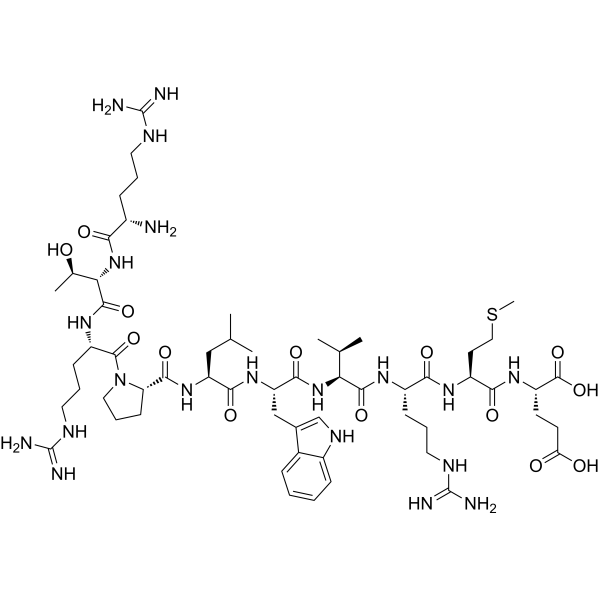
BDC2.5 Mimotope 1040-63

Based on 1 Customer Validation
BDC2.5 Mimotope 1040-63 is a biological active peptide. (The TCR transgenic model (BDC2.5) mimitope was used in type 1 diabetes (T1D) study. T1D is an autoimmune disease in which T cells mediate damage to pancreatic islet b cells. T1D is caused by autoreactive T cell destruction of insulin-producing cells. BDC2.5 mimotope was utilized to support the study on antigen presentation of antigenic peptides to islet autoantigen-specific T cells.)
For research use only. We do not sell to patients.
- Purity : 99.41%
- CAS No.: 329696-53-9
- Formula: C59H98N20O14S
- Molecular Weight:1343.60
-
Storage:
Sealed storage, away from moisture.
Powder -80°C, 2 years , -20°C, 1 year* In solvent : -80°C, 6 months; -20°C, 1 month (sealed storage, away from moisture)

To place orders, for customer services and technical support, please contact: MedChemExpress USA
Tel: 609-228-6898 E-mail: [email protected] [email protected]


-
 Biological Activity
-
Chemical Information
-
Solvent & Solubility
- Protocols
- Purity & Documentation
-
 Help & FAQs




Biological Activity
Description


Chemical Information
-
CAS No. 329696-53-9
-
Appearance Solid
-
Molecular Weight 1343.60
-
Formula C59H98N20O14S
-
Color White to off-white
-
Sequence
Arg-Thr-Arg-Pro-Leu-Trp-Val-Arg-Met-Glu
-
Sequence Shortening
RTRPLWVRME
-
Shipping
Room temperature in continental US; may vary elsewhere.
-
Storage
Sealed storage, away from moisture
Powder -80°C 2 years -20°C 1 year * In solvent : -80°C, 6 months; -20°C, 1 month (sealed storage, away from moisture)


Solvent & Solubility
In Vitro:
H2O : 100 mg/mL (74.43 mM; Need ultrasonic)
DMSO : 20 mg/mL (14.89 mM; Need ultrasonic; Hygroscopic DMSO has a significant impact on the solubility of product, please use newly opened DMSO)
Please refer to the solubility information to select the appropriate solvent. Once prepared, please aliquot and store the solution to prevent product inactivation from repeated freeze-thaw cycles.
Storage method and period of stock solution: -80°C, 6 months; -20°C, 1 month (sealed storage, away from moisture). When stored at -80°C, please use it within 6 months. When stored at -20°C, please use it within 1 month.
* Note: If you choose water as the stock solution, please dilute it to the working solution, then filter and sterilize it with a 0.22 μm filter before use.
Please refer to the solubility information to select the appropriate solvent. Once prepared, please aliquot and store the solution to prevent product inactivation from repeated freeze-thaw cycles.
Storage method and period of stock solution: -80°C, 6 months; -20°C, 1 month (sealed storage, away from moisture). When stored at -80°C, please use it within 6 months. When stored at -20°C, please use it within 1 month.
* Note: If you choose water as the stock solution, please dilute it to the working solution, then filter and sterilize it with a 0.22 μm filter before use.
Concentration (start) × Volume (start) = Concentration (final) × Volume (final)

Protocols
-
Human pluripotent stem cell pancreatic β-cell/islet-like differentiation
Human pluripotent stem cell pancreatic β-cell/islet-like differentiation is a staged directed-differentiation method that models embryonic progression from pluripotency to definitive endoderm, primitive gut tube/posterior foregut, pancreatic endoderm or pancreatic progenitors, endocrine progenitors, and β-like/islet-like endocrine cells. The principal readouts are sequential acquisition of lineage markers: SOX17/FOXA2 for definitive endoderm, PDX1 and NKX6. 1 for pancreatic progenitors, NEUROG3 for endocrine progenitors, and insulin/C-peptide with β-cell markers such as NKX6. 1 and MAFA for β-like cells. Functional readouts include glucose-stimulated insulin or C-peptide secretion, dynamic perifusion responses, calcium signaling, mitochondrial activity, and reversal or improvement of hyperglycemia after transplantation in diabetic immunodeficient mice when tested.
-
Transgenic Overexpression Model
Transgenic overexpression models are generated by introducing an exogenous DNA construct containing a gene of interest into the germline or early embryo so that the transgene integrates into the host genome and is stably expressed under the control of a chosen promoter, enabling in vivo analysis of gene function and disease mechanisms. The most established strategy is pronuclear microinjection of linearized DNA into fertilized oocytes, followed by random genomic integration and germline transmission, which allows constitutive or tissue-specific overexpression depending on promoter selection. Alternative strategies include viral vector-mediated gene delivery (e. g. , lentiviral systems) and transposon-based integration systems, which improve efficiency of stable genomic insertion in certain contexts. These approaches collectively enable functional gain-of-function studies in vivo across multiple organ systems and disease models.
-
Research Protocol for Endocrine Diseases
Endocrine diseases often arise from disrupted hormone production, hormone signaling, or target-tissue responsiveness; for diabetes-focused endocrine disease models, insulin signaling regulates glucose uptake, hepatic glucose output, lipid metabolism, and β-cell compensation. Type 2 diabetes develops through interacting defects in insulin resistance, β-cell dysfunction, adipose inflammation, hepatic glucose overproduction, altered incretin signaling, and ectopic lipid metabolism. A major unresolved question is whether endocrine dysfunction is driven primarily by target-tissue insulin resistance, intrinsic β-cell failure, immune/inflammatory stress, or combined multi-organ failure that differs by disease stage.
-
Human Islet Cell Culture
The method of preserving islets in vitro, with purified reduced immunogenicity. The steps are islet isolation, islet cell purification, in vitro determination of islet function and islet cell culture.
-
Research Protocol for Metabolic Diseases
AMP-activated protein kinase, AMPK, is a conserved cellular energy sensor that responds to reduced cellular energy status and coordinates metabolism by increasing ATP-generating catabolic pathways while suppressing ATP-consuming anabolic processes. In metabolic disease research, the AMPK pathway is experimentally relevant because it regulates hepatic lipid synthesis, fatty acid oxidation, glucose production, skeletal-muscle glucose disposal, mTORC1-linked biosynthesis, autophagy, mitochondrial homeostasis, and whole-body energy balance. The central pathway logic is that energy stress, metformin, exercise-like stimulation, or direct AMPK activators increase AMPKα Thr172 phosphorylation and downstream substrate phosphorylation, including ACC and RAPTOR. Phosphorylation of ACC suppresses lipogenesis and supports fatty acid oxidation, whereas phosphorylation of RAPTOR suppresses mTORC1 signaling and links cellular energy status to growth and protein synthesis control. The pathway is linked
-
Research Protocol for Cancer Immunology
Cancer immunology studies how the immune system recognizes, suppresses, edits, or fails to eliminate malignant cells through tumor antigen release, antigen presentation, T-cell priming, immune trafficking, tumor-cell killing, and feedback inhibition in the tumor microenvironment. The cancer-immunity cycle links tumor antigenicity, dendritic-cell priming, CD8+ T-cell infiltration, cytotoxic function, and immune-checkpoint regulation to tumor rejection or immune escape. Immune-checkpoint pathways such as PD-1/PD-L1 and CTLA-4 suppress antitumor T-cell activity and can be therapeutically blocked, but many tumors remain resistant because of poor antigen presentation, weak T-cell infiltration, suppressive myeloid cells, regulatory T cells, and tumor-intrinsic immune-exclusion programs. Unresolved questions include which immune-cell states predict response, how tumor-intrinsic pathways exclude immune cells, how myeloid suppression limits checkpoint blockade, and which combination strategies


Purity & Documentation
-
Data Sheet (248 KB)
-
SDS (252 KB)
- English - EN (252 KB)
- Français - FR (252 KB)
- Deutsch - DE (252 KB)
- Norwegian - NO (252 KB)
- Español - ES (252 KB)
- Swedish - SV (252 KB)
- Italian - IT (252 KB)
- Korean - KR (252 KB)
- Portuguese - PT (252 KB)
-
Handling Instructions (2659 KB)


Complete Stock Solution Preparation Table
Please refer to the solubility information to select the appropriate solvent. Once prepared, please aliquot and store the solution to prevent product inactivation from repeated freeze-thaw cycles.
Storage method and period of stock solution: -80°C, 6 months; -20°C, 1 month (sealed storage, away from moisture). When stored at -80°C, please use it within 6 months. When stored at -20°C, please use it within 1 month.
| Optional Solvent | Concentration Solvent Mass | 1 mg | 5 mg | 10 mg | 25 mg |
|---|---|---|---|---|---|
| DMSO / H2O | 1 mM | 0.7443 mL | 3.7213 mL | 7.4427 mL | 18.6067 mL |
| 5 mM | 0.1489 mL | 0.7443 mL | 1.4885 mL | 3.7213 mL | |
| 10 mM | 0.0744 mL | 0.3721 mL | 0.7443 mL | 1.8607 mL | |
| H2O | 15 mM | 0.0496 mL | 0.2481 mL | 0.4962 mL | 1.2404 mL |
| 20 mM | 0.0372 mL | 0.1861 mL | 0.3721 mL | 0.9303 mL | |
| 25 mM | 0.0298 mL | 0.1489 mL | 0.2977 mL | 0.7443 mL | |
| 30 mM | 0.0248 mL | 0.1240 mL | 0.2481 mL | 0.6202 mL | |
| 40 mM | 0.0186 mL | 0.0930 mL | 0.1861 mL | 0.4652 mL | |
| 50 mM | 0.0149 mL | 0.0744 mL | 0.1489 mL | 0.3721 mL | |
| 60 mM | 0.0124 mL | 0.0620 mL | 0.1240 mL | 0.3101 mL |
* Note: If you choose water as the stock solution, please dilute it to the working solution, then filter and sterilize it with a 0.22 μm filter before use.


BDC2.5 Mimotope 1040-63 Related Classifications
HY-P5488 Related Classifications
 Powered by Bioz