676 Results for "

utilization

" in MedChemExpress (MCE) Product Catalog:
Products (676)

676 Results for "utilization" in MCE Product Catalog:

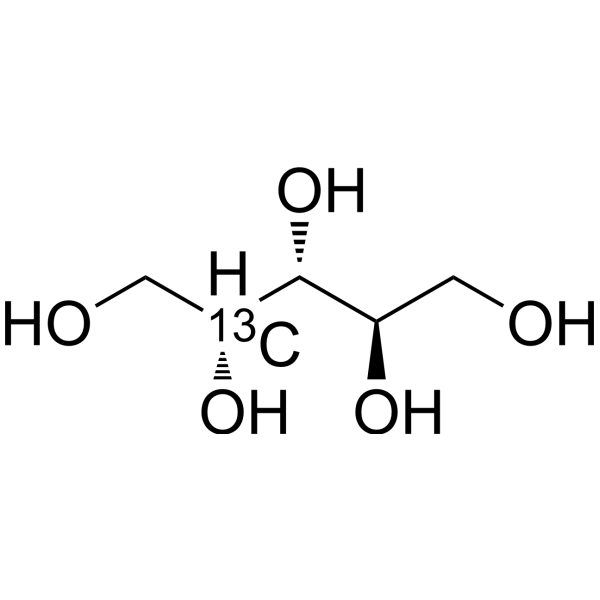
Cat. No.: HY-N3686S1
D-Arabitol- 13C-1 is the 13C labeled D-Arabitol. D-Arabitol is an orally active D-enantiomer of arabitol. D-Arabitol modulates the composition of gut microbiota, increases short-chain fatty acids, and promotes AMPK-PGC-1α-related browning of white adipose tissue. D-Arabitol improves weight gain, fat accumulation, insulin resistance, lipid deposition and inflammatory responses. D-Arabitol serves as the sole carbon/energy source for Bacillus methanolicus MGA3, a strain that can co-utilize it with mannitol. D-Arabitol is applicable to obesity-related research.
loading...
    loading...
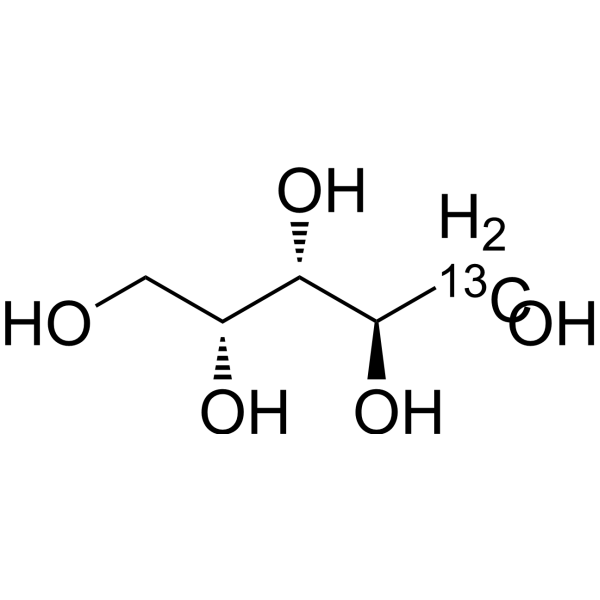
Cat. No.: HY-N3686S2
D-Arabitol- 13C-2 is the 13C labeled D-Arabitol. D-Arabitol is an orally active D-enantiomer of arabitol. D-Arabitol modulates the composition of gut microbiota, increases short-chain fatty acids, and promotes AMPK-PGC-1α-related browning of white adipose tissue. D-Arabitol improves weight gain, fat accumulation, insulin resistance, lipid deposition and inflammatory responses. D-Arabitol serves as the sole carbon/energy source for Bacillus methanolicus MGA3, a strain that can co-utilize it with mannitol. D-Arabitol is applicable to obesity-related research.
loading...
    loading...
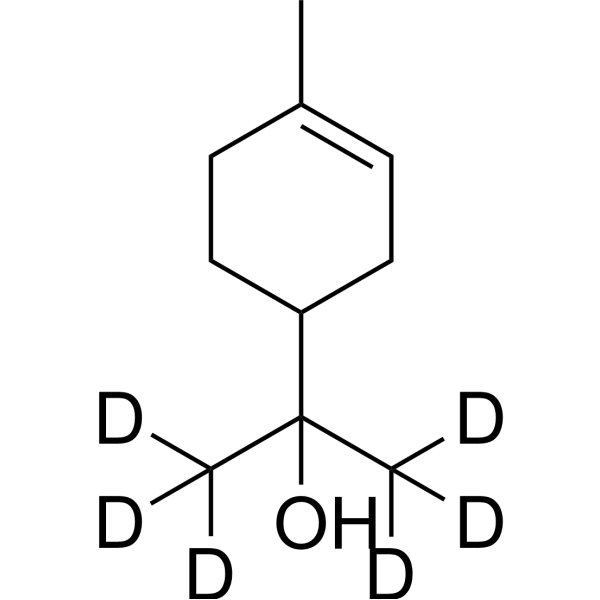
Cat. No.: HY-N5142S1
CAS No.: 1263090-98-7
α-Terpineol-d6 is deuterated labeled α-Terpineol (HY-N5142). α-Terpineol (with oral activity) can be found in Eucalyptus globulus Labill. α-Terpineol exhibits strong antimicrobial activity against periodontopathic and cariogenic bacteria.α-Terpineol possesses antifungal activity against T. mentagrophytes, and the activity might lead to irreversible cellular disruption. In addition, α-Terpineol exhibits antineuropathic and anti-inflammatory activities. α-Terpineol can be utilized in research related to diarrhea, neuropathic pain, infections, and inflammation .
loading...
    loading...
Cat. No.: HY-P991855

Target:  

TGF-β Receptor

Research Areas:  

Metabolic Disease

RKER-216 is a human monoclonal IgG antibody inhibitor targeting ALK2 with a KD of 58.7 pM. RKER-216 reduces hepcidin transcription in Hep3B.RKER-216 competes with BMP ligands for binding to the extracellular domain of ALK2, thereby inhibiting BMP-SMAD signal. RKER-216 mobilizes tissue iron effectively in inflammatory conditions. RKER-216 improves microcytic anemia in a dose-dependent manner by inhibiting SMAD signaling to reduce hepcidin and promote iron absorption and utilization in vivo. RKER-216 can be used for research on anemia of inflammation .
loading...
    loading...
Cat. No.: HY-121535
CAS No.: 116476-16-5
Research Areas:  

Others

Levosemotiadil, an S-isomer of semotiadil, exhibits stronger binding affinity to human serum albumin (HSA) compared to its R-isomer counterpart. This study utilized high-performance frontal analysis (HPFA) to demonstrate that levosemotiadil binds approximately three times more strongly to HSA than semotiadil. The binding parameters were evaluated using Scatchard analysis, revealing specific interactions with the diazepam binding site on HSA. The presence of diazepam decreased the binding affinity of both enantiomers, while warfarin did not alter their binding characteristics. These findings highlight levosemotiadil's potential as a Ca- and Na-channel blocker with significant binding preferences for HSA, crucial for understanding its pharmacokinetics and therapeutic effects .
loading...
    loading...
Cat. No.: HY-173614
CAS No.: 1061605-35-3
Research Areas:  

Cancer

CC-647 is a molecular glue-type cereblon modulator and ZBTB16 degrader. CC-647 primarily utilizes the C2H2 ZnF3 degron of ZBTB16 to promote CRL4 CRBN-mediated ubiquitination and proteasomal degradation. CC-647 also induces the degradation of the oncogenic RARα-ZBTB16 fusion protein, while exerting a weaker degrading effect on the reciprocal fusion ZBTB16-RARα. CC-647 can be used in studies related to targeted protein degradation and ZBTB16/RARA-rearranged acute promyelocytic leukemia .
loading...
    loading...
Cat. No.: HY-B0530A
CAS No.: 1798-50-1
Synonyms: γ-pipradol hydrochloride
Research Areas:  

Cancer

Azacyclonol (γ-pipradol) hydrochloride is a compound with promising anticancer activity, showing effectiveness in inhibiting NOX-derived ROS in A549 human lung cancer cells. Azacyclonol hydrochloride exhibits enhanced proliferation inhibition against androgen-refractory cancer cell lines, specifically DU145 and PC-3. Azacyclonol hydrochloride demonstrates antitumor activity in DU145-xenografted chorioallantoic membrane tumor models. Azacyclonol hydrochloride also acts as a ligand for the M3 muscarinic acetylcholine receptor, which is overexpressed in ARPC. Azacyclonol hydrochloride effectively blocks carbachol-induced proliferation and NOX activity in DU145 cells. Azacyclonol hydrochloride can also be utilized for the treatment of chronic schizophrenia.
loading...
    loading...
Cat. No.: HY-N3686R
CAS No.: 488-82-4
D-Arabitol (Standard) is the analytical standard of D-Arabitol (HY-N3686). This product is intended for research and analytical applications. D-Arabitol is an orally active D-enantiomer of arabitol. D-Arabitol modulates the composition of gut microbiota, increases short-chain fatty acids, and promotes AMPK-PGC-1α-related browning of white adipose tissue. D-Arabitol improves weight gain, fat accumulation, insulin resistance, lipid deposition and inflammatory responses. D-Arabitol serves as the sole carbon/energy source for Bacillus methanolicus MGA3, a strain that can co-utilize it with mannitol. D-Arabitol is applicable to obesity-related research .
loading...
    loading...
Cat. No.: HY-Y0543R
CAS No.: 620-02-0
5-Methylfurfural (Standard) is the analytical standard of 5-Methylfurfural. This product is intended for research and analytical applications. 5-Methylfurfural is a chemical that can be utilized as food additive, intermediate in the production of agrochemicals, and precursor of certain anti-cancer natural products. 5-Methylfurfural is formed during the photoexposition of ranitidine hydrochloride. 5-Methylfurfural is an organic compound. 5-Methylfurfural has a strong tendency to be further hydrogenated to 2,5-dimethylfuran (DMF). 5-Methylfurfural can predominantly evoke skin inflammation and barrier disintegration. 5-Methylfurfural degrades native DNA through the formation of single-strand breaks .
loading...
    loading...
Cat. No.: HY-L234
83 compounds

Nucleotide metabolism is central to cancer aggressiveness, underpinning uncontrolled proliferation, chemotherapy resistance, immune evasion, and metastasis. It is transcriptionally regulated by oncogenes (e.g., MYC) and tumor suppressors (e.g., pRb). Nucleotide imbalance and nucleoside degradation further regulate cell state transitions, especially following replication stress. Additionally, secretion of nucleotides/nucleosides into the tumor microenvironment modulates immune responses and influences treatment efficacy. Therefore, nucleotide metabolites have roles in disease response and indication in cancer research, and can be utilized to develop cancer-related mechanisms and drugs.

MCE can provide 83 metabolites produced by nucleotide metabolic pathways, which can be used for disease mechanism research and drug research.

Cat. No.: HY-145751
CAS No.: 53-00-9
Synonyms: 7α-Hydroxydehydroepiandrosterone; 3β,7α-Dihydroxy-Δ5-androsten-17-one
7α-Hydroxy-DHEA (7α-Hydroxydehydroepiandrosterone) is a 7α-hydroxylated metabolite of DHEA (HY-14650), catalyzed by intracellular steroid 7α-hydroxylases such as P450 2A1. 7α-Hydroxy-DHEA exhibits biological activity comparable to DHEA but does not convert into compounds with androgenic or estrogenic activity. It induces the activity of thermogenic enzymes such as mitochondrial sn-glycerol-3-phosphate dehydrogenase and cytosolic malic enzyme, enhancing heat production and reducing food utilization efficiency. As a more efficient and safer metabolite compared to DHEA, 7α-Hydroxy-DHEA holds potential for studies in the fields of obesity, metabolic diseases, and adrenal carcinoma .
loading...
    loading...
Cat. No.: HY-169056
CAS No.: 14668-59-8
Research Areas:  

Cancer

SLC7A11-IN-2 (Compound 1) is an SLC7A11/xCT inhibitor. SLC7A11-IN-2 induces cell death in HeLa cells by lowering intracellular glutathione levels and increasing oxidative stress, thereby disrupting the oxidative balance within the cells, with an IC50 value of 10.23 μM. Molecular dynamics simulation analysis indicates that SLC7A11-IN-2 has a stronger binding affinity to SLC7A11 compared to Erastin (HY-15763). SLC7A11-IN-2 can be utilized in research within the field of cervical cancer .
loading...
    loading...
Cat. No.: HY-189372
CAS No.: 3117572-66-1
Target:  

Drug Derivative Fungal

Research Areas:  

Infection

Antifungal agent 180 is a pyrazole-oxadiazole-linked 1,2,4-triazole derivative and a broad-spectrum antifungal agent. Antifungal agent 180 disrupts fungal cellular homeostasis through multiple pathways, damaging the integrity of fungal hyphal cell membranes, increasing membrane permeability, and causing leakage of intracellular nucleic acids and proteins; it induces hyphal shrinkage, collapse, and organelle disintegration; and it causes widespread dysregulation of sterol/lipid metabolism, carbohydrate utilization, mitochondrial respiration, and stress response pathways at both the transcriptomic and proteomic levels. Antifungal agent 180 exhibits protective and curative efficacy against rice blast in vivo. Antifungal agent 180 can be used in research on rice blast and gray mold .
loading...
    loading...
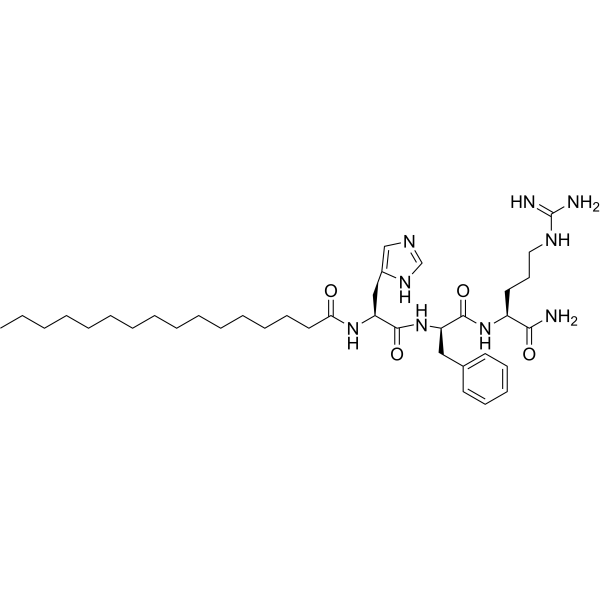
Cat. No.: HY-P5226
CAS No.: 936544-53-5
Palmitoyl tripeptide-8 is an immunomodulatory peptide and neurotransmitter inhibitory peptide. Palmitoyl tripeptide-8 inhibits the activation of the NF-κB pathway and the production of pro-inflammatory cytokines (IL-8, IL-6, and TNF-α). Palmitoyl tripeptide-8 activates the cutaneous opioid system and reduces CGRP release. Palmitoyl tripeptide-8 decreases the number of dilated capillaries, the size of dilated vessels, and the degree of edema in skin explants treated with Substance P (HY-P0201). Palmitoyl tripeptide-8 is used as an active ingredient in cosmetics for sensitive skin. Palmitoyl tripeptide-8 is utilized in research related to sensitive skin .
loading...
    loading...
Cat. No.: HY-162424
CAS No.: 3057611-79-4
Research Areas:  

Cancer

ZBP1/RIP3/MLKL activator 1 (compound 3a) is a synthetically derived quinoline compound. ZBP1/RIP3/MLKL Activator 1 induces DNA damage, enhances intracellular levels of reactive oxygen species (ROS), and triggers apoptosis via the caspase pathway. Furthermore, when apoptosis is inhibited, ZBP1/RIP3/MLKL Activator 1 promotes necroptotic cell death through the ZBP1-RIP3-MLKL pathway. ZBP1/RIP3/MLKL Activator 1 is utilized in oncological research, particularly in the selective targeting of cells with impaired apoptotic function .
loading...
    loading...
Cat. No.: HY-179338
Research Areas:  

Cancer

HPK1-IN-65 is a selective and orally active HPK1 inhibitor with an IC50 value of < 5 nM. HPK1-IN-65 inhibits HPK1 kinase activity and displays 1257-fold selectivity over the MAP4K kinase family member GLK. HPK1-IN-65 exhibits an IC50 of 92.3 nM for inhibiting pSLP76 phosphorylation. HPK1-IN-65 demonstrates an EC50 of 398 nM for stimulating IL-2 production. HPK1-IN-65 inhibits TCR-induced phosphorylation of SLP76 at Ser376 in a dose-dependent manner. HPK1-IN-65 can be further utilized for colorectal cancer research .
loading...
    loading...
Cat. No.: HY-183594
CAS No.: 3037373-65-9
Research Areas:  

Others

Exatecan-(D-2,4-DHB)-NH2-AA (bPEG8)-Mal is a linker-payload conjugate. Exatecan-(D-2,4-DHB)-NH2-AA (bPEG8)-Mal contains the linker D-2,4-DHB-NH2-AA(bPEG8)-Mal (HY-183595) and the cytotoxic agent Exatecan (HY-13631), a potent DNA topoisomerase I inhibitor. Exatecan-(D-2,4-DHB)-NH2-AA (bPEG8)-Mal can be utilized for the development of antibody-drug conjugates (ADCs) .
loading...
    loading...
Cat. No.: HY-D0027R
CAS No.: 26093-31-2
Synonyms: Coumarin 120 (Standard); AMC (Standard)
7-Amino-4-methylcoumarin (Standard) is the analytical standard of 7-Amino-4-methylcoumarin. This product is intended for research and analytical applications. 7-Amino-4-methylcoumarin belongs to the coumarin class, can be isolated from the endophytic fungus Xylaria sp. and has a broad spectrum of antibacterial activity. 7-Amino-4-methylcoumarin is also commonly used as an important laser dye that emits in the blue region, capable of analyzing glycoprotein monosaccharides and N-linked oligosaccharides, and is also utilized in tissue pathology analysis, enzyme activity measurement, and copper ion detection. The excitation wavelength and emission wavelength are 351 nm and 430 nm, respectively. [4]
loading...
    loading...
Cat. No.: HY-Y1091
CAS No.: 923-27-3
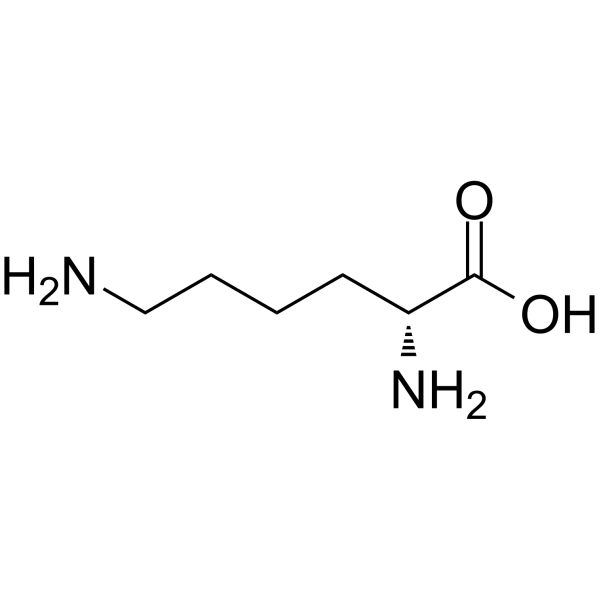
D-Lysine is the D-enantiomer of L-Lysine (HY-N0469). D-Lysine is metabolically inert and not utilized for protein synthesis by mammalian ribosomes. D-Lysine blocks renal uptake of 111In/ 90Y-Octreotide (HY-P0036)-based probes without inhibiting uptake by tumor/receptor tissues, and thus acts as a renoprotective agent in diagnostic imaging and peptide receptor radionuclide therapy (PRRT). D-Lysine specifically inhibits the early steps of non-enzymatic glycation by competing with glucose via its free amino group, theoretically, it can serve as a glycation competitor that "does not interfere with protein synthesis" under chronic hyperglycemia in diabetes. D-Lysine can be used in research related to cancer and diabetes .
loading...
    loading...
Cat. No.: HY-Y1804
CAS No.: 7274-88-6
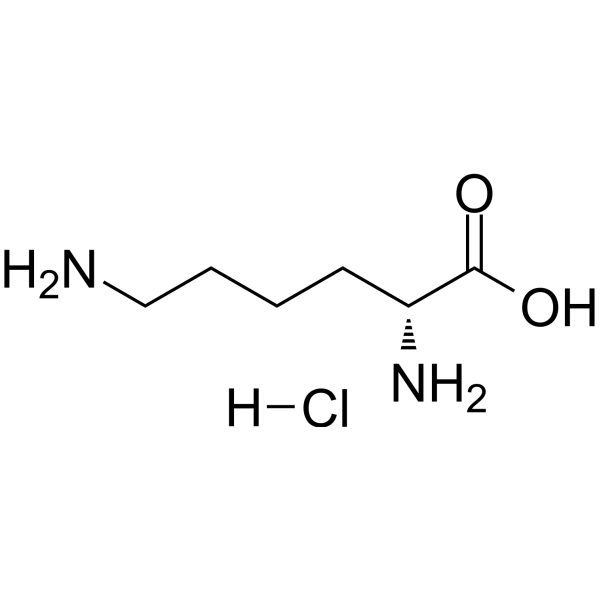
D-Lysine monohydrochloride is the D-enantiomer of L-Lysine (HY-N0469). D-Lysine monohydrochloride is metabolically inert and not utilized for protein synthesis by mammalian ribosomes. D-Lysine monohydrochloride blocks renal uptake of 111In/ 90Y-Octreotide (HY-P0036)-based probes without inhibiting uptake by tumor/receptor tissues, and thus acts as a renoprotective agent in diagnostic imaging and peptide receptor radionuclide therapy (PRRT). D-Lysine monohydrochloride specifically inhibits the early steps of non-enzymatic glycation by competing with glucose via its free amino group, theoretically, it can serve as a glycation competitor that "does not interfere with protein synthesis" under chronic hyperglycemia in diabetes. D-Lysine monohydrochloride can be used in research related to cancer and diabetes .
loading...
    loading...

