
676 Results for "

utilization

" in MedChemExpress (MCE) Product Catalog:
Products (676)

676 Results for "utilization" in MCE Product Catalog:

Cat. No.: HY-L198
140 compounds

Unlike the 20 natural amino acids commonly found within living organisms, non-natural amino acids are synthesized through chemical or biosynthetic methods, thereby being endowed with unique chemical properties or biological activities. In drug development, these amino acids can be utilized to design novel pharmaceutical molecules that may exhibit superior pharmacological characteristics, such as increased selectivity, improved pharmacokinetic profiles, or reduced toxicity. In biomedical research, uon-natural amino acids can act as biological markers or probes for investigating biological processes like cell signaling, protein conformation, and protein-protein interactions. In addition, non-natural amino acids can also be used in the field of agriculture to develop new pesticides, plant growth regulators and so on.

Cat. No.: HY-K0360

MCE Mouse CD4+ CD25+ Regulatory T Cell Positive Selection Kit is designed for the isolation of CD4+ CD25+ regulatory T cells (Tregs) from mouse splenic single-cell suspensions. The kit utilizes a two-step isolation strategy. First, CD4 Enrichment Beads are used to deplete non-target cells and enrich CD4+ T cells. Subsequently, CD25 Capture Antibody specifically binds to CD25+ cells, which are then captured by Releasable Magnetic Beads. Following isolation, the magnetic beads are gently detached from the cell surface using Magnetic Beads Release Buffer, yielding label-free CD4+ CD25+ regulatory T cells with no residual magnetic beads.

loading...
    loading...
Cat. No.: HY-103249
CAS No.: 303957-69-9
Purity:  98.08%
Synonyms: Reutericycline
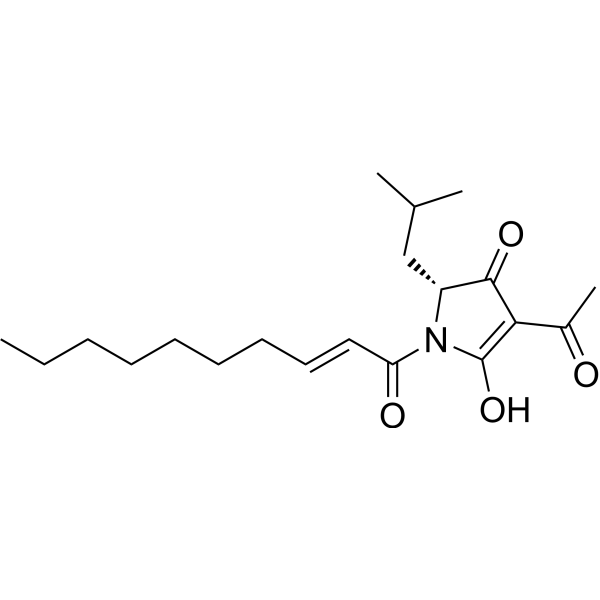
Reutericyclin (Reutericycline) is an orally active antibacterial and anti-obesity agent that selectively inhibits Gram-positive bacteria. By selectively dissipating transmembrane potential, Reutericyclin exerts non-lytic bactericidal or bacteriostatic activity against pathogens such as Clostridium difficile and Staphylococcus aureus, and rapidly kills vegetative cells and spores of Clostridium difficile. Reutericyclin possesses favorable properties including resistance to enzymatic hydrolysis, iron-chelating function, and poor absorption by colonic epithelium. Reutericyclin not only eradicates staphylococcal biofilms and inhibits drug-resistant strains, but also counteracts Risperidone (HY-11018)-induced weight gain by inducing changes in gut microbiota composition and restoring energy utilization efficiency. Reutericyclin can be used in research related to Clostridium difficile infection, Risperidone-induced weight gain, and staphylococcal superficial skin infections .
loading...
    loading...
Cat. No.: HY-126720
CAS No.: 807370-75-8
Purity:  ≥99.0%
Target:  

Endogenous Metabolite

Research Areas:  

Metabolic Disease

N-Lignoceroyl Taurine is an arachidonoyl amino acid and taurine conjugate with a fatty acid that can be isolated from bovine brain. N-Lignoceroyl Taurine is one of several novel taurine-conjugated fatty acids discovered during mass spectrometry lipidomic analysis of the brain and spinal cord of wild-type and fatty acid amide hydrolase (FAAH) knockout mice. N-Lignoceroyl Taurine levels were 23-26-fold higher in FAAH -/- mice compared to wild-type mice, suggesting that FAAH utilizes N-Lignoceroyl Taurine as a substrate. However, in vitro experiments with purified FAAH showed that N-Lignoceroyl Taurine was hydrolyzed 2,000-fold slower in FAAH compared to oleoylethanolamide. N-Acyl Taurines with polyunsaturated acyl chains can activate members of the transient receptor potential (TRP) calcium channel family, including TRPV1 and TRPV4.
loading...
    loading...
Cat. No.: HY-150175
CAS No.: 1786411-17-3
Target:  

Fluorescent Dye

Research Areas:  

Inflammation/Immunology

HKSOX-1 and its derivatives (HKSOX-1r and HKSOX-1m) are novel fluorescent probes designed for highly sensitive and selective detection of the superoxide anion radical (O2 •−) in cellular environments. These probes utilize an aryl trifluoromethanesulfonate group that undergoes O2 •−-mediated cleavage, releasing a free phenol and emitting fluorescence. They demonstrate excellent specificity and sensitivity across various pH ranges, withstand interference from strong oxidants and reductants typical in cellular contexts. HKSOX-1r, optimized for cellular retention, has been effectively employed in diverse assays including confocal imaging, flow cytometry, and zebrafish embryo studies, highlighting its utility in investigating O2 •− roles in inflammation, mitochondrial stress, and other physiological processes .
loading...
    loading...
Cat. No.: HY-161577
CAS No.: 701231-39-2
Target:  

Bcl-2 Family

Research Areas:  

Cancer

BFC1103 is a small-molecule compound whose primary mechanism of action involves interaction with a specific domain of Bcl-2, particularly its loop domain. This interaction induces a conformational change in Bcl-2, exposing its BH3 (Bcl-2 homology 3) domain, thereby switching Bcl-2's function from anti-apoptotic to pro-apoptotic. The cell death induced by BFC1103 is dependent on the presence of Bax or Bak, both of which are key proteins involved in the intrinsic apoptotic pathway mediated by mitochondria. BFC1103 has successfully inhibited lung metastasis of triple-negative breast cancer in mouse models. It can be utilized in studying the roles of Bcl-2 family proteins in cancer development and how they impact the survival and proliferation of cancer cells .
loading...
    loading...
Cat. No.: HY-D0027S1
Synonyms: Coumarin 120-d4; AMC-d4
7-Amino-4-methylcoumarin-d4 (Coumarin 120-d4) is the deuterium labeled 7-Amino-4-methylcoumarin (HY-D0027). 7-Amino-4-methylcoumarin belongs to the coumarin class, can be isolated from the endophytic fungus Xylaria sp. and has a broad spectrum of antibacterial activity. 7-Amino-4-methylcoumarin is also commonly used as an important laser dye that emits in the blue region, capable of analyzing glycoprotein monosaccharides and N-linked oligosaccharides, and is also utilized in tissue pathology analysis, enzyme activity measurement, and copper ion detection. The excitation wavelength and emission wavelength are 351 nm and 430 nm, respectively .
loading...
    loading...
Cat. No.: HY-D3112
Target:  

Fluorescent Dye

Research Areas:  

Neurological Disease

P2-Aggregate is a polarity-sensitive fluorescent probe for protein aggregation, which is based on the Nile Red scaffold and modified with a morpholine ring to enhance water solubility. P2-Aggregate improves anti-precipitation ability in aqueous phase via morpholine ring modification, and enables site-specific labeling of target proteins by combining with HaloTag technology. Utilizing the property that its emission wavelength blue-shifts with decreasing local polarity (excited at 543 nm), P2-Aggregate quantitatively detects changes in local polarity during protein aggregation and polarity heterogeneity inside aggregates in living cells. P2-Aggregate can be used in the research of diseases associated with the aggregation of Htt-110Q and SOD1 proteins, such as Huntington's disease and amyotrophic lateral sclerosis .
loading...
    loading...
Cat. No.: HY-N15841
CAS No.: 67492-18-6
Category:  

Animals Lipids

Target:  

Ceramidase

C25 Ceramide (d18:1/25:0) is an endogenous ultra-long-chain ceramide that antagonizes the detrimental effects of long-chain ceramides on insulin sensitivity. C25 Ceramide (d18:1/25:0) is specifically enriched in oxidative skeletal muscle fibers, where it serves dual roles in providing structural support to cell membranes and regulating cellular signaling. By participating in the regulation of lipid homeostasis within muscle fibers, C25 Ceramide (d18:1/25:0) helps maintain normal insulin signaling. C25 Ceramide (d18:1/25:0) is primarily utilized in research concerning metabolic diseases—particularly in mechanistic studies investigating the muscle fiber type-specific aspects of insulin resistance .
loading...
    loading...
Cat. No.: HY-P10667
Target:  

Integrin

Research Areas:  

Cancer

Ac-MRGDH-NH2 is a pentapeptide containing the RGD sequence. Ac-MRGDH-NH2 can be used to synthesize the diastereoisomeric prodrugs Λ- and Δ-[Ru(Ph2phen)2(κS,κN-(Ac-MRGDH-NH2))]Cl2. In these prodrugs, Ac-MRGDH-NH2 serves as a photolabile protecting group for the cytotoxic bis-aqua ruthenium warhead [Ru(Ph2phen)2(OH2)2]2+, and Ac-MRGDH-NH2 possesses integrin targeting ability and photosubstitution properties. Therefore, Ac-MRGDH-NH2 can be utilized in research on tumor-targeted photodynamic activation chemotherapy (PACT) .
loading...
    loading...
Cat. No.: HY-P11261
Target:  

PSMA

Research Areas:  

Cancer

AAZTA-NI-PSMA-093 is a bispecific agent targeting prostate-specific membrane antigen (PSMA) with an IC50 value for PSMA of 87.48 nM. AAZTA-NI-PSMA-093 has a PSMA targeting module and an oxygen-sensitivity module (hypoxia-sensitive NI-moiety). AAZTA-NI-PSMA-093 can utilize the PSMA targeting property as a "navigation system" to efficiently concentrate the entire molecule within prostate cancer cells, and once the cells are in an oxygen-deficient state, the molecule will irreversibly capture and remain in the oxygen-deficient cells, achieving "secondary enrichment". AAZTA-NI-PSMA-093 can be labeled with ⁶⁸Ga and ¹⁷⁷Lu, and has high accumulation and rapid clearance characteristics in mouse models. AAZTA-NI-PSMA-093 can be used for the study of prostate cancer .
loading...
    loading...
Cat. No.: HY-P4863
CAS No.: 1678415-18-3
Target:  

CGRP Receptor

Biotinyl-Amylin (human) is a biotin-labeled derivative of Amylin, amide, human (HY-P1070). Biotinyl-Amylin (human) acts as a competitive agonist for the Calcitonin Receptor (CTR) and for the Amylin receptors (AMY1, AMY2, and AMY3) formed by the association of CTR with RAMP1/2/3. By mimicking endogenous human amylin, Biotinyl-Amylin (human) binds to and activates CTR and AMY receptors, thereby initiating downstream signaling pathways involving cAMP, CREB, and ERK1/2, while retaining high-affinity receptor binding and activation capabilities. Biotinyl-Amylin (human) is primarily utilized in studies investigating the metabolic regulatory mechanisms underlying obesity and diabetes; it is also applicable to pharmacological research, receptor localization studies, and ligand-binding assays related to Amylin receptors in the context of Alzheimer's disease .
loading...
    loading...
Cat. No.: HY-W010918R
CAS No.: 58-64-0
Synonyms: Adenosine diphosphate (Standard); ADP (Standard)
Adenosine 5'-diphosphate (Standard) is the analytical standard of Adenosine 5'-diphosphate. This product is intended for research and analytical applications. Adenosine 5'-diphosphate (Adenosine diphosphate) is a nucleoside diphosphate. Adenosine 5'-diphosphate is the product of ATP dephosphorylation by ATPases. Adenosine 5'-diphosphate induces human platelet aggregation and inhibits stimulated adenylate cyclase by an action at P2T-purinoceptors. In Vitro: Adenosine 5'-diphosphate consists of the pyrophosphate group, the pentose sugar ribose, and the nucleobase adenine. Adenosine 5'-diphosphate is the product of ATP dephosphorylation by ATPases. ADP is converted back to ATP by ATP synthases. ATP is an important energy transfer molecule in cells. Adenosine 5'-diphosphate is utilized in a wide number of cellular processes, including respiration, biosynthetic reactions, motility, and cell division.
loading...
    loading...
Cat. No.: HY-W1113135
CAS No.: 2828447-14-7
Research Areas:  

Others

Carboxymethyl-β-cyclodextrin sodium salt is a negatively charged β-cyclodextrin derivative, as well as a metal ion chelator and solubilizing reagent. Carboxymethyl-β-cyclodextrin sodium salt forms stable aqueous complexes with Ba 2+, Ca 2+, Cd 2+, Ni 2+, Pb 2+, Sr 2+, and Zn 2+ ions. Carboxymethyl-β-cyclodextrin sodium salt derived hydrogel carriers support oral insulin delivery via paracellular permeation across Caco-2 monolayers and produce sustained hypoglycemic effects in diabetic mice. Carboxymethyl-β-cyclodextrin sodium salt can be conjugated onto folate-modified BSA nanoparticles to boost folate receptor-mediated endocytosis, elevate intracellular anticancer drug uptake and trigger cell apoptosis. Carboxymethyl-β-cyclodextrin sodium salt can be utilized for chiral separation in capillary electrophoresis, development of nanoscale drug carriers and nucleic acid transfection research .
loading...
    loading...
Cat. No.: HY-181607
Target:  

YAP

Research Areas:  

Others

TEAD ligand-Linker Conjugate 3 (the blue structure + black structure of A536 in the literature) is a conjugate of a TEAD1-targeting ligand and a linker. TEAD ligand-Linker Conjugate 3 can be coupled with an IAP ligand (HY-181531) to form an IAP-recruiting bifunctional protein degrader (IPD) (HY-181594), also known as a SNIPER degrader. This TEAD SNIPER simultaneously binds to the TEAD1 palmitoylation pocket and the BIR3 domain of cIAP1 to form a ternary complex, efficiently inducing the ubiquitination and degradation of both TEAD1 and cIAP1 (DC50=110 nM, Dmax=51%; IC50=122 nM for cIAP1). TEAD ligand-Linker Conjugate 3 and its synthesized SENIPER molecule can be utilized in research on Hippo pathway dysregulation-related diseases, such as NF2-mutant tumors .
loading...
    loading...
Cat. No.: HY-181888
Target:  

HIV HIV Protease

Research Areas:  

Infection

GRL-142 is a potent HIV-1 protease inhibitor capable of crossing the blood-brain barrier. GRL-142 exhibits extremely high inhibitory activity against both wild-type and multidrug-resistant strains (IC50=0.0094 nM). GRL-142 acts synergistically with the P2/P2' segments via a unique scaffold binding mechanism, utilizes fluorine-mediated stable interactions to maintain its bioactive conformation, adapts to p51 HIV-1 protease mutants, and maintains the flap-closed state by directly acting on the flap tip residues. GRL-142 disrupts the flap-water hydrogen bond network of wild-type protease, thereby effectively blocking viral replication. GRL-142 can be used to study HIV-1 infection and the associated neurocognitive disorder (HAND) .
loading...
    loading...
Cat. No.: HY-W035399S
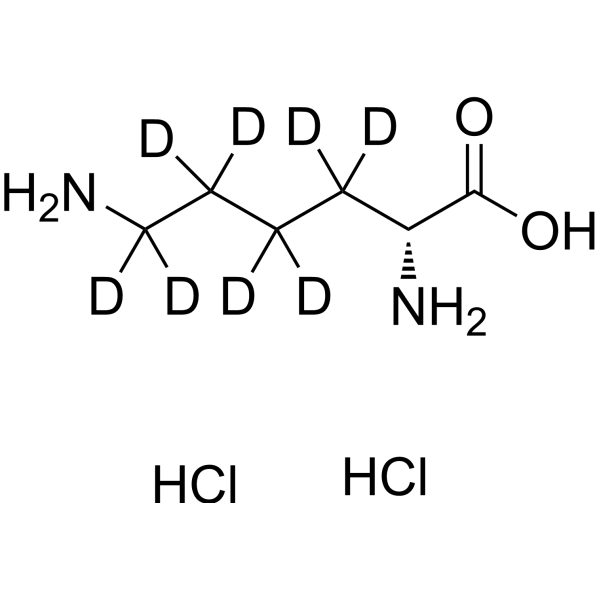
D-Lysine-d8 dihydrochloride is the d8-labeled D-Lysine (HY-Y1091). D-Lysine is the D-enantiomer of L-Lysine (HY-N0469). D-Lysine is metabolically inert and not utilized for protein synthesis by mammalian ribosomes. D-Lysine blocks renal uptake of 111In/ 90Y-Octreotide (HY-P0036)-based probes without inhibiting uptake by tumor/receptor tissues, and thus acts as a renoprotective agent in diagnostic imaging and peptide receptor radionuclide therapy (PRRT). D-Lysine specifically inhibits the early steps of non-enzymatic glycation by competing with glucose via its free amino group, theoretically, it can serve as a glycation competitor that "does not interfere with protein synthesis" under chronic hyperglycemia in diabetes. D-Lysine can be used in research related to cancer and diabetes .
loading...
    loading...
Cat. No.: HY-W035399S1
CAS No.: 2708340-91-2
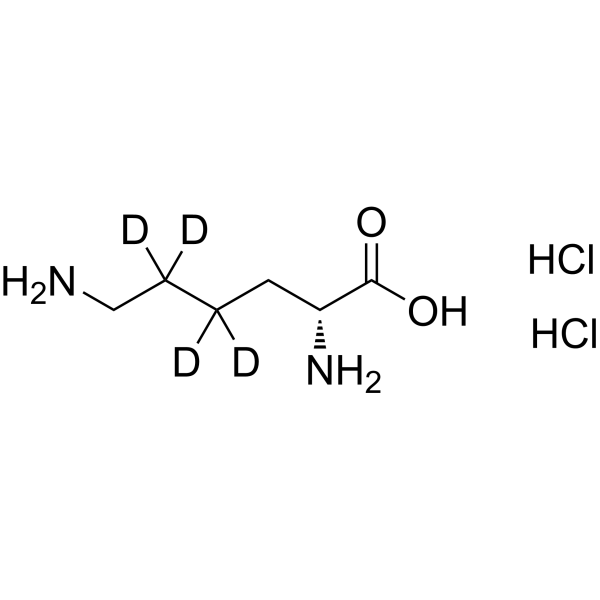
D-Lysine-d4 dihydrochloride is the d4-labeled D-Lysine (HY-Y1091). D-Lysine is the D-enantiomer of L-Lysine (HY-N0469). D-Lysine is metabolically inert and not utilized for protein synthesis by mammalian ribosomes. D-Lysine blocks renal uptake of 111In/ 90Y-Octreotide (HY-P0036)-based probes without inhibiting uptake by tumor/receptor tissues, and thus acts as a renoprotective agent in diagnostic imaging and peptide receptor radionuclide therapy (PRRT). D-Lysine specifically inhibits the early steps of non-enzymatic glycation by competing with glucose via its free amino group, theoretically, it can serve as a glycation competitor that "does not interfere with protein synthesis" under chronic hyperglycemia in diabetes. D-Lysine can be used in research related to cancer and diabetes .
loading...
    loading...
Cat. No.: HY-W1113135A
CAS No.: 2828447-14-7
Research Areas:  

Others

Carboxymethyl-β-cyclodextrin sodium salt, for capillary electrophoresis is a negatively charged β-cyclodextrin derivative, as well as a metal ion chelator and solubilizing reagent. Carboxymethyl-β-cyclodextrin sodium salt, for capillary electrophoresis forms stable aqueous complexes with Ba 2+, Ca 2+, Cd 2+, Ni 2+, Pb 2+, Sr 2+, and Zn 2+ ions. Carboxymethyl-β-cyclodextrin sodium salt derived hydrogel carriers support oral insulin delivery via paracellular permeation across Caco-2 monolayers and produce sustained hypoglycemic effects in diabetic mice. Carboxymethyl-β-cyclodextrin sodium salt can be conjugated onto folate-modified BSA nanoparticles to boost folate receptor-mediated endocytosis, elevate intracellular anticancer drug uptake and trigger cell apoptosis. Carboxymethyl-β-cyclodextrin sodium salt can be utilized for chiral separation in capillary electrophoresis, development of nanoscale drug carriers and nucleic acid transfection research .
loading...
    loading...
Cat. No.: HY-Y1804S
CAS No.: 2714413-18-8
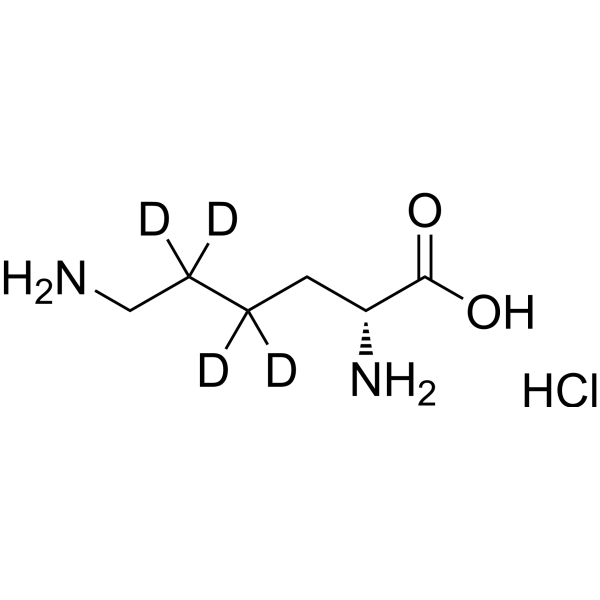
D-Lysine-d4 monohydrochloride is the d4 D-Lysine monohydrochloride (HY-Y1804). D-Lysine monohydrochloride is the D-enantiomer of L-Lysine (HY-N0469). D-Lysine monohydrochloride is metabolically inert and not utilized for protein synthesis by mammalian ribosomes. D-Lysine monohydrochloride blocks renal uptake of 111In/ 90Y-Octreotide (HY-P0036)-based probes without inhibiting uptake by tumor/receptor tissues, and thus acts as a renoprotective agent in diagnostic imaging and peptide receptor radionuclide therapy (PRRT). D-Lysine monohydrochloride specifically inhibits the early steps of non-enzymatic glycation by competing with glucose via its free amino group, theoretically, it can serve as a glycation competitor that "does not interfere with protein synthesis" under chronic hyperglycemia in diabetes. D-Lysine monohydrochloride can be used in research related to cancer and diabetes .
loading...
    loading...

