796 Results for "

stabilizing

" in MedChemExpress (MCE) Product Catalog:
Products (796)

796 Results for "stabilizing" in MCE Product Catalog:

Art. -Nr.: HY-W012908S1
CAS. Nr.: 282729-06-0
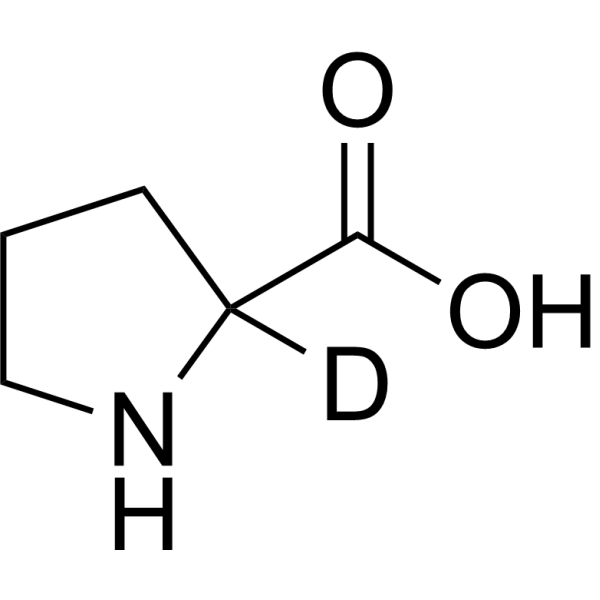
DL-Proline-2-d1 is the deuterated-labeled DL-Proline (HY-W012908). DL-Proline is a racemic mixture of D-Proline and L-Proline, belonging to cyclic imino acids with a five-membered ring structure. DL-Proline serves as a key structural unit in peptide synthesis. DL-Proline stabilizes β-turn conformations and affects the secondary structure of peptide segments. DL-Proline exhibits biological activities such as regulating peptide segment conformations and enhancing cyclic peptide stability. DL-Proline can be used in research on diseases related to peptide structure and function, including cancer and bacterial infections .
loading...
    loading...
Art. -Nr.: HY-W087905
CAS. Nr.: 1889-67-4
Forschungsgebiete:  

Others

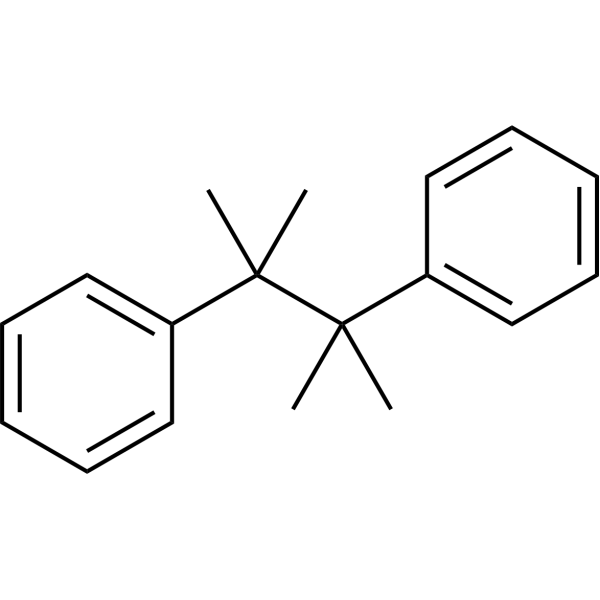
2,3-Dimethyl-2,3-diphenylbutane is a minor product formed during the thermal decomposition of dicumyl peroxide (DCP) in cumene, generated through radical coupling reactions. As an initiator capable of producing free radicals, 2,3-dimethyl-2,3-diphenylbutane promotes cross-linking or decomposition processes via initiating free radical reactions in fields such as polymer polymerization (e.g., modification of polyphenylene oxide processing), organic synthesis (e.g., DCP decomposition reactions), and coal processing (e.g., oxidation stabilization of coal tar pitch), thereby enhancing material properties or reaction efficiency .
loading...
    loading...
Art. -Nr.: HY-W099581R
CAS. Nr.: 14933-09-6
Synonyms: SB3-14 (Standard); DMAPS (Standard)
Sulfobetaine-14 (Standard) is the analytical standard of Sulfobetaine-14. This product is intended for research and analytical applications. Zwittergent 3-14 (DMAPS) is a zwitterionic detergent commonly used in biochemistry and molecular biology for the solubilization and purification of membrane-bound proteins and other hydrophobic biomolecules, which have both hydrophilic and hydrophobic moieties , so that it has good detergency properties, making it suitable for stabilizing membrane proteins in aqueous solutions. In addition, DMAPS has been used in various techniques such as electrophoresis and chromatography for the separation and analysis of biomolecules. The long The hydrocarbon chains provide it with good membrane penetration and solubilization capabilities, while the sulfonate and quaternary ammonium groups ensure water solubility and charge neutrality.
loading...
    loading...
Art. -Nr.: HY-W111692
CAS. Nr.: 68915-31-1
Sodium polyphosphate, crystal,+200 mesh, 96% is an inorganic polyphosphate that also serves as a stabilizer, dispersant, chelating agent, and coacervate-forming agent. Sodium polyphosphate provides electrostatic stabilization for mineral and material suspensions, but its dispersing efficacy decreases under acidic pH, high temperature, high calcium concentration, or a combination of these conditions. Sodium polyphosphate can chelate alkaline earth metals, reduce solution pH, and alter the rate of pH decline at a divalent cation/phosphorus molar ratio of 0.18. Sodium polyphosphate forms coacervates with smaller divalent cations and precipitates with larger divalent cations, where the functional requirements of cations depend on polyphosphate concentration, average degree of polymerization, and cation type .
loading...
    loading...
Art. -Nr.: HY-W739372
CAS. Nr.: 25704-18-1
Forschungsgebiete:  

Others

Poly (sodium 4-styrenesulfonate) is an anionic cation-exchange polyelectrolyte and metal ion binding/retention agent. It selectively retains Cr III and Fe II under pH 1 conditions, and its retention effect on all tested metal ions is enhanced under higher pH conditions. Poly (sodium 4-styrenesulfonate) inhibits nanosheet aggregation through edge-face interactions between aromatic rings and the graphite surface, thereby stabilizing the dispersion of reduced graphene oxide nanosheets. When incorporated into the mixed Nafion coating of bismuth film electrodes, Poly (sodium 4-styrenesulfonate) improves the reproducibility, stability, sensitivity, and anti-fouling capability for trace metal detection .
loading...
    loading...
Art. -Nr.: HY-W742404
CAS. Nr.: 1794891-82-9
Synonyms: (±)-Bopindolol-d9
Bopindolol-d9 ((±)-Bopindolol-d9) is the deuterium labeled Bopindolol (HY-B1562). Bopindolol ((±)-Bopindolol) is an orally active antagonist of β-adrenoceptors (ARs) with partial agonist activity. Bopindolol is non-selective for β1- and β2-ARs and has low affinity for β3-AR subtype. Bopindolol has intrinsic sympathomimetic as well as membrane stabilizing actions, inhibits renin secretion, and interacts with 5-HT receptors. Bopindolol is a proagent of Pindolol (HY-B0982). Bopindolol can be used for essential and renovascular hypertension research.
loading...
    loading...
Art. -Nr.: HY-107830
CAS. Nr.: 1448-36-8
Reinheit:  99.81%
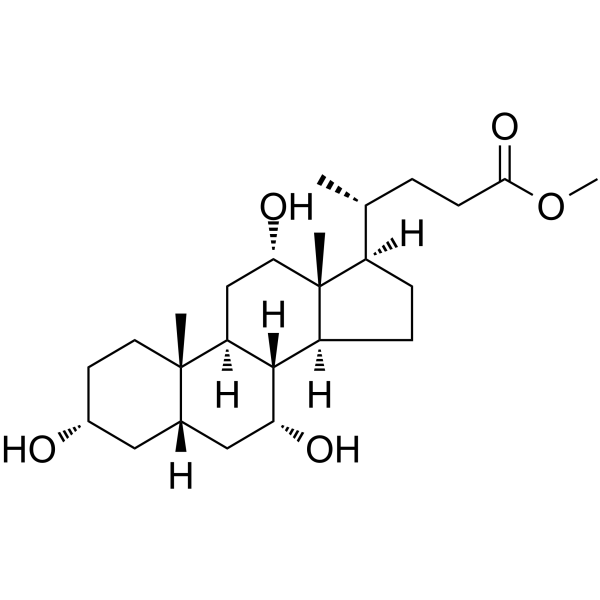
Methyl cholate is a bile acid analog and a specific inhibitor of TcdB toxin from Clostridioides difficile. Methyl cholate exerts a stronger selective inhibitory effect on TcdB than on TcdA. Methyl cholate induces conformational stabilization by binding to a unique site of TcdB, thereby blocking the binding of the toxin to host receptors and its self-processing process. Methyl cholate effectively protects human fibroblasts from TcdB-induced cytopathic effects. Methyl cholate exhibits dose-dependent anti-hepatic fibrosis activity in both cellular and zebrafish models, and significantly reduces the expression levels of α-SMA and COL-I. Methyl cholate is suitable for in-depth research in the fields of Clostridioides difficile infection and hepatic fibrosis .
loading...
    loading...
Art. -Nr.: HY-119590
CAS. Nr.: 31501-55-0
Synonyms: Lonchocarpine
Lonchocarpin (Lonchocarpine) is a Wnt/β-catenin signaling pathway inhibitor. The IC50 of Lonchocarpin in SW480 pBAR/Renilla cells is 4 μM. Acting downstream of β-catenin stabilization, Lonchocarpin inhibits β-catenin nuclear localization and TCF-mediated transcription, as well as the proliferation and migration of colorectal cancer cells. Lonchocarpin enhances Nrf2/ARE-mediated antioxidant responses in primary astrocytes via AMPK and JNK-related signaling, reduces H2O2-induced ROS production, and increases the expression of HO-1, NQO1 and MnSOD. Lonchocarpin can be used in research on colorectal cancer and oxidative stress .
loading...
    loading...
Art. -Nr.: HY-153278A
Synonyms: CDK7-IN-21 TFA
Q901 (CDK7-IN-21) TFA is a selective and potent CDK7 inhibitor with an IC50 of 10 nM. Q901 TFA disrupts MYC and E2Fstabilizes TOP1-DPCs and sensitizes tumor to TOP1 inhibitors by suppressing RNAPII transition from initiation to elongation. Q901 TFA can inhibit tumor growth and significantly enhances tumor growth inhibition combined with TOP1 inhibitors. Q901 TFA can be used for the research of cancer, such as colon cancer and lung cancer .
loading...
    loading...
Art. -Nr.: HY-158204
CAS. Nr.: 1019110-87-2
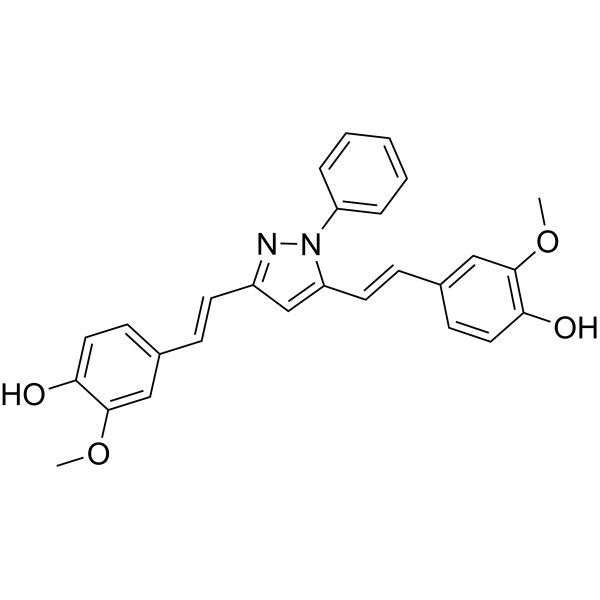
CNB-001 is a potent and orally active 5-lipoxygenase (5-LOX) inhibitor. CNB-001 can decreases 5-LOX expression and increase proteasome activity. CNB-001 can inhibit accumulation of soluble Amyloid-β and ubiquitinated aggregated proteins. CNB-001 can inhibit apoptosis, ROS production and stabilize mitochondrial membrane potential. CNB-001 can reduce insulin resistance and increase glucose uptake. CNB-001 also exhibits anti-ischemic, anti-inflammatory effects. CNB-001 can be used for the researches of inflammation, neurological and metabolic disease, such as Alzheimer's disease, stroke and diabetes .
loading...
    loading...
Art. -Nr.: HY-165503
CAS. Nr.: 1645286-58-3
Target:  

Wnt β-catenin

Forschungsgebiete:  

Cancer

AZ1366 is an orally active tankyrase inhibitor. AZ1366 stabilizes Axin2, reduces NuMA levels, disrupts the interaction between tankyrase and NuMA, induces G2/M phase arrest, inhibits the Wnt pathway, and downregulates the expression of β-catenin-dependent genes. AZ1366 inhibits tumor growth in colorectal cancer xenograft models. AZ1366 synergistically inhibits the proliferation of non-small cell lung cancer cells, improves tumor control and significantly prolongs survival in orthotopic non-small cell lung cancer mouse models. AZ1366 is applicable to research related to colorectal cancer and non-small cell lung cancer .
loading...
    loading...
Art. -Nr.: HY-175478
CAS. Nr.: 3105103-33-8
Forschungsgebiete:  

Inflammation/Immunology Cancer

Enpp-1-IN-27 is a selective ENPP1 inhibitor with an IC50 of 14.68 nM, exhibiting approximately 410-fold selectivity against ENPP2 and 10-fold selectivity against ENPP3. Enpp-1-IN-27 stabilizes cGAMP levels and activates the STING pathway, promoting cytokine release and enhancing innate immune responses. Enpp-1-IN-27 induces ISRE activation and amplified cGAMP-mediated immune responses and shows the desired antitumor efficacy in the 4T1 and CT26 syngeneic mouse models. Enpp-1-IN-27 can used for the studies of breast cancer and colon cancer .
loading...
    loading...
Art. -Nr.: HY-178441
PKM2-IN-11 is a PKM2 inhibitor (IC50 = 0.363 μM). PKM2-IN-11 has dual mechanisms involving pyruvate kinase M2 (PKM2) inhibition and microtubule stabilization. PKM2-IN-11 can decrease PKM2 protein levels in MCF-7 cells. PKM2-IN-11 can slightly reduce reactive oxygen species (ROS) levels and significantly increase early apoptotic cells. PKM2-IN-11 induces G2/M phase arrest. PKM2-IN-11 can be used for the study of breast cancer .
loading...
    loading...
Art. -Nr.: HY-179647
CAS. Nr.: 1795110-22-3
Forschungsgebiete:  

Metabolic Disease Endocrinology

ZG-2686 is a potent and selective HIF-2α agonist with an EC50 of 0.25 µM. ZG-2686 exhibits selectivity over PHD2. ZG-2686 binds to a specific internal cavity of HIF-2α, forming hydrogen bonds via structural water molecules, which stabilizes the HIF-2α/β heterodimer and enhances transcriptional activity. ZG-2686 synergizes with Vadadustat (HY-101277) to upregulate HIF-2α-dependent EPO gene expression both in vitro and in vivo. ZG-2686 can be used for the research of renal anemia .
loading...
    loading...
Art. -Nr.: HY-181654
CAS. Nr.: 3083216-69-4
Snail IN-1 is an orally active Snail inhibitor with a Ka of 0.36 μM.Snail IN-1 disrupts Snail-CBP interaction, accelerates Snail protein degradation, reduces Snail acetylation, increases Snail polyubiquitination, and selectively downregulates Snail protein without altering other EMT transcription factors.Snail IN-1 reduces atherosclerotic plaque burden, modulates inflammation and plaque stability factors, downregulates CCL5, CXCL10, MMP2, and MMP9, and upregulates α-smooth muscle actin.Snail IN-1 exerts anti-inflammatory and plaque-stabilizing properties.Snail IN-1 can be used for the research of atherosclerosis .
loading...
    loading...
Art. -Nr.: HY-18257
CAS. Nr.: 751-97-3
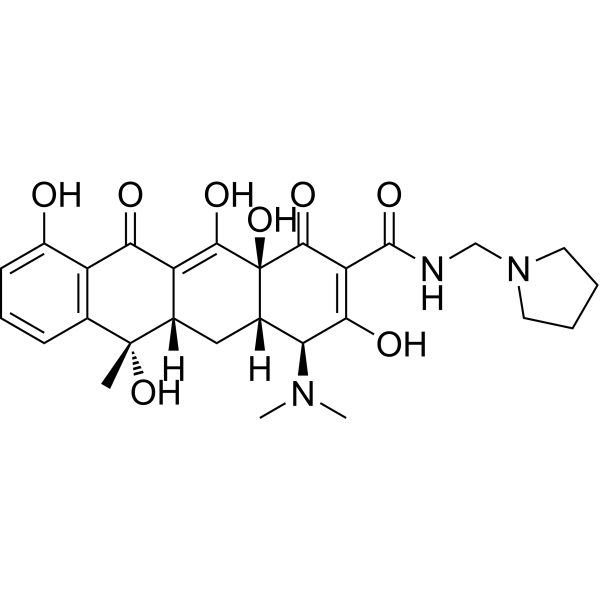
Rolitetracycline is a highly soluble, broad-spectrum antibiotic derived from tetracycline. Rolitetracycline binds to and stabilizes bovine serum albumin, and also inhibits HIV-1 integrase, blocks Aβ fibril formation and suppresses dengue virus proliferation. Rolitetracycline mediates the inhibition of Aβ fibrils via a specific three-dimensional pharmacophore conformation, and exerts bacteriostatic and bactericidal activities. Rolitetracycline acts synergistically with Penicillin G (HY-N7139) or Cephalothin (HY-B1275A) to alter the effects on microbial growth. Rolitetracycline serves as an important tool compound for the study of bacterial infections (urinary tract infections, sepsis), HIV-1 and dengue virus infections, as well as Alzheimer's disease .
loading...
    loading...
Art. -Nr.: HY-183363
Target:  

Deubiquitinase

Forschungsgebiete:  

Cancer

USP1-IN-17 is an orally active USP1/UAF1 complex inhibitor. USP1-IN-17 exhibits potent anti-proliferative activity against BRCA1-mutant human breast cancer MDA-MB-436 cells, with an IC50 value of 8.1 nM. USP1-IN-17 binds to USP1 to stabilize the enzyme conformation, impairs deubiquitination function, elevates the monoubiquitination level of PCNA, inhibits cancer cell proliferation, and induces DNA damage accumulation. USP1-IN-17 can be used for the research of BRCA1-mutated cancers .
loading...
    loading...
Art. -Nr.: HY-184604
Silver nanoclusters (AgNCs) are ultrasmall nanoparticles composed of several to tens of silver atoms. Their size is close to the Fermi wavelength of electrons, thus exhibiting unique molecular-like properties, such as strong fluorescence. Silver nanoclusters possess small size, low toxicity, excellent photostability, large Stokes shift, and good biocompatibility. Lipoic acid (also known as octylsulfonic acid) acts as a ligand in the synthesis of silver nanoclusters, primarily playing a role in stabilizing and protecting the silver nanoclusters. The ligand binds to silver atoms through its specific chemical structure, forming a stable nanocluster structure and influencing the physicochemical properties of the clusters, such as fluorescence performance, catalytic activity, and biocompatibility. This demonstrates potential application value in various fields such as chemical analysis, biosensing, catalysis, medicine, and bioimaging.
loading...
    loading...
Art. -Nr.: HY-189230
CAS. Nr.: 3108114-67-3
Target:  

Ligands for E3 Ligase

Forschungsgebiete:  

Infection

NEP48 is a small-molecule antagonist targeting the ZER1 (E3 ubiquitin ligase)-E7 oncogenic axis. NEP48 binds to the MHGD/N-degron binding pocket within the ARM repeat domain of ZER1, competitively blocking E7-ZER1 binding and ZER1-mediated substrate degradation. NEP48 disrupts the ZER1-E7 interaction, leading to Rb stabilization and silencing of E2F-driven transcriptional programs. NEP48 inhibits the proliferation of HPV-positive cancer cells and can be used for research on HPV-positive cervical cancer .
loading...
    loading...
Art. -Nr.: HY-A0236AR
CAS. Nr.: 33237-74-0
Aprindine hydrochloride (Standard) is the analytical reference standard of Aprindine hydrochloride (HY-A0236A). This product is used for research and analytical applications. Aprindine hydrochloride is an Ib-class anti-arrhythmic agent. Aprindine hydrochloride mainly exerts its effect by blocking sodium channels (INa), thereby reducing the excitability and conduction velocity of cardiac muscle cells. Aprindine hydrochloride significantly inhibits delayed potassium currents, which helps to prolong the atrial effective refractory period (AERP) and inhibit the occurrence of atrial fibrillation. Aprindine hydrochloride can also regulate intracellular calcium ion concentration by inhibiting Na +/Ca 2+ exchange current (INCX), thereby further stabilizing cardiac electrical activity. Aprindine hydrochloride can be used for the study of atrial fibrillation (AF) and ventricular arrhythmias.
loading...
    loading...

