777 Results for "

Dose-dependent

" in MedChemExpress (MCE) Product Catalog:
Products (777)

777 Results for "Dose-dependent" in MCE Product Catalog:

Cat. No.: HY-116062A
CAS No.: 129540-12-1
Research Areas:  

Neurological Disease

JNJ-7925476 is a triple reuptake inhibitor that selectively and potently inhibits the activity of the serotonin transporter (SERT), norepinephrine transporter (NET), and dopamine transporter (DAT). JNJ-7925476 is rapidly absorbed into the blood and its concentration in the brain is 7-fold higher than that in plasma. The occupancy ED(50) values of JNJ-7925476 for SERT, NET, and DAT in the rat brain are 0.18, 0.09, and 2.4 mg/kg, respectively. JNJ-7925476 rapidly induces a significant increase in the levels of extracellular serotonin, dopamine, and norepinephrine in the rat cerebral cortex in a dose-dependent manner. JNJ-7925476 exhibits potent antidepressant-like activity in the mouse tail suspension test. These results suggest that JNJ-7925476 has in vivo efficacy in biochemical and behavioral models of depression .
loading...
    loading...
Cat. No.: HY-138232
CAS No.: 141365-20-0
Synonyms: LTNAM
Target:  

Aminopeptidase

Research Areas:  

Neurological Disease

Lys-psi(CH2NH)-Trp(Nps)-OMe is a lysine-tryptophan (Nps) pseudodipeptide analog. It is obtained by replacing the peptide bond in the Lys-Trp(Nps) molecule with an aminomethylene bond and has analgesic activity. Lys-psi(CH2NH)-Trp(Nps)-OMe induces a dose-dependent and naloxone-reversible analgesia after intracerebroventricular administration in mice, and its analgesic effect lasts longer than that of the original compound. It protects methionine enkephalin from degradation in rat striatal slices and binds to low-dose opioid peptides to produce analgesia. Lys-psi(CH2NH)-Trp(Nps)-OMe effectively inhibits brain aminopeptidase activity both in vitro and in vivo. The enhanced resistance of this pseudodipeptide to proteolysis may explain its prolonged analgesic activity.
loading...
    loading...
Cat. No.: HY-144668
CAS No.: 3035088-22-0
Research Areas:  

Infection

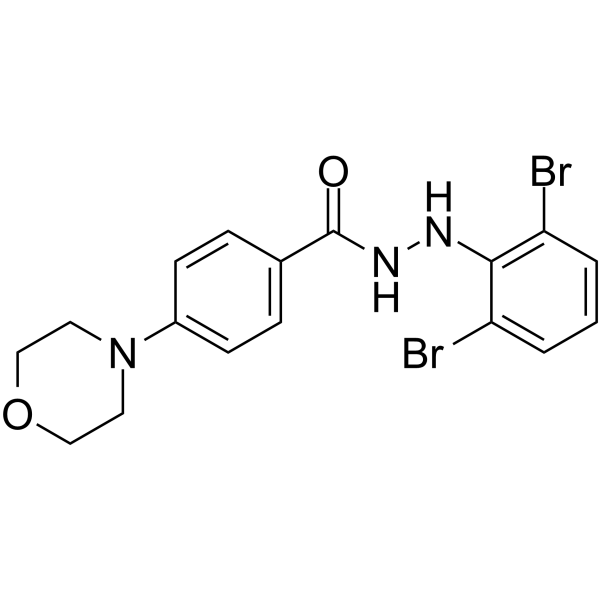
RdRP-IN-4 (compound 11q), an aryl benzoyl hydrazide analog, is an orally active influenza A virus RNA-dependent RNA polymerase (RdRp) inhibitor by interacting with the PB1 subunit. RdRP-IN-4 exhibits potent inhibitory activity against the avian H5N1 flu strain with an EC50 of 18 nM in MDCK cells. RdRP-IN-4 displays excellent potency against the the H1N1 (A/PR/8/34) Flu A strain and Flu B strain (B/Lee/1940) with EC50 values of 53 nM and 20 nM, respectively. RdRP-IN-4 significantly inhibits the expression level of viral nucleoprotein (NP) in a dose-dependent manner. RdRP-IN-4 exhibits significant antiviral activity in infected mice .
loading...
    loading...
Cat. No.: HY-155297
CAS No.: 55248-23-2
Synonyms: FLA-136
Target:  

Histamine Receptor

Research Areas:  

Cardiovascular Disease

Nebidrazine is a centrally-acting hypotensive agent compared to clonidine, demonstrating weaker cardiovascular effects in rats. It induces dose-dependent hypotension and bradycardia when administered intracerebroventricularly (i.c.v.), with significantly lower sedative potential than clonidine in conscious rats. Yohimbine attenuates the cardiovascular effects of both Nebidrazine and clonidine, suggesting involvement of central alpha-autoreceptors sensitive to yohimbine. Unlike clonidine, Nebidrazine does not affect peripheral alpha-adrenoceptors in pithed rats, indicating a selective central mechanism. Chemical sympathectomy reduces Nebidrazine's cardiovascular effects more than clonidine's, and metiamide diminishes responses to both drugs, implicating central histamine receptors. These findings highlight Nebidrazine's distinct pharmacological profile and potential therapeutic application in managing hypertension through central alpha-autoreceptor stimulation .
loading...
    loading...
Cat. No.: HY-16342
CAS No.: 827034-92-4
NA808 is an Serine Palmitoyltransferase (SPT) inhibitor. NA808 reduces sphingomyelin synthesis, inhibits its activation in hepatic stellate cells, and decreases the expression of α-SMA protein and mRNA, as well as collagen 1A1 mRNA (IC50 0.16, 0.12, and 0.11 μM, respectively). NA808 inhibits HCV replication and reduces NS3 and RdRp protein expression in HCV replicon cells without significant cytotoxicity and exhibits almost no immunosuppressive effect at effective concentrations. NA808 demonstrates broad-spectrum antiviral activity in humanized chimeric liver mice infected with various HCV genotypes, and dose-dependently reduces serum and hepatic HCV RNA levels. NA808 can be used for research on non-alcoholic steatohepatitis and hepatitis C virus infection .
loading...
    loading...
Cat. No.: HY-175204
Research Areas:  

Cancer

SHP2 protein degrader-3 is a SHP2 AUTAC degrader. SHP2 protein degrader-3 shows dose-dependent SHP2 degradation ability (DC50 = 3.22 μM) and anti-tumor activity (IC50 = 5.59 μM) in HeLa cells. SHP2 protein degrader-3 induces degradation through the LC3-mediated autophagy pathway, which can be inhibited by lysosome inhibitors. SHP2 protein degrader-3 induces apoptosis in various cancer cells (HeLa cells, HepG2 cells, LoVo cells, Huh-7 cells) (SHP2 Ligand : (HY-100388); LC3 Ligand: (HY-10542); Linker : (HY-128834)) .
loading...
    loading...
Cat. No.: HY-175207
CAS No.: 3109469-27-1
Target:  

Glycosidase

Research Areas:  

Cancer

CHI3L1-IN-3 is a CHI3L1 inhibitor. CHI3L1-IN-3 binds to CHI3L1 with Kds of 13.76 μM and 13.5 μM in MST and SPR assays, respectively. CHI3L1-IN-3 demonstrates extended plasma half-lives and microsomal stability, along with reduced intrinsic clearance. CHI3L1-IN-3 induces dose-dependent cytotoxicity, reduces spheroid mass and inhibits migration in a 3D multicellular glioblastoma (GBM) spheroid model. CHI3L1-IN-3 can be used for the study of GBM .
loading...
    loading...
Cat. No.: HY-181722
Research Areas:  

Neurological Disease

σ1R/H3R ligand-1 is a dual σ1R/H3R antagonist with a σ1R Ki of 8.8 nM and an H3R Ki of 31.2 nM. Through the dual action of simultaneously antagonizing σ1R and H3R, σ1R/H3R ligand-1 exhibits potent dose-dependent analgesic activity in mouse models of visceral pain and neuropathic pain. σ1R/H3R ligand-1 can be used for the research of visceral pain and neuropathic pain .
loading...
    loading...
Cat. No.: HY-181889
Target:  

Ras

Research Areas:  

Cancer

KRAS G12C-IN-75 is an orally active, blood-brain barrier penetrant KRAS G12C inhibitor with an IC50 of 0.53 nM. KRAS G12C-IN-75 attenuates active transport mediated by P-glycoprotein (P-gp) and breast cancer resistance protein (BCRP). KRAS G12C-IN-75 inhibits tumor growth, regulates the expression of downstream MAPK target genes DUSP6 and SPRY4, and exhibits dose-dependent KRAS G12C alkylation in KRAS G12C-positive xenograft models. KRAS G12C-IN-75 can be used for research related to non-small cell lung cancer .
loading...
    loading...
Cat. No.: HY-182503
CAS No.: 144928-48-3
Target:  

Adenosine Kinase

Research Areas:  

Others Inflammation/Immunology

GP515 is a potent and selective adenosine kinase inhibitor with a human IC50 of 4 nM. GP515 exerts tissue protective effects, produces long-lasting hepatic microcirculation effects after hemorrhagic shock, and induces dose- and time-related VEGF mRNA and protein expression in normoxic rat myocardial myoblasts, with additive VEGF increases during mild hypoxia and no effect during severe hypoxia. GP515 suppresses IFNγ synthesis and CD69 expression in DSS-induced colitis. GP515 also shows a dose-dependent suppression of TNF-α production with an IC50 of 80 μM and can be reversed in the presence of the cAMP antagonist (Rp)-cAMPS. Combinations of GP515 with either adenosine or rolipram led to an additive inhibition of TNF-α synthesis. GP515 can be used for the research of hemorrhagic shock .
loading...
    loading...
Cat. No.: HY-19471
CAS No.: 1010440-84-2
Research Areas:  

Cancer

(rac)-ZK-304709 is an isoform of ZK-304709 and is an orally active multi-targeted tumor growth inhibitor that inhibits multiple cell cycle-dependent kinases (CDKs), vascular endothelial growth factor receptor kinases (VEGF-RTKs), and platelet-derived growth factor receptor kinase β (PDGF-RTKβ). (rac)-ZK-304709 can dose-dependently inhibit the proliferation and colony formation of neuroendocrine tumor (NET) cells. (rac)-ZK-304709 directly acts on NET cells by inducing G2 cell cycle arrest and apoptosis, while reducing the expression of MCL1, survivin, and HIF1α. (rac)-ZK-304709 effectively controls tumor growth by inducing apoptosis and inhibiting tumor-induced angiogenesis, and may become a potential agent for inhibiting NET .
loading...
    loading...
Cat. No.: HY-B0661CS
CAS No.: 1189923-88-3
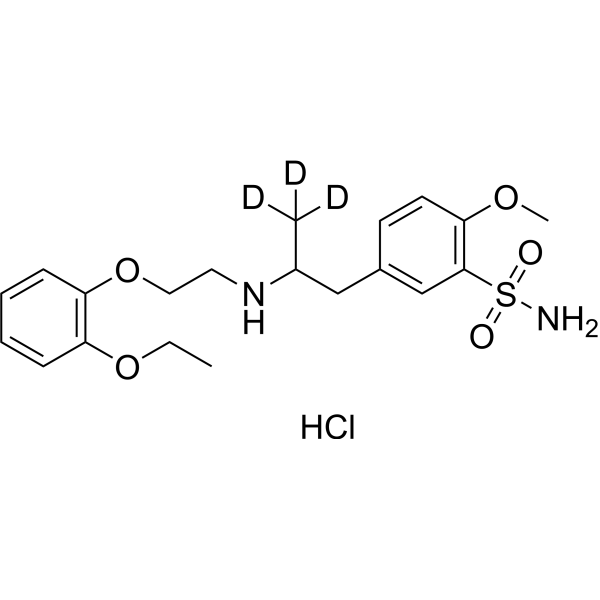
(Rac)-Tamsulosin-d3 hydrochloride is the deuterated-labeled Tamsolusin hydrochloride (HY-B0661C). Tamsolusin hydrochloride (YM12617 hydrochloride; LY253351 hydrochloride) is an isomer of Tamsulosin (HY-B0661). Tamsolusin hydrochloride is a sulfonamide phenethylamine derivative and a competitive antagonist of selective post-synaptic α1-adrenoceptors. Tamsolusin hydrochloride inhibits CYP3A4 activity in a non-competitive, enantiomer-specific manner, with an IC50 and Ki of 6.75 μM. Tamsolusin hydrochloride produces dose-dependent hypotension, preferentially antagonizing α1-adrenoceptor-mediated pressor responses, and inhibits α2-adrenoceptor-mediated pressor responses at high doses. Tamsolusin hydrochloride can be used in research related to various diseases such as metabolism .
loading...
    loading...
Cat. No.: HY-B1067A
CAS No.: 91-75-8
Synonyms: Phenazoline
Target:  

Histamine Receptor

Research Areas:  

Neurological Disease Endocrinology

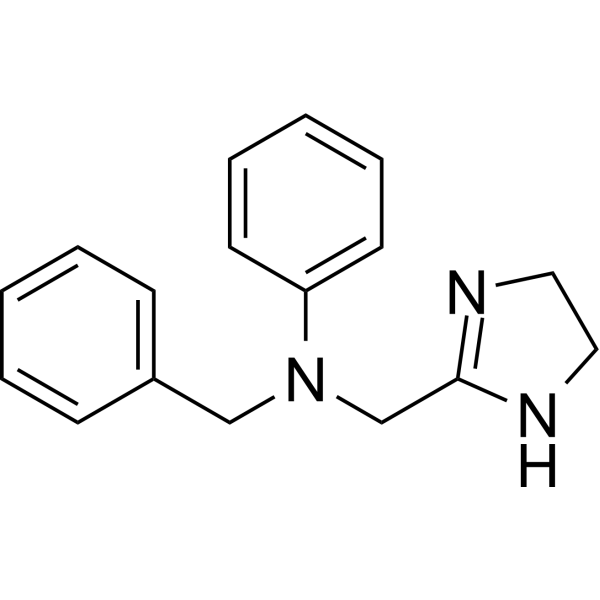
Antazoline (Phenazoline) is a histamine H1 receptor antagonist with anticholinergic and antiviral properties. Antazoline can prevent histamine from acting on target cells through a reversible competition effect on histamine receptor sites of these cells. Antazoline can exert an antiallegic effect and prevent the occurrence of physiological reactions from the effect of blocking as well as inhibiting H1 receptor. Antazoline can effectively reduce HBV DNA in the extracellular supernatant in a dose-dependent manner, with EC50 of 2.910 μmol/L in HepAD38 cells. Antazoline also has a significant inhibitory effect on HBV DNA in the extracellular supernatant of Huh7 cells (EC50 = 2.349 μmol/L). Antazoline has anti-arrhythmic effect in acute myocardial infarctions. Antazoline can be studied in research for cardiovascular diseases, and HBV .
loading...
    loading...
Cat. No.: HY-B1777S
CAS No.: 93827-50-0
Synonyms: NSC 268508-15N2; Neuridine-15N2
Spermine- 15N2 (NSC 268508- 15N2) is the 15N-labeled Spermine (HY-B1777). Spermine is a natural antioxidant and anti-inflammatory agent. Spermine is known to inhibit some bacterial cultures, especially strains of Staphylococcus aureus. Spermine induces neurotoxicity in the striarum dose-dependently. Spermine can reversibly inhibits DNA synthetic response, mixed lymphocyte response and the induction of cytolytic lymphocyte response in primary cultures of murine spleen cells. Spermine tetrahydrochloride is a polyamine nitric oxide donor that can provide nitric oxide to platelets and inhibit platelet activation to a certain extent concentration-dependently. Spermine tetrahydrochloride occurs in mammalian tissues, plants, bacteria, ribosomes and bacteriophage. Spermine tetrahydrochloride inhibits primary human embryo lung fibroblasts in vitro .
loading...
    loading...
Cat. No.: HY-P0004R
CAS No.: 50-57-7
Synonyms: Lysine vasopressin (Standard); [Lys8]-Vasopressin (Standard)
Lysipressin (Standard) is the analytical standard of Lysipressin (HY-P0004). This product is intended for research and analytical applications. Lysipressin (Lysine vasopressin ; [Lys8]-Vasopressin ) is a neurohypophyseal nonapeptide with dual cardiovascular regulatory activities of peripheral pressor action and central hypotensive action, and it also regulates pain perception in the body. Lysipressin is an Oxytocin Receptor agonist, with a Ki value of 10.2 nM for porcine OT receptor. Lysipressin stimulates contraction of rabbit bladder smooth muscle via V1-vasopressin receptor. The central hypotensive effect of Lysipressin depends on the sympathetic tone pathway. Lysipressin dose-dependently prolongs tail-flick latency in rats, producing a stable central antinociceptive effect. Lysipressin can be used in studies related to cardiovascular regulation, hypertension and pain .
loading...
    loading...
Cat. No.: HY-P11291A
Research Areas:  

Metabolic Disease

NNC0165-1273 TFA is a selective NPY Y2 receptor agonist with a Ki of 2 nM and an EC50 of 5.0 nM. NNC0165-1273 TFA blocks Ghrelin-induced cFos expression. NNC0165-1273 TFA reduces nocturnal food intake, attenuates feeding behavior, induces early satiety, and causes dose-dependent decreases in body weight and fat mass in diet-induced obese mice. When used in combination with Semaglutide (HY-114118), NNC0165-1273 TFA reduces preference for high-fat diet, promotes body weight loss, and produces sustained weight loss effects in diet-induced obese rats. NNC0165-1273 TFA can be used in studies related to diet-induced obesity .
loading...
    loading...
Cat. No.: HY-P11909
Research Areas:  

Infection

3-WP is a linear 20-peptide with a C-terminal amidation modification. 3-WP acts on lipoteichoic acid (LTA) and disrupts cell wall permeability, induces intracellular reactive oxygen species (ROS) accumulation in a dose-dependent manner, and simultaneously inhibits respiratory chain dehydrogenase activity and intracellular ATP synthesis, thereby interfering with bacterial energy metabolism and exerting Bacterial antibacterial effects. The combination of 3-WP and Melittin (HY-P0233) exerts synergistic antibacterial effects against Gram-positive bacteria, reduces the required dosage of Melittin, and thus improves the cell selectivity of Melittin. 3-WP can serve as a peptide adjuvant for Melittin in food storage scenarios. 3-WP can be used in the research of foodborne diseases caused by methicillin-resistant Staphylococcus aureus .
loading...
    loading...
Cat. No.: HY-W017141R
CAS No.: 24683-00-9
2-Isobutyl-3-methoxypyrazine (Standard) is the analytical standard of 2-Isobutyl-3-methoxypyrazine. This product is intended for research and analytical applications. 2-Isobutyl-3-methoxypyrazine is a male-specific aggregation pheromone released by the Portuguese leaf beetle Labidostomis lusitanica. 2-Isobutyl-3-methoxypyrazine induces dose-dependent electroantennographic responses in the antennae of both male and female Labidostomis lusitanica, with the overall response intensity of females being higher than that of males. 2-Isobutyl-3-methoxypyrazine induces positive chemotactic behavior, and exerts a repellent effect on male Labidostomis lusitanica at high doses. 2-Isobutyl-3-methoxypyrazine can be used in insect ecology research .
loading...
    loading...
Cat. No.: HY-W017141S1
CAS No.: 3028868-76-7
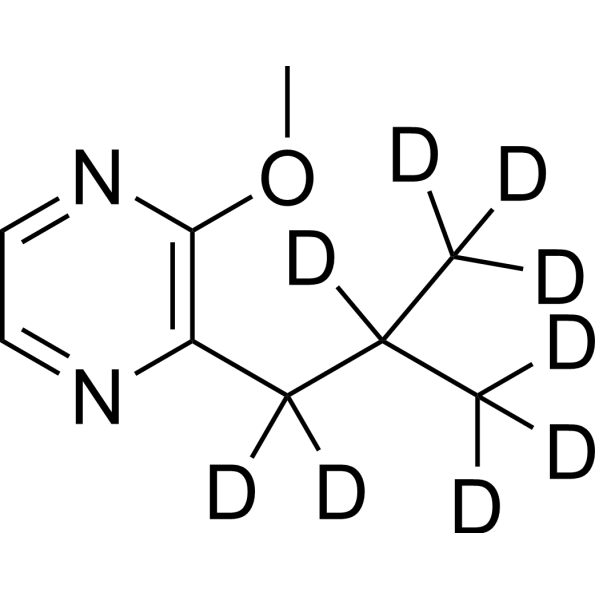
2-Isobutyl-3-methoxypyrazine-d9 is deuterated labeled 2-Isobutyl-3-methoxypyrazine (HY-W017141). 2-Isobutyl-3-methoxypyrazine is a male-specific aggregation pheromone released by the Portuguese leaf beetle Labidostomis lusitanica. 2-Isobutyl-3-methoxypyrazine induces dose-dependent electroantennographic responses in the antennae of both male and female Labidostomis lusitanica, with the overall response intensity of females being higher than that of males. 2-Isobutyl-3-methoxypyrazine induces positive chemotactic behavior, and exerts a repellent effect on male Labidostomis lusitanica at high doses. 2-Isobutyl-3-methoxypyrazine can be used in insect ecology research .
loading...
    loading...
Cat. No.: HY-W746556
CAS No.: 52886-39-2
Methyl cholate-d5 is the deuterium labeled Methyl cholate. Methyl cholate is a bile acid analog and a specific inhibitor of TcdB toxin from Clostridioides difficile. Methyl cholate exerts a stronger selective inhibitory effect on TcdB than on TcdA. Methyl cholate induces conformational stabilization by binding to a unique site of TcdB, thereby blocking the binding of the toxin to host receptors and its self-processing process. Methyl cholate effectively protects human fibroblasts from TcdB-induced cytopathic effects. Methyl cholate exhibits dose-dependent anti-hepatic fibrosis activity in both cellular and zebrafish models, and significantly reduces the expression levels of α-SMA and COL-I. Methyl cholate is suitable for in-depth research in the fields of Clostridioides difficile infection and hepatic fibrosis .
loading...
    loading...

