746 Results for "

Mutation

" in MedChemExpress (MCE) Product Catalog:
Products (746)

746 Results for "Mutation" in MCE Product Catalog:

Cat. No.: HY-181779
Target:  

Bacterial

Research Areas:  

Infection

Pyridomycin-4-F, Pyridomycin (HY-111402) derivative, is an antimycobacterial agent targeting fatty acid synthesis enzyme InhA (enoyl ACP reductase). Pyridomycin-4-F binds to the pyridomycin binding pocket of InhA, forms hydrogen bond interactions with Lys-165. Pyridomycin-4-F can be used for the research of tuberculosis .
loading...
    loading...
Cat. No.: HY-185447
CAS No.: 3086566-93-7
Target:  

PD-1/PD-L1

Research Areas:  

Cancer

Biotin-itaconate is a biotin-labeled itaconic anhydride that targets PD-L1. Biotin-itaconate acts as a biotin probe for in vitro alkylation assays to identify itaconate-modified protein substrates-typically substrates containing cysteine ​​residues. Biotin-itaconate is applicable to cancer research .
loading...
    loading...
Cat. No.: HY-134813R
CAS No.: 2621928-55-8
Target:  

Reference Standards Ras

Research Areas:  

Cancer

MRTX1133 (Standard) is the analytical standard of MRTX1133 (HY-134813). This product is intended for research and analytical applications. MRTX1133 is a noncovalent, potent, and selective alkyne-based KRAS G12D inhibitor. MRTX1133 optimally fills the switch II pocket and extends three substituents to favorably interact with the protein, resulting in an estimated KD against KRAS G12D of 0.2 pM. MRTX1133 prevents SOS1-catalyzed nucleotide exchange and/or formation of the KRAS G12D/GTP/RAF1 complex, thereby inhibiting mutant KRAS-dependent signal transduction. MRTX1133 selectively inhibits KRAS G12D mutant, but not KRAS wild-type, tumor cells. MRTX1133 has single digit nanomolar activity in cellular assays and marked in vivo efficacy in tumor models harboring KRAS G12D mutations .
loading...
    loading...
Cat. No.: HY-144657
CAS No.: 2913176-81-3
Target:  

PROTACs SOS1 Drug Isomer Ras

Research Areas:  

Cancer

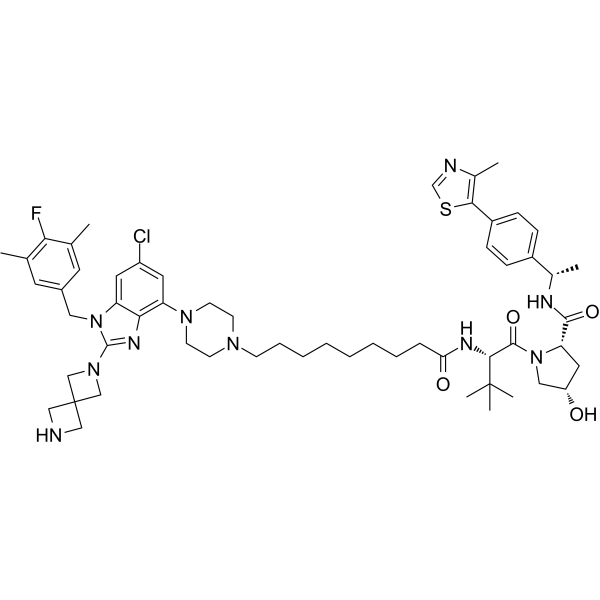
(4S)-PROTAC SOS1 degrader-1 is a stereoisomer of PROTAC SOS1 degrader-1 (HY-145737). PROTAC SOS1 degrader-1 (Compound 9d) is a degrader of SOS1 PROTAC, with a DC50 of 98.4 nM and a Kd value of 44 nM. PROTAC SOS1 degrader-1 induces the formation of a ternary complex with SOS1 and the VCB E3 ubiquitin ligase complex, thereby promoting the ubiquitination and proteasomal degradation of SOS1. PROTAC SOS1 degrader-1 reduces KRAS-GTP levels, inhibits the phosphorylation of ERK in the RAS-RAF-MEK-ERK pathway, and suppresses the proliferation of cancer cells carrying KRAS mutations. PROTAC SOS1 degrader-1 inhibits tumor growth in mouse xenograft models. PROTAC SOS1 degrader-1 can be used for the research of KRAS-driven cancers .
loading...
    loading...
Cat. No.: HY-144657A
Purity:  98.09%
Target:  

PROTACs SOS1 Drug Isomer Ras

Research Areas:  

Cancer

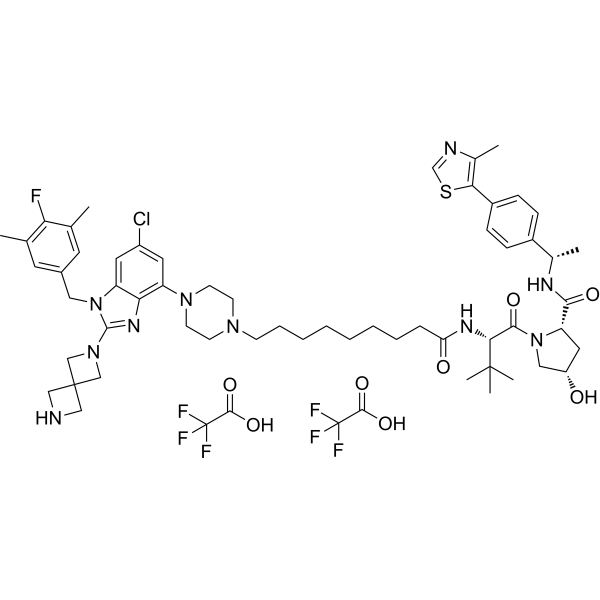
(4S)-PROTAC SOS1 degrader-1 diTFA is a stereoisomer of PROTAC SOS1 degrader-1 (HY-145737). PROTAC SOS1 degrader-1 (Compound 9d) is a degrader of SOS1 PROTAC, with a DC50 of 98.4 nM and a Kd value of 44 nM. PROTAC SOS1 degrader-1 induces the formation of a ternary complex with SOS1 and the VCB E3 ubiquitin ligase complex, thereby promoting the ubiquitination and proteasomal degradation of SOS1. PROTAC SOS1 degrader-1 reduces KRAS-GTP levels, inhibits the phosphorylation of ERK in the RAS-RAF-MEK-ERK pathway, and suppresses the proliferation of cancer cells carrying KRAS mutations. PROTAC SOS1 degrader-1 inhibits tumor growth in mouse xenograft models. PROTAC SOS1 degrader-1 can be used for the research of KRAS-driven cancers .
loading...
    loading...
Cat. No.: HY-175529
Target:  

Ras ERK Apoptosis

Research Areas:  

Cancer

KRASG12D-IN-7 is a selective KRAS G12D inhibitor. KRASG12D-IN-7 displays strong binding activity for KRAS G12D in both its GDP- and GTP- bound states, with Kd value of 1.12 nM and 1.86 nM, respectively. KRASG12D-IN-7 inhibits the proliferation of KRAS G12D harboring AsPC-1 cells with an IC50 value of 10 nM and suppresses MAPK signaling. KRASG12D-IN-7 induces G0/G1 phase arrest and apoptosis in AsPC-1 cells, and strongly inhibits their colony formation. KRASG12D-IN-7 can be used for the study of cancers harboring KRAS G12D mutation, particularly pancreatic ductal adenocarcinoma (PDAC) .
loading...
    loading...
Cat. No.: HY-175864
Research Areas:  

Inflammation/Immunology Cancer

EGFR-IN-173 is an orally active, pan-mutant EGFR tyrosine kinase inhibitor that targets EGFR 19del, L858R/T790M and C797S triple-mutations, potently inhibiting EGFR 19del/T790M/C797S with an IC50 of 1.19 nM while showing over 100-fold selectivity for mutant over wild-type EGFR (IC50 = 19.362 μM against WT). EGFR-IN-173 significantly inhibits cell migration, induces apoptosis in non-small cell lung cancer (NSCLC) cells. EGFR-IN-173 inhibits EGFR phosphorylation and suppresses the downstream pathways (MAPK/ERK, AKT, STAT3). EGFR-IN-173 exhibits antitumor efficacy in NSCLC and Ba/F3 xenograft models. EGFR-IN-173 can be used for NSCLC research .
loading...
    loading...
Cat. No.: HY-178057
CAS No.: 2754394-10-8
Research Areas:  

Cancer

EGFR-IN-176 is an orally active and ATP-competitive EGFR mutant inhibitor (particularly C797S-mediated EGFR triple mutant). EGFR-IN-176 effectively inhibits subsequent AKT signaling and induces apoptosis in Ba/F3 and PC-9 cells expressing EGFR 19del/T790M/C797S and EGFR L858R/T790M/C797S. EGFR-IN-176 selectively inhibits EGFR signaling in cell lines harboring EGFR triple mutation and shows no inhibitory effect against A431 cells that express wild-type EGFR. EGFR-IN-176 can effectively inhibit the enzymatic activity of ALK (IC50 < 0.5 nM). EGFR-IN-176 can be used for the study of non-small cell lung cancer (NSCLC) .
loading...
    loading...
Cat. No.: HY-182044
Target:  

Ras Apoptosis PARP Caspase CDK

Research Areas:  

Cancer

MRTX849-amide-C4-(o)-carborane is a KRAS G12C inhibitor with mutation selectivity for cells expressing KRAS G12C. MRTX849-amide-C4-(o)-carborane shows low intrinsic cytotoxicity in cancer cells. MRTX849-amide-C4-(o)-carborane covalently binds to Cys12 of KRAS G12C, recruits Hsp70, promotes ubiquitination, and induces proteasome-dependent degradation of the target protein. MRTX849-amide-C4-(o)-carborane inhibits the activity of the downstream ERK signaling pathway and induces apoptosis signaling in cancer cells. MRTX849-amide-C4-(o)-carborane is applicable for the research of KRAS G12C-positive cancers .
loading...
    loading...
Cat. No.: HY-184408
CAS No.: 3033990-94-9
Research Areas:  

Infection

AAP-SO2 is a Bactericide and Mycobacterium tuberculosis RNA polymerase (Mtb RNAP) inhibitor, with an IC50 of 0.025 μM against Mtb RNAP. AAP-SO2 allosterically slows the nucleotide addition rate during transcriptional elongation and enhances transcription termination efficiency. AAP-SO2 exhibits increased activity against β S450L-type Mtb, possesses activity against non-replicating Mtb, and shows whole-cell activity against Mtb and related mycobacterial species. AAP-SO2 reduces the overall emergence rate of Rifampicin (HY-B0272) tolerance in Mtb, alters the mutation spectrum, and decreases the proportion of β S450L-type Rifampicin-resistant mutants. AAP-SO2 acts synergistically with Rifampicin to kill non-replicating Mtb in a rabbit caseous necrosis model. AAP-SO2 can be used for the research of tuberculosis .
loading...
    loading...
Cat. No.: HY-P1348
CAS No.: 1197810-60-8
Synonyms: [Gly8,36,Glu22]-GLP-1 (7-37)
Research Areas:  

Metabolic Disease

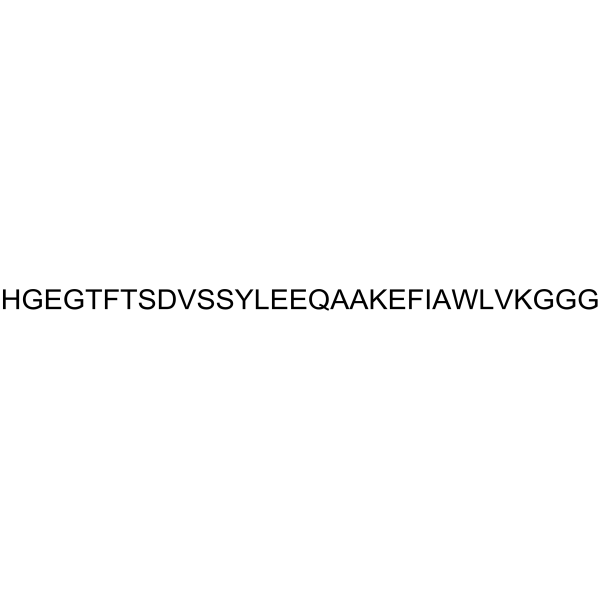
GLP-1 moiety from Dulaglutide ([Gly8,36,Glu22]-GLP-1 (7-37)) is a 31-amino acid fragment derived from Dulaglutide (HY-P0120). GLP-1 moiety from Dulaglutide is a DPP-4-modified GLP-1 analog carrying the [Gly8,36,Glu22] sequence mutation, which acts as a GLP-1 receptor agonist. GLP-1 moiety from Dulaglutide covalently links to the human IgG4 Fc fragment and constitutes a part of the dulaglutide recombinant fusion protein. GLP-1 moiety from Dulaglutide exhibits glucose-dependent insulinotropic activity. GLP-1 moiety from Dulaglutide can be used in research related to type 2 diabetes .
loading...
    loading...
Cat. No.: HY-L129
128 compounds

Proteolysis-targeting chimera (PROTAC) has been developed to be a useful technology for targeted protein degradation. PROTACs consist of a ligand for E3 ligase (E3 ligase binder), a linker and a ligand (mostly small-molecule inhibitor) for protein of interest(target binder). Upon binding to the target protein, the PROTACs can recruit E3 for target protein ubiquitination, which is subjected to proteasome-mediated degradation. Therefore, PROTACs execute their functions by degrading the target proteins rather than inhibiting them, which has a great superiority in overcoming resistance caused by target mutation or overexpression. To date, PROTAC technology has been applied to a variety of targets, including AR, ER, BTK, BET, and BCR-ABL to overcome resistance.

MCE carefully prepared a unique collection of 128 ligands for target proteins, which have been reported to be used in PROTAC design. MCE Target Protein Ligand Library is a useful tool for PROTAC development.

Cat. No.: HY-182313
Target:  

DNA/RNA Synthesis

Research Areas:  

Cancer

WRN-IN-25 is an allosteric Werner syndrome helicase (WRN) inhibitor with an IC50 of 15 nM and a Kd of 54 nM. WRN-IN-25 induces DNA damage, reduces cell viability, and exhibits synthetic lethality in WRN-driven high microsatellite instability cancer cells. WRN-IN-25 can be used in research related to microsatellite instability cancers .
loading...
    loading...
Cat. No.: HY-59343
CAS No.: 61296-22-8
Research Areas:  

Others

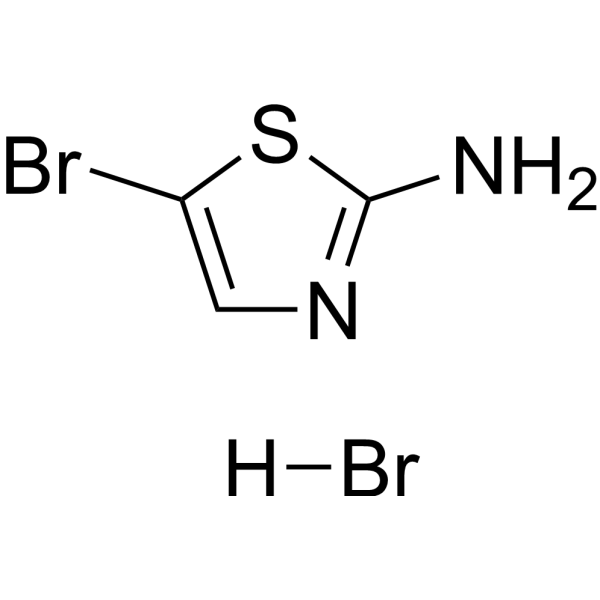
2-Amino-5-bromothiazole hydrobromide is an aminothiazole and brominated thiazole derivative. 2-Amino-5-bromothiazole hydrobromide induces base-pair substitutions in bacterial test organisms. 2-Amino-5-bromothiazole hydrobromide exhibits mutagenic activity in Klebsiella pneumoniae and Salmonella typhimurium. 2-Amino-5-bromothiazole hydrobromide acts as a Hg 2+-binding moiety in rhodamine-based fluorescent chemical sensors .
loading...
    loading...
Cat. No.: HY-170361
CAS No.: 3068001-31-7
MTHFD2-IN-5 (Compound 16e) is a selective MTHFD2 inhibitor with an IC50 of 66 nM. MTHFD2-IN-5 selectively inhibits MTHFD2. MTHFD2-IN-5 exhibits anticancer activity against acute myeloid leukemia. MTHFD2-IN-5 acts synergistically with Alimta to inhibit the proliferation of acute myeloid leukemia cells .
loading...
    loading...
Cat. No.: HY-112817
CAS No.: 139307-94-1
Synonyms: 8-Oxo-Deoxyguanosine triphosphate
8-Oxo-dGTP (8-Oxo-Deoxyguanosine triphosphate) is an oxidized guanine nucleotide formed by ROS-mediated oxidative modification of dGTP, and it also serves as a key substrate for 8-oxo-dGTP pyrophosphohydrolases (such as hMTH1 and E. coli MutT). 8-Oxo-dGTP acts as a DNA mutagen, inserts into nascent DNA and pairs with adenine and cytosine, inducing A:T to C:G transversion mutations. Furthermore, 8-Oxo-dGTP causes oxidative DNA base modification, strand breakage and S-phase arrest, and ultimately triggers AIF-mediated apoptosis and promotes spontaneous carcinogenesis in mth1-deficient mice. Accumulation of 8-Oxo-dGTP in cells induces genomic instability, but it exhibits a tumor-suppressive effect that reduces tumor incidence in mouse models instead. 8-Oxo-dGTP is widely used in studies related to spontaneous carcinogenesis, Parkinson's disease, Alzheimer's disease, heart failure and tumor mechanisms .
loading...
    loading...
Cat. No.: HY-181420
CAS No.: 3029184-80-0
Research Areas:  

Cancer

(S,R,S)-BBO-11818 is an orally active, highly selective (relative to NRAS and HRAS), non-covalent pan-KRAS inhibitor (IC50=28-120 nM). (S,R,S)-BBO-11818 specifically binds to the Switch-II/Helix 3 pocket, disrupts the KRAS:RAF1 interaction by inducing conformational changes, and blocks the MAPK signaling pathway. (S,R,S)-BBO-11818 exhibits significant anti-tumor activity, which not only inhibits cell proliferation and induces apoptosis, but also drives tumor regression in xenograft models. (S,R,S)-BBO-11818 produces synergistic effects when combined with Cetuximab (HY-P9905), anti-PD-1 antibody or PI3Kα inhibitor. (S,R,S)-BBO-11818 is used in the research of KRAS mutation-related malignancies such as pancreatic cancer, non-small cell lung cancer and colorectal cancer .
loading...
    loading...
Cat. No.: HY-L011
2,278 compounds

Most of molecules enter or leave cells mainly via membrane transport proteins, which play important roles in several cellular functions, including cell metabolism, ion homeostasis, signal transduction, the recognition process in the immune system, energy transduction, etc. There are three major types of transport proteins, ATP-powered pumps, channel proteins and transporters. Transport proteins such as channels and transporters play important roles in the maintenance of intracellular homeostasis, and mutations in these transport protein genes have been identified in the pathogenesis of a number of hereditary diseases. In the central nervous system, ion channels have been linked to, but not limited to, many diseases such asataxias, paralyses, epilepsies, and deafness. This indicates the roles of ion channels in the initiation and coordination of movement, sensory perception, and encoding and processing of information. Ion channels are a major class of drug targets in drug development.

MCE designs a unique collection of 2,278 smal-molecule modulators that can be used for the research of Ion Channel and Membrane Transporter or high throughput screening (HTS) related drug discovery.

Cat. No.: HY-177106
CAS No.: 1945941-72-9
Target:  

Drug Intermediate Ras

Research Areas:  

Cancer

ADT-1004 is an orally active prodrug of ADT-007 (HY-157887). ADT-007 is a reversible, highly potent and selective pan-RAS inhibitor that binds to the nucleotide-free conformation of RAS proteins and blocks their GTP activation, thereby inhibiting the downstream MAPK and AKT signaling pathways. ADT-1004 can be used for the research of pancreatic ductal adenocarcinoma .
loading...
    loading...
Cat. No.: HY-183553
CAS No.: 2874214-01-2
Target:  

Ras

Research Areas:  

Cancer

AUBE00 is an orally active, selective cyclic peptide pan-KRAS inhibitor. AUBE00 selectively binds to the OFF state of KRAS. AUBE00 exhibits anticancer activity against RAS wild-type colorectal cancer. The combination of AUBE00 with Cetuximab (HY-P9905) produces a synergistic antiproliferative effect .
loading...
    loading...

