







280 Results for "

immune function

" in MedChemExpress (MCE) Product Catalog:
Products (280)

280 Results for "immune function" in MCE Product Catalog:

1
1 Cited Publications
Cat. No.: HY-126855
CAS No.: 60320-05-0
Purity:  99.92%
Synonyms: 7-Sulfocholic acid
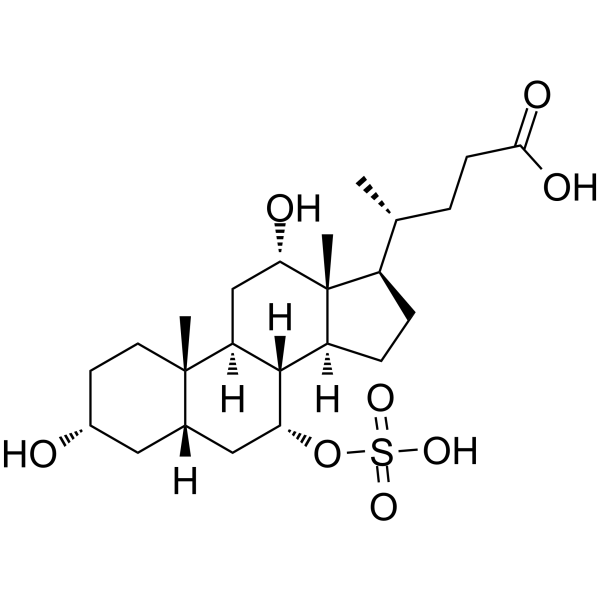
Cholic acid 7-sulfate (7-Sulfocholic acid) is a selective agonist targeting TGR5 (EC50=0.17 μM) and a ligand for MHC class I-related protein (MR1). As a gut-restricted TGR5 agonist, cholic acid 7-sulfate binds to TGR5 on enteroendocrine L cells, induces GLP-1 secretion, and improves glucose tolerance in a TGR5-dependent manner. Cholic acid 7-sulfate also acts as an endogenous ligand for MR1, promoting the survival of mucosal-associated invariant T cells MAIT and the expression of homeostatic gene signatures, affecting MAIT cell development and function. Cholic acid 7-sulfate is mainly used in the research of diabetes and MAIT cell-related immune regulation .
loading...
    loading...
1
1 Cited Publications
Cat. No.: HY-B1953
CAS No.: 111988-49-9
Research Areas:  

Infection

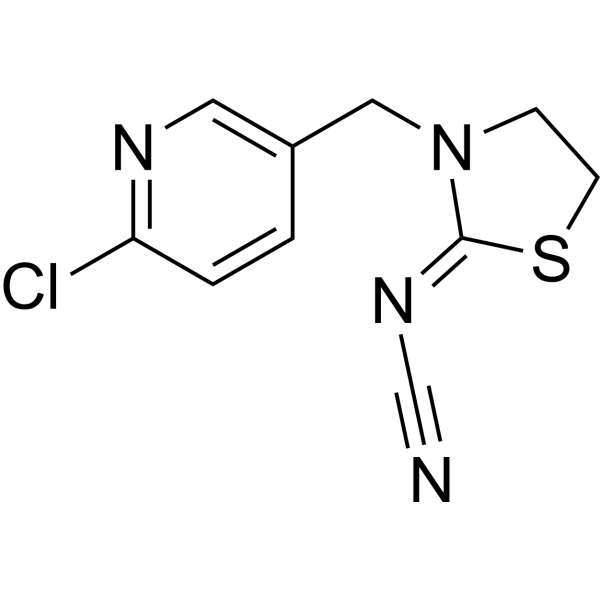
Thiacloprid is an orally active neurotoxic insecticide and also a nAChR agonist. Thiacloprid reduces the viability of healthy cells, depletes reduced glutathione, and increases MDA levels, thereby inducing cytotoxicity and oxidative stress damage. In practical applications, Thiacloprid has lower acute toxicity to honeybees than other compounds of the same class such as Imidacloprid (HY-B0838), but it still significantly impairs the learning and memory function, immune capacity and survival status of honeybees. Thiacloprid induces intestinal microbial dysbiosis and reduces survival rate in middle-aged honeybees, increases the risk of premature collapse in bumblebee colonies, and significantly decreases the final colony weight and reproductive output. Thiacloprid is used in broad-spectrum agricultural pest control, often alone or in combination with Deltamethrin (HY-B1971), and meets the pest management needs of various crops including potatoes, cabbages, various fruits and vegetables, and nuts .
loading...
    loading...
1
1 Cited Publications
Cat. No.: HY-112624I
CAS No.: 9004-54-0
Synonyms: Dextran 3; Dextran D3; Dextran T3(MW 2400-3600)
Dextran T3 (Dextran 3; Dextran T3(MW 2400-3600)) is a neural tracer and intestinal permeability probe that can move anterogradely and retrogradely in neuronal axons by passive diffusion. Dextran T3 (MW 3,000) is able to permeate across the intestinal epithelial cell membrane in the presence of cholera toxin-induced cytoskeletal disturbance. Dextran T3 (MW 3,000) is used as a fluorescent marker to rapidly label developing neurons (such as Xenopus retinal ganglion cells) and to assess intestinal barrier function. It can be used to study axonal transport in neuroanatomy and permeability changes in intestinal pathophysiology. The Dextran series of compounds are also natural polysaccharide drug carriers that can be connected to drugs through covalent bonding methods such as ester bonds, amide bonds or click chemistry, or self-assembled to form carriers such as nanoparticles and hydrogels. Dextran is biodegradable and biocompatible, and can achieve targeted delivery and controlled release of drugs. Dextran derivatives can prolong the half-life of drugs, increase local concentrations, and reduce the activity of immune clearance .
loading...
    loading...
1
1 Cited Publications
Cat. No.: HY-P99014
CAS No.: 1864871-20-4
Synonyms: ARGX-110

Research Areas:  

Inflammation/Immunology Cancer

Cusatuzumab (ARGX-110) is a selective competitive blocker targeting CD70 (with an equilibrium dissociation constant of 17 pM for binding to human CD70). Cusatuzumab also possesses enhanced antibody-dependent cell-mediated cytotoxicity (ADCC) activity. It is a humanized IgG1 monoclonal antibody, artificially synthesized through humanization and genetic engineering modifications (CH2 region mutation to enhance effector function). Cusatuzumab has a dual mechanism of action: firstly, it competitively blocks the interaction between CD70 and CD27, inhibiting the CD27-NF-κB signaling pathway, reducing regulatory T cell (Treg) activation and tumor cell proliferation; secondly, by enhancing binding to FcγRIIIa, it mediates ADCC and antibody-dependent cellular phagocytosis (ADCP), directly lysing CD70-positive tumor cells. Cusatuzumab can efficiently eliminate leukemia stem cells (LSCs), induce tumor cell differentiation and apoptosis, restore immune surveillance, and target CD70-positive tumors. Cusatuzumab is used in the study of acute myeloid leukemia (AML) .
loading...
    loading...
Cat. No.: HY-113008B
CAS No.: 3465-72-3
Purity:  99.60%
Synonyms: (E)-Urocanic acid; trans-UCA
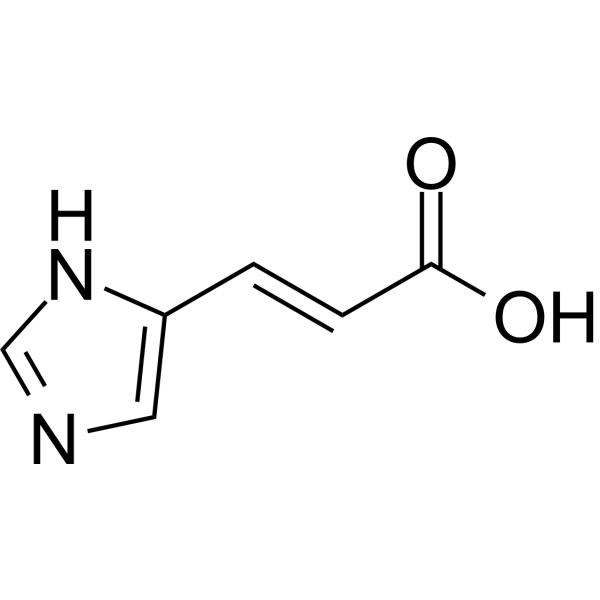
trans-urocanic acid (trans-UCA), a natural epidermal constituent, inhibits human natural killer cell (NK) activity in vitro. trans-urocanic acid is active in regulating an immune function .
loading...
    loading...
Cat. No.: HY-D0195
CAS No.: 55589-62-3
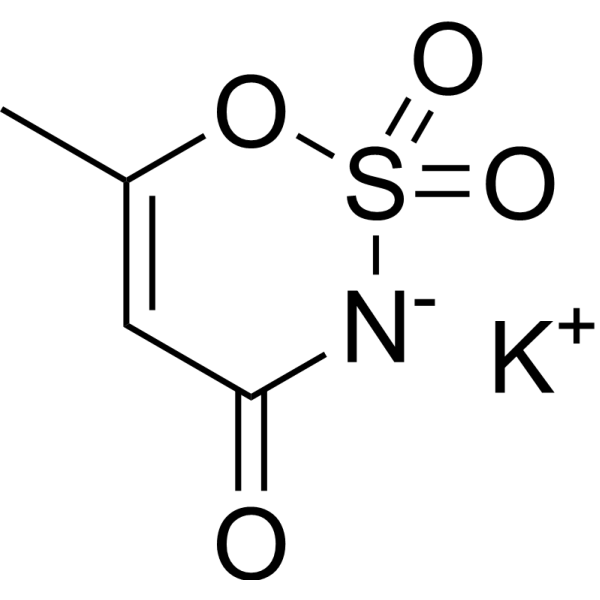
Acesulfame potassium is a synthetic sweetener. Long-term use of Acesulfame potassium can affect cognitive function, possibly by altering the neurometabolic functions in mice. Acesulfame potassium can suppress autophagic degradation of PD-L1 in RIL-175 and SK-Hep1 cells through the ERK1/2-mTORC1-ULK1 pathway, which may be related to immune evasion in cancer cells. Acesulfame potassium can be used in research on neurological diseases, metabolic disorders, cancer, and immune evasion .
loading...
    loading...
Cat. No.: HY-P990083
CAS No.: 2628092-47-5
Synonyms: AT-1501

Target:  

TNF Receptor

Research Areas:  

Inflammation/Immunology

Tegoprubart (AT-1501) is a CD40 ligand inhibitor (EC50=100 ng/mL) and immunosuppressant that selectively inhibits the CD40 ligand, a co-stimulatory molecule involved in T cell activation. Tegoprubart suppresses immune rejection, prevents rejection in animal transplantation models, and reduces cell-mediated and antibody-mediated immune responses to create a more immunotolerant environment. Tegoprubart preserves renal function when combined with Mycophenolate (HY-B0421) and Corticosteroids, and maintains graft function in preclinical studies. Tegoprubart is applicable to research related to kidney transplantation and kidney transplant rejection .
loading...
    loading...
Cat. No.: HY-P10373
CAS No.: 1259928-08-9
pJAK2(1001-1013) is a cell-penetrating peptide that corresponds to the activation loop of JAK2 tyrosine kinase and functions as a SOCS1/3antagonist. pJAK2 (1001-1013) blocks SOCS1-mediated negative regulation of immune function, and enhances the biological activity of cytokines such as IFNγ and IL6. pJAK2(1001-1013) inhibits the replication of a broad range of viruses and exerts dose-dependent protective efficacy against lethal viral infections. pJAK2(1001-1013) can be used for the study of immune regulation and infection .
loading...
    loading...
Cat. No.: HY-NP0194A
C1q Protein (mouse) is a complement protein and is a recognition molecule of the classical pathway, performs a diverse range of complement and non-complement functions. C1q Protein (mouse) binds various ligands derived from self, non-self, and altered self and modulate the functions of immune
and non-immune cells. C1q Protein (mouse) can be used for the research of mutiple disease .
loading...
    loading...
Cat. No.: HY-P99791
CAS No.: 2066544-85-0
Synonyms: SYNT001; ALXN1830

Target:  

Inhibitory Antibodies

Research Areas:  

Inflammation/Immunology

Orilanolimab (SYNT001) is a humanized, de-immunized and FcRn-blocking monoclonal antibody. Orilanolimab blocks the interaction between FcRn and the Fc portion of IgG molecules. Orilanolimab impedes IgG IC activation of the FcRn-mediated adaptive immune function. And Orilanolimab disrupts the associated pathways related to IgG homeostasis and innate and adaptive immunity .
loading...
    loading...
Cat. No.: HY-107863
CAS No.: 308066-66-2
Purity:  99.45%
Synonyms: Oligolevulose
Fructooligosaccharides (Oligolevulose) are a class of orally active dietary fibers and prebiotics. Fructooligosaccharides exist in foods such as breast milk, wheat, honey, onions, garlic and bananas. Fructooligosaccharides resist hydrolysis by the body's digestive enzymes and stimulate the growth of beneficial intestinal bacteria through colonic fermentation. Fructooligosaccharides significantly prevent bone loss in the femur and lumbar spine .
loading...
    loading...
Cat. No.: HY-P99917
CAS No.: 2200269-84-5
Synonyms: F-652; rhIL-22 dimer

Target:  

STAT

Research Areas:  

Infection Inflammation/Immunology

Eflepedocokin alfa is a recombinant fusion protein. Eflepedocokin alfa consists of human IL-22 fused to human IgG2-Fc domain. Eflepedocokin alfa leads to the activation of IL-22/IL-22R-mediated signal transduction pathways as well as STAT3. Eflepedocokin alfa plays a role in immune response and bacterial infection, enhancing intestinal barrier function, intestinal immunity, and tissue repair .
loading...
    loading...
Cat. No.: HY-P991480
ONC-841 is a blood-brain barrier-permeable, humanized monoclonal antibody targeting SIGLEC10. As an immune checkpoint inhibitor, ONC-841 restores the functions of immune effector cells such as T cells and enhances anti-tumor immune responses by blocking inhibitory signals mediated by SIGLEC10. ONC-841 restores the phagocytic and migratory activities of microglia, and promotes the phagocytosis of Amyloid-β and Tau protein aggregates by microglia. ONC-841 is applicable to research related to solid tumors and Alzheimer's disease .
loading...
    loading...
Cat. No.: HY-P990023
CAS No.: 2622254-57-1
Synonyms: ADX-914

Target:  

Interleukin Related

Research Areas:  

Inflammation/Immunology

Bempikibart (ADX-914) is a fully human anti-IL-7Rα antibody that re-regulates adaptive immune function by blocking signaling mediated by both IL-7 and thymic stromal lymphopoietin (TSLP). Bempikibart can be used for the study of atopic dermatitis and alopecia areata .
loading...
    loading...
Cat. No.: HY-P3051
CAS No.: 99273-04-8
Target:  

Reverse Transcriptase

Research Areas:  

Inflammation/Immunology

CKS-17 is a synthetic retroviral envelope peptide. CKS-17 has the highly conserved amino acid sequences occurring within the transmembrane envelope protein of many animal and human retroviruses. CKS-17 acts as an immunomodulatory epitope and exhibits suppressive properties for numerous immune functions .
loading...
    loading...
Cat. No.: HY-P990016
CAS No.: 2639874-57-8
Synonyms: ARGX-112; LEO-138559; LP-0145

Target:  

Interleukin Related

Research Areas:  

Inflammation/Immunology

Temtokibart (ARGX-112) is a monoclonal antibody and also an IL-22RA1 inhibitor. Temtokibart inhibits the signal transduction of IL-22, IL-20 and IL-24. Temtokibart reduces the expression levels of inflammatory proteins, chemokines, immune cell migration and markers of activated immune pathways. Temtokibart improves the expression of genes related to immunity and epidermal barrier function. Temtokibart is applicable to research on moderate-to-severe atopic dermatitis .
loading...
    loading...
Cat. No.: HY-B2123R
CAS No.: 63-42-3
Lactose (Standard) is the analytical standard of Lactose. This product is intended for research and analytical applications. Lactose is a β-galactoside consisting of galactose and glucose residues, the main carbohydrate in mammalian breast milk. Lactose, a macronutrient and an inducer of host innate immune responses, possesses immune modulatory functions .
loading...
    loading...
Cat. No.: HY-100196R
CAS No.: 72909-34-3
Synonyms: PQQ (Standard); Methoxatin (Standard)
Pyrroloquinoline quinone (Standard) is the analytical standard of Pyrroloquinoline quinone. This product is intended for research and analytical applications. Pyrroloquinoline quinone (PQQ), a redox co-factor, is an anionic, redox-cycling orthoquinone. Pyrroloquinoline quinone is isolated from cultures of methylotropic bacteria and tissues of mammals. Pyrroloquinoline quinone is an essential nutrient for mammals and is important for immune function .
loading...
    loading...
Cat. No.: HY-B0722R
CAS No.: 56-92-8
Histamine dihydrochloride (Standard) is the analytical standard of Histamine dihydrochloride (HY-B0722). This product is intended for research and analytical applications. Histamine dihydrochloride is the agonist for histamine receptor and a vasodilator. Histamine dihydrochloride is an organic nitrogen compound that participates in local immune responses, regulates intestinal physiological functions, and acts as a neurotransmitter. Histamine dihydrochloride affects p38 MAPK/Akt signaling pathway, exhibits antitumor, antioxidant and anti-inflammatory activities. Histamine dihydrochloride can be used in the research of acute myeloid leukemia, malignant melanoma, and renal cell carcinoma .
loading...
    loading...
Cat. No.: HY-B1204R
CAS No.: 51-45-6
Synonyms: Ergamine (Standard)
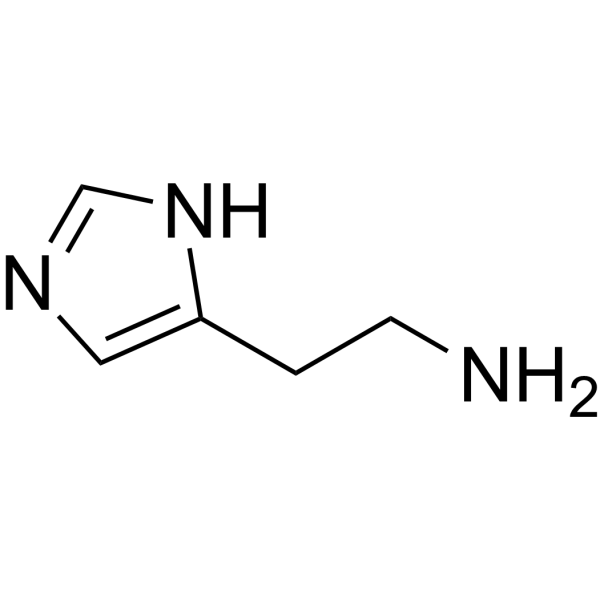
Histamine (Standard) is the analytical standard of Histamine (HY-B1204). This product is intended for research and analytical applications. Histamine is the agonist for histamine receptor and a vasodilator. Histamine is an organic nitrogen compound that participates in local immune responses, regulates intestinal physiological functions, and acts as a neurotransmitter. Histamine affects p38 MAPK/Akt signaling pathway, exhibits antitumor, antioxidant and anti-inflammatory activities. Histamine can be used in the research of acute myeloid leukemia, malignant melanoma, and renal cell carcinoma .
loading...
    loading...

