851 Results for "

AD

" in MedChemExpress (MCE) Product Catalog:
Products (851)

851 Results for "AD" in MCE Product Catalog:

Cat. No.: HY-P704979
Purity:  ≥ 90%, as determined by reducing SDS-PAGE.
Synonyms: APOE; Apolipoprotein E3; Prev. AD2; APO-E; Alzheimer Disease 2 (APOE*E4-Associated, Late Onset); ApoE4; Apolipoprotein E Isoform 4; Apo-E; Apolipoprotein E Isoform 5; LPG; Apolipoprotein E Isoform 2; Apolipoprotein E; LDLCQ5
Species:  
Human
Source:  
HEK293
loading...
    loading...
Cat. No.: HY-159941
CAS No.: 2200453-71-8
Target:  

α-synuclein

Research Areas:  

Neurological Disease

tau-0N4R-IN-1 (Compound 6T) is an BBB-penetrable inhibitor of tau 0N4R oligomerization. tau-0N4R-IN-1 effectively inhibits the fibrosis of tau 0N4R, 2N3R, and 2N4R, exhibits an anti-seeding effect on tau in vitro, reduces the oligomerization of α-syn dose-dependently, and prevents formation of α-syn inclusions. tau-0N4R-IN-1 is stable in mouse microsomes and reduces plaques in brain tissues from AD patients. tau-0N4R-IN-1 has good pharmacokinetic properties in mice .
loading...
    loading...
Cat. No.: HY-170911
Target:  

PDGFR

Research Areas:  

Cancer

KIT/PDGFRA-IN-1 (compound 19) is a stem cell growth factor receptor (KIT) and platelet-derived growth factor receptor alpha (PDGFRA) inhibitor. KIT/PDGFRA-IN-1 inhibits KIT-wt, KIT-D816H, KIT-T670I, PDGFRA-wt, PDGFRA-D842V, PDGFRA-T674I and PDGFRA-G680R with IC50s of 2.3, 12, 492, 0.8, 99.9, 42.3, and 4.3 μM, respectively. KIT/PDGFRA-IN-1 inhibits GIST-T1, T1-a-D842V and GIST-48B cells (PDGFR- and KIT-Mutant GIST cell Lines) with GR50s of 12, 8900, ≥10 000 nM, respectively .
loading...
    loading...
Cat. No.: HY-P990187

Target:  

MHC Influenza Virus

Research Areas:  

Infection Inflammation/Immunology

Anti-Mouse MHC Class II (I-A/I-E) Antibody (M5/114) is a rat-derived IgG2b type antibody inhibitor, targeting to mouse MHC Class II. Anti-Mouse MHC Class II (I-A/I-E) Antibody (M5/114) reacts with mouse MHC Class II haplotypes I-Ab, I-Ad, I-Aq, I-Ed, and I-Ek. Anti-Mouse MHC Class II (I-A/I-E) Antibody (M5/114) does not react with I-Af, I-Ak, or I-As haplotypes. Anti-Mouse MHC Class II (I-A/I-E) Antibody (M5/114) blocks MHC Class II and inhibit T cell generation. Anti-Mouse MHC Class II (I-A/I-E) Antibody (M5/114) can be used for the researches of infection and immunology, such as influenza A virus (IAV) infection .
loading...
    loading...
Cat. No.: HY-L086
3,759 compounds

Neurodegenerative diseases are incurable and life-threatening conditions that result in progressive degeneration and/or death of nerve cells. Some common neurodegenerative diseases include Alzheimer’s Disease (AD), Parkinson’s Disease (PD), Motor Neuron Disease (MND), Huntington’s Disease (HD), Spino-Cerebellar Ataxia (SCA), Spinal Muscular Atrophy (SMA), and Amyotrophic Lateral Sclerosis (ALS). Because the pathophysiology of neurodegenerative disorders is generally poorly understood, it is difficult to identify promising molecular targets and validate them. At the same time, about 85% of the drugs fail in clinical trials. Therefore, validating new targets and discovering new drugs to mitigate neurodegenerative disorders is need of the hour.

MCE offers a unique collection of 3,759 compounds with anti-Neurodegenerative Diseases activities or targeting the unique targets of neurodegenerative diseases. MCE Neurodegenerative Disease-related Compound Library is a useful tool for exploring the mechanism of neurodegenerative diseases and discovering new drugs for neurodegenerative diseases.

Cat. No.: HY-P703128
Purity:  ≥ 95%, as determined by reducing SDS-PAGE.
Synonyms: NR5A1; STF-1; Prev. FTZF1; Steroidogenic Factor 1 Nuclear Receptor; Steroidogenic Factor 1; ADrenal 4 Binding Protein; AD4BP; ADrenal 4-Binding Protein; HSF-1; Alternative Protein NR5A1; SF-1; Nuclear Receptor ADBP4; SF1; Steroidogenic Factor-1; FTZ1; SPG
Species:  
Human
Source:  
E. coli
loading...
    loading...
Cat. No.: HY-P86747
Synonyms: beta-Amyloid(1-42); A4; AAA; ABETA; ABPP; AD1; Alzheimers Disease Amyloid Protein; Amyloid B; Amyloid beta A4 Protein Precursor; Amyloid beta; Amyloid of Aging and Alzheimer Disease; APP; APPI; B Amyloid; beta APP; Cerebral Vascular Amyloid Peptide; CTFgamma; CVAP; PN II; PN2; PreA4; Protease nexin II; A beta; Amyloid 1-42.Aβ

Host:  

Mouse

Application:  

WB, IHC-P, IHC-F, IF-Tissue

Reactivity:  

Human

loading...
    loading...
Cat. No.: HY-B0426AS
CAS No.: 1331635-21-2
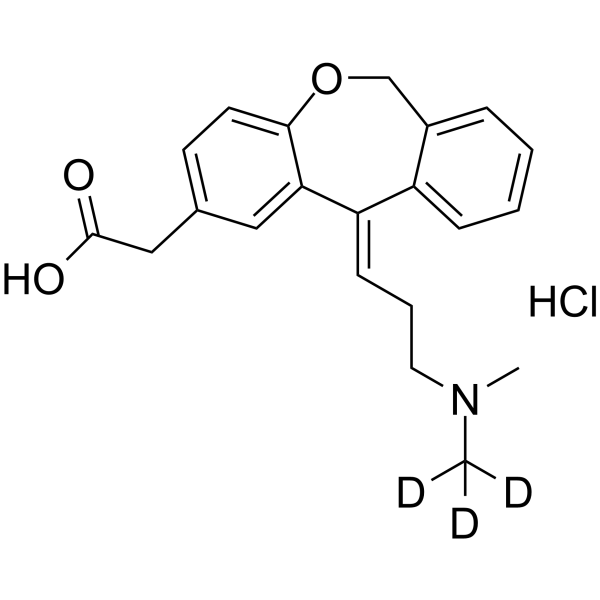
Olopatadine-d3 hydrochloride (ALO4943A-d3) is the deuterium labeled Olopatadine hydrochloride. Olopatadine hydrochloride (ALO4943A; KW4679) is an orally active histamine H1 receptor antagonist and mast cell stabilizer. Olopatadine hydrochloride exerts antiallergic effects by blocking histamine H1 receptor-mediated activities. Olopatadine hydrochloride inhibits exocytosis, chemokine release, F-actin polymerization, CXCL10-induced calcium influx, and T cell chemotactic activity. Olopatadine hydrochloride also reduces the expression levels of CXCR3 on the surface of CD4 + and CD8 + T cells. Olopatadine hydrochloride inhibits scratching behavior, improves dermatitis scores, and suppresses intraepidermal neurite outgrowth. Olopatadine hydrochloride simultaneously decreases the levels of inflammatory markers, growth factors, histamine, and specific IgE, while increasing the expression of ErbB3A/HER3A. Olopatadine hydrochloride can be used in research related to seasonal pollinosis, chronic rhinitis, urticaria, allergic conjunctivitis, alopecia areata, and atopic dermatitis .
loading...
    loading...
Cat. No.: HY-N10423
CAS No.: 18423-69-3
Synonyms: (-)-Cubebin
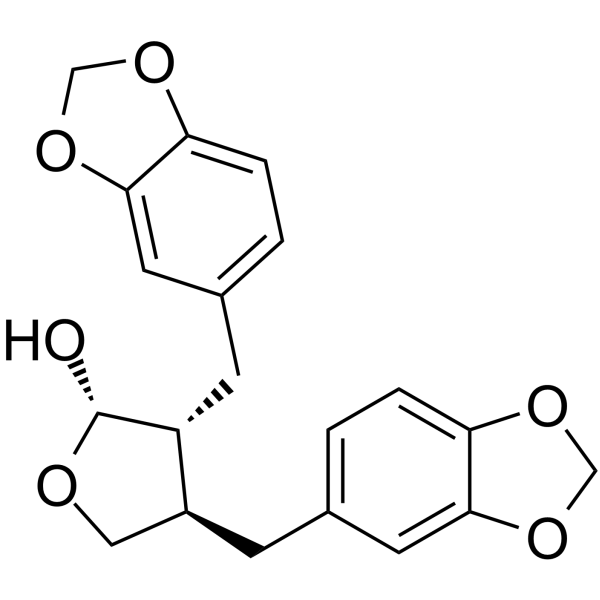
Cubebin ((-)-Cubebin), a dibenzyl butyrolactone lignan, is an orally active AChE inhibitor. Cubebin binds to active sites of NF-κB, TNF-α, and TGF-β1 via hydrogen and hydrophobic interactions, obstructing critical residues to inhibit pro-inflammatory or renal fibrosis-related activity. Cubebin enhances p38 MAPK phosphorylation to increase tyrosinase gene expression, stimulating melanogenesis via elevated tyrosinase activity, expression, and mRNA levels. Cubebin reduces oxidative stress via enhanced endogenous antioxidant enzyme activity and inhibited lipid peroxidation, regulates lipid metabolism, improves glycemic control, and exerts renoprotective effects via reduced renal dysfunction markers and improved renal architecture. Cubebin shows antimicrobial activity. Cubebin exerts larvicidal activity against Angiostrongylus cantonensis larvae, with no cytotoxicity toward monkey or human cell lines or Caenorhabditis elegans. Cubebin can be used for the research of diabetic nephropathy, melanoma, colon adenocarcinoma, neuroangiostrongyliasis, Alzheimer’s disease (AD) and depression .
loading...
    loading...
Cat. No.: HY-148547
CAS No.: 1352477-22-5
Target:  

Amyloid-β

Research Areas:  

Neurological Disease

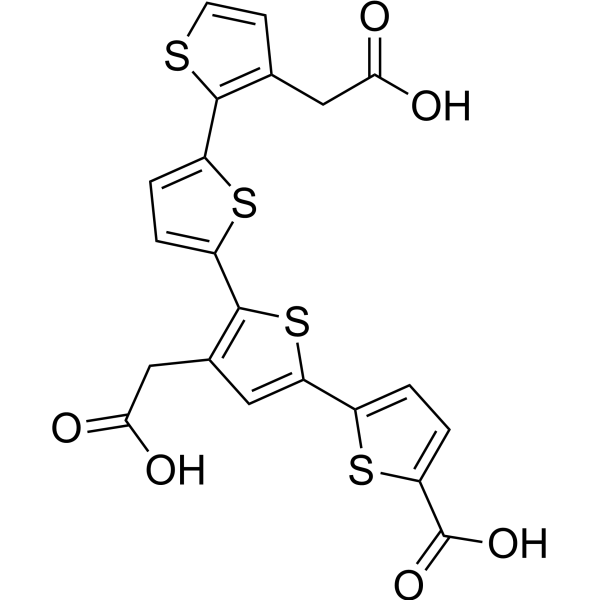
q-FTAA is an oligothiophene. q-FTAA competes for binding to the X-34 binding site on fibrils. q-FTAA is applicable to research related to Alzheimer's disease .
loading...
    loading...
Cat. No.: HY-184583
CAS No.: 3121876-09-0
S27-1047 is a brain-penetrant, potent and selective BChE (eqBChE IC50 = 7.16 nM; hBChE IC50 = 296.10 nM) inhibitor and Nrf2 activator. S27-1047 can directly bind Keap1, disrupt Keap1-Nrf2 interaction (FP IC50 = 36.87 nM), enhance antioxidant enzyme expression and activate the GSH-GPX4 axis to inhibit Aβ-induced ferroptosis. S27-1047 can protect against oxidative stress and neuroinflammation. S27-1047 can be used in Alzheimer's disease research .
loading...
    loading...
Cat. No.: HY-P77214
Purity:  ≥ 95%, as determined by reducing SDS-PAGE.
Synonyms: ATL1; ATL1-Beta Zinc Finger Protein; Prev. SPG3A; Atlastin GTPase 1 Isoform 3; Prev. SPG3; ATL1 Zinc Finger Protein; Atlastin-1; GTP-Binding Protein 3; AD-FSP; Atlastin1; FSP1; ATL1-Beta; Spastic Paraplegia 3 Protein A; Atlastin; ATL-1; HSN1D; Spastic Par
Species:  
Human
Source:  
Sf9 insect cells
loading...
    loading...
Cat. No.: HY-P81760
Synonyms: Acidic C4; Acidic complement C4; Basic C4; Basic complement C4; C4A; C4A2; C4A3; C4A4; C4A6; C4AD; C4B1; C4B12; C4B2; C4B3; C4BD; C4F; C4S; CPAMD2; CPAMD3

Host:  

Rabbit

Application:  

WB, IHC-P, FC

Reactivity:  

Human

loading...
    loading...
Cat. No.: HY-P86747A
Synonyms: beta-Amyloid(1-42); A4; AAA; ABETA; ABPP; AD1; Alzheimers Disease Amyloid Protein; Amyloid B; Amyloid beta A4 Protein Precursor; Amyloid beta; Amyloid of Aging and Alzheimer Disease; APP; APPI; B Amyloid; beta APP; Cerebral Vascular Amyloid Peptide; CTFgamma; CVAP; PN II; PN2; PreA4; Protease nexin II; A beta; Amyloid 1-42.Aβ

Host:  

Mouse

Application:  

WB, IHC-P, IHC-F, IF-Tissue

Reactivity:  

Human

loading...
    loading...
Cat. No.: HY-W283930
CAS No.: 132858-26-5
YHV98-4 is a selective, blood-brain barrier-permeable Hv1 inhibitor with an IC50 of 0.7 μM. YHV98-4 reduces ROS production and restores the SHP-1-pAKT signaling pathway. YHV98-4 decreases the spread of hyperphosphorylated Tau protein. YHV98-4 alleviates inflammation and produces analgesic effects. YHV98-4 improves cognitive function in mouse models of Alzheimer's disease. YHV98-4 can be used in research related to inflammatory pain, neuropathic pain and Alzheimer's disease .
loading...
    loading...
Cat. No.: HY-P99648A
CAS No.: 1788032-39-2
Synonyms: BMS-986168 (powder); IPN007 (powder); BIIB092 (powder)

Target:  

Tau Protein

Research Areas:  

Neurological Disease

Gosuranemab (BMS-986168; IPN007; BIIB092) (powder) is a humanised IgG4 anti-tau monoclonal antibody. Gosuranemab (powder) neutralizes the extracellular tau protein, inhibiting the spread and aggregation of pathological tau protein. Gosuranemab (powder) can be used for the research of progressive supranuclear palsy and early Alzheimer’s disease .
loading...
    loading...
Cat. No.: HY-P71645
Purity:  ≥ 90%, as determined by reducing SDS-PAGE.
Synonyms: AK3; AKL3L; Prev. AK3L1; GTP:AMP Phosphotransferase, Mitochondrial; Prev. AK6; ADenylate Kinase 3 Like 1; GTP:AMP Phosphotransferase AK3, Mitochondrial; ADenylate Kinase 6; ADenylate Kinase 3 Alpha-Like 1; AK 3; AKL3L1; FIX; ADenylate Kinase Isozyme 3; AD
Species:  
Human
Source:  
E. coli
loading...
    loading...
Cat. No.: HY-161972
Research Areas:  

Cancer

ZX782 is a HyT GPX4 degrader and a ferroptosis inducer, which induces GPX4 degradation and significantly increases lipid ROS accumulation in HT1080 cells. ZX782 can be used to treat AD by reducing the size and/or number of brain amyloid plaques and by inhibiting the spread of IL-1beta-positive microglial-like cells around amyloid plaques. ZX782 is labeled with hydrophobic benzyl alcohol (HBA) and appears bright blue under acidic conditions, which can be used for quantitative determination . ZX782 is composed of target protein ligand (red part) ML-210 (HY-100003), PROTAC linker (black part) Bromo-PEG2-CH2-Boc (HY-141371) and Hty molecule (blue part) Adamantan-1-ylmethanamine (HY-W037848). The conjugate consisting of Hyt and linker parts is Adamantan-C-amide-PEG2-C-Br (HY-161974), and the activity control of the target protein ligand is Hydroxyl-ML-210 (HY-161973).
loading...
    loading...
Cat. No.: HY-B0426AS2
Synonyms: ALO4943A-d6 hydrochloride; KW4679-d6 hydrochloride
Olopatadine-d6 (ALO4943A-d6; KW4679-d6) hydrochloride is deuterium-labeled Olopatadine (hydrochloride) (HY-B0426A). Olopatadine hydrochloride (ALO4943A; KW4679) is an orally active histamine H1 receptor antagonist and mast cell stabilizer. Olopatadine hydrochloride exerts antiallergic effects by blocking histamine H1 receptor-mediated activities. Olopatadine hydrochloride inhibits exocytosis, chemokine release, F-actin polymerization, CXCL10-induced calcium influx, and T cell chemotactic activity. Olopatadine hydrochloride also reduces the expression levels of CXCR3 on the surface of CD4 + and CD8 + T cells. Olopatadine hydrochloride inhibits scratching behavior, improves dermatitis scores, and suppresses intraepidermal neurite outgrowth. Olopatadine hydrochloride simultaneously decreases the levels of inflammatory markers, growth factors, histamine, and specific IgE, while increasing the expression of ErbB3A/HER3A. Olopatadine hydrochloride can be used in research related to seasonal pollinosis, chronic rhinitis, urticaria, allergic conjunctivitis, alopecia areata, and atopic dermatitis .
loading...
    loading...
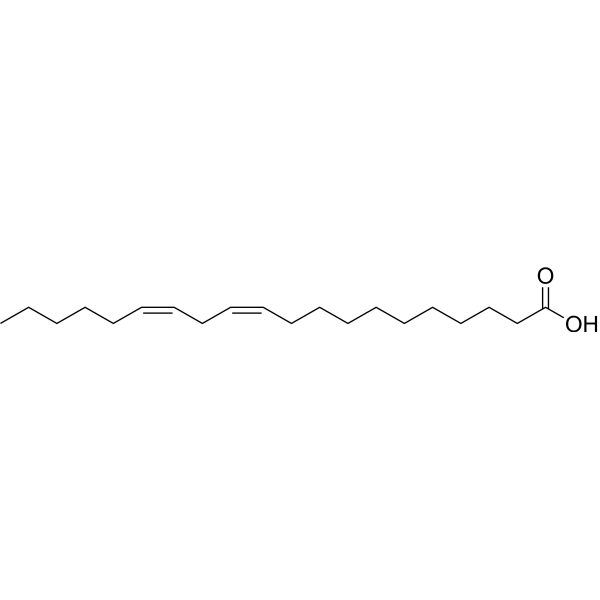
Cat. No.: HY-149589
CAS No.: 5598-38-9
Purity:  ≥98.0%
Target:  

Endogenous Metabolite

Research Areas:  

Neurological Disease

11(Z),14(Z)-Eicosadienoic acid is an unsaturated fatty acid that can serve as a biomarker for Alzheimer's disease. 11(Z),14(Z)-Eicosadienoic acid is downregulated in the feces and upregulated in the hippocampus of Alzheimer's disease model mice. 11(Z),14(Z)-Eicosadienoic acid can be used for research on Alzheimer's disease .
loading...
    loading...

