1201 Results for "

rutile TiO2 nanoparticles

" in MedChemExpress (MCE) Product Catalog:
Products (1201)

1201 Results for "rutile TiO2 nanoparticles" in MCE Product Catalog:

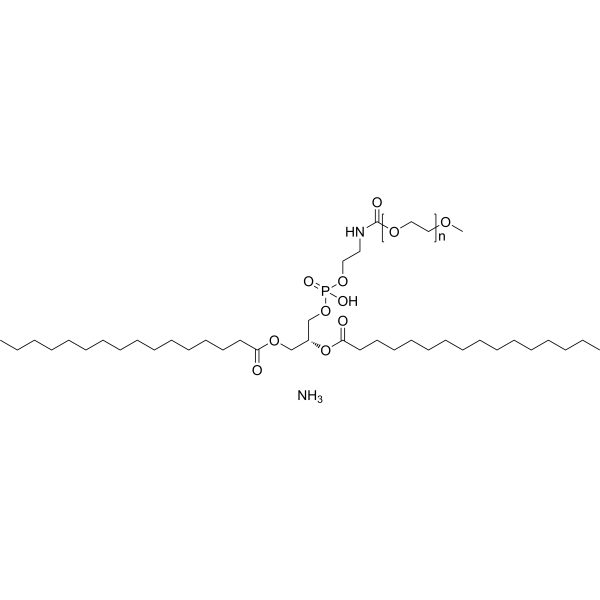
Cat. No.: HY-144012B
CAS No.: 474922-84-4
Synonyms: 16:0 PEG550 PE; 1,2-Dipalmitoyl-sn-glycero-3-phosphoethanolamine-N-[methoxy(polyethylene glycol)-550] ammonium
Target:  

Liposome

Domaines de recherche:  

Others

DPPE-PEG550 is a PEG lipid functional end group used in the synthesis of liposomes (LPs) for the design of conjugated polymer nanoparticles. Through biotin modification and carboxyl terminus, lipid nanoparticles (LNPs) further coupling with other biomolecules can be achieved. Functionalized nanoparticles can be used for targeted labeling of specific cellular proteins. With streptavidin as a linker, biotinylated PEG lipid-conjugated polymer nanoparticles are able to bind to biotinylated antibodies on cell surface receptors, yielding the utility of fluorescence-based imaging and sensing.
loading...
    loading...
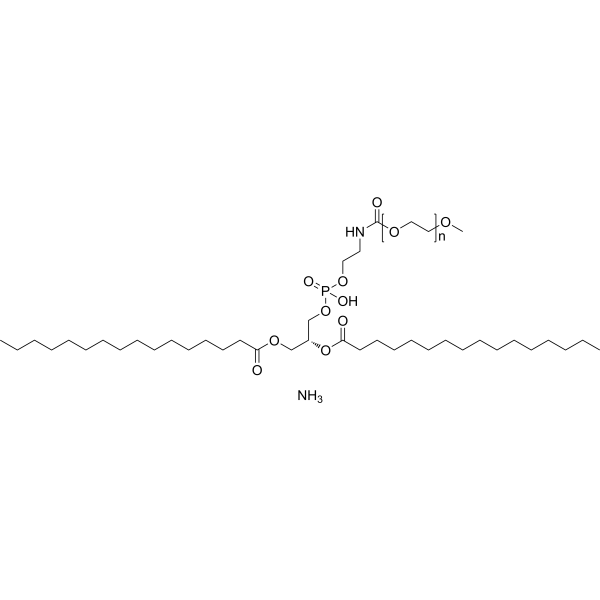
Cat. No.: HY-144012C
CAS No.: 474922-84-4
Synonyms: 16:0 PEG750 PE; 1,2-Dipalmitoyl-sn-glycero-3-phosphoethanolamine-N-[methoxy(polyethylene glycol)-750] ammonium
Target:  

Liposome

Domaines de recherche:  

Others

DPPE-PEG750 is a PEG lipid functional end group used in the synthesis of liposomes (LPs) for the design of conjugated polymer nanoparticles. Through biotin modification and carboxyl terminus, lipid nanoparticles (LNPs) further coupling with other biomolecules can be achieved. Functionalized nanoparticles can be used for targeted labeling of specific cellular proteins. With streptavidin as a linker, biotinylated PEG lipid-conjugated polymer nanoparticles are able to bind to biotinylated antibodies on cell surface receptors, yielding the utility of fluorescence-based imaging and sensing.
loading...
    loading...
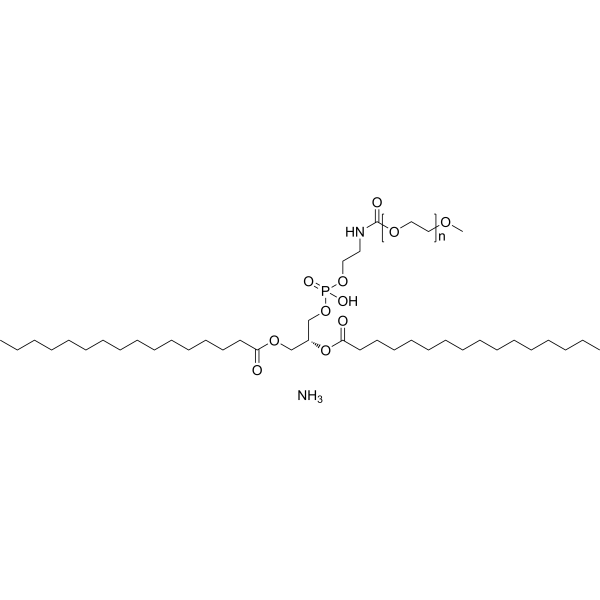
Cat. No.: HY-144012D
CAS No.: 474922-84-4
Synonyms: 16:0 PEG1000 PE; 1,2-Dipalmitoyl-sn-glycero-3-phosphoethanolamine-N-[methoxy(polyethylene glycol)-1000] ammonium
Target:  

Liposome

Domaines de recherche:  

Others

DPPE-PEG1000 is a PEG lipid functional end group used in the synthesis of liposomes (LPs) for the design of conjugated polymer nanoparticles. Through biotin modification and carboxyl terminus, lipid nanoparticles (LNPs) further coupling with other biomolecules can be achieved. Functionalized nanoparticles can be used for targeted labeling of specific cellular proteins. With streptavidin as a linker, biotinylated PEG lipid-conjugated polymer nanoparticles are able to bind to biotinylated antibodies on cell surface receptors, yielding the utility of fluorescence-based imaging and sensing.
loading...
    loading...
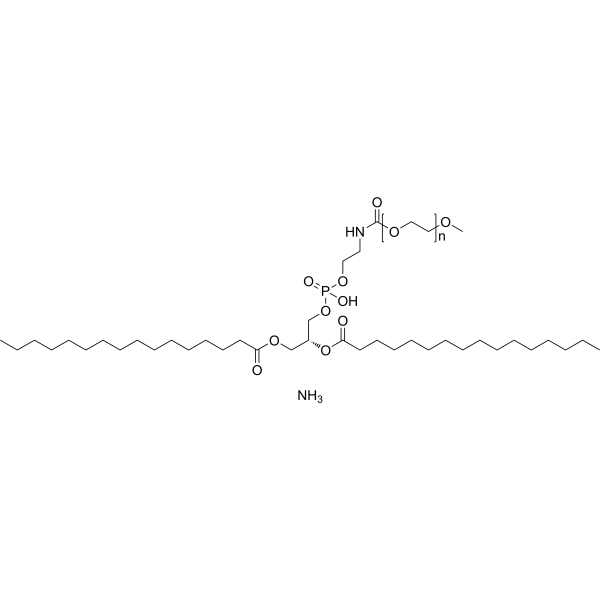
Cat. No.: HY-144012E
CAS No.: 474922-84-4
Synonyms: 16:0 PEG3000 PE; 1,2-Dipalmitoyl-sn-glycero-3-phosphoethanolamine-N-[methoxy(polyethylene glycol)-3000] ammonium
Target:  

Liposome

Domaines de recherche:  

Others

DPPE-PEG3000 is a PEG lipid functional end group used in the synthesis of liposomes (LPs) for the design of conjugated polymer nanoparticles. Through biotin modification and carboxyl terminus, lipid nanoparticles (LNPs) further coupling with other biomolecules can be achieved. Functionalized nanoparticles can be used for targeted labeling of specific cellular proteins. With streptavidin as a linker, biotinylated PEG lipid-conjugated polymer nanoparticles are able to bind to biotinylated antibodies on cell surface receptors, yielding the utility of fluorescence-based imaging and sensing.
loading...
    loading...
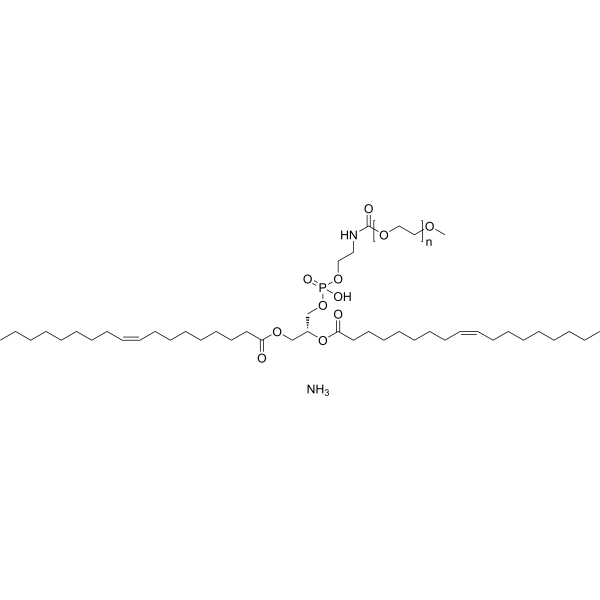
Cat. No.: HY-155930
CAS No.: 474922-90-2
Synonyms: DOPE-PEG350 ammonium; 1,2-Dioleoyl-sn-glycero-3-phosphoethanolamine-N-[methoxy(polyethylene glycol)-350] ammonium
Target:  

Liposome

Domaines de recherche:  

Others

18:1 PEG350 PE ammonium (DOPE-PEG350 ammonium) is a PEG lipid functional end group used in the synthesis of liposomes (LPs) for the design of conjugated polymer nanoparticles. Through biotin modification and carboxyl terminus, lipid nanoparticles (LNPs) further coupling with other biomolecules can be achieved. Functionalized nanoparticles can be used for targeted labeling of specific cellular proteins. With streptavidin as a linker, biotinylated PEG lipid-conjugated polymer nanoparticles are able to bind to biotinylated antibodies on cell surface receptors, yielding the utility of fluorescence-based imaging and sensing.
loading...
    loading...
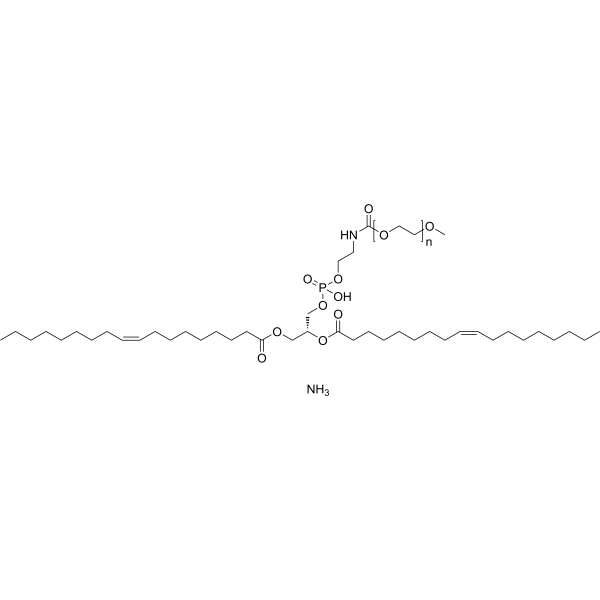
Cat. No.: HY-155931
CAS No.: 474922-90-2
Synonyms: DOPE-PEG550 ammonium; 1,2-Dioleoyl-sn-glycero-3-phosphoethanolamine-N-[methoxy(polyethylene glycol)-550] ammonium
Target:  

Liposome

Domaines de recherche:  

Others

18:1 PEG550 PE ammonium (DOPE-PEG550 ammonium) is a PEG lipid functional end group used in the synthesis of liposomes (LPs) for the design of conjugated polymer nanoparticles. Through biotin modification and carboxyl terminus, lipid nanoparticles (LNPs) further coupling with other biomolecules can be achieved. Functionalized nanoparticles can be used for targeted labeling of specific cellular proteins. With streptavidin as a linker, biotinylated PEG lipid-conjugated polymer nanoparticles are able to bind to biotinylated antibodies on cell surface receptors, yielding the utility of fluorescence-based imaging and sensing.
loading...
    loading...
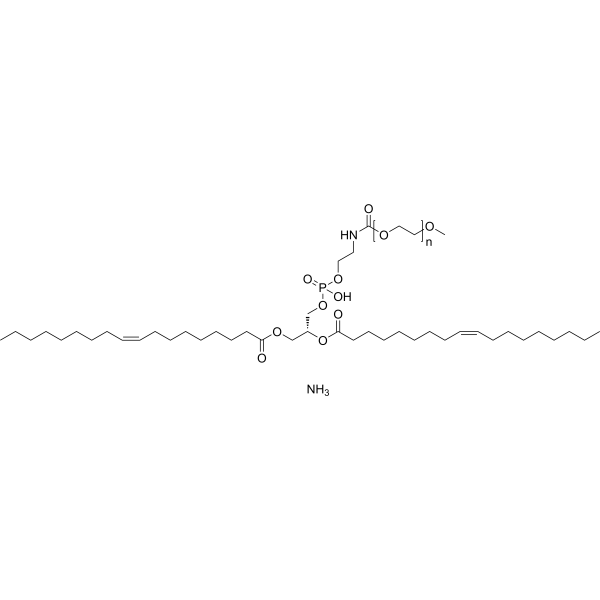
Cat. No.: HY-155932
CAS No.: 474922-90-2
Synonyms: DOPE-PEG1000 ammonium; 1,2-Dioleoyl-sn-glycero-3-phosphoethanolamine-N-[methoxy(polyethylene glycol)-1000] ammonium
Target:  

Liposome

Domaines de recherche:  

Others

18:1 PEG1000 PE ammonium (DOPE-PEG1000 ammonium) is a PEG lipid functional end group used in the synthesis of liposomes (LPs) for the design of conjugated polymer nanoparticles. Through biotin modification and carboxyl terminus, lipid nanoparticles (LNPs) further coupling with other biomolecules can be achieved. Functionalized nanoparticles can be used for targeted labeling of specific cellular proteins. With streptavidin as a linker, biotinylated PEG lipid-conjugated polymer nanoparticles are able to bind to biotinylated antibodies on cell surface receptors, yielding the utility of fluorescence-based imaging and sensing.
loading...
    loading...
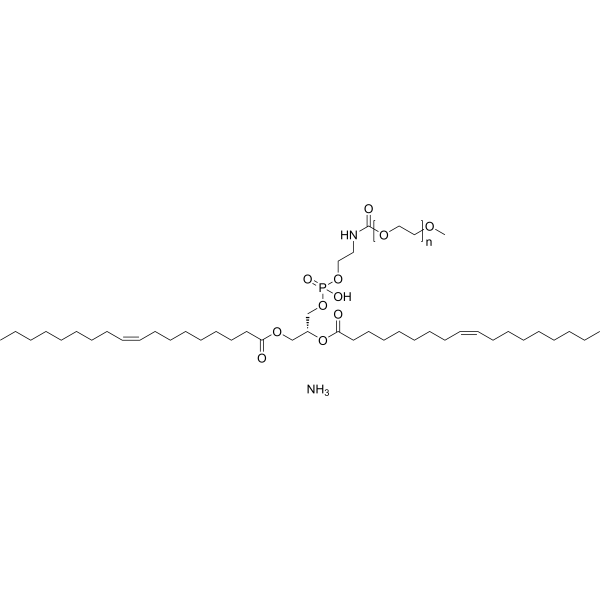
Cat. No.: HY-155933
CAS No.: 474922-90-2
Synonyms: DOPE-PEG3000 ammonium; 1,2-Dioleoyl-sn-glycero-3-phosphoethanolamine-N-[methoxy(polyethylene glycol)-3000] ammonium
Target:  

Liposome

Domaines de recherche:  

Others

18:1 PEG3000 PE ammonium (DOPE-PEG3000 ammonium) is a PEG lipid functional end group used in the synthesis of liposomes (LPs) for the design of conjugated polymer nanoparticles. Through biotin modification and carboxyl terminus, lipid nanoparticles (LNPs) further coupling with other biomolecules can be achieved. Functionalized nanoparticles can be used for targeted labeling of specific cellular proteins. With streptavidin as a linker, biotinylated PEG lipid-conjugated polymer nanoparticles are able to bind to biotinylated antibodies on cell surface receptors, yielding the utility of fluorescence-based imaging and sensing.
loading...
    loading...
Cat. No.: HY-46759A
Target:  

Liposome

Domaines de recherche:  

Infection

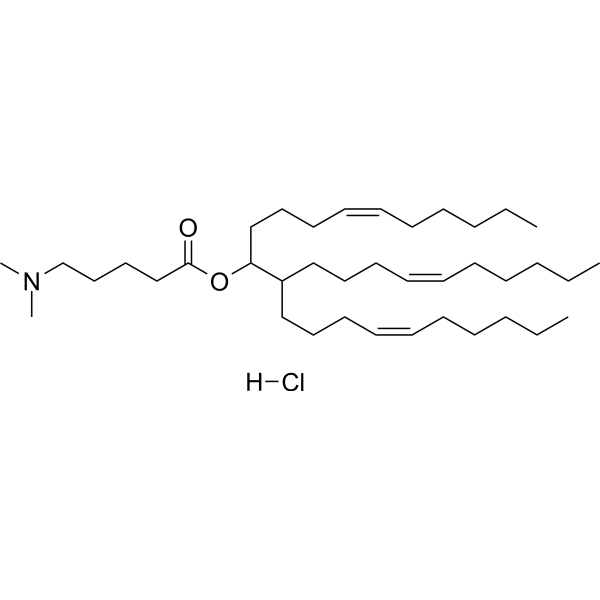
Genevant CL1 monohydrochloride is an ionizable lipid (pKa = 6.3) suitable for the preparation of lipid nanoparticles (LNPs) for delivering nucleic acid payloads and intramuscular vaccines. Genevant CL1 monohydrochloride is a component of lipid nanoparticle delivery systems for mRNA vaccines .
loading...
    loading...
Cat. No.: HY-156100
CAS No.: 2639634-71-0
Target:  

Liposome

Domaines de recherche:  

Others

C12-4 is an ionizable lipid for lipid nanoparticles (LNPs) formulation.
loading...
    loading...
Cat. No.: HY-W075708
CAS No.: 41699-93-8
Synonyms: Cu(II) Meso-Tetra(4-carboxyphenyl)porphyrin
Target:  

MOFs

Domaines de recherche:  

Others

Cu (II) MTCPP (Cu (II) Meso-Tetra (4-carboxyphenyl) porphyrin) is a copper coordination complex. Cu (II) MTCPP-sensitized TiO2 nanotubes are a type of visible-light photocatalyst. Cu (II) MTCPP-sensitized TiO2 nanotubes can expand the wavelength response range, transfer excited electrons more efficiently, and separate photogenerated electron-hole pairs .
loading...
    loading...
Cat. No.: HY-172168
Orange Fluorescent PLGA nanoparticles, 100nm a nanoparticle made from the polymer PLGA and labeled with an orange fluorescent dye. Orange Fluorescent PLGA nanoparticles, 100nm can be used for drug delivery and for tracing .
loading...
    loading...
Cat. No.: HY-172168A
Orange Fluorescent PLGA nanoparticles, 200nm a nanoparticle made from the polymer PLGA and labeled with an orange fluorescent dye. Orange Fluorescent PLGA nanoparticles, 200nm can be used for drug delivery and for tracing .
loading...
    loading...
Cat. No.: HY-172168B
Orange Fluorescent PLGA nanoparticles, 500nm a nanoparticle made from the polymer PLGA and labeled with an orange fluorescent dye. Orange Fluorescent PLGA nanoparticles, 500nm can be used for drug delivery and for tracing .
loading...
    loading...
Cat. No.: HY-172174A
Red Fluorescent PLGA nanoparticles, 200nm is a nanoparticle made from the polymer PLGA and labeled with a red fluorescent dye. Red Fluorescent PLGA nanoparticles, 200nm can be used for drug delivery and for tracing .
loading...
    loading...
Cat. No.: HY-172174B
Red Fluorescent PLGA nanoparticles, 500nm is a nanoparticle made from the polymer PLGA and labeled with a red fluorescent dye. Red Fluorescent PLGA nanoparticles, 500nm can be used for drug delivery and for tracing .
loading...
    loading...
Cat. No.: HY-168947A
Green Fluorescent PLGA nanoparticles, 200nm is a PLGA nanoparticle labeled with a green fluorescent dye and is commonly used in imaging and diagnostic applications.
loading...
    loading...
Cat. No.: HY-168947B
Green Fluorescent PLGA nanoparticles, 500nm is a PLGA nanoparticle labeled with a green fluorescent dye and is commonly used in imaging and diagnostic applications.
loading...
    loading...
Cat. No.: HY-168943A
PLGA nanoparticles, 200nm, are biodegradable tumor-targeting nanocarriers that can serve as drug delivery enhancers and multidrug resistance inhibitors. PLGA nanoparticles, 200nm, passively enriched through the EPR effect and actively targeted via ligand-mediated endocytosis, can encapsulate various antitumor active molecules. PLGA nanoparticles, 200nm can specifically recognize multiple types of tumor cells and improve cellular uptake, cytotoxicity and antiproliferative effects after modification with ligands such as transferrin, folic acid, and RGD. PLGA nanoparticles, 200nm can encapsulate various therapeutic drugs and can be surface modified to achieve targeting, imaging, and prolonged circulation time, making them suitable for cancer-related research [2] .
loading...
    loading...
Cat. No.: HY-168943B
PLGA nanoparticles, 500nm, are biodegradable tumor-targeting nanocarriers that can serve as drug delivery enhancers and multidrug resistance inhibitors. PLGA nanoparticles, 500nm, passively enriched through the EPR effect and actively targeted via ligand-mediated endocytosis, can encapsulate various antitumor active molecules. PLGA nanoparticles, 500nm can specifically recognize multiple types of tumor cells and improve cellular uptake, cytotoxicity and antiproliferative effects after modification with ligands such as transferrin, folic acid, and RGD. PLGA nanoparticles, 500nm can encapsulate various therapeutic drugs and can be surface modified to achieve targeting, imaging, and prolonged circulation time, making them suitable for cancer-related research [2] .
loading...
    loading...

