115 Results for "

sensor

" in MedChemExpress (MCE) Product Catalog:
Products (115)

115 Results for "sensor" in MCE Product Catalog:

Cat. No.: HY-P1073
CAS No.: 484598-35-8
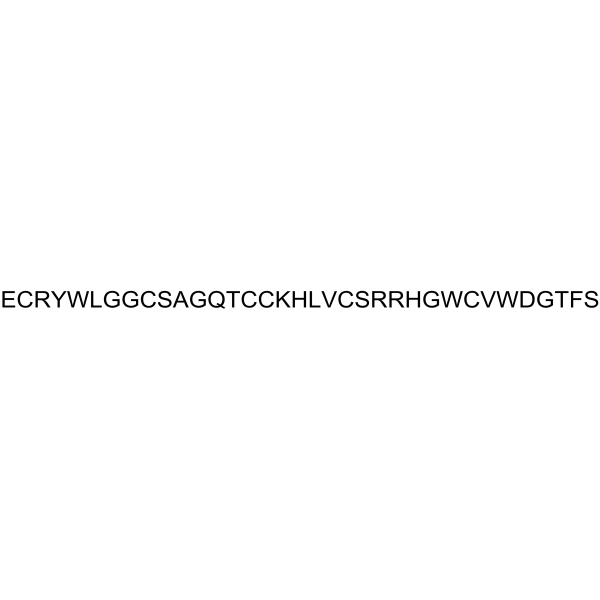
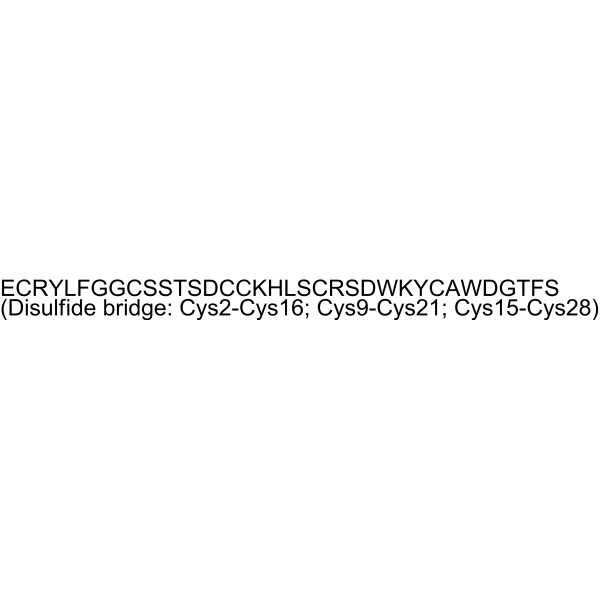
ProTx-I is a toxin derived from Thrixopelma pruriens and a peptide inhibitor targeting TTX-resistant sodium channels. ProTx-I interacts with voltage sensors of multiple domains such as NaV1.7, reduces neuronal excitability through allosteric modulation of channel gating and alteration of voltage dependence. The IC50 values of ProTx-I against human NaV1.7, NaV1.2, NaV1.6, and NaV1.5 are 95 nM, 104 nM, 21 nM, and 358 nM, respectively; ProTx-I also potently inhibits Ba 2+ currents of hCav3.1, while its inhibitory potency against hCav3.2 is approximately 160-fold lower. ProTx-I is applicable to the research of chronic pain .
loading...
    loading...
Cat. No.: HY-W017443S
CAS No.: 202406-87-9
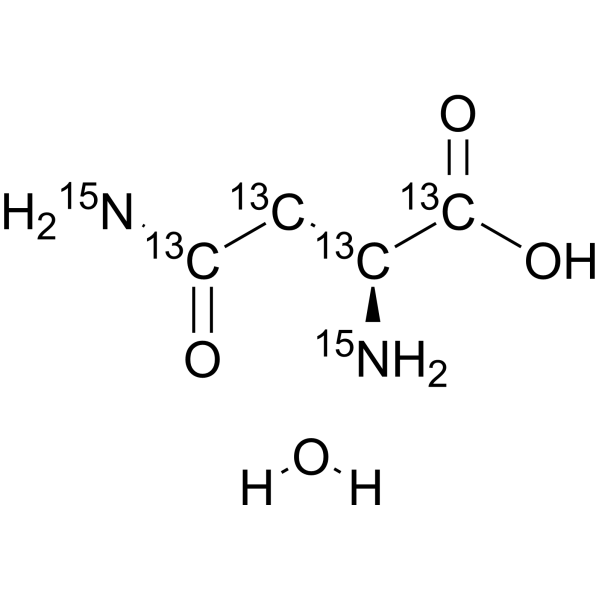
L-Asparagine- 13C4, 15N2 monohydrateis the 13C-labeled and 15N-labeled L-Asparagine monohydrate (HY-W017443). L-Asparagine monohydrate is an essential amino acid for leukemic cells and a substrate for L-Asparaginase. L-Asparaginase is a potent anti-leukemic enzyme that promotes asparagine (Asn) and glutamine (Gln) depletion and inhibits protein biosynthesis in lymphoblasts. Removal of L-asparagine from plasma by L-Asparaginase results in inhibition of RNA and DNA synthesis and subsequent apoptosis. L-Asparaginase has cell-killing ability in vitro and in vivo, and selectively inhibits the growth of cancer cells with low asparagine synthetase (AASNS) expression. L-Asparagine monohydrate can be used as a biomarker and sensor for the study of childhood acute lymphoblastic leukemia .
loading...
    loading...
Cat. No.: HY-W017443S2
CAS No.: 2483829-30-5
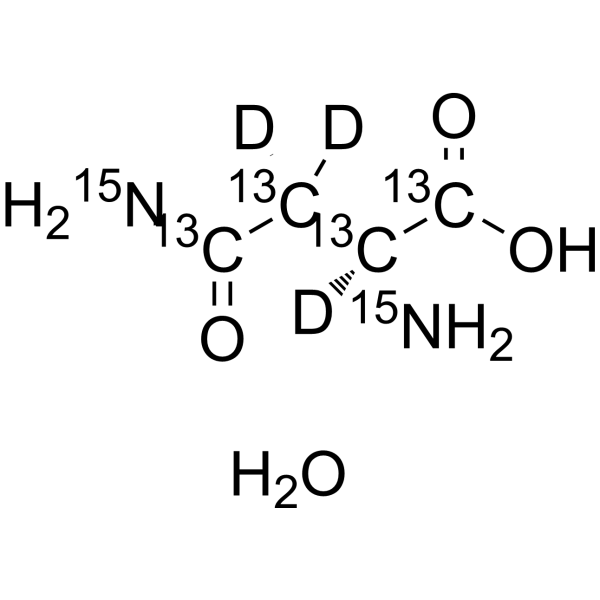
L-Asparagine- 13C4, 15N2,d3 monohydrate is the deuterium, 13C-, and 15N-labeled L-Asparagine monohydrate (HY-W017443). L-Asparagine monohydrate is an essential amino acid for leukemic cells and a substrate for L-Asparaginase. L-Asparaginase is a potent anti-leukemic enzyme that promotes asparagine (Asn) and glutamine (Gln) depletion and inhibits protein biosynthesis in lymphoblasts. Removal of L-asparagine from plasma by L-Asparaginase results in inhibition of RNA and DNA synthesis and subsequent apoptosis. L-Asparaginase has cell-killing ability in vitro and in vivo, and selectively inhibits the growth of cancer cells with low asparagine synthetase (AASNS) expression. L-Asparagine monohydrate can be used as a biomarker and sensor for the study of childhood acute lymphoblastic leukemia .
loading...
    loading...
Cat. No.: HY-W017443S3
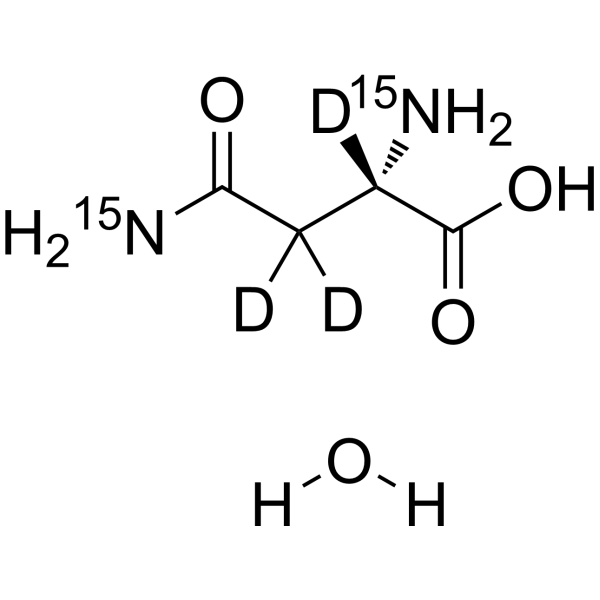
L-Asparagine- 15N2,d3 monohydrate is the deuterium and 15N-labeled L-Asparagine monohydrate (HY-W017443). L-Asparagine monohydrate is an essential amino acid for leukemic cells and a substrate for L-Asparaginase. L-Asparaginase is a potent anti-leukemic enzyme that promotes asparagine (Asn) and glutamine (Gln) depletion and inhibits protein biosynthesis in lymphoblasts. Removal of L-asparagine from plasma by L-Asparaginase results in inhibition of RNA and DNA synthesis and subsequent apoptosis. L-Asparaginase has cell-killing ability in vitro and in vivo, and selectively inhibits the growth of cancer cells with low asparagine synthetase (AASNS) expression. L-Asparagine monohydrate can be used as a biomarker and sensor for the study of childhood acute lymphoblastic leukemia .
loading...
    loading...
Cat. No.: HY-W017443S4
CAS No.: 768348-44-3
Synonyms: (-)-Asparagine-13C4; Asn-13C4; Asparamide-13C4
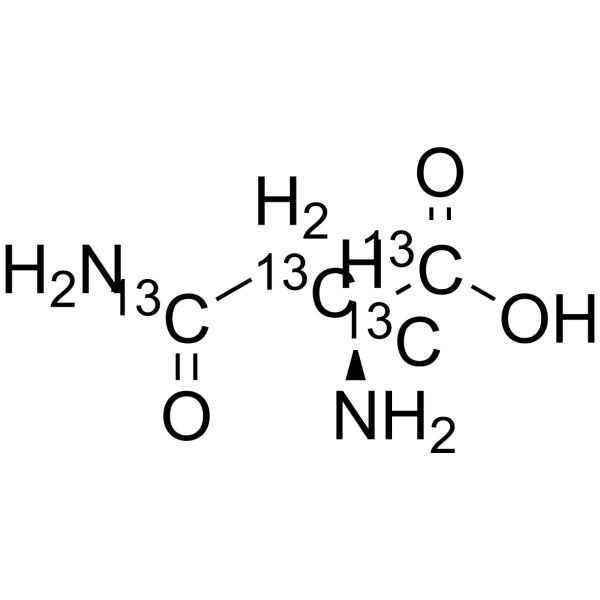
L-Asparagine- 13C4 ((-)-Asparagine- 13C4; Asn- 13C4) monohydrate is the 13C labeled labeled L-Asparagine monohydrate (HY-W017443). L-Asparagine monohydrate is an essential amino acid for leukemic cells and a substrate for L-Asparaginase. L-Asparaginase is a potent anti-leukemic enzyme that promotes asparagine (Asn) and glutamine (Gln) depletion and inhibits protein biosynthesis in lymphoblasts. Removal of L-asparagine from plasma by L-Asparaginase results in inhibition of RNA and DNA synthesis and subsequent apoptosis. L-Asparaginase has cell-killing ability in vitro and in vivo, and selectively inhibits the growth of cancer cells with low asparagine synthetase (AASNS) expression. L-Asparagine monohydrate can be used as a biomarker and sensor for the study of childhood acute lymphoblastic leukemia .
loading...
    loading...
Cat. No.: HY-187364
CAS No.: 3050594-88-9
Research Areas:  

Inflammation/Immunology

TRPV4 antagonist-7 is a potent and selective TRPV4 antagonist with an IC50 of 0.2 nM against human targets. TRPV4 antagonist-7 binds to the voltage-sensor-like domain cavity of TRPV4 and inhibits channel activity through the formation of salt bridges, hydrogen bonds, and edge-to-face π-stacking interactions. TRPV4 antagonist-7 induces phospholipid accumulation in HepG2 C3A cells in vitro with an IC50 of 3.8 μM, and exhibits moderate inhibitory effects on CYP2D6 with an IC50 of 5.1 μM. TRPV4 antagonist-7 dose-dependently inhibits GSK1016790A (HY-19608)-induced bronchoconstriction in rats and cough in guinea pigs. TRPV4 antagonist-7 can be used in studies related to respiratory system diseases .
loading...
    loading...
Cat. No.: HY-P5183
Target:  

Sodium Channel

Research Areas:  

Neurological Disease

Hm1a is a venom peptide and a selective hNaV1.1 activator with an EC50 of 7.5 nM. Hm1a enhances hNaV1.1 and hNaV1.3 channel currents via delayed inactivation. Hm1a restores action potential firing in Dravet syndrome GABAergic inhibitory interneurons, reduces interictal epileptiform discharges and whole-brain hyperexcitability, lowers seizure frequency, and rescues premature death in Dravet syndrome mice. Hm1a can be used for the research of neurological disease, such as Dravet syndrome .
loading...
    loading...
Cat. No.: HY-L175
178 compounds

Inflammasomes are classic pattern recognition receptors for natural immune responses. Inflammasomes are polymeric protein complexes that regulate inflammatory responses and pyrolytic cell death, thereby exerting the host's defense against microorganisms. Inflammasomes sensors are associated with adapter proteins, activating inflammatory caspase-1, releasing inflammatory cytokines and inducing cell death, endowing the host with defense against pathogens. NLRP1, NLRP3, NLRC4, AIM2, and pyrin are considered typical inflammasomes because they convert cysteine asparaginase-1 into catalytically active capsaicin-1. In addition to infectious diseases, the importance of inflammasomes is also related to various clinical diseases, such as autoimmune diseases, neurodegeneration and metabolic disorders, and the development of cancer. Therefore, it is necessary to strictly regulate the activation and function of inflammasomes to avoid accidental host tissue damage while inducing pathogens to kill the inflammatory response.

MCE designs a unique collection of 178 inflammasomes related compounds. It is a good tool to be used for research on Inflammation, cancer and other diseases.

Cat. No.: HY-177569
NVS1.1 is an orally active, blood-brain barrier-penetrant eRF1 degrader. NVS1.1 induces ubiquitination of eRF1 at Lys279, mediates proteasomal degradation via the E3 ubiquitin ligases RNF14 and RNF25 as well as the translational stress sensor GCN1, traps eRF1 at the ribosomal A-site, inhibits translation termination and triggers ribosome collision. As a readthrough enhancer, NVS1.1 enables near-cognate tRNA incorporation at premature termination codons by reducing intracellular eRF1 levels. NVS1.1 activates ribosome-associated quality control pathways via ribosome collision, including ubiquitination of small subunit ribosomal proteins. NVS1.1 restores functional full-length CFTR and IDUA proteins and reduces glycosaminoglycan accumulation in relevant models. NVS1.1 can be used in the research of cystic fibrosis and Hurler syndrome (mucopolysaccharidosis type I, MPS I) .
loading...
    loading...
Cat. No.: HY-Y1840
CAS No.: 150-19-6
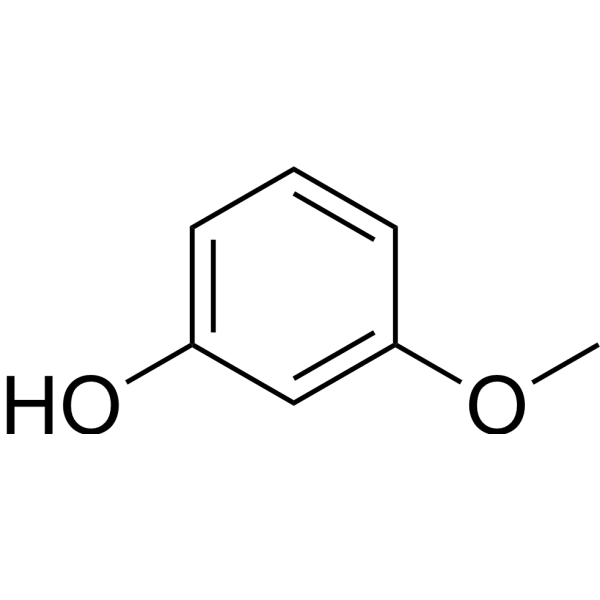
3-Methoxyphenol is an environmental pollutant. 3-Methoxyphenol occurs in the aroma components of dried bonito. 3-Methoxyphenol potentially enhances GABA-evoked responses of α1β1 GABAA receptors by increasing the affinity of GABA binding sites. 3-Methoxyphenol is used as a flavoring substance in food and animal feed. 3-Methoxyphenol prolongs pentobarbital-induced sleeping time and reduces elevated plus maze behavior .
loading...
    loading...
Cat. No.: HY-Y1840R
CAS No.: 150-19-6
3-Methoxyphenol (Standard) is the analytical standard of 3-Methoxyphenol (HY-Y1840). This product is intended for research and analytical applications. 3-Methoxyphenol is an environmental pollutant. 3-Methoxyphenol occurs in the aroma components of dried bonito. 3-Methoxyphenol potentially enhances GABA-evoked responses of α1β1 GABAA receptors by increasing the affinity of GABA binding sites. 3-Methoxyphenol is used as a flavoring substance in food and animal feed. 3-Methoxyphenol prolongs pentobarbital-induced sleeping time and reduces elevated plus maze behavior .
loading...
    loading...
Cat. No.: HY-Y1840S
CAS No.: 104714-88-7
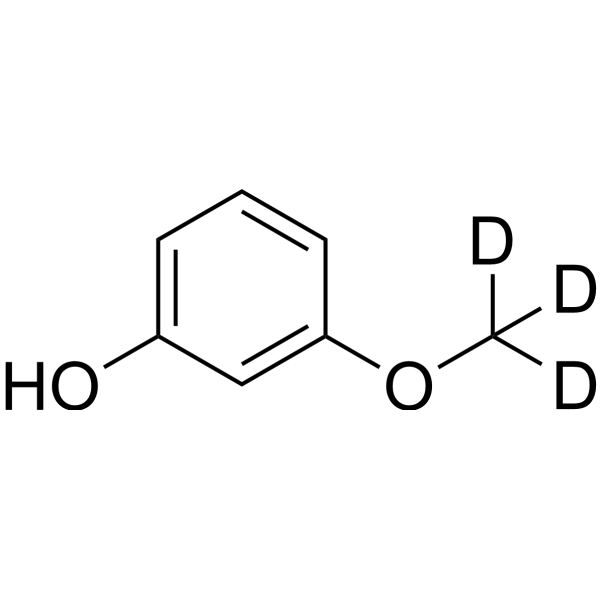
3-Methoxyphenol-d3 is the d3-labeled 3-Methoxyphenol (HY-Y1840). 3-Methoxyphenol is an environmental pollutant. 3-Methoxyphenol occurs in the aroma components of dried bonito. 3-Methoxyphenol potentially enhances GABA-evoked responses of α1β1 GABAA receptors by increasing the affinity of GABA binding sites. 3-Methoxyphenol is used as a flavoring substance in food and animal feed. 3-Methoxyphenol prolongs pentobarbital-induced sleeping time and reduces elevated plus maze behavior .
loading...
    loading...
Cat. No.: HY-110251A
CAS No.: 1539318-40-5
Purity:  ≥98.0%
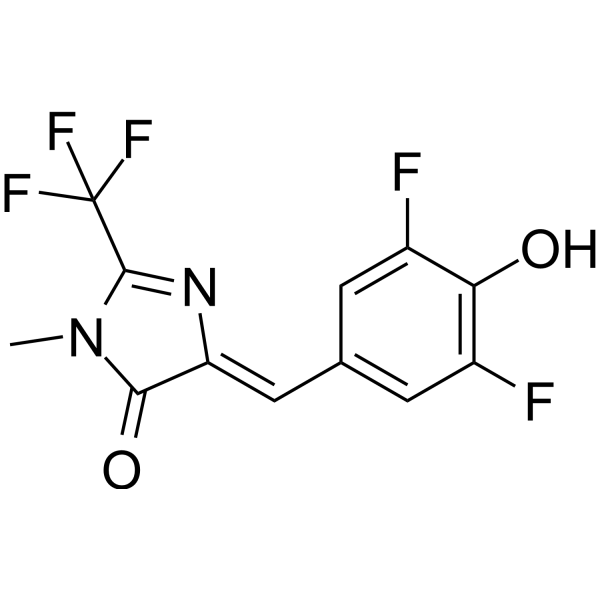
DFHBI-2T is a membrane-permeable, RNA aptamer-activated fluorescent probe (Ex/Em=500 nm/523 nm), with a Kd value of 1300 nM for the RNA aptamer Spinach2. DFHBI-2T binds to Spinach2, converting the fluorophore to a fluorescent state, stabilizing its planar structure to facilitate the radiative fluorescence decay pathway, and forming a complex with red-shifted excitation and emission peaks. DFHBI-2T can be used for RNA imaging in live cells. It is also applicable to research related to fragile X-associated tremor/ataxia syndrome .
loading...
    loading...
Cat. No.: HY-DY1111
CAS No.: 1539318-40-5
Target:  

DNA Stain

Research Areas:  

Neurological Disease

DFHBI-2T solution is a membrane-permeable, RNA aptamer-activated fluorescent probe (Ex/Em=500 nm/523 nm), with a Kd value of 1300 nM for the RNA aptamer Spinach2. DFHBI-2T solution binds to Spinach2, converting the fluorophore to a fluorescent state, stabilizing its planar structure to facilitate the radiative fluorescence decay pathway, and forming a complex with red-shifted excitation and emission peaks. DFHBI-2T solution can be used for RNA imaging in live cells. It is also applicable to research related to fragile X-associated tremor/ataxia syndrome .
Solvent and concentration: DMSO: 5 mM
loading...
    loading...
Cat. No.: HY-W585368
CAS No.: 945921-51-7
Research Areas:  

Others

BODIPY dyes are a class of small-molecule fluorophores with strong ultraviolet absorption and sharp fluorescence emission peaks. BODIPY dyes can non-specifically label erythrocyte membranes, fail to inhibit the proliferation of Plasmodium falciparum, exhibit weak cytotoxicity against Chinese hamster ovary cells, and have extremely low hemolytic activity. BODIPY dyes serve as a universal scaffold for fluorescent compounds such as laser dyes and fluorescent probes, and can also be used to construct photoelectric and biophotonic molecular assembly units. BODIPY dyes are applicable to research related to live-cell imaging, fluorescent labeling of proteins and DNA, and various biological imaging assays .
loading...
    loading...

