161 Results for "

elements

" in MedChemExpress (MCE) Product Catalog:
Products (161)

161 Results for "elements" in MCE Product Catalog:

Cat. No.: HY-W030338
CAS No.: 15854-08-7
Target:  

Endogenous Metabolite

Research Areas:  

Inflammation/Immunology

aPKC-IN-2 is a small molecule inhibitor that inhibits aPKC activity. aPKC-IN-2 can effectively block vascular endothelial permeability in cell culture and in vivo experiments. aPKC-IN-2 shows biological activity in interfering with NFκB-driven gene transcription and is associated with inflammatory responses. aPKC-IN-2 has a significant inhibitory effect on vascular endothelial permeability induced by VEGF and TNF, and its EC50 value is in the low nanomolar range. The structural characteristics of aPKC-IN-2 reveal key elements of its inhibitory activity, providing the possibility for further development of small molecule aPKC inhibitors .
loading...
    loading...
Cat. No.: HY-150101
CAS No.: 1798578-61-6
Research Areas:  

Inflammation/Immunology

LAS194046 is a selective pan-JAK inhibitor, with an IC50 of 5.46 nM against JAK1, 0.4 nM against JAK2, and 2.07 nM against JAK3. LAS194046 reduces the levels of IL-8 and MMP-9. LAS194046 enhances the activation of glucocorticoid response elements by Fluticasone propionate. LAS194046 inhibits T2-type allergic pulmonary inflammation, allergen-induced airway inflammation, and late-phase asthmatic responses in rats. LAS194046 can be used in research related to non-T2 severe asthma, chronic obstructive pulmonary disease, and asthma .
loading...
    loading...
Cat. No.: HY-158476
Synonyms: FA2G2S1 N-linked oligosaccharide, procainamide labelled; α(2,6)/FA2G2S(6)1 glycan, procainamide labelled; F(6)A2G(4)2S(6)1 glycan, procainamide labelled
FA2G2S1 glycan (G2FS1), procainamide labelled (FA2G2S1 N-linked oligosaccharide, procainamide labelled; α(2,6)/FA2G2S(6)1 glycan, procainamide labelled; F(6)A2G(4)2S(6)1 glycan, procainamide labelled) is a N-polysaccharide protein and a multifunctional fluorescent linker. The resulting conjugates exhibit high sensitivity and specificity by mimicking the antennal elements of N-glycans .
loading...
    loading...
Cat. No.: HY-173025
Research Areas:  

Neurological Disease

Nurr1 agonist 12 (Compound 37) is the agonist for nuclear receptor-associated protein 1 (Nurr1) that activates the transcriptional activity of Nurr1 with an EC50 of 0.06 μM. Nurr1 agonist 12 activates the human response elements NBRE, NurRE, and DR5 with EC50 of 0.07 μM, 0.027 μM, and 0.014 μM, respectively. Nurr1 agonist 12 induces the expression of Nurr1-regulated neurotrophic genes, such as tyrosine hydroxylase (TH), SOD1/2, BDNF, Sestrin 3, and BIRC5 (Survivin). Nurr1 agonist 12 exhibits neuroprotective efficacy against Paraquat-induced neurotoxicity .
loading...
    loading...
Cat. No.: HY-121856
CAS No.: 36740-73-5
Target:  

Others

Research Areas:  

Inflammation/Immunology

Flumizole, a derivative of substituted 5,6-diaryl-2,3-dihydroimidazo[2,1-b]thiazoles, was synthesized and evaluated for its immunoregulatory and anti-inflammatory properties in animal models such as rat adjuvant-induced arthritis and mouse oxazolone-induced contact sensitivity assays. This compound class combines structural elements from flumizole and levamisole, aiming to enhance therapeutic efficacy. Symmetrically substituted 5,6-diaryl compounds with specific alkyl heteroatom or halogen substitutions showed optimal potency in the arthritis model. However, variations in activity were less consistent in the contact sensitivity assay. Flumizole and related compounds demonstrate potential as dual-action agents, targeting inflammation and immune modulation, offering promise for therapeutic development in immune-related disorders .
loading...
    loading...
Cat. No.: HY-135146R
CAS No.: 2170136-65-7
Synonyms: (R)-GSK3482364 (Standard)
Research Areas:  

Cancer

GSK-3484862 (Standard) is the analytical standard of GSK-3484862 (HY-135146). This product is intended for research and analytical applications. GSK-3484862 is a highly potent non-covalent inhibitor and demethylating agent of DNMT1. GSK-3484862 induces genome-wide DNA demethylation, including the regulatory elements of DNMT3B and the promoter region of TERT, and significantly inhibits cell viability, growth, proliferation and self-renewal. GSK-3484862 blocks the transformation of young AT2 cells, induces apoptosis, and generates transcriptomic features similar to those of senescent cells. GSK-3484862 is widely used in studies related to lung cancer, oral squamous cell carcinoma and lung adenocarcinoma .
loading...
    loading...
Cat. No.: HY-403733B
CAS No.: 1998094-24-8
Research Areas:  

Cancer

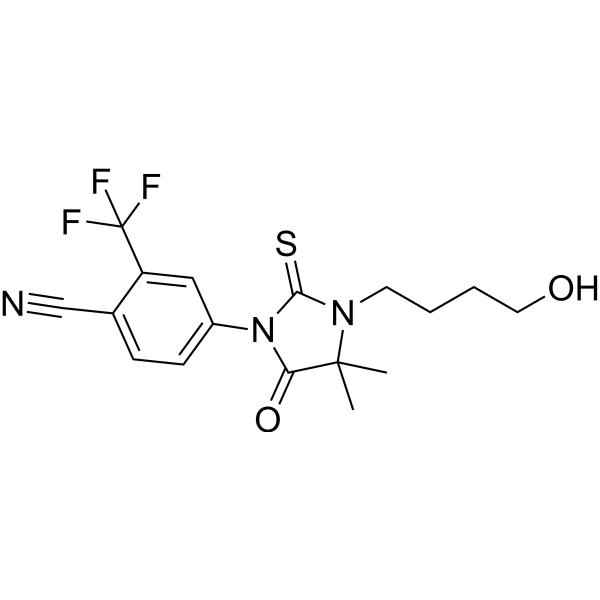
(+)-JJ-450 is a non-competitive antagonist targeting the androgen receptor (AR) that inhibits AR nuclear localization and transcriptional activity in the absence of androgen. (+)-JJ-450 is less active than (-)-JJ-450 (HY-403733A) in inhibiting prostate-specific antigen (PSA) expression in LN95 cells, possibly because (+)-JJ-450 targets the ligand binding domain (LBD) of AR. (+)-JJ-450 inhibits the transcriptional activity of AR and its splice variants (e.g., ARv7) by promoting the degradation of unliganded AR in the nucleus and reducing the binding of AR to androgen response elements (AREs). (+)-JJ-450 can be used in castration-resistant prostate cancer (CRPC) studies that are resistant to enzalutamide (MDV3100) (HY-70003) .
loading...
    loading...
Cat. No.: HY-D0932R
CAS No.: 85-83-6
Synonyms: Solvent Red 24 (Standard); C.I. 26105 (Standard)
Sudan IV (Standard) (Solvent Red 24 (Standard)) is the analytical standard of Sudan IV (HY-D0932). This product is intended for research and analytical applications. Sudan IV is an agonist of the aryl hydrocarbon receptor (AhR) that activates downstream signaling pathways and induces CYP1A1 expression. Sudan IV promotes CYP1A1 gene transcription by activating AhR-ARNT heterodimers and binding to exogenous response elements (XREs) on DNA, thereby enhancing drug metabolizing enzyme activity. Sudan IV can be used to study the toxicity mechanisms of industrial dyes and the effects of interactions with serum proteins (such as bovine serum albumin (BSA)) on their distribution in vivo. Sudan IV is a fat-soluble diazo dye that can be used to stain lipids, triglycerides, and lipoproteins on frozen sections.
loading...
    loading...
Cat. No.: HY-L0120V
170,269 compounds

“BioDesign” approach incorporates key structural features of known pharmacologically relevant natural products (e.g. alkaloids and other secondary metabolites) into synthetically feasible medicinal chemistry scaffolds. In order to identify the privileged pharmacophores, ring systems and linkers, we have carried out statistical analysis of structural features of natural products, marketed drugs, and drug candidates.

Saturated, fused ring, spiro, and bridged systems with a tendency towards multiple chiral centers are highly privileged among natural products and marketed drugs yet these structures are very poorly represented in commercial libraries. This library addressed this market need by incorporating these privileged elements into the design of novel synthetic molecules with high molecular framework diversity, multiple stereogenic centers (≥2), and degree of saturation (Fsp3 > 0.5).

Cat. No.: HY-135146G
CAS No.: 2170136-65-7
Synonyms: (R)-GSK3482364 (GMP)
GSK-3484862 GMP is GSK-3484862 (HY-135146) produced by using GMP guidelines. GMP small molecules works appropriately as an auxiliary reagent for cell therapy manufacture. GSK-3484862 is a highly potent non-covalent inhibitor and demethylating agent of DNMT1. GSK-3484862 induces genome-wide DNA demethylation, including the regulatory elements of DNMT3B and the promoter region of TERT, and significantly inhibits cell viability, growth, proliferation and self-renewal. GSK-3484862 blocks the transformation of young AT2 cells, induces apoptosis, and generates transcriptomic features similar to those of senescent cells. GSK-3484862 is widely used in studies related to lung cancer, oral squamous cell carcinoma and lung adenocarcinoma .
loading...
    loading...
Cat. No.: HY-141466
CAS No.: 992-67-6
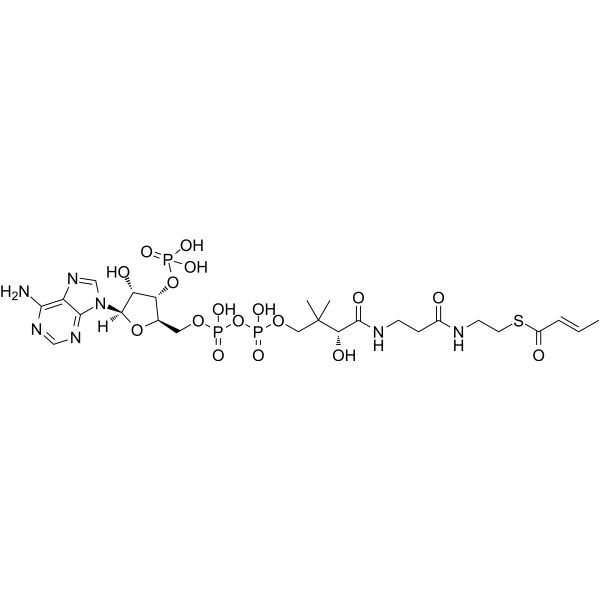
Crotonyl-CoA, a high-energy acyl donor, is an intermediate in the fermentation of butyric acid, and in the metabolism of lysine and tryptophan. Crotonyl-CoA is important in the metabolism of fatty acids and amino acids. Crotonyl-CoA acts as a substrate for p300’s histone crotonyltransferase activity, competing with acetyl-CoA for p300-mediated histone acylation reactions. Crotonyl-CoA regulates global and gene-specific histone crotonylation levels in cells, with cellular concentration changes altering histone crotonylation at regulatory elements of activated genes. Crotonyl-CoA serves as the substrate for crotonyl-CoA reductase/carboxylase (CCRC)-catalyzed NADPH-mediated reduction and carbon dioxide trapping to form unusual alkylmalonyl-CoA polyketide synthase extender units. Crotonyl-CoA can be used for the research of LPS-induced inflammatory response .
loading...
    loading...
Cat. No.: HY-184617
Due to their unique physical and chemical properties, noble metal nanoparticles, represented by platinum, gold, silver, and palladium, have been extensively studied by many scientists. Palladium is a noble metal belonging to the platinum group elements. Its elemental form is a silvery-white transition metal, soft in texture and possessing good ductility and malleability. Palladium nanoparticles, due to their unique physical, chemical, and electronic properties, have shown remarkable application potential in multiple fields. The preparation methods for palladium nanoparticles mainly include chemical reduction and physical reduction methods. Chemical reduction generally involves adding a reducing agent to reduce palladium ions to elemental palladium. Common reducing agents used include sodium citrate, sodium borohydride, and hydrogen gas. Because the chemical reduction process is relatively fast, protective agents such as polyvinylpyrrolidone (PVP) are generally added to prevent palladium particles from agglomerating.
loading...
    loading...
Cat. No.: HY-D0932S
CAS No.: 1014689-18-9
Synonyms: Solvent Red 24-d6; C.I. 26105-d6
Sudan IV-d6 (Solvent Red 24-d6) is the deuterium labeled Sudan IV(HY-D0932). Sudan IV is an agonist of the aryl hydrocarbon receptor (AhR) that activates downstream signaling pathways and induces CYP1A1 expression. Sudan IV promotes CYP1A1 gene transcription by activating AhR-ARNT heterodimers and binding to exogenous response elements (XREs) on DNA, thereby enhancing drug metabolizing enzyme activity. Sudan IV can be used to study the toxicity mechanisms of industrial dyes and the effects of interactions with serum proteins (such as bovine serum albumin (BSA)) on their distribution in vivo. Sudan IV is a fat-soluble diazo dye that can be used to stain lipids, triglycerides, and lipoproteins on frozen sections .
loading...
    loading...
Cat. No.: HY-L033
370 compounds

Peptidomimetics are compounds whose essential elements (pharmacophore) mimic a natural peptide or protein in 3D space and which retain the ability to interact with the biological target and produce the same biological effect. Peptidomimetics are designed to circumvent some of the problems associated with a natural peptide: e.g. stability against proteolysis (duration of activity) and poor bioavailability. Certain other properties, such as receptor selectivity or potency, often can be substantially improved. The design and synthesis of peptidomimetics are most important because of the dominant position peptide and protein-protein interactions play in molecular recognition and signaling, especially in living systems. Hence mimics have great potential in drug discovery.

MCE Peptidomimetic Library contains 370 compounds including peptoid, α-helix mimetics, β-turn/sheets mimetics, etc. This library is an indispensable tool of structure-activity relationships in drug discovery.

Cat. No.: HY-117953
CAS No.: 155180-53-3
Target:  

Androgen Receptor

Research Areas:  

Cancer

RU 59063 is a high-affinity, selective nonsteroidal androgen receptor (AR) ligand that acts as a partial AR agonist/antagonist in CV-1 cell transcription assays. RU 59063 has a Ka value of 6.2×10 9 M -1 for human AR. RU 59063 induces a conformation of AR that can bind to the androgen response element (ARE), triggers partial AR-dependent transcriptional activation, and antagonizes testosterone-induced AR transcriptional activity. RU 59063 inhibits testosterone propionate-induced ornithine decarboxylase activity in mouse kidneys and testosterone propionate-induced prostate weight gain in rats. RU 59063 can be used in studies related to prostate cancer .
loading...
    loading...
Cat. No.: HY-189158
CAS No.: 1160-14-1
Target:  

SARS-CoV

Research Areas:  

Infection

DMA-132 is a translation inhibitor and antiviral agent. DMA-132 can target and bind to the conserved RNA stem-loop (bulge structure) in the 5'-UTR of SARS-CoV-2, thereby blocking viral RNA translation and replication. DMA-132 can be used in research related to coronavirus disease 2019 (COVID-19) and coronavirus infections .
loading...
    loading...
Cat. No.: HY-141466A
Purity:  97.85%
Crotonyl-CoA tetrasodium, a high-energy acyl donor, is an intermediate in the fermentation of butyric acid, and in the metabolism of lysine and tryptophan. Crotonyl-CoA tetrasodium is important in the metabolism of fatty acids and amino acids. Crotonyl-CoA tetrasodium acts as a substrate for p300’s histone crotonyltransferase activity, competing with acetyl-CoA for p300-mediated histone acylation reactions. Crotonyl-CoA tetrasodium regulates global and gene-specific histone crotonylation levels in cells, with cellular concentration changes altering histone crotonylation at regulatory elements of activated genes. Crotonyl-CoA tetrasodium serves as the substrate for crotonyl-CoA reductase/carboxylase (CCRC)-catalyzed NADPH-mediated reduction and carbon dioxide trapping to form unusual alkylmalonyl-CoA polyketide synthase extender units. Crotonyl-CoA tetrasodium can be used for the research of LPS-induced inflammatory response .
loading...
    loading...
Cat. No.: HY-166309
CAS No.: 116912-55-1
Crotonyl-CoA tetralithium, a high-energy acyl donor, is an intermediate in the fermentation of butyric acid, and in the metabolism of lysine and tryptophan. Crotonyl-CoA tetralithium is important in the metabolism of fatty acids and amino acids. Crotonyl-CoA tetralithium acts as a substrate for p300’s histone crotonyltransferase activity, competing with acetyl-CoA for p300-mediated histone acylation reactions. Crotonyl-CoA tetralithium regulates global and gene-specific histone crotonylation levels in cells, with cellular concentration changes altering histone crotonylation at regulatory elements of activated genes. Crotonyl-CoA tetralithium serves as the substrate for crotonyl-CoA reductase/carboxylase (CCRC)-catalyzed NADPH-mediated reduction and carbon dioxide trapping to form unusual alkylmalonyl-CoA polyketide synthase extender units. Crotonyl-CoA tetralithium can be used for the research of LPS-induced inflammatory response .
loading...
    loading...
Cat. No.: HY-181588
NR4A agonist-2 is a selective pan-NR4A agonist designed based on Vidofludimus (HY-14908), with a Kd of 0.10 μM against NR4A1, and EC50 values of 0.098 μM, 0.092 μM and 0.09 μM against Nur77, Nurr1, NOR-1, respectively. NR4A agonist-2 exhibits 47-fold selectivity over DHODH, and shows no cytotoxic activity at concentrations up to 10 μM. By binding to a specific surface pocket in the ligand-binding domain of Nurr1, NR4A agonist-2 inhibits the formation of Nurr1 homodimers, activates response elements such as NBRE, NurRE, DR5, and then potently induces the expression of neuroprotective genes including BDNF, SOD2, thereby exerting neuroprotective activity. NR4A agonist-2 can be used in the research of neurodegenerative diseases such as Parkinson's disease, dementia and multiple sclerosis .
loading...
    loading...
Cat. No.: HY-L242
495 compounds

Flavors and fragrances serve as indispensable enhancing elements in modern industries, playing multidimensional roles in the fields of food, cosmetics, and pharmaceutical development. In the food industry, flavors and fragrances are not only used to compensate for flavor loss during processing but also to create novel sensory experiences and enhance product appeal. Natural flavors such as vanilla and citrus oils impart rich, layered aromas to foods, while synthetic flavors can precisely replicate specific tastes, meeting the demands of standardized production and extending the flavor stability of food products. In the cosmetics sector, flavors and fragrances are key to emotional design. They enhance product recognition and elevate the pleasure of use through pleasant scents. In pharmaceutical development, the application of flavors and fragrances focuses on improving compliance. Especially in formulations such as oral liquids and chewable tablets, the addition of mint, fruit, and other flavoring components effectively masks the bitter or irritating taste of medications, increasing patient acceptance. Additionally, some natural flavors may themselves possess auxiliary therapeutic benefits.

MCE contains 495 kinds of flavors and fragrances, which can be used in fields such as food, cosmetics and drug development.

