197 Results for "

leukemic

" in MedChemExpress (MCE) Product Catalog:
Products (197)

197 Results for "leukemic" in MCE Product Catalog:

Cat. No.: HY-184891
CAS No.: 3028770-95-5
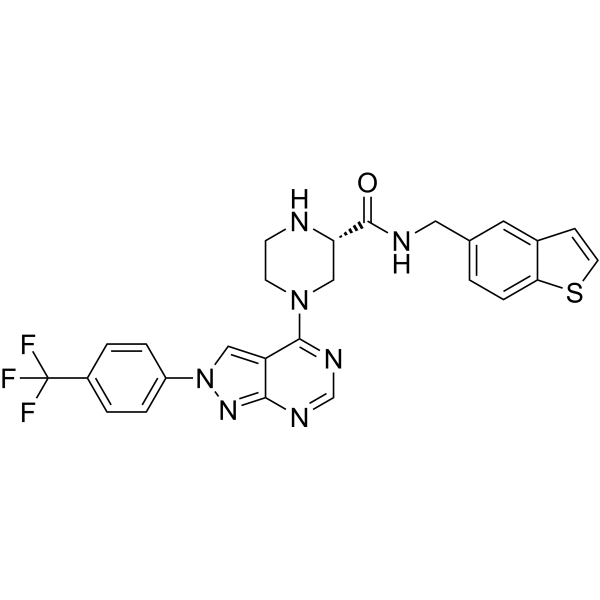
W1307 is a selective STAT3 inhibitor with a KD value of 1.74 μM. W1307 inhibits STAT3 Tyr705 phosphorylation, disrupts STAT3 dimerization, and suppresses STAT3 transcriptional activity. W1307 downregulates the expression of STAT3 downstream targets c-Myc, Mcl-1 and Bcl-2. W1307 transcriptionally inhibits SREBP1 and CPT2 expression to disrupt lipid homeostasis. W1307 shows potent anti-leukemic activity and synergizes with Cytarabine (Ara-C) (HY-13605) to overcome chemoresistance in acute myeloid leukemia (AML) .
loading...
    loading...
Cat. No.: HY-185682
CAS No.: 1382354-26-8
Research Areas:  

Cancer

NCO-141 is a selective SIRT2 inhibitor with an IC50 of 0.5 μM. NCO-141 induces cell apoptosis via caspase activation and mitochondrial superoxide anion production. NCO-141 induces cell autophagy by increasing LC3-II levels and autophagosome accumulation. NCO-141 is applicable to relevant research on leukemia .
loading...
    loading...
Cat. No.: HY-101287R
CAS No.: 1346169-92-3
MPT0B392 (Standard) is the analytical standard of MPT0B392 (HY-101287). This product is intended for research and analytical applications. MPT0B392, an orally active quinoline derivative, induces c-Jun N-terminal kinase (JNK) activation, leading to apoptosis. MPT0B392 inhibits tubulin polymerization and triggers induction of the mitotic arrest, followed by mitochondrial membrane potential loss and caspases cleavage by activation of JNK and ultimately leads to apoptosis. MPT0B392 is demonstrated to be a novel microtubule-depolymerizing agent and enhances the cytotoxicity of sirolimus in sirolimus-resistant acute leukemic cells and the multidrug resistant cell line .
loading...
    loading...
Cat. No.: HY-178500A
Research Areas:  

Cancer

WCY-8-67 TFA is an orally active and selective USP5 inhibitor, with an IC50 value of 1.33 μM. WCY-8-67 TFA induces apoptosis and suppresses JAK/STAT3 and PI3K/AKT signaling pathways. WCY-8-67 TFA inhibits proliferation of AE-positive AML cells, induces G1 phase arrest and differentiation of AML cells. WCY-8-67 TFA demonstrates potent anti-leukemic efficacy in mice. WCY-8-67 TFA can be used for the study of acute myeloid leukemia .
loading...
    loading...
Cat. No.: HY-182891
Target:  

Histone Demethylase

Research Areas:  

Cancer

MC4455 is a LSD1/PRMT5 dual inhibitor. MC4455 inhibits the LSD1/CoREST and PRMT5/MEP50 complex with IC50 values of 0.104 μM and 0.014 μM. MC4455 covalently binds to LSD1’s FAD cofactor, stabilizes the LSD1/CoREST complex. MC4455 induces myeloid differentiation, alters transcriptomic profiles, drives alternative splicing changes, and impairs leukemic cell viability in AML cells. MC4455 can be used for the research of acute myeloid leukemia .
loading...
    loading...
Cat. No.: HY-183870
CAS No.: 1382354-18-8
NCO-90 is a selective SIRT2 inhibitor with an IC50 of 1.0 μM. NCO-90 induces Apoptosis via Caspase activation and mitochondrial superoxide anion production, and also induces Autophagic cell death by increasing LC3-II levels and autophagosome accumulation. NCO-90 exhibits anticancer activity against leukemia. NCO-90 can be used in research related to acute lymphoblastic leukemia and acute myeloid leukemia .
loading...
    loading...
Cat. No.: HY-P992389

Target:  

LILRB

Research Areas:  

Cancer

IO-202 is a high-affinity LILRB4/ILT3 binder and myeloid checkpoint inhibitor. IO-202 blocks APOE binding and LILRB4 activation to reverse T-cell suppression and enhance T-cell cytotoxicity, while eliminating LILRB4-high-expressing leukemic blasts via ADCC and ADCP mechanisms. IO-202 promotes dendritic cell maturation and antigen presentation, reshapes the phenotype of tumor-associated macrophages, and reduces myeloid-derived suppressor cells. IO-202 is widely applicable to research on relapsed/refractory acute myeloid leukemia (AML), chronic myelomonocytic leukemia (CMML), and solid tumors .
loading...
    loading...
Cat. No.: HY-151411
CAS No.: 88755-39-9
Purity:  99.88%
Target:  

RUNX

Research Areas:  

Cancer

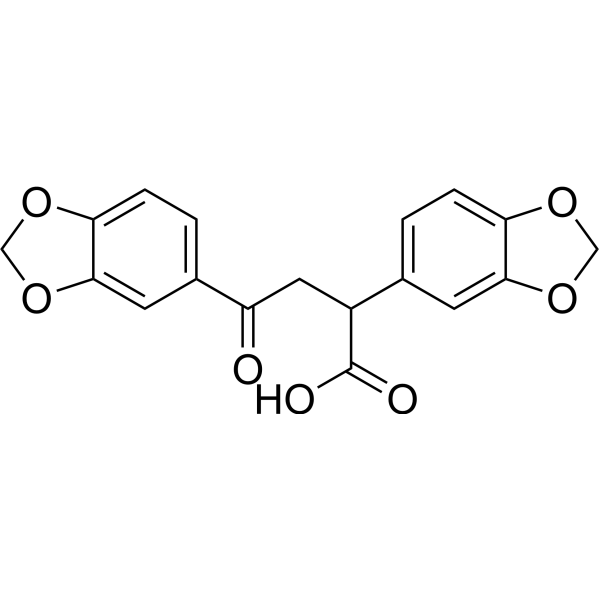
RUNX1/ETO tetramerization-IN-1 is a small-molecule inhibitor of RUNX1/ETO tetramerization, exhibits anti-leukemic effect. RUNX1/ETO tetramerization-IN-1 specifically targets to NHR2 of RUNX1/ETO (EC50=0.25 μM), restores gene expression down-regulated by RUNX1/ETO. RUNX1/ETO tetramerization-IN-1 inhibits the proliferation of RUNX1/ETO-depending SKNO-1 cells, and reduces the RUNX1/ETO-related tumor growth in a mouse model .
loading...
    loading...
Cat. No.: HY-184486
CAS No.: 16781-09-2
Synonyms: 1-Amino-8-naphthol-2,4-disulfonic acid
Target:  

CaMK MDM-2/p53 Phosphatase

Research Areas:  

Cancer

ANDS (1-Amino-8-naphthol-2,4-disulfonic acid) is an orally active inhibitor of CaMKP (IC50 = 6.4 μM; Ki = 3.6 μM) and CaMKP‑N (IC50 = 6.6 μM) . ANDS binds unacetylated p53 and restores p53 activity by disrupting ANP32B-p53 interaction. ANDS inhibits chronic myeloid leukemia (CML) cell proliferation, impairs leukemic stem cells (LSC) function and prolongs survival in CML mouse model while sparing normal progenitor cells. ANDS can be used to study the eradication of LSCs and the overcoming of tyrosine kinase inhibitor (TKI) resistance in CML . ANDS can be used to study breast cancer .
loading...
    loading...
Cat. No.: HY-123153
CAS No.: 1816331-64-2
Research Areas:  

Cancer

GSK990 is an inactive mutant IDH1 inhibitor with no significant inhibitory activity against wild-type or mutant IDH1/IDH2 enzymes. In experiments, GSK990 can serve as an inactive negative control for the IDH1 inhibitor GSK321 (HY-18948). GSK990 is applicable to the research of acute myeloid leukemia .
loading...
    loading...
Cat. No.: HY-P991425

Research Areas:  

Cardiovascular Disease Cancer

AT-1413 is a monoclonal antibody targeting CD43s that recognizes a unique sialylated CD43 epitope spanning amino acid residues 133-165. AT1413 induces antibody-dependent cell-mediated cytotoxicity (ADCC) and complement-dependent cytotoxicity (CDC) in AML cells, with EC50 values of 1.1 nM and 12.4 nM, respectively. AT-1413 binds to a variety of cancer cells, shows weak binding to non-malignant myeloid cells and endothelial cells, and does not bind to healthy lymphoid cells or normal non-hematopoietic cells. AT1413 clears CD43s-expressing leukemic blasts in vivo without affecting non-malignant myeloid cells. AT-1413 can be used in research related to acute myeloid leukemia, myelodysplastic syndrome, melanoma, and breast cancer .
loading...
    loading...
Cat. No.: HY-118563
CAS No.: 135784-48-4
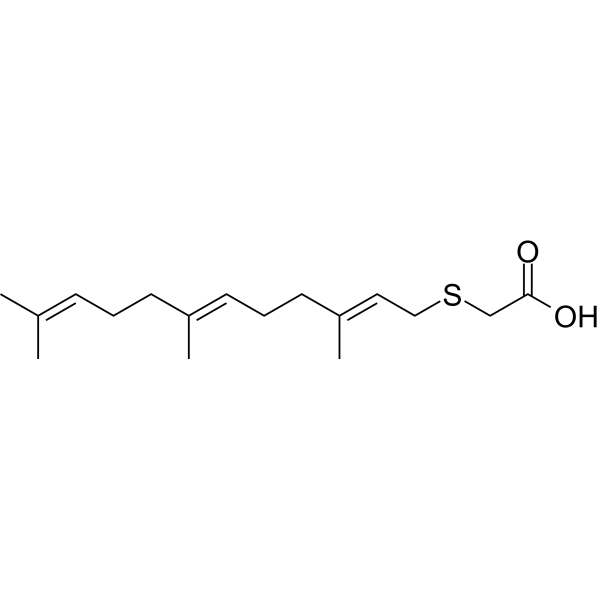
Farnesylthioacetic acid is a competitive, non-substrate inhibitor of Prenylcysteine α-carboxyl methyltransferase. It acts as a non-substrate competitive inhibitor of Arabidopsis thaliana Prenylcysteine α-carboxyl methyltransferase and blocks methyltransferase activity. Farnesylthioacetic acid does not inhibit protein farnesyltransferase activity in Arabidopsis. It induces Apoptosis. Farnesylthioacetic acid regulates the subcellular localization of Ras protein, reducing the proportion of cytoplasmic Ras protein without disrupting membrane binding. It enhances ABA-induced seed dormancy, delays seed germination, and promotes maximum stomatal closure at lower exogenous ABA concentrations. Farnesylthioacetic acid can be used in studies related to promyelocytic leukemia .
loading...
    loading...
Cat. No.: HY-172262
Research Areas:  

Cancer

WEHI-3773 is a VDAC2 ligand and apoptosis modulator. WEHI-3773 directly binds to the β7-β10 region of VDAC2 and disrupts its interaction with BAX and BAK. WEHI-3773 regulates BAX-mediated apoptosis in BAK-deficient cells by modulating conformational activation of BAX, mitochondrial redistribution, and cytochrome c release. WEHI-3773 overcomes Venetoclax (HY-15531) resistance, resensitizes leukemia cells carrying BAX mutations to BH3 mimetics, and enables long-term clonogenic survival of BAK-deficient cells treated with BH3 mimetics. WEHI-3773 is applicable to research related to acute myeloid leukemia .
loading...
    loading...
Cat. No.: HY-B1713A
CAS No.: 1069-31-4
Synonyms: DL-(±)-Ornithine hydrochloride
DL-Ornithine (DL-(±)-Ornithine) hydrochloride is an amino acid and also a urea cycle promoter. DL-Ornithine hydrochloride has the characteristics of low metabolic rate and rapid excretion, and only the L-enantiomer undergoes decarboxylation. In mice inoculated with L-1210 leukemia cells, DL-Ornithine hydrochloride is excreted in urine in its original form, and its conversion to carbon dioxide within 24 h is negligible. DL-Ornithine hydrochloride is mainly used in the urea cycle to eliminate excess nitrogen in the body and protect the kidneys .
loading...
    loading...
Cat. No.: HY-157421
CAS No.: 2847156-05-0
Target:  

NAMPT

Research Areas:  

Metabolic Disease

Nampt activator-4 is an orally active NAMPT activator, with an EC50 of 58 nM and a Ka of 85.38 nM against human NAMPT. Nampt activator-4 effectively relieves the feedback inhibition of nicotinamide and NAD +, thereby enhancing enzymatic activity and significantly increasing intracellular NAD + levels. Nampt activator-4 exhibits moderate stability in human and mouse liver microsomes. Nampt activator-4 shows low to moderate inhibitory effects on cytochrome P450 (especially CYP3A4). Nampt activator-4 can be used for the research of type 2 diabetes and related metabolic disorders .
loading...
    loading...
Cat. No.: HY-P12114
Research Areas:  

Infection Cancer

S3 peptide is a multifunctional synthetic peptide that acts as a LIMK1 inhibitor with an IC50 of 40 μg/mL. S3 peptide blocks cofilin phosphorylation and SDF-1α (HY-P4911)-induced T cell chemotaxis, and reduces viral particle production of HIV-1 and M-PMV. S3 peptide forms dimers via intermolecular disulfide bonds to bind and disrupt LPS micelles, exerting anti-Gram-negative bacterial activity. S3 peptide serves as a targeting moiety for NKA α1 and is used for the construction of PET tracers. S3 peptide is applicable to research related to HIV-1 infection, M-PMV infection, breast cancer, liver cancer and non-small cell lung cancer .
loading...
    loading...
Cat. No.: HY-13551C
CAS No.: 80277-14-1
Synonyms: m-AMSA isethionate; Acridinyl anisidide isethionate
Amsacrine isethionate (m-AMSA isethionate) is a Topoisomerase II inhibitor. Amsacrine isethionate intercalates into DNA. Amsacrine isethionate induces Ca 2+-mediated inactivation of ERK, and also downregulates AKT, promoting MCL1 downregulation mediated by GSK3β via reducing the phosphorylation level of GSK3β. Amsacrine isethionate induces Apoptosis by activating Caspase-9 and Caspase-3. Amsacrine isethionate blocks HERG potassium channels in the open/inactivated state. Amsacrine isethionate induces chromosomal aberrations and sister chromatid exchanges, and inhibits the synthesis of RNA and DNA. Amsacrine isethionate exhibits anti-leukemic activity. Amsacrine isethionate causes cardiac repolarization disorders, QT interval prolongation, ventricular arrhythmias, and increases the risk of sudden cardiac death. Amsacrine isethionate can be used in research related to acute myeloid leukemia, lymphoma and progressive malignancies .
loading...
    loading...
Cat. No.: HY-13551D
CAS No.: 80277-11-8
Synonyms: m-AMSA lactate; Acridinyl anisidide lactate
Amsacrine lactate (m-AMSA lactate) is a Topoisomerase II inhibitor. Amsacrine lactate intercalates into DNA. Amsacrine lactate induces Ca 2+-mediated inactivation of ERK, and also downregulates AKT, promoting MCL1 downregulation mediated by GSK3β via reducing the phosphorylation level of GSK3β. Amsacrine lactate induces Apoptosis by activating Caspase-9 and Caspase-3. Amsacrine lactate blocks HERG potassium channels in the open/inactivated state. Amsacrine lactate induces chromosomal aberrations and sister chromatid exchanges, and inhibits the synthesis of RNA and DNA. Amsacrine lactate exhibits anti-leukemic activity. Amsacrine lactate causes cardiac repolarization disorders, QT interval prolongation, ventricular arrhythmias, and increases the risk of sudden cardiac death. Amsacrine lactate can be used in research related to acute myeloid leukemia, lymphoma and progressive malignancies .
loading...
    loading...
Cat. No.: HY-159520
CAS No.: 2731294-23-6
Synonyms: Ofirnoflast; HT-6184
Ofirnoflastum (Ofirnoflast) is an orally active first-in-class allosteric NEK7 inhibitor with an IC50 of 46 nM. Ofirnoflastum binds an allosteric site adjacent to NEK7’s ATP-binding pocket, induces conformational shifts, disrupts NEK7-NLRP3 binding, blocks NLRP3 inflammasome assembly, spares NEK7’s physiological functions, and suppresses caspase-1, caspase-8, NF-κB, and TNF activity. Ofirnoflastum reduces pro-inflammatory cytokine production, suppresses ASC specks, IL-1β release, pyroptotic cell death, and leukemic burden, induces apoptosis and erythroid differentiation, restores hematopoiesis, and improves outcomes in colitis models. Ofirnoflastum can be used for the research of myelodysplastic syndromes, chronic myelomonocytic leukemia, and acute myeloid leukemia .
loading...
    loading...
Cat. No.: HY-182356
CAS No.: 3125953-25-2
MTHFD1/2-IN-1 is an orally active dual MTHFD1/MTHFD2 inhibitor, with IC50 values of 0.26 μM and 0.031 μM against human MTHFD1 and MTHFD2, respectively. MTHFD1/2-IN-1 blocks one-carbon metabolism by inhibiting the dehydrogenase activity of MTHFD1 as well as the dehydrogenase and cyclohydrolase activities of MTHFD2, thereby disrupting nucleotide biosynthesis and redox homeostasis in cancer cells. MTHFD1/2-IN-1 exhibits favorable Caco-2 permeability and hepatic microsomal metabolic stability. MTHFD1/2-IN-1 shows significant anti-leukemic activity, which not only reduces the viability of various leukemia cells but also inhibits tumor growth of acute myeloid leukemia (AML) in mouse models .
loading...
    loading...

