200 Results for "

modulation

" in MedChemExpress (MCE) Product Catalog:
Products (200)

200 Results for "modulation" in MCE Product Catalog:

Cat. No.: HY-119340
CAS No.: 87626-55-9
Synonyms: Flavoneacetic acid
Research Areas:  

Cancer

Mitoflaxone (flavoneacetic acid) is a synthetic flavonoid compound with vascular targeting properties. Mitoflaxone exerts anti-proliferative effects on endothelial cells through a superoxide-dependent mechanism, this effect leads to changes in the permeability of tumor blood vessels, thereby exerting anti-tumor effects [1] [2] .
loading...
    loading...
Cat. No.: HY-185011
CAS No.: 157469-21-1
AM9053 is a selective, effective and slowly reversible inhibitor of N-acyl ethanolamine acid amidease (NAAA) (IC50 = 30 nM). The effect of AM9053 on FAAH activity is limited (IC50 > 100 nM). AM9053 inhibits the proliferation of colorectal cancer cells by activating the PPAR-α and TRPV1 dependent mechanisms and induces S-phase cell cycle arrest. AM9053 alleviates intestinal fibrosis by regulating macrophage activity and inhibiting the IL-23 signaling pathway. AM9053 leads to an increase in NAE levels, especially PEA and OEA. AM9053 can be used for the study of colorectal cancer and intestinal fibrosis .
loading...
    loading...
Cat. No.: HY-111024R
CAS No.: 950-99-2
Synonyms: PMC (Standard)
2,2,5,7,8-Pentamethyl-6-Chromanol (Standard) is the analytical standard of 2,2,5,7,8-Pentamethyl-6-Chromanol. This product is intended for research and analytical applications. 2,2,5,7,8-Pentamethyl-6-Chromanol (PMC) is the anti-oxidant moiety of vitamin E (α-tocopherol). 2,2,5,7,8-Pentamethyl-6-Chromanol has potent androgen receptor (AR) signaling modulation and anti-cancer activity against prostate cancer cell lines[1].
loading...
    loading...
Cat. No.: HY-111329R
CAS No.: 1256375-38-8
Synonyms: ILS-JGB-1741 (Standard)
Research Areas:  

Cancer

JGB1741 (Standard) is the analytical standard of JGB1741 (HY-111329). This product is intended for research and analytical applications. JGB1741 (ILS-JGB-1741) is a potent and specific SIRT1 activity inhibitor with an IC50 of ~15 μM. JGB1741 is a weak SIRT2 and SIRT3 inhibitor with an all IC50>100 μM. JGB1741 increases the acetylated p53 levels leading to p53-mediated apoptosis with modulation of Bax/Bcl2 ratio, cytochrome c release and PARP cleavage. JGB1741 has the potential for breast cancer research .
loading...
    loading...
Cat. No.: HY-187664
CAS No.: 470-94-0
Target:  

Cholinesterase (ChE)

Research Areas:  

Neurological Disease

N-Demethyl amiton oxalic is an irreversible cholinesterase (ChE) inhibitor. N-Demethyl amiton oxalic elicits low-level postganglionic neuronal firing in cat vesical parasympathetic ganglia by preventing the breakdown of endogenously released ChE. N-Demethyl amiton oxalic inhibits ChE activity in squid optic ganglia and induces hyperactivity, ink ejection, pigment changes, and death, with a rate of enzymatic detoxification much lower than that of DFP. N-Demethyl amiton oxalic can be used in studies related to the mechanisms of cholinergic transmission in parasympathetic ganglia and neurotoxicology .
loading...
    loading...
Cat. No.: HY-P11260
CAS No.: 3051556-89-6
Research Areas:  

Metabolic Disease

MD5 is a selective TMPRSS6 mimetic peptide inhibitor with an IC50 for recombinant human TMPRSS6 protein of 22 nM and a Ki of 3.4 nM. MD5 exhibits the significantly reduced inhibitory effect on Matriptase, with an IC50 of 352 nM and a Ki of 99.2 nM. MD5 exhibits good target specificity and only has a weak inhibitory effect on thrombin (Thrombin), with Ki of 120 nM. MD5 demonstrates good initial drugability and can be used for the study of iron overload diseases (such as hereditary hemochromatosis, β-thalassemia) .
loading...
    loading...
Cat. No.: HY-160698
CAS No.: 2661481-41-8
Synonyms: SGR-1505
Target:  

MALT1 Apoptosis

Research Areas:  

Cancer

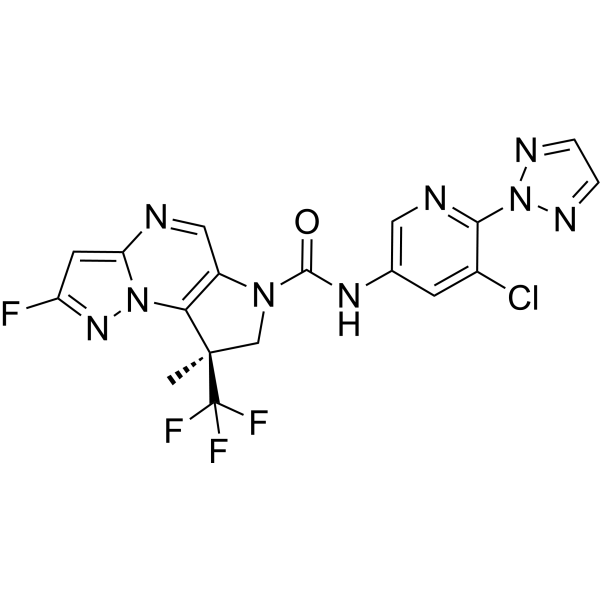
SGR-1505 is an oral small molecule MALT1 inhibitor with anti-proliferative and antitumor activity.SGR-1505 inhibits MALT1 enzymatic activity to modulate NF-κB pathway gene expression.SGR-1505 induces modulation of cell cycle, DNA damage, and apoptosis-related genes in in vivo tumor samples.SGR-1505 exerts tumorostatic and regressive activity in ABC-DLBCL xenograft models.SGR-1505 can be used for the research of activated B cell-like diffuse large B cell lymphoma, non-Hodgkin B-cell lymphomas, chronic lymphocytic leukemia, and mature B cell neoplasms .
loading...
    loading...
Cat. No.: HY-W016773
CAS No.: 112-47-0
1,10-Decanediol is a diol compound that can react with α-ketoglutarate (aKG) to generate polymeric microparticles (termed paKG MPs) for the sustained release of aKG, thereby promoting immunosuppressive regulation. Additionally, paKG MPs can bind to dendritic cells (DCs), reducing their glycolysis and mitochondrial respiration in vitro. These metabolic changes lead to the modulation of MHC-II and CD86 expression in DCs and alter the frequency of regulatory T cells (Tregs) as well as T-helper type 1/2/17 cells in vitro. 1,10-Decanediol can be used in research within the field of immunometabolism. can be used as a surfactant/stabilizer in the synthesis of nanomaterials .
loading...
    loading...
Cat. No.: HY-W700452
Y-27632-d4 hydrochloride hydrate is the deuterium labeled Y-27632 hydrochloride hydrate (HY-10071A). Y-27632 hydrochloride hydrate is an orally active, ATP-competitive inhibitor of ROCK-I and ROCK-II, with Kis of 220 and 300 nM, respectively. Y-27632 hydrochloride hydrate attenuates Doxorubicin-induced apoptosis of human cardiac stem cells. Y-27632 hydrochloride hydrate also suppresses dissociation-induced apoptosis of murine prostate stem/progenitor cells. Y-27632 hydrochloride hydrate primes human induced pluripotent stem cells (hIPSCs) to selectively differentiate towards mesendodermal lineage via epithelial-mesenchymal transition-like modulation .
loading...
    loading...
Cat. No.: HY-176271
CAS No.: 3069915-36-9
MAO-B-IN-45 is a dual inhibitor of ferroptosis and MAO-B. MAO-B-IN-45 shows selectivity towards MAO-B with an IC50 of 87.47 nM and selectivity exceeding 229-fold for MAO-B over MAO-A. MAO-B-IN-45 has excellent antiferroptosis activity through modulation of the iron metabolic pathway and GSH-GPX4 axis in vitro. MAO-B-IN-45 improves cognitive and behavioral impairments in 3×Tg (APP/Tau/Ps1) AD mouse and significantly reduced the levels of ferritin heavy chain 1 (FTH1), APP, and Tau phosphorylation (p-Tau) proteins in the brain.
loading...
    loading...
Cat. No.: HY-187085
CAS No.: 13544-52-0
Kaempferidinidin chloride is a chymotrypsin-like site inhibitor of the Proteasome. Kaempferidinidin chloride can be used in the research of neurodegenerative diseases .
loading...
    loading...
Cat. No.: HY-107738R
CAS No.: 95975-55-6
Synonyms: Z/E-Guggulsterone (Standard)
Guggulsterone (Standard) is the analytical standard of Guggulsterone (HY-107738). This product is intended for research and analytical applications. Guggulsterone is a plant sterol derived from the gum resin of the tree Commiphora wightii. Guggulsterone inhibits the growth of a wide variety of tumor cells and induces apoptosis through down regulation of antiapoptotic gene products (IAP1, xIAP, Bfl-1/A1, Bcl-2, cFLIP and survivin), modulation of cell cycle proteins (cyclin D1 and c-Myc), activation of caspases and JNK, inhibition of Akt. Guggulsterone, a farnesoid X receptor (FXR) antagonist, with IC50s of 24.06 μM and 39.05 μM for (-)-(E)-Guggulsterone (HY-N7781) and (Z)-Guggulsterone (HY-110066), respectively.
loading...
    loading...
Cat. No.: HY-121856
CAS No.: 36740-73-5
Target:  

Others

Research Areas:  

Inflammation/Immunology

Flumizole, a derivative of substituted 5,6-diaryl-2,3-dihydroimidazo[2,1-b]thiazoles, was synthesized and evaluated for its immunoregulatory and anti-inflammatory properties in animal models such as rat adjuvant-induced arthritis and mouse oxazolone-induced contact sensitivity assays. This compound class combines structural elements from flumizole and levamisole, aiming to enhance therapeutic efficacy. Symmetrically substituted 5,6-diaryl compounds with specific alkyl heteroatom or halogen substitutions showed optimal potency in the arthritis model. However, variations in activity were less consistent in the contact sensitivity assay. Flumizole and related compounds demonstrate potential as dual-action agents, targeting inflammation and immune modulation, offering promise for therapeutic development in immune-related disorders .
loading...
    loading...
Cat. No.: HY-164795
CAS No.: 1849603-79-7
SBI-810 is a blood-brain barrier-permeable NTSR1 modulator. SBI-810 promotes the recruitment of β-arrestin-2 to NTSR1 and antagonizes NTSR1-mediated Gq activation. SBI-810 inhibits excitatory synaptic transmission, NMDA receptor and extracellular signal-regulated kinase (ERK) signaling in spinal nociceptive neurons, reduces surface expression of Nav1.7 and action potential firing in primary sensory neurons, and attenuates C-fiber responses. SBI-810 effectively alleviates acute and chronic pain in various rodent models through peripheral and central modulation. SBI-810 is applicable to research related to multiple pain disorders .
loading...
    loading...
Cat. No.: HY-164795A
CAS No.: 2772746-58-2
SBI-810 hydrochloride is a blood-brain barrier-permeable NTSR1 modulator. SBI-810 hydrochloride promotes the recruitment of β-arrestin-2 to NTSR1 and antagonizes NTSR1-mediated Gq activation. SBI-810 hydrochloride inhibits excitatory synaptic transmission, NMDA receptor and extracellular signal-regulated kinase (ERK) signaling in spinal nociceptive neurons, reduces surface expression of Nav1.7 and action potential firing in primary sensory neurons, and attenuates C-fiber responses. SBI-810 hydrochloride effectively alleviates acute and chronic pain in various rodent models through peripheral and central modulation. SBI-810 hydrochloride is applicable to research related to multiple pain disorders .
loading...
    loading...
Cat. No.: HY-19870A
Synonyms: RM-493 TFA; BIM-22493 TFA; IRC-022493 TFA
Setmelanotide TFA (RM-493 TFA) is a blood-brain barrier-permeable, selective MC4R agonist with a Ki value of 2.1 nM for hMC4R. Setmelanotide TFA activates the CaMKK2/AMPK signaling pathway. Setmelanotide TFA mediates body weight homeostasis, feeding regulation and energy expenditure modulation; it reduces food intake, induces weight loss, decreases obesity severity, increases daytime activity and energy expenditure, lowers levels of leptin, triglycerides, fasting insulin and diastolic blood pressure, improves insulin sensitivity, glucose tolerance and fatty liver condition, and reverses respiratory depression. Setmelanotide TFA is applicable to research related to obesity, hyperinsulinemia, fatty liver and respiratory depression .
loading...
    loading...
Cat. No.: HY-N1964R
CAS No.: 77-06-5
Synonyms: Gibberellin A3 (Standard)
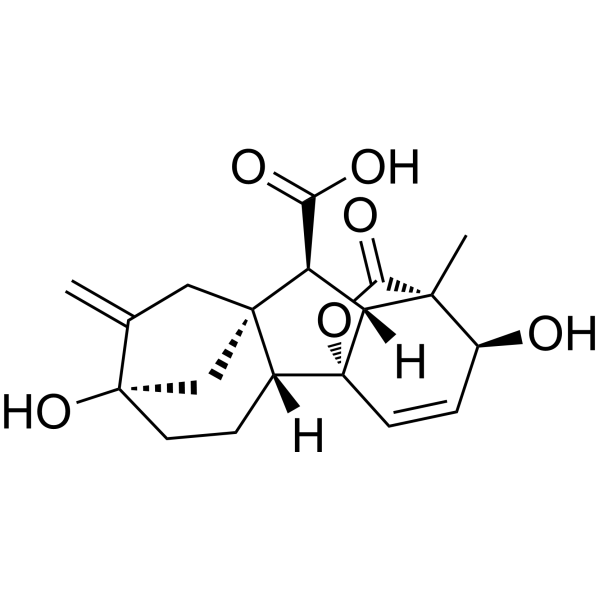
Gibberellic acid (Standard) is the analytical standard of Gibberellic acid (GA3) (HY-N1964). This product is intended for research and analytical applications. Gibberellic acidis a natural plant growth regulator with oral bioactivity. Gibberellic acid governs multiple plant developmental events, including seed germination, cell elongation, floral organ formation, and rice spikelet fertility. Gibberellic acid optimizes root morphology and secondary metabolite production in Echinacea purpurea hairy roots, and serves as a bioactive seed priming agent to improve chilling stress tolerance in chickpea. Gibberellic acid mediates modulation of enzyme activity and secondary metabolism in plants and exerts tissue-specific regulatory effects on antioxidant systems and lipid peroxidation in rats. Gibberellic acid can be used in studies of plant growth, metabolism, and abiotic stress responses .
loading...
    loading...
Cat. No.: HY-N3980R
CAS No.: 489-86-1
Synonyms: Champacol (Standard); Guaiac alcohol (Standard)
Guaiol (Standard) is the analytical standard of Guaiol. This product is intended for research and analytical applications. Guaiol is a sesquiterpenoid alcohol with oral activity found in various traditional Chinese medicines, exhibiting biological activities such as anti-proliferative, autophagy-promoting, insecticidal, anti-anxiety, anti-inflammatory, diuretic, and blood pressure-lowering effects. Guaiol induces apoptosis in non-small cell lung cancer cells by regulating the stability of RAD51 through autophagy modulation. Guaiol can also act directly on parasites, inhibiting their growth by affecting the kinetoplast, mitochondrial matrix and plasma membrane of the promastigotes. Guaiol kills amastigotes at an IC50 of 0.01 µg/mL. Guaiol can be used in research related to cancer, infections, cardiovascular diseases, and inflammatory conditions [4]
loading...
    loading...
Cat. No.: HY-W016773S
CAS No.: 347841-78-5
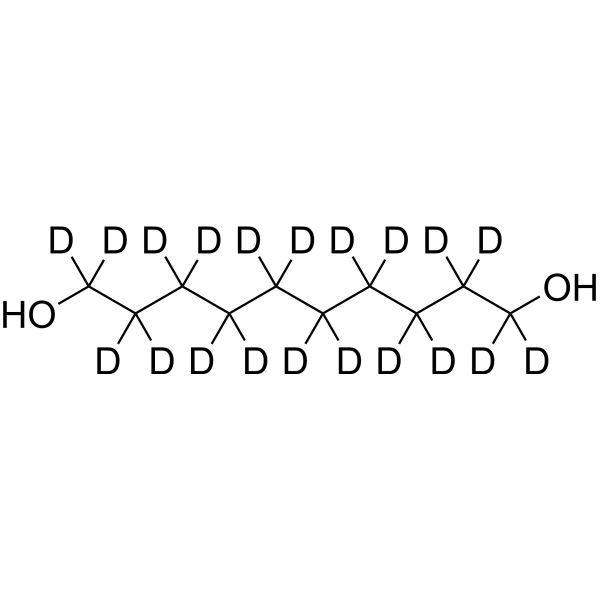
1,10-Decanediol-d20 is the deuterium labeled 1,10-Decanediol . 1,10-Decanediol is a diol compound that can react with α-ketoglutarate (aKG) to generate polymeric microparticles (termed paKG MPs) for the sustained release of aKG, thereby promoting immunosuppressive regulation. Additionally, paKG MPs can bind to dendritic cells (DCs), reducing their glycolysis and mitochondrial respiration in vitro. These metabolic changes lead to the modulation of MHC-II and CD86 expression in DCs and alter the frequency of regulatory T cells (Tregs) as well as T-helper type 1/2/17 cells in vitro. 1,10-Decanediol can be used in research within the field of immunometabolism. can be used as a surfactant/stabilizer in the synthesis of nanomaterials .
loading...
    loading...
Cat. No.: HY-178945
KOR agonist 7 (Compound 29) is a highly selective κ-opioid receptor (KOR) agonist with a Ki of 138 nM. KOR agonist 7 shows no activity at μ- and δ-opioid receptors or σ1 receptor, and exhibits extremely low affinity for σ2 receptor (Ki = 2.8 μM). KOR agonist 7 significantly reduces the secretion of pro-inflammatory cytokines such as IL-6, TNF-α, and IFN-γ, while increasing the production of the anti-inflammatory cytokine IL-10. KOR agonist 7 downregulates the expression of the pro-inflammatory M1 macrophage marker CD80 and upregulates the anti-inflammatory M2 macrophage marker CD163. KOR agonist 7 holds potential for applications in analgesia and immune modulation .
loading...
    loading...

