182 Results for "

Separation

" in MedChemExpress (MCE) Product Catalog:
Products (182)

182 Results for "Separation" in MCE Product Catalog:

Cat. No.: HY-148140A
CAS No.: 9041-35-4
Research Areas:  

Others

Cross-linked dextran G 25, coarse is a cross-linked dextran gel chromatography coarse (average particle size D50 = 200-250 μm) that possesses multiple separation activities, including molecular sieve effects, weak anion exchange, and aromatic adsorption. Cross-linked dextran G 25, coarse weakly exchanges cations through immobilized terminal carboxyl groups and repels anions at low ionic strength. Cross-linked dextran G 25, coarse is used for the fractionation of low molecular weight solutes, including peptides, amino acids, nucleotide sugar derivatives, and aromatic compounds .
loading...
    loading...
Cat. No.: HY-148140B
CAS No.: 9041-35-4
Research Areas:  

Others

Cross-linked dextran G 25, medium is a cross-linked dextran gel chromatography medium (average particle size D50 = 120-140 μm) that possesses multiple separation activities, including molecular sieve effects, weak anion exchange, and aromatic adsorption. Cross-linked dextran G 25, medium weakly exchanges cations through immobilized terminal carboxyl groups and repels anions at low ionic strength. Cross-linked dextran G 25, medium is used for the fractionation of low molecular weight solutes, including peptides, amino acids, nucleotide sugar derivatives, and aromatic compounds .
loading...
    loading...
Cat. No.: HY-148140C
CAS No.: 9041-35-4
Research Areas:  

Others

Cross-linked dextran G 25, fine is a cross-linked dextran gel chromatography fine (average particle size D50 = 70-90 μm) that possesses multiple separation activities, including molecular sieve effects, weak anion exchange, and aromatic adsorption. Cross-linked dextran G 25, fine weakly exchanges cations through immobilized terminal carboxyl groups and repels anions at low ionic strength. Cross-linked dextran G 25, fine is used for the fractionation of low molecular weight solutes, including peptides, amino acids, nucleotide sugar derivatives, and aromatic compounds .
loading...
    loading...
Cat. No.: HY-W009048
CAS No.: 16069-36-6
Synonyms: DCH18C6; Perhydrodibenzo-18-crown-6
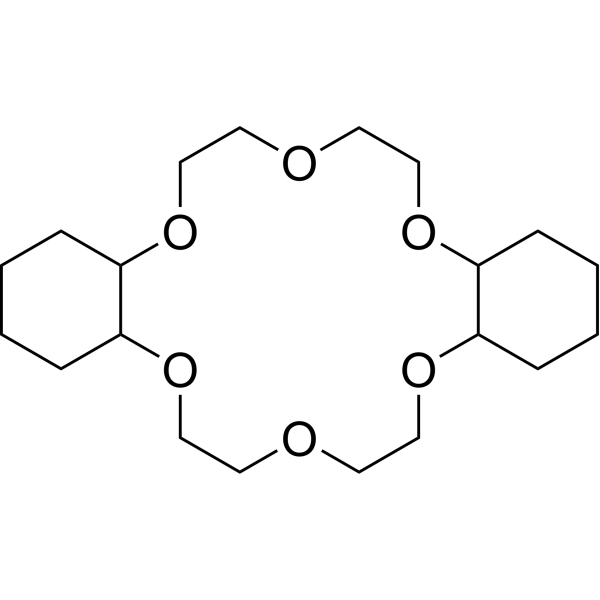
Dicyclohexano-18-crown-6-ether (DCH18C6) is an excellent strontium chelating agent. Dicyclohexano-18-crown-6-ether exhibits favorable extraction capacity and selectivity toward Sr (II). After chemical modification, Dicyclohexano-18-crown-6-ether is covalently bonded to an organosilicon matrix via co-condensation. DCH18C6-functionalized organosilicon materials are expected to be applied to the extraction and separation of strontium from radioactive waste liquid .
loading...
    loading...
Cat. No.: HY-114901
CAS No.: 186141-75-3
Target:  

Adenosine Kinase

Research Areas:  

Neurological Disease

A-134974 is a selective adenosine kinase (ADK) inhibitor, with an IC50 of 0.06 nM and 45 nM in rat brain cytoplasmic ADK enzyme assays and intact IMR-32 cells, respectively . A-134974 inhibits adenosine phosphorylation and elevates intracellular and extracellular adenosine levels, alleviates neuropathic tactile allodynia and inflammatory thermal hyperalgesia via endogenous adenosine signaling in the spinal cord, and shows favorable dose separation between its analgesic effects and motor function impairment . A-134974 can be used in research on neuropathic pain, inflammatory pain, RNA silencing and thermoregulation .
loading...
    loading...
Cat. No.: HY-174802
CAS No.: 3117797-77-7
XL-3158 is a selective and cross-species Cyclic GMP-AMP synthase (cGAS) inhibitor (IC50: 11.1 μM for human cGAS, 2.19 μM for mouse cGAS). XL-3158 simultaneously occupy allosteric and orthosteric sites, stabilizing the activation loop in a closed, inactive conformation and thereby attenuating the cGAS-DNA interactions. XL-3158 inhibits cGAS by targeting phase separation. XL-3158 efficiently penetrates cells by inhibiting aggregate formation, effectively reducing the local concentration of cGAS within cells. XL-3158 can be used for the study of cGAS-dependent inflammatory diseases.
loading...
    loading...
Cat. No.: HY-W007223
CAS No.: 4350-07-6
Synonyms: D-5-HTP; 5-Hydroxy-D-tryptophan
Target:  

5-HT Receptor

Research Areas:  

Neurological Disease

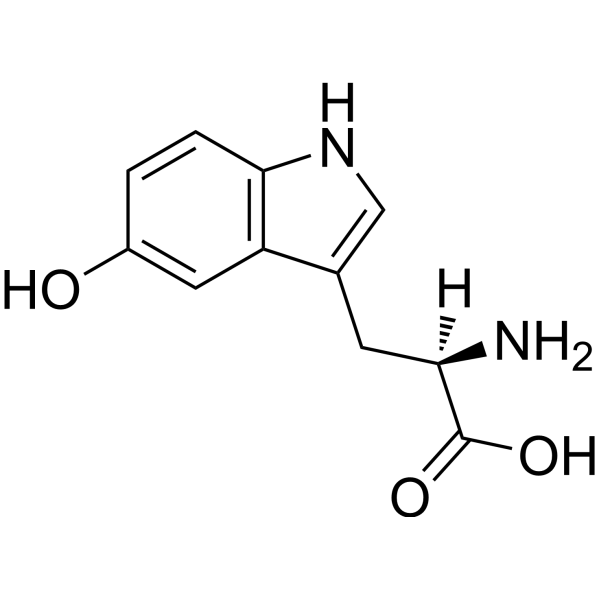
D-5-Hydroxytryptophan (D-5-HTP) is the D-isomer of 5-HTP and can be isolated from DL-5-hydroxytryptophan by continuous separation. Compared with intraperitoneal administration of L-5-Hydroxytryptophan, which can induce dose-dependent backward walking behavior in mice, D-5-Hydroxytryptophan has no significant effect on mouse behavior and is a negative control. D-5-Hydroxytryptophan is also a 5-HT ligand, capable of binding to the 5-HT site with affinity in the micromolar range .
loading...
    loading...
Cat. No.: HY-D0877
CAS No.: 29915-38-6
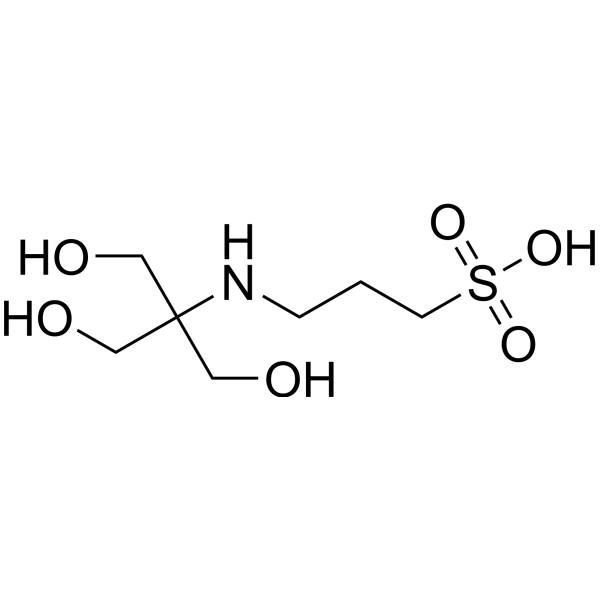
TAPS is an aminosulfonate-based lysozyme stabilizer and connexin channel inhibitor. TAPS maintains the native structure of lysozyme in aqueous solution at pH 7.0 and significantly protects it from heat-induced denaturation. TAPS directly inhibits the activity of heteromeric connexin 32/connexin 26 channels (Cx32/Cx26) via its protonated form, and this inhibitory effect is dependent on the presence of connexin 26. TAPS reduces connexin channel-mediated solute exchange in a recombinant liposome system, resulting in a decreased degree of liposome density shift in transport-specific separation assays. TAPS is a critical compound for investigating the structure and function of connexin channels .
loading...
    loading...
Cat. No.: HY-W016638
CAS No.: 479500-35-1
Synonyms: 1-Butyl-1-methylpyrrolidin-1-ium chloride
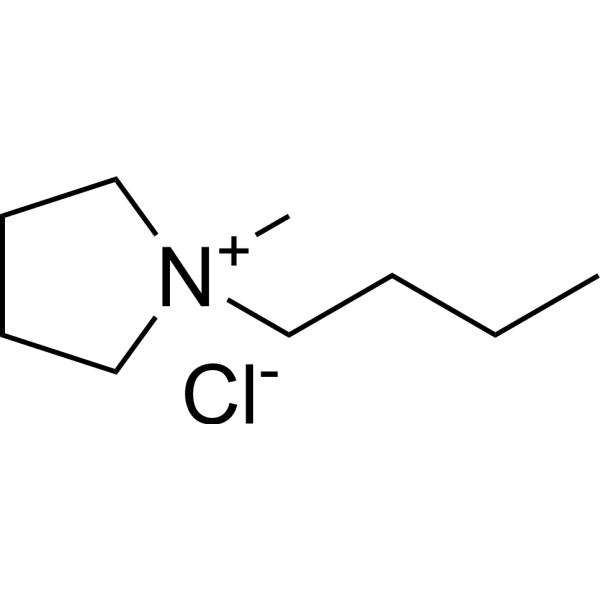
1-Butyl-1-methylpyrrolidin-1-ium chloride, also known as BMIM chloride, belongs to the class of ionic liquids and consists of a positively charged pyrrolidine cation and a negatively charged chloride anion. This compound is commonly used as a solvent for various chemical reactions, especially those involving organic compounds and metals. Its unique physical and chemical properties, such as low volatility, high thermal stability, and tunable solubility, make it useful in a range of applications in catalysis, electrochemistry, and separation science. Furthermore, 1-butyl-1-methylpyrrolidin-1-ium chloride may have potential applications as a green solvent in energy storage devices and various industrial processes.
loading...
    loading...
Cat. No.: HY-W099581R
CAS No.: 14933-09-6
Synonyms: SB3-14 (Standard); DMAPS (Standard)
Sulfobetaine-14 (Standard) is the analytical standard of Sulfobetaine-14. This product is intended for research and analytical applications. Zwittergent 3-14 (DMAPS) is a zwitterionic detergent commonly used in biochemistry and molecular biology for the solubilization and purification of membrane-bound proteins and other hydrophobic biomolecules, which have both hydrophilic and hydrophobic moieties , so that it has good detergency properties, making it suitable for stabilizing membrane proteins in aqueous solutions. In addition, DMAPS has been used in various techniques such as electrophoresis and chromatography for the separation and analysis of biomolecules. The long The hydrocarbon chains provide it with good membrane penetration and solubilization capabilities, while the sulfonate and quaternary ammonium groups ensure water solubility and charge neutrality.
loading...
    loading...
Cat. No.: HY-B0109H
CAS No.: 120279-95-0
Synonyms: (4R,6R)-L671152; (4R,6R)-MK507
(4R,6R)-Dorzolamide ((4R,6R)-L671152; (4R,6R)-MK507) is a carbonic anhydrase II (CAII) inhibitor and the undesired chiral enantiomer of Dorzolamide. (4R,6R)-Dorzolamide inhibits CAII isoenzymes, thereby modulating the rate of aqueous humor formation. (4R,6R)-Dorzolamide serves as a stereoisomeric reference standard in chiral HPLC separation studies. (4R,6R)-Dorzolamide can be used for research on ocular hypertension and glaucoma .
loading...
    loading...
Cat. No.: HY-W099535
CAS No.: 2044-56-6
Research Areas:  

Others

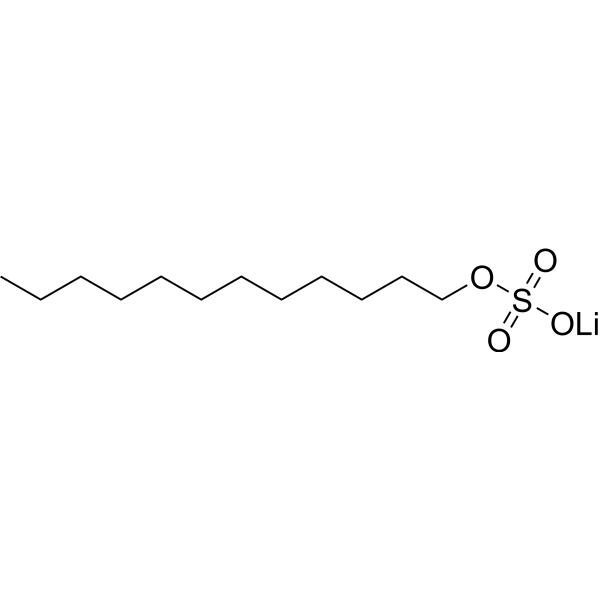
Lithium dodecyl sulfate is an anionic hydrocarbon surfactant with both surface tension reduction and interfacial adsorption capabilities. Lithium dodecyl sulfate forms micelles in aqueous solutions via entropy-driven (low temperature) and enthalpy-driven (high temperature) mechanisms, and can also form an adsorption layer at the air-water interface with quantifiable surface excess and minimum area per molecule. Lithium dodecyl sulfate exhibits favorable equilibrium surface tension and foamability, but shows low foam stability above its critical micelle concentration. When acting synergistically with tetrabutylammonium bromide, Lithium dodecyl sulfate also exhibits unique cloud point behavior due to micelle aggregation and phase separation .
loading...
    loading...
Cat. No.: HY-W1061847
Research Areas:  

Others

5-VIC Phosphoramidite is a Fluorescent dye and a component of TaqMan probes for nucleic acid detection. 5-VIC Phosphoramidite serves as a 5' reporter dye, which is conjugated to probes targeting the conserved region of the S protein of porcine epidemic diarrhea virus genotype GII, and is used with Eclipse® Dark Quencher for duplex real-time quantitative PCR. 5-VIC Phosphoramidite-labeled probes targeting the Rv0222 gene in the RD4 region specific to Mycobacterium tuberculosis are applied in triplex droplet digital PCR to differentiate mycobacterial strains. During PCR amplification, the 5'→3' exonuclease activity of Taq polymerase mediates the separation of 5-VIC Phosphoramidite from the quencher, thereby generating a detectable fluorescent signal .
loading...
    loading...
Cat. No.: HY-W002065
CAS No.: 37718-11-9
Target:  

Drug Metabolite

Research Areas:  

Metabolic Disease

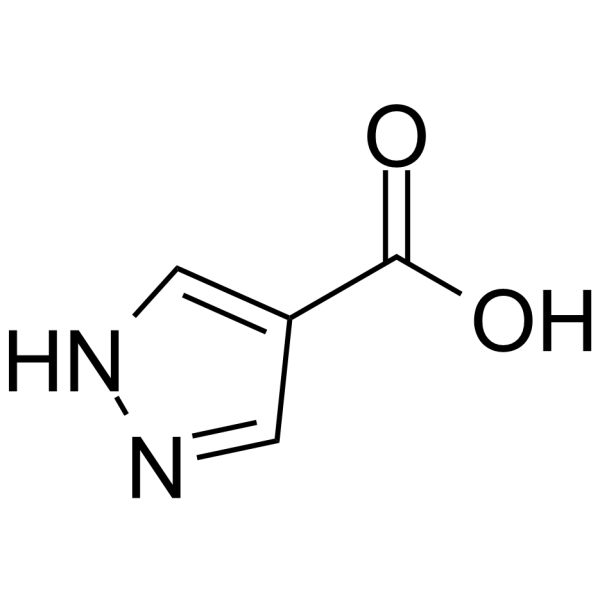
4-Carboxypyrazole is a pyrazole metabolite and a human liver alcohol dehydrogenase ligand. It is a metabolite of 4-methylpyrazole in mice and rats and does not inhibit the enzyme when methanol is used as a substrate. 4-Carboxypyrazole can be used in studies related to alcohol dehydrogenase metabolism .
loading...
    loading...
Cat. No.: HY-W002065R
CAS No.: 37718-11-9
4-Carboxypyrazole (Standard) is the analytical standard of 4-Carboxypyrazole (HY-W002065). This product is intended for research and analytical applications. 4-Carboxypyrazole is a pyrazole metabolite and a human liver alcohol dehydrogenase ligand. It is a metabolite of 4-methylpyrazole in mice and rats and does not inhibit the enzyme when methanol is used as a substrate. 4-Carboxypyrazole can be used in studies related to alcohol dehydrogenase metabolism .
loading...
    loading...
Cat. No.: HY-W075708
CAS No.: 41699-93-8
Synonyms: Cu(II) Meso-Tetra(4-carboxyphenyl)porphyrin
Target:  

MOFs

Research Areas:  

Others

Cu (II) MTCPP (Cu (II) Meso-Tetra (4-carboxyphenyl) porphyrin) is a copper coordination complex. Cu (II) MTCPP-sensitized TiO2 nanotubes are a type of visible-light photocatalyst. Cu (II) MTCPP-sensitized TiO2 nanotubes can expand the wavelength response range, transfer excited electrons more efficiently, and separate photogenerated electron-hole pairs .
loading...
    loading...
Cat. No.: HY-W1113135
CAS No.: 2828447-14-7
Research Areas:  

Others

Carboxymethyl-β-cyclodextrin sodium salt is a negatively charged β-cyclodextrin derivative, as well as a metal ion chelator and solubilizing reagent. Carboxymethyl-β-cyclodextrin sodium salt forms stable aqueous complexes with Ba 2+, Ca 2+, Cd 2+, Ni 2+, Pb 2+, Sr 2+, and Zn 2+ ions. Carboxymethyl-β-cyclodextrin sodium salt derived hydrogel carriers support oral insulin delivery via paracellular permeation across Caco-2 monolayers and produce sustained hypoglycemic effects in diabetic mice. Carboxymethyl-β-cyclodextrin sodium salt can be conjugated onto folate-modified BSA nanoparticles to boost folate receptor-mediated endocytosis, elevate intracellular anticancer drug uptake and trigger cell apoptosis. Carboxymethyl-β-cyclodextrin sodium salt can be utilized for chiral separation in capillary electrophoresis, development of nanoscale drug carriers and nucleic acid transfection research .
loading...
    loading...
Cat. No.: HY-100557H
CAS No.: 9004-64-2
Synonyms: Hydroxypropyl Cellulose, Viscosity(2%):95000-105000mPa.s
Research Areas:  

Others

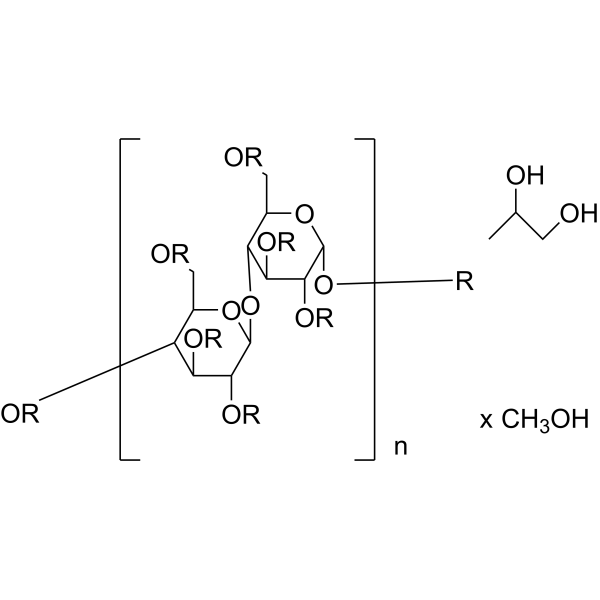
HPC, Viscosity (2%): 95000-105000 mPa.s (Hydroxypropyl Cellulose, Viscosity (2%): 95000-105000 mPa.s) is a nonionic, biocompatible cellulose derivative. Hydroxypropyl Cellulose serves as a thickener or gelling agent, lubricant, and emulsion stabilizer, and is also used in the preparation of capsules and films .
loading...
    loading...
Cat. No.: HY-A0104F
CAS No.: 9004-65-3
Synonyms: Hypromellose (Type II,Viscosity:400mPa.s); (Hydroxypropyl)methyl cellulose (Type II,Viscosity:400mPa.s); Celacol HPM 5000 (Type II,Viscosity:400mPa.s)
Research Areas:  

Others

HPMC (Type II, Viscosity: 400 mPa·s) is a thermosensitive hydroxypropyl methylcellulose polymer. HPMC (Type II, Viscosity: 400 mPa·s) can be used to prepare Fe3O4@HPMC magnetic fluids with temperature-responsive properties, and its temperature-responsive process involves the weakening of HPMC-water hydrogen bonds and the enhanced association of hydrophobic groups. HPMC (Type II, Viscosity: 400 mPa·s) can be used in research on thermosensitive magnetic fluid materials .
loading...
    loading...
Cat. No.: HY-116470
CAS No.: 1202055-39-7
Target:  

Mps1

Research Areas:  

Cancer

Mps1/TTK-IN-1 (Compound cpd-5), a derivative of NMS-P715 (HY-12382), is a Mps1 kinase inhibitor with an IC50 of 9.2 nM and a Kd of 1.6 nM. Mps1/TTK-IN-1 specifically targets the ATP-binding pocket of the Mps1 kinase. Mps1/TTK-IN-1 maintains inhibitory activity against Mps1 drug-resistant mutants (C604Y, C604W) with IC50 values of 170 and 19 nM and Kd values of 471 and 349 nM. Mps1/TTK-IN-1 can block the phosphorylation of kinetochore protein KNL1 mediated by Mps1, interfere with the spindle assembly checkpoint function, prevent the correct separation of chromosomes, and thereby inhibit the mitosis and proliferation of tumor cells .
loading...
    loading...

