45 Results for "

α2A receptors

" in MedChemExpress (MCE) Product Catalog:
Products (45)

45 Results for "α2A receptors" in MCE Product Catalog:

9
9 Publications Verification
Cat. No.: HY-B0527A
CAS No.: 549-18-8
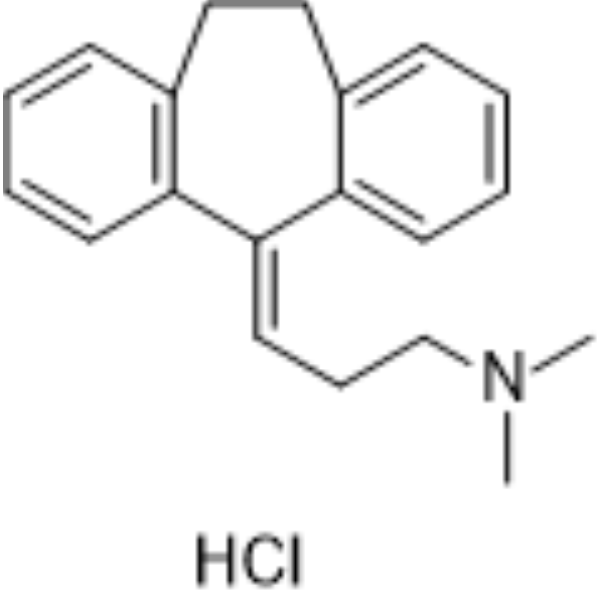
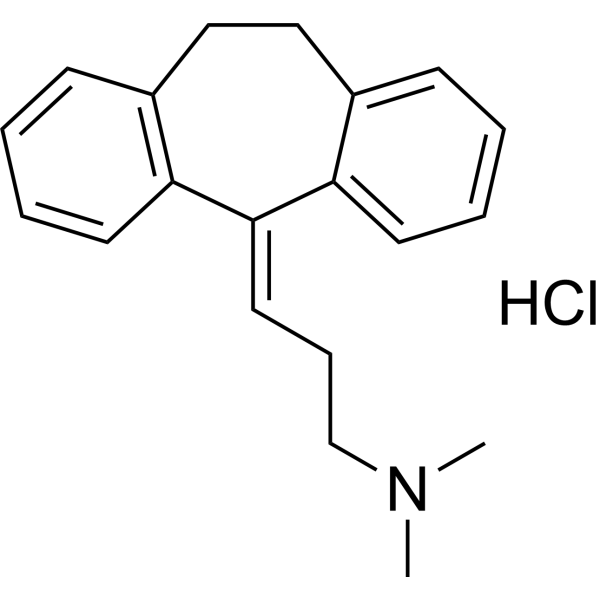
Amitriptyline hydrochloride is an orally active tricyclic antidepressant (TCA). Amitriptyline hydrochloride mainly exerts its antidepressant effect by blocking SERT (Ki = 3.45 nM) and NET (Ki = 13.3 nM), thereby increasing the concentrations of 5-hydroxytryptamine (5-HT) and norepinephrine (NE) in the synaptic cleft. Amitriptyline hydrochloride is also an agonist at α2A and TrkA/TrkB receptors, thereby exerting analgesic and neurotrophic activities (inhibiting cell apoptosis). Amitriptyline hydrochloride can reduce inflammation, angiogenesis and fibrosis. Amitriptyline hydrochloride binds to DAT (with Ki = 2.58 μM). Amitriptyline hydrochloride has high affinity for a series of receptors and can antagonize muscarinic cholinergic receptors (M1/M2/M3/M4/M5 receptors) (Ki = 11-24 nM), H1 receptors (Ki = 0.5-1.1 nM), adrenergic α1 receptors (Ki = 4.4 nM), etc., resulting in a series of side effects. Amitriptyline hydrochloride can block sodium channels and hERG potassium channel (IC50 = 4.78 μM) and it has cardiotoxicity .
loading...
    loading...
9
9 Publications Verification
Cat. No.: HY-B0527
CAS No.: 50-48-6
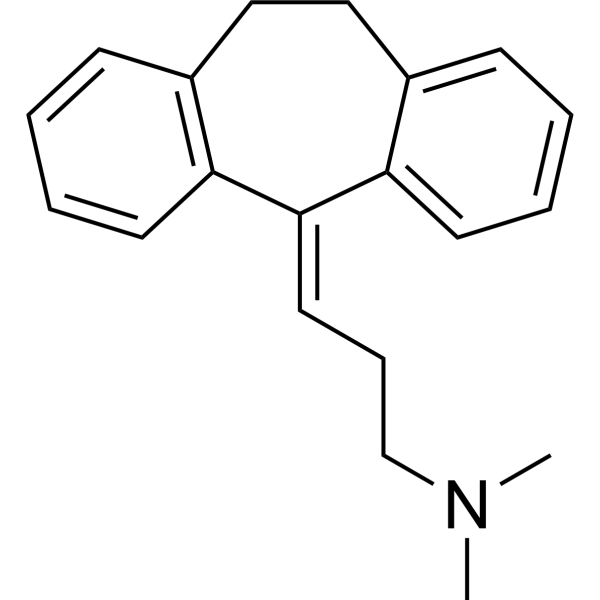
Amitriptyline is an orally active tricyclic antidepressant (TCA). Amitriptyline mainly exerts its antidepressant effect by blocking SERT (Ki = 3.45 nM) and NET (Ki = 13.3 nM), thereby increasing the concentrations of 5-hydroxytryptamine (5-HT) and norepinephrine (NE) in the synaptic cleft. Amitriptyline is also an agonist at α2A and TrkA/TrkB receptors, thereby exerting analgesic and neurotrophic activities (inhibiting cell apoptosis). Amitriptyline can reduce inflammation, angiogenesis and fibrosis. Amitriptyline binds to DAT (with Ki = 2.58 μM). Amitriptyline has high affinity for a series of receptors and can antagonize muscarinic cholinergic receptors (M1/M2/M3/M4/M5 receptors) (Ki = 11-24 nM), H1 receptors (Ki = 0.5-1.1 nM), adrenergic α1 receptors (Ki = 4.4 nM), etc., resulting in a series of side effects. Amitriptyline can block sodium channels and hERG potassium channel (IC50 = 4.78 μM) and it has cardiotoxicity .
loading...
    loading...
3
3 Cited Publications
Cat. No.: HY-17416
CAS No.: 29110-48-3
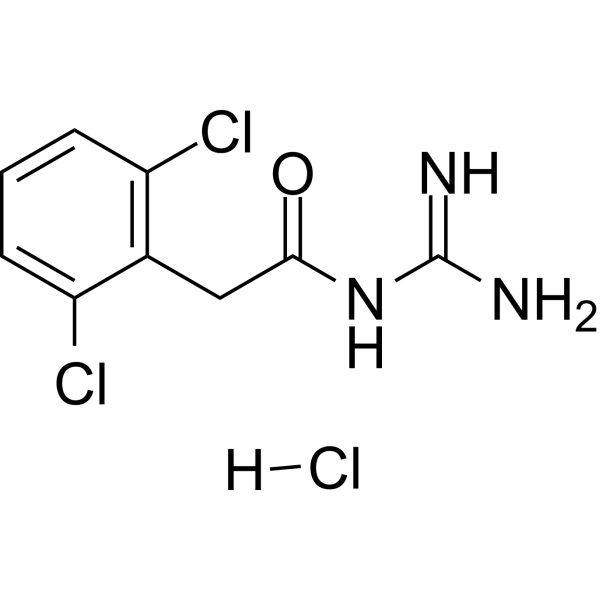
Guanfacine hydrochloride is an orally active and blood-brain barrier permeability noradrenergic α2A agonist and has high selective for the α2A receptor subtype. Guanfacine has effects in producing hypotension and sedation. Guanfacine can be used for the research of a variety of prefrontal cortex (PFC) cognitive disorders, including tourette's syndrome and attention deficit hyperactivity disorder (ADHD) .
loading...
    loading...
3
3 Cited Publications
Cat. No.: HY-17416A
CAS No.: 29110-47-2
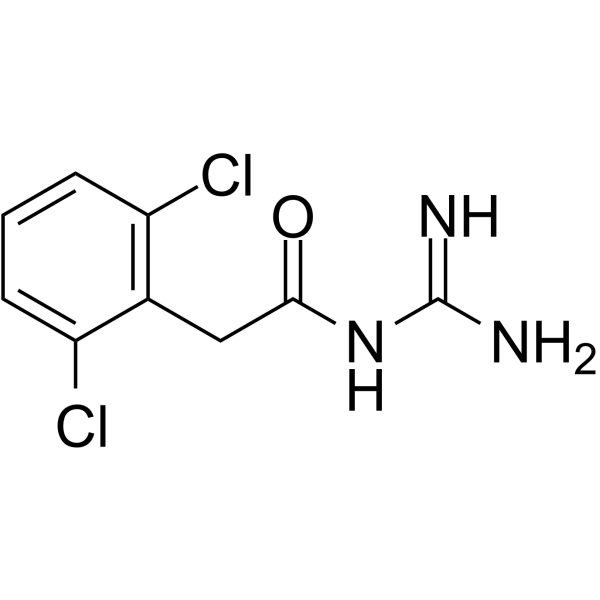
Guanfacine is an orally active noradrenergic α2A agonist and has high selective for the α2A receptor subtype. Guanfacine has effects in producing hypotension and sedation. Guanfacine can be used for the research of a variety of prefrontal cortex (PFC) cognitive disorders, including tourette's syndrome and attention deficit hyperactivity disorder (ADHD) .
loading...
    loading...
2
2 Cited Publications
Cat. No.: HY-12709A
CAS No.: 55974-42-0
Purity:  99.57%
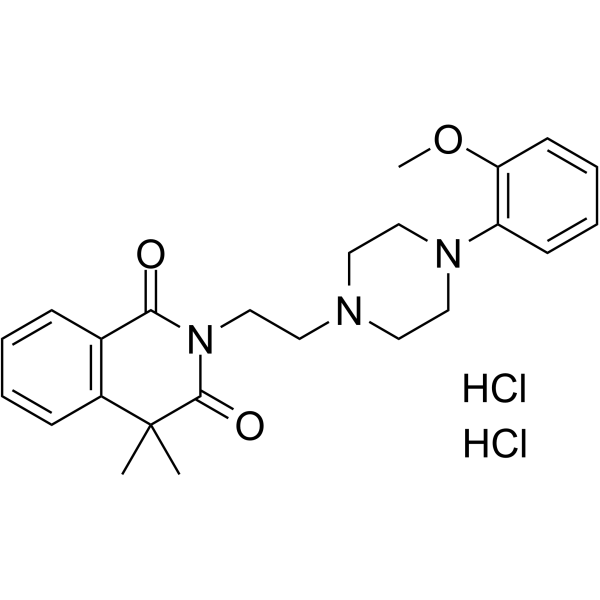
ARC 239 dihydrochloride is a selective α2B/2C adrenoceptor antagonist (pKd values are 5.95, 7.41 and 7.56 at α2A, α2B, and α2C receptors respectively). ARC 239 dihydrochloride binds to CHO cell membranes expressing human recombinant a2A-, a2B- or a2C-adrenoceptor subtypes with pKis of 5.6, 8.4, and 7.08, respectively .
loading...
    loading...
Cat. No.: HY-B1052
CAS No.: 21498-08-8
Synonyms: Baq-168; MDL-14042
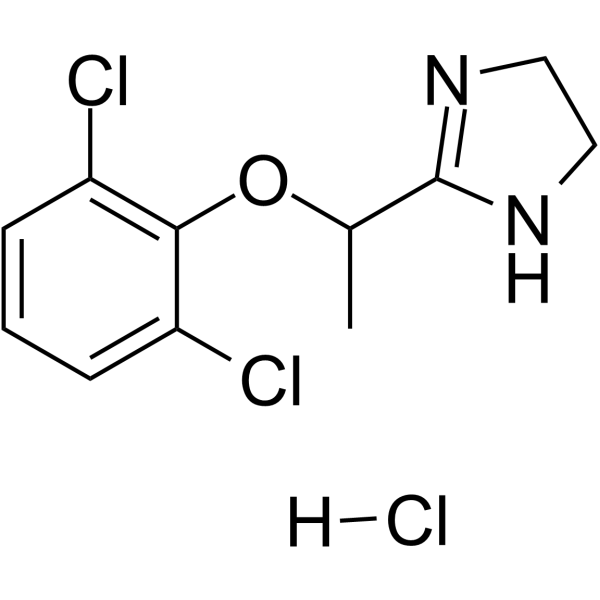
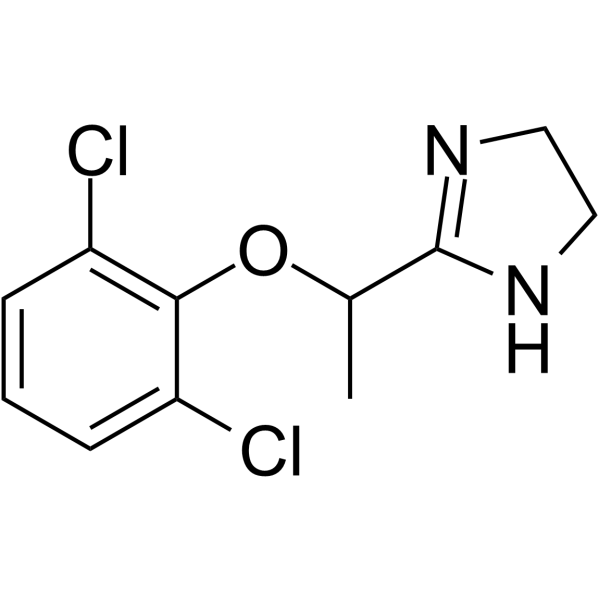
Lofexidine hydrochloride (Baq-168) is an orally active agonist of the imidazoline I1 receptor (imidazoline I1 receptor) (Ki: 1.9 nM) and α2-adrenergic receptor (α2-adrenergic receptor). Lofexidine hydrochloride binds to the α2A-adrenergic receptor, reduces sympathetic outflow, lowers blood pressure, and exhibits vasoconstrictive effects. Lofexidine hydrochloride regulates the expression of c-fos and alleviates opioid withdrawal symptoms. Lofexidine hydrochloride is applicable to research on opioid addiction and withdrawal .
loading...
    loading...
Cat. No.: HY-14689
CAS No.: 190133-94-9
Purity:  99.46%
Synonyms: SCH 39166 hydrochloride
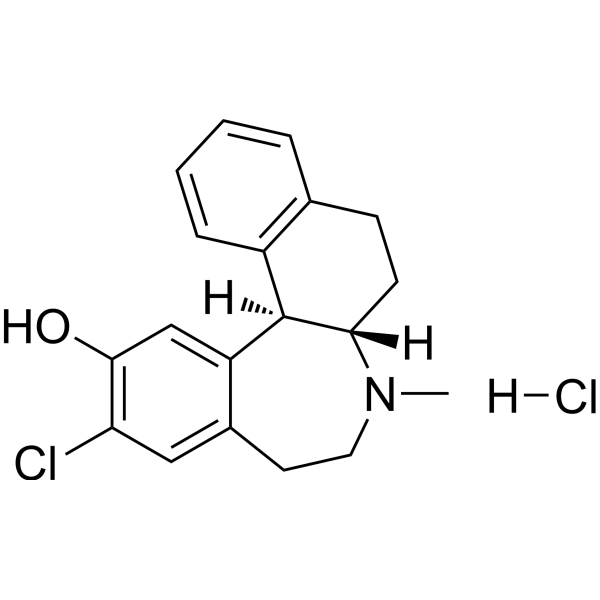
Ecopipam (SCH 39166) hydrochloride is a potent, selective and orally active antagonist of dopamine D1/D5 receptor, with Kis of 1.2 nM and 2.0 nM, respectively. Ecopipam hydrochloride shows more than 40-flod selectivity over D2, D4, 5-HT, and α2a receptor (Ki=0.98, 5.52, 0.08, and 0.73 μM, respectively). Ecopipam hydrochloride can be used for the research of schizophrenia and obesity .
loading...
    loading...
Cat. No.: HY-14690
CAS No.: 112108-01-7
Synonyms: SCH 39166
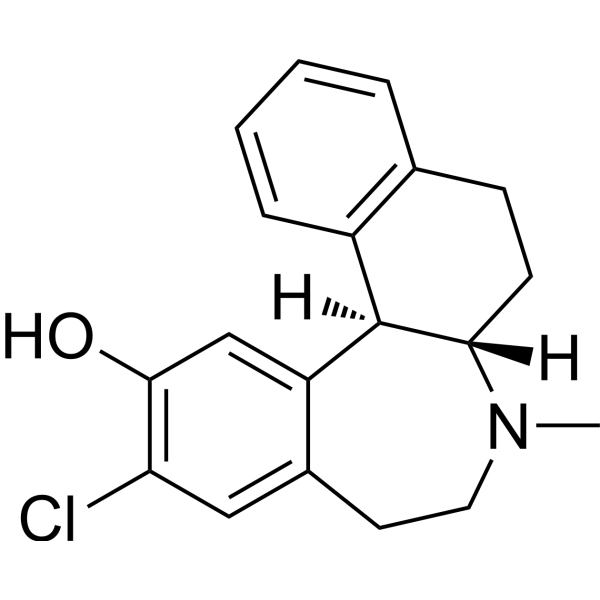
Ecopipam (SCH 39166) is a potent, selective and orally active antagonist of dopamine D1/D5 receptor, with Kis of 1.2 nM and 2.0 nM, respectively. Ecopipam shows more than 40-flod selectivity over D2, D4, 5-HT, and α2a receptor (Ki=0.98, 5.52, 0.08, and 0.73 μM, respectively). Ecopipam can be used for the research of schizophrenia and obesity .
loading...
    loading...
Cat. No.: HY-101198
CAS No.: 145231-35-2
Purity:  98.99%
Research Areas:  

Neurological Disease Cancer

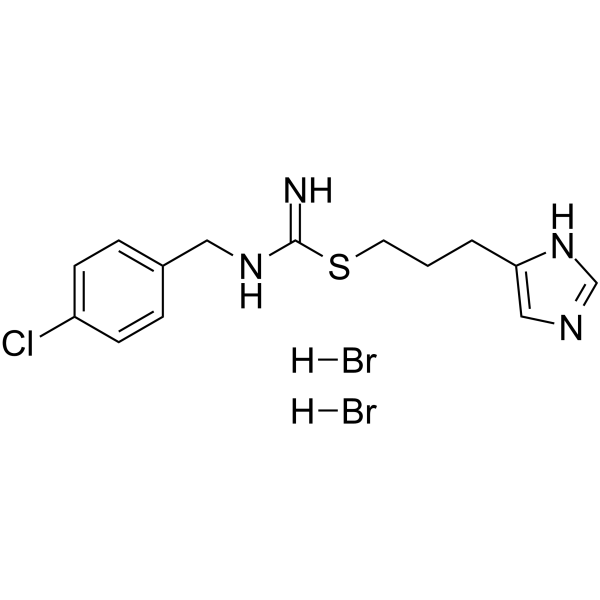
Clobenpropit dihydrobromide is a potent histamine H3R antagonist/inverse agonist with a pEC50 of 8.07 for histamine H3LR . Clobenpropit dihydrobromide acts as partial agonist at histamine H4 receptors (Ki 13 nM). Clobenpropit dihydrobromide also binds to serotonin 5-HT3 receptors (Ki 7.4 nM) and α2A/α2C adrenoceptors (Ki 17.4/7.8 nM) . Clobenpropit dihydrobromide increases apoptosis .
loading...
    loading...
Cat. No.: HY-12716A
CAS No.: 681806-46-2
Purity:  ≥99.0%
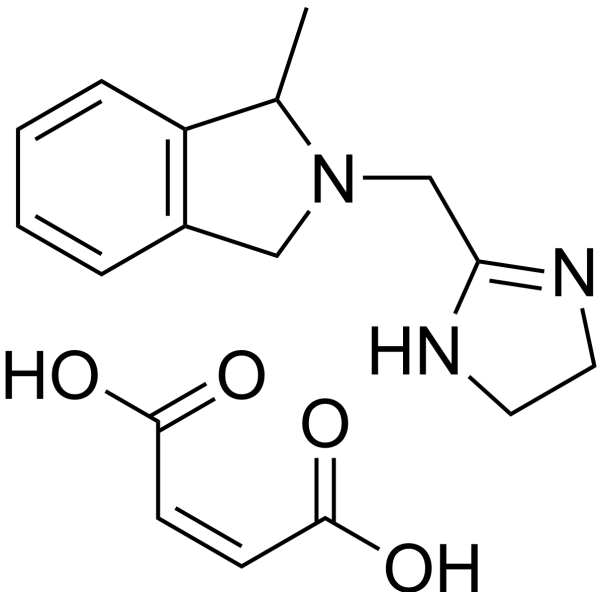
BRL-44408 maleate is a selective, blood-brain barrier-permeable α2A-adrenergic receptor antagonist with a Ki value of 8.56 nM against human targets. BRL-44408 maleate exhibits activities such as antidepressant, analgesic effects and attenuation of sepsis-induced acute lung injury by regulating the release of neurotransmitters such as norepinephrine and dopamine, or inhibiting signaling pathways including ERK1/2, p38MAPK and p65. BRL-44408 maleate can be used in studies related to acute respiratory distress syndrome, depression and visceral pain .
loading...
    loading...
Cat. No.: HY-B1052A
CAS No.: 31036-80-3
Synonyms: Baq-168 free base; MDL-14042 free base
Lofexidine (Baq-168 free base) is an orally active agonist of the imidazoline I1 receptor (imidazoline I1 receptor) (Ki: 1.9 nM) and α2-adrenergic receptor (α2-adrenergic receptor). Lofexidine binds to the α2A-adrenergic receptor, reduces sympathetic outflow, lowers blood pressure, and exhibits vasoconstrictive effects. Lofexidine regulates the expression of c-fos and alleviates opioid withdrawal symptoms. Lofexidine is applicable to research on opioid addiction and withdrawal .
loading...
    loading...
Cat. No.: HY-B0527AR
CAS No.: 549-18-8
Amitriptyline hydrochloride (Standard) is the analytical standard of Amitriptyline hydrochloride (HY-B0527A). This product is intended for research and analytical applications. Amitriptyline hydrochloride is an orally active tricyclic antidepressant (TCA). Amitriptyline hydrochloride mainly exerts its antidepressant effect by blocking SERT (Ki = 3.45 nM) and NET (Ki = 13.3 nM), thereby increasing the concentrations of 5-hydroxytryptamine (5-HT) and norepinephrine (NE) in the synaptic cleft. Amitriptyline hydrochloride is also an agonist at α2A and TrkA/TrkB receptors, thereby exerting analgesic and neurotrophic activities (inhibiting cell apoptosis). Amitriptyline hydrochloride can reduce inflammation, angiogenesis and fibrosis. Amitriptyline hydrochloride binds to DAT (with Ki = 2.58 μM). Amitriptyline hydrochloride has high affinity for a series of receptors and can antagonize muscarinic cholinergic receptors (M1/M2/M3/M4/M5 receptors) (Ki = 11-24 nM), H1 receptors (Ki = 0.5-1.1 nM), adrenergic α1 receptors (Ki = 4.4 nM), etc., resulting in a series of side effects. Amitriptyline hydrochloride can block sodium channels and hERG potassium channel (IC50 = 4.78 μM) and it has cardiotoxicity.
loading...
    loading...
Cat. No.: HY-101610
CAS No.: 167626-17-7
Target:  

Adrenergic Receptor

OPC-28326 is a selective peripheral vasodilator and an angatonist of α2-adrenergic receptor, with Ki of 2040, 285, and 55 nM for α2A-, α2B- and α2C-adrenoceptors, respectively.
loading...
    loading...
Cat. No.: HY-B0527AS
CAS No.: 203645-63-0
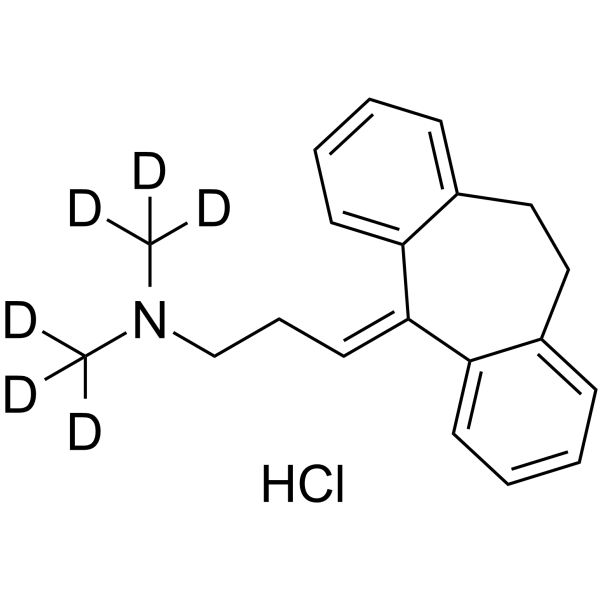
Amitriptyline-d6 hydrochloride is the deuterium labeled Amitriptyline hydrochloride (HY-B0527A). Amitriptyline hydrochloride is an orally active tricyclic antidepressant (TCA). Amitriptyline hydrochloride mainly exerts its antidepressant effect by blocking SERT (Ki = 3.45 nM) and NET (Ki = 13.3 nM), thereby increasing the concentrations of 5-hydroxytryptamine (5-HT) and norepinephrine (NE) in the synaptic cleft. Amitriptyline hydrochloride is also an agonist at α2A and TrkA/TrkB receptors, thereby exerting analgesic and neurotrophic activities (inhibiting cell apoptosis). Amitriptyline hydrochloride can reduce inflammation, angiogenesis and fibrosis. Amitriptyline hydrochloride binds to DAT (with Ki = 2.58 μM). Amitriptyline hydrochloride has high affinity for a series of receptors and can antagonize muscarinic cholinergic receptors (M1/M2/M3/M4/M5 receptors) (Ki = 11-24 nM), H1 receptors (Ki = 0.5-1.1 nM), adrenergic α1 receptors (Ki = 4.4 nM), etc., resulting in a series of side effects. Amitriptyline hydrochloride can block sodium channels and hERG potassium channel (IC50 = 4.78 μM) and it has cardiotoxicity.
loading...
    loading...
Cat. No.: HY-U00123A
CAS No.: 23256-40-8
Synonyms: Hydroxyguanabenz hydrochloride
Target:  

Adrenergic Receptor

Research Areas:  

Neurological Disease

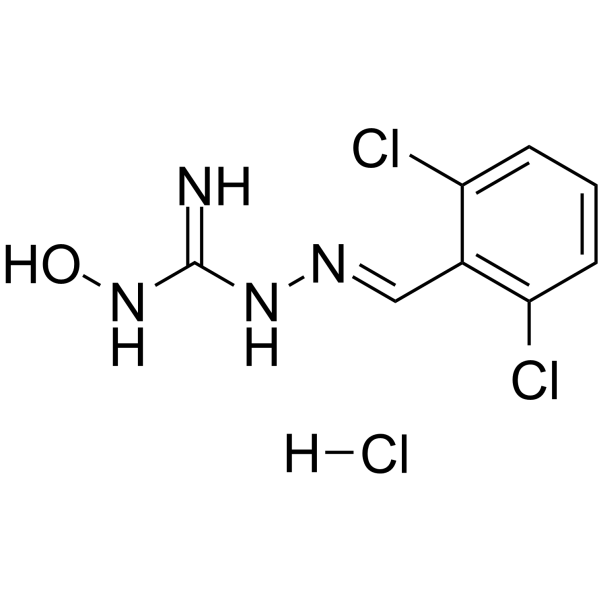
Guanoxabenz (Hydroxyguanabenz) hydrochloride is an α2 adrenergic receptor agonist, with a Ki of 4000 nM and the fully activated form 40 nM for an α2A adrenoceptor .
loading...
    loading...
Cat. No.: HY-110033
CAS No.: 2587360-22-1
Purity:  ≥99.0%
Synonyms: SCH 39166 hydrobromide
Ecopipam (SCH 39166) hydrobromide is a potent, selective and orally active antagonist of dopamine D1/D5 receptor, with Kis of 1.2 nM and 2.0 nM, respectively. Ecopipam hydrobromide shows more than 40-flod selectivity over D2, D4, 5-HT, and α2a receptor (Ki=0.98, 5.52, 0.08, and 0.73 μM, respectively). Ecopipam hydrobromide can be used for the research of schizophrenia and obesity .
loading...
    loading...
Cat. No.: HY-B1052S
CAS No.: 1206845-57-9
Synonyms: Baq-168-d4; MDL-14042-d4
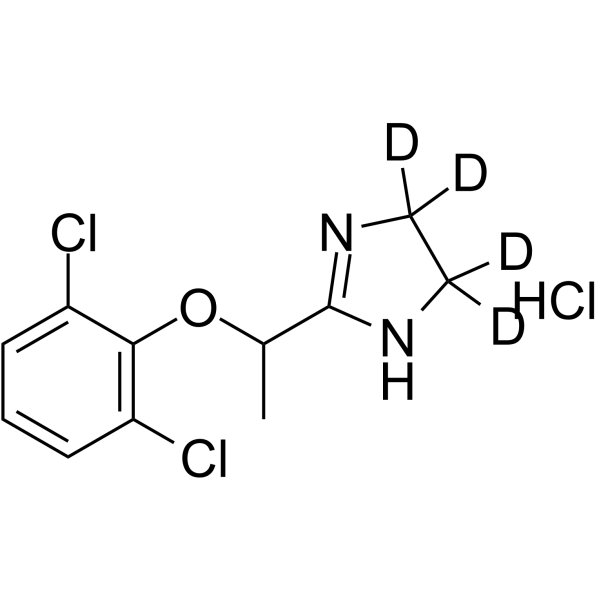
Lofexidine-d4 hydrochloride (Baq-168-d4) is the deuterium labeled Lofexidine hydrochloride (HY-B1052). Lofexidine hydrochloride (Baq-168) is an orally active agonist of the imidazoline I1 receptor (imidazoline I1 receptor) (Ki: 1.9 nM) and α2-adrenergic receptor (α2-adrenergic receptor). Lofexidine hydrochloride binds to the α2A-adrenergic receptor, reduces sympathetic outflow, lowers blood pressure, and exhibits vasoconstrictive effects. Lofexidine hydrochloride regulates the expression of c-fos and alleviates opioid withdrawal symptoms. Lofexidine hydrochloride is applicable to research on opioid addiction and withdrawal .
loading...
    loading...
Cat. No.: HY-12716
CAS No.: 118343-19-4
BRL-44408 is a selective, blood-brain barrier-permeable α2A-adrenergic receptor antagonist with a Ki value of 8.56 nM against human targets. BRL-44408 exhibits activities such as antidepressant, analgesic effects and attenuation of sepsis-induced acute lung injury by regulating the release of neurotransmitters such as norepinephrine and dopamine, or inhibiting signaling pathways including ERK1/2, p38MAPK and p65. BRL-44408 can be used in studies related to acute respiratory distress syndrome, depression and visceral pain .
loading...
    loading...
Cat. No.: HY-17416R
CAS No.: 29110-48-3
Guanfacine (hydrochloride) (Standard) is the analytical standard of Guanfacine (hydrochloride). This product is intended for research and analytical applications. Guanfacine hydrochloride is an orally active noradrenergic α2A agonist and has high selective for the α2A receptor subtype. Guanfacine has effects in producing hypotension and sedation. Guanfacine can be used for the research of a variety of prefrontal cortex (PFC) cognitive disorders, including tourette's syndrome and attention deficit hyperactivity disorder (ADHD) .
loading...
    loading...
Cat. No.: HY-U00117
CAS No.: 214548-46-6
Synonyms: R107474
Target:  

Adrenergic Receptor

Research Areas:  

Neurological Disease Endocrinology

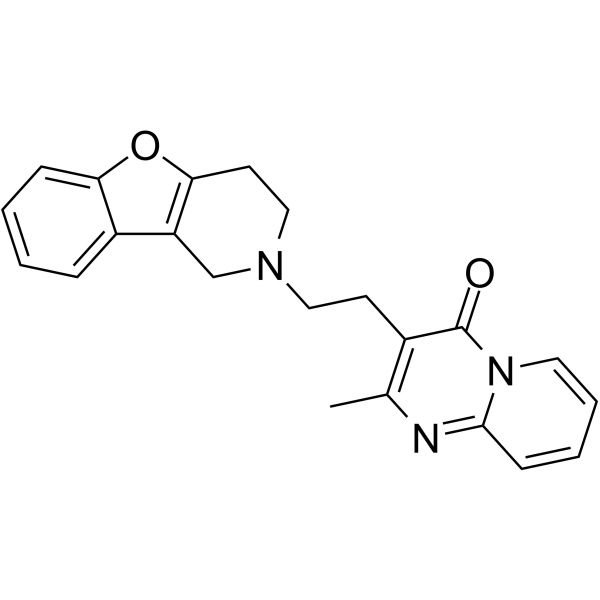
Lusaperidone (R107474) is an α2 adrenergic receptor antagonist with Kis of 0.13 and 0.15 nM for α2A and α2C, respectively.
loading...
    loading...

