6 Results for "

β-(l,3)-D-glucan

" in MedChemExpress (MCE) Product Catalog:
Products (6)

6 Results for "β-(l,3)-D-glucan" in MCE Product Catalog:

12
12 Cited Publications
Cat. No.: HY-17006
CAS No.: 179463-17-3
Synonyms: MK-0991 diacetate; L-743872 diacetate
Research Areas:  

Infection Cancer

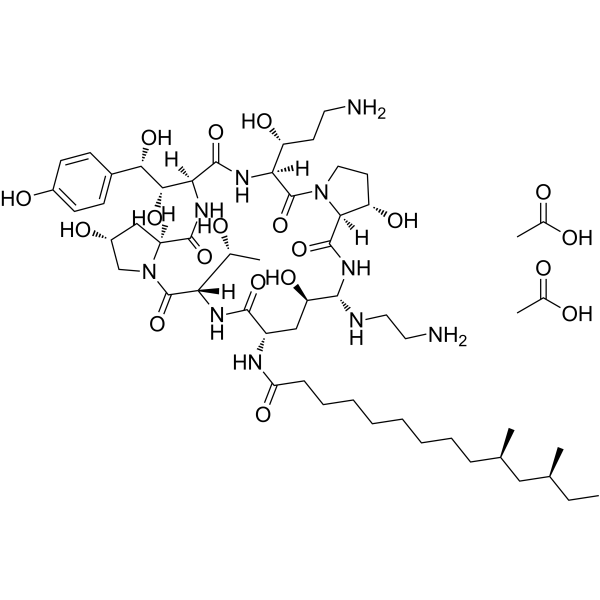
Caspofungin (MK-0991) diacetate is a potent antifungal agent. Caspofungin diacetate inhibits the synthesis of the fungal cell wall component β-(l,3)-D-glucan .
loading...
    loading...
12
12 Cited Publications
Cat. No.: HY-17006A
CAS No.: 162808-62-0
Synonyms: MK-0991; L-743872
Research Areas:  

Infection Cancer

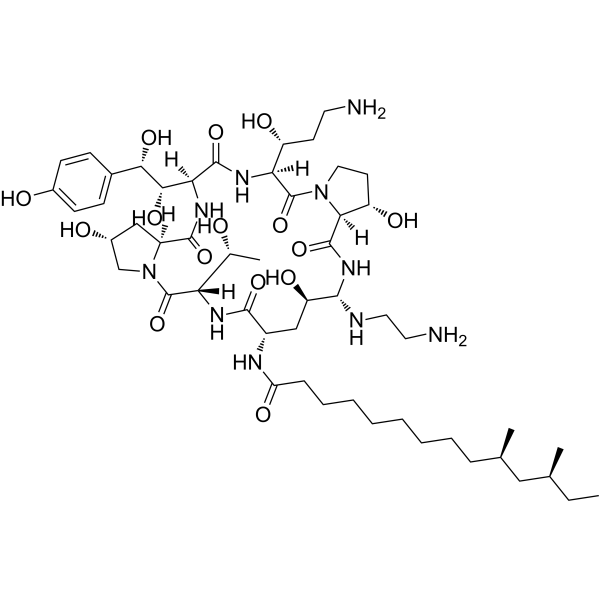
Caspofungin is a potent antifungal agent. Caspofungin inhibits the synthesis of the fungal cell wall component β-(l,3)-D-glucan .
loading...
    loading...
Cat. No.: HY-17006S
Synonyms: MK-0991-d4 diacetate; L-743872-d4 diacetate
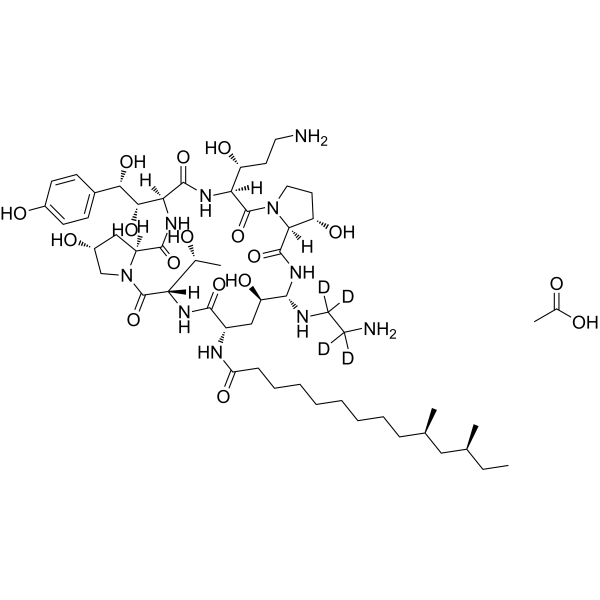
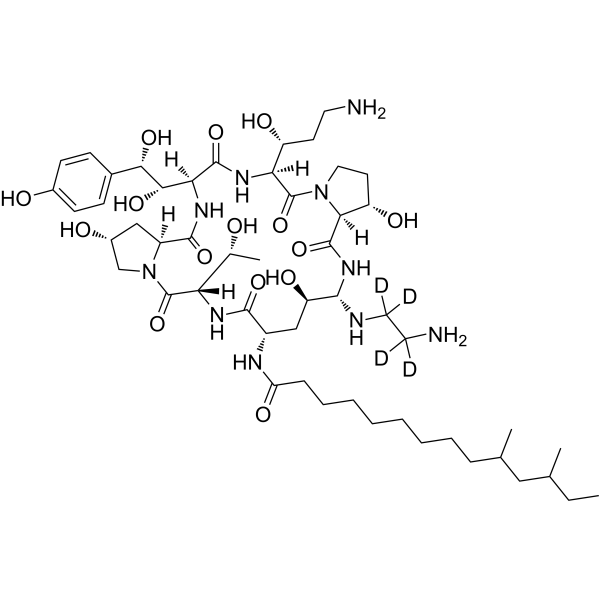
Caspofungin-d4 (acetate) is the deuterium labeled Caspofungin diacetate . Caspofungin (MK-0991) diacetate is a potent antifungal agent. Caspofungin diacetate inhibits the synthesis of the fungal cell wall component β-(l,3)-D-glucan [3].
loading...
    loading...
Cat. No.: HY-17006R
CAS No.: 179463-17-3
Synonyms: MK-0991 diacetate (Standard); L-743872 diacetate (Standard)
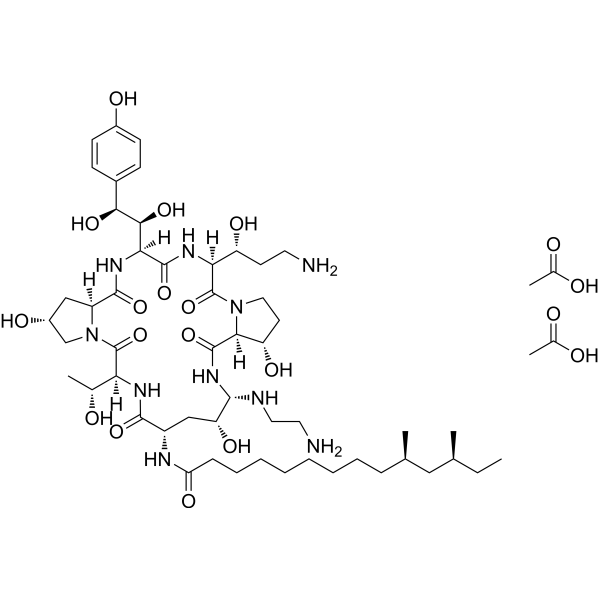
Caspofungin (diacetate) (Standard) is the analytical standard of Caspofungin (diacetate). This product is intended for research and analytical applications. Caspofungin (MK-0991) diacetate is a potent antifungal agent. Caspofungin diacetate inhibits the synthesis of the fungal cell wall component β-(l,3)-D-glucan .
loading...
    loading...
Cat. No.: HY-17006AS
CAS No.: 1131958-73-0
Synonyms: MK-0991-d4; L-743872-d4
Caspofungin-d4 (MK-0991-d4; L-743872-d4) is a deuterium labeled Caspofungin (HY-17006A). Caspofungin is a potent antifungal agent. Caspofungin inhibits the synthesis of the fungal cell wall component β-(l,3)-D-glucan [3].
loading...
    loading...
Cat. No.: HY-DY2041
Target:  

Fluorescent Dye

Research Areas:  

Infection

Callose Staining Solution (Aniline Blue, Bright-Field Method) is a fluorescent dye used for detecting callose in plant tissues, green algal cell walls, plant cells, and protoplasts. Callose Staining Solution (Aniline Blue, Bright-Field Method) specifically binds to callose, a β-(1,3)-D-glucan polymer, and exhibits blue-green fluorescence under alkaline conditions with reduced background staining and non-toxicity to living cells. Callose Staining Solution (Aniline Blue, Bright-Field Method) is suitable for observation under UV or epifluorescence microscopy (Ex/Em = 365-370/397-509 nm). Callose Staining Solution (Aniline Blue, Bright-Field Method) can be used in studies related to the visualization of callose deposition in plants [3].
loading...
    loading...

