



Caspofungin diacetate (Standard)

Based on 1 Customer Validation
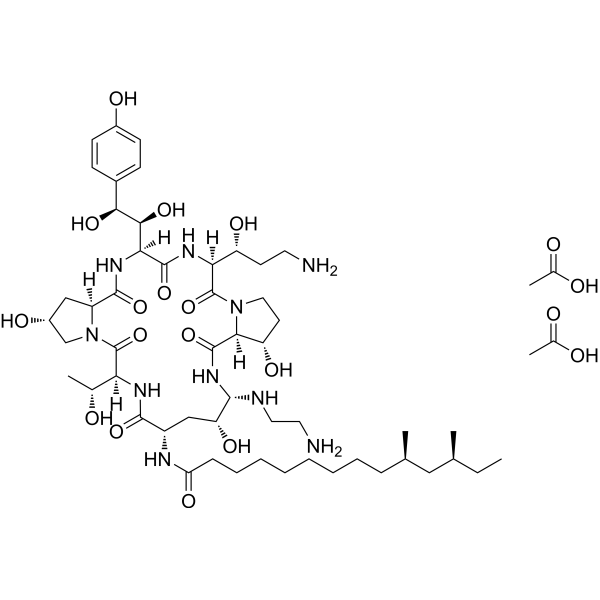
Caspofungin (diacetate) (Standard) is the analytical standard of Caspofungin (diacetate). This product is intended for research and analytical applications. Caspofungin (MK-0991) diacetate is a potent antifungal agent. Caspofungin diacetate inhibits the synthesis of the fungal cell wall component β-(l,3)-D-glucan.
For research use only. We do not sell to patients.
- Purity : 98.21%
- CAS No.: 179463-17-3
- Formula: C56H96N10O19
- Molecular Weight:1213.42
-
Storage:
Please store the product under the recommended conditions in the Certificate of Analysis.

To place orders, for customer services and technical support, please contact: MedChemExpress USA
Tel: 609-228-6898 E-mail: [email protected] [email protected]


-
 Product Information
-
Chemical Information
- Purity & Documentation
-
 Help & FAQs


-
HY-17006
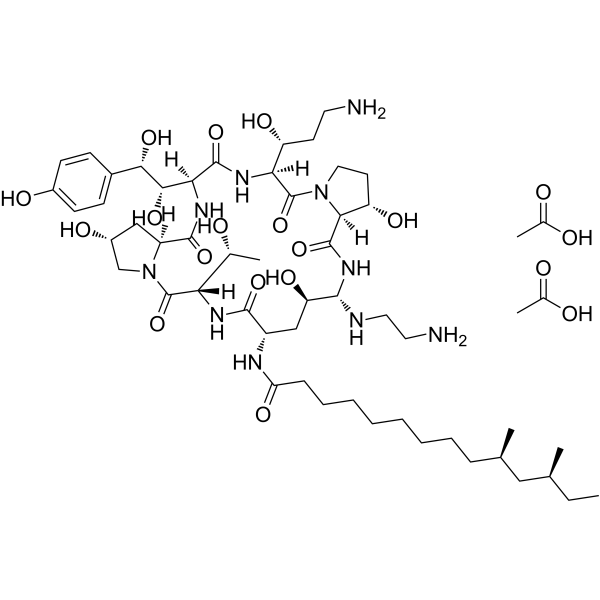
Caspofungin diacetateAntifungal Agent -
HY-B0221
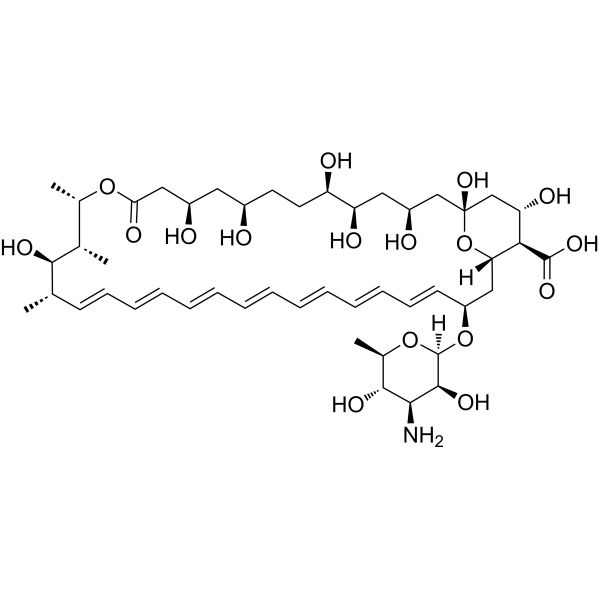
Amphotericin BAntifungal Agent -
HY-16321
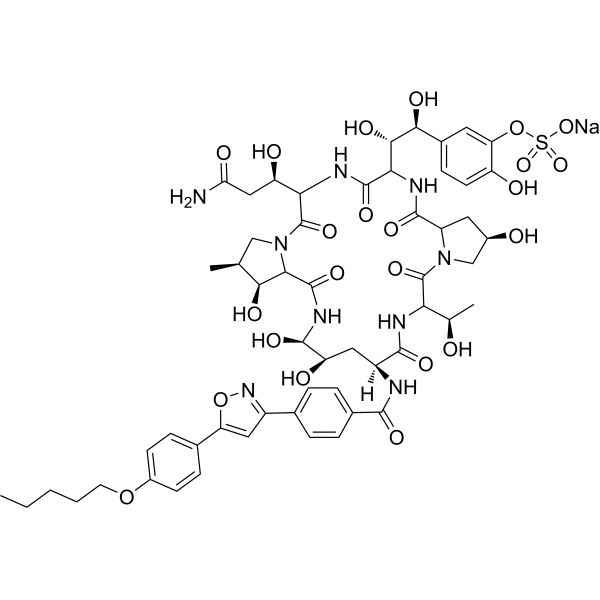
Micafungin sodiumAntifungal Agent -
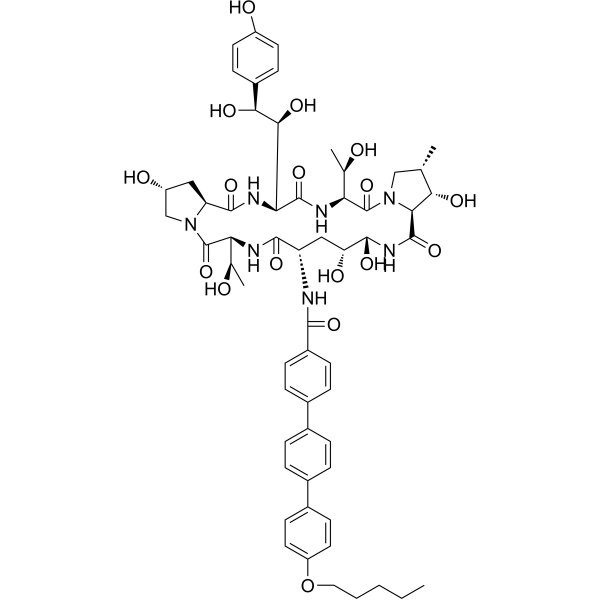
HY-13553
AnidulafunginAntifungal Agent -
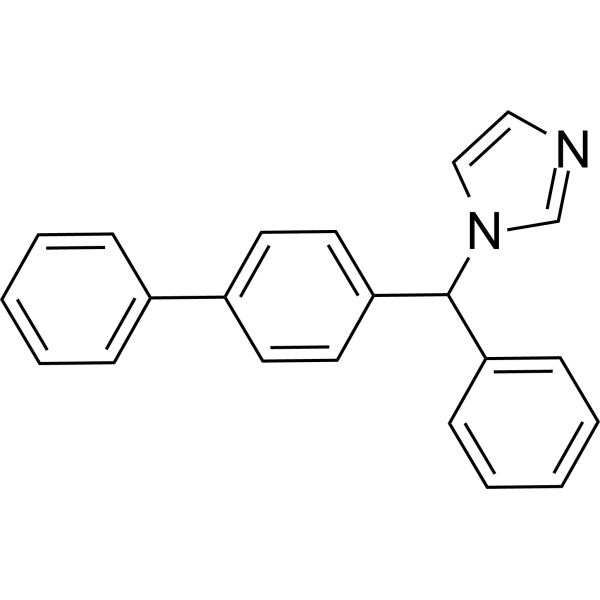
HY-B0301
BifonazoleAntibiotic -
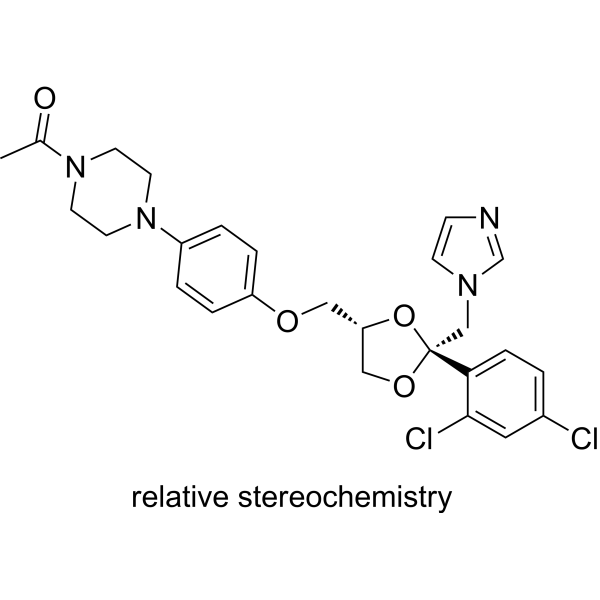
HY-B0105
KetoconazoleCYP3A4 Inhibitor -
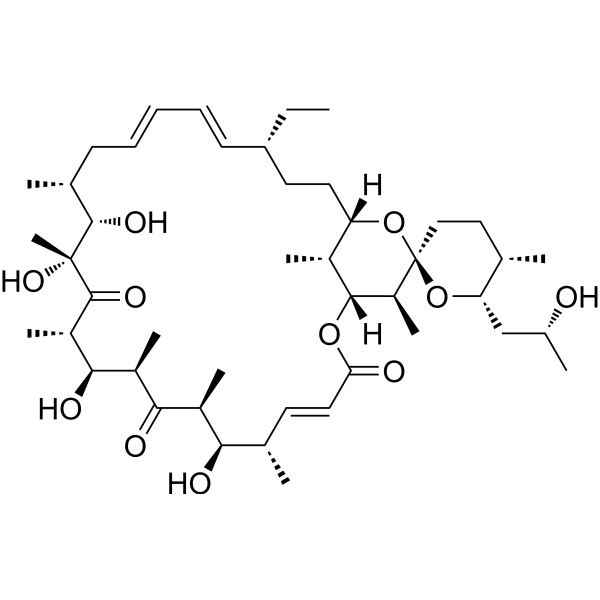
HY-16589
Oligomycin AMitochondrial ATP Synthase Inhibitor -
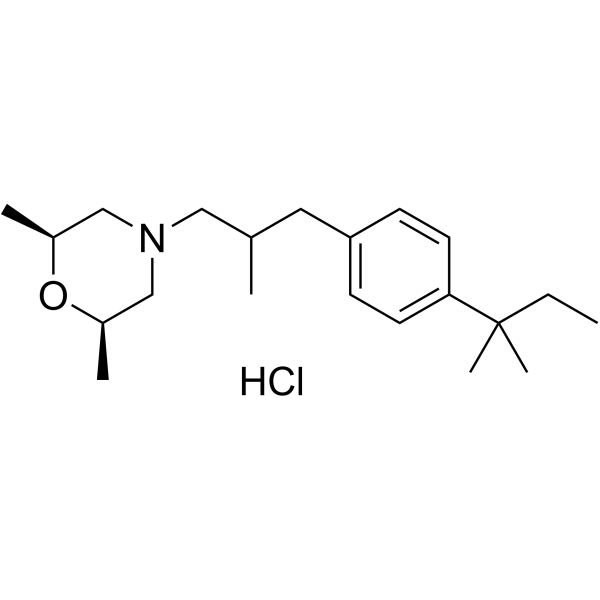
HY-B0238
Amorolfine hydrochlorideAnti-fungal Agent -
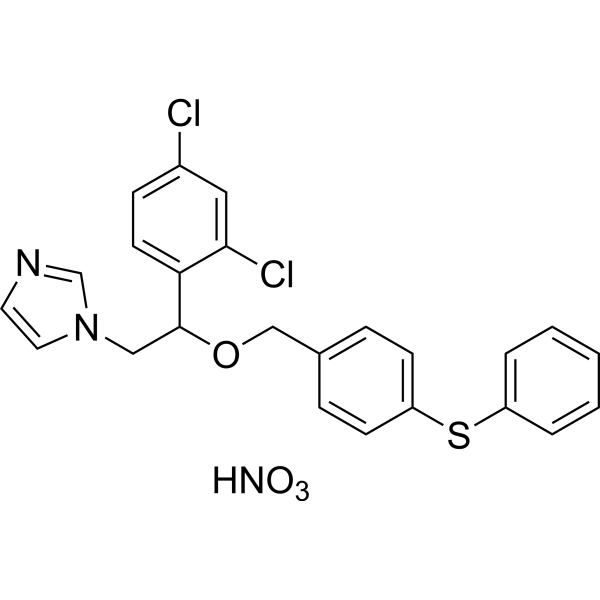
HY-B0359
Fenticonazole NitrateAntibiotic -
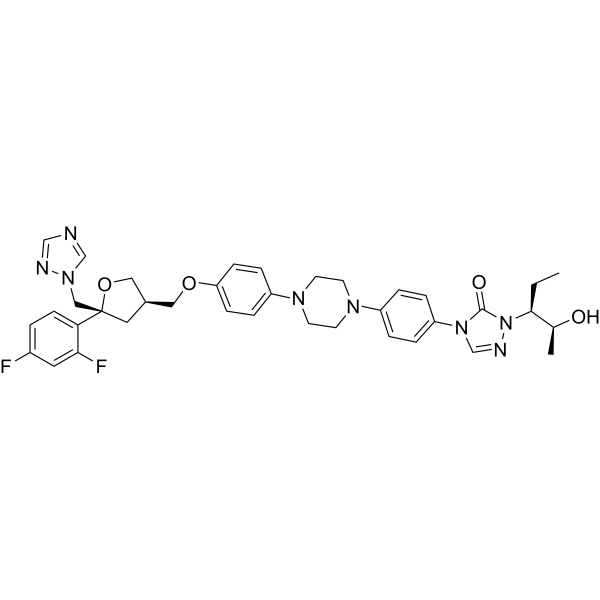
HY-17373
PosaconazoleAnti-fungal Agent -
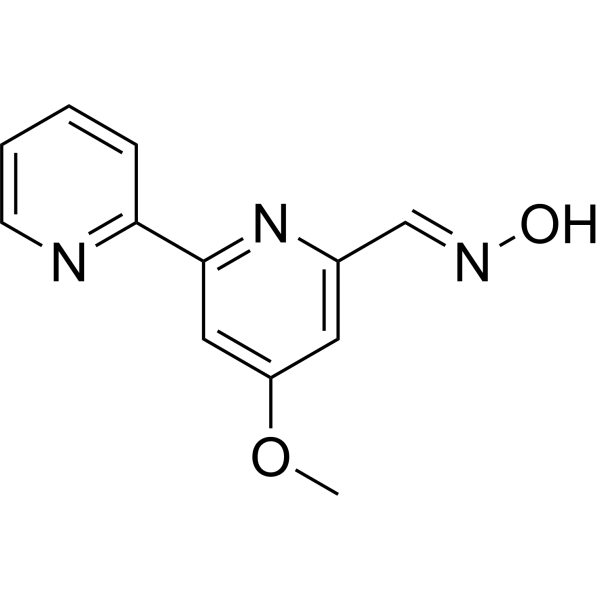
HY-114495
Caerulomycin ASmad3 Activator, STAT1 Inhibitor, GATA-3 Inhibitor -
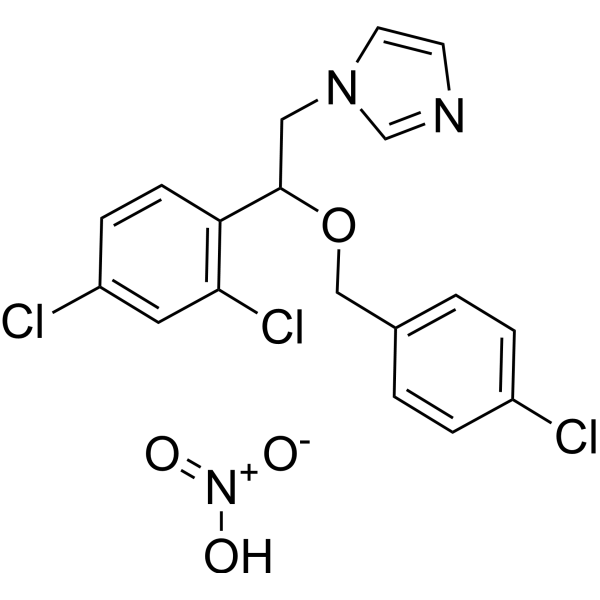
HY-B0453
Econazole nitrateAntifungal Agent


Product Information
Information
Application
The compound is the grade of analytical standard, which is the reference standard supplied assay. It is commonly used in qualitative, quantitative and methodological research experiments in HPLC, GC and MS.


Chemical Information
-
CAS No. 179463-17-3
-
Appearance Solid
-
Molecular Weight 1213.42
-
Formula C56H96N10O19
-
Color White to off-white
-
SMILES
O=C([C@](NC([C@](NC([C@@](C[C@H]1O)([H])N(C1)C2=O)=O)([H])[C@H](O)[C@H](C(C=C3)=CC=C3O)O)=O)([H])[C@H](O)CCN)N(CC[C@@H]4O)[C@]4([H])C(N[C@@H]([C@@H](C[C@@H](C(N[C@@]2([H])[C@H](O)C)=O)NC(CCCCCCCC[C@@H](C)C[C@@H](C)CC)=O)O)NCCN)=O.OC(C)=O.OC(C)=O
-
Synonyms
MK-0991 diacetate (Standard); L-743872 diacetate (Standard)
-
Shipping
Room temperature in continental US; may vary elsewhere.
-
Storage
Please store the product under the recommended conditions in the Certificate of Analysis.


Purity & Documentation
-
SDS (393 KB)
- English - EN (393 KB)
- Français - FR (393 KB)
- Deutsch - DE (393 KB)
- Norwegian - NO (393 KB)
- Español - ES (393 KB)
- Swedish - SV (393 KB)
- Italian - IT (393 KB)
- Korean - KR (393 KB)
- Portuguese - PT (393 KB)
-
Handling Instructions (2659 KB)
References
[1]. Flattery AM, et, al. Efficacy of caspofungin in a juvenile mouse model of central nervous system candidiasis. Antimicrob Agents Chemother. 2011 Jul;55(7):3491-7. [Content Brief]
[2]. Mojumder DK, et, al. Evaluating retinal toxicity of intravitreal caspofungin in the mouse eye. Invest Ophthalmol Vis Sci. 2010 Nov;51(11):5796-803. [Content Brief]


Caspofungin diacetate (Standard) Related Classifications
HY-17006R Related Classifications
 Powered by Bioz