


1. Search Result
Search Result
Results for "

δ-Opioid

" in MedChemExpress (MCE) Product Catalog:

118

Inhibitors & Agonists

34

Peptides

4

Natural
Products

7

Isotope-Labeled Compounds

1

Antibodies

Cat. No. Product Name Target Research Areas Chemical Structure
  • HY-P1502
    β-Endorphin, human
    1 Publications Verification

    Opioid Receptor Neurological Disease
    β-Endorphin, human, a prominent endogenous peptide, existing in the hypophysis cerebri and hypothalamus, is an agonist of opioid receptor, with preferred affinity for μ-opioid receptor and δ-opioid receptor; β-Endorphin, human exhibits antinociception activity.
    β-Endorphin, human
  • HY-101202

    NIH 10815

    Opioid Receptor Neurological Disease
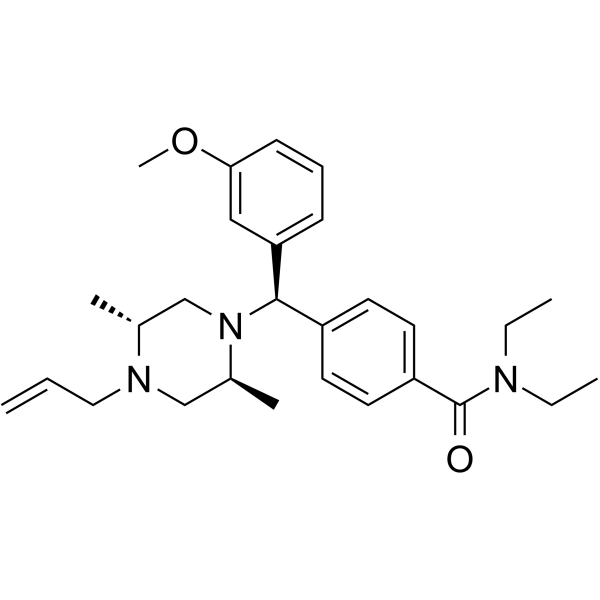
    SNC80 (NIH 10815) is a potent, highly selective and non-peptide δ-opioid receptor agonist with a Ki of 1.78 nM and an IC50 of 2.73 nM. SNC80 also selectively activates μ-δ heteromer in HEK293 cells with an EC50 of 52.8 nM. SNC80 shows antinociceptive, antihyperalgesic and antidepressant‐like effects. SNC80 has the potential for multiple headache disorders treatment .
    SNC80
  • HY-G0021

    Norclozapine; Desmethylclozapine; Normethylclozapine

    mAChR Opioid Receptor Drug Metabolite Virus Protease Infection
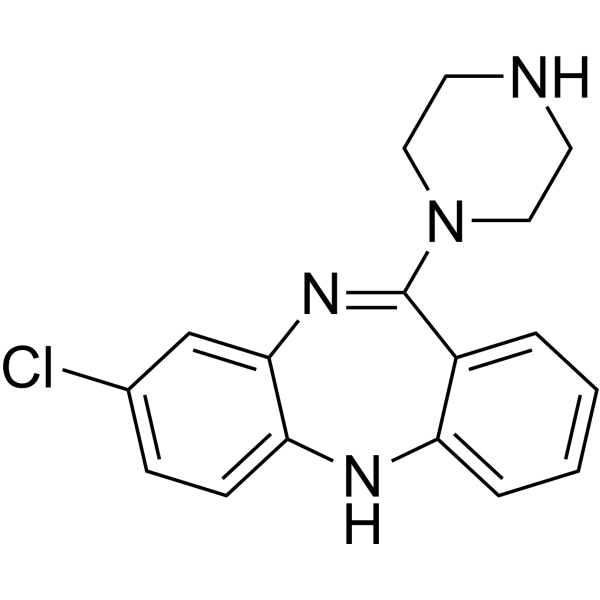
    N-Desmethylclozapine is a major active metabolite of the atypical antipsychotic agent Clozapine. N-Desmethylclozapine is a potent, allosteric and partial M1 receptors agonist (EC50=115 nM) and is able to potentiate hippocampal N-methyl-d-aspartate (NMDA) receptor currents through M1 receptor activation. N-Desmethylclozapine is also a δ-opioid agonist .
    N-Desmethylclozapine
  • HY-13243
    Alvimopan
    2 Publications Verification

    ADL 8-2698; LY 246736

    Opioid Receptor Neurological Disease
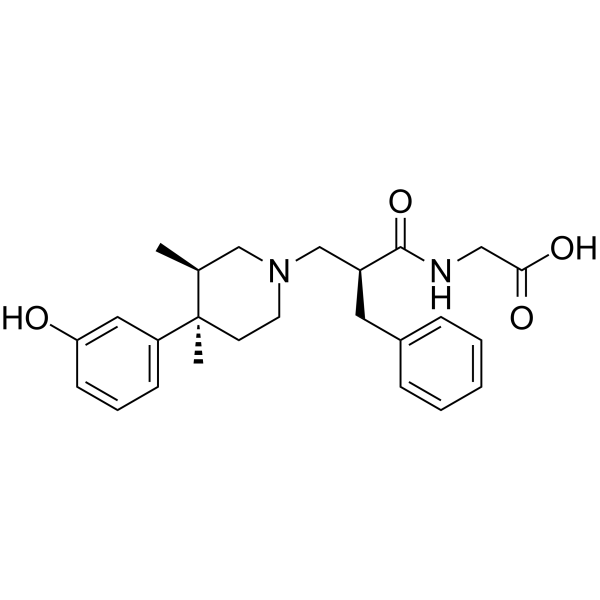
    Alvimopan (ADL 8-2698) is a potent, selective, orally active and reversible μ-opioid receptor antagonist, with an IC50 of 1.7 nM. Alvimopan has selectivity for μ-opioid receptor (Ki=0.47 nM) over κ- and δ-opioid receptors (Kis=100, 12 nM, respectively). Alvimopan can be used for the research of postoperative ileus .
    Alvimopan
  • HY-90003
    Tianeptine
    1 Publications Verification

    Opioid Receptor iGluR MMP PI3K Akt NF-κB Neurological Disease Inflammation/Immunology
    Tianeptine is an atypical antidepressant. Tianeptine is a moderate-intensity agonist of the μ-opioid receptor (MOR), and to a lesser extent, is an agonist of the δ-opioid receptor (DOR). Tianeptine is a glutamate modulator that can enhance AMPA receptor and antagonize NMDA receptor. tianeptine increases sensitivity of the α1 adrenergic receptor, which only manifests in chronic treatment. Tianeptine exerts neuroprotective effects under stress/inflammation-induced conditions, exhibiting anti-inflammatory and antioxidant properties. Tianeptine inhibits MMP-9 by suppressing the PI3K/Akt-mediated NF-κB pathway. Tianeptine can be used to alleviate symptoms of depression and anxiety, but does not cause sedative effects .
    Tianeptine
  • HY-145404
    Mitragynine pseudoindoxyl
    1 Publications Verification

    Opioid Receptor Metabolic Disease
    Mitragynine pseudoindoxyl is a potent orally active agonist of the μ-opioid receptor (MOR-1, Ki=0.8 nM) and an antagonist of the δ-opioid receptor (DOR-1, Ki=3.0 nM). Mitragynine pseudoindoxyl has moderate affinity for the κ-opioid receptor (KOR-1, Ki=24 nM) and does not recruit β-arrestin-2, acting through G protein-mediated signaling pathways without β-arrestin-2-related activation. Mitragynine pseudoindoxyl produces potent analgesic activity through a mixed μ-agonist/δ-antagonist mechanism, with low side effects such as physical dependence, respiratory depression, and constipation, and no rewarding or aversive behaviors. Mitragynine pseudoindoxyl reduces hyperactivity, inhibits GI transit, and enhances characteristics, making it a potential analgesic .
    Mitragynine pseudoindoxyl
  • HY-P1335
    CTAP
    2 Publications Verification

    Opioid Receptor Neurological Disease
    CTAP is a potent, highly selective, and BBB penetrant μ opioid receptor antagonist, with an IC50 of 3.5 nM. CTAP displays over 1200-fold selectivity over δ opioid (IC50=4500 nM) and somatostatin receptors. CTAP can be used for the study of L-DOPA-induced dyskinesia (LID) and opiate overdose or addiction .
    CTAP
  • HY-P1334
    DPDPE
    1 Publications Verification

    Opioid Receptor Neurological Disease
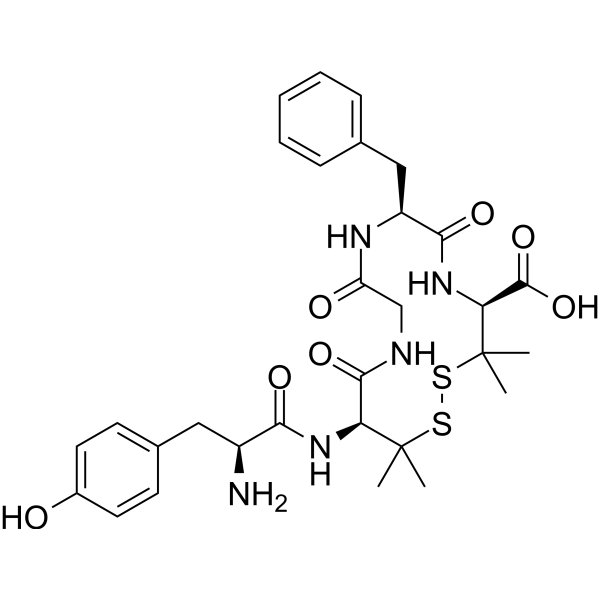
    DPDPE, an opioid peptide, is a selective δ-opioid receptor?(DOR) agonist?with anticonvulsant effects .
    DPDPE
  • HY-P4053

    Opioid Receptor Neurological Disease
    Dalargin is a potent δ-opioid receptor agonist. Dalargin mitigates Gentamicin (HY-A0276)-induced cell death. Dalargin shows nephroprotective effects on Gentamicin (HY-A0276A)-induced kidney injury. Dalargin shows antiulcer activity .
    Dalargin
  • HY-120613

    Opioid Receptor Neurological Disease
    BMS-986187 is an δ-opioid receptor-selective positive allosteric modulator (PAM) with an EC50 of 0.03 μM and a pKB of 6.02 (~1 μM). BMS-986187 has no observable PAM activity at the μ-receptor (EC50=3 μM) .
    BMS-986187
  • HY-123689

    ALKS-33; RDC-0313

    Opioid Receptor Neurological Disease
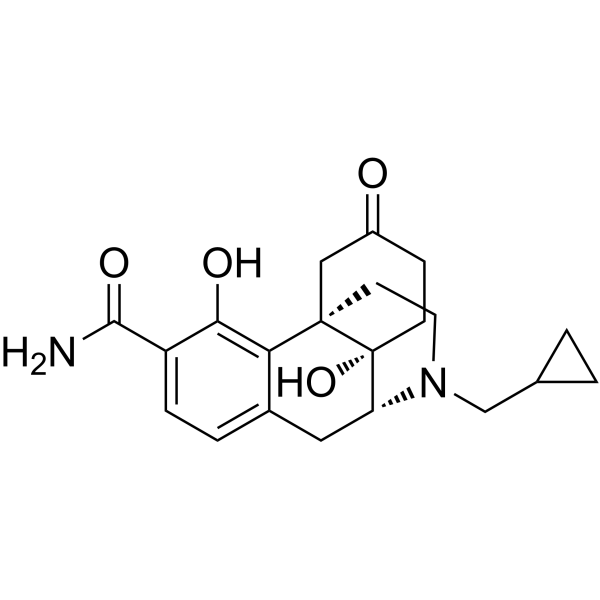
    Samidorphan (ALKS-33) is an orally active opioid system modulator that has a high affinity for binding with μ‐opioid, κ‐opioid, and δ‐opioid receptors. Samidorphan acts as an antagonist at μ‐opioid receptors and acts as a partial agonist at k-opioid and δ‐opioid receptors. Samidorphan primarily acts as an opioid receptor antagonist in vivo. Samidorphan can improve the behavior of depressed animals .
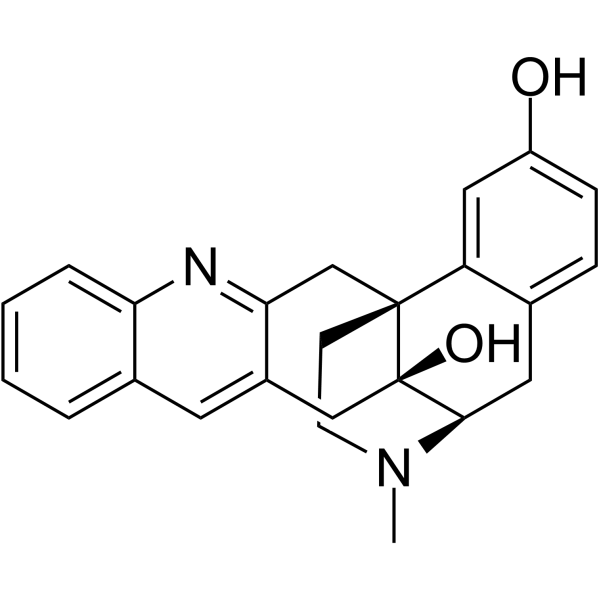
    Samidorphan
  • HY-P0098

    Opioid Receptor Neurological Disease Inflammation/Immunology
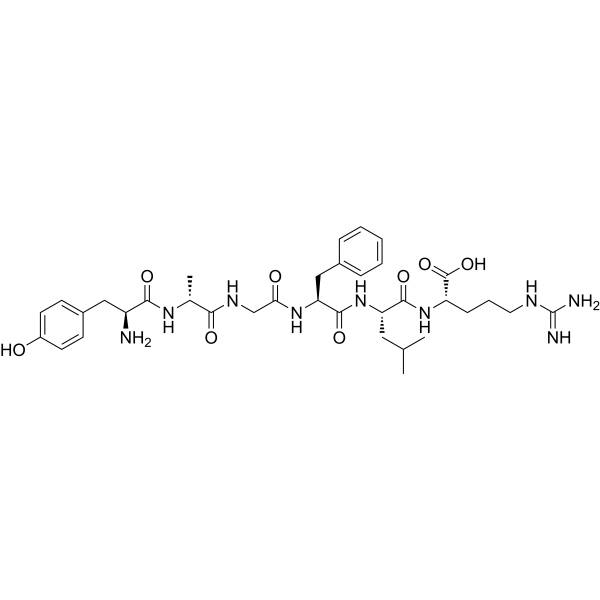
    [D-Ala2]leucine-enkephalin, a delta opioid agonist, is a degradation resistant long-acting Leu-enkephalin analog used to study the signaling pathway of delta opioid receptors.
    [D-Ala2]leucine-enkephalin
  • HY-120511
    KNT-127
    1 Publications Verification

    Opioid Receptor Neurological Disease
    KNT-127 is a selective and BBB-penetrant δ-opioid receptor (DOR) agonist (Ki = 0.16 nM). KNT-127 is highly selective to the δ receptor, with Ki values of 0.16, 21.3 and 153 nM for δ, μ and κ receptors, respectively. KNT-127 acts as a biased ligand that mainly activates cyclic adenosine monophosphate (cAMP) signaling with lower beta-arrestin signaling activation. KNT-127 increases the release of dopamine and L-glutamate in the striatum, nucleus accumbens, and prefrontal cortex. KNT-127 exhibits antidepressant- and anxiolytic-like effects. KNT-127 can be studied in research on neurological diseases .
    KNT-127
  • HY-90003A
    Tianeptine sodium salt
    1 Publications Verification

    Opioid Receptor iGluR MMP PI3K Akt NF-κB Neurological Disease Inflammation/Immunology
    Tianeptine sodium salt is an atypical antidepressant. Tianeptine sodium salt is a moderate-intensity agonist of the μ-opioid receptor (MOR), and to a lesser extent, is an agonist of the δ-opioid receptor (DOR). Tianeptine sodium salt is a glutamate modulator that can enhance AMPA receptor and antagonize NMDA receptor. Tianeptine sodium salt increases sensitivity of the α1 adrenergic receptor, which only manifests in chronic treatment. Tianeptine sodium salt exerts neuroprotective effects under stress/inflammation-induced conditions, exhibiting anti-inflammatory and antioxidant properties. Tianeptine sodium salt inhibits MMP-9 by suppressing the PI3K/Akt-mediated NF-κB pathway. Tianeptine sodium salt can be used to alleviate symptoms of depression and anxiety, but does not cause sedative effects .
    Tianeptine sodium salt
  • HY-13044
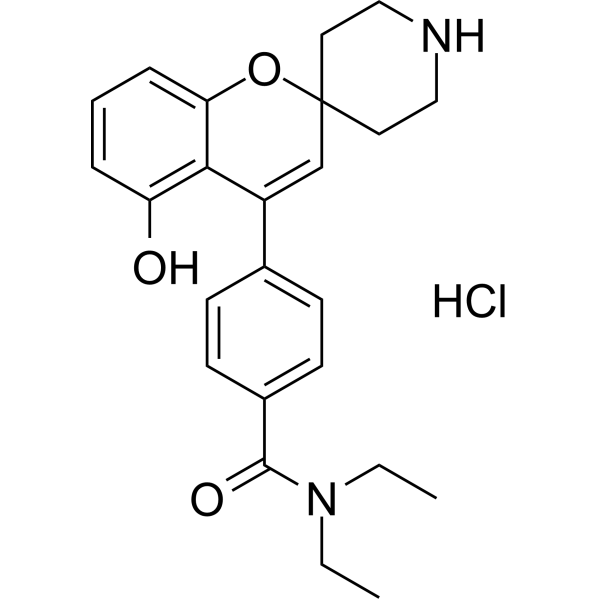
    ADL-5859 hydrochloride
    1 Publications Verification

    Opioid Receptor Potassium Channel Cytochrome P450 Neurological Disease Inflammation/Immunology
    ADL-5859 hydrochloride (compound 20) is a selective and orally active δ opioid receptor (DOR) agonist with an Ki and an EC50 value of 0.84 and 20 nM, respectively. ADL-5859 hydrochloride also shows inhibitory activity to hERG channel with an IC50 value of 78 μM. ADL-5859 hydrochloride can be used for the research of pain .
    ADL-5859 hydrochloride
  • HY-P1336

    Deltorphin 1; Deltorphin C; [D-Ala2] Deltorphin I

    Opioid Receptor Neurological Disease
    Deltorphin I is a δ-opioid receptor agonist with high affinity and selectivity.
    Deltorphin I
  • HY-104006

    Opioid Receptor Neurological Disease
    CYM51010 is a biased ligand of μ-opioid receptor – δ-opioid receptor heterodimers with an EC50 of 403 nM. CYM51010 exhibits anti-nociceptive activity similar to morphine but with a decreased levels of tolerance development and withdrawal symptoms .
    CYM51010
  • HY-P1470

    Leu-Enkephalin amide

    Opioid Receptor Neurological Disease
    [Leu5]-Enkephalin, amide is a δ opioid receptor agonist.
    [Leu5]-Enkephalin, amide
  • HY-107741

    Opioid Receptor Neurological Disease
    SNC162 is a delta-opioid receptor agonist with an IC50 of 0.94 nM. SNC162 has antidepressant-like and antinociceptiv effects .
    SNC162
  • HY-P1596

    Opioid Receptor Neurological Disease
    Gluten exorphin C is an opioid peptide derived from wheat gluten. Its IC50 values are 40 μM and 13.5 μM for μ opioid and δ opioid activities in the GPI and MVD assays, respectively.
    Gluten Exorphin C
  • HY-105343
    BW-180C
    1 Publications Verification

    [D-Ala2, D-Leu5]-Enkephalin; DADLE

    Opioid Receptor Neurological Disease
    BW-180C ([D-Ala2, D-Leu5]-Enkephalin; DADLE) is an δ opioid receptor (DOR) agonist, which belongs to the enkephalin family. Neuroprotective agent. BW-180C reversibly inhibits cellular transcription in neurons without causing cell injury .
    BW-180C
  • HY-14157

    Opioid Receptor Inflammation/Immunology
    ADL-5747 is a selective and orally active agonist of the δ-opioid receptor (DOR). By binding to the δ-opioid receptors, ADL-5747 activates these receptors, thereby playing a role in pain management pathways. ADL-5747 can be used for research into pain management mechanisms .
    ADL-5747
  • HY-P1334A
    DPDPE TFA
    1 Publications Verification

    Opioid Receptor Neurological Disease
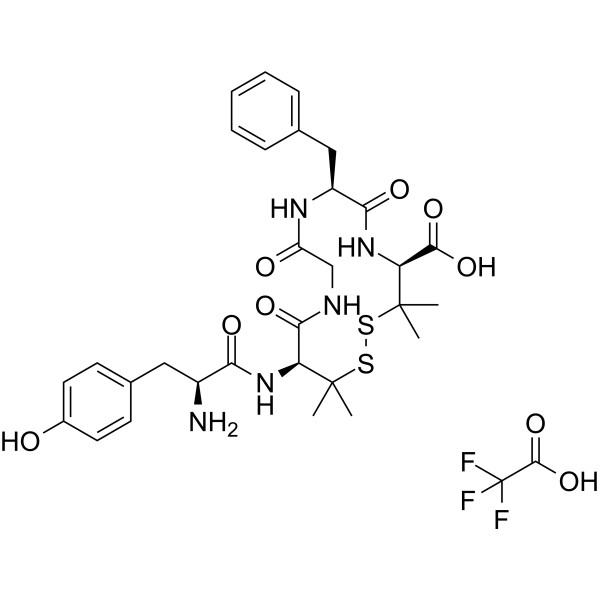
    DPDPE TFA, an opioid peptide, is a selective δ-opioid receptor (DOR) agonist with anticonvulsant effects .
    DPDPE TFA
  • HY-W048697

    Amino Acid Derivatives Others
    Fmoc-D-Pen(Trt)-OH is an amino acid derivative with an Fmoc protecting group, which can be used to synthesize analogs of cyclic lanthionine enkephalin, a δ-opioid receptor selective ligand .
    Fmoc-D-Pen(Trt)-OH
  • HY-136208

    Opioid Receptor Neurological Disease
    TAN-452 is an orally active, selective peripherally acting δ-opioid receptor (DOR) antagonist with a Ki of 0.47 nM and a Kb of 0.21 nM. TAN-452 is an antagonist for μ-opioid receptor (MOR; Ki=36.56 nM and Kb=9.43 nM) and κ-opioid receptor (KOR; Ki=5.31 nM and Kb=7.18 nM). TAN-452, a derivative of Naltrindole, demonstrates low brain penetrability and attenuates morphine-induced side effects without affecting pain control .
    TAN-452
  • HY-P1013A
    Deltorphin 2 TFA
    3 Publications Verification

    [D-Ala2]-Deltorphin II TFA

    Opioid Receptor Neurological Disease
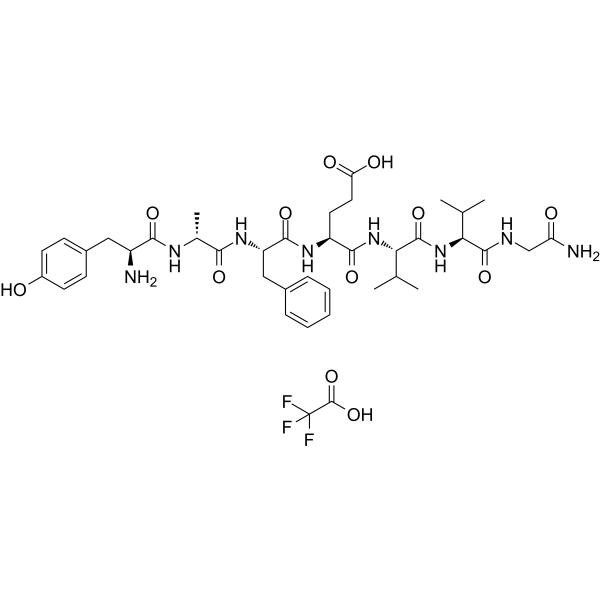
    Deltorphin 2 TFA is a selective peptide agonist for the δ opioid receptor .
    Deltorphin 2 TFA
  • HY-P1467A

    5-Methionine-enkephalin amide TFA

    Opioid Receptor Neurological Disease
    [Met5]-Enkephalin, amide TFA is an agonist for δ opioid receptors as well as putative ζ ζ opioid receptors.
    [Met5]-Enkephalin, amide TFA
  • HY-P3546

    Opioid Receptor Neurological Disease
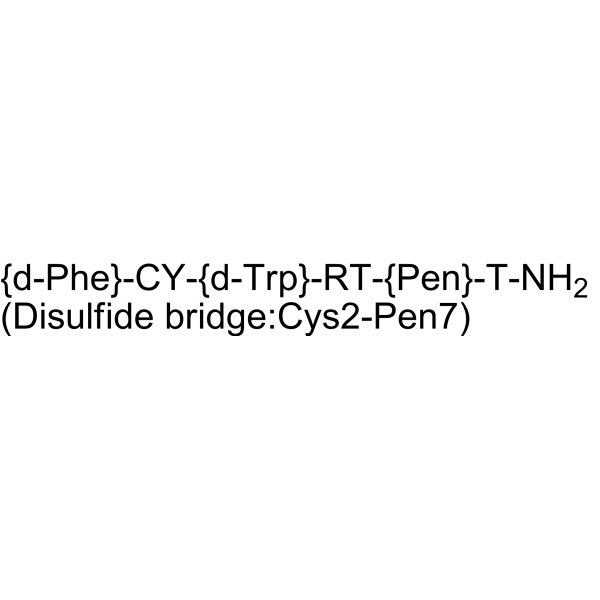
    [DPen2, Pen5] Enkephalin is a δ-opioid receptor selective analog of [Leu5]-Enkephalin (HY-P0288) .
    [DPen2, Pen5] Enkephalin
  • HY-P1335A
    CTAP TFA
    2 Publications Verification

    Opioid Receptor Neurological Disease
    CTAP TFA is a potent, highly selective, and BBB penetrant μ opioid receptor antagonist, with an IC50 of 3.5 nM. CTAP TFA displays over 1200-fold selectivity over δ opioid (IC50=4500 nM) and somatostatin receptors. CTAP TFA can be used for the study of L-DOPA-induced dyskinesia (LID) and opiate overdose or addiction .
    CTAP TFA
  • HY-101230

    Opioid Receptor Neurological Disease
    ICI 174864 is a selective and brain-penetrant δ-opioid receptor antagonist with Ke values of 22.0 nM to 30.6 nM at δ-opioid receptor in mouse vas deferens. ICI 174864 selectively blocks biological effects mediated by the δ-opioid receptor agonist DPDPE (HY-P1334) after central administration. ICI 174864 reverses hypotension in rats with endotoxic shock and inhibits acetic acid-induced writhing in mice. ICI 174864 can be used for the research of opioid receptor subtypes, endotoxic hypotension and analgesic pathways .
    ICI 174864
  • HY-101317
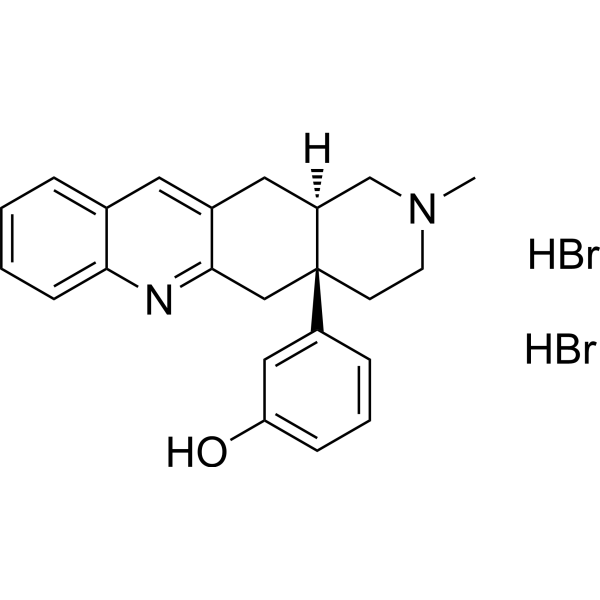
    TAN-67 dihydrobromide
    1 Publications Verification

    SB-205607 dihydrobromide

    Opioid Receptor Neurological Disease
    TAN-67 (SB-205607) dihydrobromide is a potent and selective nonpeptidic δ-opioid receptor agonist with a Ki value of 0.647 nM. TAN-67 dihydrobromide has neuroprotective effect. TAN-67 dihydrobromide can be used in research of ischemic stroke .
    TAN-67 dihydrobromide
  • HY-76657A
    Alvimopan dihydrate
    2 Publications Verification

    ADL 8-2698 dihydrate; LY 246736 dihydrate

    Opioid Receptor Neurological Disease Cancer
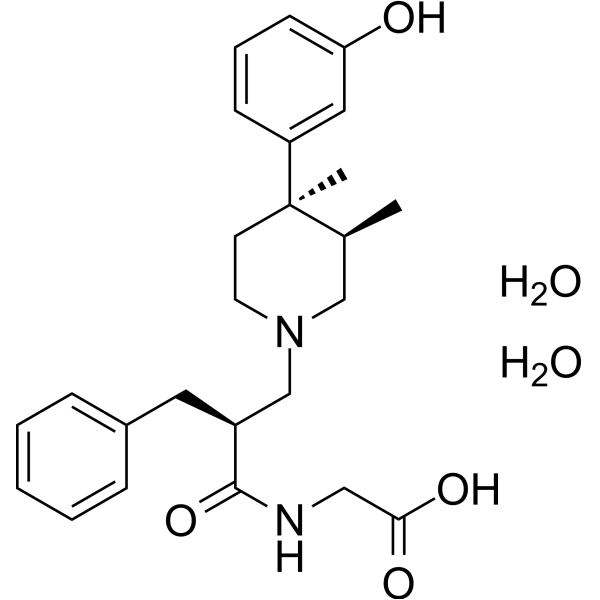
    Alvimopan dihydrate (ADL 8-2698 dihydrate) is a potent, selective, orally active and reversible μ-opioid receptor antagonist, with an IC50 of 1.7 nM. Alvimopan dihydrate has selectivity for μ-opioid receptor (Ki=0.47 nM) over κ- and δ-opioid receptors (Kis=100, 12 nM, respectively). Alvimopan dihydrate can be used for the research of postoperative ileus .
    Alvimopan dihydrate
  • HY-P1866A
    β-Endorphin, equine TFA
    1 Publications Verification

    Opioid Receptor Neurological Disease
    β-Endorphin, equine TFA is an endogenous opioid peptide, which binds at high affinity to both μ/δ opioid receptors. β-Endorphin, equine TFA has analgesic properties .
    β-Endorphin, equine TFA
  • HY-10486

    Opioid Receptor Neurological Disease
    JDTic is a highly selective antagonist for the κ-opioid receptor; without affecting the μ- or δ-opioid receptors.
    JDTic
  • HY-107743

    NalBzoH

    Opioid Receptor Neurological Disease
    Naloxone benzoylhydrazone (NalBzoH) is a mixed agonist/antagonist. Naloxone benzoylhydrazone is a prototypic κ3-opioid receptor agonist, and a partial agonist at the cloned μ and δ opioid receptors, and an antagonist at opioid-like NOP receptors. Naloxone benzoylhydrazone has potently analgesia effect .
    Naloxone benzoylhydrazone
  • HY-178235

    Opioid Receptor Neurological Disease
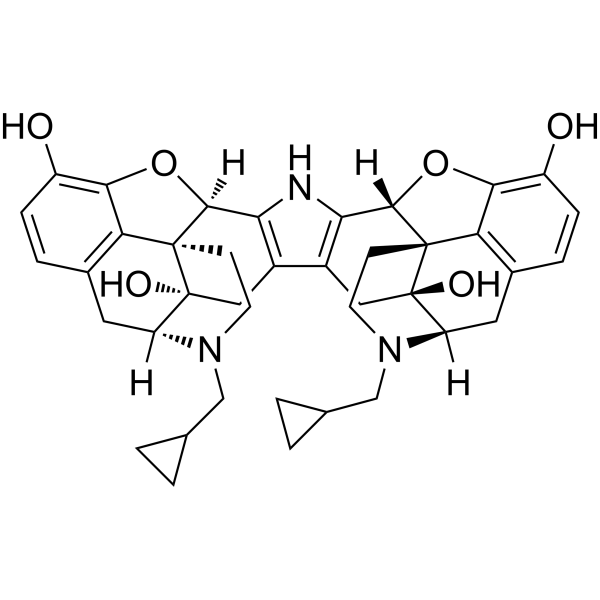
    MDAN-21 is a bivalent opioid ligand that contains both μ-opioid receptor agonists and δ-opioid receptor antagonists. MDAN-21 has a strong analgesic effect and does not produce tolerance in mouse studies. MDAN-21 can effectively inhibit the withdrawal of morphine dependent monkeys and alleviate abnormal pain in the study of rhesus monkeys. MDAN-21 can be used for the study of allodynia .
    MDAN-21
  • HY-G0021S1

    Norclozapine-d8 hydrochloride; Desmethylclozapine-d8 hydrochloride; Normethylclozapine-d8 hydrochloride

    mAChR Opioid Receptor Drug Metabolite Virus Protease Infection
    N-Desmethylclozapine-d8 (hydrochloride) is the deuterium labeled N-Desmethylclozapine hydrochloride. N-Desmethylclozapine hydrochloride is a major active metabolite of the atypical antipsychotic agent Clozapine. N-Desmethylclozapine hydrochloride is a potent, allosteric and partial M1 receptors agonist (EC50=115 nM) and is able to potentiate hippocampal N-methyl-d-aspartate (NMDA) receptor currents through M1 receptor activation. N-Desmethylclozapine hydrochloride is also a δ-opioid agonist .
    N-Desmethylclozapine-d8 hydrochloride
  • HY-16979

    Opioid Receptor Neurological Disease
    RK-851 is a highly selective and orally active δ-opioid receptor antagonist, with a negative logarithm of the antagonist concentration (pA2) of 8.84. TRK-851 exhibits the selectivity for the δ receptor of more than 100 times higher than that for the μ or κ receptors. TRK-851 exhibits a potent antitussive effect in a rat model of capsaicin-induced cough. TRK-851 can be used for research on antitussive effects .
    TRK-851
  • HY-P1013

    [D-Ala2]-Deltorphin II

    Opioid Receptor Neurological Disease
    Deltorphin 2 is a selective peptide agonist for the δ opioid receptor.
    Deltorphin 2
  • HY-A0115R

    HOE 498 diacid (Standard); Ramipril diacid (Standard)

    Drug Metabolite Reference Standards Angiotensin-converting Enzyme (ACE) Endogenous Metabolite Cardiovascular Disease
    Alvimopan (dihydrate) (Standard) is the analytical standard of Alvimopan (dihydrate). This product is intended for research and analytical applications. Alvimopan dihydrate (ADL 8-2698 dihydrate) is a potent, selective, orally active and reversible μ-opioid receptor antagonist, with an IC50 of 1.7 nM. Alvimopan dihydrate has selectivity for μ-opioid receptor (Ki=0.47 nM) over κ- and δ-opioid receptors (Kis=100, 12 nM, respectively). Alvimopan dihydrate can be used for the research of postoperative ileus .
    Ramiprilat (Standard)
  • HY-101233

    M 154129

    Opioid Receptor Neurological Disease
    ICI 154 129 is a delta-opioid receptor antagonist and can be used for seizure research.
    ICI 154129
  • HY-101039A

    Opioid Receptor Neurological Disease
    AR-M 1000390 hydrochloride is an exceptionally selective, potent δ opioid receptor agonist with an EC50 of 7.2±0.9 nM for δ agonist potency.
    AR-M 1000390 hydrochloride
  • HY-120024

    Opioid Receptor Neurological Disease
    BMS-986188 is a selective positive allosteric modulator of δ-opioid receptor with an EC50 of 0.05 μM .
    BMS-986188
  • HY-123689S1

    ALKS-33-d5; RDC-0313-d5

    Isotope-Labeled Compounds Opioid Receptor Neurological Disease
    Samidorphan-d5 (ALKS-33-d5) is is a deuterated compound of Samidorphan. Samidorphan is an orally active opioid system modulator that binds with high affinity to μ-opioid, κ-opioid, and δ-opioid receptors. Samidorphan is a μ-opioid receptor antagonist and a partial agonist at k-opioid and δ-opioid receptors. Samidorphan acts primarily as an opioid receptor antagonist in vivo .
    Samidorphan-d5
  • HY-108043

    Opioid Receptor Neurological Disease
    AZD-2327 is a potent and selective δ-opioid receptor agonist. AZD-2327 binds to the human opioid receptor (Ki of 0.49 and 0.75 nM and EC50 of 24 and 9.2 nM at the C27 and F27 isoforms, respectively). AZD-2327 shows selectivity of >1000-fold over the human μ- and κ-opioid receptor subtypes as well as >130 other receptors and channels. AZD-2327 exhibits antidepressant and anxiolytic activities and can be used for the research of neurological disease .
    AZD-2327
  • HY-107751

    SNC86

    Opioid Receptor Neurological Disease
    BW373U86 (SNC86) is a δ-opioid receptor agonist with an IC50 of 1.49 nM. BW373U86 shows antidepressant-like effects .
    BW373U86
  • HY-P1316A

    Opioid Receptor Neurological Disease
    Ac-RYYRWK-NH2 is a potent and selective partial agonist for the nociceptin receptor (NOP), [ 3H]Ac-RYYRWK-NH2 binds to rat cortical membranes ORL1 with a Kd of 0.071 nM, but has no affinity for μ-, κ- or δ-opioid receptors .
    Ac-RYYRWK-NH2 TFA
  • HY-175366

    Opioid Receptor Arrestin Neurological Disease
    DOR agonist 3 (Compound 10) is a δ-opioid receptor (DOR)-selective positive allosteric modulator. DOR agonist 3 enhances G protein signaling while reducing β-arrestin2 recruitment. DOR agonist 3 is promising for research of chronic pain and depression .
    DOR agonist 3
  • HY-76657

    ADL 8-2698 monohydrate; LY 246736 monohydrate

    Opioid Receptor Neurological Disease Cancer
    Alvimopan monohydrate (ADL 8-2698 monohydrate) is a potent, selective, orally active and reversible μ-opioid receptor antagonist, with an IC50 of 1.7 nM. Alvimopan monohydrate has selectivity for μ-opioid receptor (Ki=0.47 nM) over κ- and δ-opioid receptors (Kis=100, 12 nM, respectively). Alvimopan monohydrate can be used for the research of postoperative ileus .
    Alvimopan monohydrate
  • HY-G0021S

    Norclozapine-d8; Desmethylclozapine-d8; Normethylclozapine-d8

    mAChR Opioid Receptor Drug Metabolite Virus Protease Infection
    N-Desmethylclozapine-d8 is the deuterium labeled N-Desmethylclozapine. N-Desmethylclozapine is a major active metabolite of the atypical antipsychotic agent Clozapine. N-Desmethylclozapine is a potent, allosteric and partial M1 receptors agonist (EC50=115 nM) and is able to potentiate hippocampal N-methyl-d-aspartate (NMDA) receptor currents through M1 receptor activation. N-Desmethylclozapine is also a δ-opioid agonist .
    N-Desmethylclozapine-d8

Inquiry Online

Your information is safe with us. * Required Fields.

Salutation


Country or Region *

Applicant Name *


Organization Name *

Department *


Email Address *


Product Name *

Cat. No.


Requested quantity *

Phone Number *


Remarks

Inquiry Online

Inquiry Information

Product Name:
Cat. No.:
Quantity:
MCE Japan Authorized Agent:

