1. Search Result
Search Result
Results for "

κ-opioid

" in MedChemExpress (MCE) Product Catalog:

145

阻害剤およびアゴニスト

26

ペプチド

10

天然物

8

同位体標識化合物

2

抗体

製品番号 製品名 Target 研究分野 構造式
  • HY-101718
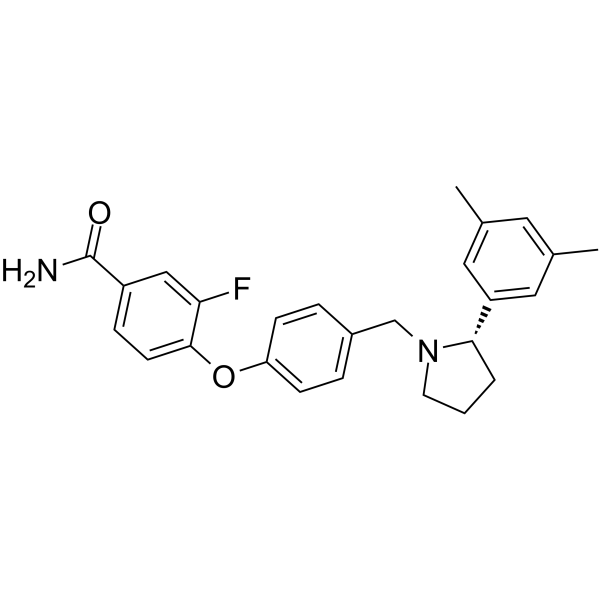
    Aticaprant
    5+ Cited Publications

    CERC-501; LY-2456302

    Opioid Receptor Neurological Disease
    Aticaprant (CERC-501) is a potent and centrally-penetrant kappa opioid receptor antagonist with a Ki of 0.807 nM.
    Aticaprant
  • HY-B0188A
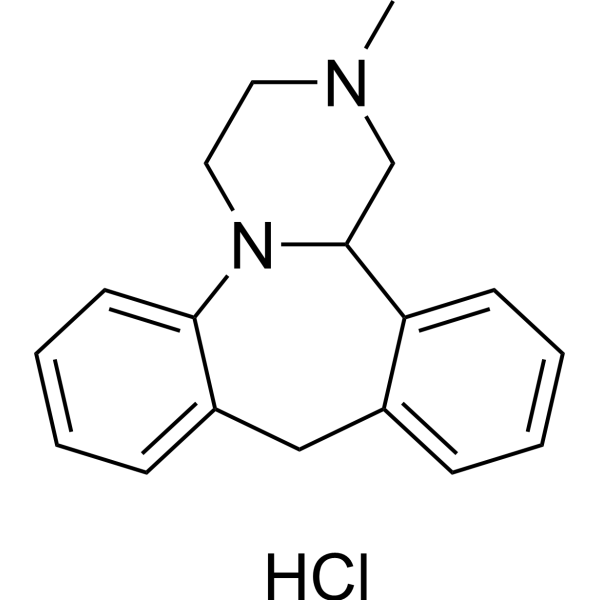
    Mianserin hydrochloride
    1 Publications Verification

    Org GB 94

    Histamine Receptor Opioid Receptor ERK p38 MAPK Neurological Disease Metabolic Disease
    Mianserin hydrochloride (Org GB 94) is an orally active H1 receptor antagonist. Mianserin hydrochloride can activate κ-opioid receptor and octopamine receptor. Mianserin hydrochloride increases ERK1/2 and CREB phosphorylation, and antagonizes full κ-opioid agonist and Dynorphin A (HY-P1333)-induced MAPK phosphorylation. Mianserin hydrochloride modulates social and exploratory behaviour, raises electroconvulsive thresholds. Mianserin hydrochloride can be used for the research of neurological disease, such as depression and epilepsy .
    Mianserin hydrochloride
  • HY-17609
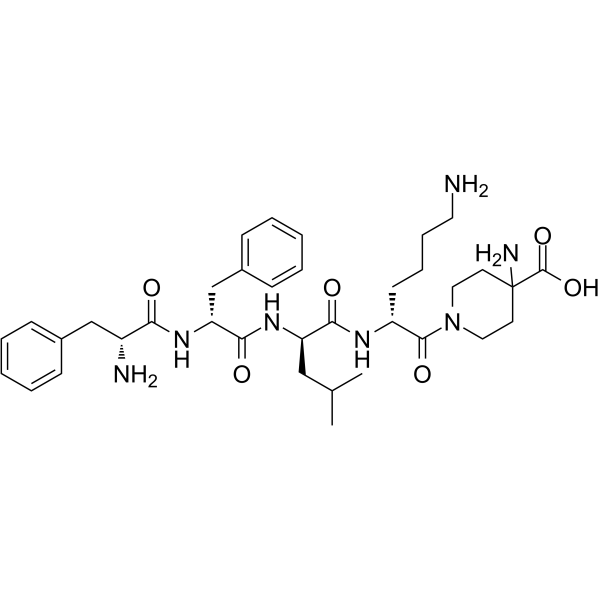
    Difelikefalin
    1 Publications Verification

    CR-845; FE-202845

    Opioid Receptor Neurological Disease Inflammation/Immunology
    Difelikefalin (CR-845) is a peripherally restricted and selective agonist of kappa opioid receptor (KOR). Difelikefalin produces anti-inflammatory effects and has the potential in modulating pruritus in conditions such as chronic kidney disease .
    Difelikefalin
  • HY-10487
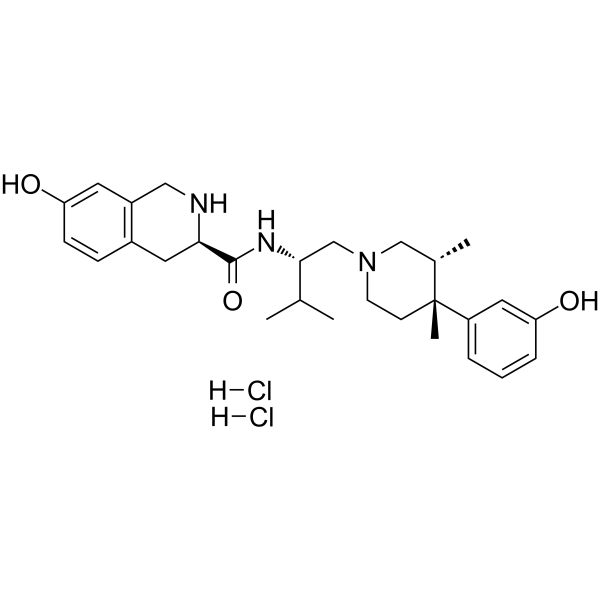
    JDTic dihydrochloride
    3 Publications Verification

    Opioid Receptor Neurological Disease
    JDTic (dihydrochloride) is a potent antagonist of kappa-opioid receptors (KOR), blocking the κ-agonist U50, 488-induced antinociception.
    JDTic dihydrochloride
  • HY-117040
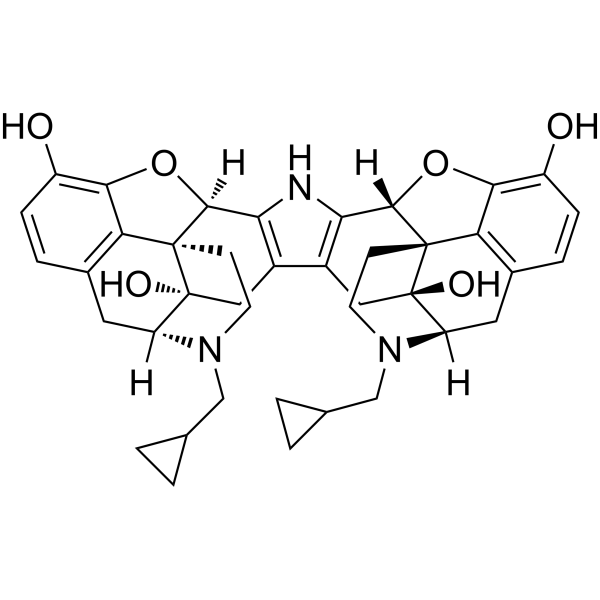
    nor-Binaltorphimine
    5+ Cited Publications

    Norbinaltorphimine; NorBNI

    Opioid Receptor Neurological Disease
    nor-Binaltorphimine (Norbinaltorphimine; NorBNI) is a selective, long-acting competitive antagonist of the κ-opioid receptor. nor-Binaltorphimine blocks κ-opioid receptor-mediated analgesic effects, and inhibits butorphanol-induced changes in κ-opioid receptor binding kinetics, desensitization and down-regulation. nor-Binaltorphimine suppresses specific opioid withdrawal symptoms, precipitates withdrawal behaviors in butorphanol-dependent rats, and serves as a molecular probe for studying κ-opioid receptor-agonist interactions. nor-Binaltorphimine is applicable to research related to neurological disorders such as pain .
    nor-Binaltorphimine
  • HY-100903

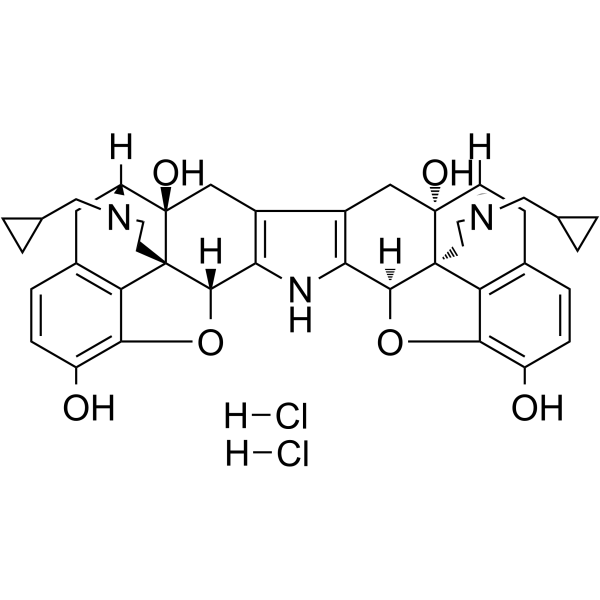
    nor-Binaltorphimine dihydrochloride; nor-BNI dihydrochloride

    Opioid Receptor Neurological Disease
    Norbinaltorphimine dihydrochloride (nor-Binaltorphimine dihydrochloride; nor-BNI dihydrochloride) is a selective, long-acting competitive antagonist of the κ-opioid receptor. Norbinaltorphimine dihydrochloride blocks κ-opioid receptor-mediated analgesic effects, and inhibits butorphanol-induced changes in κ-opioid receptor binding kinetics, desensitization and down-regulation. Norbinaltorphimine dihydrochloride suppresses specific opioid withdrawal symptoms, precipitates withdrawal behaviors in butorphanol-dependent rats, and serves as a molecular probe for studying κ-opioid receptor-agonist interactions. Norbinaltorphimine dihydrochloride is applicable to research related to neurological disorders such as pain .
    Norbinaltorphimine dihydrochloride
  • HY-B0188
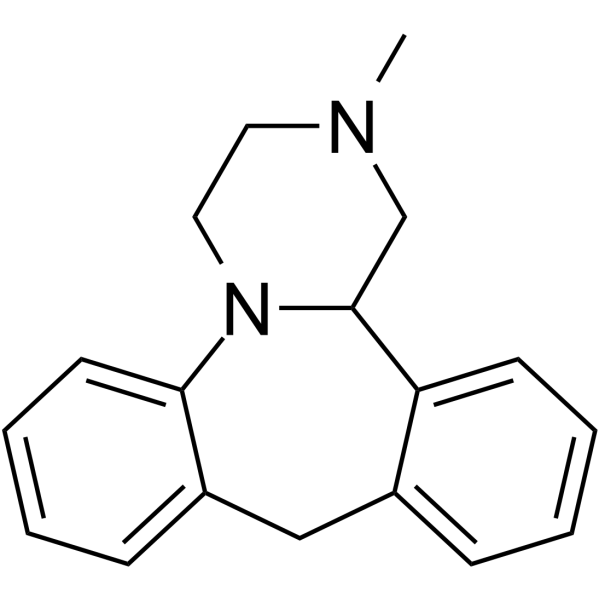
    Mianserin
    1 Publications Verification

    Mianserine

    Histamine Receptor Opioid Receptor ERK p38 MAPK Neurological Disease
    Mianserin (Mianserine) is an orally active H1 receptor antagonist. Mianserin can activate κ-opioid receptor and octopamine receptor. Mianserin increases ERK1/2 and CREB phosphorylation, and antagonizes full κ-opioid agonist and Dynorphin A (HY-P1333)-induced MAPK phosphorylation. Mianserin modulates social and exploratory behaviour, raises electroconvulsive thresholds. Mianserin can be used for the research of neurological disease, such as depression and epilepsy .
    Mianserin
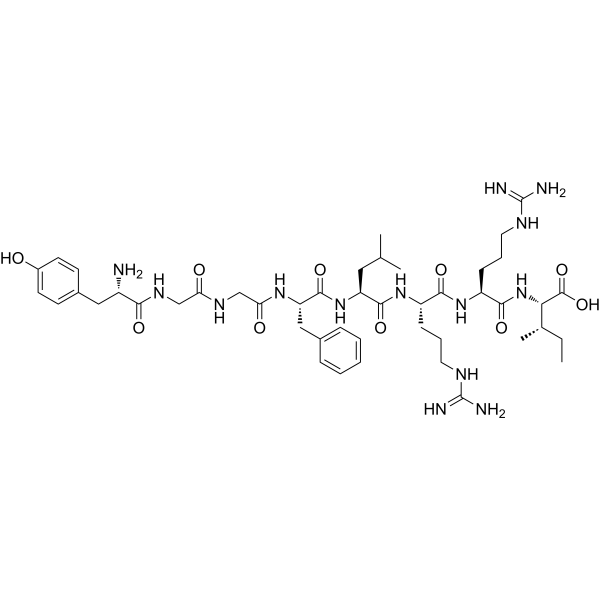
  • HY-P2159

    Opioid Receptor Endogenous Metabolite Neurological Disease
    Dynorphin A (1-8) is a ligand with preference for the κ-opioid receptor, and its IC50 value against human placental κ-opioid receptor is 330 nM. Dynorphin A (1-8) mediates neuroprotective effects by inhibiting oxidative stress, suppressing apoptosis, and competitively displacing the binding of κ partial agonists. Dynorphin A (1-8) is the dominant opioid peptide in human placental villi and tissue extracts; it undergoes rapid hydrolysis and can enter the central nervous system via intranasal administration. Dynorphin A (1-8) can be used in studies related to ischemic stroke .
    Dynorphin A (1-8)
  • HY-176710

    Protein Arginine Deiminase Opioid Receptor mAChR Neurological Disease Inflammation/Immunology Cancer
    PAD-PF2 is a PAD family inhibitor, as well as a κ-opioid receptor agonist (EC50 = 7.55 μM) and an M1 muscarinic acetylcholine receptor antagonist (IC50 = 12.3 μM). The IC50 values of PAD-PF2 against PAD1, PAD2, PAD3 and PAD4 are 109 nM, 27.9 nM, 106 nM and 20.1 nM, respectively. PAD-PF2 binds to the common allosteric pocket of PAD1-4, and its inhibitory effects on PAD2 and PAD4 are Ca 2+-dependent. PAD-PF2 inhibits protein citrullination in neutrophils. PAD-PF2 is applicable to research related to rheumatoid arthritis, neurodegenerative diseases and cancer .
    PAD-PF2
  • HY-P3445A

    HSK21542 acetate

    Opioid Receptor Neurological Disease
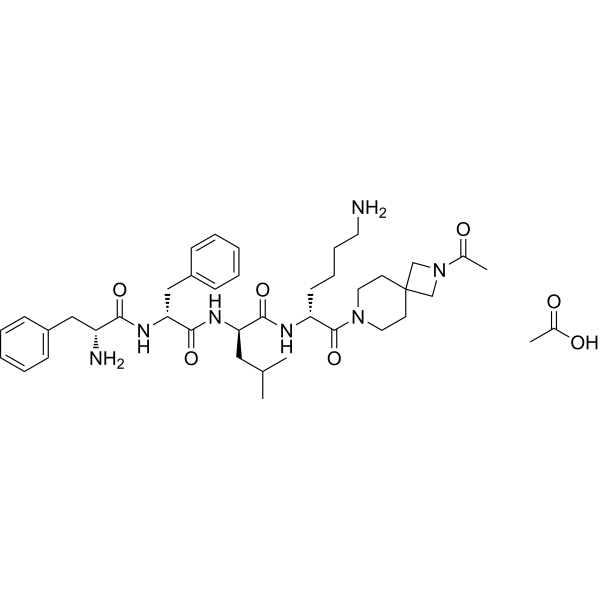
    Anrikefon (HSK21542) acetate is a kappa opioid receptor agonist with analgesic effect .
    Anrikefon acetate
  • HY-136832

    Serotonin Transporter Potassium Channel Arrestin Opioid Receptor Cardiovascular Disease Neurological Disease
    Noribogaine hydrochloride is an orally active, blood-brain barrier permeable SERT inhibitor (IC50=50-300 nM) and hERG channel blocker. Noribogaine hydrochloride enhances serotonergic transmission, activates the κ-opioid receptor (OPRK) G protein signaling pathway and inhibits β-arrestin recruitment. Meanwhile, Noribogaine hydrochloride blocks the μ-opioid receptor (OPRM) signaling pathway as well as ion channels associated with cardiac repolarization. Noribogaine hydrochloride induces neuritogenesis, upregulates GDNF mRNA expression, and modulates opioid tolerance. Noribogaine hydrochloride reduces alcohol-seeking behavior in experimental animals, and is widely used in studies related to depression, addiction, alcoholism, and cardiotoxicity .
    Noribogaine hydrochloride
  • HY-100845

    Divinorin A

    Opioid Receptor Cardiovascular Disease
    Salvinorin A is a potent, unique and short-acting high efficacy kappa-opioid receptor (KOPr) agonist with Ki value of 4.3 nm. Salvinorin A is a non-nitrogenous neoclerodane isolated from Salvia divinorum.
    Salvinorin A
  • HY-P3609
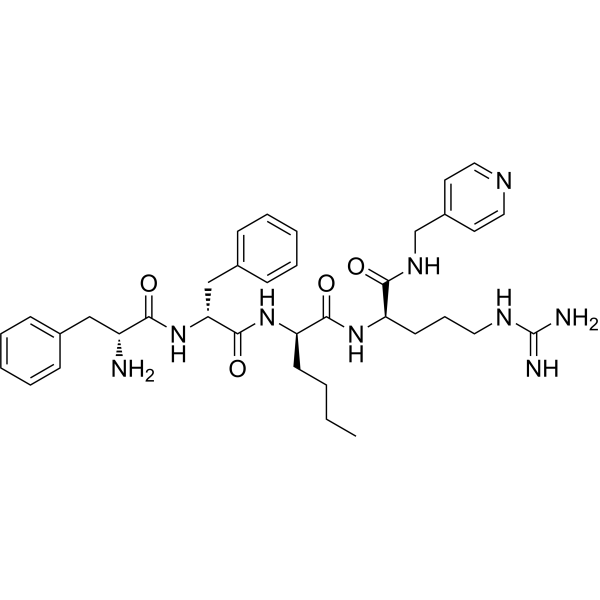
    CR 665
    2 Publications Verification

    JNJ 38488502; FE 200665

    Opioid Receptor Neurological Disease
    CR 665 (JNJ 38488502) is a peripherally selective κ-opioid agonist. CR 665 can activate the kappa opioid receptor with EC50 value of 10.9 nM. CR 665 can be used for the research of peripheral pain .
    CR 665
  • HY-107384A

    EMD-61753 hydrochloride

    Opioid Receptor Neurological Disease Metabolic Disease Inflammation/Immunology
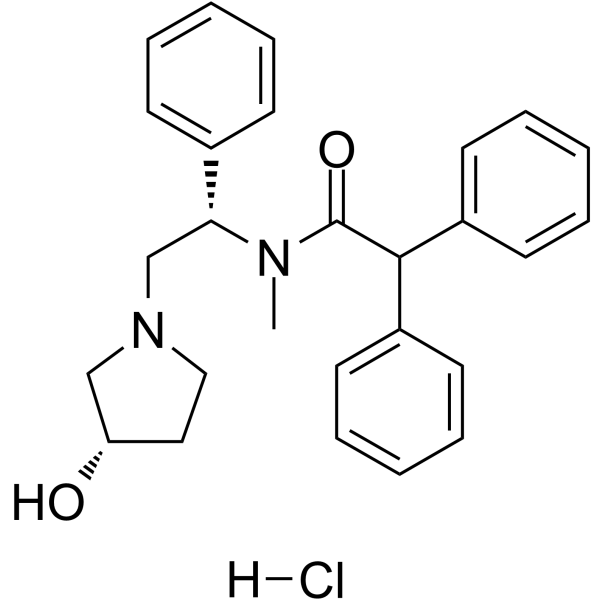
    Asimadoline (EMD-61753) hydrochloride is an orally active, selective and peripherally active κ-opioid agonist with IC50s of 5.6 nM (guinea pig) and 1.2 nM (human recombinant). Asimadoline hydrochloride has low permeability across the blood brain barrier and has peripheral anti-inflammatory actions. Asimadoline hydrochloride ameliorates allodynia in diabetic rats and has the potential for irritable bowel syndrome (IBS) .
    Asimadoline hydrochloride
  • HY-107748

    5'-GNTI hydrochloride

    Opioid Receptor Neurological Disease
    5'-Guanidinonaltrindole (5'-GNTI) hydrochloride is a highly selective and potent κ-opioid receptor antagonist with a Ki of 0.18 nM for human κ-opioid receptor .
    5'-Guanidinonaltrindole hydrochloride
  • HY-123689

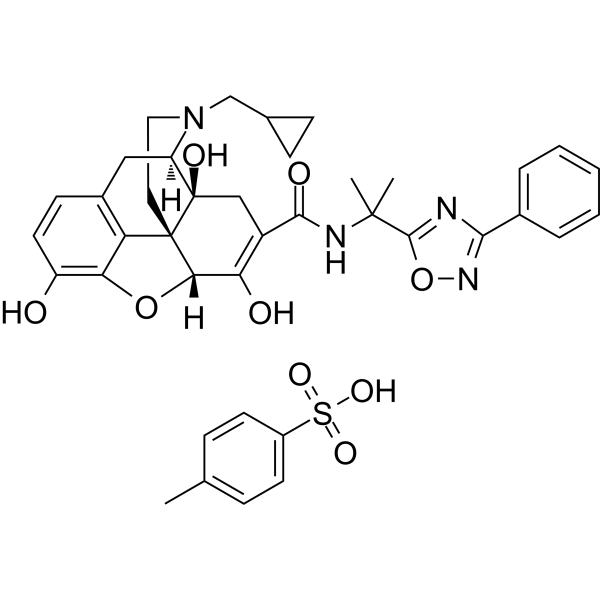
    ALKS-33; RDC-0313

    Opioid Receptor Neurological Disease
    Samidorphan (ALKS-33) is an orally active opioid system modulator that has a high affinity for binding with μ‐opioid, κ‐opioid, and δ‐opioid receptors. Samidorphan acts as an antagonist at μ‐opioid receptors and acts as a partial agonist at k-opioid and δ‐opioid receptors. Samidorphan primarily acts as an opioid receptor antagonist in vivo. Samidorphan can improve the behavior of depressed animals .
    Samidorphan
  • HY-P3445

    HSK21542

    Opioid Receptor Neurological Disease
    Anrikefon (HSK21542) is a kappa opioid receptor agonist with analgesic effect .
    Anrikefon
  • HY-107749

    Opioid Receptor Neurological Disease
    ML 190 is a selective κ opioid receptor (KOR) antagonist with an IC50 of 120 nM and an EC50 of 129 nM, respectively .
    ML 190
  • HY-P0088

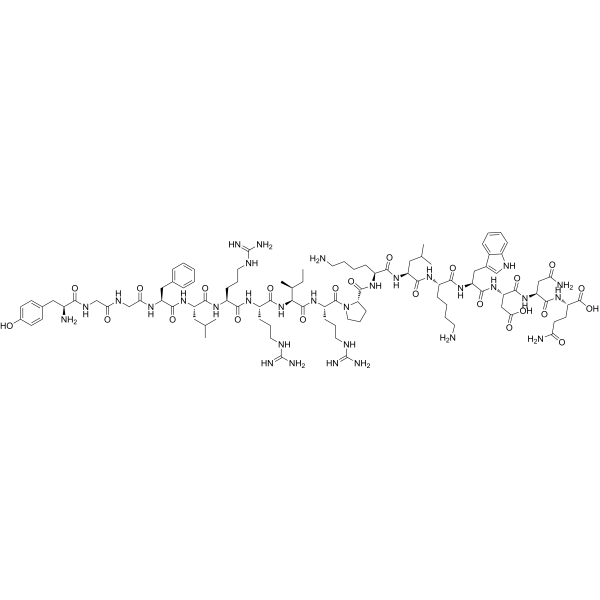
    Dynorphin A Porcine Fragment 1-13

    Opioid Receptor Others
    Porcine dynorphin A (1-13) is a potent, endogenous κ opioid receptor agonist and is antinociceptive at physiological concentrations.
    Porcine dynorphin A(1-13)
  • HY-101231

    Opioid Receptor Neurological Disease
    ICI-204448 is a κ-opioid agonist with limited access to the CNS, ICI-204448 can displace the binding of the kappa-opioid ligand 3H-bremazocine from guinea pig cerebellum membranes .
    ICI-204448
  • HY-N0050

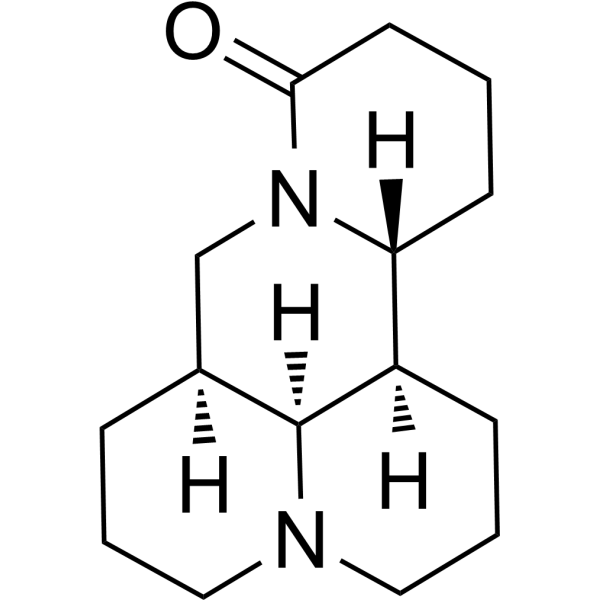
    (+)-Allomatrine

    Others Neurological Disease
    Allomatrine ((+)-Allomatrine) is an alkaloid from the bark of Sophora japonica. Allomatrine has antinociceptive properties mediated mainly through the activation ofκ-opioid receptors .
    Allomatrine
  • HY-101079

    Opioid Receptor Neurological Disease
    BRL 52537 hydrochloride is a highly selective κ-Opioid receptor (KOR) agonist with Kis of 0.24 nM and 1560 nM for κ and μ subtypes, respectively. BRL 52537 hydrochloride decreases ischemia-evoked NO production as a potential mechanism of neuroprotection. BRL 52537 hydrochloride attenuates early stroke damage .
    BRL 52537 hydrochloride
  • HY-101205

    Opioid Receptor Cardiovascular Disease Neurological Disease
    ICI-199441 hydrochloride is a potent and selective κ-opioid receptor agonist with analgesic effects. ICI 199441 hydrochloride can improve heart resistance to ischemia/reperfusion .
    ICI-199441 hydrochloride
  • HY-P1594A

    Opioid Receptor iGluR Neurological Disease
    Dynorphin A (1-10) (TFA), an endogenous opioid neuropeptide, binds to extracellular loop 2 of the κ-opioid receptor. Dynorphin A (1-10) (TFA) also blocks NMDA-activated current with an IC50 of 42.0 μM.
    Dynorphin A (1-10) TFA
  • HY-136208

    Opioid Receptor Neurological Disease
    TAN-452 is an orally active, selective peripherally acting δ-opioid receptor (DOR) antagonist with a Ki of 0.47 nM and a Kb of 0.21 nM. TAN-452 is an antagonist for μ-opioid receptor (MOR; Ki=36.56 nM and Kb=9.43 nM) and κ-opioid receptor (KOR; Ki=5.31 nM and Kb=7.18 nM). TAN-452, a derivative of Naltrindole, demonstrates low brain penetrability and attenuates morphine-induced side effects without affecting pain control .
    TAN-452
  • HY-15691

    Opioid Receptor mTOR Neurological Disease Metabolic Disease
    PF-04455242 is an orally bioavailable, blood-brain barrier-permeable κ-opioid receptor (KOR) inhibitor. PF-04455242 blocks in vivo effects induced by KOR and MOR agonists, and elicits KOR-independent outward currents in ventral tegmental area neurons. PF-04455242 promotes energy expenditure and activates the hypothalamic mTOR pathway. PF-04455242 attenuates stress-induced behavioral effects and produces antidepressant-like effects. PF-04455242 can be used in studies related to pain, depression, addictive disorders, and obesity induced by estrogen withdrawal .
    PF-04455242
  • HY-15997B

    (±)-Trans-(1R,2R)-U-50488 hydrochloride

    Opioid Receptor Neurological Disease
    (±)-U-50488 ((±)-Trans-(1R,2R)-U-50488) hydrochloride is a selective κ opioid receptor (KOR) agonist .
    (±)-U-50488 hydrochloride
  • HY-107750A

    Opioid Receptor Neurological Disease
    Cyprodime hydrochloride is a highly selective μ-opioid receptor antagonist with Ki values of 5.4 nM, 244.6 nM and 2187 nM for μ-, δ- and κ-opioid receptors, respectively. Cyprodime hydrochloride has anti-depressant-like effect .
    Cyprodime hydrochloride
  • HY-110302

    Opioid Receptor Neurological Disease
    6'-GNTI dihydrochloride, a κ-opioid receptor (KOR) agonist, displays bias toward the activation of G protein-mediated signaling over β-arrestin2 recruitment. 6'-GNTI 6'-GNTI dihydrochloride only activates the Akt pathway in striatal neurons .
    6'-GNTI dihydrochloride
  • HY-101307

    7-Benzylidenenaltrexone maleate

    Opioid Receptor Neurological Disease
    BNTX (7-Benzylidenenaltrexone) maleate is a δ1-opioid receptor antagonist with the Kis of 0.1, 10.8, 13.3, and 58.6 nM for δ1, δ2-, μ-, and κ-opioid receptor, respectively. BNTX maleate shows antinociceptive activity .
    BNTX maleate
  • HY-121800

    Opioid Receptor Others
    ML138, a κ opioid receptor agonist, is a MLPCN probe .
    ML138
  • HY-135230

    FP3FBZ

    Opioid Receptor Neurological Disease
    LY2444296 is an orally bioavailable, high-affinity and selective short-acting kappa opioid receptor (KOPR) antagonist, with a Ki value of ~1 nM. LY2444296 exhibits anti-anxiety like effects .
    LY2444296
  • HY-10486

    Opioid Receptor Neurological Disease
    JDTic is a highly selective antagonist for the κ-opioid receptor; without affecting the μ- or δ-opioid receptors.
    JDTic
  • HY-107384

    EMD-61753

    Opioid Receptor Neurological Disease Metabolic Disease Inflammation/Immunology
    Asimadoline (EMD-61753) is an orally active, selective and peripherally active κ-opioid agonist with IC50s of 5.6 nM (guinea pig) and 1.2 nM (human recombinant). Asimadoline has low permeability across the blood brain barrier and has peripheral anti-inflammatory actions. Asimadoline ameliorates allodynia in diabetic rats and has the potential for irritable bowel syndrome (IBS) .
    Asimadoline
  • HY-B0188AR

    Org GB 94 (Standard)

    Reference Standards Histamine Receptor Opioid Receptor ERK p38 MAPK Neurological Disease Metabolic Disease
    Mianserin hydrochloride (Org GB 94) (Standard) is the analytical standard of Mianserin hydrochloride. This product is intended for research and analytical applications. Mianserin hydrochloride is an orally active H1 receptor antagonist. Mianserin hydrochloride can activate κ-opioid receptor and octopamine receptor. Mianserin hydrochloride increases ERK1/2 and CREB phosphorylation, and antagonizes full κ-opioid agonist and Dynorphin A (HY-P1333)-induced MAPK phosphorylation. Mianserin hydrochloride modulates social and exploratory behaviour, raises electroconvulsive thresholds. Mianserin hydrochloride can be used for the research of neurological disease, such as depression and epilepsy .
    Mianserin hydrochloride (Standard)
  • HY-B0188S

    Mianserine-d3

    Histamine Receptor Isotope-Labeled Compounds Opioid Receptor ERK p38 MAPK Neurological Disease
    Mianserin-d3 is the deuterium labeled Mianserin (HY-B0188). Mianserin (Mianserine) is an orally active H1 receptor antagonist. Mianserin can activate κ-opioid receptor and octopamine receptor. Mianserin increases ERK1/2 and CREB phosphorylation, and antagonizes full κ-opioid agonist and Dynorphin A (HY-P1333)-induced MAPK phosphorylation. Mianserin modulates social and exploratory behaviour, raises electroconvulsive thresholds. Mianserin can be used for the research of neurological disease, such as depression and epilepsy .
    Mianserin-d3
  • HY-19231

    Org 41793

    Opioid Receptor Neurological Disease
    DPI-3290 (Org 41793) is a potent and specific opioid receptors agonist with Ki values of 0.18 nM, 0.46 nM, and 0.62 nM for δ-, μ-, and κ-opioid receptors, respectively. DPI-3290 is one of a series of novel centrally acting agents with potent antinociceptive activity .
    DPI-3290
  • HY-N7437

    Opioid Receptor DNA/RNA Synthesis Neurological Disease Inflammation/Immunology
    Akuammidine, isolated from the seeds of Picralima nitida, shows a preference for μ-opioid binding sites with Ki values of 0.6, 2.4 and 8.6 μM at μ-, σ- and κ-opioid binding sites, respectively. Akuammidine possesses anti-inflammatory and anti-asthmatic properties .
    Akuammidine
  • HY-106756

    U-62066

    Opioid Receptor Neurological Disease
    Spiradoline (U-62066), an arylacetamide, is a selective kappa opioid receptor (KOR) agonist with a Ki of 8.6 nM in guinea pig. The Ki values of Spiradoline for μ and δ receptors are 252 nM and 9400 nM, respectively. Spiradoline has potent diuretic, analgesic, antiarrythmic, antitussive, neuroprotective properties and easily penetrates the blood-brain barrier .
    Spiradoline
  • HY-156614

    Opioid Receptor Neurological Disease
    Icalcaprant is a kappa-opioid receptor antagonist .
    Icalcaprant
  • HY-15997C

    (±)-Trans-(1R,2R)-U-50488 hydrate hydrochloride

    Opioid Receptor Neurological Disease
    (±)-U-50488 ((±)-Trans-(1R,2R)-U-50488) hydrate hydrochloride is a selective κ opioid receptor (KOR) agonist .
    (±)-U-50488 hydrate hydrochloride
  • HY-105235

    CI-977

    Opioid Receptor Neurological Disease
    Enadoline (CI-977) is a highly selective, brain-penetrating, and nonpeptide kappa-opioid receptor (KOR) agonist (Ki=1.25 nM). Antinociceptive effects .
    Enadoline
  • HY-120949

    Opioid Receptor Neurological Disease
    (1R,2R)-U-50488 hydrochloride is the absolute stereochemistry of (±)-U-50488 hydrochloride. (±)-U-50488 hydrochloride is a selective κ opioid receptor (KOR) agonist .
    (1R,2R)-U-50488 hydrochloride
  • HY-145128

    Opioid Receptor Neurological Disease
    GR103545 is a potent and selective agonist of the κ-opioid receptor (κ-OR). 11GR103545 is a radiotracer for imaging κ-OR in vivo [1]
    GR103545 fumarate
  • HY-W019787

    Opioid Receptor CXCR Neurological Disease
    BAM-12P, an endogenous opioid peptide, is a novel pro-Met-enkephalin. BAM-12P can activate human κ-opioid receptor (hKOR) with an EC50 of 101 nM and a pEC50 of 6.99. BAM-12P is a ligand for CXCR7 with an EC50 of 175 nM .
    BAM-12P
  • HY-108043

    Opioid Receptor Neurological Disease
    AZD-2327 is a potent and selective δ-opioid receptor agonist. AZD-2327 binds to the human opioid receptor (Ki of 0.49 and 0.75 nM and EC50 of 24 and 9.2 nM at the C27 and F27 isoforms, respectively). AZD-2327 shows selectivity of >1000-fold over the human μ- and κ-opioid receptor subtypes as well as >130 other receptors and channels. AZD-2327 exhibits antidepressant and anxiolytic activities and can be used for the research of neurological disease .
    AZD-2327
  • HY-101223

    Opioid Receptor Neurological Disease
    DIPPA hydrochloride is an irreversible, long-lasting, selective and high affinity κ-opioid receptor antagonist. DIPPA hydrochloride can be used for the research of anxiety and antidepressant .
    DIPPA hydrochloride
  • HY-P1594

    Opioid Receptor iGluR Neurological Disease
    Dynorphin A (1-10) an endogenous opioid neuropeptide, binds to extracellular loop 2 of the κ-opioid receptor. Dynorphin A (1-10) also blocks NMDA-activated current with an IC50 of 42.0 μM.
    Dynorphin A (1-10)
  • HY-B0188AS

    Org GB 94-d3

    Isotope-Labeled Compounds Histamine Receptor Opioid Receptor ERK p38 MAPK Neurological Disease Metabolic Disease
    Mianserin-d3 hydrochloride is the deuterium labeled Mianserin. Mianserin (Mianserine) is an orally active H1 receptor antagonist. Mianserin can activate κ-opioid receptor and octopamine receptor. Mianserin increases ERK1/2 and CREB phosphorylation, and antagonizes full κ-opioid agonist and Dynorphin A (HY-P1333)-induced MAPK phosphorylation. Mianserin modulates social and exploratory behaviour, raises electroconvulsive thresholds. Mianserin can be used for the research of neurological disease, such as depression and epilepsy .
    Mianserin-d3 hydrochloride
  • HY-P5907

    Opioid Receptor Neurological Disease
    Helianorphin-19 is a potent and selective κ-opioid receptor (KOR) activator with a Ki of 21 nM and an EC50 of 45 nM. Helianorphin-19 exhibits strong KOR-specific peripheral analgesic activity in a mouse model of chronic visceral pain .
    Helianorphin-19

オンラインお問い合わせ

入力情報は安全に管理されます. 必須入力項目.

タイトル


国或いは地域 *

お名前 *


組纖名 *

デパートメント *


メールアドレス *


製品名 *

製品番号


カスタマ需要量 *

電話番号 *


必ず会社名を記載ください。個人への返信は行いません。

備考

バルクお問い合わせ

Inquiry Information

製品名:
製品番号:
数量:
MCE 日本正規代理店:

