1. Search Result
Search Result
Results for "

2-arachidonoylglycerol

" in MedChemExpress (MCE) Product Catalog:

26

Inhibitors & Agonists

3

Natural
Products

5

Isotope-Labeled Compounds

Cat. No. 상품명 Target 연구분야 Chemical Structure
  • HY-W011051
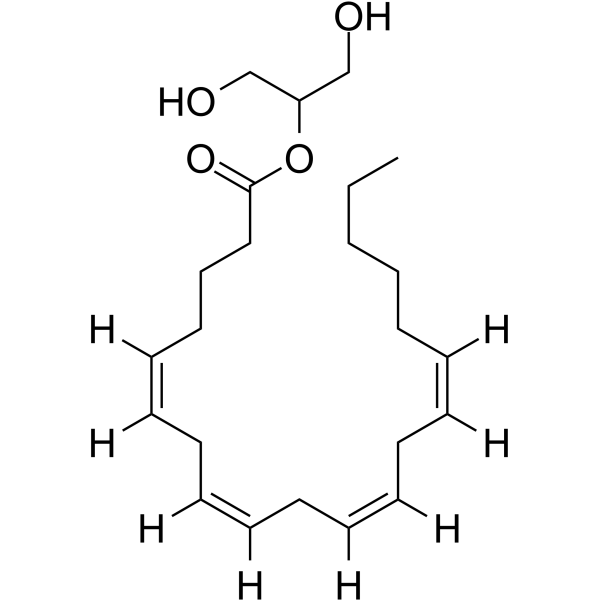
    2-Arachidonoylglycerol
    1 Publications Verification

    Cannabinoid Receptor Endogenous Metabolite Neurological Disease
    2-Arachidonoylglycerol is a second endogenous cannabinoid ligand in the central nervous system.
    2-Arachidonoylglycerol
  • HY-15249
    JZL 184
    Maximum Cited Publications
    8 Publications Verification

    MAGL Neurological Disease
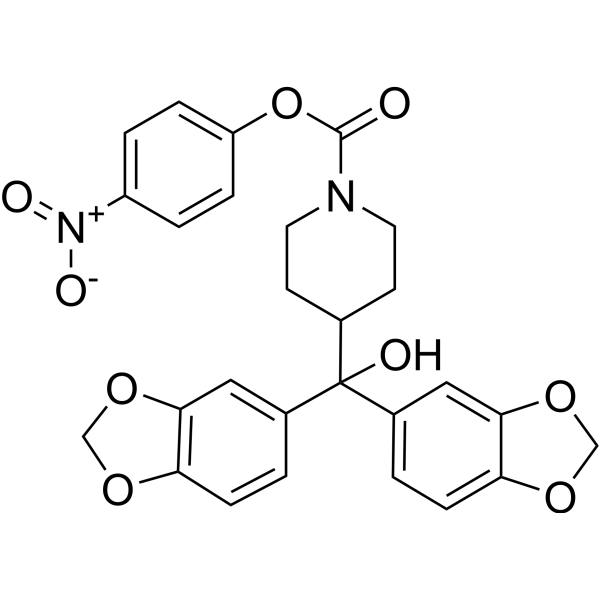
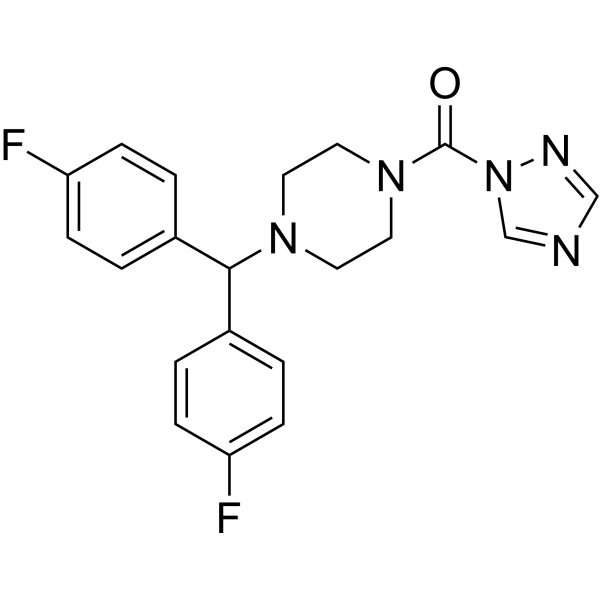
    JZL 184 is a potent, selective and irreversible MAGL inhibitor that blocks 2-Arachidonoylglycerol (2-AG) hydrolysis in brain membranes (IC50 of 8 nM). JZL 184 displays >300-fold selectivity for MAGL over FAAH [2].
    JZL 184
  • HY-117474
    MJN110
    5 Publications Verification

    MAGL Neurological Disease
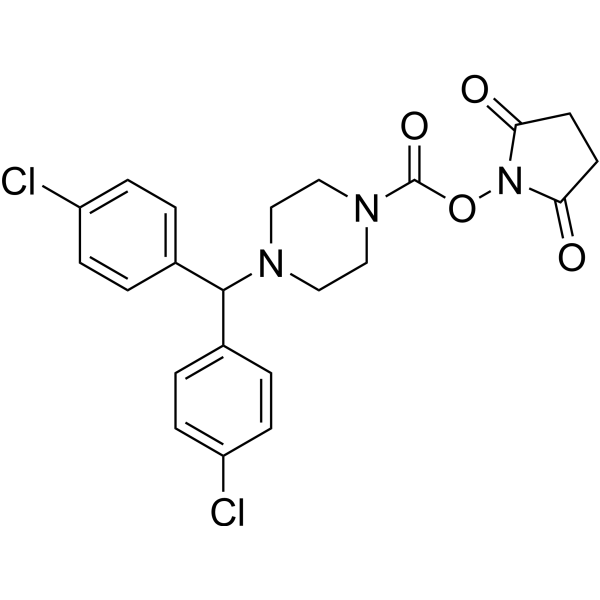
    MJN110 is an orally active and selective monoacylglycerol lipase (MAGL) inhibitor with IC50s of 9.1 nM and 2.1 nM for hMAGL and 2-arachidonoylglycerol (2-AG), respectively . MJN110 produces opioid-sparing effects and displays strong antihyperalgesic activity [2].
    MJN110
  • HY-18540
    KT109
    1 Publications Verification

    MAGL DAGL Metabolic Disease Inflammation/Immunology
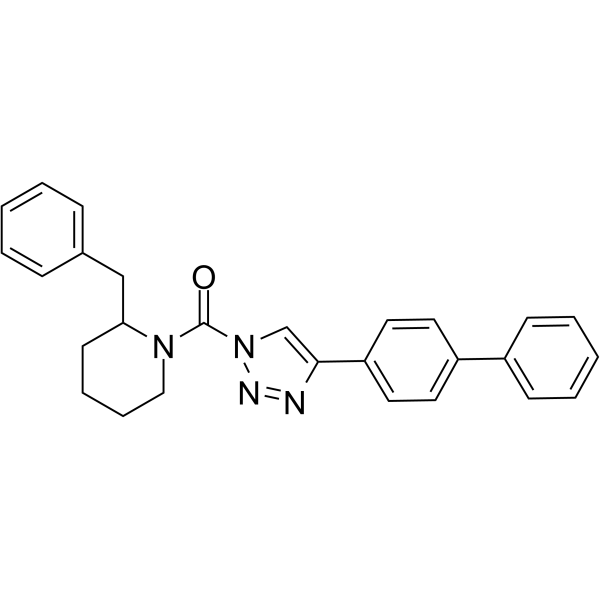
    KT109 is a potent and an isoform-selective inhibitor of diacylglycerol lipase-β (DAGLβ) with an IC50 of 42 nM. KT109 has ~60-fold selectivity for DAGLβ over DAGLα. KT109 shows inhibitory activity against PLA2G7 (IC50=1 µM). KT109 shows negligible activity against FAAH, MGLL, ABHD11, and cytosolic phospholipase A2 (cPLA2 or PLA2G4A). KT109 perturbs a lipid network involved in macrophage inflammatory responses and lowers 2-Arachidonoylglycerol (HY-W011051), Arachidonic acid (HY-109590) and eicosanoids in mouse peritoneal macrophages .
    KT109
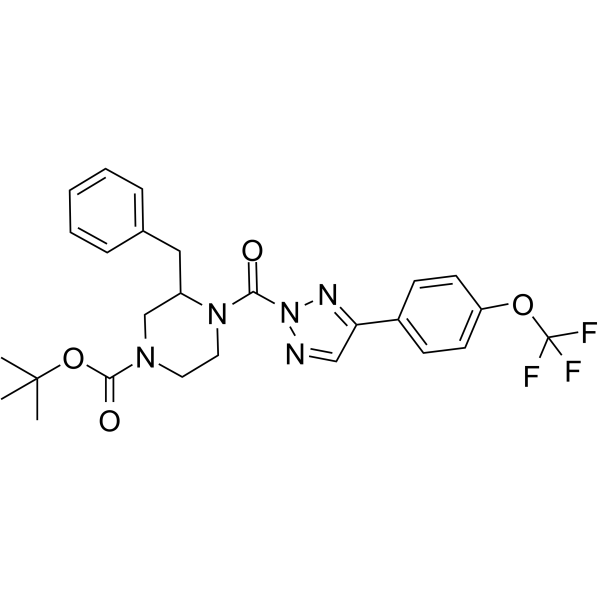
  • HY-124314

    MAGL DAGL Metabolic Disease
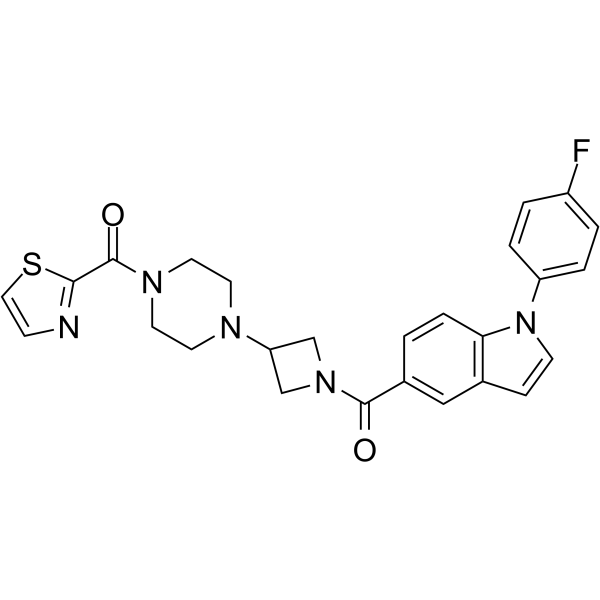
    LEI-106 is a dual ABHD6 and DAGL-α inhibitor, with a Ki of 0.8 μM for ABHD6, and an IC50 of 18 nM and a Ki of 0.7 μM for DAGL-α. LEI-106 blocks the synthesis of 2-arachidonoylglycerol, reduces the level of endothelial cell-derived 2-arachidonoylglycerol, without altering the levels of cannabinoids and diacylglycerol. LEI-106 is applicable to research related to diet-induced obesity and metabolic syndrome [2].
    LEI-106
  • HY-133130
    JNJ-42226314
    1 Publications Verification

    MAGL Neurological Disease
    JNJ-42226314, a chemical probe, is a competitive, highly selective and reversible non-covalent monoacylglycerol lipase (MAGL) inhibitor. JNJ-42226314 demonstrates dose-dependent enhancement of the major endocannabinoid 2-arachidonoylglycerol (2-AG) as well as efficacy in models of neuropathic and inflammatory pain .
    JNJ-42226314
  • HY-W011051S

    Cannabinoid Receptor Endogenous Metabolite Neurological Disease
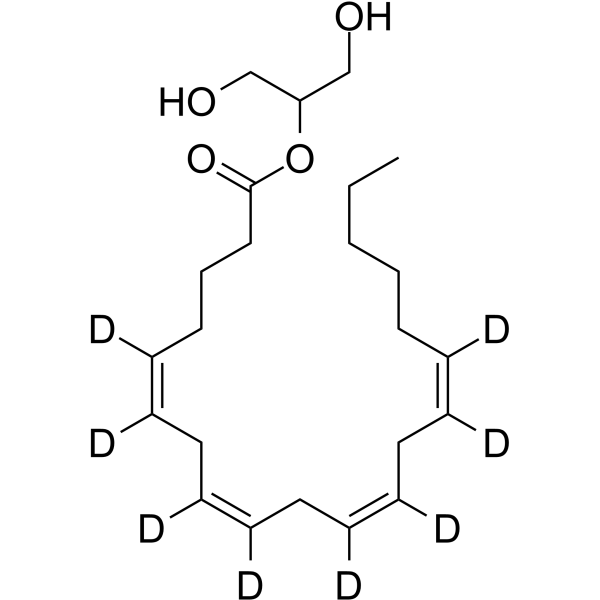
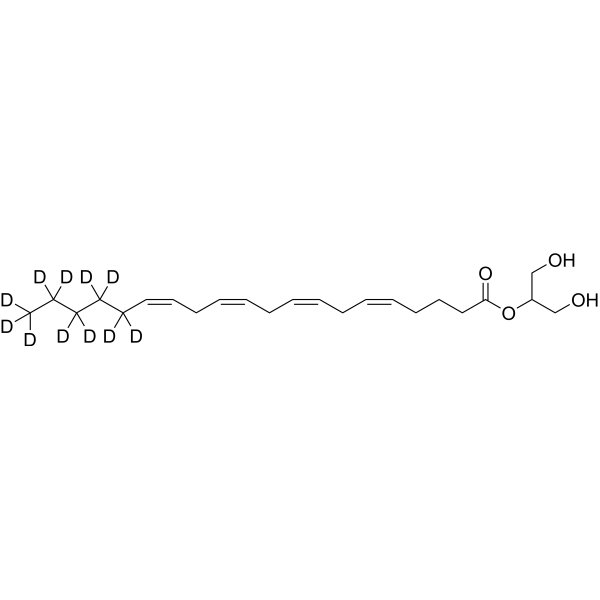
    2-Arachidonoylglycerol-d8 is the deuterium labeled 2-Arachidonoylglycerol. 2-Arachidonoylglycerol is a second endogenous cannabinoid ligand in the central nervous system.
    2-Arachidonoylglycerol-d8
  • HY-W011051S1
    2-Arachidonoylglycerol-d5
    1 Publications Verification

    Cannabinoid Receptor Endogenous Metabolite Neurological Disease
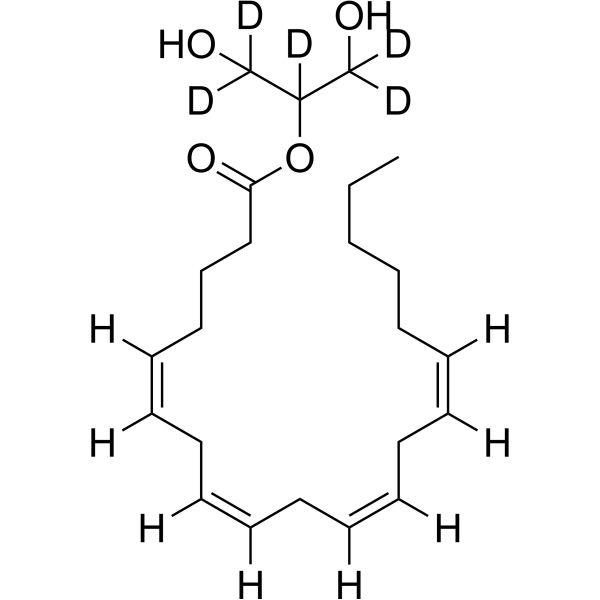
    2-Arachidonoylglycerol-d5 is the deuterium labeled 2-Arachidonoylglycerol. 2-Arachidonoylglycerol is a second endogenous cannabinoid ligand in the central nervous system.
    2-Arachidonoylglycerol-d5
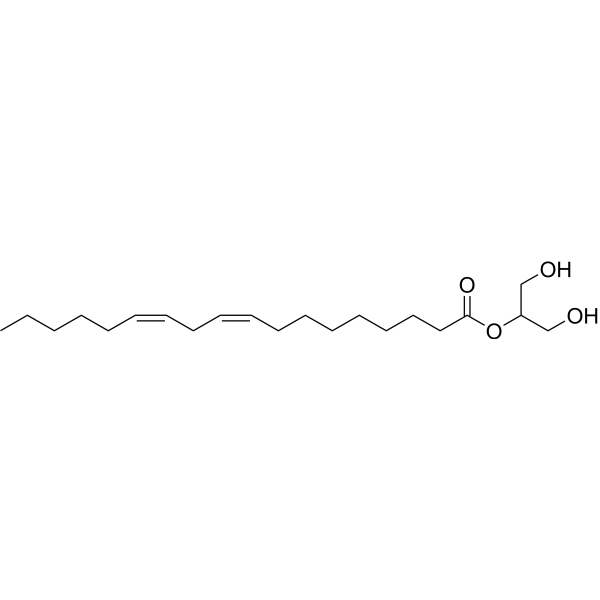
  • HY-130311

    2-Monolinolein; 2-Monolinoleoylglycerol

    Cannabinoid Receptor Neurological Disease
    2-Linoleoyl glycerol (2-Monolinolein) is a partial CB1 receptor agonist with a pEC50 of 4.781. 2-Linoleoyl glycerol activates the hCB1 receptor. 2-Linoleoyl glycerol does not induce an increase in intracellular free Ca 2+. 2-Linoleoyl glycerol can be used in the research of neurological disorders [2].
    2-Linoleoyl glycerol
  • HY-15249R

    MAGL Reference Standards Neurological Disease
    JZL 184 (Standard) is the analytical standard of JZL 184. This product is intended for research and analytical applications. JZL 184 is a potent, selective and irreversible MAGL inhibitor that blocks 2-Arachidonoylglycerol (2-AG) hydrolysis in brain membranes (IC50 of 8 nM). JZL 184 displays >300-fold selectivity for MAGL over FAAH [2].
    JZL 184 (Standard)
  • HY-118653

    MAGL Metabolic Disease
    SAR629 is a potent monoglyceride lipase (MGL) covalent inhibitor. SAR629 also inhibits 2-Arachidonoylglycerol (2-AG) degradation [2].
    SAR629
  • HY-126031

    DAGL Inflammation/Immunology
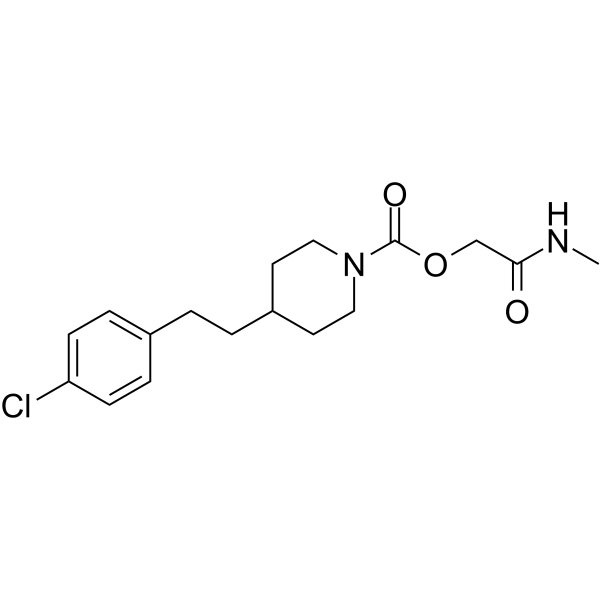
    (R)-KT109 is a peripherally restricted serine hydrolase inhibitor that cannot cross the blood-brain barrier. (R)-KT109 irreversibly inhibits ABHD6, DAGLα and DAGLβ via carbamoylation of the active-site serine. (R)-KT109 exerts selective inhibitory effects on serine hydrolases in mouse brains, with pIC50 values of 8.6, 9.1 and 8.2 against human ABHD6, DAGLα and DAGLβ, respectively. (R)-KT109 effectively reduces the levels of 2-arachidonoylglycerol, arachidonic acid, eicosanoids and TNF-α. (R)-KT109 is widely used in studies of metabolic syndrome-related diseases and neuroinflammation [2] .
    (R)-KT109
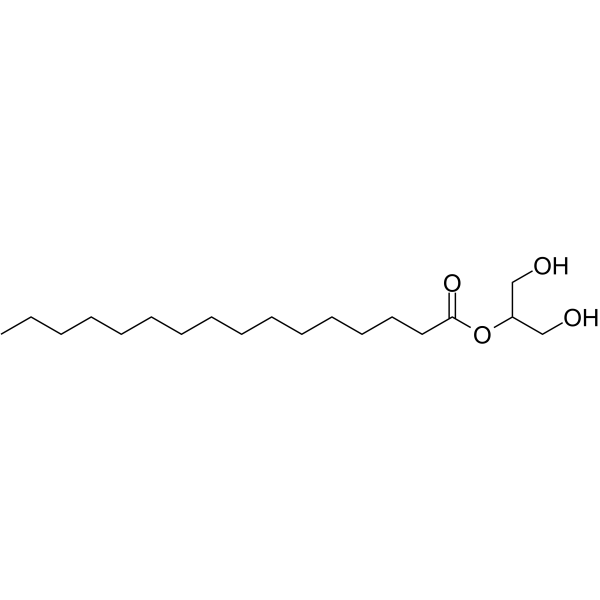
  • HY-W013788

    2-Palm-Gl

    Cannabinoid Receptor Neurological Disease
    2-Palmitoylglycerol (2-Palm-Gl), an congener of 2-arachidonoylglycerol (2-AG), is a modest cannabinoid receptor CB1 agonist. 2-Palmitoylglycerol also may be an endogenous ligand for GPR119 .
    2-Palmitoylglycerol
  • HY-112828

    DAGL Neurological Disease Metabolic Disease Inflammation/Immunology
    LEI105 is a potent, highly selective and reversible dual diacylglycerol lipase (DAGL)-α/DAGL-β inhibitor. LEI105 reduces 2-arachidonoylglycerol levels in Neuro2A cells. LEI105 also reduces cannabinoid CB1-receptor-mediated short-term synaptic plasticity in a mouse hippocampal slice model. LEI105 is promising for research of diseases, such as obesity, related metabolic disorders and neuroinflammation .
    LEI105
  • HY-117771A

    DAGL Neurological Disease Metabolic Disease
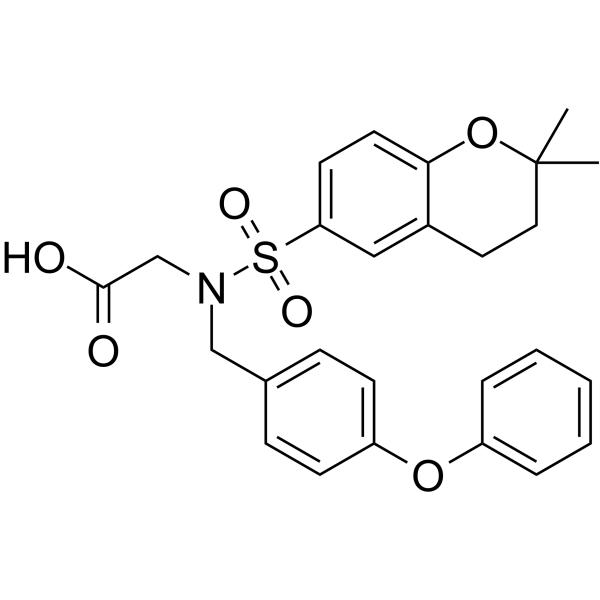
    DO34 analog is a structural analog of DO34 (HY-117771). DO34 is a selective DAGL inhibitor, with an IC50 of 6 nM for DAGLα conversion of SAG to 2-AG. DO34 can be used for the research of energy balance disorder and neuroinflammation [2] .
    DO34 analog
  • HY-W011051S2

    Isotope-Labeled Compounds Cannabinoid Receptor Endogenous Metabolite Neurological Disease
    2-Arachidonoylglycerol-d11 is deuterium labeled 2-Arachidonoylglycerol.2-Arachidonoylglycerol is a second endogenous cannabinoid ligand in the central nervous system .
    2-Arachidonoylglycerol-d11
  • HY-103463

    FAAH MAGL Neurological Disease
    SA57 is a potent, selective FAAH inhibitor with IC50s of 3.2 nM and 1.9 nM for mouse and human FAAH. SA57 also inhibits the 2-arachidonoylglycerol hydrolases MAGL (IC50s of 410 nM and 1.4 μM for mouse and human MAGL) and mouse α/β-hydrolase domain-containing protein 6 (mABHD6; IC50 of 850 nM), but not other brain serine hydrolases [2].
    SA57
  • HY-W013788R

    2-Palm-Gl (Standard)

    Reference Standards Cannabinoid Receptor Neurological Disease
    2-Palmitoylglycerol (Standard) is the analytical standard of 2-Palmitoylglycerol. This product is intended for research and analytical applications. 2-Palmitoylglycerol (2-Palm-Gl), an congener of 2-arachidonoylglycerol (2-AG), is a modest cannabinoid receptor CB1 agonist. 2-Palmitoylglycerol also may be an endogenous ligand for GPR119 .
    2-Palmitoylglycerol (Standard)
  • HY-130567

    Endogenous Metabolite Drug Derivative Others
    1-Monoarachidin is a fatty acid that is derived from 2-arachidonoylglycerol (HY-W011051) .
    1-Monoarachidin
  • HY-120300

    Cannabinoid Receptor Metabolic Disease
    UCM710 is an endocannabinoid (eCB) hydrolysis inhibitor that increases the levels of N-arachidonoyl ethanolamine and 2-arachidonoylglycerol in neurons. UCM710 inhibits fatty acid amide hydrolase and α/β-hydrolase domain 6, but not monoacylglycerol lipase .
    UCM710
  • HY-158362A

    Endogenous Metabolite Neurological Disease Metabolic Disease Inflammation/Immunology
    Monoglyceride lipase, Bacillus sp., is a key enzyme involved in lipid metabolism. It catalyzes the hydrolysis of monoglycerides (particularly 2-AG, or 2-arachidonoylglycerol) into glycerol and free fatty acids. By regulating the levels of 2-AG, Monoglyceride lipase, Bacillus sp., can influence neural signaling, pain perception, inflammatory responses, and metabolic processes .
    Monoglyceride lipase, Bacillus sp.
  • HY-131995

    Cannabinoid Receptor Metabolic Disease
    O-Arachidonoyl glycidol (compound 1) is a 2-arachidonoylglycerol (2-AG) analog. O-Arachidonoyl glycidol inhibits cytosolic 2-oleoylglycerol (2-OG) hydrolysis with an IC50 value of 4.5 µM. O-Arachidonoyl glycidol blocks 2-OG hydrolysis in membrane fractions and anandamide hydrolysis with IC50s of 19, 12 µM, respectively .
    O-Arachidonoyl glycidol
  • HY-173296

    Lipase Cancer
    MAGL-IN-222 (Compound ZQ-7) is a covalent inhibitor targeting monoacylglycerol lipase (MAGL) with an IC50 of 42.31 μM. MAGL-IN-222 can reduce the breakdown of 2-arachidonoylglycerol (2-AG) and increase the intracellular 2-AG level, thereby inhibiting the proliferation and migration of MDA-MB-231 breast cancer cells. MAGL-IN-222 can be used in the research of breast cancer and other related diseases .
    MAGL-IN-222
  • HY-W742940

    Isotope-Labeled Compounds Cannabinoid Receptor Metabolic Disease
    O-Arachidonoyl glycidol-d5 is the deuterium labeled O-Arachidonoyl glycidol (HY-131995). O-Arachidonoyl glycidol (compound 1) is a 2-arachidonoylglycerol (2-AG) analog. O-Arachidonoyl glycidol inhibits cytosolic 2-oleoylglycerol (2-OG) hydrolysis with an IC50 value of 4.5 μM. O-Arachidonoyl glycidol blocks 2-OG hydrolysis in membrane fractions and anandamide hydrolysis with IC50s of 19, 12 μM, respectively .
    O-Arachidonoyl glycidol-d5
  • HY-W770198

    2-Monolinolein-d5; 2-Monolinoleoylglycerol-d5

    Isotope-Labeled Compounds Cannabinoid Receptor Neurological Disease
    2-Linoleoyl glycerol-d5 (2-Monolinolein-d5; 2-Monolinoleoylglycerol-d5) is the deuterium labeled 2-Linoleoyl glycerol (HY-130311). 2-Linoleoyl glycerol (2-Monolinolein; 2-Monolinoleoylglycerol) is a monoacylglycerol that is an antagonist and partial agonist at the type 1 cannabinoid CB1 receptor. The potency of 2-Linoleoyl glycerol can be enhanced by JZL195 (HY-15250), an inhibitor of FAAH and MAGL, and inhibited by the CB1 antagonist AM251 (HY-15443) and Cannabidiol. As a CB1 antagonist, 2-Linoleoyl glycerol does not enhance, but only attenuates, the activity of the CB1/CB2 receptor ligands cannabinoids (AEA) and 2-arachidonoylglycerol (2-AG) [2].
    2-Linoleoyl glycerol-d5
  • HY-181482

    DAGL Neurological Disease
    A1480LS is a peripherally restricted, orally active covalent and irreversible inhibitor of DAGLα and DAGLβ, with IC50 values of 6 nM and 4 nM against human targets, respectively, and IC50 values ≤15 nM across mouse, rat, dog, monkey and human systems. A1480LS reduces the levels of 2-arachidonoylglycerol, arachidonic acid, and cyclooxygenase- and lipoxygenase-derived eicosanoids. A1480LS inhibits injury-induced production of 2-arachidonoylglycerol and arachidonic acid in the peripheral sciatic nerve, and suppresses the responses of high-threshold and wide-dynamic-range-like dorsal horn neurons to mechanical stimulation. A1480LS alleviates pain behaviors in rat models of inflammatory pain, neuropathic pain and chemotherapy-induced peripheral neuropathy .
    A1480LS

온라인 문의

Your information is safe with us. * Required Fields.

호칭


Country or Region *

고객명 *


회사명 *

Department *


메일주소 *


상품명 *

Cat. No.


Requested quantity *

전화번호 *


비고

온라인 문의

Inquiry Information

상품명:
Cat. No.:
수량:
MCE Japan Authorized Agent:

