30 Results for "

7-amido-4-methylcoumarin

" in MedChemExpress (MCE) Product Catalog:
Products (30)

30 Results for "7-amido-4-methylcoumarin" in MCE Product Catalog:

13
13 Publications Verification
Cat. No.: HY-P1005
CAS No.: 201608-14-2
Target:  

Fluorescent Dye

Research Areas:  

Cancer

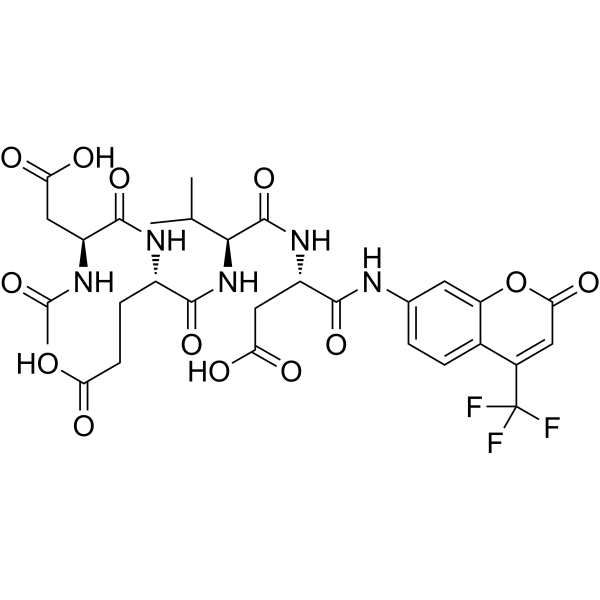
Ac-DEVD-AFC is a fluorogenic substrate (λex=400 nm, λem=530 nm).
loading...
    loading...
5
5 Cited Publications
Cat. No.: HY-P1003
CAS No.: 169332-61-0
Target:  

Fluorescent Dye

Research Areas:  

Others

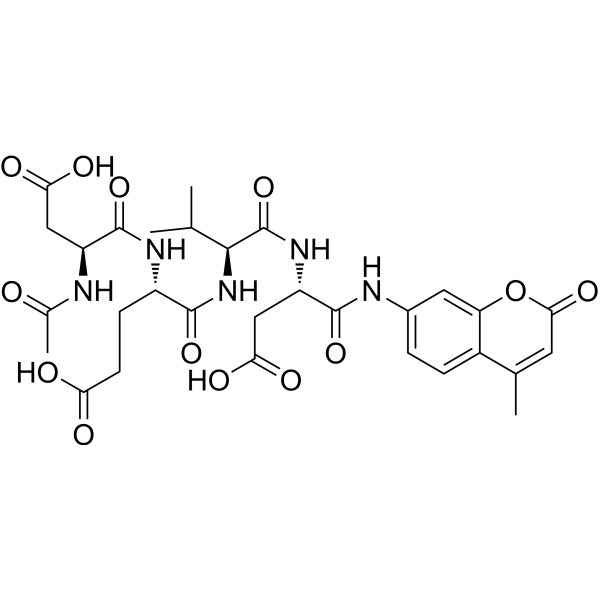
Ac-DEVD-AMC is a fluorescent substrate of caspase-3/caspase-7. When treating Ac-DEVD-AMC with cell lysate, Ac-DEVD-AMC releases amino-4-methylcoumarin (AMC) for fluorescence detection, with an excitation wavelength of 380 nm and an emission wavelength of 460 nm .
loading...
    loading...
4
4 Cited Publications
Cat. No.: HY-D1670
CAS No.: 68542-93-8
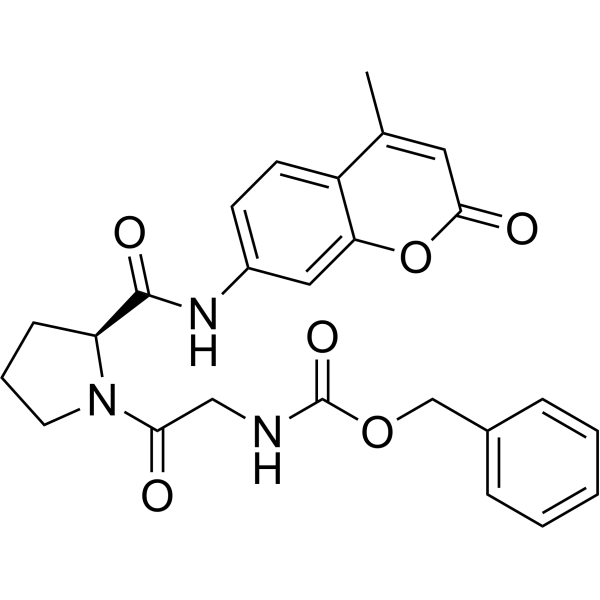
Z-Gly-Pro-AMC is a fluorogenic substrate. Z-Gly-Pro-AMC is hydrolyzed by prolyl endopeptidase to generate highly fluorescent 7-Amino-4-methylcoumarin (HY-D0027). (λex=380 nm, λem=465 nm) .
loading...
    loading...
1
1 Cited Publications
Cat. No.: HY-134124
CAS No.: 92614-59-0
Purity:  95.8%
Research Areas:  

Metabolic Disease

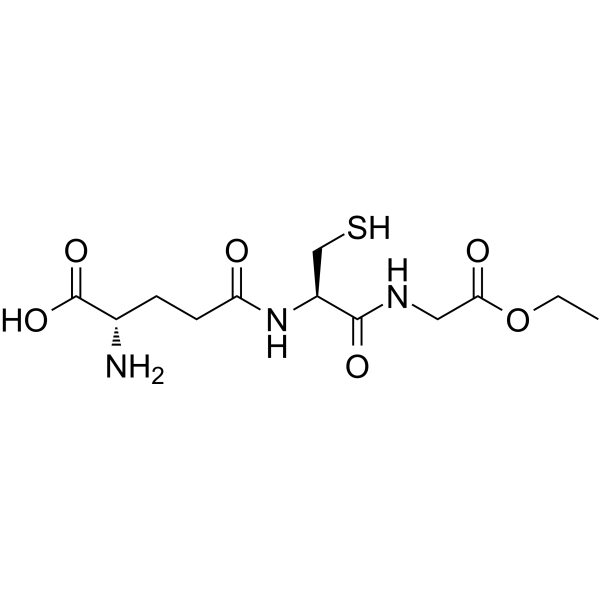
Glutathione ethyl ester is a cell-permeable GSH donor and provides an efficient supply of GSH to the oocyte. Glutathione ethyl ester shows positive effect on the in vitro production of embryos by enhancement of the antioxidative defense .
loading...
    loading...
1
1 Cited Publications
Cat. No.: HY-A0248A
CAS No.: 4135-11-9
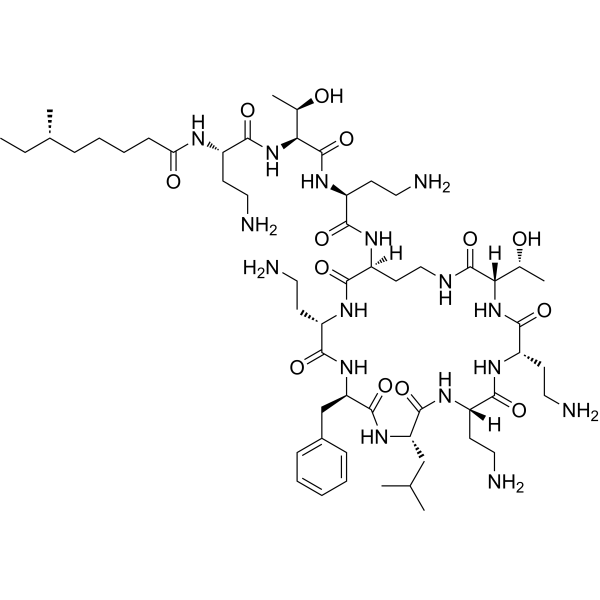
Polymyxin B1 is a potent antimicrobial lipopeptide first derived from Bacilus polymyxa. Polymyxin B1 is the major component in Polymyxin B (HY-A0248). Polymyxin B1 can induce lysis of bacterial cells through interaction with their membranes. Polymyxin B1 has the potential for multidrug-resistant Gram-negative bacterial infections treatment .
loading...
    loading...
1
1 Cited Publications
Cat. No.: HY-P1108
CAS No.: 681260-70-8
Target:  

CRFR

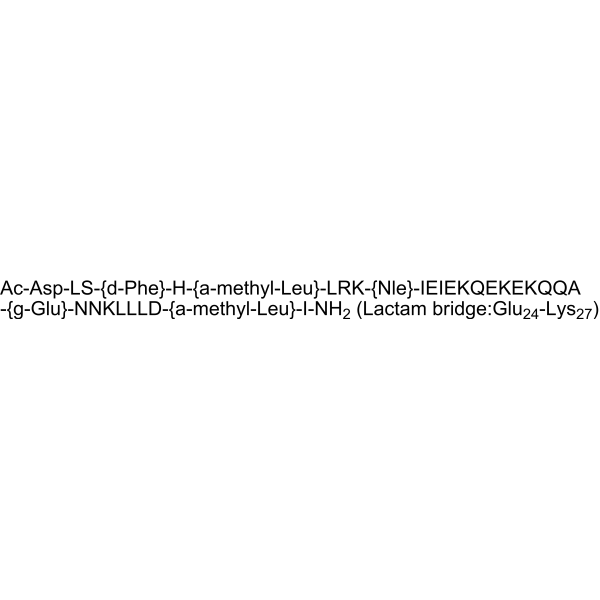
Astressin 2B is a blood-brain barrier-impermeable, highly selective CRFR2 antagonist (rCRFR2, IC50=0.57 nM). Astressin 2B blocks the protective effects mediated by CRFR2, thereby exacerbating indomethacin (HY-14397)-induced hemorrhagic intestinal injury in rats. Astressin 2B reverses the protective effects of Urocortin 1 against intestinal hypermotility, bacterial invasion and upregulation of inflammatory mediators. Astressin 2B also blocks the anxiogenic effect of Urocortin 2 and attenuates stress-induced anxiety-related behaviors. In the Clostridioides difficile toxin A (C. difficile toxin A)-mediated enteritis model, Astressin 2B mimics the phenotype of CRFR2-deficient mice, significantly exacerbating intestinal epithelial damage, edema, neutrophil migration and the expression of multiple proinflammatory cytokines. Astressin 2B is an important tool molecule for investigating the intestinal protective mechanisms of CRFR2 .
loading...
    loading...
1
1 Cited Publications
Cat. No.: HY-P1108A
Target:  

CRFR

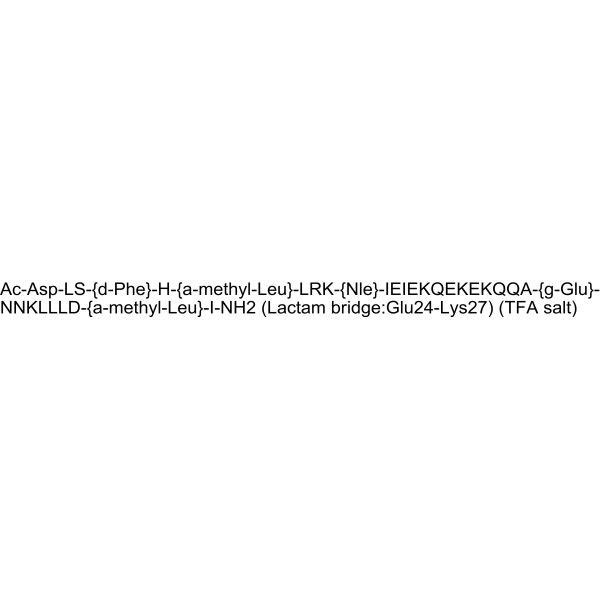
Astressin 2B TFA is a blood-brain barrier-impermeable, highly selective CRFR2 antagonist (rCRFR2, IC50=0.57 nM). Astressin 2B TFA blocks the protective effects mediated by CRFR2, thereby exacerbating indomethacin (HY-14397)-induced hemorrhagic intestinal injury in rats. Astressin 2B TFA reverses the protective effects of Urocortin 1 against intestinal hypermotility, bacterial invasion and upregulation of inflammatory mediators. Astressin 2B TFA also blocks the anxiogenic effect of Urocortin 2 and attenuates stress-induced anxiety-related behaviors. In the Clostridioides difficile toxin A (C. difficile toxin A)-mediated enteritis model, Astressin 2B TFA mimics the phenotype of CRFR2-deficient mice, significantly exacerbating intestinal epithelial damage, edema, neutrophil migration and the expression of multiple proinflammatory cytokines. Astressin 2B TFA is an important tool molecule for investigating the intestinal protective mechanisms of CRFR2 .
loading...
    loading...
Cat. No.: HY-137844
CAS No.: 62480-44-8
Purity:  99.98%
Synonyms: Leu-AMC hydrochloride
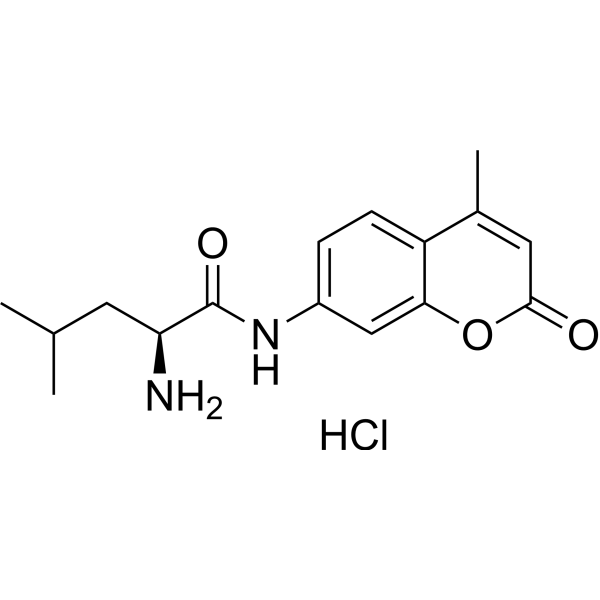
L-Leucine-7-amido-4-methylcoumarin (Leu-AMC) hydrochloride is a bright blue fluorogenic peptidyl substrate for LAP3 (leucine aminopeptidase). L-Leucine-7-amido-4-methylcoumarin hydrochloride can be used for leucine aminopeptidase inhibition assays in vitro .
loading...
    loading...
Cat. No.: HY-P10272
CAS No.: 1628323-80-7
Synonyms: PTG-300
Target:  

Ferroportin

Research Areas:  

Others

Rusfertide is a peptide mimetic of natural hepcidin, which targets and degrades ferroportin, reduces serum iron and transferrin-saturation, and thus regulates the production of red blood cells. Rusfertide ameliorates the polycythemia vera, β-thalassemia and hereditary hemochromatosis .
loading...
    loading...
Cat. No.: HY-137841
CAS No.: 69304-16-1
Purity:  99.23%
Synonyms: Arginine 4-methyl-7-coumarylamide hydrochloride
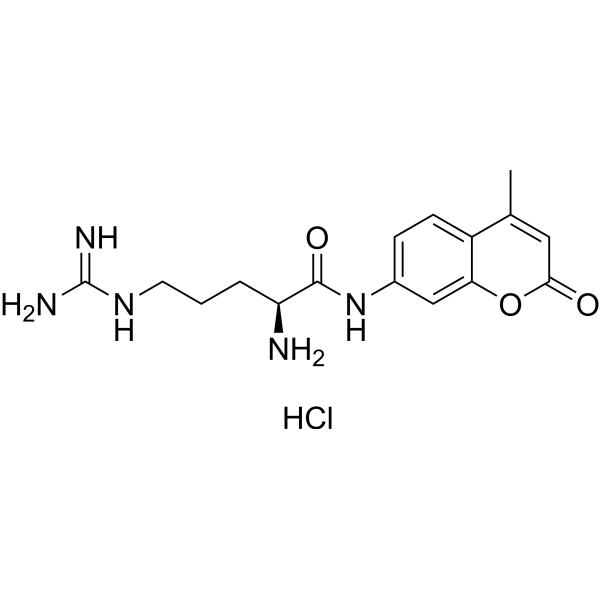
L-Arginine-7-amido-4-methylcoumarin (Arginine 4-methyl-7-coumarylamide) hydrochloride is a specific substrate of cathepsin H but not for cathepsins L and B .
loading...
    loading...
Cat. No.: HY-W928283
CAS No.: 1135372-06-3
L-Hydroxyproline 7-amido-4-methylcoumarin hydrochloride is a fluorescent substrate with biological activity for enzyme activity detection. L-Hydroxyproline 7-amido-4-methylcoumarin hydrochloride is often used in biochemical research to detect reactions associated with specific enzymes. L-Hydroxyproline 7-amido-4-methylcoumarin hydrochloride helps scientists monitor the progress of reactions through its fluorescent properties. L-Hydroxyproline 7-amido-4-methylcoumarin hydrochloride has important application value in compound development and basic biological research.
loading...
    loading...
Cat. No.: HY-W750190
CAS No.: 113712-08-6
L-Arginine 7-amido-4-methylcoumarin dihydrochloride is a special fluorescent substrate with the potential to be used for detecting cathepsin H activity. L-Arginine 7-amido-4-methylcoumarin dihydrochloride can be used to provide highly sensitive fluorescent signals for biological research. L-Arginine 7-amido-4-methylcoumarin dihydrochloride has important applications in enzyme activity analysis.
loading...
    loading...
Cat. No.: HY-137916
CAS No.: 191723-64-5
L-Histidine 7-amido-4-methylcoumarin is a biochemical reagent.
loading...
    loading...
Cat. No.: HY-W329113
CAS No.: 108321-84-2
L-Phenylalanine 7-amido-4-methylcoumarin (trifluoroacetate) is a biochemical reagent.
loading...
    loading...
Cat. No.: HY-W040280
CAS No.: 94367-35-8
L-Methionine 7-amido-4-methylcoumarin (trifluoroacetate) is a biochemical assay reagent.
loading...
    loading...
Cat. No.: HY-137859
CAS No.: 115388-93-7
L-Proline 7-amido-4-methylcoumarin hydrobromide is a biochemical reagent.
loading...
    loading...
Cat. No.: HY-W286423
CAS No.: 66642-36-2
L-Pyroglutamic acid 7-amido-4-methylcoumarin is a fluorogenic substrate for pyroglutamate aminopeptidase 1 (PGP-1) .
loading...
    loading...
Cat. No.: HY-P10143
CAS No.: 99828-55-4
Synonyms: Ac-Pro-Leu-Gly-[(S)-2-mercapto-4-methyl-pentanoyl]-Leu-Gly-OEt
Target:  

MMP

Research Areas:  

Others

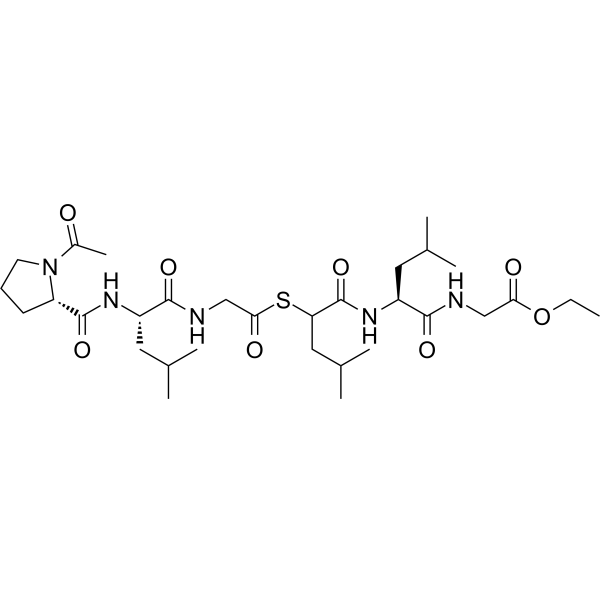
MMP-2/MMP-9 Substrate (Ac-Pro-Leu-Gly-[(S)-2-mercapto-4-methyl-pentanoyl]-Leu-Gly-OEt) is a synthetic chromogenic polypeptide substrate whose core structure mimics the cleavage sites of MMP-2 and MMP-9 (gelatinase A and B) in collagen. After being hydrolyzed by collagenase, MMP-2/MMP-9 Substrate reacts with 4,4'-dithiodipyridine or Ellman's Reagent via its thiol fragment to produce a product with ultraviolet absorption properties .
loading...
    loading...
Cat. No.: HY-A0248AS
Polymyxin B1-d7 TFA is the deuterium labeled Polymyxin B1 TFA (HY-A0248A). Polymyxin B1 is a potent antimicrobial lipopeptide first derived from Bacilus polymyxa. Polymyxin B1 is the major component in Polymyxin B (HY-A0248). Polymyxin B1 can induce lysis of bacterial cells through interaction with their membranes. Polymyxin B1 has the potential for multidrug-resistant Gram-negative bacterial infections treatment .
loading...
    loading...
Cat. No.: HY-W560593
CAS No.: 80173-27-9
S-Benzyl-L-cysteine 7-amido-4-methylcoumarin is a biochemical reagent.
loading...
    loading...

